How Does a Cold Room Work? A Complete Guide

Most cold room failures aren’t caused by the refrigeration cycle itself. They stem from miscalculating the cooling load calculation because buyers ignore transmission loads through wall joints and solar heat gain on the roof. I spent 15 years watching operators undersize compressors, only to see their inventory spoil during peak summer months. The physics of…

PUR Sandwich Panel vs. EPS: Which is Best for Cold Storage?

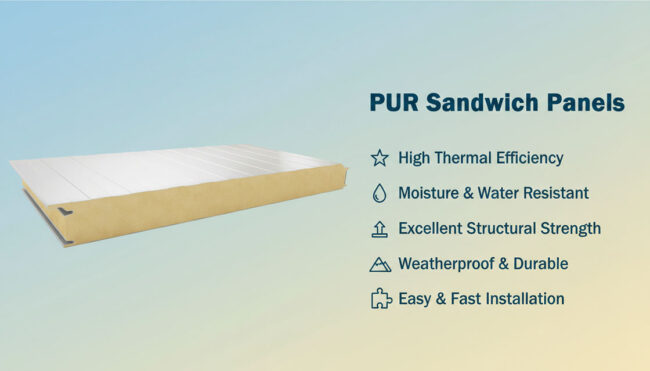
Most procurement managers pick EPS panels because the upfront invoice looks cheaper, but they ignore the hidden energy bleed that destroys margins over a 10-year cold storage panel TCO calculation PUR vs EPS cycle. At -25°C, the thermal conductivity gap isn’t just a spec sheet detail—it translates to thousands of dollars in wasted electricity and…

A sleek industrial building with a corrugated metal facade featuring roller blinds and sandwich panels.

Ultimate Guide to Different Types of Sandwich Panels for Building

Sandwich panel types are not interchangeable commodities. Choosing the wrong core material for a specific building envelope creates long-term liability for procurement managers and contractors. Rax Panel manufactures these composite materials daily, and the difference between a successful project and a warranty nightmare often comes down to one specific metric: core density. This guide moves…

What Are FRP Honeycomb Panels? 2026 Spec Guide What Are FRP Honeycomb Panels? 2026 Spec Guide

What Is FRP Honeycomb Panel

Walk any trade show floor in 2026 and you’ll hear the same conversation at booth after booth — a procurement manager holding two sample swatches, trying to decide whether their next build calls for an FRP honeycomb panel or a conventional aluminum alternative. Most suppliers hand over a spec sheet and move on. That spec…

What Materials Does a Steel Sandwich Panel Consist Of?

Most procurement specs treat sandwich panel core types as the main decision — EPS, PIR, mineral wool — then accept whatever steel facing thickness the supplier ships. That’s backwards. The gap between 0.4mm and 0.8mm facing steel dictates fastener pull-out strength and panel rigidity more than any core selection does. After 15 years building these…

FRP, GRP FRP vs GRP: Core Differences for Procurement

What Is the Difference Between FRP and GRP?

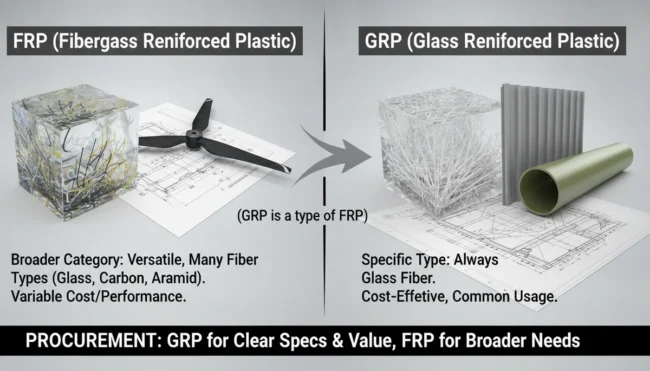
If you’ve sourced composite panels for a European client and received different documentation from your US supplier, you’ve hit the naming wall. GRP meaning in composites is simple: glass-reinforced plastic. But GRP is a subset of FRP. All GRP uses glass fiber. FRP can also mean carbon fiber or aramid reinforcement. That naming split between…

What Determines the Strength of a Honeycomb Core Panel?

Most engineers still spec honeycomb panels the way they spec solid plate steel: add 20% thickness, call it safe. That approach wastes material budget and still misses the real failure risks. Honeycomb core panel strength isn’t a single-variable equation where thicker always wins. It’s a multi-variable system where core geometry, material selection, bonding quality, and…

How Do Non-Slip Honeycomb Panels Perform in Cold Weather?

Standard embossed metal flooring turns into a liability the moment temperatures drop below freezing. The diamond plate collects moisture, freezes over, and creates a severe slip hazard on truck beds and outdoor platforms. You eat the replacement costs. Worse, the chemical adhesives bonding traditional aluminum skins to their cores turn brittle and fail after just…