Building Sandwich Panel Specification & Engineering Guide
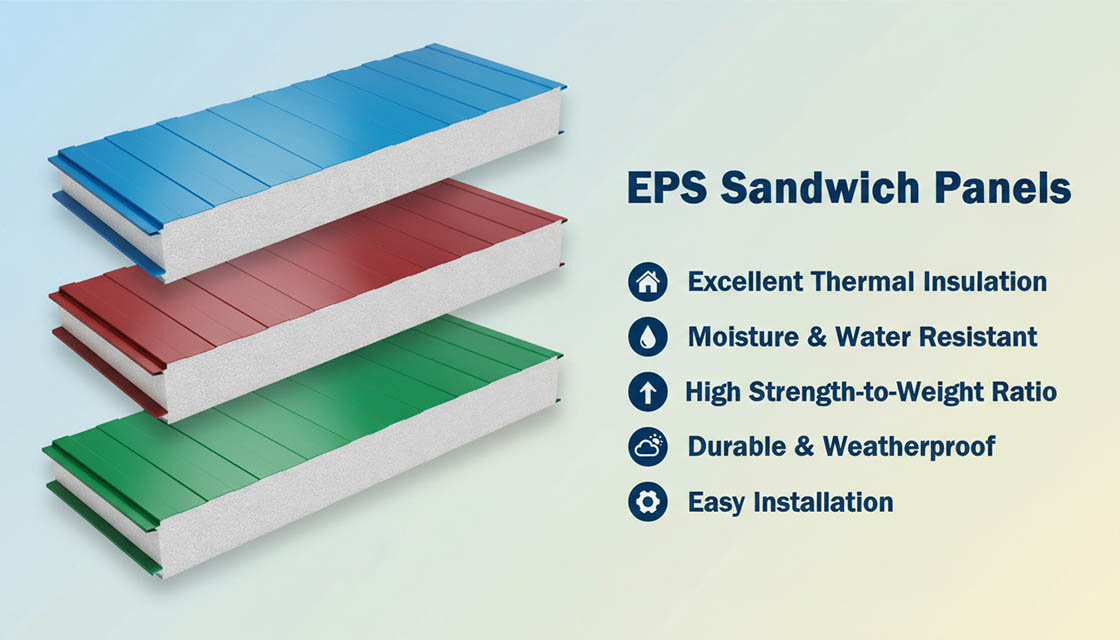
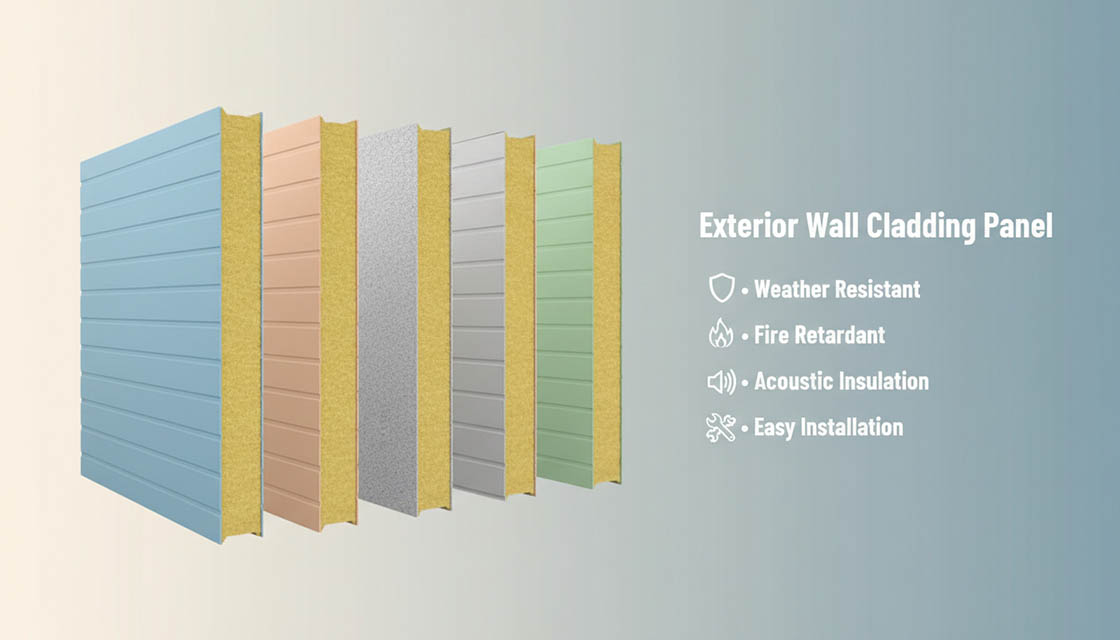
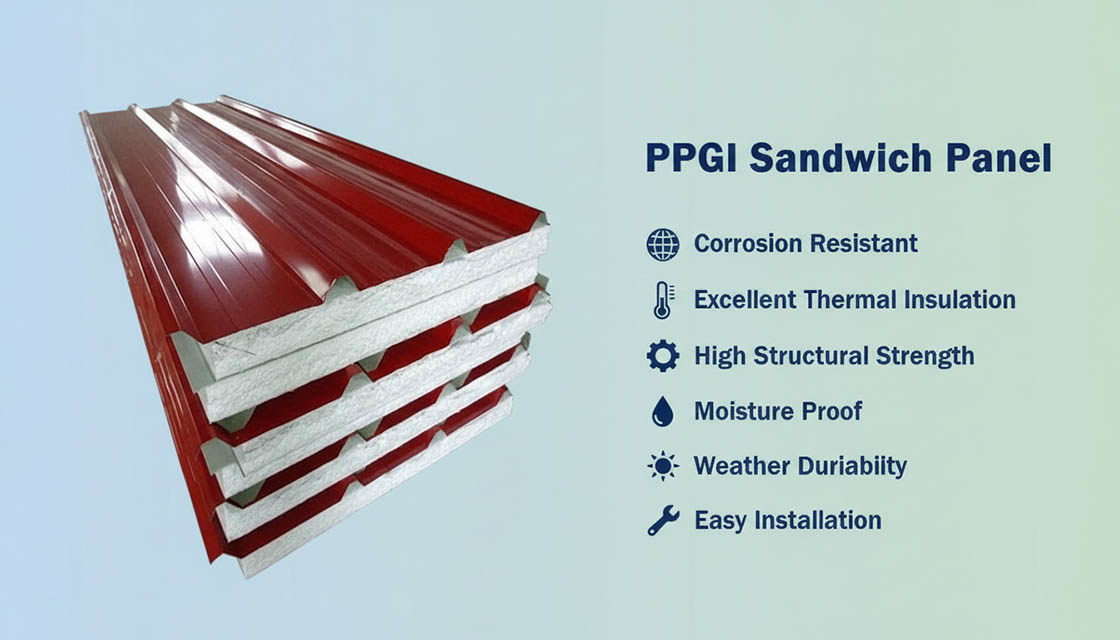
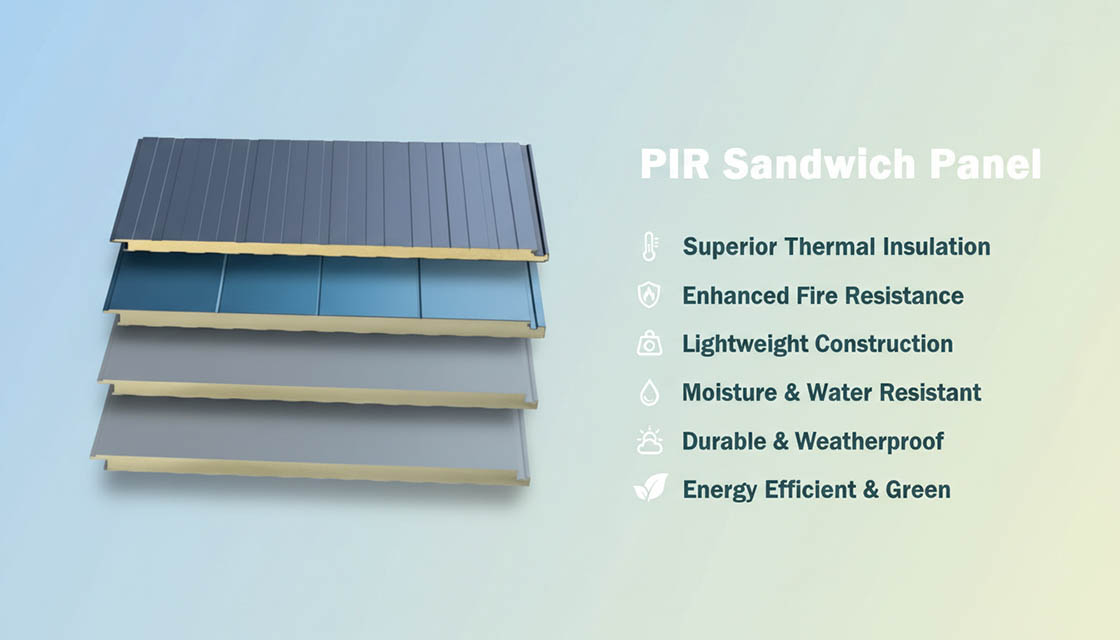
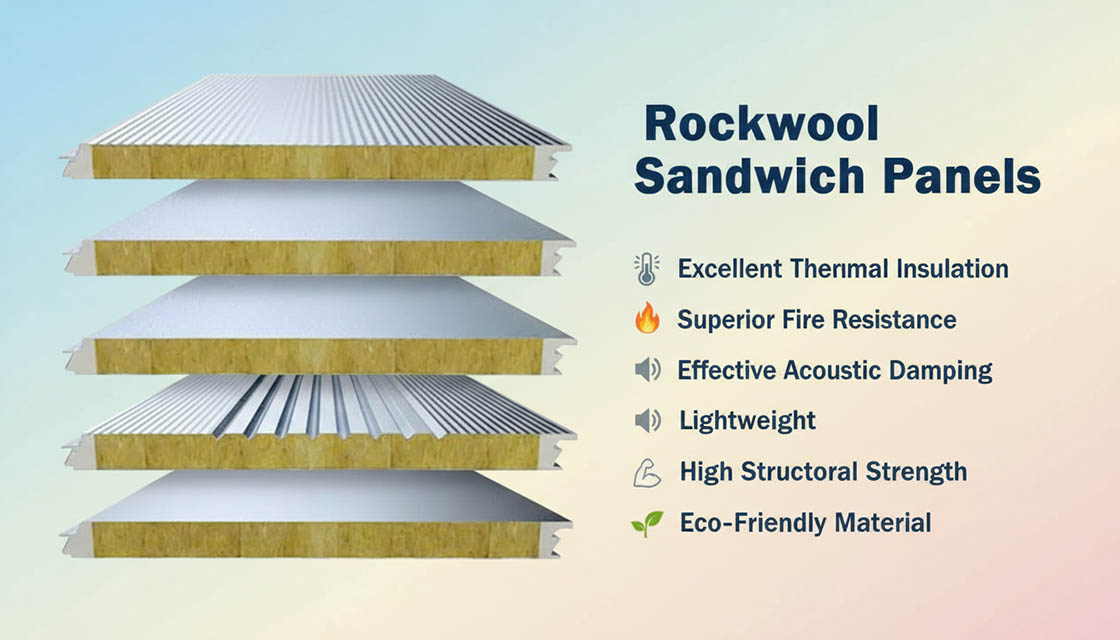
Building sandwich panels provide high-performance thermal insulation, weatherproofing, and structural strength for commercial warehouses, residential enclosures, agricultural facilities, and modular shelters. Utilizing premium metal skins such as 55% Aluzinc / Galvalume or high-tensile pre-painted steel bonded to EPS, PUR, PIR, or Rockwool cores, these panels deliver rapid construction turnaround and long-term energy savings.
💡 Pro Tip: 55% Aluzinc Corrosion Resistance & Heat Reflectivity
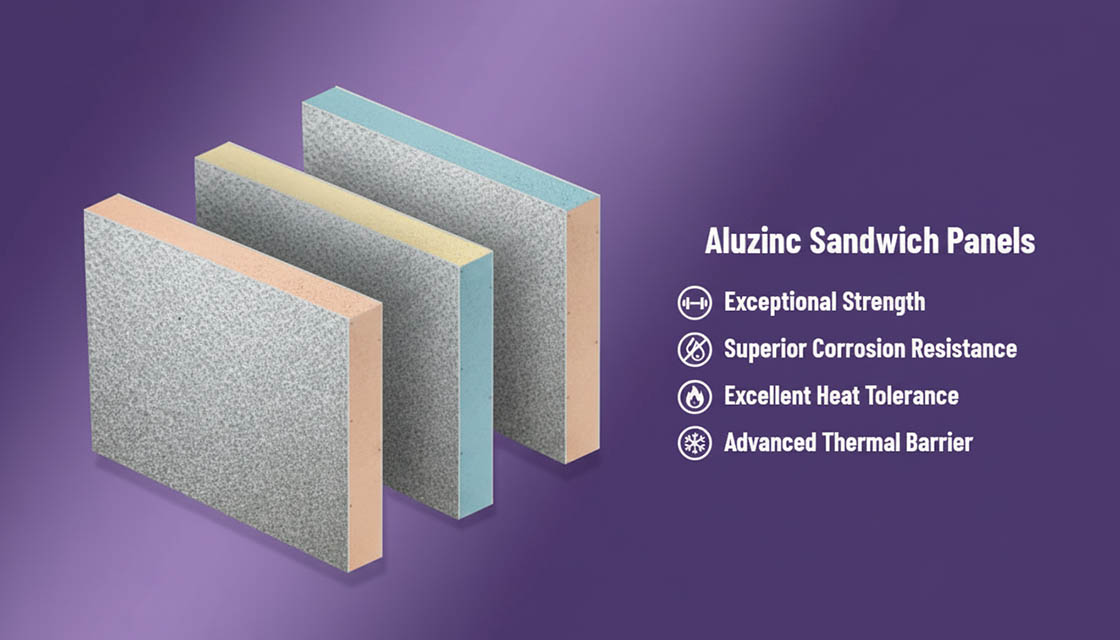
At RaxPanel, our Aluzinc (AZ150) coated steel facings feature a 55% Aluminum – 43.4% Zinc – 1.6% Silicon alloy matrix. This provides 2x to 6x greater corrosion protection than standard galvanized steel while reflecting over 65% of solar heat radiation to reduce summer cooling loads.
1. How Does Aluzinc Core Coating Outperform Standard Galvanized Steel?
Standard GI steel rusts at cut edges and scratches within a few years. Aluzinc’s microscopic aluminum barrier layer combined with zinc galvanic protection prevents edge red rust, delivering a 25-30 year maintenance-free lifespan even in coastal and humid agricultural environments.
2. Technical Performance Matrix Across Core Options
Compare mechanical load capacities, fire ratings, and thermal conductivity across RaxPanel core formulations:
| Core Formulation |
RaxPanel Technical Metric |
Target Engineering Application |
| 55% Aluzinc Facings (AZ150) |
Coating Weight 150 g/m² / Solar Reflectance > 65% |
Extreme weather roofs & coastal warehouse wall cladding |
| EPS (Expanded Polystyrene) |
Density 15-20 kg/m³ / λ ≈ 0.035 – 0.038 W/m·K |
Lightweight economic wall partitions & site office enclosures |
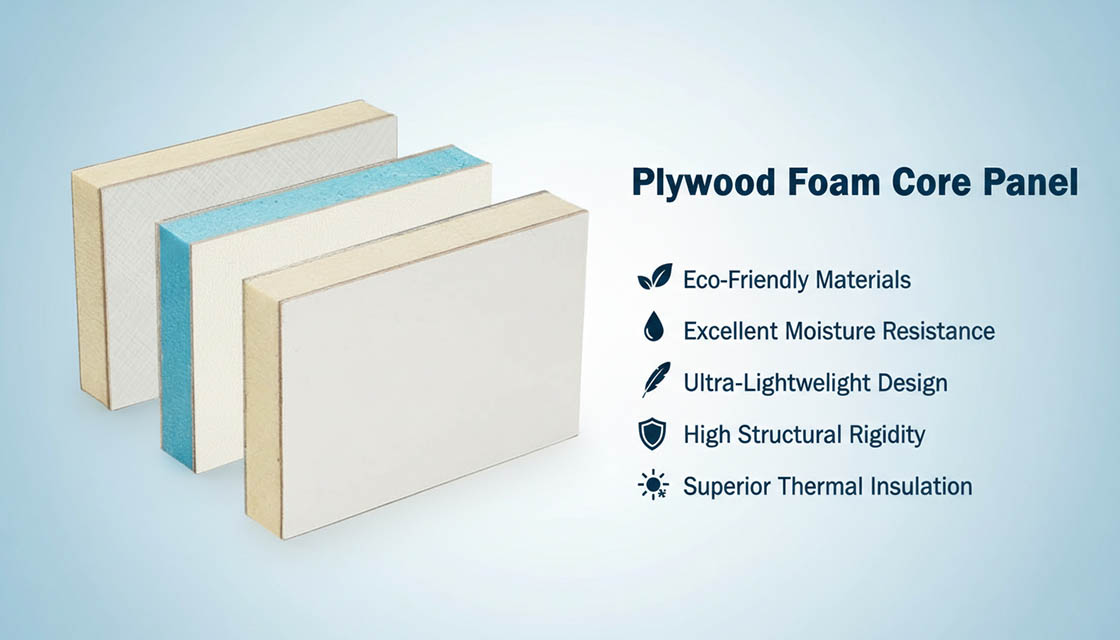
| Plywood Foam Composite |
Structural Marine Plywood + High-Density XPS Core |
Load-bearing flooring decks & internal partition walls |
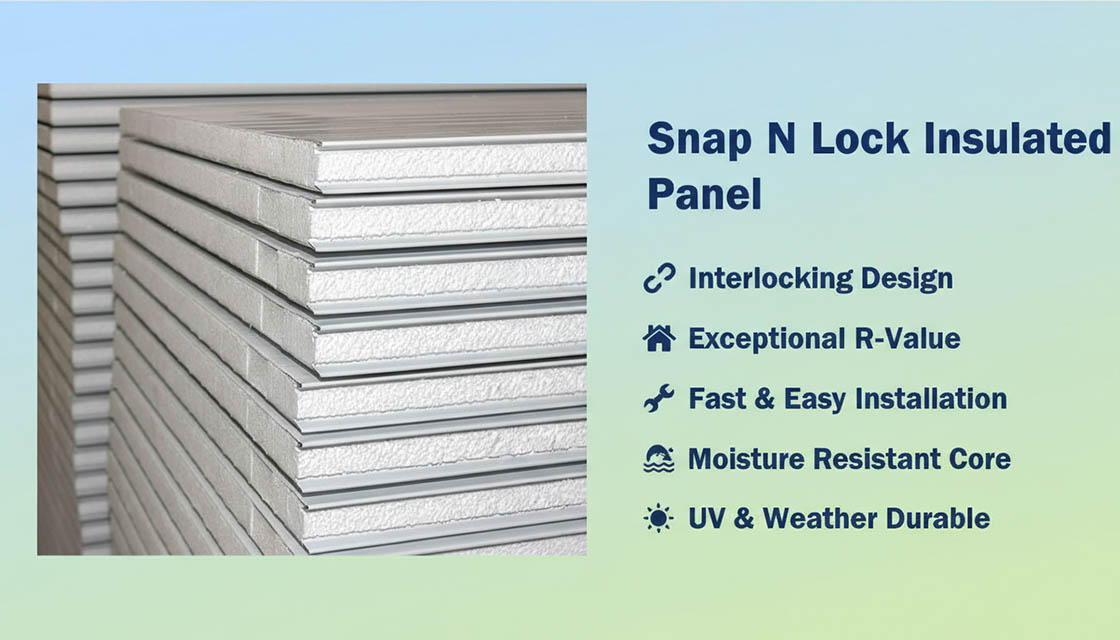
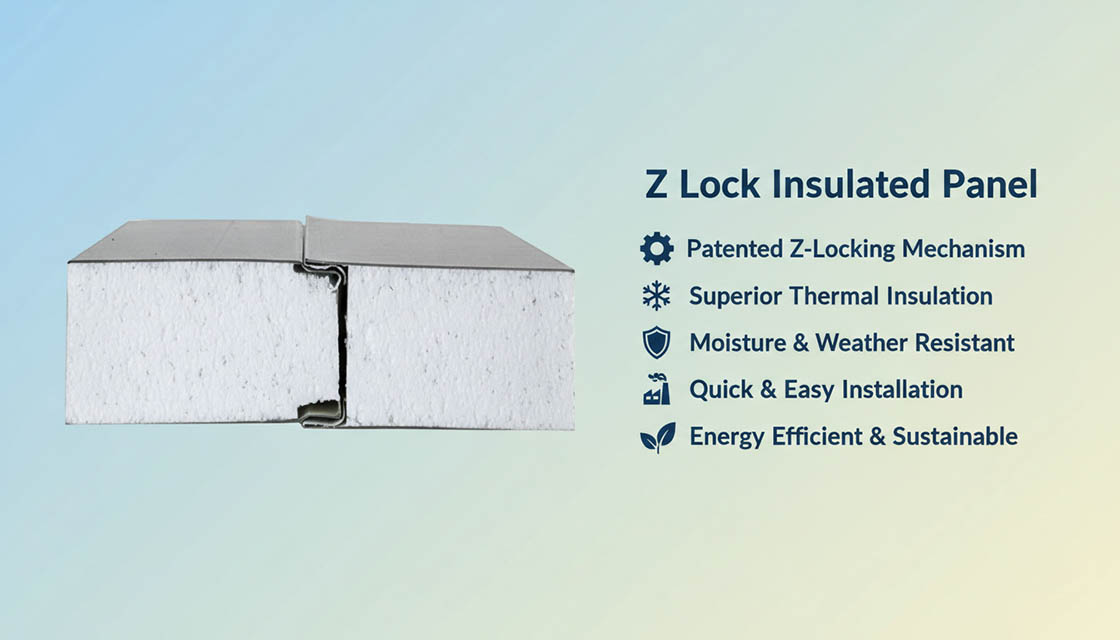
| Snap-N-Lock Joint System |
Concealed Interlocking Joint with Dual Seal Gasket |
Rapid DIY patio, room extension & shelter assembly |
3. Fast Modular Assembly with Snap-N-Lock Interlocking Profiles
The Snap-N-Lock interlocking profile allows adjacent panels to click together effortlessly without exposed screws, creating an airtight, watertight structural joint in half the labor time of conventional framing.
4. Sound Damping and Thermal Comfort Performance
🏠 Occupant Acoustic & Thermal Protection:
- Rain Noise Reduction: High-density core absorbs impact sound vibrations from heavy tropical rainfall.
- Continuous Thermal Barrier: Eliminates thermal bridges, lowering indoor summer temperatures by 5°C to 8°C compared to single-skin roofs.
5. Where Are Building Sandwich Panels Most Commonly Installed?
🏬 Commercial Warehouses & Factories
Large-span insulated roofing, exterior wall cladding, and internal office partitions.
🏡 Modular Homes, Patios & Site Enclosures
Pre-engineered insulated room additions, sunrooms, and temporary site offices.
6. On-Site Handling and Fastener Securing Standards
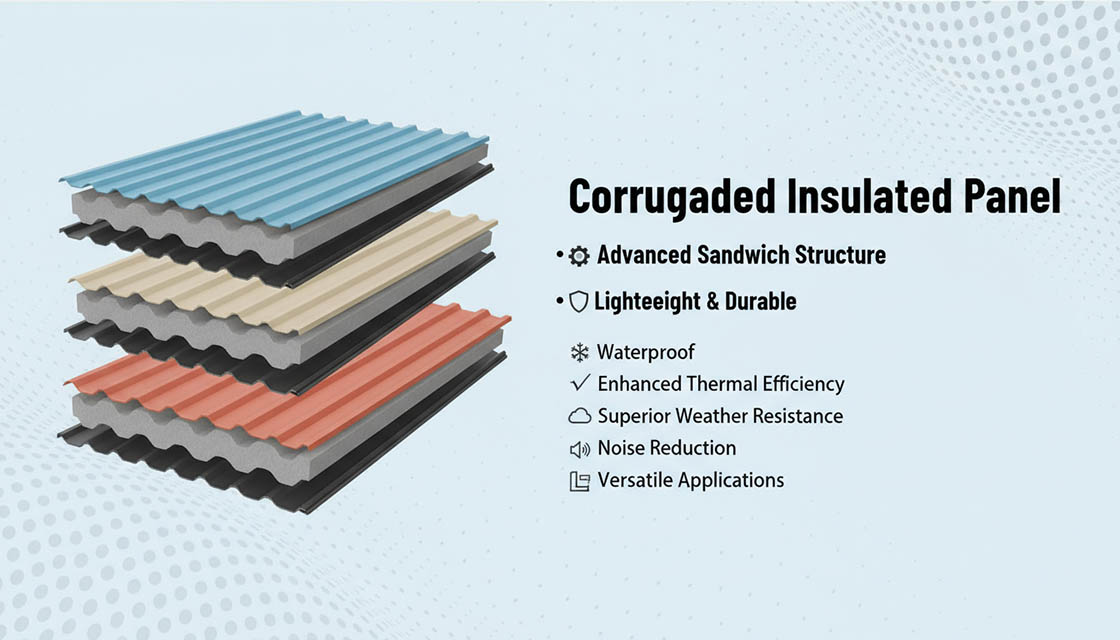
Panels install onto steel or timber girts using self-drilling screws with EPDM sealing washers. Flashing accessories cover ridges, corners, and eaves for complete weatherproofing.
Frequently Asked Questions (FAQS)
1. What is Aluzinc steel coating and why is it superior to galvanized steel?
Aluzinc consists of 55% aluminum, 43.4% zinc, and 1.6% silicon. It provides 2x to 6x longer corrosion resistance and reflects 65% of solar heat.
2. How does the Snap-N-Lock joint system work?
Snap-N-Lock panels interlock with a male-female snap mechanism that conceals fasteners, ensuring airtight joints and fast assembly.
3. What applications suit EPS core sandwich panels best?
EPS (Expanded Polystyrene) panels offer a lightweight, budget-friendly solution ideal for interior partitions, site offices, and mild climate walls.
4. What are Plywood Foam Composite panels used for?
Plywood foam composite panels combine structural marine plywood with XPS foam for heavy-duty structural flooring, mezzanine decks, and container walls.
5. Are RaxPanel building sandwich panels fire retardant?
Yes. All EPS, PUR, and PIR core formulations include flame-retardant self-extinguishing additives to meet international building fire codes.
6. What standard steel skin thicknesses are available?
Skin thicknesses range from 0.4mm, 0.5mm, 0.6mm up to 0.8mm depending on purlin span and wind load requirements.
7. What maximum panel length can be shipped in ocean freight containers?
Maximum panel length is 11.8 meters to fit standard 40ft HC ocean shipping containers.