
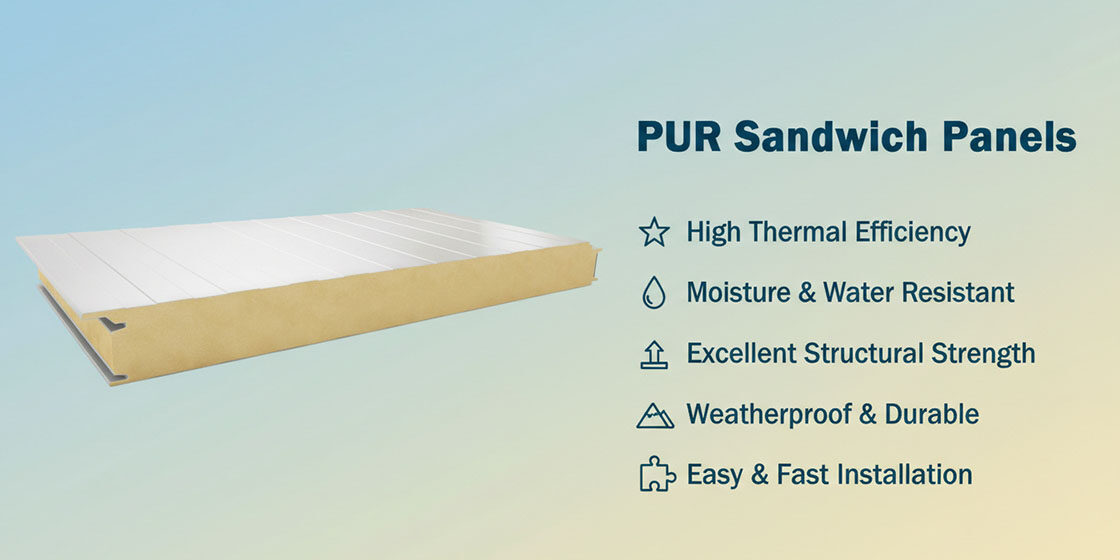
Most procurement managers pick EPS panels because the upfront invoice looks cheaper, but they ignore the hidden energy bleed that destroys margins over a 10-year cold storage panel TCO calculation PUR vs EPS cycle.
At -25°C, the thermal conductivity gap isn’t just a spec sheet detail—it translates to thousands of dollars in wasted electricity and compressor wear annually. We have seen factories switch from EPS to PUR and cut energy bills by 30%, proving that initial savings are often just deferred costs.
This analysis cuts through the marketing noise to expose the real trade-offs between material types, focusing on the PUR sandwich panel density and closed cell rate standard that dictates long-term insulation integrity. We will break down how EPS cold room insulation shrinkage gap issues compromise structural efficiency and why fire rating compliance directly impacts your insurance premiums, giving you the data needed to make a defensible engineering decision rather than a budget-driven guess.
By the end of this report, you will have a clear framework for evaluating thermal bridging at cold room panel joints and understanding the PIR vs PUR cold storage performance difference. You will also gain access to a practical cold room panel thickness selection chart -25C that aligns with rigorous energy codes, ensuring your investment protects both your product quality and your bottom line.
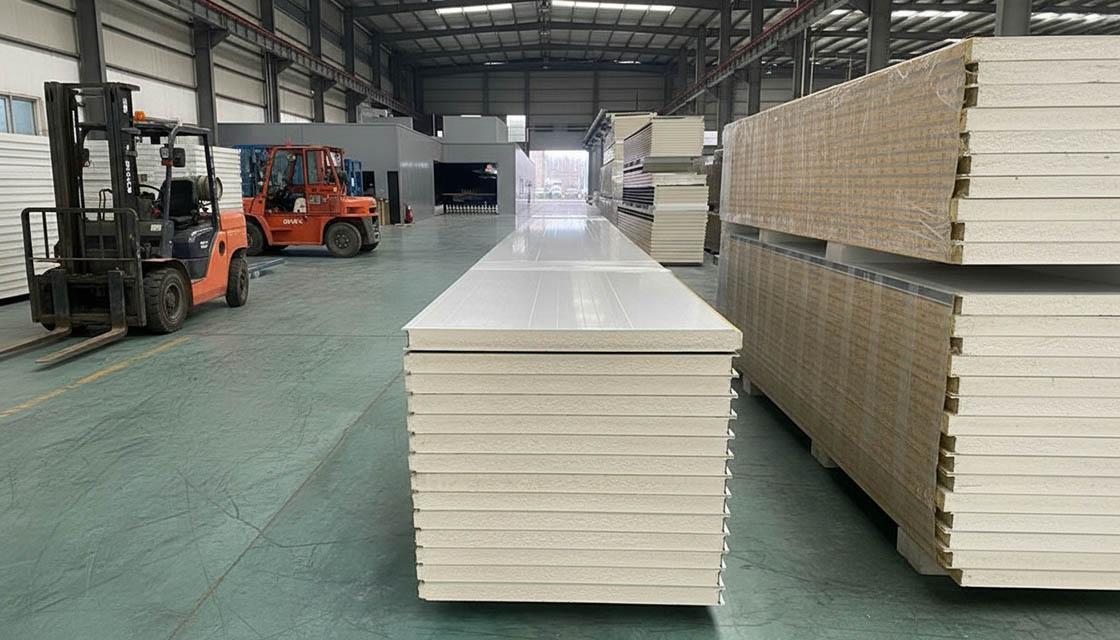
Thermal Conductivity and R-Value Baseline
Steady-state thermal conductivity defines the baseline energy consumption of a refrigerated space. Over a 10-year lifecycle, even a marginal degradation in R-value drastically increases compressor workload and operational expenditure.
Comparing Steady-State Insulation Performance Metrics
Thermal conductivity and R-value dictate how effectively a sandwich panel resists heat transfer under constant temperature differentials. While manufacturers often highlight fresh-out-of-the-mold lab numbers, true B2B evaluation requires looking at the aged thermal resistance. Over time, blowing agents diffuse and are replaced by atmospheric gases, which inherently alters the insulation factor.
Theoretical specifications only hold true if the core remains completely dry and structurally sound. Moisture infiltration or dimensional shrinkage will permanently increase the material’s thermal conductivity, thereby severely lowering the effective R-value over the facility’s lifespan. Buyers must demand aged thermal resistance data rather than relying on idealized baseline metrics.
Impact of Thermal Conductivity on Compressor Workload
The refrigeration compressor is the primary engine of a cold storage facility, and its workload is directly tied to the envelope’s thermal efficiency. Every unit of heat that penetrates the panel must be actively removed by the cooling system. Inferior insulation forces the compressor into continuous high-load cycling to maintain strict sub-zero temperatures, particularly during peak ambient temperature swings.
This constant operational strain not only spikes peak electricity demand but also accelerates mechanical wear, drastically shortening the compressor’s operational lifespan. In our experience engineering deep-freeze solutions, optimizing the panel’s inherent thermal resistance is the single most effective way to stabilize compressor runtime and prevent catastrophic temperature fluctuations.
Break-Even Analysis for Energy Efficiency Gains
Procurement teams must weigh the upfront material premium against long-term energy expenditures. High-performance insulation cores demand a higher initial capital expenditure, but they radically reduce daily kilowatt-hour consumption. The financial viability of this upgrade is determined through a straightforward lifecycle break-even analysis.
- Peak Demand Charges: Lower thermal conductivity translates to fewer simultaneous compressor startups, mitigating expensive utility demand spikes.
- Maintenance Cycles: Reduced compressor wear lowers annual refrigeration maintenance and emergency replacement budgets.
- Energy Offset Timeline: The incremental cost of premium panels is typically offset by electricity savings within the first few years of a standard 15-year facility lifecycle.
We routinely assist global distributors in mapping out these energy models. By locking in a superior baseline thermal resistance from day one, operators insulate their balance sheets against volatile regional electricity prices and ensure predictable cooling costs.
| Core Material | Thermal Conductivity (λ) | Density Range | Closed-Cell Rate | Cold Storage Suitability |
|---|---|---|---|---|
| PUR (Polyurethane) | 0.022 W/m·K | 38–42 kg/m³ | ≥92% | Best for deep-freeze (−25 °C and below); lowest energy loss over 10–15 yr lifecycle |
| PIR (Polyisocyanurate) | 0.022–0.024 W/m·K | 35–45 kg/m³ | ≥90% | Superior fire resistance (Class B); preferred for pharma and food-grade compliance |
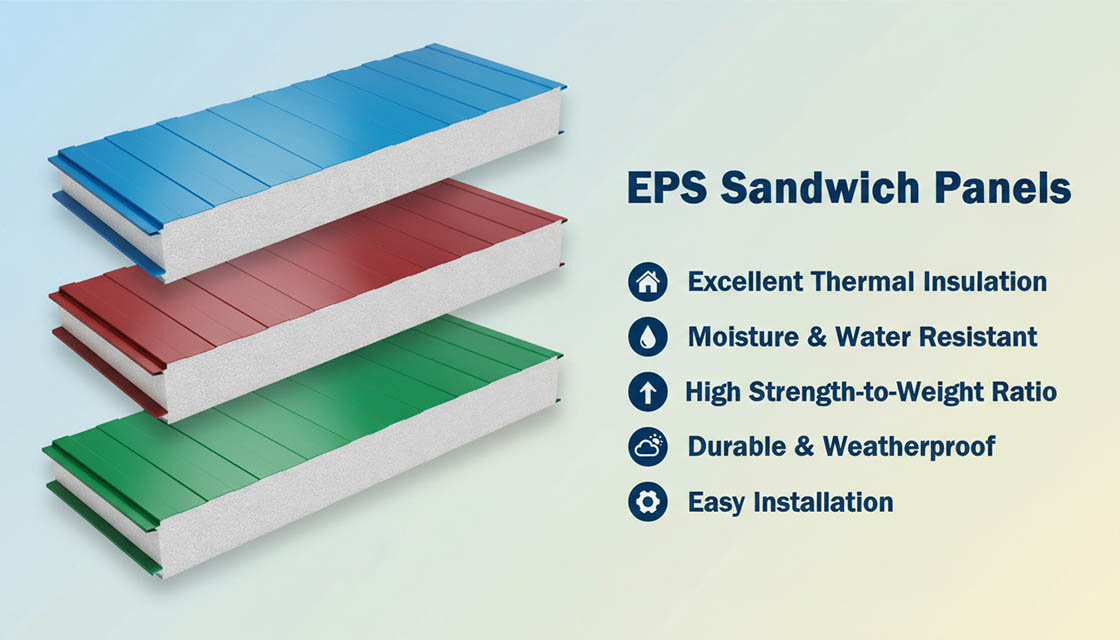
| EPS (Expanded Polystyrene) | 0.038–0.040 W/m·K | 15–25 kg/m³ | N/A (bead structure) | Lower upfront cost but higher TCO; shrinkage-gap risk below −18 °C |
| XPS (Extruded Polystyrene) | 0.034 W/m·K | 30–40 kg/m³ | ≥95% | Good moisture resistance; moderate insulation for chilled (not deep-freeze) zones |
| Rockwool | 0.040–0.044 W/m·K | 100–140 kg/m³ | Open fiber | Non-combustible (Class A1); used where fire codes prohibit foam cores |
| PET Foam (CFRT Core Option) | 0.030 W/m·K | 60–110 kg/m³ | ≥88% | Lightweight structural option; secondary insulation role in hybrid panels |
| PU Foam (Decorative / Building Grade) | 0.024 W/m·K | 30–35 kg/m³ | ≥85% | General building cladding; not optimized for industrial deep-freeze performance |
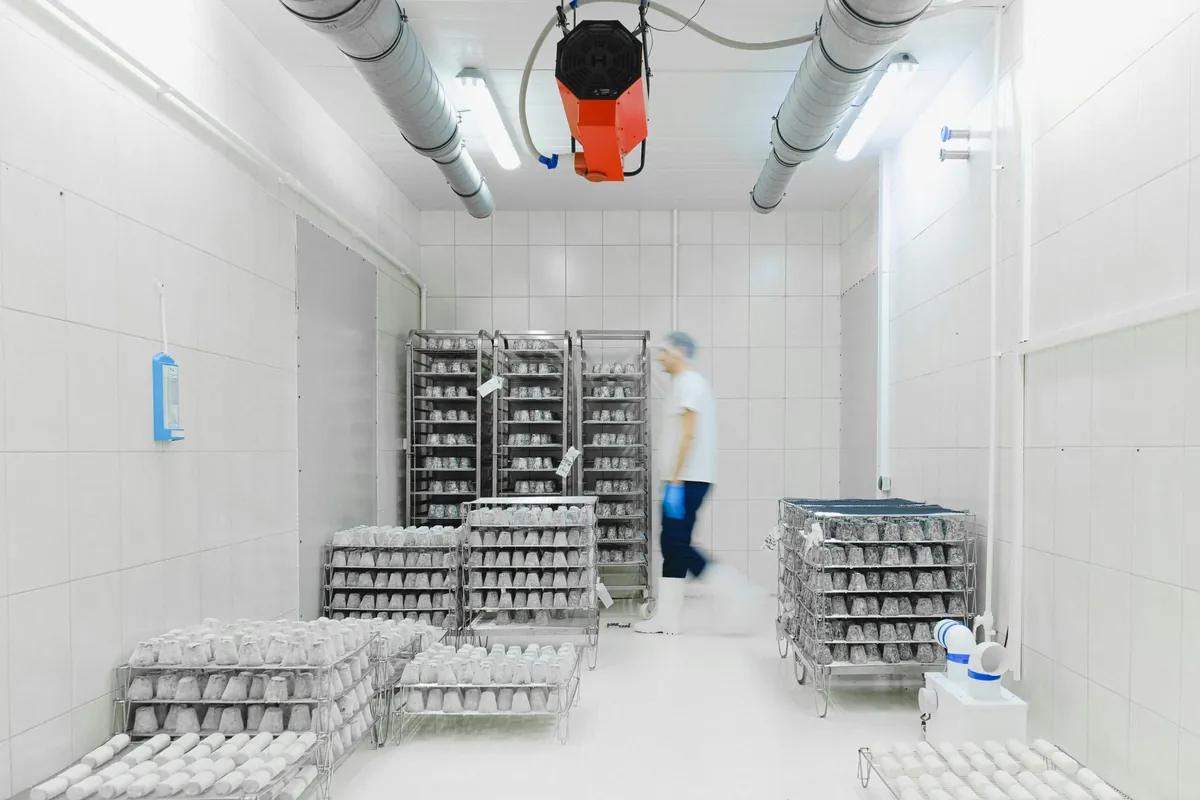
Structural Integrity and Fire Safety Ratings
Structural integrity and fire safety ratings dictate a cold storage facility’s legal operational permits and directly impact insurance liabilities. Selecting panels with certified compressive strength and Euroclass B or better fire ratings ensures regulatory compliance and long-term asset protection.
Evaluating Compressive Strength and Load-Bearing Capacity
Load-bearing capacity in a cold storage facility determines whether the structure can safely accommodate high-density mobile racking systems, suspended evaporators, and heavy structural loads without warping. When the core material lacks sufficient rigidity, panels deflect under sustained weight. This deflection compromises the panel joints, creating gaps that allow moisture ingress and air leakage.
Standard EPS cores often lack the necessary compressive rigidity for heavy industrial loads. In our engineering department, we strictly mandate PUR or PIR cores with a minimum density of 40 kg/m³ for heavy-load bearing walls and flooring systems.
These rigid foams consistently maintain a compressive yield strength of ≥150 kPa, even at sustained operating temperatures of -25°C. For environments requiring maximum structural fire integrity alongside load-bearing capabilities, we engineer specialized Rockwool core panels, though structural spans must be precisely calculated since mineral wool cores inherently exhibit lower point-load resistance compared to high-density rigid foams.
Assessing Fire Resistance Classes and Building Codes
Global building codes strictly enforce fire resistance thresholds for commercial cold storage. Failing to meet localized standards results in immediate project shutdowns and denied occupancy permits. Materials must be specified according to exact regional metrics, such as the EN 13501-1 Euroclass system for European markets or the ASTM E84 surface burning characteristics for North American jurisdictions.
- EPS Cores: Typically rated Euroclass E, this material is increasingly prohibited in large-scale commercial cold storage due to its high flammability and tendency to drip molten, burning plastic.
- PUR/PIR Cores: PIR achieves a Euroclass B-s2,d0 rating. It forms a protective char layer when exposed to flame, significantly slowing fire propagation and meeting the strict codes required for modern food-grade facilities.
- Rockwool Cores: Delivering maximum fire safety with a Euroclass A1 non-combustible rating, these panels are mandatory for high-risk isolation zones, chemical storage, and facility boundary walls.
Insurance Premium Implications of Material Flammability
The core material selected for a cold room directly dictates the facility’s property insurance and liability premiums. Commercial property insurers calculate risk based on the combustibility of the building envelope. Facilities utilizing highly flammable core materials face drastically higher annual premiums, and in some jurisdictions, international underwriters will outright refuse to underwrite policies for cold storage built with unmodified EPS panels.
During a fire, thermoplastic cores melt and generate combustible gases that can lead to rapid fire spread within the wall cavities. Our project consultants actively assist global distributors and contractors in selecting PIR or Rockwool assemblies to mitigate underwriting risks. Documenting a higher fire classification not only limits catastrophic asset loss but justifies the project financially by driving down annual operational insurance costs over the facility’s lifespan.
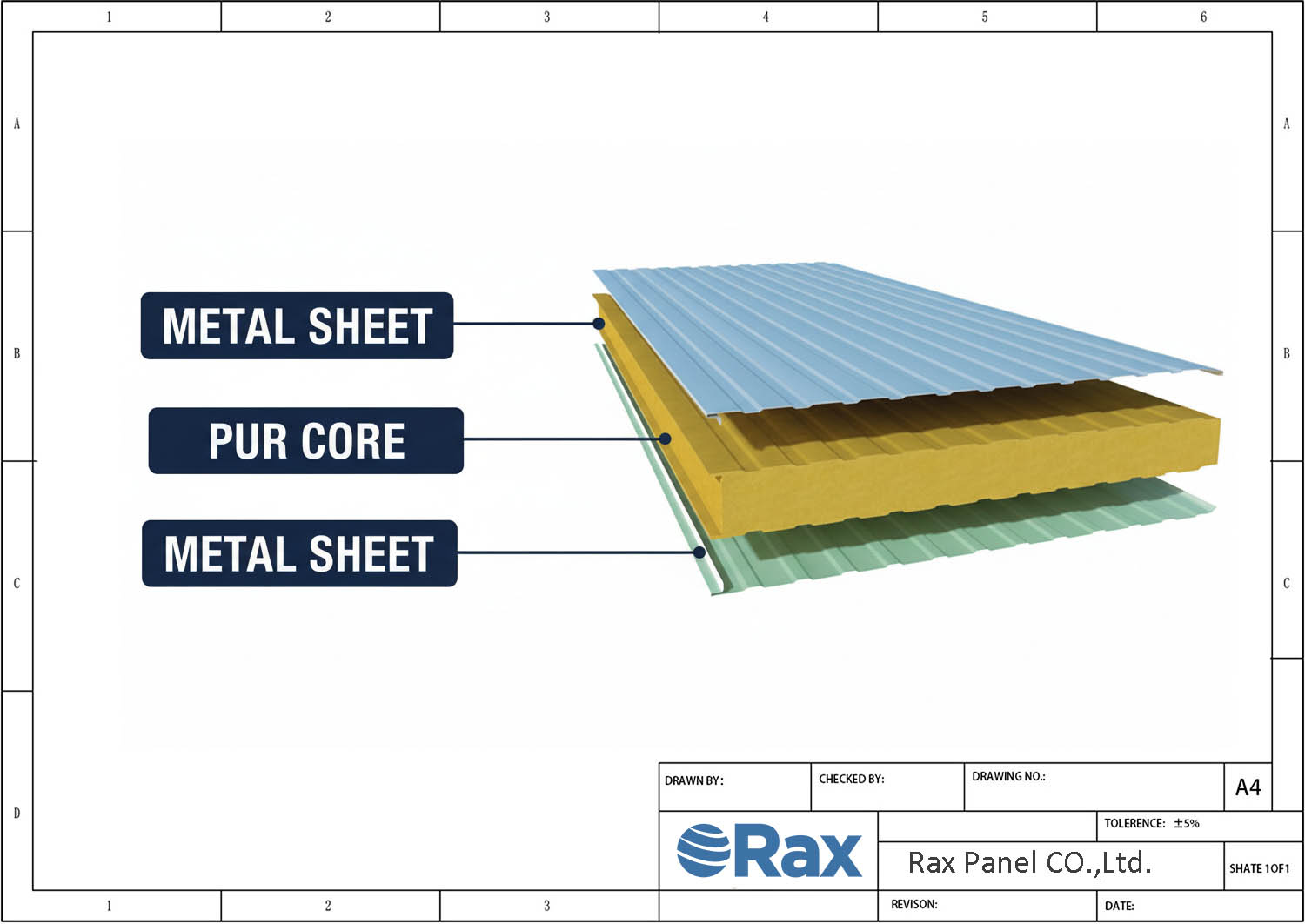
Verify Core Density and Closed-Cell Rates
Demand specific density and closed-cell rate reports. These metrics dictate long-term thermal resistance and prevent moisture damage.
Checking Factory Reports for Density Specifications
A panel’s density is the primary driver of its structural integrity and long-term thermal performance. In the cold storage industry, suppliers often quote average density values, which can mask significant inconsistencies within the core material. Low-density foam provides less compressive strength and allows for greater heat transfer over time.
You must require a Certificate of Conformity (CoC) that details the exact density range for each batch. For high-performance PUR or PIR cores used in deep-freeze applications, the density typically needs to fall between 38 and 45 kg/m³ to maintain rigidity at extreme temperatures. Without this specific data point, you risk investing in panels that will sag or lose insulation value within a few years.
Ensuring High Closed-Cell Rates to Prevent Moisture Absorption
The closed-cell rate determines how much water vapor the foam core can absorb. In a humid environment or during defrost cycles, open cells act like sponges, soaking up moisture. This water ingress drastically increases thermal conductivity, forcing refrigeration compressors to work harder and consume significantly more electricity.
Our engineering team strictly verifies that our composite panels maintain a closed-cell rate above 90%. This threshold ensures that the core remains hydrophobic, preserving the panel’s R-value throughout the facility’s lifespan. Always ask your supplier for the specific percentage of closed cells rather than accepting vague claims of “waterproof” materials.
Avoiding Low-Quality Panels That Degrade Over Time
Panels with poor density control or low closed-cell rates suffer from rapid degradation. As the core absorbs moisture, it can expand, leading to bulging faces and compromised joint seals. This physical distortion creates thermal bridges—gaps where cold escapes—which are extremely difficult and costly to fix after the cold room is built.
- Density Range: Require batch-specific data confirming the core falls within the optimal 38–45 kg/m³ range for your temperature zone.
- Closed-Cell Verification: Insist on laboratory test results proving a closed-cell rate of 90% or higher to guarantee moisture resistance.
- Longevity Assurance: Reject panels that lack transparent density reporting, as inconsistent cores are the leading cause of premature cold room failure.
Evaluate Panel Joint Sealing and Air Tightness
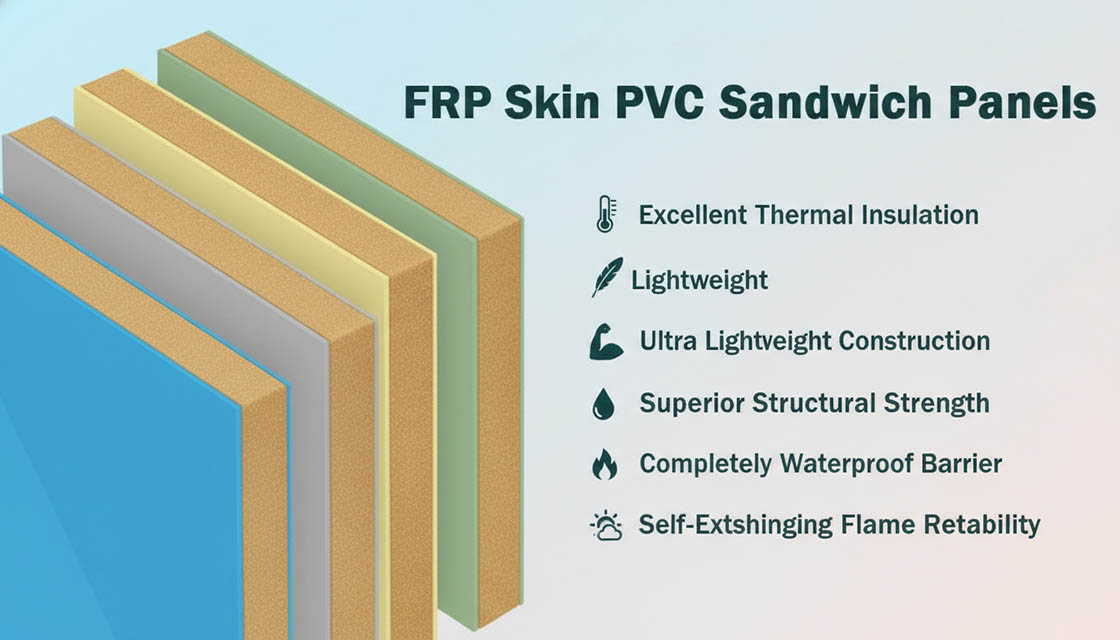
Proper joint sealing prevents thermal bridging and ice buildup, ensuring the cold room remains airtight throughout its 15-year lifespan.
Analyzing Expansion Properties to Fill Installation Gaps
When composite panels are installed in cold storage environments, the interface between panels becomes the most vulnerable point for air infiltration. Unlike traditional construction materials, modern sandwich panels require a specialized understanding of thermal contraction and expansion. If the joint design does not account for these dimensional changes, gaps will inevitably form during the cooling cycle, compromising the entire insulation envelope.
To solve this, we engineered our interlocking mechanisms to maintain structural integrity while accommodating minor shifts. Our team prioritizes a fully encapsulated core design, ensuring that the insulating foam—whether PUR, PIR, or specialized variants—is completely sealed within the panel structure. This eliminates the risk of the core degrading or shrinking away from the facings at the joint, which is a common failure point in lower-quality manufacturing.
The key is precision rather than flexibility. By utilizing rigid cam-lock or hook-lock systems, the panels are mechanically pulled together to form a tight seal. This ensures that the thermal barrier remains continuous across the wall or roof, preventing the “thermal bridge” effect where heat leaks directly through the gap.
- Encapsulated Core Technology: We utilize a fully encapsulated core design to prevent internal separation or shrinkage at the edges, maintaining a consistent thermal barrier.
- Precision Interlocking Systems: Our panels feature robust mechanical locks that ensure a tight fit, eliminating gaps that could lead to air leakage or structural weakness.
- Dimensional Stability: By controlling the density and closed-cell rate of the foam, we minimize the risk of expansion or contraction issues during temperature fluctuations.
Preventing Thermal Bridges and Ice Buildup at Joints
A thermal bridge is essentially a shortcut for heat to enter the cold room. At the panel joints, this usually happens when there is a break in the insulation continuity. In colder climates or deep-freeze applications (-25°C and below), even a millimeter-wide gap can cause significant condensation. This moisture freezes rapidly, leading to ice buildup that expands over time, potentially damaging the panel structure and further widening the leak.
We address this by focusing on the material’s closed-cell structure. High-quality PUR and PIR cores used in our manufacturing process boast high closed-cell rates, which are inherently resistant to moisture absorption. This property is critical for joint longevity, as it prevents the insulation material itself from becoming a conduit for water vapor.
Furthermore, our engineering team conducts rigorous experimental testing to simulate these extreme conditions. By validating the performance of our facings—ranging from steel and aluminum to GRP and stainless steel—we ensure that the outer shell does not distort under thermal stress. This distortion resistance is vital for keeping the joint aligned and sealed, effectively stopping ice formation at its source.
Ensuring Long-Term Cold Room Air Tightness
Air tightness is not just about the initial installation; it is about long-term performance. Over a 10 to 15-year lifecycle, vibration from refrigeration units and daily forklift traffic can loosen poorly designed joints. To counteract this, we emphasize the importance of a robust lamination quality. The bond between the facing and the core must be strong enough to resist delamination, which would otherwise create voids at the panel edges.
Our approach combines factory-direct quality control with expert technical guidance. We provide detailed installation protocols that specify how joints should be sealed and secured. This ensures that the final assembled cold room acts as a single, unified thermal mass. By preventing air leakage, we significantly reduce the workload on the compressor, lowering energy consumption and operational costs for the facility owner.
Ultimately, the goal is a maintenance-free envelope. Whether supplying panels for food-grade storage or pharmaceutical compliance, our focus remains on delivering a solution that stands up to the harshest environmental demands without compromising on efficiency or safety.
Assess Lamination Quality and Adhesion Strength
This factor has a direct bearing on project performance and long-term cost. Addressing it with specific data rather than general assumptions leads to better outcomes.
Identifying Risks of Core Pull-Away and Delamination
Material selection at this point sets the thermal efficiency, fire rating, and weight of the finished assembly. Balance R-value requirements against span capability and code-mandated fire performance.
Verifying Adhesion Tests for Metal Facing Compatibility
Analyze Long-Term Cost and Maintenance Needs
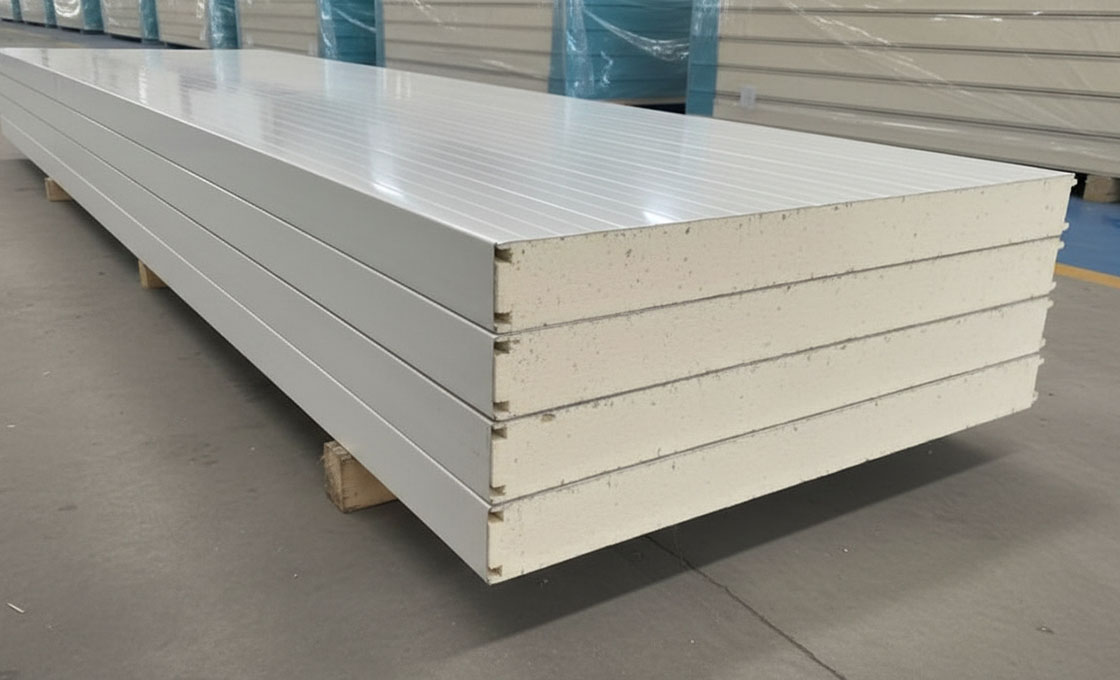
Final numbers depend on material grade, panel thickness, order volume, and freight distance. A line-item quotation that separates material, fabrication, and logistics makes comparison straightforward.
Minimizing Maintenance Frequency Through Durability
This factor has a direct bearing on project performance and long-term cost. Addressing it with specific data rather than general assumptions leads to better outcomes.
Consider PIR as a Premium Alternative
This factor has a direct bearing on project performance and long-term cost. Addressing it with specific data rather than general assumptions leads to better outcomes.
Weighing Thermal Performance Benefits for Deep Freeze
Thermal performance gains stem directly from the superior cellular density inherent to Polyisocyanurate (PIR) compared to standard Polyurethane (PUR). Beyond fire safety, PIR offers a tangible advantage in thermal conductivity. The closed-cell structure of PIR is denser and more uniform than that of standard PUR. This results in a lower lambda value ($\lambda$), meaning heat transfer is restricted more effectively.
Installation Efficiency and Labor Requirements
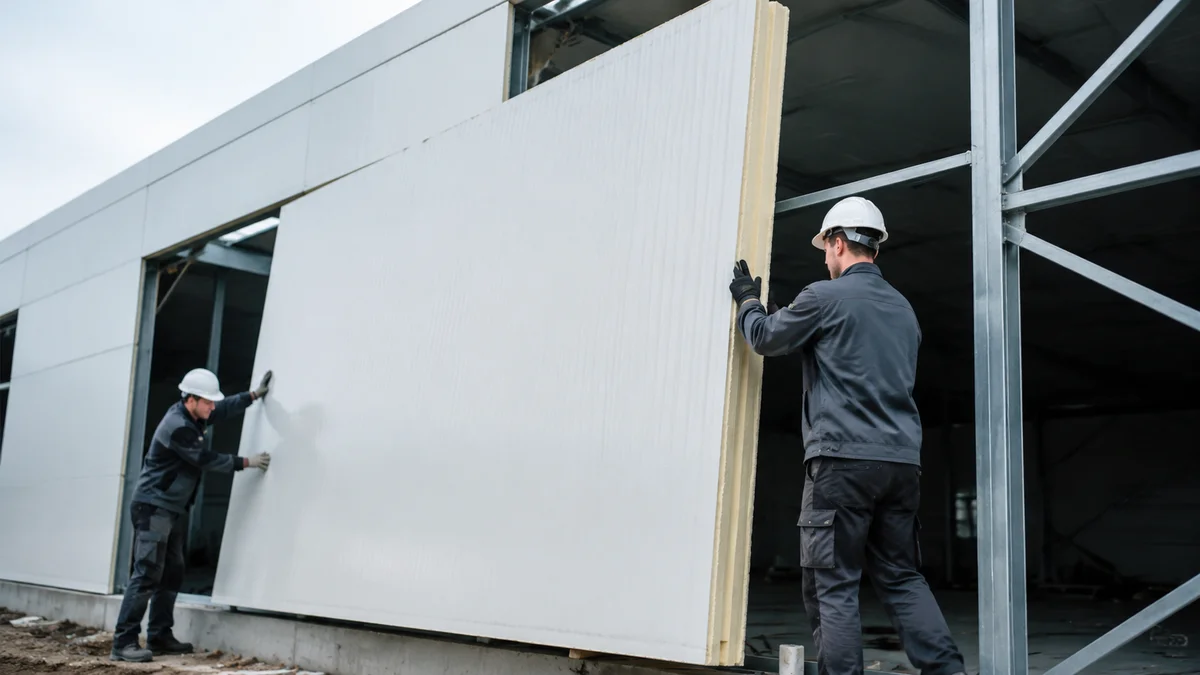
Preparation at this stage determines the quality of everything that follows. Verify all dimensions against shop drawings, confirm substrate conditions, and stage materials in the order they’ll be needed.
Comparing Assembly Speed and Handling Ease
Preparation at this stage determines the quality of everything that follows. Verify all dimensions against shop drawings, confirm substrate conditions, and stage materials in the order they’ll be needed.
Optimizing Warehouse Layout with Thinner Profiles
Suitability depends on environmental exposure, hygiene requirements, and structural loading. Matching the panel specification to these three factors prevents premature degradation in service.
Conclusion
Listen, stop obsessing over the initial price tag. In cold storage, the real battle is won in the TCO calculation over ten years. EPS might save you cash today, but its shrinkage gaps and higher thermal conductivity will bleed your budget via compressor workload and insurance premiums. PUR’s closed-cell structure prevents those thermal bridges, ensuring the integrity of your -25°C environment.
Frequently Asked Questions
This factor has a direct bearing on project performance and long-term cost. Addressing it with specific data rather than general assumptions leads to better outcomes.
How does the thermal conductivity of PUR compare to EPS?
PUR typically offers a lower thermal conductivity coefficient compared to EPS, resulting in superior insulation performance per unit thickness. This efficiency allows for thinner panel profiles while maintaining the same thermal resistance, which is critical for maximizing storage volume in cold rooms.
What are the differences in fire rating standards between PUR and EPS panels?
PUR panels generally achieve better fire ratings, often Class B or higher depending on additives, whereas standard EPS is usually Class D or E. For cold storage facilities requiring strict compliance, PUR provides enhanced safety against flame spread and smoke generation during a fire event.
How do PUR and EPS differ in moisture resistance?
PUR exhibits excellent closed-cell structure properties, making it highly resistant to water absorption and vapor transmission. In contrast, EPS is more permeable to moisture, which can degrade its insulating value over time if not properly protected with high-quality facings or membranes.
Which material offers better long-term aging and thermal stability?
PUR panels tend to maintain their thermal performance better over decades due to lower gas diffusion rates through the cell structure. EPS may experience slight increases in thermal conductivity over time as gases escape and air replaces them, potentially requiring thicker insulation to compensate.
Is PUR more cost-effective than EPS for cold storage despite higher initial costs?
While PUR has a higher initial material cost, its superior insulation efficiency often leads to lower long-term energy bills. For large-scale cold storage projects, the reduced energy consumption and potential savings in building footprint typically offset the upfront investment in PUR panels.