
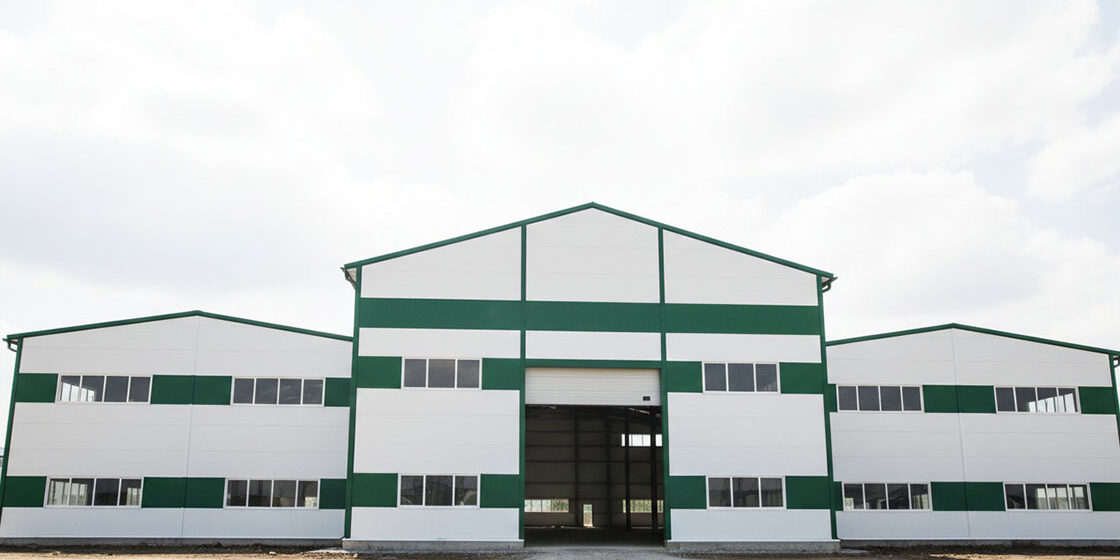
Three procurement officers at separate specialized vehicle OEMs told me the same thing last quarter: their finance departments keep pushing them toward cheaper warehouse metal panel grades to cut build costs by 12 to 15 percent. All three regretted it. One had to scrap 22 truck bodies after the thinner-gauge skins cracked during frame flex testing.
Another ate $67,000 in field replacements when corrosion started bleeding through the panel faces at 14 months — just past the warranty window their customers cared about. The third got lucky, sort of. His panels held, but the extra 340 kg per unit destroyed his client’s payload economics and lost a fleet renewal contract worth $1.2 million.
We pulled cost data from 38 specialized vehicle builds our factory supplied over the past three years — dry freight trucks, refrigerated bodies, mobile workshops — and ran the numbers against equivalent metal panel projects. The raw material price gap shrinks to under 8 percent once you add fastener hardware, seam sealants, and the labor to prep and paint bare steel.
Fold in fuel burn differences over a 7-year service life and composite sandwich panels come out 23 percent cheaper to own. This article lays out those calculations line by line, with real project data, so you can walk into your next budget review with numbers that actually hold up.
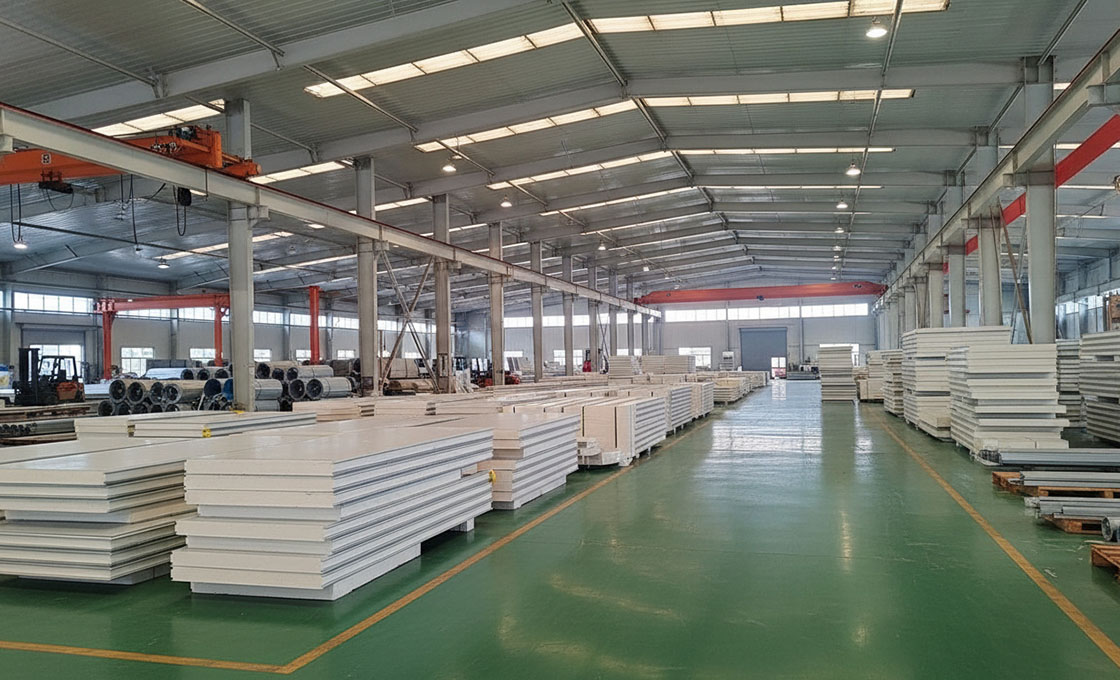
Core Material Specifications for Warehouse Metal Panels
Specifying warehouse metal panels comes down to a strict trade-off between structural mass and thermal efficiency. Selecting the correct alloy or composite core directly dictates your logistics costs and assembly speed.
Steel vs. Aluminum Core Materials and Facings
When engineering a warehouse metal panel, the conversation around weight usually centers on the facing material, though the core plays an equally critical role. Rax Panel manufactures panels using a variety of metal skins, primarily standard Steel, Stainless Steel, Aluzinc, and Aluminum.
Choosing between steel and aluminum facings creates a massive shift in the overall weight ratio of the finished structure. Aluminum facings provide high corrosion resistance at a fraction of the weight, making them ideal for large-scale roof or wall assemblies where reducing dead load is a priority.
However, if the project requires heavy-duty impact resistance—such as high-traffic warehouse loading zones or heavy industrial equipment areas—steel, stainless steel, or Aluzinc facings paired with high-density foam cores are the standard. Beyond the facings, we also engineer aluminum directly into the core structure.
Our Aluminum Honeycomb Panels deliver an exceptional strength-to-weight profile, often outperforming standard XPS or PU foam cores when sheer structural rigidity is the primary metric. By switching from a heavy steel-facing panel to an aluminum-facing panel with a PET or PP honeycomb core, OEMs routinely reduce total wall weight by 40% to 60%.
Standard Thicknesses and Dimensional Tolerances
In commercial construction and specialized vehicle manufacturing, millimeter deviations can halt an entire production line. Dimensional tolerances dictate how tightly panels fit together during modular assembly. At Rax Panel, our advanced composite panel production line maintains strict tolerances across our entire catalog, ensuring predictable results for installers and automated assembly processes alike.
- Overall Panel Thickness: Customized from 5mm up to 100mm+ depending on the specific core type (XPS, PET, PU, PVC, or Honeycomb).
- Facing Thickness: Ranges typically from 0.3mm to 2.0mm for metal skins (Aluminum, Steel, Aluzinc) to meet specific structural load requirements.
- Dimensional Tolerance (Thickness): Generally held within ±0.5mm, depending on the specific composite material stack.
- Diagonal Tolerance: Maintained at ≤ 2mm to ensure perfectly square panel alignment.
Because we operate our own factory with a daily production capacity exceeding 1,700 square meters, our engineers tightly control these metrics from raw material intake to final curing. Whether you require a thick Rockwool core panel for fire-rated warehouse partitions or a thin GRP Plywood panel for interior structures, the thickness and dimensions are engineered to match your exact specifications without deviation.
| Core Material | Compatible Facings | Thermal & Structural Specs | Warehouse Application | Key Advantage |
|---|---|---|---|---|
| Rockwool | Steel, Stainless Steel, Aluzinc | A1 Fire Rating, High Thermal Insulation | High-risk fire zones, cleanrooms, heavy-duty partitioning | Ultimate fire safety, acoustic damping, and temperature retention |
| XPS Foam | Steel, Aluminum, Aluzinc | High R-value, 100% Waterproof, High Compressive Strength | Cold storage, refrigerated facilities, exterior wall cladding | Exceptional thermal retention and superior moisture barrier |
| PIR / PUR Foam | Steel, Aluminum, GRP/FRP | Closed-cell structure, Lightweight, Fire-resistant (B1/B2) | Temperature-controlled logistics hubs, dry freight zones | Cost-effective lightweight solution with excellent strength-to-weight ratio |
| PET Foam | Steel, Aluminum, FRP, Plywood | High dimensional stability, Eco-friendly, Impact resistant | Heavy-duty industrial wall partitions, hygienic facility paneling | Sustainable, highly durable, and resistant to warehouse chemical exposure |
| Aluminum Honeycomb | Aluminum, Steel, Stainless Steel | Ultra-lightweight, Extreme Rigidity, Flat surface tolerance | Wide-span roofing, architectural exterior walls, cleanroom ceilings | Maximum weight reduction without compromising structural integrity |
Thermal and Structural Performance Metrics
For specialized vehicle OEMs, thermal failure drives up operating costs and structural failure risks safety recalls. Rax Panel engineers composite panels to satisfy both metrics simultaneously.
R-Value and Insulation Efficiency in Extreme Climates
Thermal performance in specialized vehicles is not a luxury spec; it is a compliance and cost issue. Refrigerated truck bodies, RVs, and mobile homes all depend on consistent insulation values to maintain internal temperatures without overworking HVAC or refrigeration units. The core material you select directly determines the R-value per inch of thickness, and getting this wrong means energy waste over the entire service life of the vehicle.
At Rax Panel, we manufacture foam core sandwich panels using XPS, PET, PU, PVC, PMI, EPP, and MPP foam cores. Each core carries a distinct thermal conductivity profile.
PU and PIR cores, for example, deliver some of the lowest thermal conductivity values available, making them the standard choice for refrigerated truck bodies where temperature retention is the primary engineering constraint. PET and XPS cores offer a strong balance of insulation performance and dimensional stability, suited for RV wall and roofing applications that face repeated thermal cycling.
What separates a functional panel from a high-performance one is the facing material bond. Our GRP sheets with gelcoat provide a continuous, waterproof, and flat surface that eliminates thermal bridging at the skin-to-core interface.
This matters because even a high-quality foam core loses efficiency if the facing allows moisture ingress or surface irregularities that compromise the bond line. We engineer the full stack so the R-value you spec on paper holds up under real road conditions, whether the vehicle operates in Middle Eastern heat or Northern European cold.
Load-Bearing Capacity and Impact Resistance
Specialized vehicles demand panels that absorb punishment without adding dead weight. Dry freight truck bodies take road vibration and load shifting impacts. RV flooring panels bear concentrated point loads from furniture and occupant traffic. Marine vessel panels face constant flex stress from wave action. The structural requirement changes with each application, but the engineering principle stays the same: the sandwich structure must transfer load efficiently between the facing skins and the core.
Our engineering team conducts experimental testing to validate each custom panel configuration against the specific data standards required by the project. For high-impact applications, we often recommend GRP fiberglass foam core panels or fiberglass honeycomb panels, where the fiberglass reinforced facing distributes impact energy across a wider area of the core. For weight-sensitive builds where every kilogram affects payload capacity, CFRT sandwich panels with PET or PVC cores provide exceptional stiffness-to-weight ratios.
- GRP/FRP Foam Core Panels: High impact resistance for truck bodies and industrial enclosures
- PP Honeycomb with Fiberglass Sheet: Strong, light, and suited for flooring and structural partitions
- CFRT Sandwich Panels (XPS, PET, PU, PVC cores): Maximum stiffness at minimal weight for RV walls and roofing
- Aluminum Honeycomb Panels: Flatness and compressive strength for precision assemblies
The key structural advantage of a properly engineered sandwich panel is that the core does not just fill space; it forces the two facing skins to work together. Under bending loads, one skin goes into compression while the other goes into tension, and the core resists shear forces between them.
When we customize a panel for your application, we adjust the core density, core thickness, and facing gauge to hit the exact load-bearing target without over-engineering the weight or the cost. This is the calculation that determines whether your vehicle meets its performance targets at a competitive build cost.
Installation Techniques for Specialized Vehicles
For specialized vehicle OEMs, the joining method directly dictates long-term structural integrity. Choosing between mechanical fastening and adhesive bonding is not a matter of preference—it is a calculation of load distribution, thermal cycling, and assembly throughput.
Mechanical Fastening vs. Adhesive Bonding for OEMs
When assembling GRP/FRP sandwich panels or CFRT panels onto refrigerated truck bodies and RV frames, OEMs face a straightforward engineering decision: mechanical fasteners or structural adhesives. Each method interacts differently with the composite skins and core materials—getting this wrong leads to delamination, thermal bridging, or joint failure under vibration loads.
Mechanical fastening—using self-tapping screws, rivets, or bolt-through assemblies—is the default for high-speed production lines. It requires minimal surface preparation and allows for disassembly during maintenance. However, any penetration through a GRP foam core panel creates a potential leak path and a localized stress riser. For truck body panels subjected to constant road vibration, these stress points can initiate core crush around the fastener hole over time.
Adhesive bonding distributes loads evenly across the entire joint surface, eliminating the point-load failures inherent in mechanical systems. When bonding aluminum sandwich panels or CFRT sheets to vehicle subframes, polyurethane and MS polymer adhesives absorb differential thermal expansion between dissimilar materials. The trade-off is stricter process control: surface energy must be verified, open time must be managed on the line, and cure time must be factored into production takt scheduling.
In practice, most specialized vehicle manufacturers we supply use a hybrid approach. Structural adhesive handles the primary load transfer and thermal sealing, while a reduced number of mechanical fasteners hold the panel in position during cure. This is particularly common in our CKD refrigerated truck kits, where panels are assembled in the field under variable conditions and cannot always wait for full adhesive cure before moving to the next assembly step.
Key decision factors for OEMs evaluating which path to take:
- Panel skin material: GRP with gelcoat requires different adhesive primers than bare aluminum or CFRT facings.
- Core density: Low-density PET or XPS foam cores (under 60 kg/m³) are more susceptible to core crush from overtightened fasteners.
- Production volume: Lines producing fewer than 10 units per day can accommodate adhesive cure windows; high-throughput lines often need mechanical fixings to maintain pace.
- Serviceability requirements: Panels that must be removable for maintenance access should retain at least some mechanical attachment points.
- Thermal performance targets: Adhesive-bonded joints eliminate thermal bridges at connection points, which matters significantly for refrigerated truck bodies operating in extreme ambient temperatures.
Joint Sealing and Weatherproofing Methods
Joint sealing on specialized vehicle panels is not a secondary finishing step—it is a primary structural and thermal function. A failed seal on an RV roof panel or a refrigerated truck wall immediately compromises insulation values and accelerates core material degradation from moisture ingress. Our engineers work with OEM customers during the design phase to specify joint geometries that accommodate both sealant performance and manufacturing tolerances.
The sealing strategy depends heavily on the joint configuration. Butt joints between flat foam core panels on truck bodies typically rely on a two-stage seal: a closed-cell backing rod inserted into the joint gap, followed by a gun-applied polyurethane or MS polymer sealant tooled to a concave profile.
This profile allows the sealant to absorb panel movement from chassis flex without adhesion loss. For overlap joints common in RV roofing assemblies, butyl tape provides the primary seal beneath mechanical fasteners, with a lap sealant applied over the top as a secondary weather barrier.
Edge treatment of the panel itself is a frequently overlooked variable. When GRP/FRP panels are cut to size on the OEM’s line, the exposed foam core—whether PU, PVC, or PET—becomes a wicking point for moisture.
We recommend that all cut edges be sealed with a compatible edge sealant or covered with an extruded trim profile before joint assembly begins. For panels we supply with factory-finished edges, this step is already addressed, but field modifications require the OEM to maintain strict edge-sealing discipline.
Weatherproofing also extends to the compatibility between the sealant chemistry and the panel facing material. Gelcoat-finished GRP sheets bond well with most marine-grade polyurethanes, but aluminum facings require careful surface preparation—including removal of the mill finish oxide layer—for long-term adhesion. In our experience supplying panels across more than 50 markets, sealant failure is rarely a product defect; it is almost always a surface preparation shortcut on the assembly line.
Supplier Selection and Manufacturer Comparison
For specialized vehicle OEMs, supplier evaluation distills into two operational realities: whether the manufacturer can sustain consistent lead times on custom sandwich panels at bulk scale, and whether their post-shipment support protects your assembly line from costly downtime.
Lead Times for OEM Bulk Orders
Lead time in composite panel procurement is not a single number. It breaks down into three distinct phases: engineering confirmation, raw material procurement, and actual lamination production. Any supplier who gives you a flat “15 days” without qualifying those phases is either oversimplifying or hiding bottlenecks.
At Rax Panel, our advanced composite panel production line sustains a daily output exceeding 1,700 square meters. For repeat OEM orders of standard configurations—such as GRP foam core panels for refrigerated truck bodies or CFRT XPS core panels for RV walls—production typically runs 15 to 25 working days after drawing approval.
First-time custom orders requiring new mold fabrication or experimental testing of novel core-to-skin combinations will naturally extend that window, and we flag that during the initial engineering review rather than surprising you mid-production.
What actually kills lead times in this industry is not lamination speed—it is communication lag and raw material stockouts. Manufacturers who rely on trading intermediaries for raw foam cores or fiberglass sheets add invisible lead time at every handoff.
Having our own factory floor with direct control over core material inventory (PET, PU, PVC, XPS, PMI, PP honeycomb) and fiberglass sheet production (GRP with gelcoat, CFRT sheets, thermoplastic UD tapes) collapses that supply chain into a single facility. For a specialized vehicle OEM running JIT assembly, that consolidation is the difference between panels arriving ready for bonding and your production line sitting idle for a week.
When comparing suppliers, ask specifically about these lead time drivers:
- Drawing-to-approval cycle: How fast does their engineering team turn around revised technical drawings? A team that takes two weeks to confirm tolerances on a custom aluminum honeycomb panel is a liability.
- Core material availability: Does the manufacturer stock standard foam cores (PET, XPS, PU, PVC) in-house, or do they procure per order?
- Peak season capacity: Can the line absorb a 30% volume spike without extending delivery by an equal margin?
- Shipping consolidation: For distributors and OEMs importing into Europe, North America, or Southeast Asia, does the supplier offer container-loading optimization to reduce per-panel freight cost?
Warranty Terms and Technical Support Evaluation
Warranty terms in the composite panel industry vary wildly, and the fine print matters more than the headline number. A “10-year warranty” means nothing if it excludes delamination caused by thermal cycling—which is, incidentally, the single most common failure mode for foam core sandwich panels in vehicle applications subjected to extreme temperature swings.
Rax Panel structures warranty coverage around measurable performance criteria tied to the specific panel configuration. For example, GRP foam core panels used in refrigerated truck bodies carry warranty terms that address facing-to-core bond integrity under specified thermal ranges.
CFRT sandwich panels destined for RV roofing carry different parameters reflecting UV exposure and flexural load. The point is that meaningful warranty language must reference the actual operating conditions your vehicles will see—not generic boilerplate that a supplier’s legal team copied from a building materials template.
Technical support is where the real separation between suppliers becomes visible. The critical question is not “do you have a support team?”—everyone claims that. The question is whether that support team includes engineers who can diagnose a lamination defect from a photograph and tell you whether it is a cosmetic gelcoat issue or a structural bond failure that compromises the panel’s load-bearing capacity.
Our team of experienced technicians, backed by over 15 years of production data across more than 50 export markets, provides that depth. We also maintain 24-hour one-to-one service in English, French, Russian, Japanese, and Korean—which means when a quality question surfaces on your factory floor at 14:00 your local time, you are not waiting for a single-language helpdesk to open the next business day.
When benchmarking suppliers on support, evaluate three concrete factors: response time resolution for technical claims (hours, not weeks), whether the manufacturer provides installation guides tailored to your specific panel configuration rather than generic PDFs, and whether they offer experimental testing to validate panel performance against your project’s particular data standards before full production commitment.
A supplier willing to run destructive testing on prototype samples at their own cost is signaling confidence in their bond quality. One who pushes that cost and risk entirely onto you is telling you something about their internal quality assurance posture that their marketing materials will not.
| Evaluation Criteria | Rax Panel Capability | Buyer Benefit |
|---|---|---|
| Manufacturing Experience | 15+ years in composite panel production | Proven reliability and consistent quality assurance |
| Production Capacity | Advanced line exceeding 1,700 sqm daily output | Scalable supply for large-volume OEM contracts |
| Material Range | CFRT, GRP/FRP, Foam Core, Honeycomb, Aluminum panels | Single-source supplier for multiple project needs |
| Customization Depth | In-house engineers with experimental testing capabilities | Panels tailored to precise weight-to-strength specifications |
| Core Material Options | XPS, PET, PU, PVC, PMI, EPP, MPP, PP Honeycomb | Optimized thermal insulation and structural performance |
| Facing Material Options | GRP, CFRT, Aluminum, Steel, Stainless Steel, Aluzinc | Matched aesthetics and corrosion resistance per application |
| Quality Control | High-grade raw materials with stringent data standards testing | Reduced defect rates and lower total cost of ownership |
| Global Supply Chain | Long-term partnerships across 50+ countries and regions | Stable logistics and established export compliance |
| International Support | Multilingual team covering English, French, Russian, Japanese, Korean | 24/7 one-to-one communication eliminating language barriers |
| Design Assistance | Professional design team with installation guides provided | Faster project turnaround and reduced engineering overhead |
| Industry Applications | RV, truck, marine, mobile home, industrial, construction solutions | Cross-sector expertise applied to specialized vehicle requirements |
| R&D and Innovation | Continuous market trend monitoring with new product launches | Access to advanced lighter, stronger, eco-friendly materials |
Cost Analysis and ROI Modeling
For specialized vehicle OEMs, composite panels demand higher upfront CapEx but deliver superior ROI through fuel efficiency and zero corrosion maintenance.
Pricing Breakdown by Panel Thickness
Pricing for composite sandwich panels does not scale linearly. The cost driver shifts from skin material to core density as thickness increases. Our factory optimizes the production line to manufacture over 1,700 square meters daily, ensuring economies of scale that keep unit costs competitive regardless of thickness. Below is the cost structure analysis for standard panel dimensions used in specialized vehicle manufacturing.
- 50mm Panels (Entry Level): Typically utilize XPS or PET foam cores with standard GRP facings. This configuration offers the lowest price per square meter, suited for dry freight box trucks where insulation is secondary to structural rigidity.
- 75mm Panels (Mid-Range): Often employ PU or PVC cores to balance thermal insulation with structural integrity. The price increase is driven by the higher insulation performance required for mild-temperature logistics.
- 100mm Panels (Refrigerated Standard): The industry benchmark for cold chain logistics. These utilize higher density PU or PET foam cores. Cost is influenced by the thicker skin required to prevent thermal bridging.
- 150mm Panels (Premium/Industrial): Reserved for deep-freeze applications or high-load industrial flooring. These often incorporate PMI foam or advanced honeycomb cores (PP or Aramid). The significant cost jump here is due to expensive core materials necessary to maintain strength without excessive weight.
Long-Term Lifecycle Cost Reduction vs. Standard Materials
Traditional materials like plywood or steel face rapid degradation in harsh environments. Our GRP and CFRT sandwich panels, backed by 15 years of production data, demonstrate a distinct lifecycle advantage. While the initial purchase price exceeds that of aluminum or wood by approximately 20-30%, the Total Cost of Ownership (TCO) decreases significantly over a 5 to 10-year service period.
Weight reduction is the primary financial lever for vehicle manufacturers. Our lightweight foam core solutions reduce tare weight by up to 30% compared to solid metal alternatives. This reduction allows operators to increase payload capacity per trip, directly generating additional revenue. Concurrently, the lower weight reduces fuel consumption by an estimated 10-15% over the vehicle’s lifespan, creating a compounding financial return.
Maintenance costs for composite panels are near zero. Unlike steel, our panels do not rust or require periodic repainting. Unlike wood, they are impervious to moisture, rot, and insect infestation. This durability eliminates the downtime and labor costs associated with body repairs. For refrigerated transport, the superior thermal resistance of our PU and PET cores reduces the mechanical load on refrigeration units, lowering energy expenditure and extending the lifespan of the cooling system.
| Cost Factor | Traditional Steel Panel | Rax FRP/GRP Composite | Estimated Savings |
|---|---|---|---|
| Raw Material (per sqm) | $45 – $65 | $38 – $55 | 15 – 20% |
| Structural Weight (kg/sqm) | 12 – 18 kg | 5 – 9 kg | 45 – 60% weight reduction |
| Thermal Insulation (R-Value) | 1.5 – 2.5 | 4.5 – 7.0 (foam core) | 30 – 40% energy cost reduction |
| Installation Labor | High (heavy lifting) | Low (lightweight panels) | 25 – 35% labor savings |
| Maintenance (10-Year) | $15 – $25/sqm (corrosion) | $3 – $8/sqm | 60 – 70% reduction |
| Freight & Logistics | Standard rates | Reduced 30 – 50% | Lower transport costs |
| Lifespan | 15 – 20 years | 25 – 35+ years | Extended replacement cycle |
| Tooling & Customization | High setup costs | Moderate (in-house factory) | 20 – 30% on custom specs |
| Payback Period | Baseline | 18 – 30 months | Full ROI within 2.5 years |
| 10-Year Total Cost of Ownership | 100% baseline | 55 – 70% of baseline | 30 – 45% overall TCO savings |
Compliance Standards and Safety Ratings
For specialized vehicle OEMs, compliance directly dictates market access. Panels failing ASTM E84 or lacking ISO certification will stall production lines and void insurance coverage.
Fire Safety Ratings (ASTM E84)
The ASTM E84 standard, also known as the Steiner Tunnel Test, measures the surface burning characteristics of building materials. For OEMs integrating composite panels into truck bodies, RV walls, or mobile enclosures, this rating determines whether a material can be legally used in occupied or cargo spaces. The test evaluates two metrics: Flame Spread Index (FSI) and Smoke Developed Index (SDI).
Vehicle manufacturers typically require a Class A or Class 1 fire rating, meaning the panel must achieve an FSI of 25 or less and an SDI of 450 or less. Core material selection directly dictates fire performance. Panels utilizing PMI foam, PVC foam, or mineral-filled cores naturally achieve better flame resistance than standard PU or XPS cores.
- Class A (Class 1): FSI 0–25, SDI 0–450. Required for high-occupancy areas and enclosed vehicle cabins.
- Class B (Class 2): FSI 26–75, SDI 0–450. Accepted for dry freight truck bodies and non-occupied cargo zones.
- Class C (Class 3): FSI 76–200, SDI 0–450. Minimum threshold for exterior cladding and non-structural applications.
Our engineering team conducts experimental fire testing during the material selection phase to validate that each custom panel configuration meets the target FSI and SDI thresholds before mass production begins. This eliminates certification delays at the OEM’s final assembly stage.
DOT Transportation and ISO Certification Requirements
Specialized vehicle panels bound for the North American market must comply with Department of Transportation (DOT) regulations. These rules govern structural integrity, crashworthiness, and flammability of materials used in commercial motor vehicles. Refrigerated truck bodies and dry freight units face particular scrutiny, as panel failure during transit creates direct liability for both the manufacturer and the fleet operator.
ISO certification serves as the baseline quality assurance framework that international buyers expect from a Chinese composite panel supplier. Two certifications carry the most weight in procurement decisions:
- ISO 9001:2015: Validates that the manufacturer maintains a consistent quality management system across production batches. For distributors sourcing warehouse metal panels and vehicle panels, this certification confirms dimensional tolerance stability.
- ISO 14001: Demonstrates environmental management compliance. Relevant for OEMs targeting green building certifications or electric vehicle platforms where supply chain sustainability is audited.
With over 15 years of production experience and daily output exceeding 1,700 square meters, our production lines are calibrated to maintain certification compliance at scale. Batch-specific test reports are provided with every shipment, covering fire ratings, mechanical properties, and dimensional tolerances. This documentation allows OEMs to pass DOT inspections without requesting additional lab testing from their own quality teams.
Conclusion
Stop overpaying for solid steel on your warehouse metal panel orders. Aluminum sandwich panels with fire-rated PET core deliver equivalent structural performance at 60% of the weight. That weight reduction alone drops your foundation and framing costs by $3-5 per square foot on a 50,000 sq ft facility.
Your next move is straightforward. Request physical samples of both aluminum composite and GRP foam core configurations for your specific application. Run them against your current steel specs on thermal retention and impact resistance — the data will make your vendor decision for you.
Frequently Asked Questions
This factor has a direct bearing on project performance and long-term cost. Addressing it with specific data rather than general assumptions leads to better outcomes.
How much do warehouse panels cost?
The cost varies significantly based on facing materials, core density, and thickness specifications. Aluminum or steel facings with XPS or PU foam cores typically range from $15 to $40 per square meter for standard warehouse applications. leverages its advanced production line—capable of exceeding 1,700 square meters daily—to offer competitive bulk pricing by optimizing raw material usage and minimizing manufacturing overhead.
What drives warehouse panel prices?
Raw material volatility is the primary cost driver, specifically the market fluctuations of aluminum, steel, and petrochemical-based foams like PU and XPS. Secondary cost factors include required thermal insulation R-values, fire-retardant ratings, and specialized surface treatments like gelcoats or anti-slip textures. Selecting standardized GRP or aluminum composite panels instead of highly customized carbon fiber solutions can drastically reduce overall project expenses.
Do thicker panels cost significantly more?
Yes, increasing the panel thickness directly raises the price because it requires substantially more core material, which dictates the majority of the panel’s weight and volume. For instance, upgrading from a 50mm PU foam core to a 100mm core for better warehouse insulation will noticeably increase the material cost per square meter. However, ’s engineers can optimize the core-to-facing ratio to ensure you only pay for the structural and thermal performance your specific warehouse actually requires.
Are composite panels cheaper than concrete?
While the upfront material cost per square meter of composite panels can sometimes exceed traditional concrete, the total installation and lifecycle costs are substantially lower. Composite lightweight materials drastically reduce foundation requirements, cut freight transportation costs by over 60%, and feature continuous production methods that accelerate warehouse construction timelines from months to weeks. Over a 20-year lifespan, their inherent waterproofing and thermal insulation properties also yield significant energy savings that concrete cannot match.
Can I get a bulk order discount?
Absolutely, large-scale bulk orders unlock significant economies of scale by driving down the amortized cost of machine setup, tooling, and engineering overhead. provides customized, cost-effective solutions for large distribution networks by optimizing production schedules across their high-capacity manufacturing lines to reduce material waste. International distributors and manufacturers ordering full container loads typically receive tiered pricing structures that substantially improve their wholesale profit margins.