
Clean room ceiling panels maintain temperature-controlled environments by forming sealed enclosures that minimize thermal transfer and ensure climate stability. The panels feature rigid polyurethane (PUR) or polyisocyanurate (PIR) foam cores injected between metal facings of pre-painted galvanized steel or stainless steel with antibacterial coatings meeting EC/USDA hygiene standards.
Available in thicknesses from 50mm to 200mm, these panels achieve thermal conductivity between 0.020-0.024 W/(m·K) with R-values up to 8.8 per inch. Standard widths include 960mm, 1000mm, or 1120mm, with lengths up to 12 meters. Surface options range from flat to ribbed finishes in various RAL colors using polyester, PVDF, or plastisol coatings.
Tongue-and-groove edges with cam-lock fasteners create airtight joints for seamless installation. The closed-cell foam structure provides moisture resistance while meeting B1 or B2 fire standards. Materials resist corrosion, chemicals, and bacterial growth, supporting strict hygiene protocols with smooth surfaces that avoid dust accumulation.
These ceiling panels serve food processing, pharmaceutical storage, clean rooms, and cold storage applications maintaining temperatures from -45°C to +10°C. The modular cam-lock system enables quick assembly without on-site cutting, reducing labor time while ensuring rigid, leak-free joints that minimize thermal bridging and energy consumption.
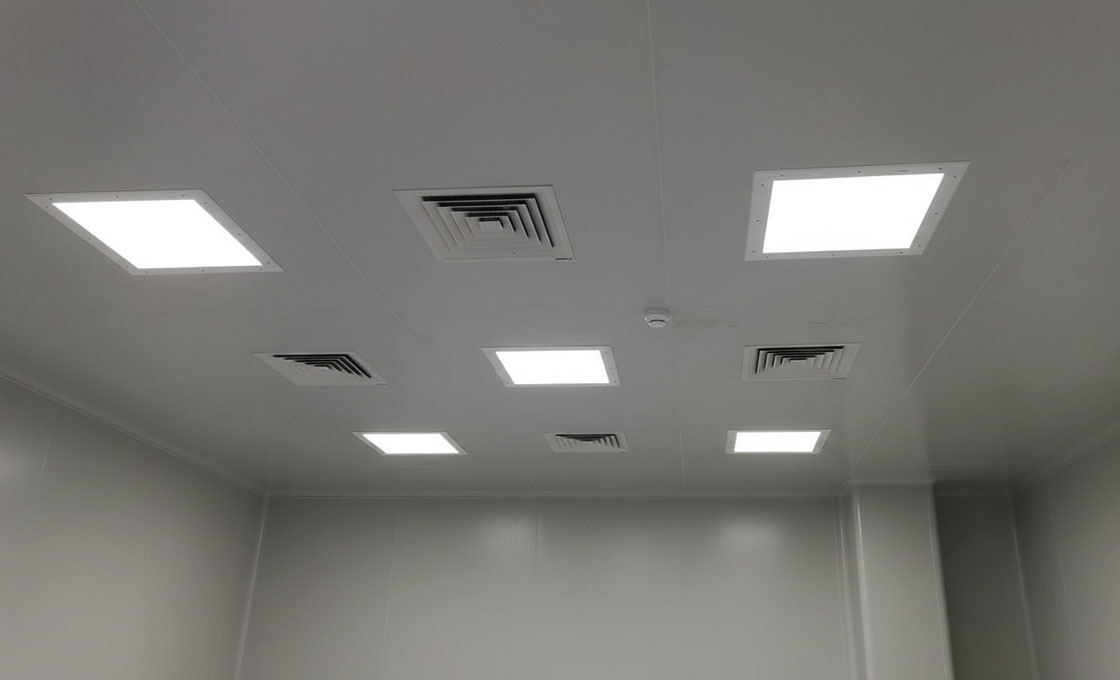
Reliable Clean Room Ceiling Panel Solutions from RaxPanel
As the industry leading insulated panel manufacturer for cold storage, RaxPanel provides multiple cold storage panel types for different applications. With over 20 years of experience, our in-house R&D, design, and production capabilities allow us to build project to spec, specializing in custom composite panel solutions.
Our clean room ceiling panels are manufactured with high-quality insulation materials to ensure optimal thermal efficiency, durability, and long-lasting performance, reflecting our commitment to precision and reliability.
Produced at our Hebei, China facility with a daily output of 1500+ m², these panels are designed to meet rigorous standards, including CE, FM, and FDA compliance, ensuring they deliver superior temperature control and energy savings.
Serving clients in 30+ countries, we focus exclusively on manufacturing and supply, providing tailored solutions that meet exact project requirements. Get a quote. Tell us what you need. We’ll calculate the best price.
| Parameter | Value |
|---|---|
| Core Material | Rigid polyurethane (PUR) or polyisocyanurate (PIR) foam, CFC-free |
| Facing Materials | Pre-painted galvanized steel or stainless steel, often with antibacterial coatings |
| Foam Core Density | 40–50 kg/m³ |
| Standard Thicknesses | 50 mm, 75 mm, 100 mm, 120 mm, 150 mm, 200 mm |
| Thermal Conductivity (λ-value) | 0.020–0.024 W/(m·K) |
| Standard Panel Widths | 960 mm, 1000 mm, 1120 mm |
| Maximum Panel Length | Up to 12 m |
| Joint System | Tongue-and-groove with optional internal cam-lock fasteners |
| Surface Finishes | Flat, ribbed, or corrugated |
| Coating Types | Polyester, PVDF, or plastisol |
| Color Options | Various RAL colors |
| Fire Resistance Rating | B1 or B2 |
| Operating Temperature Range | -45°C to +10°C |
| R-Value (per inch) | Up to 8.8 |
| Installation Method | Horizontal mounting with cam-lock or tongue-and-groove system |
| Applications | Clean rooms, cold storage, food processing, pharmaceutical storage, horticulture |
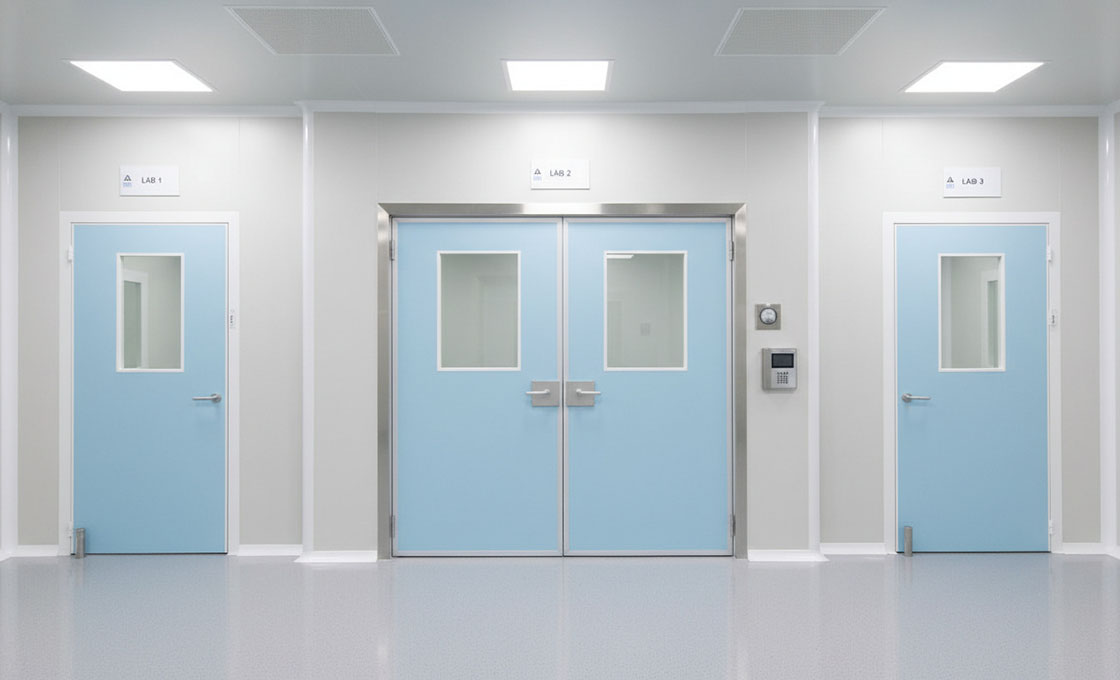
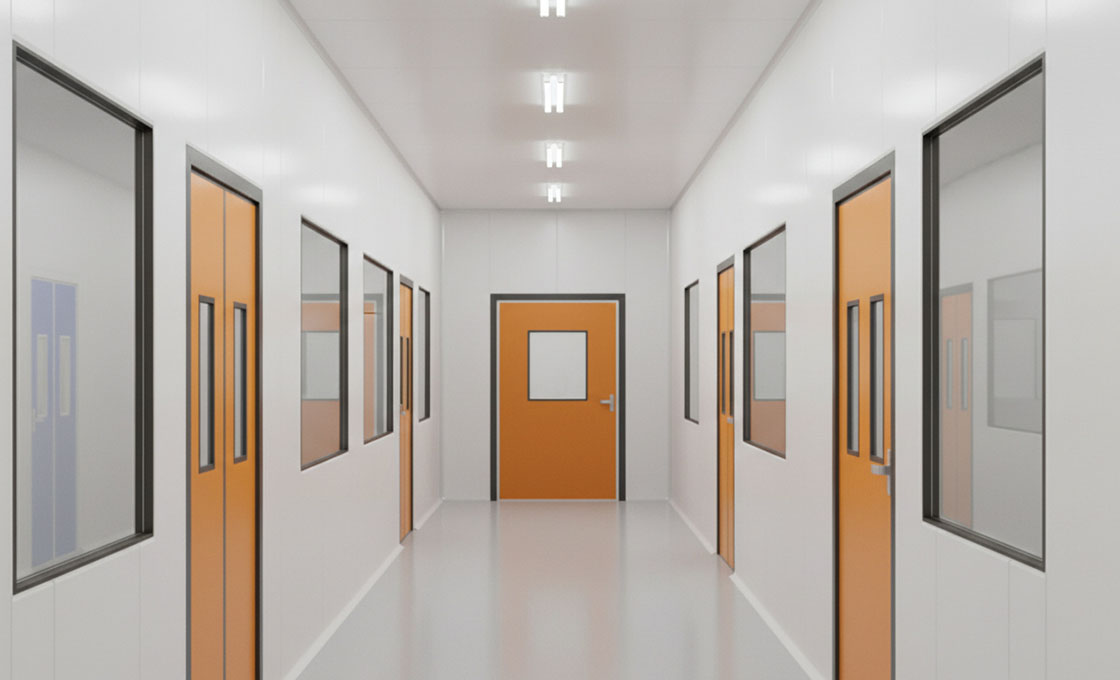
ISO 14644 & GMP Clean Room Panel System Guide
Cleanroom sandwich panels are specifically engineered for contamination-controlled environments in pharmaceutical manufacturing, semiconductor fabrication, biotechnology labs, and medical operating suites. Built with anti-static, anti-bacterial coated steel facings or Grade 304 stainless steel bonded to Rockwool or Aluminum Honeycomb cores, these panels comply with ISO 14644-4 Class 1 to Class 9 and EU GMP Annex 1 sterility mandates.
💡 Pro Tip: Flush Joint Aluminum Profiles & VHP Resistance
At RaxPanel, our cleanroom panels feature double-male-female aluminum keels that interlock completely flush with 0mm surface steps. Joints are sealed with medical-grade non-outgassing silicone, eliminating ledges where dust or microbes collect and standing up to daily Vaporized Hydrogen Peroxide (VHP) sterilization.
At RaxPanel, our cleanroom panels feature double-male-female aluminum keels that interlock completely flush with 0mm surface steps. Joints are sealed with medical-grade non-outgassing silicone, eliminating ledges where dust or microbes collect and standing up to daily Vaporized Hydrogen Peroxide (VHP) sterilization.
1. Why Are Anti-Static (ESD) and Anti-Bacterial Coatings Required?
Standard building steel paint attracts airborne dust through static charge. RaxPanel cleanroom coatings maintain surface resistivity of 10⁶ to 10⁹ Ω/sq to prevent Electrostatic Discharge (ESD) damage in microelectronics, while nano-copper/silver ion additives inhibit bacterial growth by > 99.9%.
2. What Core Options Fit Cleanroom Walls vs Walk-On Ceilings?
Cleanroom core selection governs structural deflection under differential air pressure (+50 Pa) and foot-traffic maintenance loads:
3. How Integrated Cleanroom Doors and Double-Glazed Windows Maintain Air Pressure
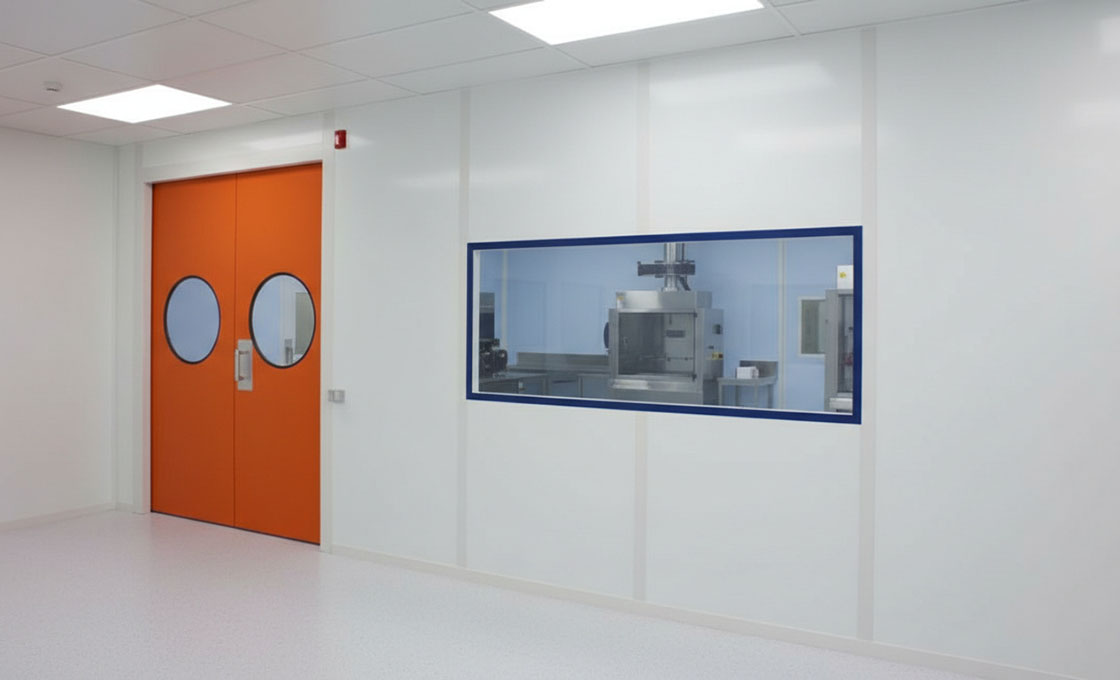
RaxPanel cleanroom doors install completely flush with adjacent wall panels on both sides. Windows feature double-glazed toughened safety glass filled with dry nitrogen gas and internal desiccant to prevent condensation fogging.
4. Chemical Washdown Immunity (VHP & 70% IPA)
🧪 Sterilization Chemical Resistance:
- Vaporized Hydrogen Peroxide (VHP): Special HDP/PVDF paint coatings withstand 35% concentration VHP decontamination cycles without surface blistering.
- Alcohol & Disinfectant Wipes: Resistant to continuous wiping with 70% Isopropyl Alcohol (IPA), sodium hypochlorite, and quaternary ammonium biocides.
5. Where Are Cleanroom Panel Systems Most Commonly Installed?
💊 Pharmaceutical Facilities & Sterile Filling Rooms
EU GMP Grade A/B/C/D compliant aseptic processing and packaging suites.
🔬 Semiconductor & Optoelectronics Fabs
ISO 5 / Class 100 anti-static ESD safe wafer fabrication and laser labs.
6. Aluminum Radius Coving for 90° Wall-to-Floor Junctions
To comply with GMP sanitation, all 90° internal wall-to-wall and wall-to-floor corners are fitted with clip-in concave aluminum coving profiles (R50mm), ensuring rounded, easy-to-wipe corner transitions.
Frequently Asked Questions (FAQS)
1. What ISO cleanroom classifications do RaxPanel cleanroom panels satisfy?
Our cleanroom panel systems comply with ISO 14644-4 Class 1 through Class 9 specifications, as well as EU GMP Annex 1 Grade A, B, C, and D aseptic manufacturing standards.
2. Why is a flush-joint system mandatory for pharmaceutical cleanrooms?
Flush joints eliminate steps, gaps, and exposed screw heads where dust, bacteria, or spores can hide, allowing thorough wiping and biocide disinfection.
3. What core material is recommended for walk-on cleanroom ceiling systems?
Aluminum Honeycomb core is recommended for walk-on ceilings due to its high stiffness-to-weight ratio, structural flatness, and support for HVAC maintenance personnel.
4. Are RaxPanel cleanroom coatings resistant to Vaporized Hydrogen Peroxide (VHP)?
Yes. Our specialized PVDF and HDP cleanroom steel coatings withstand continuous 35% VHP vapor decontamination cycles without paint peeling or discoloration.
5. How do anti-static ESD cleanroom panels work?
ESD coatings maintain a surface resistivity of 10⁶ to 10⁹ Ω/sq, safely bleeding off static charges to ground and preventing micro-particle static attraction.
6. Are cleanroom doors and windows pre-engineered to fit the panel thickness?
Yes. RaxPanel cleanroom doors and double-glazed nitrogen-filled windows are manufactured to match the exact panel thickness (50mm / 75mm / 100mm) for double-sided flush installation.
7. What aluminum profile accessories are supplied with cleanroom panel packages?
Packages include aluminum floor channels, internal concave corner covings, external 3-way corner caps, ceiling suspension T-bars, and medical silicone sealants.