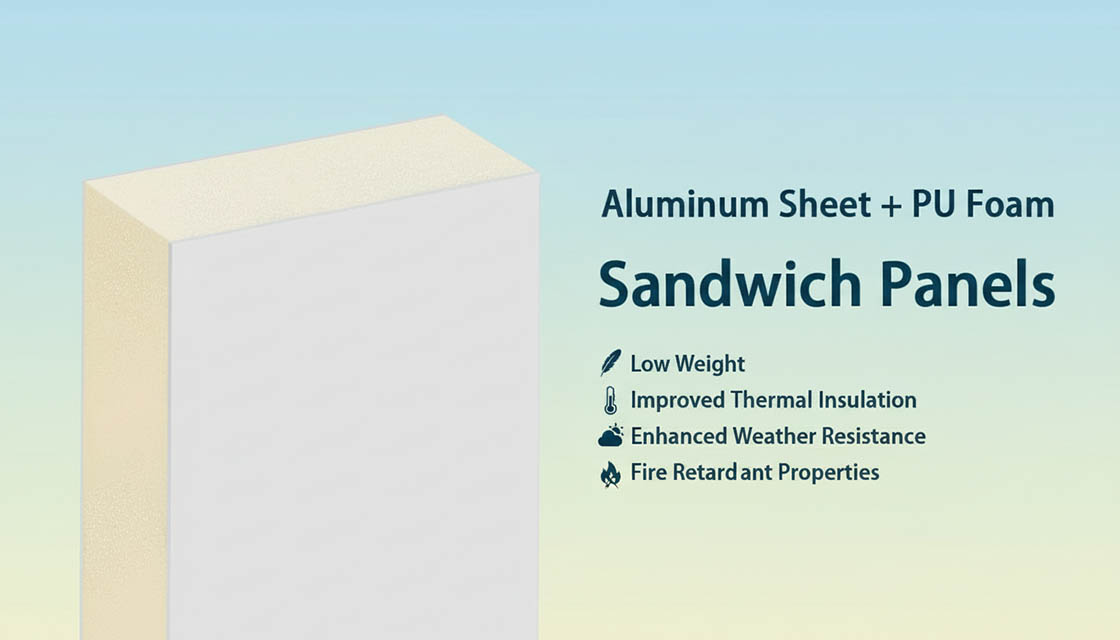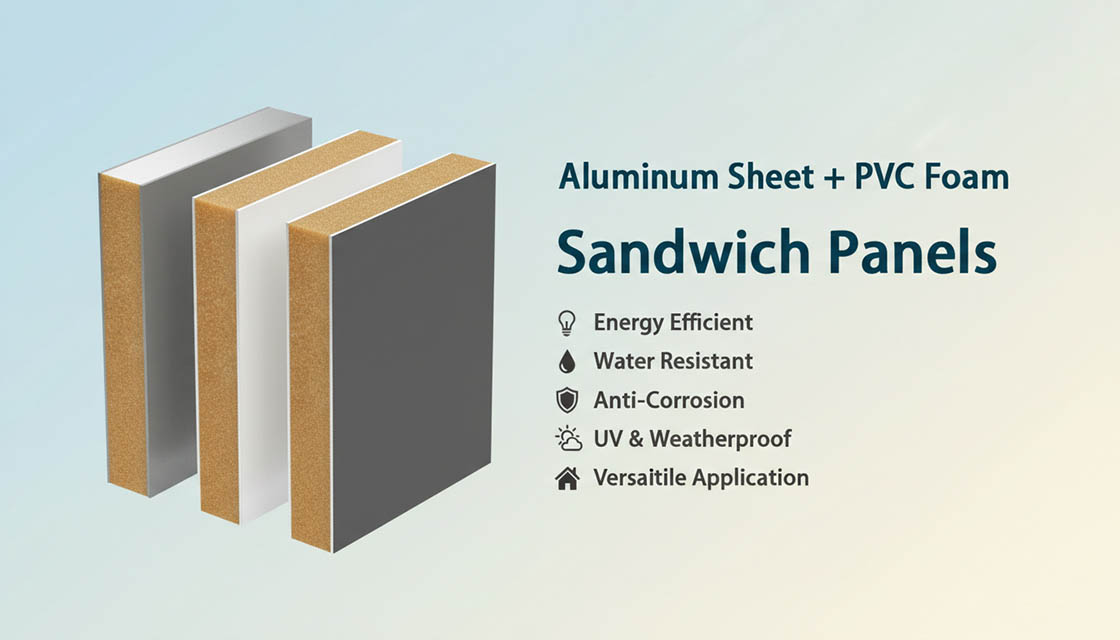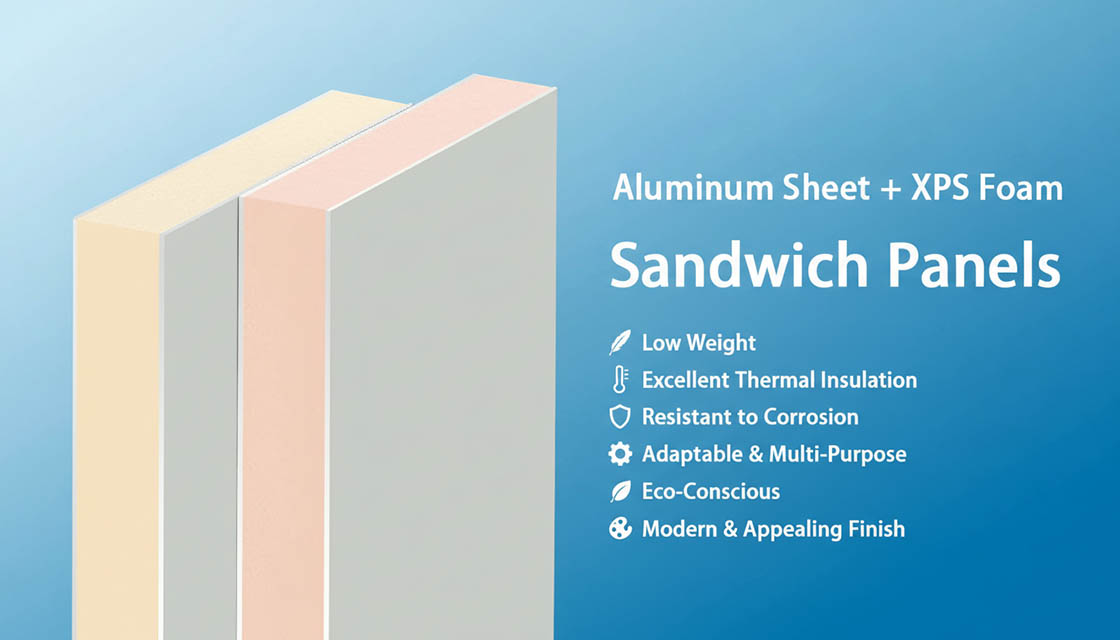
Aluminum Honeycomb Panel

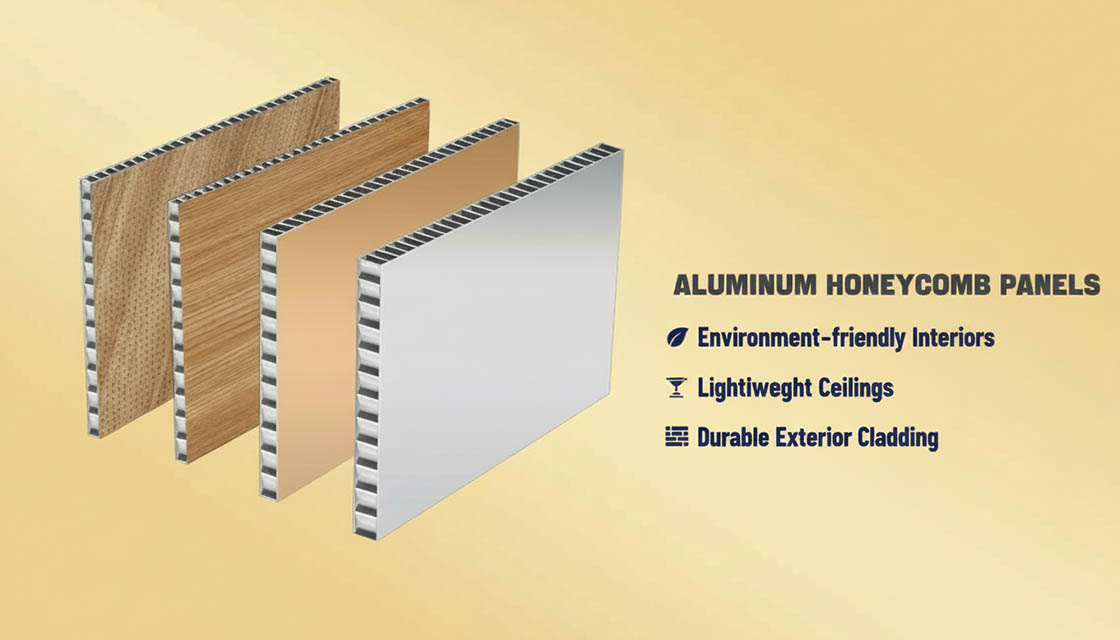
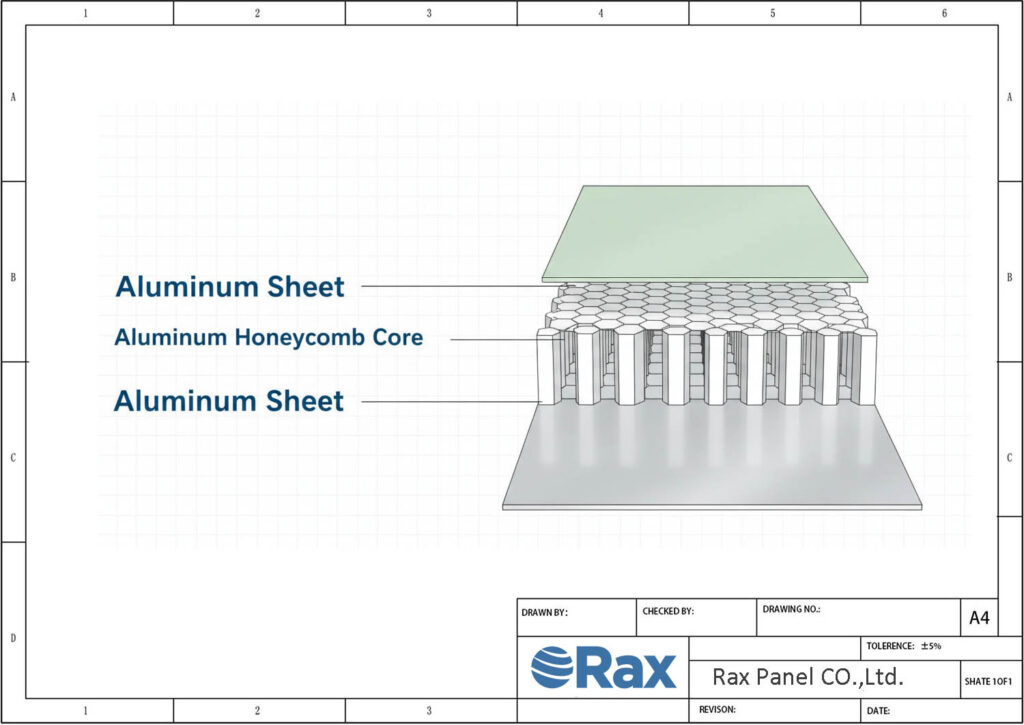
Aluminum Honeycomb Panel is a sandwich-structured composite consisting of two aluminum face sheets bonded to an aluminum honeycomb core. This structure is inspired by natural honeycomb geometry, where hexagonal cells distribute loads efficiently across the entire surface while using minimal material. The result is a panel that is exceptionally lightweight yet rigid.

The core itself is over 95% open space, which gives the panel its remarkable strength-to-weight ratio. Compared to a solid aluminum sheet of the same thickness, a honeycomb panel can be several times lighter while maintaining comparable bending stiffness. This makes it practical where weight reduction matters, such as vehicle bodies, elevator cabins, and curtain wall systems.

Face sheets are available with a range of surface finishes, including PVDF, PE, anodizing, and decorative transfers that replicate wood, stone, or metallic textures. Panels can be cut, routed, bent, and edge-sealed using standard fabrication tools, and are fully recyclable at end of life.

Common applications include architectural cladding, interior partitions, transportation interiors, marine bulkheads, and industrial equipment enclosures.

Your Expert Manufacturer for Custom Aluminum Honeycomb Solutions

RaxPanel has been manufacturing composite sandwich panels in Hebei, China since 2002. We produce the aluminum honeycomb core in-house, which gives us direct control over core density, cell size, and bonding quality, rather than relying on outsourced cores. This vertical integration also keeps our pricing competitive.

Our workshop runs continuous lamination lines with polyurethane and epoxy adhesive systems. We handle custom panel sizes up to 5800mm in length, and offer standard surface treatments including PVDF fluorocarbon coating, PE, anodizing, and heat-transfer printing for wood and stone grain finishes. Curved panels, perforated acoustic panels, and custom edge closures are available on request.

We work with clients across building cladding, refrigerated vehicle bodies, cleanroom partitions, and marine interiors. Every project is assigned a dedicated QC coordinator who tracks production from raw material inspection through final packaging. Panels are packed with PE film and export-grade wooden pallets for ocean freight.

Common applications include:

  • Building facades and curtain walls
  • Refrigerated truck and trailer bodies
  • Interior partitions and ceilings

Contact us today to discuss your panel specifications.

Parameter Category Parameter Value / Specification Notes / Tolerance
Panel Dimensions Thickness 20mm – 100mm Custom sizes available
Width 1000mm, 1220mm, 1500mm Custom sizes available
Length 2440mm, 3200mm, 4880mm, 5800mm Custom sizes available
Face Skin Material Aluminum Alloy 3003, 5005, 1100 Other alloys available
Thickness 0.3mm – 2.0mm
Core Material Aluminum Honeycomb
Density 20 – 130 kg/m3
Cell Size 3mm – 25mm
Surface Treatment Mechanical Brushing, Sandblasting, Polishing, Embossing
Coating Type PVDF, FEVE, PE
Other Options Anodizing
Color & Finish Options Mill finish, Metallic, Solid colors, Wood grain, Stone grain Wide spectrum available
Mechanical Properties Compressive Strength 3MPa – 17MPa
Bending Strength 3MPa – 15MPa
Tensile Strength 2MPa – 7MPa
Energy Absorption Up to 30 J/cm³
Physical Properties Thermal Conductivity 0.25W/m·K – 0.62W/m·K
Sound Insulation 20 – 30 dB (Rw)
Electromagnetic Shielding Effective below 200MHz
Coefficient of Linear Expansion Low (Dimensional Stability)
Performance & Certifications Combustion Performance Class A2-s1,d0 (EN 13501-1)
Corrosion Resistance Excellent Resistant to moisture & chemicals
Recyclability Fully Recyclable
Toxicity Non-toxic
Configuration & Fabrication Shape Flat Panel, Curved Panel Custom shapes per drawing
Edge Type Standard open, Closed, Custom with extrusions
Fabrication Can be cut, sawn, planed, milled, CNC machined Standard wood/aluminum tools


    This site is protected by reCAPTCHA and the Google Privacy Policy and Terms of Service apply.

    Related Products

    Aluminum Honeycomb Panel Selection & Fabrication Guide

    💡 Pro Tip: Match Core Density to Your Load Requirement
    Honeycomb core density ranges from 20 to 130 kg/m3. Higher density means higher compressive strength but also more weight and cost. For most building and vehicle applications, 50-80 kg/m3 is sufficient. Specify above 100 kg/m3 only for heavy-load floors or aerospace applications.

    1. How to choose skin alloy and thickness

    Face sheets are typically 3003 or 5005 aluminum alloy, ranging from 0.5mm to 2.0mm. Thinner skins (0.5-0.7mm) are used for interior partitions and ceilings where weight matters more than impact resistance. Thicker skins (1.0mm and above) are specified for exterior curtain walls, vehicle floors, and marine applications where panels must withstand wind loads, impact, and repeated handling.

    2. Core specifications and how they affect panel performance

    The honeycomb core determines the panel’s shear strength, compressive strength, and weight. Key specifications are cell size (typically 3-25mm) and foil thickness (0.04-0.08mm):

    Core Specification Typical Range Best Suited For
    Cell Size 3mm – 25mm Smaller cells for higher strength; larger cells for cost savings
    Core Density 20 – 130 kg/m3 50-80 kg/m3 for buildings; 100+ for floors and aerospace
    Foil Thickness 0.04mm – 0.08mm Thicker foil for marine and heavy-load applications

    3. Which surface coating should you choose?

    PVDF (fluorocarbon) coating is recommended for exterior curtain walls and facades, offering 15-20 year color retention under UV exposure. PE (polyester) coating is a cost-effective option for interior partitions, ceilings, and elevator cabins. For decorative applications, heat-transfer printing can replicate wood grain, stone, and metallic textures. Anodizing is available for a premium matte finish on interior feature walls.

    4. How do honeycomb panels perform for sound insulation?

    Acoustic Performance:

    • Sound Transmission: Honeycomb panels reduce noise transmission by approximately 20-30 dB compared to solid metal sheets of equivalent weight.
    • Damping Effect: The honeycomb cell structure absorbs vibration energy, making these panels effective for machinery enclosures and vehicle interiors.

    5. Where are aluminum honeycomb panels commonly used?

    Architecture and Construction

    Curtain wall cladding, interior partitions, ceilings, elevator cabins, and cleanroom wall systems.

    Transportation and Marine

    Truck and trailer bodies, RV walls, train interiors, ship bulkheads, and aircraft cabin components.

    6. How to cut, route, and edge-seal panels during installation

    Honeycomb panels can be fabricated using standard woodworking or aluminum-working tools. For straight cuts, a circular saw with carbide-tipped blade is sufficient. For complex shapes and cutouts, CNC routing provides clean edges without delamination. Panel edges can be finished with aluminum extrusion profiles (U-channel, Z-profile) or left open depending on the application. Always seal cut edges in exterior applications to prevent moisture ingress into the core.

    Frequently Asked Questions (FAQS)

    1. Can you produce custom panel sizes beyond standard dimensions?
    Yes. We manufacture panels to your drawings. Maximum single-sheet length is 5800mm to fit standard 40ft containers. For curved panels or irregular shapes, we CNC-route the honeycomb core before lamination.
    2. What adhesive system do you use, and how do you prevent delamination?
    We offer two options: polyurethane adhesive film for general applications (operating range -40 to 80 degrees C) and modified epoxy adhesive for exterior or high-temperature environments. Both are applied via automated continuous lamination to ensure uniform bonding pressure across the full panel surface.
    3. What is the difference between PVDF and PE coatings for exterior use?
    PVDF (fluorocarbon) coatings contain at least 70% PVDF resin and are recommended for exterior curtain walls, with a typical color retention warranty of 15-20 years. PE (polyester) is a cost-effective alternative suitable for interior partitions, ceilings, and short-term exterior applications.
    4. Do you supply edge profiles and installation accessories?
    Yes. We supply matching aluminum extrusion profiles for edge closure, including U-channels, Z-profiles, and custom shapes. We can also assist with shop drawings and panel nesting diagrams to help your installation team optimize material yield.
    5. What is the typical lead time and minimum order quantity?
    Standard specification panels typically ship in 10-15 days. Custom colors, special alloys, or curved panels require 15-25 days depending on complexity. MOQ is 200 sqm for standard specs; sample panels can be arranged separately.
    6. How are panels packed for export shipping?
    Both face sheets are protected with peel-off PE film. Panels are stacked with foam interlayers between sheets, then strapped onto heavy-duty export wooden pallets or steel crates suitable for 20ft and 40ft container loading.


    Sandwich Panel Manufacturer

    Custom Core & Skin • Tailored Dimensions


      This site is protected by reCAPTCHA and the Google Privacy Policy and Terms of Service apply.