
I’ve watched three vehicle manufacturers recall units in the last 18 months for the same reason. They spec’d fire resistant panels that sailed through ASTM E84 Class A testing but couldn’t survive actual road conditions. One builder used MgO board cores — the fire rating looked great on paper, but those brittle boards cracked after 40,000 miles of vibration. A DOT inspector caught the defect during a routine stop. Smoke leaked through the joints. That single recall cost $1.8 million and idled their production line for 11 weeks. The certification paperwork was flawless. The actual engineering was wrong.
We pulled our lab test data from the last three years — mineral wool cores vs. FR foam cores, vibration cycling results, weight-to-strength ratios across 20mm to 50mm panel profiles. Then we compared those numbers against what most suppliers actually ship for vehicle applications. We test fire ratings alongside vibration endurance because that’s the real question: does the panel still contain fire after 80,000 miles of potholes and highway vibration? The data below answers that. Use it to spec panels that pass your fire inspection without destroying your weight targets or falling apart on the interstate.
ASTM E84 vs EN 13501-1
Two fire standards dictate composite panel procurement for specialized vehicles: ASTM E84 governs the North American market, while EN 13501-1 is your strict gatekeeper for European export. Miss the spec on either, and your vehicle fails homologation.
ASTM E84: The North American Benchmark
The ASTM E84 test, also known as the Steiner Tunnel Test, is the dominant fire performance standard across the United States and Canada. It evaluates how surface burning characteristics behave on a given material sample placed in a 25-foot horizontal tunnel with a controlled flame exposure. For specialized vehicle manufacturers, this is the baseline test your procurement engineers and compliance teams will reference repeatedly.
The standard outputs two critical metrics that directly impact your vehicle’s fire certification:
- Flame Spread Index (FSI): Measures how far and how fast flame propagates across the panel surface. Class A requires an FSI of 0 to 25.
- Smoke Developed Index (SDI): Measures the optical density of smoke generated during the burn. Class A permits an SDI of 0 to 450.
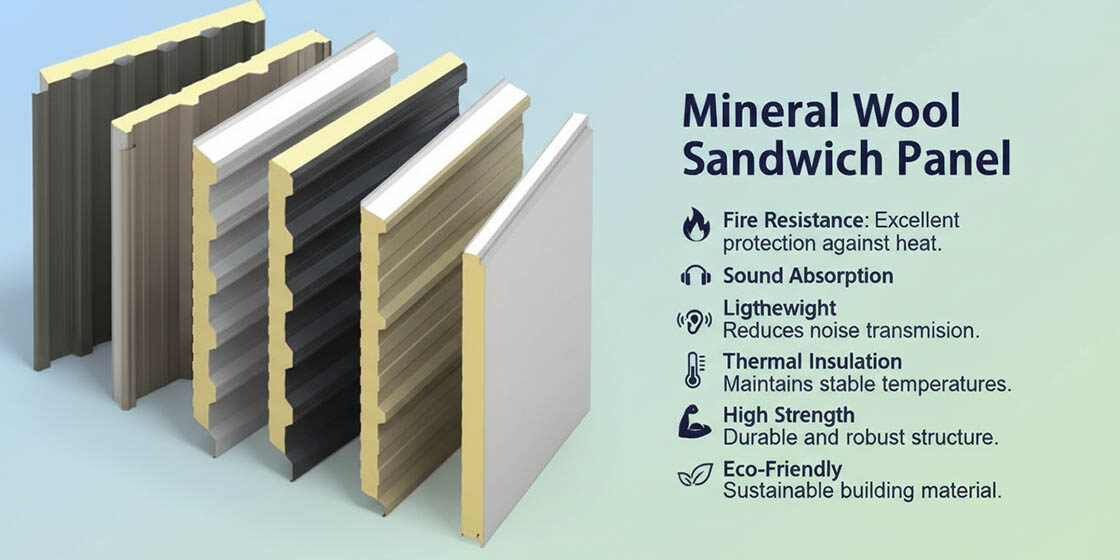
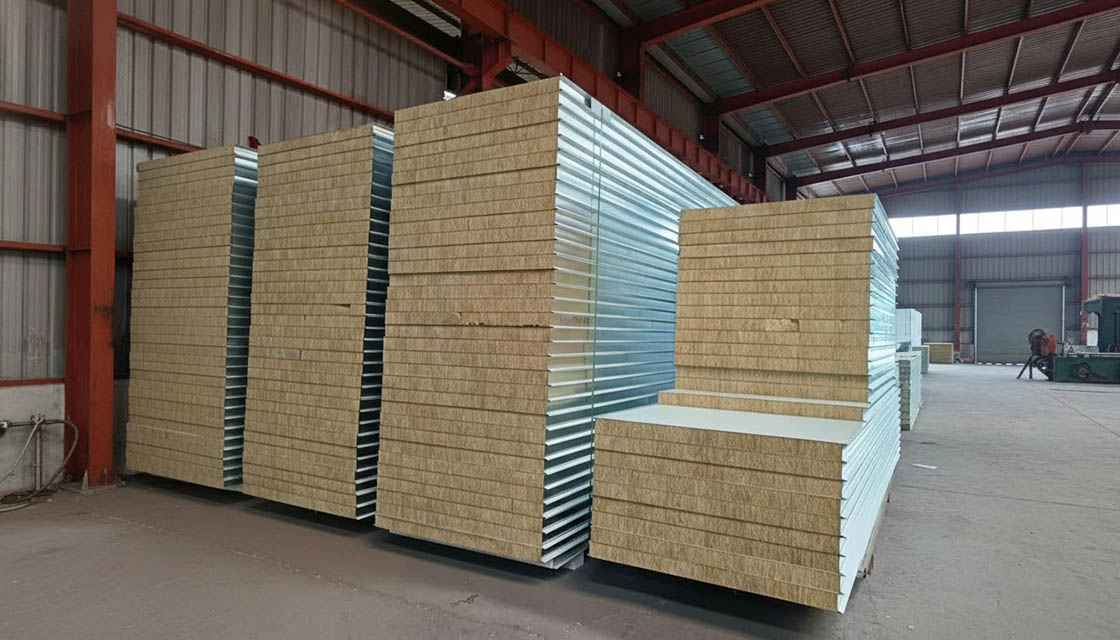
Our FRP and Mineral Wool Sandwich Panels consistently achieve ASTM E84 Class A ratings. The mineral wool core, at approximately 120 kg/m³ density, provides the fire barrier while the FRP skins keep the overall panel weight significantly lower than steel-sheet alternatives. This matters for RV and marine applications where every kilogram impacts fuel efficiency and payload capacity, and where panel thickness typically ranges from 20mm to 50mm.
EN 13501-1: The European Classification System
The European market operates under a completely different framework. EN 13501-1 classifies construction products and building elements based on their reaction to fire, using a lettered classification system that provides a more granular view of combustibility behavior than ASTM E84. The classification ranges from A1, which denotes non-combustible materials, down through A2, B, C, D, E, and finally F, which covers products with no determined fire performance.
What makes EN 13501-1 more demanding for vehicle manufacturers is its multi-layered notation system. A classification like B-s1,d0 tells you three things simultaneously: the fire growth rate class (B), the smoke production class (s1 being low smoke), and the flaming droplets class (d0 meaning no droplets). This triple-metric approach forces engineers to optimize panel construction for smoke suppression and structural integrity under fire, not just flame spread alone.
B-s1,d0: The Minimum Threshold for European Vehicle Export
For any specialized vehicle, whether it is a motorhome, emergency vehicle, or transport truck, destined for the European market, B-s1,d0 is widely recognized as the minimum acceptable fire classification. This rating signifies limited combustibility with minimal smoke production and no flaming droplets or particles falling from the panel during fire exposure.
The smoke toxicity component is where many panel suppliers fall short without telling you. Competitors frequently push magnesium oxide (MgO) boards or Type X drywall alternatives that pass fire tests on paper but introduce serious problems in real-world vehicle applications. These boards are brittle and heavy, which causes structural degradation under constant road vibration. Worse, certain foam core alternatives may achieve a nominal fire rating yet emit toxic smoke when burned, creating a critical safety hazard in occupied compartments like RVs and crew cabins.
Our approach at RaxPanel balances fire resistance with crash worthiness. A brittle fire board that shatters in a collision defeats the entire safety purpose. Our fire rated mineral wool sandwich panels deliver the B-s1,d0 classification your export vehicles require while maintaining the structural flexibility and impact resistance that dynamic vehicle applications demand. When you specify panels for your next European-bound build, ensure your supplier provides documented EN 13501-1 test results, not just generic fire resistance claims, so your vehicle passes statutory homologation requirements without costly redesigns or material swaps on the production line.
Composite Core Fire Performance
Fire compliance in vehicle manufacturing is not just about passing a static burn test; it is about balancing non-combustibility with the structural integrity required for crash survival.
Mineral Wool Fire Ratings: The Heavyweight Champion
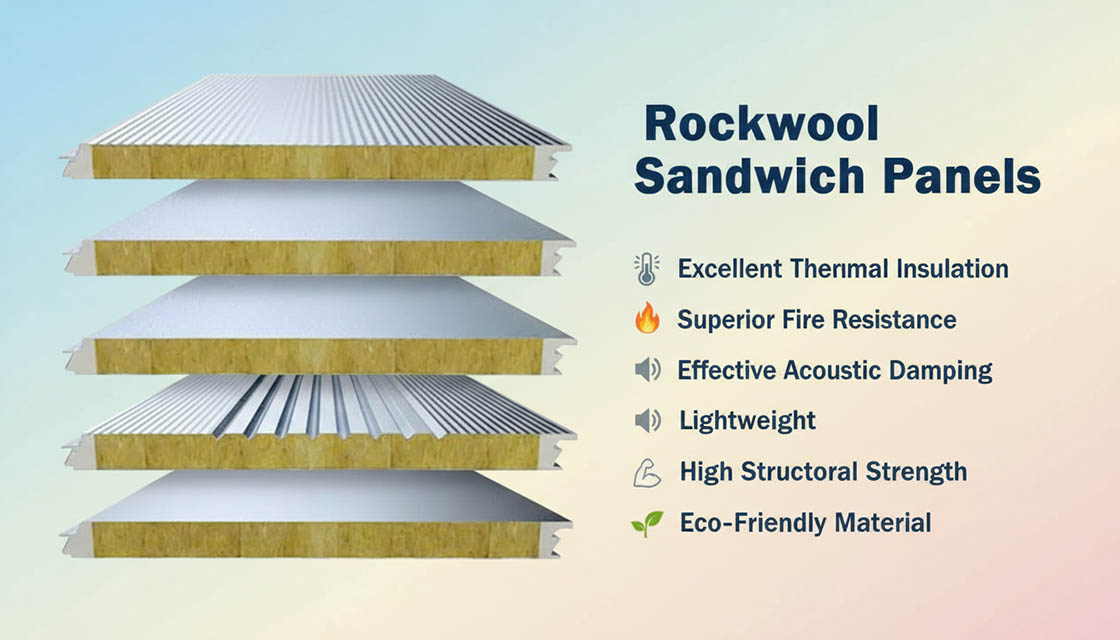
When absolute fire resistance is the priority, Mineral Wool cores are the industry benchmark, achieving Euroclass A1/A2 non-combustible ratings. These cores can withstand direct exposure to temperatures exceeding 1000°C without losing structural integrity, making them ideal for high-risk zones like engine compartments or bulkheads in specialized vehicles. However, this performance comes with a significant penalty: mass.
For vehicle manufacturers focused on fuel efficiency and payload capacity, this weight penalty is a critical constraint. We strictly adhere to a mineral wool density of approximately 120 kg/m³, which is necessary for fire stability but drastically increases curb weight compared to synthetic alternatives. While competitors might push MgO boards as a lighter “fire-rated” alternative, our testing shows these materials are brittle and prone to failure under the vibration loads of transit vehicles.
- Fire Performance: Non-combustible (Euroclass A1/A2), withstands >1000°C.
- Weight Impact: High density (~120 kg/m³) affects vehicle fuel efficiency.
- Structural Note: Brittle fire boards like MgO can crack during vehicle operation; Mineral Wool maintains cohesion better under vibration.
FR Foam and Honeycomb Risks: Managing Lightweight Trade-offs
The primary appeal of FR Foam and Honeycomb cores is their high strength-to-weight ratio, with densities often as low as 35 kg/m³. However, for occupied vehicle compartments like RVs or buses, the danger shifts from heat to smoke toxicity. Many lightweight foams emit toxic black smoke when burning, which is often the primary cause of injury in enclosed vehicle fires. As a supplier, we prioritize low smoke developed indices (SDI) to mitigate this life-threatening risk.
Honeycomb cores present a unique engineering challenge. Their open-cell structure can act as a chimney, accelerating flame spread through the panel if not properly treated. To utilize these lightweight cores safely without compromising our ASTM E84 Class A certification, industry practice requires intumescent coatings. These coatings expand when exposed to heat, sealing the cell structure and preventing the core from fueling the fire.
- Toxicity Risk: Lightweight foams can emit high volumes of toxic smoke; check SDI ratings carefully.
- Honeycomb Mitigation: Requires intumescent coatings to prevent flame spread through cells.
- Application Fit: Best for non-engine areas where weight reduction is more critical than absolute fire duration.
Weight vs. Fire Resistance
Mineral wool delivers an ASTM E84 Class A fire rating at a core density of ~120 kg/m³—roughly 3.4x that of FR foam at ~35 kg/m³. For a standard 30mm vehicle wall panel, that core difference translates to approximately 60% more total panel weight per square meter. The engineering workaround: pair CFRT skins with fire-retardant foam to hit Class A without the mass penalty.
Why Weight Is the Primary Constraint for RV and Marine OEMs
Every kilogram added to a vehicle’s structure chips away at its payload capacity and, increasingly, its electric driving range. RV and marine manufacturers operate within strict Gross Vehicle Weight Rating (GVWR) limits. A panel decision here is not aesthetic—it directly determines how many batteries, water tanks, or cargo the vehicle can legally carry. When a procurement engineer specifies a wall panel, they are balancing three non-negotiable variables: fire certification, structural integrity, and weight. Compromise on any one, and the vehicle either fails inspection or underperforms in the field.
This is where many suppliers get it wrong. They push MgO boards or heavy mineral wool panels because those materials easily pass static construction fire codes. But vehicles are dynamic environments. Vibration, road shock, and collision forces punish brittle materials. A panel that passes a fire test but cracks under real-world driving conditions creates a liability far more expensive than the material cost.
The Density Penalty: Mineral Wool vs. FR Foam Core
Let us run the actual numbers on a standard 30mm vehicle wall panel (1m × 1m), assuming 1mm CFRT skins on each face with a 28mm core. The CFRT skins contribute approximately 3.0 kg/m² regardless of core choice. The core is where the weight divergence happens:
- Mineral wool core (120 kg/m³): 0.028m × 120 = 3.36 kg/m² → Total panel ≈ 6.36 kg/m²
- FR foam core (35 kg/m³): 0.028m × 35 = 0.98 kg/m² → Total panel ≈ 3.98 kg/m²
- Net difference: Mineral wool panel is approximately 60% heavier per square meter
Scale that across an entire RV coach or marine cabin—roughly 30–50 m² of wall and ceiling surface—and you are adding 70 to 120 kg of dead weight. For an electric RV platform where every 10 kg reduces range, that is a design failure disguised as a safety upgrade.
CFRT Skins + FR Cores: Solving the Range vs. Safety Conflict
This is the engineering path that actually works for vehicle applications. Continuous Fiber Reinforced Thermoplastic (CFRT) skins provide high tensile strength and impact resistance at a fraction of the weight of steel or thick FRP. When paired with a fire-retardant foam core, the composite system achieves an ASTM E84 Class A rating (Flame Spread Index 0–25, Smoke Developed Index 0–450) while maintaining a total panel density closer to the FR foam benchmark than the mineral wool one.
The critical advantage here is crash worthiness. Unlike MgO boards or brittle mineral wool substrates, CFRT-faced panels flex under impact and return to structural form. They do not shed particles under constant road vibration. For occupied vehicles—where smoke toxicity from burning foam is a life-safety concern—specifying a core with verified low smoke emission data is essential. We test every CFRT/FR foam configuration to its specific application standard, not just a generic construction fire code.
For procurement engineers evaluating wholesale composite sandwich panel suppliers, the specification question is straightforward: demand both the ASTM E84 Class A certificate and the core density data sheet. If the supplier cannot provide both on the same panel SKU, the product is not engineered for vehicle use—it is a repurposed building material with a weight penalty your platform cannot afford.
Verification and Documentation
A fire rating is only as reliable as the documentation behind it. Requesting the full test report—not just a data sheet—is what separates a compliant vehicle build from a recall waiting to happen.
Demand the Actual Test Reports, Not Marketing Summaries
Any reputable composite sandwich panel wholesale supplier should be able to produce the original ASTM E84 test report on request. The two numbers you are verifying are straightforward: Flame Spread Index (FSI) in the 0–25 range and Smoke Developed Index (SDI) in the 0–450 range. These thresholds define ASTM E84 Class A compliance, and both endpoints are valid passing values—do not let anyone tell you the panel must score below them. If a supplier only provides a one-page certificate of compliance without the lab’s full data, that is a red flag. You need the stamped report from an accredited testing body.
Verify the Exact Assembly That Was Tested
Here is where many specialized vehicle manufacturers get caught out. A fire rating applies to a specific build-up—core material, skin type, adhesive, and panel thickness all factor into the test result. For example, our FRP / Mineral Wool Sandwich Panels achieve ASTM E84 Class A with a mineral wool core at roughly 120 kg/m³ density paired with FRP skins. That rating is tied to that configuration. If your engineering team swaps the core for a lighter FR foam at roughly 35 kg/m³ to save weight, the fire rating from the mineral wool test no longer applies. The same logic holds for thickness: a rating earned on a 30mm panel does not automatically transfer to a 20mm version. Always cross-check the test report’s assembly description against your actual bill of materials.
Penetrations Nullify the Rating Without Re-Testing
Fire testing is conducted on intact, uninterrupted panel assemblies. The moment you cut a hole for cable routing, HVAC vents, or plumbing pass-throughs, you have modified the tested assembly. This is not a minor technicality—inspectors and auditors specifically look for unsealed or non-fire-stopped penetrations during vehicle certification audits. If your build requires penetrations, and most do, you have two options. First, re-test the full assembly with the penetrations included, complete with approved fire-stopping materials. Second, use fire-rated penetration sleeves and seals that carry their own independent certification compatible with your panel system. Document every penetration and its fire-stopping method. During a vehicle recall scenario, this documentation is your only defense.
- FSI: 0–25 (ASTM E84 Class A range)
- SDI: 0–450 (ASTM E84 Class A range)
- Core Density Reference: Mineral Wool ~120 kg/m³, FR Foam ~35 kg/m³
- Standard Vehicle Panel Thickness: 20mm–50mm
Keep all original test reports, assembly drawings, and penetration logs in your vehicle’s technical file. When a safety inspector asks for proof, a supplier’s brochure will not suffice. The stamped lab report matched to your exact panel configuration is the only document that holds weight.
Conclusion
If you’re spec’ing panels for vehicle compartments, go FRP with mineral wool cores and skip the MgO boards entirely. The math is brutal: mineral wool hits ASTM E84 Class A (Flame Spread Index under 25) at 120 kg/m³ while surviving the vibration and crash loads that shatter brittle construction materials. One failed safety inspection or vehicle recall erases a decade of margin from using cheaper panels.
Before you commit to any supplier, request two documents: the full ASTM E84 test report with Smoke Developed Index values, and vibration cycle data proving structural integrity past 50,000 cycles. If they hesitate, find another source. Your name is on every vehicle that leaves your floor — make sure the fire test paperwork has the lab’s stamp, not a distributor’s promise.
Frequently Asked Questions
This factor has a direct bearing on project performance and long-term cost. Addressing it with specific data rather than general assumptions leads to better outcomes.
What are the standard fire ratings for wall panels?
Standard fire ratings for wall panels are classified under ASTM E84 for surface burning characteristics and ASTM E119 or UL 263 for fire endurance. Across our CFRT Sandwich Panels, GRP/FRP Honeycomb Panels, Foam Core Panels, and Aluminum Sandwich Panels, common classifications include Class A (flame spread index 0-25), Class B (26-75), and Class C (76-200). Additionally, panels are rated for specific fire-resistance durations—typically 1-hour, 2-hour, or 3-hour—depending on panel thickness, core composition, and assembly configuration, ensuring compliance with IBC and NFPA 101 life safety code requirements.
Do fire resistant panels cost more?
Yes, fire resistant panels generally carry a 15-35% premium over standard non-rated panels due to specialized core materials, advanced manufacturing processes, and rigorous third-party testing and certification requirements. However, this incremental upfront cost is offset by significant long-term advantages including reduced insurance premiums, full regulatory compliance, enhanced occupant safety, and minimized property damage risk. When evaluating total lifecycle costs and risk mitigation benefits, our fire-rated CFRT, GRP/FRP, Foam Core, and Aluminum Sandwich Panels deliver exceptional value and strong return on investment for commercial and industrial projects.
Can fire resistant panels be used for wood stoves?
Yes, our fire resistant panels can serve as protective wall shielding adjacent to wood stove installations when proper clearances and installation protocols are followed in accordance with NFPA 211 and local building codes. Our Aluminum Sandwich Panels and GRP/FRP Honeycomb Panels are especially suited for these high-heat proximity applications due to their non-combustible construction and superior thermal barrier performance. Critical installation requirements include maintaining appropriate air gaps between the panel and heat source, ensuring panels never directly contact the stove or flue, and obtaining approval from the local authority having jurisdiction (AHJ) before installation.
Are 4×8 fireproof panels available?
Yes, 4×8 foot (48″ x 96″) panels are a standard production size available across our entire fire-rated product range, including CFRT Sandwich Panels, GRP/FRP Honeycomb Panels, Foam Core Panels, and Aluminum Sandwich Panels. This dimension is optimized for efficient manufacturing, shipping, handling, and field installation in most commercial and industrial applications. Custom sizes and thicknesses are also available to meet project-specific requirements, though standard 4×8 panels typically offer the most cost-effective and readily available solution.
What is the difference between 1-hour and 2-hour fire-rated wall panels?
The fundamental distinction between 1-hour and 2-hour fire-rated wall panels is the duration each assembly can maintain structural integrity and prevent flame and heat passage during standardized fire exposure testing per ASTM E119 or UL 263. Achieving a 2-hour rating typically requires increased panel thickness, higher-density core materials—such as our advanced Foam Core or reinforced Aluminum Sandwich formulations—and more robust joint and edge-sealing systems. The required rating is dictated by the International Building Code based on factors including occupancy type, building height, floor area, and whether the wall serves as a fire barrier, fire partition, or smoke barrier.