
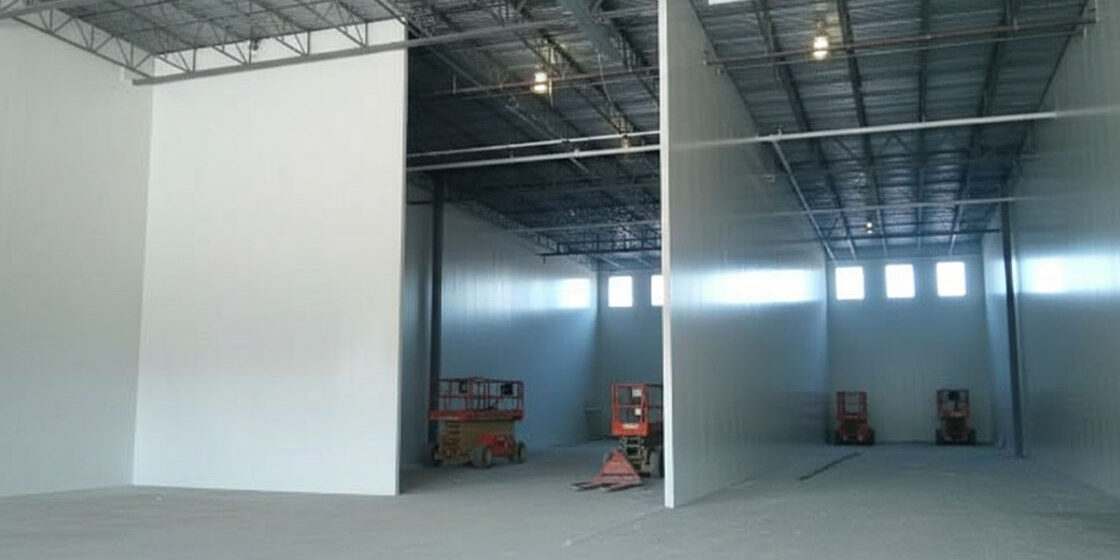
Last month, I was on a call with a plant manager who had to shut down his assembly line for three days. His team spec’d out a traditional lauan rv wall panel for a new fifth-wheel model, but the supplier shipped sheets with a 12% ambient water content. That hidden moisture added 40 pounds of dead weight to the front end of the unit. It pushed the vehicle over its gross vehicle weight rating limit right before a compliance check. The line stopped completely. Wood is a liability. You calculate your weight-to-strength ratios down to the gram, but organic materials shift the math on you.
We pulled three years of our factory test data to figure out exactly how much mass you can strip out of a chassis without losing structural rigidity. We ran CFRT and FRP honeycomb composites against standard lauan. The gap is massive. If you swap out wood for a continuous fiber reinforced thermoplastic structure, you drop front-end mass by over 40 pounds per unit and eliminate water absorption entirely. I will show you the exact density metrics, impact resistance ratings, and CNC routing tolerances you need to speed up your production line.
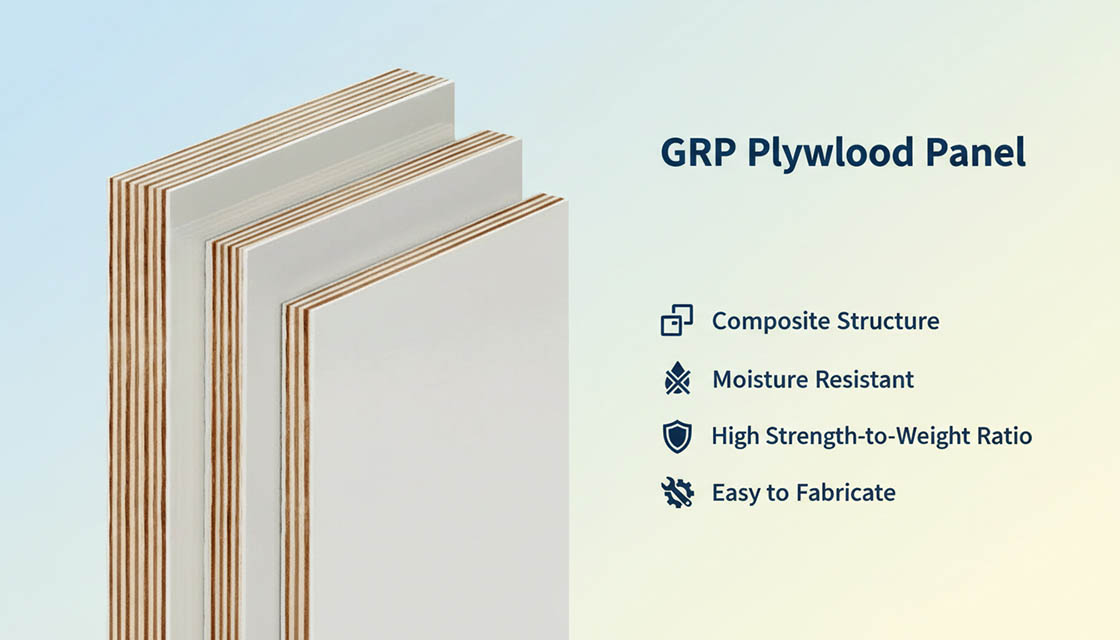
Wood vs Composite RV Wall Panels
Traditional lauan plywood acts as a moisture sponge, carrying a 10-12% ambient water weight penalty. Replacing it with advanced composites strips over 40 lbs of hidden dead weight per unit.
The Hidden Moisture Penalty in Lauan Plywood
Veteran procurement engineers know that traditional lauan and luan plywood are notoriously hygroscopic. While often specified as baseline lightweight structural rv wall panels, wood substrates inherently absorb and retain ambient humidity. We consistently find that standard lauan wood carries a 10-12% ambient water content right off the lumberyard truck. You are essentially paying to ship hidden water embedded in your RV walls.
This retained moisture fundamentally alters your weight-to-strength calculations and creates unpredictable variables for your final vehicle Gross Vehicle Weight Rating (GVWR). As ambient humidity fluctuates throughout the production cycle and the vehicle’s lifespan, wood panels expand, contract, and literally add unaccounted dead weight directly to the RV chassis.
Reducing Chassis Dead Weight with Advanced Composites
To maintain strict control over vehicle GVWR and drive down transport costs, OEMs must eliminate unnecessary chassis weight at the structural level. By transitioning from wood lauan to advanced CFRT (Continuous Fiber Reinforced Thermoplastic) sandwich panels, our engineers recorded a weight reduction of over 40 lbs on the front-end wall of a single Class C unit. This drastic drop in rv wall panel weight per square foot is achieved without sacrificing structural rigidity or road impact resistance.
We design our OEM rv composite panel manufacturing to solve exact engineering pain points:
- Material Density: High-quality FRP honeycomb panels feature a density as low as 0.65 g/cm³ while maintaining high mechanical stability.
- Moisture Immunity: Closed-cell foam core rv wall panel specs and CFRT substrates boast near-zero water absorption, ensuring the panel weight remains identical on day one and year ten.
- Assembly Tolerances: Custom CNC cut rv wall panels guarantee thickness consistency within +/- 0.5mm, preventing the line bottlenecks caused by warped or swollen wood.
When your production KPIs rely on maximizing fuel efficiency and maintaining strict thickness consistency, utilizing lightweight honeycomb panels for rv bodies is a structural and commercial imperative. The ROI is measurable on the very first scale ticket.
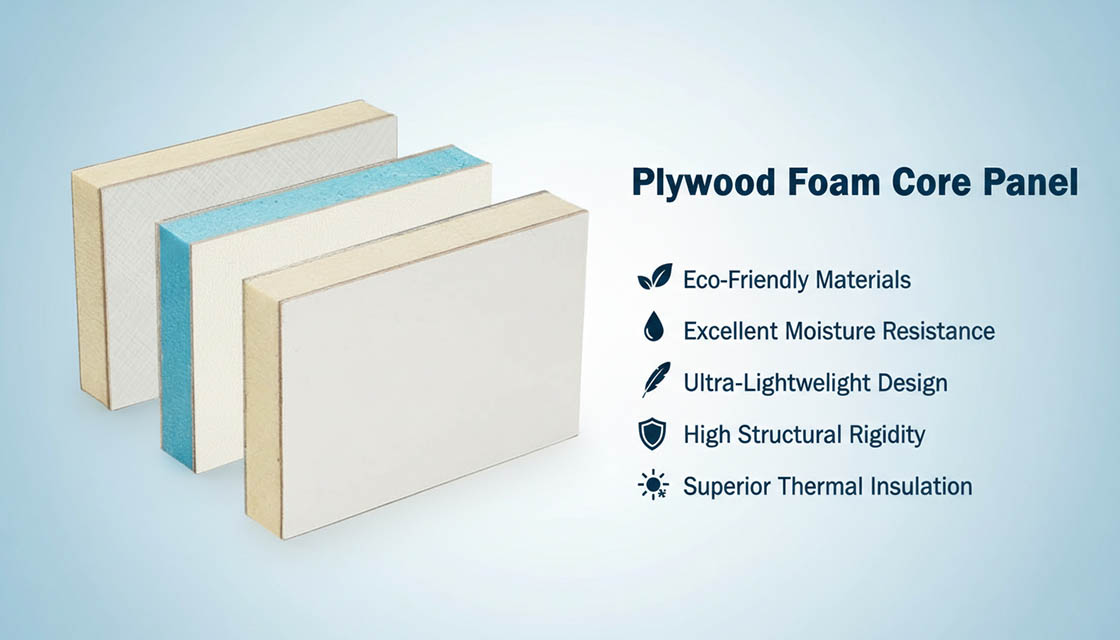
RV Wall Panel Core Materials Compared
Core selection dictates your RV’s GVWR, thermal efficiency, and assembly line speed. We break down the hard data on foam versus honeycomb composites to optimize your production throughput.
Foam Core vs Honeycomb Panels: The Structural Trade-off
Traditional lauan wood carries a 10-12% ambient water content, adding hidden dead weight that severely limits your payload capabilities. By replacing wood with advanced composite RV wall panels, manufacturers routinely reduce front-end wall weight by over 40 lbs per unit. The decision between foam and honeycomb ultimately hinges on your specific balance of thermal insulation needs versus sheer structural rigidity.
Foam cores, such as XPS, trap gas within their closed-cell structure to resist heat transfer. Honeycomb structures, like PP and FRP, rely on their geometric geometry to distribute sheer stress and absorb impact forces across the panel surface.
Comparison of XPS Foam Core, PP Honeycomb, and FRP Cores
Evaluating specific core materials requires looking closely at density and mechanical stability. Our engineers test these variations continuously to match strict OEM RV composite panel manufacturing standards.
- XPS Foam Core: Extruded Polystyrene provides exceptional thermal insulation, making it the go-to choice for temperature-controlled recreational vehicle bodies.
- PP Honeycomb: Polypropylene structures offer an incredibly high strength-to-weight ratio, drastically cutting total vehicle mass without sacrificing structural integrity.
- FRP Honeycomb: High-quality Fiberglass Reinforced Plastic cores feature a density as low as 0.65 g/cm³ while maintaining the high mechanical stability required for rugged chassis integration.
For extreme impact scenarios, CFRT (Continuous Fiber Reinforced Thermoplastic) sandwich panels deliver superior impact resistance at a fraction of traditional laminate weight, preventing delamination during heavy road vibration.
Weight Per Square Foot and R-Value Insulation Metrics
When calculating total landed cost, procurement teams must scrutinize the RV wall panel weight per square foot against thermal conductivity coefficients (R-value). XPS foam cores generally yield higher R-values per inch of thickness, directly reducing long-term HVAC loads for the end user. PP honeycomb panels provide massive weight savings that translate to better fuel economy and higher payload margins for the manufacturer.
Manufacturing tolerance is equally critical as the core material itself. Inconsistent panel thickness creates immediate production line bottlenecks during frame mounting. We apply precision CNC routing to ensure panel thickness consistency strictly within +/- 0.5mm. This exact manufacturing tolerance eliminates assembly line friction, allowing your factory to maintain high production throughput without manual sanding or adjustments.
| Core Material | Density / Weight | Structural Strength | Thermal & Moisture | Assembly Tolerance |
|---|---|---|---|---|
| Traditional Lauan Wood | Heavy baseline; carries 10-12% ambient water content adding hidden dead weight. | Low mechanical stability; prone to warping, rotting, and localized impact damage. | Poor thermal retention (low R-value) and high moisture absorption leading to delamination. | Inconsistent thickness causes production friction, fitment issues, and assembly line bottlenecks. |
| High-Quality FRP Honeycomb | Ultra-lightweight; features density as low as 0.65 g/cm³ to optimize vehicle GVWR. | High mechanical stability and excellent strength-to-weight ratio for RV bodies. | Inherently moisture-resistant; prevents the hidden dead weight of water absorption. | Precision CNC routing ensures thickness consistency within +/- 0.5mm. |
| CFRT (Continuous Fiber Reinforced Thermoplastic) | Extremely light; reduces front-end RV wall weight by over 40 lbs per unit. | Superior impact resistance supported by rigorous tensile and shear strength test reports. | Highly stable across extreme temperature variations; zero water retention. | Custom CNC cut profiles guarantee the exact specifications required for automated assembly throughput. |
| Advanced Foam Core | Significant weight reduction; drastically lowers vehicle GVWR and improves fuel efficiency. | Excellent compressive strength and uniform load distribution for structural rv wall panels. | High R-value thermal conductivity coefficients; meets strict ISO certifications for insulation. | Highly uniform cell structure eliminates manufacturing friction and ensures flat panel consistency. |
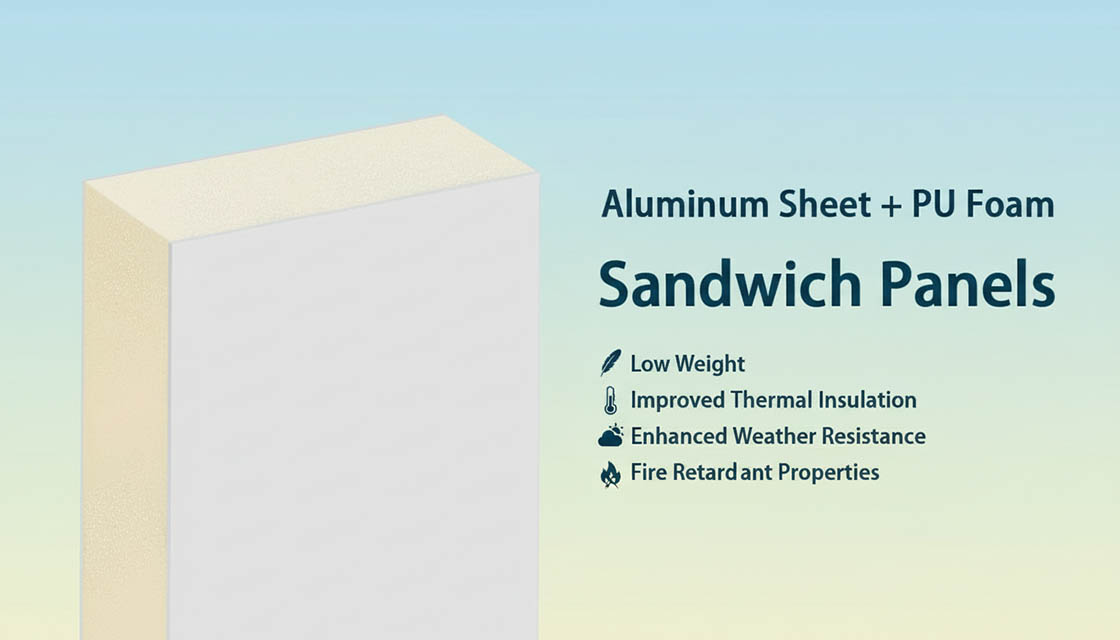
Structural Load Limits and Mounting
Traditional lauan wood acts as a structural liability. By upgrading to CFRT sandwich panels, manufacturers eliminate hidden moisture weight while significantly increasing the shear strength required for heavy OEM cabinetry mounts.
Total Weight Capacity of RV Walls
Determining the total weight capacity of an RV wall is not just a static calculation; it is heavily dependent on the moisture content of the chosen substrate. Our engineers consistently find that traditional lauan wood carries a 10-12% ambient water content. This absorbed moisture adds hidden dead weight to the RV walls, directly chipping away at the vehicle’s Gross Vehicle Weight Rating (GVWR) before the unit even leaves the factory floor.
By replacing these outdated wood substrates with our advanced composite panels, manufacturers routinely reduce front-end wall weight by over 40 lbs per unit. This immediate weight reduction frees up critical payload capacity for specialized equipment, slide-outs, and heavy mounts without sacrificing structural integrity.
Shear Strength of CFRT Sandwich Panels vs Thin Wood
When comparing the shear strength of modern lightweight structural RV wall panels to traditional thin wood, the engineering data heavily favors thermoplastics. Thin wood is highly susceptible to delamination, rot, and structural degradation over time. CFRT (Continuous Fiber Reinforced Thermoplastic) sandwich panels offer superior impact resistance at a fraction of the traditional weight.
- Material Density: High-quality FRP honeycomb panels maintain high mechanical stability with a density as low as 0.65 g/cm³.
- Impact Resistance: CFRT skins absorb and dissipate impact energy far better than rigid, brittle wood veneers.
- Manufacturing Tolerance: Precision CNC routing guarantees panel thickness consistency within +/- 0.5mm, eliminating assembly line friction during wall integration.
Suitability for Heavy Mounts
Procurement engineers often question whether custom CNC cut RV wall panels can handle the localized stress of heavy mounts, such as exterior awnings, interior entertainment centers, and loaded overhead cabinetry. The continuous fiber matrix in our CFRT panels distributes point loads across a much wider surface area than rigid, grained wood.
We recommend specifying optimized foam core RV wall panel specs or honeycomb cores for high-stress mounting zones. Because the composite core structure does not rely on grain direction, fasteners grip more uniformly. This prevents the screw pull-out failures common in conventional RV construction, ensuring long-term structural stability for your fleet.
OEM CNC Cutting and Tolerance Specs
Tight CNC tolerances aren’t just a manufacturing flex; they are the mechanical bridge between a smooth RV production line and an absolute bottleneck caused by forced fittings.
Eliminating Assembly Delays with Precise CNC Cutting
When you are pushing dozens of units off the floor every week, a two-minute manual adjustment per custom cnc cut rv wall panel quickly snowballs into a massive production bottleneck. We eliminate this friction entirely through multi-axis CNC routing. By shipping pre-cut, ready-to-install lightweight structural rv wall panels, we remove the need for your line workers to manually trim or force-fit components. Every cutout for windows, doors, and utility routing is machined to exact OEM specifications, ensuring that your assembly crew moves directly from staging to installation without wasted motion.
Solving Inconsistent Panel Thickness Issues
Traditional lauan wood carries a hidden penalty that plagues RV manufacturers: an ambient water content of 10-12%. This moisture not only adds hidden dead weight to the RV walls, but it inevitably causes structural swelling and warping over time. This organic inconsistency wreaks havoc on automated fastening systems and adhesive application thicknesses. Upgrading to advanced CFRT sandwich panels or high-quality FRP honeycomb panels completely neutralizes this variable. Our composite panels maintain uniform structural integrity without absorbing ambient moisture, ensuring that the dimensional stability required for high-speed production remains constant from the first unit to the thousandth.
Ensuring Seamless Integration with Tight Tolerances
Automated assembly lines demand exact physical parameters to function correctly. If panel dimensions fluctuate, robotic adhesive applicators miss their targeted spread, and structural fasteners fail to seat properly. Our engineering team maintains strict manufacturing thresholds to guarantee that every batch of honeycomb panels for rv bodies integrates flawlessly into your existing fixtures.
- Thickness Consistency: Precision CNC routing maintains panel thickness strictly within +/- 0.5mm.
- Moisture Stability: 0% ambient water absorption, permanently eliminating wood-swell variables.
- Dimensional Accuracy: Exact window, door, and utility routing mapped directly to your OEM CAD files.
We know from direct experience on the production floor that adhering strictly to this +/- 0.5mm tolerance is the critical factor in preventing line stoppages. When you source from an OEM rv composite panel manufacturer, you are buying guaranteed throughput as much as you are buying advanced materials.
Preventing Damage During Shipping
Composite panels like CFRT and FRP honeycomb survive structural impacts, but edge damage during international freight destroys yields. Reinforced crating and strict container loading protocols are non-negotiable for protecting your total landed cost.
Reinforced Packaging for International Freight
International ocean freight subjects cargo to severe dynamic loads, high humidity, and prolonged vibration. Standard palletizing fails under these conditions. We mandate reinforced wooden crates for all overseas OEM shipments to maintain the structural integrity of lightweight structural RV wall panels. This strict packaging prevents panel warping and protects the precise +/- 0.5mm CNC routed edges required for your automated assembly lines.
Prevention of Edge Damage
Edge integrity is a critical failure point for OEM RV composite panels. Dented or frayed edges disrupt seamless jointing, compromise adhesive bonds, and stall production throughput. Foam core and FRP honeycomb panels are highly resistant to structural impact but remain vulnerable to corner crushing if left unprotected. We isolate each custom CNC cut RV wall panel bundle with hardboard edge protectors and internal structural bracing. This ensures the factory-cut tolerances are maintained from our facility to your production floor.
Container Loading Best Practices for Flat Panels
The way a container is loaded dictates the condition of your RV wall panels upon arrival. Flat panels must be stored horizontally on reinforced dunnage to prevent permanent bowing. Based on our experience shipping GRP and CFRT sandwich panels globally, we require specific load-securing metrics:
- Dunnage Spacing: Maintain intervals of no more than 1000mm to distribute weight evenly across the honeycomb or foam core structure.
- Securing Mechanisms: Use heavy-duty nylon strapping rather than steel banding, which aggressively cuts into and fractures composite panel edges under transit loads.
- Void Filling: Deploy inflatable dunnage bags at the container doors to eliminate any dead space, completely preventing lateral load shifting during maritime transit.
Eliminating load shift directly protects the dimensional stability of your aluminum and composite panels. Proper flat-loading protocols ensure your materials arrive ready for immediate fabrication, avoiding the costly production bottlenecks associated with warped or rejected inventory.
Conclusion
If you are running a production line with strict GVWR limits, spec CFRT or FRP honeycomb cores exclusively. Lauan wood holds 10% ambient moisture—dead weight that directly eats into your payload capacity and fuel efficiency. Ditching that wood for advanced composites sheds over 40 pounds per front-end unit.
Do not evaluate quotes based on price per square foot alone. Ask our engineering team for the tensile shear test reports and the specific CNC tolerance data. If the panel thickness variance exceeds 0.5mm, you will stall your automated assembly line.
Frequently Asked Questions
This factor has a direct bearing on project performance and long-term cost. Addressing it with specific data rather than general assumptions leads to better outcomes.
How much weight can an RV wall hold?
The weight an RV wall mount can hold largely depends on the internal core structure and the specific composite materials used during manufacturing. Traditional RV walls may only support light loads, but modern advanced panels drastically increase this capacity. For instance, utilizing our GRP/FRP Honeycomb Panels or specialized Aluminum Sandwich Panels provides exceptional shear strength and structural rigidity, allowing mounts to safely support heavy fixtures when properly anchored. Ultimately, choosing high-strength, lightweight composite solutions ensures superior load-bearing capabilities without compromising the vehicle’s overall weight.
How to make an RV lighter?
The most effective way to reduce an RV’s weight is by upgrading its structural envelope with advanced lightweight composite materials during the manufacturing or refurbishment process. Replacing traditional heavy plywood or standard solid fiberglass with our CFRT Sandwich Panels or Foam Core Panels significantly decreases the overall gross vehicle weight. These engineered materials utilize supreme strength-to-weight ratios, ensuring maximum structural integrity and thermal insulation without the unnecessary bulk. By integrating our specialized Aluminum Sandwich Panels, manufacturers can achieve massive weight reductions that directly translate to improved fuel efficiency and increased payload capacity.
What materials are used for RV walls?
Modern RV walls are predominantly constructed using multi-layered composite sandwich panels designed to optimize both durability and weight. Manufacturers rely heavily on our advanced materials, such as CFRT Sandwich Panels for superior impact resistance and Foam Core Panels for exceptional thermal insulation. Additionally, GRP/FRP Honeycomb Panels are frequently utilized to provide unmatched structural stiffness while keeping the wall profile incredibly thin and lightweight. These specialized composite solutions have become the industry standard, replacing outdated wooden frameworks with high-performance, long-lasting architectural structures.
How to hang heavy items on RV walls?
To securely hang heavy items on RV walls, it is crucial to leverage the inherent structural advantages of the composite panels used in the vehicle’s construction. When dealing with high-density Foam Core Panels or Aluminum Sandwich Panels, we recommend using specialized mechanical anchors like toggle bolts or rivet nuts to distribute the load efficiently across the surface. Unlike brittle traditional materials, our CFRT Sandwich Panels offer robust pull-out resistance, allowing for reliable mounting points without the risk of core delamination. By matching the correct heavy-duty fasteners with our premium composite wall systems, you can safely install heavy fixtures with total confidence.