
When a supplier secretly alters a fiberglass resin mix, the weight drift alone can push a build over its gross vehicle weight limit, stall an assembly line for weeks, and wipe out a quarter’s margins in a single production run. When you compare CFRT PU sandwich panels with fiberglass, you expect to solve these exact weight and consistency issues, but finding a reliable vendor often feels like navigating a minefield of lies of omission.
Our material data comes from documented batch testing, so your engineers can see exactly how the materials survive real factory floor stress. We are publishing our raw CFRT PU panel density metrics and impact resistance test data so your engineers can validate the numbers for their next build. If your goal is to hit strict payload targets without sacrificing the thermal insulation R-value, these are the hard facts you need to prevent delamination failures.
CFRT PU Panel Overview
CFRT PU sandwich panels combine continuous fiber reinforced thermoplastic skins with polyurethane cores to deliver a lightweight, high-impact solution that fundamentally lowers assembly costs for specialized vehicle manufacturing.
What is CFRT PU?
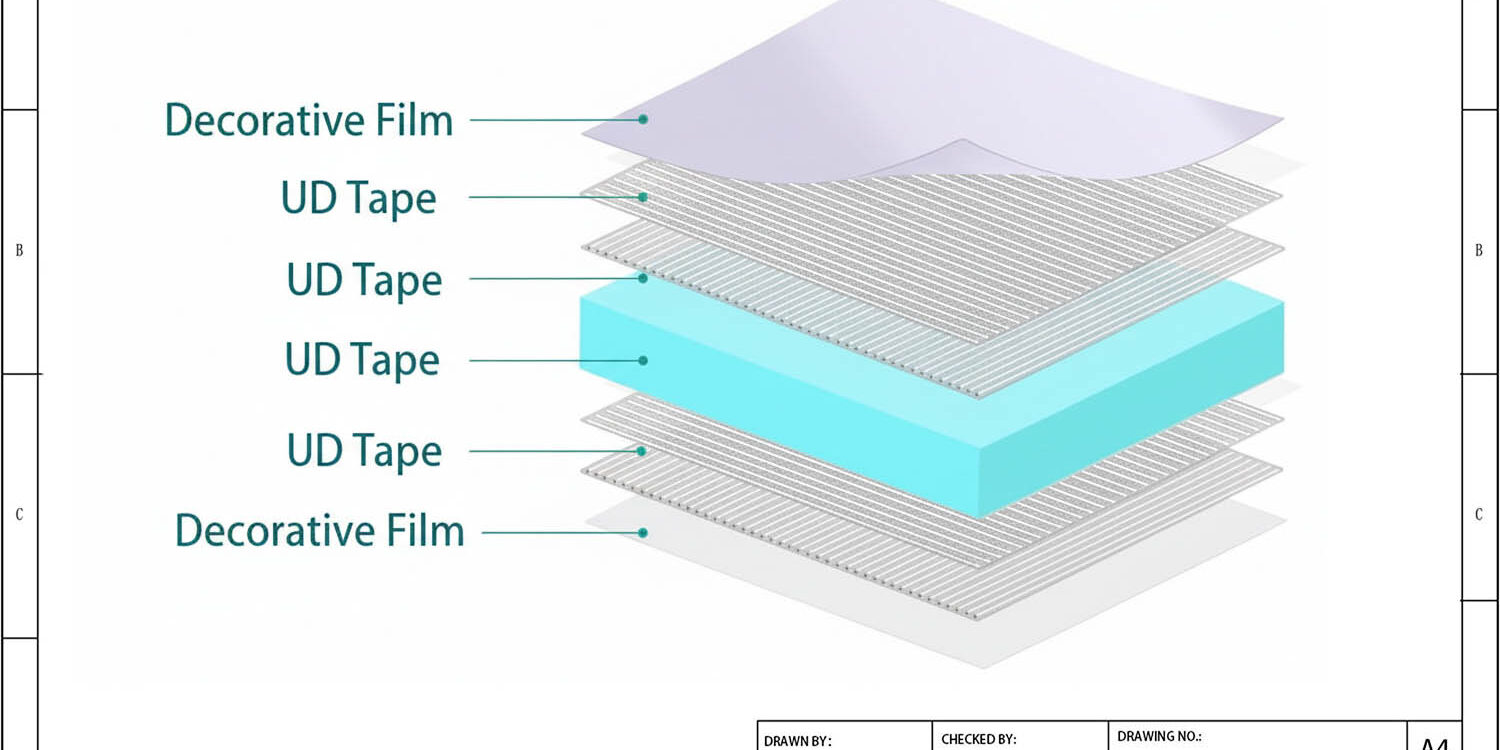
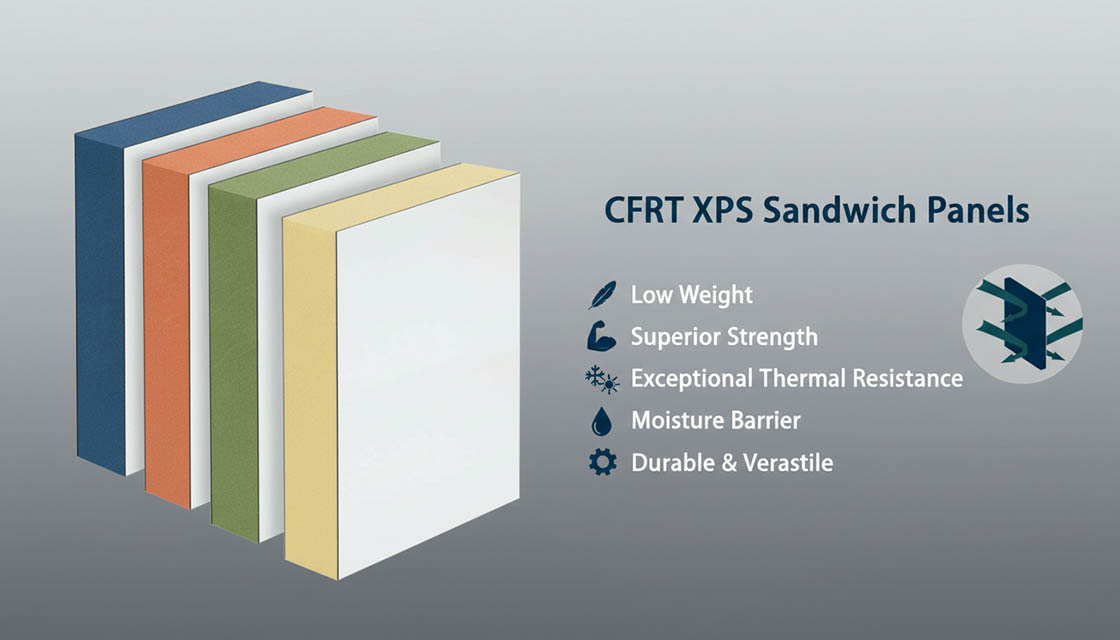
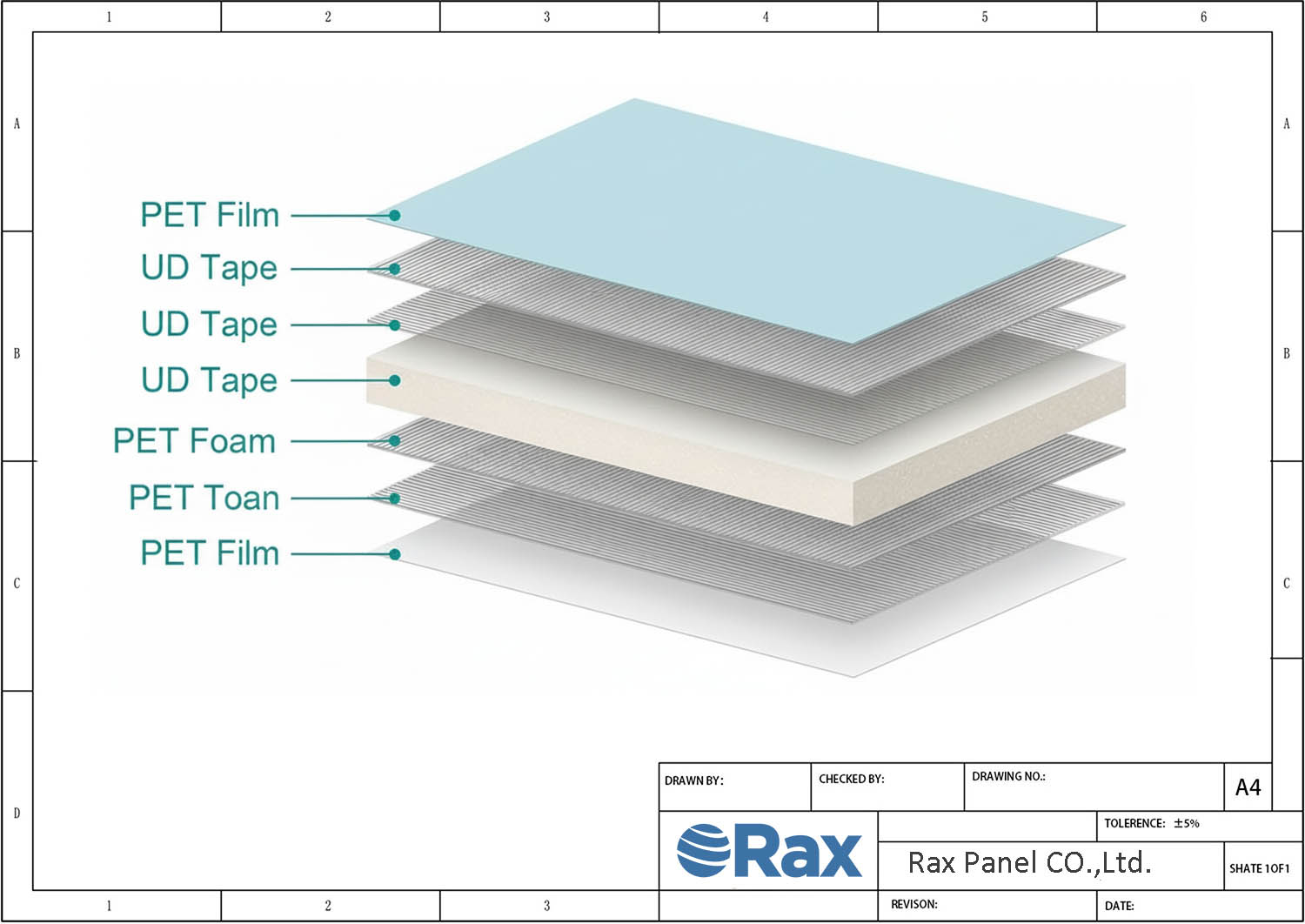
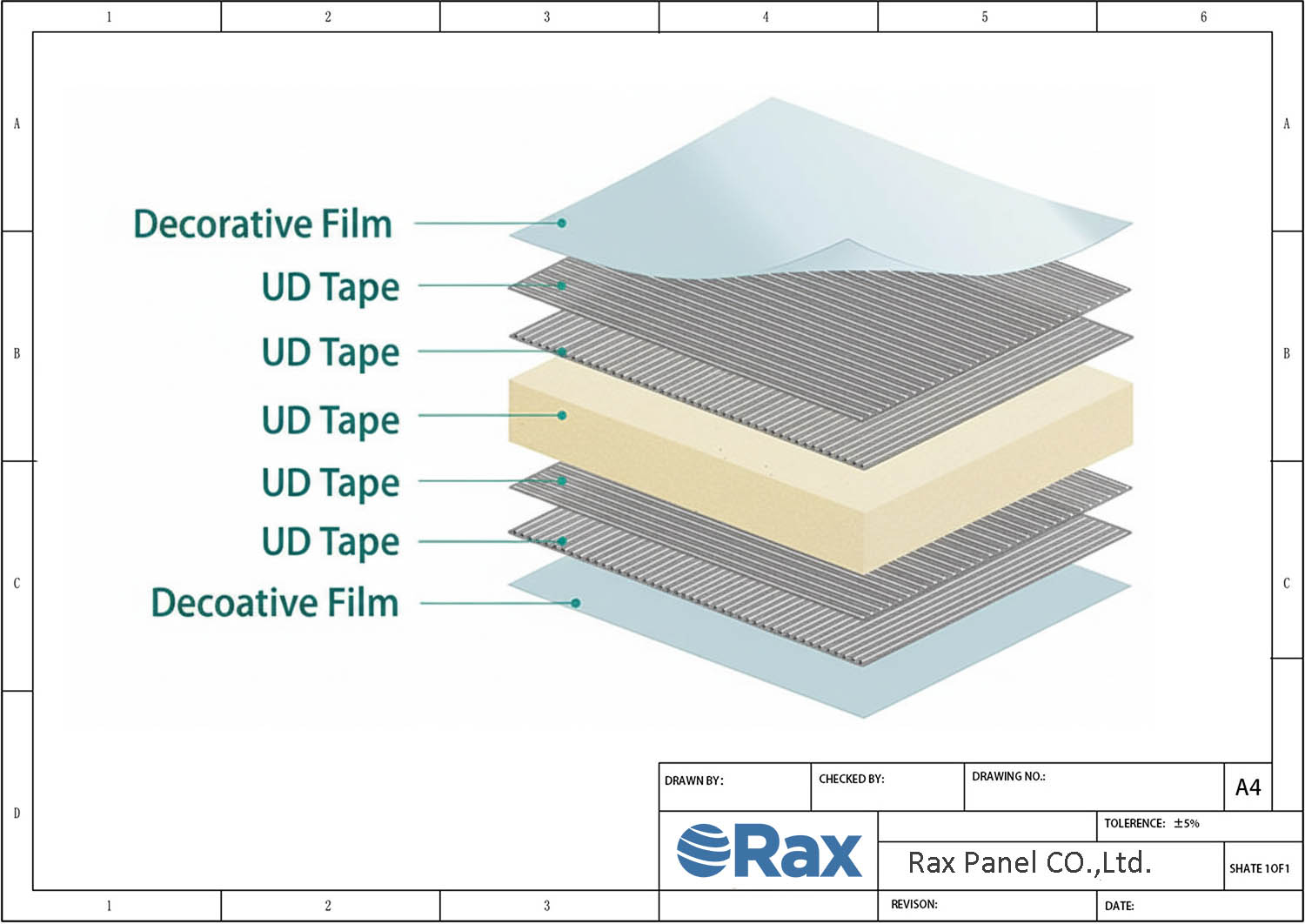
Our CFRT PU sandwich panels for RV manufacturing feature a polyurethane foam core pressed between two continuous fiber reinforced thermoplastic face sheets. We engineer these composites specifically to solve the brutal weight-to-strength bottlenecks found in modern commercial vehicle production. The outer skins utilize a polypropylene resin matrix loaded with 60-75% continuous glass fiber, laid in 2 to 9 layers of unidirectional tapes to prevent structural yielding.
- We manufacture panels in custom thicknesses ranging from 10mm up to 120mm to match your exact structural load requirements.
- The outer CFRT skin thickness scales from 0.4mm to 10mm depending on the sheer impact resistance your specific application demands.
- Internal PU foam core density ranges from 28kg/m³ to 80kg/m³, allowing you to dial in the exact balance between rigid structural support and weight reduction.
- Hitting the weight and stiffness targets RV manufacturers require starts with eliminating unnecessary seams. We run continuous production up to 12 meters in length and 3.2 meters in width. Fewer joints mean fewer structural failure points on the road.
Traditional FRP relies on chemical adhesives that off-gas and eventually break down. Our continuous fiber reinforced thermoplastic PU panel density targets are met without a single drop of glue, fusing the resin skins directly to the core under extreme heat and pressure. Skipping the adhesive step slashes cure times and drives down your unit cost on high-volume fleet runs.
Core Design Benefits
Dropping dead weight is the fastest way to increase payload capacity and cut fuel costs. Our skins hit a density of just 1.54 to 1.63 g/cm³, sitting far below standard aluminum or FRP. Bonded to a PU core with a thermal conductivity of 0.021-0.028 W/(m·K), you easily hit the thermal insulation R-value needed to replace heavy plywood without losing structural rigidity.
Suppliers love to claim high impact resistance without backing it up with hard numbers. Our impact resistance test data shows that multiple layers of unidirectional continuous glass fiber tapes absorb harsh impacts and rebound to their original shape. This elasticity shrinks your warranty claims because the material survives drops and scratches that permanently dent metal or crack standard fiberglass.
Real assembly-line speed comes down to how you handle mounting points for heavy hardware. We embed structural blocks, like wood, aluminum, or profiles, directly into the PU foam core during the continuous production run. Compared with fiberglass builds, this approach wins because your factory can mount windows and fixtures straight to the panel without adding heavy secondary framing.
Technical Specifications
CFRT PU sandwich panels provide a measurable weight reduction over traditional aluminum and FRP without sacrificing structural load limits. By combining a continuous fiber reinforced thermoplastic matrix with a customizable polyurethane core, these panels directly address the strict weight and insulation requirements of modern RV manufacturing.
Panel Thickness & Dimensions
Exact fitment dictates your final assembly speed and structural integrity on the factory floor. We produce panels in custom thicknesses ranging from a slim 10mm up to a heavy-duty 120mm. Whether you are running lightweight interior partitions or structural flooring, we dial in the exact dimensions your production line demands.
- We manufacture panels in custom thicknesses ranging from 10mm up to 120mm. Exact dimensioning limits on-site assembly modifications.
- Maximum panel length stretches to 12,000mm. This allows seamless continuous runs for commercial truck bodies.
- You can order widths up to 3,200mm. That massive footprint maximizes your CNC nesting yield.
Maximizing the single sheet area is critical. Running a 12-meter sheet across a full RV sidewall eliminates joint lines. Fewer seams mean fewer sealant failure risks and better preservation of thermal insulation R-value over years of highway vibration. Procurement teams order these oversized blanks to drive down raw material scrap rates.
CFRT Skin Composition
The exterior skin dictates whether a vehicle body survives real-world impacts. We press Continuous Fiber Reinforced Thermoplastic sheets by embedding continuous glass fiber into a polypropylene resin matrix. This yields a skin density of roughly 1.55 g/cm³. In any direct comparison with fiberglass, the material drops significant dead weight while absorbing impacts that crack standard FRP, as our impact resistance test data documents.
- Skin Thickness: 0.4mm to 10mm
- Fiber Content: 60% to 75% continuous glass fiber
- Standard builds use 2 to 9 layers of unidirectional tapes. We dial in the exact layer count based on your load-bearing requirements when manufacturing custom-thickness panels. This adjustability ensures you never pay for excess structural capacity you simply do not need.
Drop the metal skins. CFRT skins bounce back upon impact, preventing the permanent dents you see in aluminum, a fact proven out by strict cfrt panel impact resistance test data. When you look at a cfrt pu sandwich panel vs fiberglass, the real structural win is that our thermoplastic matrix needs zero glue, meaning we fuse the layers under heat to completely eliminate delamination failures.
PU Foam Core Density
The polyurethane (PU) foam acts as both the structural spine and primary thermal barrier. We calibrate the PU core density between 28 kg/m³ and 80 kg/m³ based on your exact compressive strength targets. This precise engineering lets you balance raw material freight costs against actual field performance.
- Density Range: 28kg/m³ to 80kg/m³. We spec the lighter foam for standard wall partitions and reserve the heavier cores for heavy-duty structural flooring.
- Thermal Conductivity: 0.021 to 0.028 W/(m·K). This low heat transfer rate directly drives up the cfrt pu panel thermal insulation R-value. Your refrigeration units work less, which drops your overall fleet fuel consumption.
Heavy-duty vehicles require solid mounting points for heavy hardware. We embed wood, aluminum, or fiberglass profiles directly into the PU foam under high pressure to lock them in place. These embedded blocks guarantee you can bolt down heavy internal cabinetry without crushing the insulation envelope.
Surface Treatment Options
Vehicle walls take a beating from road debris, weather, and daily wear. We apply factory-level surface treatments directly to the skin so you skip secondary painting. Our impact resistance test data shows these treated surfaces absorb heavy impacts without cracking, saving you days of assembly time and refinishing labor.
- Aesthetic Finishes: Matte or Glossy
- Protective Films: Optional PET, PVC, or PP films
- Performance Additives: Anti-ultraviolet, flame retardant, and antistatic treatments
We bake UV and flame retardant additives directly into the CFRT skin to prevent yellowing and structural decay after years of harsh sun exposure. This is exactly where the CFRT vs fiberglass debate ends. Standard untreated fiberglass degrades rapidly outdoors, while our panels hold their mechanical properties and are manufactured with fire-retardant additives.
| Feature | Specification | Performance Benefit |
|---|---|---|
| CFRT Skin Composition | 60-75% Continuous Glass Fiber (2-9 unidirectional layers), Polypropylene Resin | High impact resistance with rapid shape restoration; reduces maintenance costs |
| Skin Density | 1.54 – 1.63 g/cm³ | Significantly lighter than FRP and aluminum; maximizes vehicle payload and fuel efficiency |
| PU Foam Core Density | 28 – 80 kg/m³ | Optimal balance of structural support and extreme weight reduction |
| Thermal Conductivity | 0.021 – 0.028 W/(m·K) | Superior insulation (high R-value) ensures energy efficiency and climate control |
| Total Panel Dimensions | Thickness: 10-120mm | Length: ≤12m | Width: ≤3.2m | Highly customizable dimensions ensure precise fit for complex RV designs |
| Skin Thickness | 0.4 – 10 mm (Customizable) | Tailored durability and structural reinforcement based on engineering needs |
| Manufacturing Process | Glue-free thermoplastic heat and pressure fusion | Streamlined mass production and lower assembly costs without adhesive inconsistencies |
| Custom Machining Options | CNC routing; Embedding of wood, aluminum, or fiberglass profiles | Secure fixture mounting and structural enhancements without compromising insulation |
| Surface & Treatments | Glossy/Matte finish; Anti-UV, Flame Retardant, Antistatic | Ensures strict compliance, safety, longevity, and desired aesthetic finish |
Performance Advantages
CFRT PU sandwich panels directly address the core bottlenecks in specialized vehicle manufacturing: payload limitations, thermal leakage, and high assembly friction. We engineer these composites to deliver precise weight-to-strength metrics while drastically reducing production cycle times.
Superior Thermal Insulation
Keeping an RV comfortable without draining the battery requires serious thermal management. Our cfrt pu panel thermal insulation R-value consistently outperforms standard plywood or metal framing because the closed-cell polyurethane foam locks in the climate. We adjust the continuous fiber reinforced thermoplastic PU panel density from 28kg/m³ to 80kg/m³ to match your specific load requirements. By providing custom thickness cfrt foam core panels, we hit thermal conductivity ratings between 0.021 and 0.028 W/(m·K). Meeting these lightweight cfrt pu sandwich panel specs RV builders demand effectively eliminates HVAC energy drain.
High Strength-to-Weight Ratio
When reviewing lightweight cfrt pu sandwich panel specs RV applications, every extra kilogram on the chassis destroys your payload margin and drives up fuel costs. We solve this by keeping the continuous fiber reinforced thermoplastic PU panel density strictly between 1.54 and 1.63 g/cm³. You drop serious weight compared to standard aluminum or traditional FRP builds, without losing an ounce of structural rigidity.
- CFRT Skin Fiber Content: 60-75% continuous glass fiber for maximum tensile strength.
- Layer Configuration: 2 to 9 layers of unidirectional tapes calibrated to your exact load-bearing requirements.
- Skin Thickness: We engineer custom thickness cfrt foam core panels with skin depths ranging from a razor-thin 0.4mm up to a heavy-duty 10mm. This specific range gives your fabrication team the exact tolerances needed for tight assembly lines.
Impact & Scratch Resistance
Commercial vehicle panels take a relentless beating on the highway and on the factory floor. Our internal cfrt panel impact resistance test data proves that these multi-layered unidirectional tapes flex under sudden stress and bounce back to their original shape. You stop paying for permanent dents from road debris, which directly slashes your warranty claims and manufacturing scrap rates.
Cost Efficiency Analysis
In a direct cfrt pu sandwich panel vs fiberglass comparison, the true cost advantage comes down to our thermoplastic polypropylene resin matrix. We bypass the messy adhesives and lengthy curing ovens required by traditional FRP by fusing the components directly under heat and pressure. This glue-free process speeds up your entire production timeline, while the solid PU core delivers a high cfrt pu panel thermal insulation R-value that holds up in demanding environments.
Customization & Manufacturing
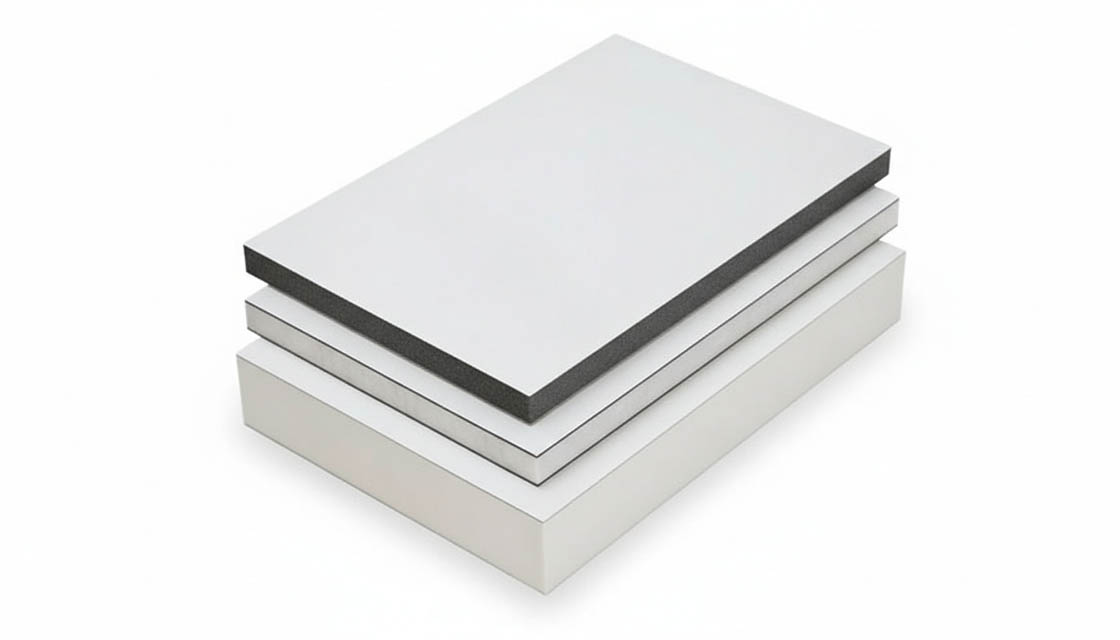
Engineering custom CFRT PU sandwich panels requires more than cutting standard sizes. We embed structural hardware directly into the core and apply precision CNC machining to deliver drop-in-ready components, eliminating secondary fabrication on your assembly line.
Embedded Reinforcement Options
Mounting heavy roof racks or cabinetry to thin composite walls usually ends in stripped screws. While the cfrt pu panel thermal insulation R-value remains excellent with conductivity ratings between 0.021-0.028 W/(m·K), standard polyurethane foam alone cannot handle high pull-out loads. We solve this by fusing high-density structural profiles directly into the core, balancing the continuous fiber reinforced thermoplastic PU panel density to give you solid anchoring points without adding dead weight.
We tailor these lightweight cfrt pu sandwich panel specs RV manufacturers require by offering three specific core reinforcements based on your exact load limits:
- Aluminum Extrusions: Our lab’s cfrt panel impact resistance test data proves these inserts handle extreme shear stress for roof racks, heavy door hinges, and equipment anchoring.
- Hardwood Battens: When weighing cfrt pu sandwich panel vs fiberglass costs, these battens provide the most economical interior screw retention for standard cabinetry and fixtures.
- Fiberglass Reinforced Profiles: This option delivers massive screw retention while entirely eliminating the thermal bridging and corrosion risks you normally get with metal inserts.
CNC Machining & Precision
Dimensional consistency dictates your assembly line speed. If your custom thickness cfrt foam core panels vary by even two millimeters, gaps widen and you burn through budget on structural sealants. We cut every unit on multi-axis CNC routing centers to hold exact tolerances, and because our CFRT skins pack 60-75% continuous glass fiber, the edges machine flawlessly without the delamination typical of standard fiberglass.
Our CNC routing centers cut panels up to 12 meters long and 3.2 meters wide. That means massive RV sidewalls come out as a single, continuous piece. We run your exact CAD files to mill out window voids and wire chases, ensuring these custom thickness cfrt foam core panels drop straight onto your assembly line without field trimming.
Logistics & Shipping Safety
A single scratched panel arriving at your facility halts the entire vehicle build. We treat packaging as a critical manufacturing step, not an afterthought. When evaluating the cfrt pu sandwich panel vs fiberglass debate for transit survivability, our reinforced steel pallets and heavy-duty barrier wraps guarantee your cargo arrives ready for immediate assembly.
We wrap the high-gloss or matte CFRT surfaces in thick PVC film to block transit abrasion. The load gets strapped down with heavy-duty woven polyester. We absolutely ban steel banding because it crushes the delicate panel edges, guaranteeing the lightweight cfrt pu sandwich panel specs RV engineers demand arrive in factory-perfect condition.
CFRT vs. Traditional Materials
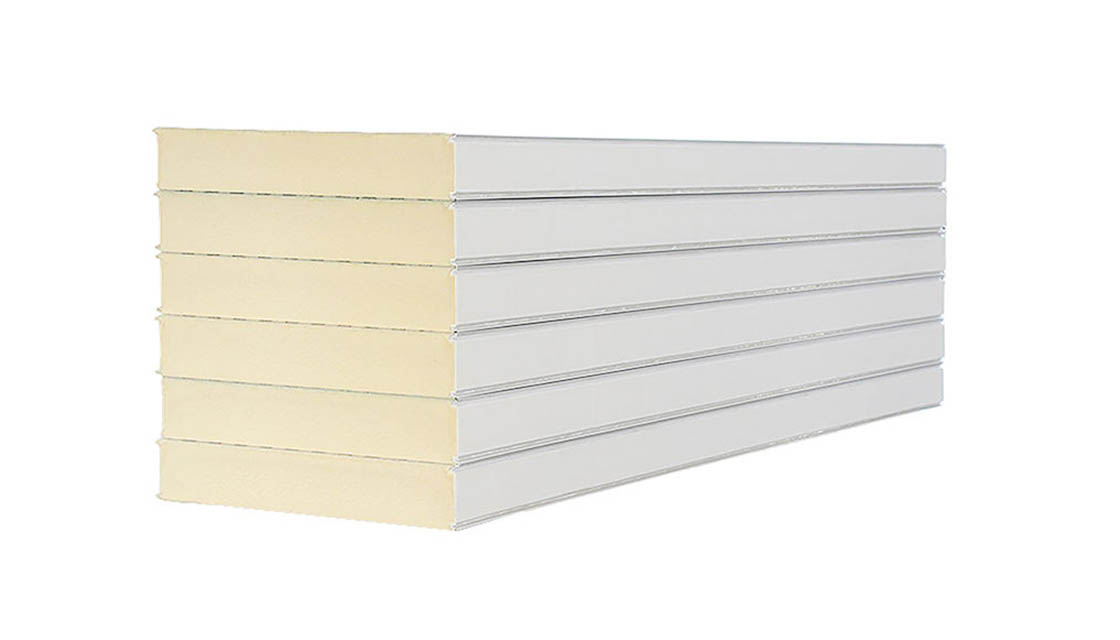
Replacing traditional FRP and aluminum with CFRT PU sandwich panels directly addresses specialized vehicle manufacturing pain points: excessive curb weight and high assembly costs. The thermoplastic polypropylene resin allows for a glue-free fusion process, cutting production time while maintaining a strict density of 1.54-1.63 g/cm³.
CFRT vs. FRP Panels
Traditional fiberglass shatters under continuous road vibration because it relies on brittle thermoset resins. We replace that fragile chemistry with a polypropylene matrix impregnated with up to 75% continuous glass fibers. This structure keeps the continuous fiber reinforced thermoplastic PU panel density between 1.54-1.63 g/cm³, immediately stripping dead weight out of the vehicle chassis.
Standard FRP requires messy secondary glues to bond to the foam core, which eventually fails under thermal stress. Our process skips the adhesive entirely, fusing the thermoplastic skin and the PU core together under extreme heat and pressure. This monolithic bond completely eliminates delamination risks while locking in a high cfrt pu panel thermal insulation R-value for the life of the vehicle.
- Standard fiberglass cracks permanently the second it takes a heavy hit from road debris. We build our sheets with 2 to 9 layers of unidirectional tapes that absorb that kinetic energy and snap back into shape. The raw cfrt panel impact resistance test data proves this structure survives blunt force trauma that would instantly write off a traditional composite wall.
- Fiberglass shows its age when fibers bloom into a white fuzz after a few years of UV exposure. In the cfrt pu sandwich panel vs fiberglass debate, thermoplastic composite faces solve this degradation issue completely. Add a flame-retardant UV coating, and the surface stays intact for the life of the vehicle.
CFRT vs. Aluminum Panels
Aluminum frames act like massive thermal bridges, transferring outside temperatures straight into the cabin. When you check the cfrt pu panel thermal insulation R-value, you see how the PU foam core blocks that heat transfer entirely. The material delivers a tight 0.021-0.028 W/(m·K) thermal conductivity, slashing your HVAC costs.
Aluminum dents the moment a tool drops on it, leaving permanent damage. CFRT skins absorb kinetic energy and bounce back to their original shape. Our cfrt panel impact resistance test data proves the material survives impacts that destroy standard metal sheeting.
- You need stiffness without dragging down the chassis. CFRT matches the structural rigidity of heavy aluminum profiles at a fraction of the weight. Buyers specifically request lightweight cfrt pu sandwich panel specs RV builds require to max out their payload limits legally.
- Welding aluminum requires certified labor and creates thermal leaks at the fastener points. We CNC route custom thickness cfrt foam core panels to embed mounting blocks directly into the substrate. You screw into these blocks without piercing the outer skin, keeping the envelope perfectly sealed.
| Feature | CFRT PU Panel | Traditional FRP | Traditional Aluminum | Engineering Benefit |
|---|---|---|---|---|
| Material Density & Weight | Skin density 1.54-1.63 g/cm³ (Lightweight) | ~2.0 g/cm³ (Heavier) | ~2.7 g/cm³ (Heaviest) | Maximizes payload capacity and improves fuel efficiency |
| Impact Resistance & Structure | Multi-layer unidirectional tape; rapid rebound | Brittle; prone to cracking under stress | Dents easily; permanent deformation | Reduces maintenance costs and survives rigorous road use |
| Thermal Insulation (R-value) | 0.021-0.028 W/(m·K) (PU Core 28-80kg/m³) | Variable; often requires additional thermal breaks | High conductivity; severe cold bridging | Guarantees superior climate control and energy efficiency |
| Manufacturing & Assembly | Glue-free thermoplastic fusion; embeds hardware | Requires toxic adhesives and lengthy cure times | Requires mechanical fasteners and thermal strips | Streamlines mass production and ensures consistent assembly |
| Dimensional Customization | 10-120mm thick; lengths up to 12m; CNC routed | Restricted by mold sizes and manual layup limits | Standard profiles; struggles with complex custom geometries | Achieves precise fits for complex designs without delays |
Conclusion
If your production run exceeds 50 units, sticking with traditional fiberglass is a financial mistake. The continuous fiber reinforced thermoplastic PU panel density sits at just 1.54 g/cm³, dropping massive weight off the chassis. A glue-free thermoplastic bonding process removes messy adhesive steps from your assembly line entirely.
Order custom thickness cfrt foam core panels with CNC-machined embedded aluminum profiles for your engineering team. Do not approve this material shift based on a brochure. Get the prototype on your bench and physically strike the surface to test the rapid rebound. Demand the official ISO-certified cfrt panel impact resistance test data from the manufacturer. Compare those raw figures against your current structural baseline. Verify the continuous fiber reinforced thermoplastic PU panel density meets your strict payload limits before you cut the purchase order. We provide the exact cfrt pu panel thermal insulation R-value and lightweight cfrt pu sandwich panel specs RV for your specific build. Set up a side-by-side physical trial on your factory floor. Run a direct comparison of cfrt pu sandwich panel vs fiberglass to let the lab results drive the final engineering sign-off.
Frequently Asked Questions
What are CFRT PU sandwich panels?
CFRT PU sandwich panels are advanced composite structures featuring Continuous Fiber Reinforced Thermoplastic (CFRT) face sheets bonded to a rigid polyurethane (PU) foam core. This unique combination results in an exceptionally lightweight yet structurally robust material tailored for highly demanding engineering applications. Within our diverse product portfolio, these panels stand out for their ability to deliver superior thermal insulation and impact resistance, making them the ideal choice for manufacturing refrigerated truck bodies, modular buildings, and recreational vehicles.
What are the main advantages of CFRT Sandwich Panels?
Utilizing CFRT sandwich panels offers a remarkable high strength-to-weight ratio that significantly reduces overall vehicle mass and improves fuel efficiency. The inherent low thermal conductivity of the PU foam core ensures superior thermal insulation, while the thermoplastic outer layers provide exceptional impact resistance and long-term durability. Furthermore, these panels offer unparalleled cost-effectiveness during high-volume production, proving to be a highly efficient alternative to traditional GRP/FRP honeycomb panels and specialized aluminum sandwich panels.
Why is CFRT PU more economical than FRP or aluminum?
CFRT PU panels provide significant cost savings because the base Continuous Fiber Reinforced Thermoplastic sheets are inherently less expensive to produce than traditional FRP and specialized aluminum panels. The primary economic advantage lies in the advanced adhesive-free thermal lamination manufacturing process, which drastically reduces material waste and eliminates the need for secondary bonding operations. This highly streamlined production method translates directly into lower labor requirements and reduced material costs, making it the most financially viable option for mass production scenarios.
Can you custom cut these panels for RVs?
Our CFRT PU sandwich panels are highly customizable and can be fabricated to meet the precise dimensional requirements of any RV or specialty vehicle structure. We utilize advanced CNC machining services to precisely cut, drill, sand, and shape the panels, ensuring an absolute perfect fit for complex geometric assemblies. This high degree of customization ensures seamless integration into your manufacturing workflow, whether you are building intricate foam core panels for recreational vehicles or large-scale refrigerated truck bodies.
What is the thermal conductivity of the PU foam core?
The polyurethane (PU) foam core utilized in our panels exhibits exceptionally low thermal conductivity, consistently ranging between 0.021 and 0.028 W/(m·K). This outstanding thermal resistance is achieved through the rigid closed-cell structure of the PU foam, which effectively prevents air and moisture infiltration to halt heat transfer across the panel. As a result, these foam core panels provide ultimate insulation performance, making them the definitive industry standard for strictly temperature-controlled environments such as commercial cold rooms and refrigerated transport vehicles.