ACP Foam Core Panel

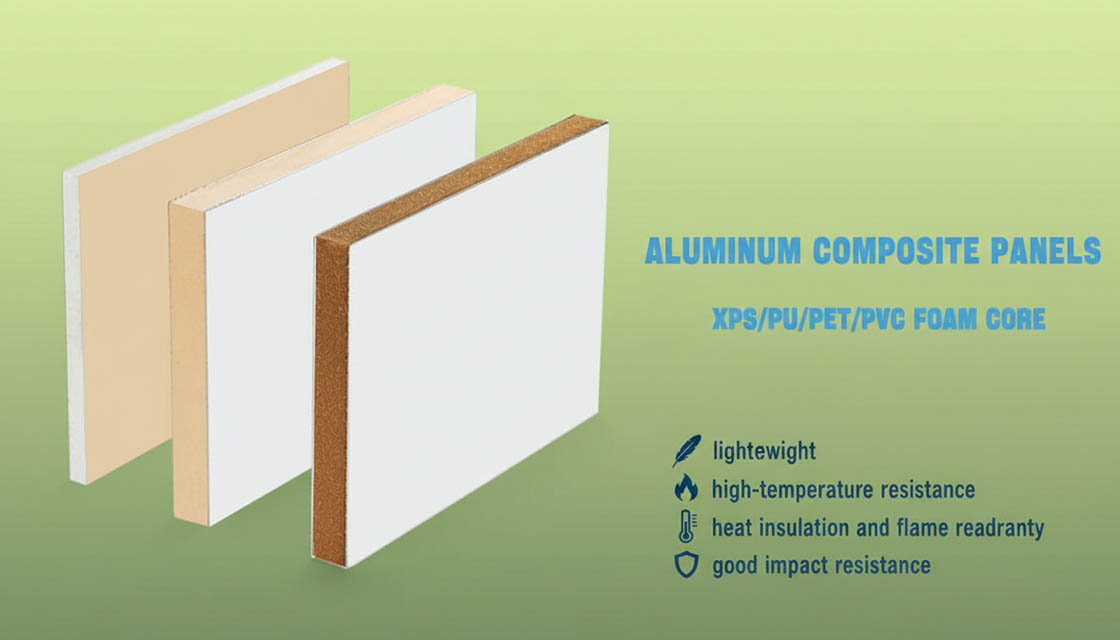
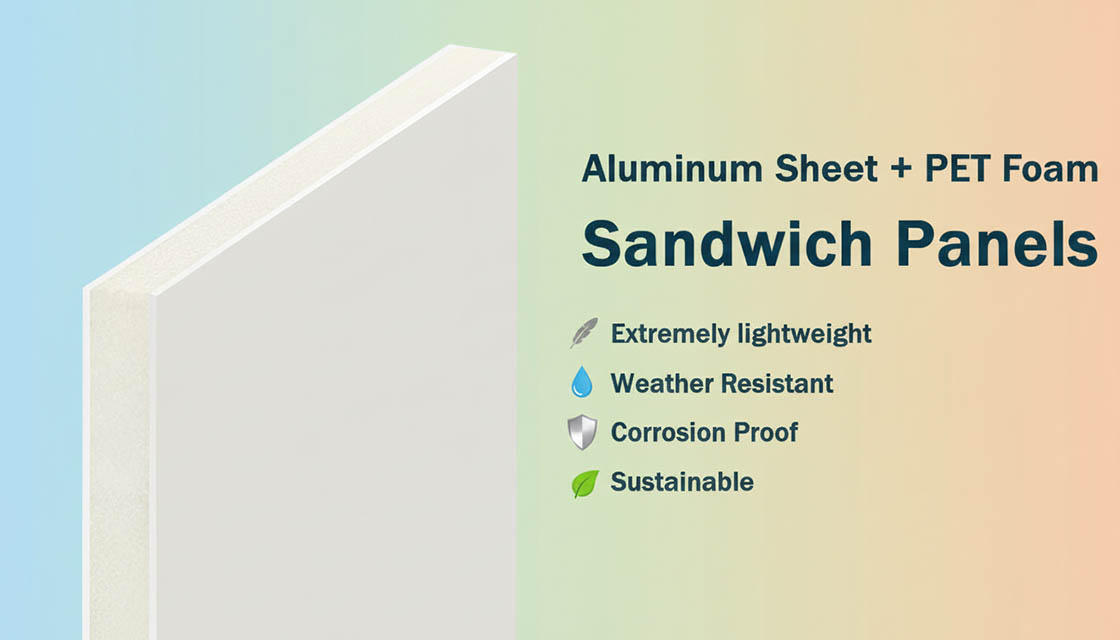
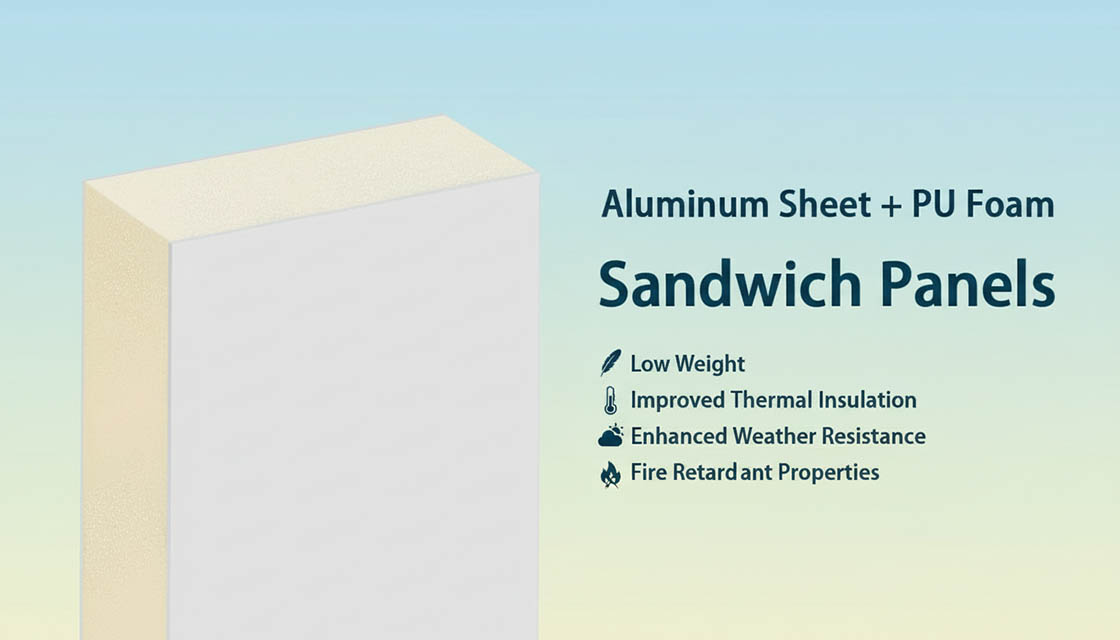
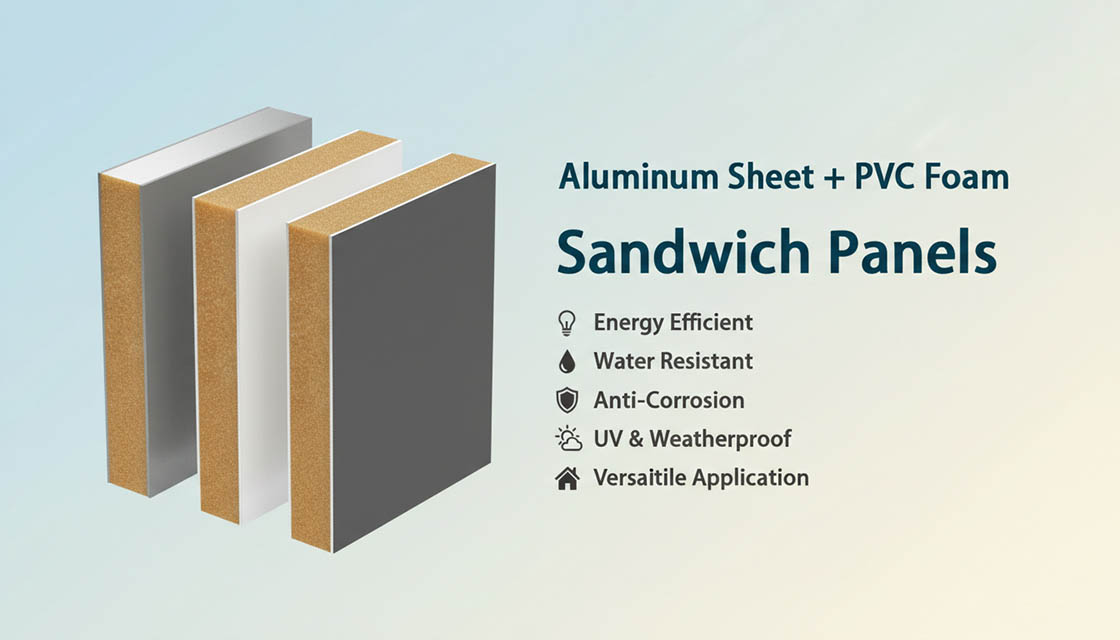
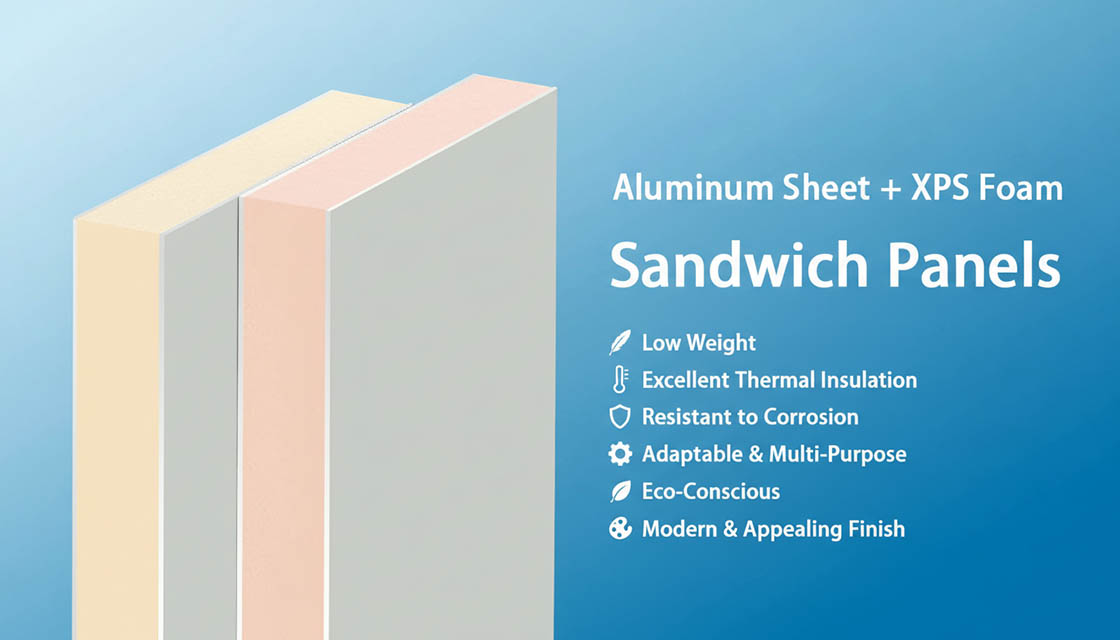
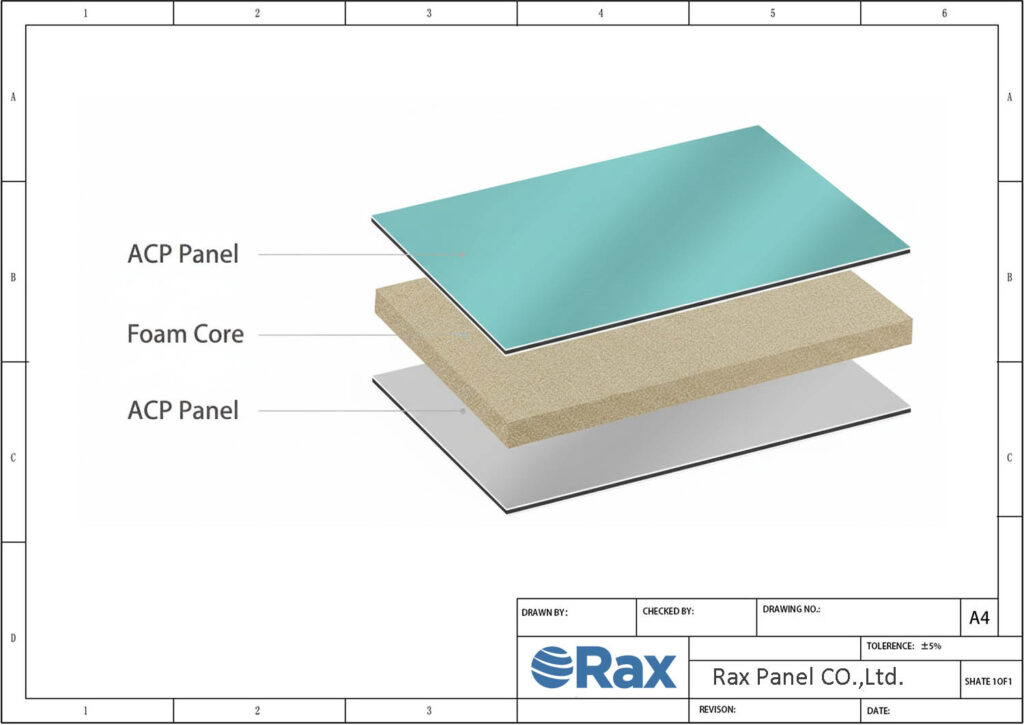
ACP Foam Core Panels combine two aluminum alloy skins with a lightweight foam core through lamination bonding. The aluminum skins utilize 1100, 3003, or 5005 alloys in thicknesses from 0.3mm to 2.0mm, while core materials include polyurethane (PU), extruded polystyrene (XPS), polyethylene terephthalate (PET), and polyvinyl chloride (PVC) foams with densities from 28kg/m³ to 280kg/m³.

Standard dimensions include widths of 1000mm, 1220mm, or 1500mm, lengths up to 5800mm, and thickness ranges from 20mm to 100mm. Surface treatments encompass pre-painted coatings including polyvinylidene fluoride (PVDF), fluoroethylene vinyl ether (FEVE), and polyethylene (PE), plus mechanical finishes like brushing, anodizing, and embossing. Color options range from mill finish to wood grain and stone patterns.

The panels deliver thermal insulation with conductivity as low as 0.03W/m·K for PU and XPS cores, moisture resistance, and electromagnetic shielding up to 90dB. Mechanical properties include compressive strength of 3-17MPa, bending strength of 3-15MPa, and energy absorption of 8-30J/cm³.

Applications span building facades, interior partitions, cold storage facilities, and transportation components. Processing utilizes standard tools including computer numerical control (CNC) machines, with fabrication services available for custom shapes and edge configurations.
ACP Foam Core Panel Manufacturer | Built for Performance

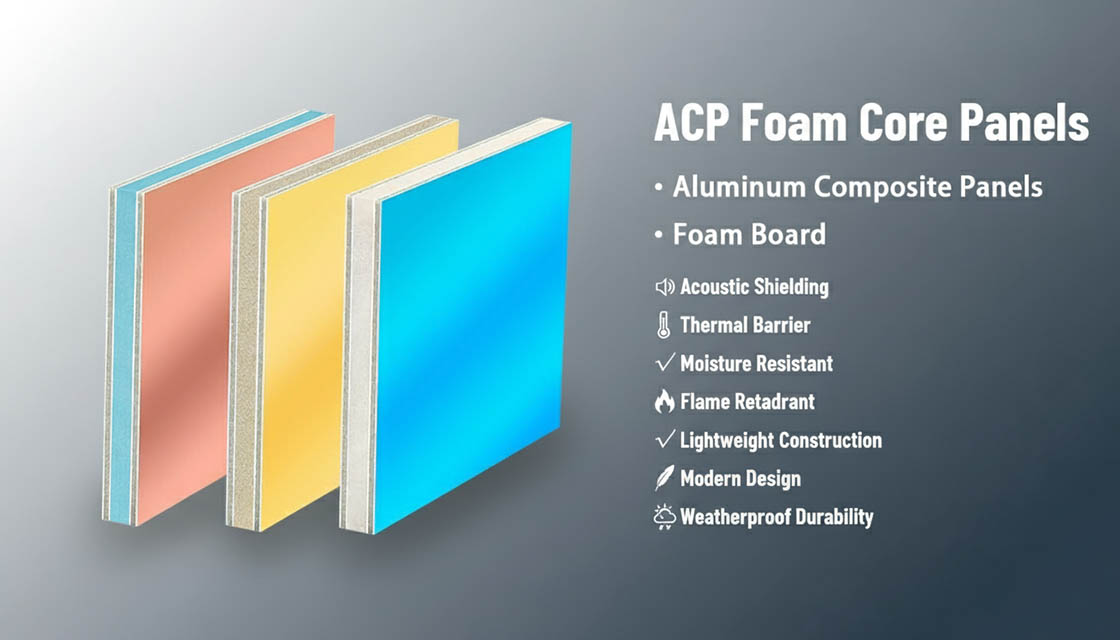
Introducing our revolutionary ACP Foam Core Panel, brought to you by RaxPanel, a direct manufacturer based in Hebei, China with 20+ years of experience specializing in custom composite panel solutions. Our aluminum foam core panel is a high-performance material designed for a wide range of applications, offering an exceptional combination of strength, light weight, and thermal conductivity.

With in-house R&D, design, and production capabilities, we ensure that every panel delivers superior performance, featuring:

  • A heat conductivity coefficient as low as 0.03W/m·k for excellent insulation
  • A density around 40kgs/m³ for easy handling and reduced structural weight

Serving clients in 30+ countries with a daily output of 1500+ m², we are committed to quality assurance and customer satisfaction, providing reliable, durable panels with smooth surfaces, diverse color options, and easy processability. Contact us today to learn more about how our ACP Foam Core Panel can benefit your next project.

Parameter Category Parameter Value / Specification
Dimensions Panel Thickness 20mm – 100mm
Panel Width 1000mm, 1220mm, 1500mm (or as required)
Panel Length Up to 5800mm (or as required)
Skin Layer Aluminum Alloy 1100, 3003, 5005
Skin Thickness 0.3mm – 2.0mm
Surface Treatment Pre-painted (PVDF, FEVE, PE), Anodizing, Mechanical (brushing, sandblasting, polishing, embossing)
Color & Finish Options Mill finish, metallic colors, solid colors, wood grain, stone grain
Core Material Core Type PU (Polyurethane) Foam, XPS (Extruded Polystyrene) Foam, PET (Polyethylene Terephthalate) Foam, PVC (Polyvinyl Chloride) Foam
Core Density 28 kg/m³ – 280 kg/m³
Pore Diameter 3mm – 8mm
Thermal Properties Thermal Conductivity ~0.03 W/m·K (for PU/XPS)
Mechanical Properties Compressive Strength 3 MPa – 17 MPa
Bending Strength 3 MPa – 15 MPa
Tensile Strength 2 MPa – 7 MPa
Energy Absorption 8 J/cm³ – 30 J/cm³
Physical Properties Water Absorption (PU) < 3%
Electromagnetic Shielding (below 200MHz) Up to 90 dB
Fabrication Panel Shape Flat, Curved, Custom
Panel Edge Standard open edge, closed edge, customized with aluminum extrusions
Processing Can be cut, drilled, shaped using standard woodworking or aluminum working tools (saws, blades, CNC)


    Related Products

    ACP Foam Core Panel Buyer & Specification Guide

    Selecting the right composite panel comes down to matching your mechanical load, insulation requirements, and environmental exposure. Below is a practical engineering guide to help you evaluate skin alloys, core materials, coatings, and fabrication options for your project.

    💡 Pro Tip: Preventing Surface Buckling Under Thermal Stress
    Aluminum skins expand naturally under direct solar radiation. To absorb differential thermal movement between the skin and foam core, RaxPanel applies flexible two-component polyurethane adhesives during automated vacuum lamination, preventing micro-delamination over long service lifespans.

    1. How to Choose the Right Aluminum Alloy and Skin Thickness

    Outer skin alloy selection determines structural strength and corrosion resistance:

    • 1100 Alloy: High formability; best for interior wall cladding, ceiling tiles, and indoor signage.
    • 3003 Alloy: Superior tensile strength; the standard choice for exterior building facades and commercial trailer walls.
    • 5005 Alloy: Excellent saltwater corrosion resistance; recommended for marine cabin partitions and coastal projects.

    2. How to Select the Best Foam Core Material for Your Project

    Each foam core material serves specific structural and thermal performance criteria:

    Foam Core Type Density Options Insulation Efficiency Primary Application
    PU (Polyurethane) Foam 35 – 50 kg/m³ ~ 0.022 – 0.028 W/m·K Cold storage rooms, freezers, and cold chain enclosures
    XPS (Extruded Polystyrene) 28 – 45 kg/m³ ~ 0.028 – 0.030 W/m·K Building envelope cladding requiring near-zero moisture absorption
    PET Foam 60 – 200 kg/m³ ~ 0.030 – 0.035 W/m·K 100% Recyclable composite bodies for RVs, trailers, and trucks
    PVC Foam 60 – 280 kg/m³ ~ 0.033 – 0.038 W/m·K Marine interiors and structural partitions needing strict fire compliance

    3. Which Surface Coating Will Keep Your Panels Looking New for 20+ Years?

    Surface coating specifies long-term color retention and UV protection:

    • PVDF Coating (70% PVDF Fluorocarbon Coating): 20+ Year exterior warranty against UV fading, chalking, and industrial pollutants.
    • FEVE Coating: High gloss retention and vivid color stability for modern architectural facades.
    • PE Coating: Cost-effective interior finish available in wood grain, stone texture, and solid colors.

    4. How Fire-Safe and Soundproof Are These Panels?

    🛡️ Compliance & Acoustic Notes:

    • Fire Performance: Flame-retardant core formulations comply with EN 13501-1 Class B-s1,d0 and GB8624 Class B1 fire codes.
    • Sound Reduction: Composite foam cores attenuate transmission noise by 24 dB to 30 dB relative to solid metal sheets.

    5. Where Are ACP Foam Core Panels Most Commonly Installed?

    🏢 Building Facades & Cold Rooms

    Weather-tight R-value insulation for building envelopes, cleanroom walls, and walk-in freezers.

    🚚 RV, Truck Body & Marine Fleets

    Weight-saving composite walls for refrigerated trucks, dry cargo trailers, and marine cabins.

    6. How to Cut, Groove, and Seal Edges During Installation

    Panels process easily with standard CNC routers or hand tools:

    • V-Groove Folding: Cut 90° V-grooves on the back skin to fold crisp architectural corners without paint cracking.
    • Edge Sealing: Options include standard open edges, folded skin edges, or aluminum extrusions to prevent moisture ingress.
    🏭 Factory Direct Supply
    RaxPanel supplies custom-fabricated composite panels directly to project sites worldwide, with daily capacity exceeding 1,500 m² and strict quality control on every batch.

    Frequently Asked Questions (FAQS)

    1. What are the standard panel thicknesses, maximum lengths, and width options available?
    Standard panel thicknesses range from 20mm up to 100mm, with custom core options up to 150mm. Standard widths include 1000mm, 1220mm, and 1500mm, with maximum single-sheet lengths up to 5800mm (5.8m) to fit standard ocean freight container dimensions. Custom skin thicknesses (0.3mm to 2.0mm) can be tailored to structural load requirements.
    2. How do I choose between PU, XPS, PET, and PVC foam cores for a specific project?
    Select PU (Polyurethane) for maximum thermal insulation efficiency in cold storage envelopes; XPS (Extruded Polystyrene) for near-zero moisture absorption (<1%) and freeze-thaw stability; PET for 100% recyclable, high fatigue shear strength in vehicle and RV bodies; and PVC for rigid structural partitions requiring high flame-retardant compliance in marine cabin interiors.
    3. What fire safety ratings and international quality standards do these composite panels meet?
    Fire-retardant core formulations meet EN 13501-1 Class B-s1,d0 and GB8624 Class B1 fire performance standards. Manufacturing quality is governed under ISO9001 management systems, with raw material performance verified under SGS, CE, and REACH testing for international compliance.
    4. Can ACP foam core panels be CNC grooved, bent, or edge-sealed on-site?
    Yes. The pre-painted aluminum skins can be V-grooved at 90° or 135° on the reverse skin using standard CNC routers or hand tools, allowing manual edge folding into architectural cassettes without surface paint cracking. Edge sealing options include open edges, folded skin capping, or interlocking aluminum extrusion profiles.
    5. What is the difference between PVDF, FEVE, and PE coatings for outdoor weatherability?
    70% PVDF Fluorocarbon Coating-based PVDF (Polyvinylidene Fluoride) coating provides a 20+ year weatherability warranty against UV fading, chalking, and acid rain on exterior building facades. FEVE delivers high gloss retention for architectural landmarks, while PE (Polyethylene) coating is cost-effective for interior wall partitions and signage.
    6. How can I request physical samples for engineering evaluation and testing?
    Custom composite sample kits—including specific skin-to-core combinations, alloy grades, and RAL color swatches—are available upon request for engineering evaluation. Standard sample preparation and international express dispatch typically take 3 to 5 business days.
    7. How are large panel shipments packaged to prevent freight damage during ocean transit?
    Panels are packed with protective PE film on both aluminum skins, separated by inter-sheet foam layers, and secured on heavy-duty export wooden pallets or CKD (Completely Knocked Down) steel crates. This prevents surface scratching or edge impact damage during 20ft and 40ft container shipping.

    Get A Quick Quotation Today