Aluminium Sandwich Panel vs Traditional Cladding

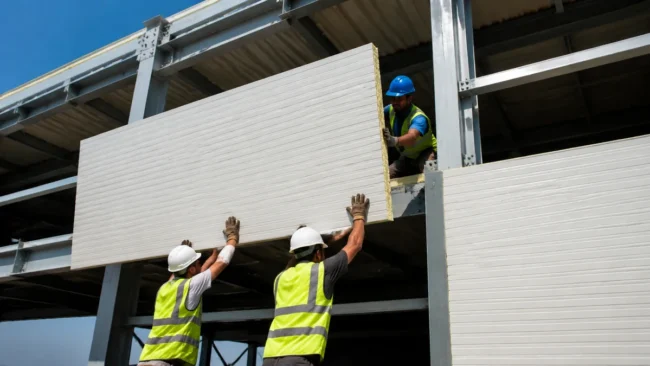
Aluminum sandwich panels weigh roughly 65 percent less than equivalent steel-faced panels — and a fraction of what brick or precast concrete imposes on your structural frame. That weight gap drives every major cost line downstream: footing depth, steel tonnage, crane capacity, container count, and the number of weeks your facade sits on the critical…

Modern industrial building's yellow facade with metal roof against clear blue sky.

Aluminium Sandwich Panels: Benefits and Applications

The aluminum sandwich panel market is projected to hit $71.4 billion by 2026, driven by the urgent need for high-performance building envelopes. Rax Panel manufactures composite sandwich panels with over 1,700 square meters of daily production capacity, delivering lightweight yet structurally rigid solutions for commercial and industrial projects. The core difference between a successful build…

Crop Storage Insulated Panel Thickness Guide

Selecting the correct crop storage panel thickness is the single most critical variable for long-term crop viability and energy efficiency in 2026. We see too many procurement engineers underspecify insulation for lateral bulk loads, leading to compressor overloads and rapid product spoilage. Rax Panel manufactures high-density composite panels with daily capacities exceeding 1,700 square meters,…

Aluminum Frame Cleanroom Door: Lab/Hospital Selection Guide

Procurement veterans know the silence of a failed inspection is louder than any budget overrun. We see it constantly: facilities managers defaulting to steel because they assume aluminum lacks the structural integrity for high-traffic hospital zones, unaware that modern alloy grades have fundamentally changed the durability equation. The real risk isn’t the door material itself,…

Best Time to Order Sandwich Panels for Your RV Build

Your assembly line goes dark for three weeks because a container of composite panels sits at port. Sound familiar? This plays out every quarter at facilities that treat panel procurement as a line item instead of a critical path. RV sandwich panel ordering deserves the same scheduling rigor as your chassis delivery — miss the…

How to Protect Structural Insulated Panels for the Long Term

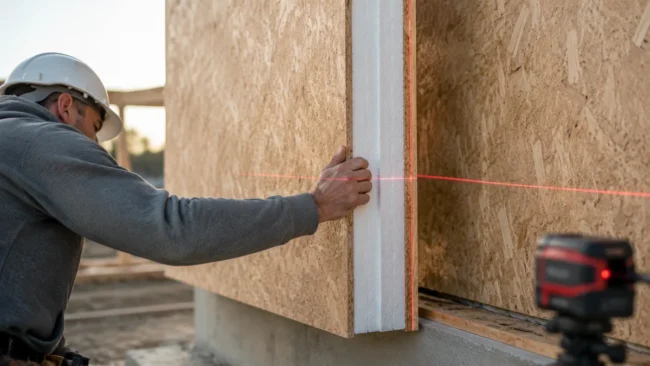
More than 95% of all structural insulated panels in North America rely on oriented strand board and expanded polystyrene. That combination delivers exceptional thermal performance but introduces a specific vulnerability: moisture intrusion at the panel interfaces. Protecting structural insulated panels requires addressing the weak points where the building envelope meets the rigid foam core, not…

How SIP Panels Transfer Building Loads

Stop treating Structural Insulated Panels like insulated drywall. They are composite structural members that transfer loads through skin-to-core shear interaction, meaning the OSB facings and the EPS or GPS core act as a single I-beam rather than separate layers. Understanding sip load transfer mechanics is the difference between a code-compliant envelope and a structural failure…

Sandwich Panel Certifications Guide: ISO, EN & CE for 2026

In 2026, a missing Notified Body number on a CE certificate can stop your entire shipment at customs. Most procurement teams never catch the gap until the building inspector shows up on site. Sandwich panel certifications divide into three categories that serve completely different functions: ISO 9001 controls manufacturing process consistency, EN standards like EN…

How SIPs Reduce Building Energy Loss 2026

Commercial procurement officers know that standard R-value ratings ignore the reality of thermal bridging, a silent killer of building energy loss that sticks framing cannot solve. At Rax Panel, our 15 years of integrated R&D prove that Structural Insulated Panels deliver up to 15 times greater airtightness than traditional methods, eliminating the conductive heat transfer…

A Guide to Cold Room Panels – How We Insulate Our Cold Rooms

Cold room panel types comparison isn’t just about picking the cheapest core material; it’s about preventing the silent energy drain that kills your profit margins. We’ve seen facilities lose up to 30% of their cooling capacity to poor thermal envelope design, specifically where structural gaps let heat bypass the insulation entirely. This guide cuts through…