
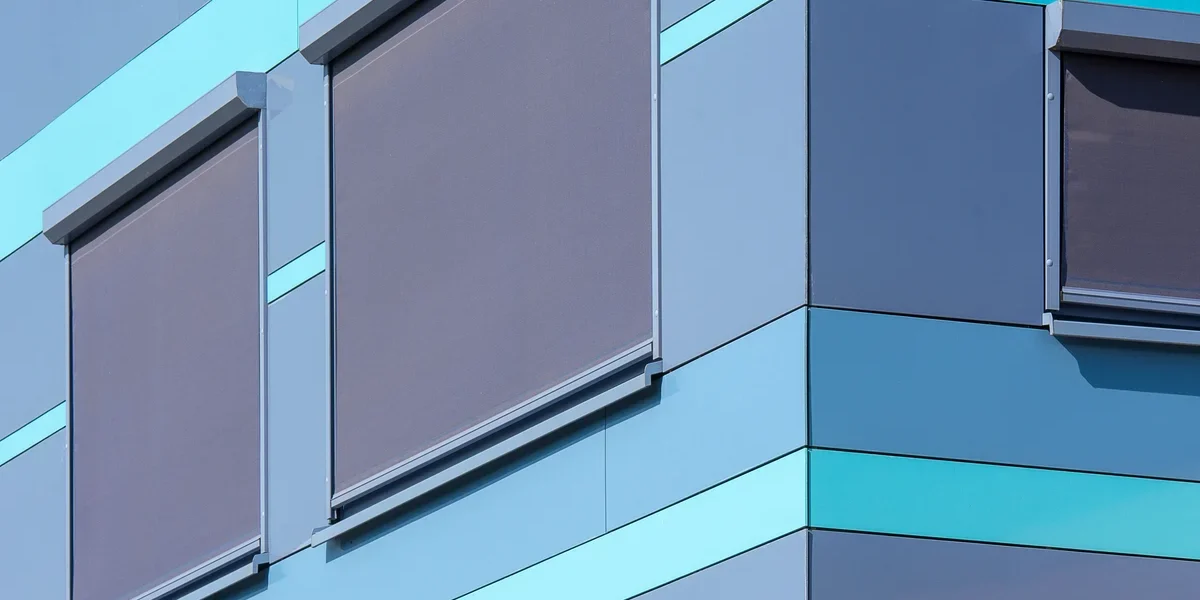
The core material in composite panels is where the real performance differences emerge. Procurement managers often assume MCM and ACM panels are interchangeable because they look identical on the jobsite. That visual similarity can be misleading. While the skins may match, the internal core composition dictates regulatory compliance. At RaxPanel, we consistently see specification errors where a standard polyethylene core is selected for projects requiring maximum safety. Although polyethylene-core ACM meets the Class A fire rating per ASTM E84, mineral-filled variants are necessary to satisfy ICC 1407 compliance on buildings exceeding 40 feet in height.
This article cuts through the marketing noise to compare the structural rigidity, thermal insulation values, and fabrication realities of both materials. We examine the weight-to-stiffness ratios that impact your logistics and the specific core composition differences that affect fire performance. You will learn exactly when to specify the higher-cost MCM option and where a standard ACM panel provides better lifecycle value without sacrificing compliance.
What Makes MCM and ACM Different?
The difference between MCM and ACM comes down to three things: what’s inside the core, how it reacts to heat, and how the skin-to-core ratio dictates stiffness. Get these wrong and you risk code failures and costly rework.
Core Material Composition and Density Variations
The core is where MCM and ACM diverge most dramatically, and it’s also the part buyers can’t see once the panel is installed. ACM panels typically use a polyethylene (PE) core as the baseline, with fire-rated (FR) mineral-filled variants available for projects that demand higher combustion performance. These cores are dense, uniform, and engineered for consistent flatness across large panel spans.
MCM panels, operating under the broader umbrella, pull from a much wider core library. Depending on the skin material and end use, MCM cores can range from cross-linked polyethylene (XPS) and polyurethane (PU) to polyvinyl chloride (PVC), phenolic, and even honeycomb structures made from paper, aluminum, or aramid fibers. That flexibility is what makes MCM a more generic classification — the performance profile depends entirely on which core-skin combination the specifier selects.
Density variations between the two categories directly affect handling, fastener pull-out resistance, and the ability to route or fabricate edges without core exposure. ACM’s PE core sits at a predictable density band, which is why it remains the default choice for signage and facade cladding where dimensional stability matters most. MCM’s broader core palette means density can swing significantly, which is why our engineering team always asks for the project’s load and fabrication requirements before recommending a configuration.
Fire Performance and Thermal Insulation Values
Fire performance is the single most consequential difference between these two panel types, and it’s also where the most dangerous assumptions happen in the field. A standard ACM panel with a PE core is combustible by definition. The “FR” designation on an ACM panel means the core has been mineral-filled to slow flame spread, but it does not make the panel non-combustible. This distinction matters enormously for projects subject to NFPA 285 or equivalent fire code assemblies.
MCM panels span the entire fire performance spectrum because the core dictates the rating. A mineral-core or honeycomb-core MCM panel can achieve non-combustible classifications that a standard ACM panel simply cannot match. Conversely, an XPS-core MCM panel may behave more like a PE-core ACM panel in a fire scenario. The takeaway for specifiers is clear: never assume fire performance from the panel’s exterior appearance or even its “ACM” label. Request the core specification and the tested assembly rating before committing to a product.
Thermal insulation values follow a similar logic. ACM panels with PE cores offer modest insulating properties, while MCM panels built with PIR, phenolic, or thick XPS cores deliver meaningfully higher R-values per inch. For insulated cladding and refrigerated transport applications, that difference isn’t academic — it determines whether the assembly meets energy code thresholds without adding separate insulation layers.
Structural Rigidity and Weight-to-Stiffness Ratios
Structural rigidity in composite panels is a function of skin material, skin thickness, core density, and core architecture — not just the total panel thickness. ACM panels are engineered for a specific stiffness-to-weight balance that works exceptionally well for flat or gently curved facade applications and vehicle bodies. The aluminum skin bonded to a uniform polymer core creates a predictable bending modulus that fabricators can rely on for standard span applications.
MCM panels can exceed ACM’s rigidity in specific configurations, particularly when honeycomb cores are paired with metal or composite skins. A fiberglass-reinforced thermoplastic (CFRT) skin over an aramid honeycomb core, for example, produces a panel with a stiffness-to-weight ratio that rival materials engineered for aerospace and high-performance transportation. But achieving that performance requires deliberate engineering — it doesn’t happen by default the way it does with a standard ACM panel.
Weight-to-stiffness ratios also determine installation logistics. Lighter panels reduce structural support requirements and lower shipping costs per square meter, but only if the stiffness is sufficient to prevent deflection under load. In our testing across multiple project specifications, we’ve found that ACM panels in the 4mm to 6mm range deliver the best balance for most cladding and transport body applications, while MCM configurations targeting higher rigidity often require core thicknesses that shift the weight equation. That’s why we run experimental tests on custom core-skin combinations before they go into production.
Surface Finish Options and Impact Resistance
Surface finish capabilities differ between MCM and ACM primarily because of the skin materials available. ACM panels are limited to aluminum skins, which accept PVDF, polyester, and primer coatings with excellent color consistency and formability. Aluminum skins can be rolled, bent, and routed without cracking, which is why ACM dominates the signage and architectural cladding markets. The trade-off is that aluminum skins dent under point impact, and the visible deformation is difficult to repair in the field.
MCM panels open the door to steel, stainless steel, zinc, copper, GRP, CFRT, and Aluzinc skins — each bringing distinct impact resistance and aesthetic profiles. A stainless steel-skinned MCM panel will outperform an ACM panel in high-traffic or high-abuse environments. A CFRT-skinned panel offers superior impact resistance compared to aluminum while remaining significantly lighter than solid metal alternatives. The finish options also extend to textured and patterned surfaces, particularly with metallic skins that develop natural patinas over time.
For B2B buyers evaluating these options, the impact resistance question should always be tied to the application environment. RV and truck body panels face stone chips, vibration, and handling abuse — here, GRP or CFRT skins on MCM configurations often prove more resilient than standard ACM. Architectural facades in low-traffic areas may not need that level of impact resistance, making ACM’s superior formability and finish consistency the more practical choice. Matching the skin material to the actual service conditions, rather than defaulting to the most recognizable panel type, is what separates a well-specified project from a costly correction after installation.
| Comparison Factor | MCM (Metal Composite Material) | ACM (Aluminum Composite Material) | Core & Safety Note |
|---|---|---|---|
| Category Definition | Umbrella term for any two metal sheets bonded to a core. | Specific subset of MCM using two sheets of aluminum. | ACM is the industry standard for lightweight cladding and transportation. |
| Skin Material | Can use Zinc, Copper, Stainless Steel, or Aluminum skins. | Strictly composed of two aluminum sheets. | Aluminum skins offer optimal strength-to-weight ratio for cladding and transportation applications. |
| Core Composition | Varies depending on the specific metal skin and application. | Typically Polyethylene (PE) or Fire-Rated Mineral cores. | Fire performance relies on the core; PE is combustible while Mineral and Honeycomb cores are fire-resistant. |
| Application & Cost | Often used for high-end architectural projects with exotic metals. | Cost-effective choice for signage, walls, and vehicle bodies. | Widely used in RV and Truck solutions for durability and weight reduction. |
| Performance Variability | Highly variable based on metal type (e.g., Zinc patinas). | Consistent flatness, flexibility, and weather resistance. | Custom core combinations (XPS, PET, Honeycomb) can be engineered to meet rigorous project data standards. |
How MCM and ACM Compare on Durability, Weight, and More
Weight and Structural Load Implications
When evaluating structural load, the primary differentiator between MCM and ACM is the density of the metal skins. ACM panels utilize two thin sheets of aluminum, which has a density of approximately 2.7 g/cm³. This makes ACM panels significantly lighter than many alternative cladding options, typically ranging from 2.5 to 5.5 kg per square meter depending on thickness. This low weight reduces the dead load on the building structure, often allowing for lighter steel support systems and lowering overall construction costs.
The choice of skin metal in MCM panels directly determines both weight and structural performance. In contrast to ACM, MCM panels employ skins of stainless steel, zinc, copper, or titanium. Stainless steel (~7.9 g/cm³), copper (~8.9 g/cm³), and zinc (~7.1 g/cm³) fall within a high density range of 7.0 to 8.9 g/cm³, while titanium is notably lighter at approximately 4.5 g/cm³. Despite this variance, these materials are significantly denser than the aluminum used in ACM, making MCM panels substantially heavier even at similar thicknesses (often 4mm to 6mm). However, this weight contributes to higher rigidity. It is critical to calculate the load-bearing capacity of the substrate; while ACM can often be retrofitted to existing structures with minimal reinforcement, MCM systems typically require more robust structural support to accommodate the increased mass.
Durability and Impact Resistance
Durability in cladding is defined by resistance to surface damage, denting, and environmental corrosion. MCM panels generally offer superior surface hardness due to the inherent properties of metals like zinc and copper. For instance, zinc forms a self-healing patina (hydroxyl carbonate) that protects the material from corrosion without requiring paint. Stainless steel variants provide exceptional resistance to harsh coastal environments or industrial pollutants where aluminum might be susceptible to pitting if the coating is compromised.
ACM panels, while durable, are more susceptible to surface denting because aluminum is softer than steel or copper. The durability of ACM is heavily reliant on the thickness of the aluminum skins (commonly 0.30mm, 0.40mm, or 0.50mm). Thinner skins may deform under impact, known as “oil-canning” or surface waviness. However, the polyethylene or mineral cores in ACM provide a degree of flexibility, allowing the panel to absorb minor impacts without fracturing, whereas harder MCM skins might transfer impact energy directly to the fasteners or substrate if not properly detailed.
Fire Resistance and Safety Compliance
Fire performance remains the most scrutinized technical metric in the industry. The core material is the decisive factor here, not the metal skin. ACM panels are available with two distinct core types: Polyethylene (PE) and Fire-Retardant (FR) or mineral-filled cores. Standard PE core ACM poses a significant fire risk and is often restricted to low-rise applications or interior uses due to its combustibility. To meet stringent building codes for high-rises, architects must specify ACM with FR cores that achieve a Class A rating per ASTM E84 (or equivalent EN 13501-1 Class B).
MCM panels are frequently specified for high-end institutional and civic projects where fire codes are most rigorous. These panels are almost exclusively manufactured with fire-retardant mineral cores as a standard configuration. The combination of a non-combustible or low-combustibility core with high-melting-point metal skins (like steel or copper) provides a higher inherent fire resistance compared to standard PE-core ACM. When evaluating lifecycle safety, MCM often presents a more “compliance-ready” solution, whereas ACM requires strict verification of core composition to ensure it meets the specific fire ratings of the jurisdiction.
Decision Factor: While ACM offers the best strength-to-weight ratio for standard commercial projects, MCM is the superior choice for environments demanding high impact resistance, premium patina aesthetics, or strict non-combustibility.
Technical Comparison Matrix
| Performance Metric | ACM (Aluminum Composite Material) | MCM (Metal Composite Material) |
|---|---|---|
| Skin Material | Two sheets of Aluminum Alloy (3000 or 5000 series) | Zinc, Copper, Stainless Steel, or Titanium sheets |
| Typical Weight | Light (approx. 3–6 kg/m² for 4mm panel) | Heavy (approx. 7–12 kg/m² depending on metal skin) |
| Impact Resistance | Good, but prone to denting if skin thickness is < 0.30mm | Excellent; high surface hardness prevents dents |
| Core Variability | High (Combustible PE vs. Fire-Retardant Mineral) | Low (Standardized Fire-Retardant Mineral Cores) |
| Best Application | Corporate offices, Retail, Canopies, Signage | High-rises, Hospitals, Civic Centers, Coastal Exteriors |
Which Panel Type Saves You More Money?
ACM panels typically deliver the lowest upfront material cost, but MCM can win on total project economics when structural savings, fabrication efficiency, and code compliance are factored in.
The question of which panel type saves more money doesn’t have a single answer. It depends entirely on your project profile, local labor rates, and how deeply you factor in the hidden costs that show up after the material quote is signed. On paper, ACM panels usually carry the lowest per-square-foot price tag, especially in standard PE-core configurations. But the real cost delta often hides in structural support requirements, fabrication tooling, and code-driven retrofit expenses.
Where ACM Delivers the Clear Cost Edge
For standard exterior cladding on low- to mid-rise buildings, ACM is almost always the more economical choice on a straight material-and-install basis. The PE-core variants in particular sit at the bottom of the cost spectrum, and their lightweight nature means less structural steel is needed behind the facade. That steel savings compounds quickly on larger projects.
ACM also benefits from decades of established fabrication infrastructure. Most panel fabricators already own the tooling, training, and workflows to cut, bend, and finish ACM panels without special adaptation. That means lower labor hours, less scrap waste during fabrication, and faster project timelines — all of which translate directly into cost savings that don’t appear on a material price sheet.
- Lower material cost per square foot — especially for PE-core ACM in standard thicknesses and colors
- Fabrication familiarity — widely available tooling and skilled labor reduce processing time and waste
- Reduced structural steel requirements — lightweight panels mean smaller subframes and simpler supporting structures
- High container loading efficiency — flat-packed ACM maximizes freight utilization, cutting per-unit shipping costs
Where MCM Can Flip the Economics
MCM panels occupy a different cost position, and they become the more economical choice in specific scenarios. The primary driver is code compliance. In jurisdictions that require Class A fire-rated facades or NFPA 285 compliance, ACM panels — particularly PE-core variants — may need additional fire barriers, retrofit assemblies, or even be ruled out entirely. Those compliance costs can easily erase ACM’s material price advantage.
MCM’s mineral-based composition inherently meets strict fire ratings without supplemental systems. When you factor in the avoided cost of fire-rated underlayments, specialized installation protocols, and potential inspection delays, the total project cost can shift in MCM’s favor — even if the per-panel price is higher at purchase.
Additionally, MCM panels offer design flexibility that can reduce secondary material costs. Their ability to mimic stone, brick, or textured finishes eliminates the need for separate cladding materials on accent sections, reducing both material procurement and labor for mixed-material installations.
- Inherent fire rating compliance — mineral composition meets Class A and NFPA 285 requirements without added fire barriers
- Elimination of retrofit assemblies — no need for supplemental fire-rated underlayments in strict code jurisdictions
- Decorative versatility — realistic stone, brick, and texture finishes reduce the need for secondary cladding materials
- Lower long-term maintenance in harsh environments — UV and weather resistance can reduce repaint or replacement cycles
The Volume and Scale Factor
Project scale significantly influences which panel type saves more money. On large-scale commercial projects where container loads are fully utilized and fabrication runs are long, ACM’s cost advantages compound. The per-square-meter shipping cost drops, fabrication waste percentages decrease, and labor efficiency gains from repetition all favor ACM.
On smaller or specialized projects — such as renovation work with complex geometries, limited storage space, or tight delivery windows — MCM’s lighter weight and easier handling can reduce crane rental time, simplify on-site logistics, and lower the risk of damage during installation. Those operational savings matter more on smaller projects where fixed costs like mobilization and equipment rental don’t spread as efficiently.
Regional Cost Variables
Geographic location introduces another layer of cost variation. In regions with strict fire codes — such as California, parts of the Northeast corridor, and major metropolitan areas in Australia and the Middle East — the compliance premium on ACM can be substantial. Buyers in these markets should budget for fire-rated assembly costs or consider MCM as the default option to avoid compliance risk.
Conversely, in markets where fire code requirements are less restrictive and ACM is the dominant facade material, the established supply chain and competitive pricing often make ACM the clear cost winner. Local availability of fabrication specialists also plays a role — if your region has a deep pool of ACM-trained installers, labor costs will stay lower compared to markets where MCM installation requires more specialized training.
Decision Framework: Which Saves You More?
The most reliable approach is to run a side-by-side total cost comparison specific to your project. Use the following framework to ensure you’re comparing apples to apples:
📋 Cost Comparison Checklist
- Step 1: Identify your local fire code requirements and determine whether ACM PE-core panels need supplemental fire-rated assemblies.
- Step 2: Calculate structural support costs for each panel type based on weight differences — ACM is lighter but honeycomb or solid aluminum variants change the equation.
- Step 3: Obtain fabrication quotes from local shops familiar with each panel type; labor rates and scrap percentages can vary significantly by material.
- Step 4: Factor in freight costs based on panel weight and container loading efficiency for your shipment volume.
- Step 5: Estimate 15-year maintenance costs, including cleaning, repaint cycles, and potential replacement of damaged panels.
When you complete this analysis, the answer to “which saves more money” will be clear for your specific project. In many cases, the panel type with the higher material cost delivers the lower total project cost once all variables are accounted for. The key is refusing to let the material quote be the final word on economics.
| Panel Type | Material Cost Tier | Weight & Transport Savings | Installation Efficiency | Economic Use Case |
|---|---|---|---|---|
| ACM (PE Core) | Lowest Material Cost | Lightweight structure reduces freight; high packing efficiency per container | Standard fabrication and easy routing reduce labor hours | Budget-friendly signage, interior cladding, and low-rise applications |
| ACM (Fire-Rated Mineral Core) | Moderate Material Cost | Lighter than solid metal; retains shipping efficiency | Standard fabrication similar to PE core; no specialized tools needed | Exterior cladding where code compliance avoids expensive retrofitting |
| Aluminum Honeycomb Panel | High Initial Material Cost | Ultra-lightweight core minimizes structural steel costs and maximizes load capacity | Flatness allows large spans; fewer fasteners reduce framing time | Large-scale projects where substructure and freight savings offset material cost |
| Solid Aluminum Plate | Highest Material Cost | Heavy weight significantly increases freight and foundation requirements | Requires heavy lifting equipment and specialized labor | Niche heavy-duty industrial use; generally cost-prohibitive for standard facades |
When to Choose MCM vs ACM in Practice
Scenario 1: Complex 3D Fabrication and Signage
When the project design demands complex geometry, such as routed letters, channel letters, or intricate column wraps, Aluminum Composite Material (ACM) is the superior operational choice. Its unique composition—two thin aluminum skins bonded to a thermoplastic core—provides exceptional flexibility that standard Metal Composite Materials (MCM) or solid plates cannot match without specialized and expensive brake pressing equipment.
For signage applications, fabricators prioritize ACM because it can be easily cut, routed, and folded. The standard thickness for exterior signage and cladding is typically 4mm (approximately 0.16 inches), with 3mm (approx. 0.12 inches) serving as the standard for interior applications. This gauge offers the optimal balance between flexural strength for routing and sufficient flatness for the finished surface.
- Formability: ACM allows for tight fold radii, enabling the creation of 3D boxes and trays from a single sheet, reducing welding joints and installation time.
- Weight Reduction: Compared to solid aluminum plates of equivalent size, ACM is significantly lighter, reducing the load on support structures and simplifying installation mechanisms for overhead signage.
If the fabrication scope requires extensive CNC routing and folding for architectural features or wayfinding, ACM is the only practical choice to maintain budget and schedule efficiency.
Scenario 2: High-Traffic Interiors and Impact Resistance
In environments where walls and surfaces are subject to physical impact—such as hospitals, airports, schools, and retail interiors—the decision shifts towards the durability of the skin. While standard ACM offers decent impact resistance, MCM panels with thicker metal skins (often 0.5mm to 1.0mm per side, compared to the 0.3mm or 0.5mm typical of standard ACM) provide superior dent resistance and structural integrity.
For high-traffic zones, specifiers should consider the “oil-canning” effect (waviness) and dent susceptibility. A standard ACM panel with 0.21mm skins may deform under impact from carts or luggage. In these scenarios, a heavier-gauge MCM or a specialized ACM variant reinforced with impact-resistant cores is the optimal solution to minimize lifecycle maintenance costs.
- Skin Thickness: Verify the total aluminum thickness (TAT). For high-impact zones, specify a TAT of at least 0.8mm or higher to prevent surface deformation.
- Core Density: High-density mineral cores or specialized thermoplastic cores can increase the panel’s sheer strength, preventing delamination under sudden stress.
Scenario 3: Coastal Environments and Long-Term Exposure
Both ACM and MCM panels are utilized in exterior cladding, but the choice in coastal or corrosive environments hinges on the coating system and edge sealing rather than just the panel category. Standard ACM panels perform well if they utilize a high-performance coating system, such as PVDF (Polyvinylidene Fluoride) with a minimum of 70% Kynar resin.
However, the practical difference lies in the installation detailing. Because ACM panels consist of two layers of metal, the exposed core at the cut edges can be a point of failure if moisture penetrates the sealant. In practice, projects in salt-spray environments often select MCM systems with fully sealed joints or utilize ACM with strict edge-sealing protocols. If the project budget allows, natural metal MCMs (like Zinc or Copper composites) offer a self-healing patina that handles coastal weathering differently than the painted surface of an ACM, which may require more frequent maintenance.
Never use standard PE (Polyethylene) core ACM in applications requiring a non-combustible assembly. While both ACM and MCM look similar visually, the fire performance varies drastically by core composition. Always verify the core type (FR, Mineral, or A2) matches the local building code requirements before specifying for exterior cladding.
Picking the Right Panel for Your Project
Balancing Initial Cost with Lifecycle Value
The cheapest panel on the spec sheet is rarely the cheapest panel over the life of the project. Procurement teams who optimize only for upfront material cost routinely underestimate the total cost of ownership, which includes insurance premiums, fire-code remediation, maintenance cycles, and replacement downtime. A fire-rated mineral-core ACM panel may carry a 15–25% premium over a standard polyethylene-core alternative, but that premium often pays for itself through reduced building insurance costs and a single-pass inspection result. We see this play out repeatedly in our engineering consultations: buyers who lock in a lower-cost core material frequently return within 18 months asking for a retrofit because their authority having jurisdiction (AHJ) rejected the assembly.
Lifecycle value should be calculated across four dimensions: initial material cost, installation labor, code-compliance risk, and expected service life. Panels with combustible cores may lower your bill of materials but introduce a hidden cost layer in the form of additional fire-stopping requirements, cavity barrier installations, and potential system-level re-certification. When we evaluate a project for a client, we model the full lifecycle cost before recommending a core material, because the decision is never just about price per square meter.
- Initial Cost: Standard PE-core ACM panels sit at the lowest price tier; mineral-core and A2-rated variants command a premium.
- Installation Labor: Heavier or more rigid panels increase handling time and may require specialized tooling.
- Code-Compliance Risk: Non-compliant assemblies trigger retrofit costs that far exceed the original panel price difference.
- Service Life: Higher-grade cores and facings extend replacement intervals, reducing long-term capital expenditure.
Compliance with Local Building and Fire Codes
Fire code compliance is where most specification errors surface, and the consequences are severe. A critical distinction that every specifier must understand is the difference between panel-level fire ratings and assembly-level fire ratings. A panel may carry an ASTM E84 Class A surface flame spread rating in isolation, but when installed as part of a complete wall system—including insulation, air gaps, and mounting hardware—the entire assembly must be evaluated. Several jurisdictions now require full-wall system testing under standards such as NFPA 285, and a panel that passes individually may cause the assembly to fail.
Mastering these technical fire safety distinctions is just the beginning of the compliance process. Specifiers must also navigate a complex regulatory landscape that shifts based on the building’s location and height.
Building codes vary significantly by region and by building height. High-rise constructions typically face stricter requirements than low-rise commercial buildings. In the United States, IBC and NFPA 285 govern exterior wall fire performance for buildings over a certain height. In the European market, the Euroclass system (A2-s1,d0 being the highest rating) applies. Specifiers working across multiple jurisdictions must track which standard governs each project location. We maintain a working knowledge of these regional requirements because our global client base spans over 50 countries, and a specification that passes in one market may not be acceptable in another.
- Panel-Level Rating: ASTM E84 Class A measures surface flame spread and smoke development of the panel material itself.
- Assembly-Level Rating: NFPA 285 or equivalent tests the complete wall assembly including insulation and cavities.
- Regional Standards: Euroclass (EU), ASTM (US), AS/NZS (Australia/New Zealand)—each jurisdiction has distinct requirements.
- Building Height Thresholds: Many codes impose stricter requirements on mid-rise and high-rise construction.
Fabrication Complexity and Installation Logistics
The fabricability of a panel directly impacts project timeline and labor cost. ACM panels with aluminum facings can be cut, bent, and formed using standard metalworking equipment, but the core material determines how cleanly the panel behaves during fabrication. Honeycomb-core panels, for example, require specialized edge-sealing procedures to prevent moisture ingress into the core structure. Foam-core panels cut more easily but may require specific blade types to avoid core delamination or melting.
Bending and forming capabilities also vary by construction. Solid aluminum panels offer superior formability for curved or radiused applications, while composite panels with rigid foam cores have limited bend radii and may fracture the facing if over-bent. For projects requiring complex geometries, we recommend evaluating the panel’s minimum bend radius before committing to a specification. Our engineering team routinely performs formability testing during the specification phase to ensure the selected panel can accommodate the design intent without compromise.
Installation logistics extend beyond fabrication. Panel dimensions, weight, and packaging affect shipping costs and on-site handling. Large-format panels reduce joint count and installation time but require heavier lifting equipment and more careful transport. For projects with limited site access or tight delivery windows, modular panel sizes and standardized packaging can make a meaningful difference in schedule adherence.
- Cutting: Foam-core panels cut cleanly with carbide-tipped blades; honeycomb cores require edge sealing after cutting.
- Forming: Solid aluminum panels offer the greatest bending flexibility; composite panels have limited bend radii.
- Edge Protection: Exposed honeycomb cores must be sealed to prevent moisture wicking and core degradation.
- Shipping: Large-format panels reduce on-site joints but increase transport and handling requirements.
Performance in Extreme Weather and Humidity
Environmental exposure is a defining factor in panel selection, particularly for projects in coastal, high-humidity, or extreme-temperature climates. The core material plays a decisive role in moisture resistance. Closed-cell foam cores such as XPS, PET, and PVC exhibit very low water absorption rates and maintain structural integrity in wet environments. Open-cell or hygroscopic cores can absorb moisture over time, leading to core swelling, facing delamination, and reduced thermal performance.
Coastal applications introduce an additional challenge: salt corrosion. Aluminum facings with appropriate coating systems (PVDF or fluoropolymer finishes) provide excellent corrosion resistance, but the edge conditions and fastener points remain vulnerable. We recommend specifying sealed-edge constructions and corrosion-resistant fasteners for any project within a defined coastal zone. Our factory produces panels with gelcoat-treated GRP facings that provide an additional waterproof barrier, which our marine and coastal clients rely on for long-term performance.
Thermal cycling also affects panel performance. Expansion and contraction cycles can stress facings and adhesives, particularly in climates with extreme temperature swings. Panels with higher thermal stability cores and robust adhesive bonding systems maintain their integrity over repeated cycling. When evaluating panels for extreme climates, we recommend requesting thermal cycling test data from the manufacturer rather than relying solely on nominal specifications.
- Moisture Resistance: Closed-cell foam cores (XPS, PET, PVC) resist water absorption; open-cell cores are vulnerable in humid environments.
- Coastal Corrosion: PVDF-coated aluminum facings and sealed-edge constructions are essential for salt-exposed applications.
- Thermal Cycling: Robust adhesive bonding and dimensionally stable cores prevent facing delamination under temperature swings.
- Test Verification: Request thermal cycling and moisture resistance test data before specifying for extreme climates.
Key Takeaway: Selecting the right panel requires evaluating four interdependent factors—lifecycle cost, code compliance, fabrication logistics, and environmental performance. A decision based on any single factor in isolation carries significant risk. Engage your supplier’s engineering team early in the specification process to validate your choices against project-specific requirements.
Conclusion
ACM panels with polyethylene cores deliver on cost and ease of fabrication for low-rise facades and signage. MCM panels with mineral cores belong on high-rises, fire-rated assemblies, and projects where local codes demand Class A ratings. The math is straightforward: if your authority having jurisdiction requires non-combustible cladding, ACM with a PE core won’t clear inspection — and retrofitting later costs more than the panel premium upfront. Pick the core that matches your code envelope, not your budget timeline.
Share your project square footage, elevation drawings, and local fire-code requirements with our engineering team and we’ll pull a thickness and core recommendation within 24 hours. We hold ISO 9001 certification and maintain in-house ASTM E84 testing on every mineral-core batch we ship, so you get documented fire ratings that stand up to submittal review. No obligation — just a technical call and a spec sheet you can take to your contractor.
Frequently Asked Questions
Is MCM the same as ACM?
No. ACM specifically refers to aluminum composite material with aluminum facings and a polyethylene or other core. MCM is a broader term that can include aluminum, steel, or GRP facings with various core options. In practice, many buyers use the terms interchangeably, but the distinction matters for fire rating and specification compliance.
What is the difference between a panel and a complete cladding system?
A panel is just the composite sheet itself. A complete cladding system includes the panels, subframes, fixings, sealants, fire barriers, and flashings designed to work together. Fire performance, wind load capacity, and weathertightness depend on the entire system, not the panel alone. Always specify and source systems from suppliers who can provide tested assembly solutions.
How does NFPA 285 affect ACM panel selection?
NFPA 285 is a full-scale fire test required for exterior wall assemblies on certain building types and heights in the US. ACM panels with combustible cores may not pass this test when paired with specific insulation and attachment systems. Always confirm with your supplier that the complete panel assembly has been tested and complies with local fire codes.
What thickness options are available for ACM panels?
ACM panels typically range from 3mm to 6mm in thickness, with 4mm and 6mm being the most common for cladding applications. Thicker panels offer greater rigidity and impact resistance but add weight and cost. Selection depends on panel size, wind load requirements, and the specific facade design.
Can ACM panels be used for roofing applications?
ACM panels are primarily designed for wall cladding and facade applications, not structural roofing. Their thin aluminum facings and lightweight cores are not engineered to support roof loads or direct weather exposure. For roofing, consider aluminum sandwich panels with foam or honeycomb cores that are rated for structural and weathertight performance.
How do ACM panels compare to solid aluminum sheets?
ACM panels are significantly lighter and more rigid than solid aluminum sheets of equivalent thickness due to their sandwich core structure. Solid aluminum is cheaper per sheet but requires greater thickness for similar stiffness, adding weight and cost. ACM also provides better thermal and acoustic insulation because of its core material.
Can ACM panels be fabricated and formed on-site?
ACM panels can be cut, drilled, and routed with standard aluminum working tools, but bending or forming is limited compared to solid sheet. Deep forming may delaminate the core from the facings. Complex fabrications should be done by experienced fabricators using recommended techniques and tooling to avoid compromising panel integrity.