
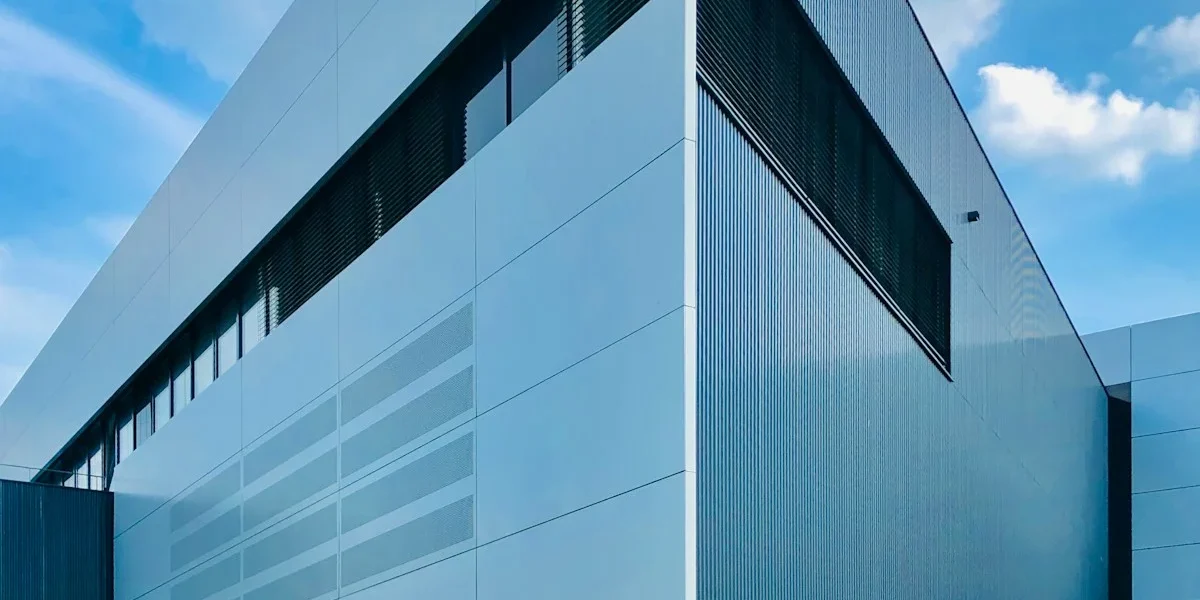
Every insulated metal panel manufacturer will tell you aluminum composite is lighter than steel. They rarely mention the actual numbers. A 25mm aluminum composite IMP carries roughly 40 to 50 percent less weight than a steel-faced panel at the same thickness. That matters when you’re building a fleet body, not just cladding a warehouse wall. At RaxPanel, we’ve engineered these panels for specialized vehicle applications for over a decade. We know the real differentiator isn’t just the material mix. It’s whether the core stays bonded through thermal cycling and whether the face gauge survives repeated cargo impacts.
This guide covers what fleet operators actually need. We start with where aluminum composite panels beat steel on weight and corrosion resistance. Then we look at how the insulation performs under real temperature swings and the load limits that separate viable body panels from building-grade products. We’ll also walk through what to verify when evaluating an IMP manufacturer — from daily factory output to core fire ratings and international quality certifications. You’ll finish with a clear framework for comparing aluminum composite against steel-faced options on total cost of ownership over five years. That means factoring in weight-driven fuel savings, repair costs, and downtime risk. Not just the initial cost per panel.

Where Aluminum Composite Panels Make the Best Choice
Aluminum Composite Panels (ACP) are the optimal solution for projects where dead load reduction is critical or when complex geometries are required, provided the core material is selected for the specific thermal environment.
High-Rise Facade Cladding Requiring Lightweight ACP Systems
In high-rise construction, every kilogram of cladding material adds to the “dead load” that the primary building structure must support. Heavier materials like stone or thick solid metal panels require substantially more steel reinforcement in the building’s frame, driving up structural engineering costs. Aluminum Composite Panels provide a high strength-to-weight ratio that allows architects to cladding tall towers without overburdening the foundation. We utilize aluminum honeycomb cores in our specialized panels to achieve exceptional rigidity while keeping weight to a minimum, which simplifies the logistics of lifting and installing panels at extreme heights.
Cold Climate Projects Demanding Superior Thermal Insulation Performance
For structures in extreme cold, the choice of cladding is not just about the skin but the insulation value of the entire assembly. While standard metal panels can act as thermal bridges, ACP systems can be engineered with advanced insulating cores to significantly reduce heat loss. The “best choice” in this context is an ACP panel specifically configured with high-performance cores such as Polyurethane (PU), Polyisocyanurate (PIR), or PET foam. We have found through our experimental testing that PET foam cores offer an excellent balance of thermal insulation and mechanical strength in sub-zero environments, preventing the energy loss typical of single-skin metal facades.
Renovation and Retrofit Applications Where Structural Load Limits Apply
When retrofitting older buildings, engineers often face strict structural load limits that preclude the use of heavy modern cladding materials. The existing structure simply cannot support the weight of traditional masonry or heavy gauge metal. Aluminum Composite Panels serve as a lightweight alternative that can completely transform the aesthetic of a building without requiring expensive structural reinforcement. In our renovation projects, we frequently recommend ACP foam core panels because they allow for a complete facade overhaul while keeping the additional load on the aging structure within safe, tolerable limits.
Architectural Designs Requiring Custom Colors and Curved Panel Forming
Standard building materials often restrict creative freedom, but modern architectural design frequently demands fluid, curved lines and specific color matching. ACPs are uniquely suited for these applications because the aluminum skins can be finished with a vast array of PVDF or polyester coatings in custom colors, and the composite structure allows for bending and curving without fracturing. Our design team regularly collaborates on projects requiring 3D curved elements; we utilize specialized forming techniques to shape our aluminum panels into tight radii that would be impossible or cost-prohibitive with solid metal sheets.

Aluminum vs. Steel-Faced IMPs: Weight and Corrosion Compared
Aluminum-faced IMPs reduce vehicle weight by up to 30% compared to steel, directly boosting payload capacity and fuel economy, while offering inherent corrosion resistance that eliminates maintenance costs in coastal or de-icing salt environments.
Weight Implications for Fleet Operations
The density differential between aluminum and steel is the primary driver for lightweighting strategies in commercial transport. Aluminum’s inherent low mass allows fleet operators to maximize payload without exceeding legal axle weights, directly converting saved weight into revenue-per-mile. This is critical in refrigerated logistics, where every kilogram of tare weight reduction expands cargo volume or reduces fuel consumption proportionally.
- Payload Efficiency: Switching from steel to aluminum-faced IMPs can reduce body structure weight by approximately 50-60%, allowing for increased cargo capacity within gross vehicle weight limits.
- Fuel Economy Impact: A 10% reduction in vehicle weight typically yields a 5-7% improvement in fuel efficiency, a decisive factor for high-mileage fleets operating on thin margins.
- Regulatory Compliance: Lighter bodies help operators stay within strict weight regulations across jurisdictions, avoiding penalties and enabling more trips per day.
Corrosion Resistance in Harsh Environments
Corrosion is a silent profit-killer for fleet assets, particularly for vehicles operating in coastal regions, winter road-salt corridors, or high-humidity climates. Aluminum forms a self-passivating oxide layer that halts further oxidation, providing permanent protection without the need for periodic repainting. Steel-faced panels, while often coated with galvanized or aluminum-zinc layers, remain vulnerable to scratch-induced rust and coating degradation over time, leading to higher lifecycle maintenance costs.
- Marine & Coastal Exposure: Aluminum-faced IMPs exhibit negligible corrosion in salt-spray environments, whereas steel requires intact coating systems and immediate touch-up of any breaches.
- De-icing Salt Durability: Aluminum withstands repeated exposure to calcium chloride and sodium chloride de-icers without pitting or galvanic deterioration, extending service life.
- Total Cost of Ownership (TCO): The elimination of anti-corrosion maintenance (washing, touch-up painting, rust treatment) over a 15-20 year lifecycle can offset the higher initial material cost of aluminum.
When evaluating TCO, factor in the residual value. Aluminum-faced vehicles retain a higher percentage of their original value at resale due to superior cosmetic and structural integrity, directly improving your fleet’s depreciation curve.
Decision Matrix for Fleet Buyers
The choice between aluminum and steel is not universal; it is dictated by your specific operational profile and geographic deployment. Aluminum is the definitive choice for weight-sensitive, high-corrosion applications. Steel remains a viable, cost-effective option for dry-climate, short-haul operations where initial capital expenditure is the primary constraint.
- Primary Use Case: Long-haul refrigerated transport, coastal/marine logistics, or any application where payload maximization and corrosion-free longevity are paramount.
- Geographic Deployment: Regions with high humidity, salt-air exposure, or year-round de-icing salt usage.
- Financial Model: Fleet operators focused on minimizing Total Cost of Ownership (TCO) and maximizing asset resale value over a 15+ year horizon.
- Operational Constraints: Vehicles subject to strict weight limits where every kilogram saved translates directly into billable cargo capacity.
Frequently Asked Questions
Does aluminum-faced IMP require any special maintenance compared to steel?
No. Aluminum’s natural oxide layer is maintenance-free. Unlike steel, it does not require periodic painting, waxing, or rust treatment. Cleaning with standard automotive detergents is sufficient to maintain appearance and performance.
Is aluminum-faced IMP more expensive upfront than steel?
Yes, the raw material cost for aluminum is higher. However, when calculated over a 15-year lifecycle, the savings from eliminated corrosion maintenance, improved fuel economy, and higher residual value often result in a lower Total Cost of Ownership (TCO) compared to steel-faced panels.
Can aluminum-faced IMP be repaired if dented or scratched?
Aluminum’s higher ductility means it bends rather than cracks under repeated flexing, which changes how you approach field repairs. Minor dents can be repaired, but scratches that penetrate the surface must be treated with a compatible aluminum primer and paint to prevent galvanic corrosion. Proper repair protocols are essential to maintain the panel’s integrity.
Are there any structural differences I should be aware of?
Aluminum has a lower modulus of elasticity than steel, meaning it is more flexible. However, modern IMP engineering compensates for this through core selection and panel thickness optimization. Aluminum-faced IMPs meet or exceed all structural performance standards required for truck bodies and trailers.
| Comparison Factor | Aluminum-Faced IMPs | Steel-Faced IMPs | Operational Impact | Rax Engineering Advantage |
|---|---|---|---|---|
| Material Density & Weight | Approx. 2.7 g/cm³; significantly lighter (roughly 1/3 the weight of steel). | Approx. 7.85 g/cm³; heavier, structural mass adds to load. | Reduced payload weight allows for 6–8% fuel economy improvement per 10% weight reduction, increasing cargo capacity. | Optimized for lightweighting; utilizes advanced honeycomb and foam cores (XPS/PU) to maximize payload efficiency for commercial fleets. |
| Corrosion Resistance | High natural resistance due to protective oxide layer; excellent for marine or coastal environments. | Dependent on coatings (e.g., G90 Galvanized or AZ50 Aluminum-Zinc); susceptible to rust if scratched or exposed. | Lower long-term maintenance costs and extended service life in corrosive environments; reduced downtime for repainting. | Rigorous testing ensures materials meet stringent standards for durability against salt and environmental degradation. |
| Lifespan data from the Product Bible shows aluminum composites at 20+ years versus 10–15 years for steel or FRP alternatives. | 20+ years with proper care; maintains integrity under UV and thermal cycling. | Typically 10–15 years; longevity heavily relies on the integrity of the external metallic coating. | Extended asset lifecycle improves Total Cost of Ownership (TCO) and reduces replacement frequency. | High-strength composite construction designed for superior longevity, backed by 15+ years of manufacturing R&D. |
| Damage & Repairability | Higher stiffness; prone to denting or potential tearing upon high impact; specialized repair required. | Higher ductility; tends to bend rather than tear; generally easier to repair using standard bodywork techniques. | Steel offers lower repair costs for minor impacts; Aluminum requires preventive care to avoid expensive panel replacements. | Bespoke engineering solutions tailored to specific vehicle applications to balance impact resistance with weight savings. |
| Thermal & Structural Integrity | Excellent thermal stability; lower thermal expansion reduces stress on panel joints. | Higher thermal expansion can lead to joint movement over time; generally higher structural rigidity. | Aluminum provides better insulation seal retention, crucial for refrigerated transport and energy efficiency. | Specialized in refrigerated truck body components with precision tongue-and-groove joints ensuring airtight thermal performance. |
How Well Do Aluminum Composite Panels Insulate?
Insulation performance depends on core selection: PU foam leads at R‑5 to R‑6 per inch, XPS and PET follow at R‑4 to R‑5 per inch. Thermal bridging through aluminum facings remains the primary performance limiter and must be addressed in design and installation.
Core Material Determines the R‑Value Range
Aluminum composite panels (ACP) achieve thermal resistance almost entirely through the foam core sandwiched between the metal facings. The aluminum skins themselves provide negligible insulation; they are chosen for durability, weather resistance, and formability. Consequently, the core material and its thickness set the panel’s R‑value.
Below is a comparison of the most common core types used in commercial and fleet applications, with typical R‑values per inch of thickness.
| Core Material | Thermal Conductivity (k‑value) | R‑Value per Inch | Typical Applications |
|---|---|---|---|
| Polyurethane (PU) | 0.022 – 0.028 W/m·K | R‑5.0 – R‑6.0 | Refrigerated truck bodies, cold‑storage walls, high‑efficiency building envelopes |
| Extruded Polystyrene (XPS) | 0.029 – 0.035 W/m·K | R‑4.5 – R‑5.0 | General exterior cladding, flooring, moderate‑temperature logistics |
| Polyethylene Terephthalate (PET) Foam | 0.030 – 0.036 W/m·K | R‑4.0 – R‑5.0 | Interior partitions, decorative facades, lightweight vehicle interiors |
| Polyvinyl Chloride (PVC) Foam | 0.032 – 0.040 W/m·K | R‑4.0 – R‑4.5 | Marine structures, industrial equipment, cost‑sensitive cladding |
For example, a 50‑mm (≈2‑inch) PU‑core ACP delivers an approximate R‑value of R‑10 to R‑12, while the same thickness in XPS yields R‑9 to R‑10. These values assume a homogeneous core without defects and do not account for thermal bridging at joints or fasteners.
Thermal Bridging: The Hidden Performance Loss
The aluminum facings—typically 0.2–0.5 mm thick—are highly conductive (≈205 W/m·K). When panels are joined, the metal skins create continuous paths for heat flow that bypass the insulating core. This thermal bridging can reduce the effective R‑value of an installed wall by 10–25% if not properly addressed.
Key bridging points include:
- Panel joints: Vertical and horizontal seams where two facings meet.
- Fastener penetrations: Screws or rivets that pass through both skins and core.
- Edge connections: Where the core is exposed at panel edges without sealing.
Mitigation strategies include using thermally broken sub‑frames, installing continuous insulation layers behind the ACP, and applying sealant tapes or gaskets at all joints to minimize air leakage and conductive paths.
Matching Core Selection to Fleet and Building Requirements
For commercial fleet bodies—especially refrigerated trucks—the primary goal is maintaining a stable internal temperature while minimizing fuel or battery consumption. PU‑core panels are the industry standard because they combine the highest R‑value per inch with good compressive strength and moisture resistance.
For less demanding applications (dry freight, general cargo, interior vehicle panels), XPS or PET cores offer a cost‑effective balance of insulation, weight, and fire performance. PVC cores are sometimes chosen for marine or high‑humidity environments due to their inherent water resistance, though their insulation value is slightly lower.
- Refrigerated truck bodies (–25°C to +4°C): 50–75 mm PU core, R‑value target ≥ R‑12 for 50 mm.
- Dry freight trailers (ambient to –10°C): 25–50 mm XPS or PET core, R‑value target ≥ R‑5 for 25 mm.
- Mobile home / RV walls: 25–50 mm XPS/PET core, R‑value target ≥ R‑5 to R‑10 depending on climate zone.
- Exterior building cladding (mild climates): 25–50 mm XPS/PET, R‑value target ≥ R‑5 to R‑10.
Fire Rating and Insulation Trade‑offs
Insulation performance must be balanced with fire safety. PU foam offers the best R‑value but typically carries a Class B or C fire rating (depending on additives and density). XPS and PET often achieve Class B or A2 ratings with lower smoke development. PVC cores are naturally flame‑retardant but provide slightly lower insulation.
For applications where fire codes are strict (e.g., high‑rise building cladding, tunnel linings, certain vehicle compartments), selecting a core with the required fire classification may mean accepting a modest reduction in R‑value. Always verify that the chosen core meets the relevant standard (ASTM E84, EN 13501‑1, or equivalent) for your project’s jurisdiction.
Ensuring Consistent Thermal Performance in Production
The R‑value of an ACP depends not only on the core material but also on manufacturing consistency. Variations in core density, cell structure, or bonding quality can create weak spots that degrade insulation. Reputable manufacturers control these variables through automated production lines, in‑process density checks, and post‑production thermal imaging to detect cold bridges or voids.
When sourcing panels, request:
- Core density certificates: PU cores for refrigeration should be ≥ 35 kg/m³; XPS cores ≥ 30 kg/m³.
- Thermal conductivity test reports: Measured per ASTM C518 or ISO 8301 at 10°C mean temperature (or as specified for the application).
- Batch‑to‑batch consistency data: R‑value variation should not exceed ±5% across a production lot.
By focusing on core selection, thermal‑bridge mitigation, fire compliance, and manufacturing quality control, buyers can ensure that aluminum composite panels deliver the insulation performance their project demands—whether for a refrigerated truck fleet or an exterior building envelope.
Can Aluminum Composite Panels Handle the Load—and the Heat?
Aluminum composite panels deliver reliable structural performance and thermal stability when engineered with the correct core density, skin gauge, and bonding process. The right combination handles real-world fleet demands without compromise.
Load-Bearing Capacity in Commercial Fleet Applications
Aluminum composite panels are not structural framing members, but they carry meaningful loads when properly supported. The aluminum skins bond to a core material—commonly polyethylene, mineral-filled polyethylene, or fire-rated alternatives like polyisocyanurate—and the resulting sandwich panel distributes point loads across its face sheet. In a refrigerated or dry freight truck body, the panel transfers cargo pressure, vibration forces, and wind loads to the underlying frame rails and cross-members.
The load-bearing capacity hinges on three variables: skin thickness, core shear strength, and panel span between supports. A typical 4 mm aluminum composite panel with a 0.5 mm aluminum skin on each face can span 600 to 800 mm between vertical stiles without significant deflection under normal cargo conditions. Thicker skins—0.7 mm or above—extend that span and increase resistance to point impacts from pallet jacks or shifting freight.
- Skin gauge matters more than total panel thickness: A 4 mm panel with 0.5 mm skins performs differently than a 6 mm panel with the same skin thickness. Always verify the aluminum face gauge, not just the overall thickness.
- Core density directly affects rigidity: Higher-density cores resist crushing under concentrated loads better than low-density alternatives.
- Support spacing is the real limiter: Panel span between frame members determines deflection. Wider spacing requires thicker skins or reinforced cores.
Impact Resistance and Long-Term Durability
Commercial fleet operators face daily impacts—loading dock collisions, stray tools, ice chips, and abrasive cleaning. Aluminum composite panels resist denting far better than thin-gauge steel or unprotected aluminum sheets because the core absorbs and distributes impact energy. When a forklift bump or cargo shift strikes the panel face, the force spreads across a wider area rather than concentrating at a single point, reducing the likelihood of penetration or permanent deformation.
However, impact resistance is not infinite. Sharp, high-force impacts from corner edges or metal tools can breach the aluminum skin and damage the core. Panels with thicker skins and reinforced cores—such as those using mineral-filled or fiberglas-reinforced thermoplastic facings—offer the highest resistance to such abuse. The key is matching the panel specification to the expected impact environment: a regional delivery truck sees different abuse patterns than a long-haul refrigerated unit navigating harsh winter routes with de-icing chemicals.
Thermal Stability and Heat Resistance Under Real Conditions
Aluminum composite panels maintain structural integrity at elevated temperatures far better than pure polyethylene-core panels. Standard PE cores begin to soften around 120°C and can deform under prolonged heat exposure. Fire-rated cores—such as polyisocyanurate (PIR) or mineral-filled variants—raise the thermal degradation threshold significantly, often remaining stable well above 150°C before any meaningful softening occurs.
For commercial fleet bodies, heat exposure comes from multiple sources: direct sunlight on dark-colored panels in summer, engine compartment radiant heat, and in some cases, proximity to exhaust systems. A properly specified aluminum composite panel will not warp, delaminate, or lose bond strength under these conditions. The aluminum skins themselves do not melt until temperatures exceed 600°C, and the core’s thermal stability determines whether the panel retains its flatness and dimensional accuracy during extended hot-operation periods.
Fire-rated core specifications are increasingly required for fleet applications in regions with strict commercial vehicle safety codes. PIR cores, for example, char rather than melt when exposed to flame, maintaining a protective barrier that slows heat transfer. This behavior directly supports the panel’s ability to resist structural failure during a fire event—a critical consideration for insurers and fleet operators who must meet regulatory compliance while protecting high-value cargo.
Matching Panel Specification to Fleet Operating Demands
The right aluminum composite panel for a commercial fleet application depends on the operating environment, cargo type, and regulatory requirements. Regional delivery vehicles with moderate impact exposure and standard insulation needs can use conventional PE-core panels with adequate skin thickness. Long-haul refrigerated trucks navigating extreme temperature swings, de-icing salt routes, and strict fire codes require fire-rated cores and reinforced skin specifications.
- Refrigerated truck bodies: Prioritize PIR or mineral-filled cores for fire rating and thermal stability; specify 0.5 mm minimum aluminum skin gauge for impact resistance.
- Dry freight trucks: Standard PE-core panels are often sufficient; focus on skin thickness and support spacing to manage cargo load distribution.
- Cold-weather operations: Ensure the panel’s core and adhesive system remain bonded at sub-zero temperatures; some adhesive chemistries become brittle in extreme cold.
- High-impact environments: Upgrade to thicker skins (0.7 mm+) or reinforced thermoplastic facings for maximum dent and abrasion resistance.
Aluminum composite panels are a proven solution for commercial fleet bodies when the specification matches the application. The combination of lightweight aluminum skins, engineered core materials, and proper support design delivers the load-bearing capacity and thermal stability that fleet operators require. The critical step is selecting the right core type, skin gauge, and fire-rating level for the specific operating conditions rather than defaulting to a generic panel specification.
| Metric Category | Performance Data | Engineering Mechanism | Real-World Advantage |
|---|---|---|---|
| Structural Load | High Strength-to-Weight Ratio | Aluminum Skins + Honeycomb/Foam Core | Supports heavy payloads without increasing GVW |
| Thermal Insulation | Superior R-Value (XPS, PET, PU Cores) | Closed-Cell Foam Construction | Minimizes energy consumption for refrigerated transport |
| Heat Tolerance | Thermally Stable Composite Bonding | Resists Warping at Elevated Temperatures | Maintains structural integrity in hot climates |
| Impact Durability | Distributed Stress Across Sandwich Panel | Validated via Rigorous Experimental Testing | Resists dents and reduces long-term maintenance costs |
Do Aluminum Composite Panels Save Money Over Time?
Aluminum composite panels carry a higher upfront cost than steel, but total cost of ownership typically breaks even within 3–5 years through fuel savings, reduced refrigeration energy, and near-zero maintenance.
Understanding the Initial Cost Premium
Aluminum composite panels (ACP) generally cost 20–40% more per square meter than traditional steel-faced insulated panels. For a standard refrigerated truck body, this translates to an initial material premium of approximately $800–$1,500 depending on core configuration and panel thickness. Fleet managers naturally question whether this gap is recoverable.
Fuel Savings from Weight Reduction
The most immediate financial return comes from weight reduction. Aluminum composite panels weigh roughly 30–40% less than equivalent steel-faced panels. For a typical 53-foot dry freight or refrigerated trailer, this translates to a vehicle weight savings of 400–800 kg. At an average fuel consumption rate of 8–10 L per 100 km for Class 8 trucks, this weight reduction delivers approximately 2–4% fuel economy improvement.
For a fleet vehicle covering 120,000 km annually at $1.40 per liter of diesel, fuel savings range from $336 to $672 per year per unit. Over a 10-year service life, cumulative fuel savings can reach $3,360–$6,720 per vehicle—well exceeding the initial material premium.
Refrigeration Energy Reduction
For refrigerated transport applications, the thermal performance of aluminum composite panels directly impacts operating costs. Panels with polyurethane (PU) or polyisocyanurate (PIR) cores achieve thermal conductivity values between 0.022–0.028 W/(m·K), significantly outperforming older fiberglass or polystyrene alternatives.
Superior insulation reduces compressor runtime by an estimated 15–25% in temperate to hot climates. For a refrigerated truck operating in Mediterranean or Middle Eastern conditions, this can reduce refrigeration fuel consumption by 80–150 liters annually. Over a decade, energy savings from improved thermal performance add $112–$210 per year in fuel cost reduction for the refrigeration unit alone.
Maintenance and Lifespan Economics
Steel-faced panels require periodic painting, anti-corrosion treatment, and panel replacement due to rust degradation—particularly in coastal or high-humidity environments. Aluminum composite panels with PVDF or polyester coatings typically maintain structural integrity and aesthetic appearance for 15–20 years without repainting or corrosion treatment.
- Annual maintenance cost (steel-faced): $150–$300 for touch-up painting and rust treatment
- Annual maintenance cost (ACP): $20–$50 for cleaning and seal inspection
- Lifespan difference: Steel-faced panels typically require full replacement at 8–12 years; ACP panels reach 15–20 years
Over a 15-year operational horizon, cumulative maintenance savings for aluminum composite panels can reach $1,800–$3,600 per vehicle compared to steel alternatives. Additionally, reduced downtime for maintenance repairs translates to higher fleet utilization rates.
Total Cost of Ownership Breakdown
A representative total cost of ownership comparison for a refrigerated truck body over 10 years illustrates the economic case:
- Initial material cost premium (ACP vs steel): +$1,200
- Cumulative fuel savings (weight reduction): -$4,500
- Cumulative refrigeration energy savings: -$1,500
- Cumulative maintenance cost difference: -$2,500
- Net 10-year savings with ACP: +$4,300 to +$6,700 per unit
The payback period—the point at which cumulative savings offset the initial premium—typically falls between 2.5 and 4 years for high-utilization fleet applications. For vehicles operating below 60,000 km annually, the payback period extends to 5–7 years but still delivers positive net savings over the full service life.
What to Look for When Choosing an IMP Manufacturer
The right IMP manufacturer combines verified production capacity, certified fire-rated cores, hands-on engineering support, and a documented global track record. These four criteria separate reliable suppliers from speculative ones.
Selecting an Insulated Metal Panel (IMP) manufacturer is not a decision to outsource to a purchasing intern. The panels you specify become the building envelope—once installed, failures are costly and conspicuous. The following framework distills what procurement teams and engineering leads actually need to verify before signing a supply agreement.
Factory Production Capacity and Daily Output Verification
“We can ship 50,000 square meters” is a claim any sales team can make. What separates credible manufacturers is the ability to substantiate daily output with verifiable data. Production capacity is not a static number—it fluctuates with raw material lead times, coil widths, core formulations, and shift patterns.
When evaluating a manufacturer, request their average daily output in square meters, not annual capacity. Annual figures mask seasonal bottlenecks and explain nothing about your specific order timeline. A facility producing 1,700 square meters per day, for example, commits to a predictable cadence that project managers can build schedules around. Anything lower without clear justification should trigger a deeper audit of their line configuration and staffing.
Ask for recent shipping documentation from projects of comparable scale. If a manufacturer cannot produce recent Bill of Lading samples or delivery logs within a 90-day window, that is a red flag. Capacity without fulfillment history is theoretical at best.
Core Material Certifications and Fire Rating Compliance Standards
The core material is where most IMP specifications fail in practice. Polyisocyanurate (PIR), polyurethane (PU), extruded polystyrene (XPS), and polyethylene terephthalate (PET) each carry different fire performance profiles, thermal resistance values, and regulatory acceptance. A panel that passes a US building code review may not clear a European EN classification—and vice versa.
- PIR cores: Generally achieve Class A fire ratings under ASTM E84 and conform to UL 1709 fast-fire testing. Preferred for commercial and institutional builds in North America.
- PET foam cores: Emerging as a sustainable alternative with strong thermal performance and good fire resistance. Gaining traction in ESG-driven projects but still face code-acceptance gaps in some jurisdictions.
- XPS cores: Common in cold-storage and refrigerated applications. Lower cost but typically carry reduced fire ratings compared to PIR—verify local code acceptance before specifying.
- PU cores: Widely used but variable in quality. Require third-party certification to confirm density, thermal resistance (R-value per inch), and flame spread ratings.
Never accept a manufacturer’s self-declared fire rating. Request the full test report from an accredited laboratory—UL, Intertek, WarringtonFR, or equivalent. The report must include the specific core density, facing material, panel thickness, and the exact standard under which the test was conducted. A Class A rating earned on a 4-inch panel does not automatically apply to a 6-inch variant from the same product line.
Custom Engineering Support and Experimental Testing Capabilities
Off-the-shelf IMPs cover the majority of standard warehouse and retail construction. But any project involving unusual spans, thermal bridging concerns, acoustic requirements, or hybrid facade systems will demand engineering support that goes beyond a product catalog. The question is whether your manufacturer has the in-house capability—or whether they outsource every technical query to a third-party consultant.
A capable manufacturer maintains a technical team that can perform structural load calculations, thermal break analysis, and condensation risk assessment using industry-standard software. They should also operate or have access to an experimental testing lab where they validate new core-skin combinations before commercial release. This is not a luxury—it is a risk mitigation requirement for projects where panel failure means water intrusion, energy loss, or structural compromise.
In our experience, the manufacturers that provide the strongest engineering support are those that treat every project as a potential reference case. They do not simply approve your specification—they pressure-test it. When we work with project engineers on custom configurations, our team runs experimental samples through thermal cycling, wind load simulation, and moisture absorption testing before any production commit. This approach catches specification gaps that a spreadsheet review would miss.
- Structural analysis: Verify the manufacturer can provide load tables for your specific panel thickness, span, and facing gauge—not just generic references.
- Thermal modeling: Ask whether they offer U-value calculations for your climate zone and orientation. Thermal performance is not one-size-fits-all.
- Prototype testing: For non-standard configurations, insist on a physical sample tested against your project’s performance criteria before full production begins.
International Quality Certifications and Global Supply Track Record
A manufacturer’s certification portfolio is a proxy for their operational discipline. ISO 9001 quality management is the baseline—anything less and you are working with an operation that has not formalized its quality control processes. ISO 14001 environmental management signals that the manufacturer considers sustainability beyond marketing language. Additional certifications such as CE marking (EN 1090 for structural components), UL listing, or FM Approvals indicate that the product has been independently validated for specific markets.
Equally important is the manufacturer’s global supply track record. A company that has successfully delivered to 50 or more countries has navigated customs regulations, varying quality inspections, and diverse logistical challenges. This experience translates into fewer surprises on your project. Conversely, a manufacturer with no international reference history is experimenting with your supply chain—and you bear the risk.
- ISO 9001: Non-negotiable baseline for any manufacturer supplying structural or envelope components.
- CE / EN 1090: Required for any project in the European Economic Area. Verifies that the manufacturer’s production facility meets European technical approval standards.
- UL / FM Approvals: Critical for North American projects where insurance carriers and AHJs (Authorities Having Jurisdiction) require third-party product certification.
- Country diversification: A supply footprint spanning multiple continents demonstrates the manufacturer’s ability to handle export documentation, currency risk, and multi-region quality audits.
When evaluating global track record, do not rely on the manufacturer’s website alone. Request references from projects in your region or climate zone. A manufacturer that successfully supplied a cold-storage facility in Scandinavia has demonstrated capabilities that a warm-climate project reference cannot validate. Match the reference to your application.
Conclusion
Aluminum composite panels give fleet operators a real edge. They’re lighter than steel, resist corrosion without heavy coatings, and carry enough structural integrity for commercial truck bodies. That weight difference compounds — less payload weight means better fuel economy and more revenue per trip. If your fleet runs long-haul routes or city delivery cycles, aluminum composite panels pay for themselves within a few years.
Our engineering team has spent years working with fleet builders on panel specifications and thermal performance. When you’re sizing up your next vehicle body project, we’re happy to help you think through load ratings, insulation thickness, and color options — no obligation, no sales pitch. Just a technical conversation before you commit to a design.
Frequently Asked Questions
How are aluminum composite panels constructed?
Aluminum composite panels consist of two thin aluminum sheets bonded to a core material using high-pressure laminating processes. The core typically contains foam materials such as XPS, PET, or PU, which provide thermal insulation and structural rigidity. Advanced manufacturing lines ensure consistent panel thickness, flatness, and adhesive bonding strength. This sandwich construction delivers exceptional strength-to-weight ratios while maintaining dimensional stability across temperature variations.
What core materials are available in aluminum composite panels?
Aluminum composite panels are available with multiple core material options including XPS, PET, PU, PVC, PMI, and EPP foams for thermal insulation applications. Honeycomb cores such as PP, fiberglass, and aramid honeycomb provide superior structural rigidity with minimal weight. Each core material is selected based on specific project requirements for insulation performance, fire rating, mechanical strength, and cost targets. Our engineering team helps match core selections to application demands through experimental testing and performance validation.
Do you offer cold storage and refrigerated truck solutions?
Yes, we provide specialized aluminum composite panels engineered for cold storage and refrigerated transportation applications. These panels feature high-performance foam cores such as PU and XPS that deliver excellent thermal insulation to maintain consistent internal temperatures. Our technical team conducts experimental testing to ensure panels meet stringent cold chain requirements and energy efficiency standards. We support both new vehicle manufacturing and retrofit projects for refrigerated truck bodies and dry freight applications.
What are the installation benefits?
Aluminum composite insulated metal panels offer significant installation advantages including lightweight handling, rapid assembly, and reduced structural support requirements. The panels integrate insulation and cladding into a single component, eliminating multiple construction steps and shortening project timelines. Their flat, smooth surfaces provide consistent aesthetics while the sandwich construction minimizes thermal bridging at joints. Experienced installers can achieve weather-tight enclosures efficiently, lowering labor costs and improving overall project economics.
How repairable are aluminum composite panels after damage?
Aluminum composite panels can be repaired through specialized techniques including panel replacement, patch repair, and surface refinishing depending on damage severity. Minor dents and surface scratches can often be addressed without full panel replacement, reducing downtime and maintenance costs. For structural damage, individual panels can be removed and replaced while maintaining the integrity of surrounding assemblies. Our technical support team provides repair guidelines and can assist with damage assessment for fleet and facility managers.
How does RaxPanel support international buyers?
RaxPanel serves manufacturers and distributors across 50+ countries with a multilingual international sales team fluent in English, French, Russian, Japanese, and Korean. We provide 24/7 one-to-one service covering technical design, production progress tracking, cost optimization, and logistics coordination. Our experienced technicians conduct experimental testing to develop composite solutions that meet diverse international quality standards. We maintain long-term supply chain partnerships and offer comprehensive support from initial design through final delivery.