
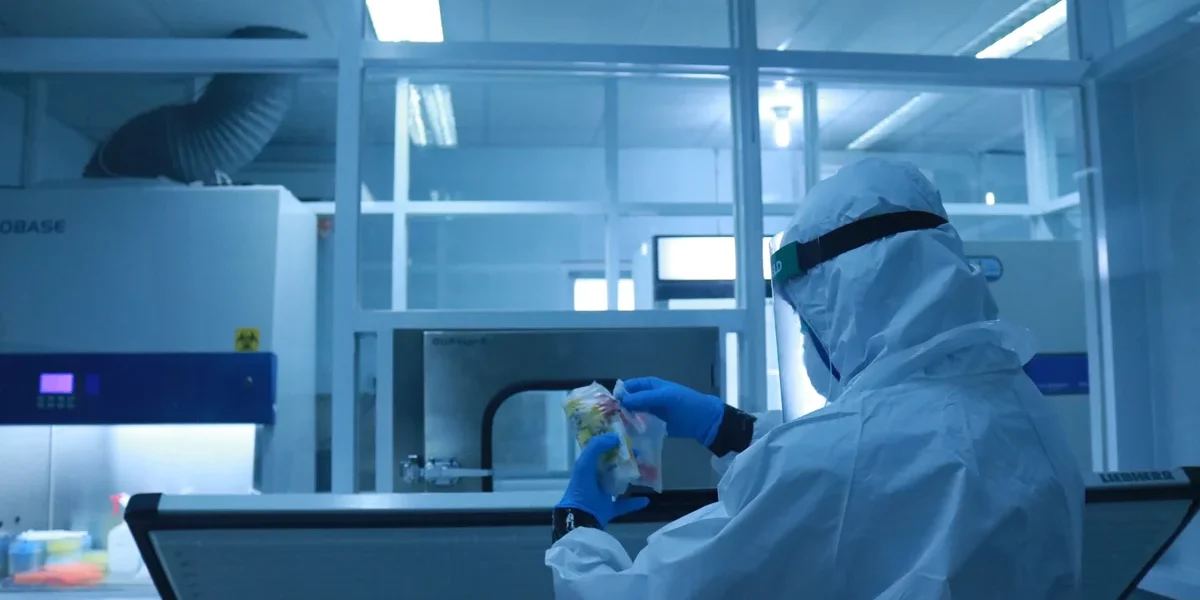
Most engineers fixate on airflow patterns when designing a clean room, but in chemical processing, the wall itself is often the failure point. Standard composite panels outgas or delaminate the moment aggressive solvents hit them, turning your containment strategy into a contamination source. You are not just building a box to filter dust; you are constructing a vessel that must withstand molecular assault.
An ISO 5 environment permits no more than 3,520 particles of 0.5 micrometers or larger per cubic meter of air. Maintaining that classification is nearly impossible if your building materials react with the process environment. We look at how to specify panel surfaces that resist chemical corrosion and explain why your HVAC integration must account for both particulate and vapor loads. You will learn the critical design parameters that ensure your facility survives its first GMP audit.
Why Chemical Clean Rooms Need More Than Dust Control
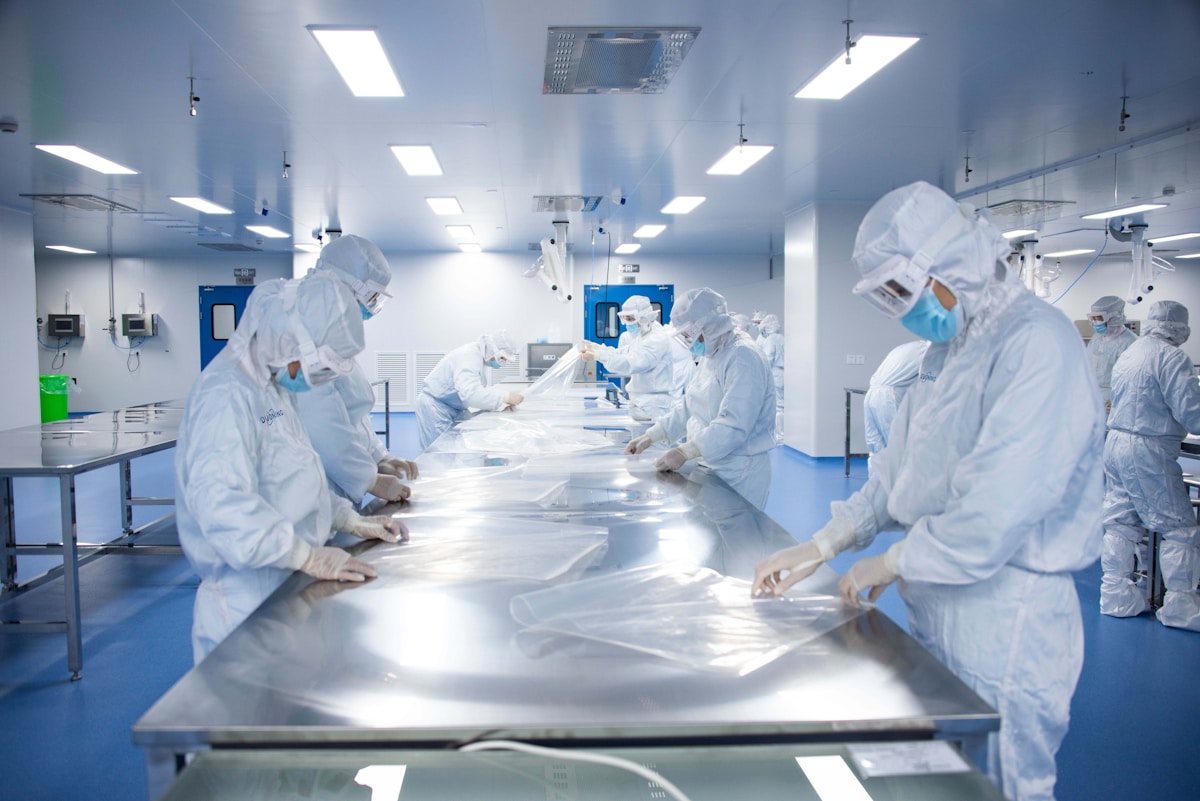
Chemical clean rooms require impervious, non-porous wall assemblies that resist vapor ingress, aggressive disinfectants, and accidental spills, rather than relying solely on particulate filtration.
Standard pharmaceutical or electronics clean rooms are engineered primarily for airborne particle control. Chemical laboratories introduce a fundamentally different threat profile: volatile organic compounds, strong oxidizers, and high-frequency solvent wipe-downs actively degrade many common cladding materials. If a wall system cannot withstand molecular contamination and chemical exposure, ISO classification becomes irrelevant because the facility will fail surface integrity audits within months of operation. The engineering priority shifts from filtering the air to ensuring the enclosure itself remains chemically inert and hermetically sealed.
Managing Chemical Vapor and Molecular Contamination
Volatile organic compounds do not settle like dust; they permeate porous matrices, outgas from unprotected adhesives, and accumulate in micro-gaps along panel joints. In a controlled laboratory environment, prolonged low-concentration vapor exposure causes surface blistering, resin breakdown, and hidden delamination. Once a panel surface begins to degrade, it sheds microscopic particles directly into the airstream, defeating the purpose of the clean room classification system governed by ISO 14644-1.
Effective vapor management requires continuous, non-porous barrier systems with no exposed edges or open-cell pathways. Specialized composite facings paired with precision-cut geometries eliminate on-site fabrication gaps where vapors could otherwise linger. When joints are properly sealed and the facing remains impervious, HVAC pressure differentials can be maintained without the system fighting residual off-gassing from the wall assembly itself. In our engineering reviews, we consistently find that vapor intrusion failures originate at unsealed edges, not across the broad panel face.
Impact of Corrosive Agents on Wall Materials
Routine decontamination in chemical labs relies on aggressive disinfectants such as peracetic acid, concentrated hydrogen peroxide, and quaternary ammonium solutions. These compounds are highly effective against biological contaminants but rapidly attack poorly matched wall surfaces. Repeated exposure leads to discoloration, loss of gloss, and gradual embrittlement of polymer matrices, which accelerates particle shedding exactly when the facility needs to remain sterile and compliant with ISO 20743 antimicrobial standards.
What\’s Changing in Beyond visible surface damage, chemical attack compromises the bond between the facing and the internal core. Once interfacial adhesion fails, moisture and vapors infiltrate the panel assembly, creating hidden degradation that is nearly impossible to detect during routine walkthroughs. Selecting facings rated for sustained chemical inertness—such as reinforced thermoset composites with cured gelcoat layers or stainless-steel cladding—is mandatory for high-risk zones. These materials also preserve critical fire safety performance, ensuring the cladding continues to meet UL 94 V-0, ASTM E84, and European flammability classifications even after years of chemical stress.
Ensuring Structural Integrity Against Chemical Spills
Accidental spills are unavoidable in active laboratories, making splash resistance a core design requirement rather than a secondary feature. When corrosive liquids pool against a wall panel, the primary failure mode is moisture migration into the core. Foam-based cores can absorb water through cut edges or compromised seals, causing swelling, weight gain, and permanent loss of thermal insulation performance. Honeycomb structures with exposed cells can trap fluids, creating ideal conditions for microbial colonization behind the visible surface.
To prevent cascade failures, panel assemblies should use fully sealed facings over closed-cell or chemically inert core materials. Factory-finished edges and mechanically protected corners eliminate capillary action at cut lines, ensuring that accidental splashes cannot penetrate the assembly.
We recommend specifying fully encapsulated composite panels for high-risk chemical zones, as they demonstrate significantly lower long-term maintenance costs and maintain structural stability through repeated direct liquid contact. Customizable thickness and core density allow facilities to match hydraulic and mechanical demands with hygiene requirements without adding unnecessary dead load or compromising space efficiency.
| Contaminant Category | Facility Risk | Required Panel Performance | Validation Standard | Engineering Specification |
|---|---|---|---|---|
| Volatile Organic Compounds & Solvents (e.g., IPA, PAA) | Surface degradation, delamination, and chemical off-gassing into the airstream | Impervious, non-porous barrier with high chemical inertness | Chemical resistance profiling per GMP cleaning protocols | GRP/FRP panels with chemical-resistant gelcoat or stainless-steel facings |
| Strong Oxidizers (e.g., Hydrogen Peroxide, Sodium Hypochlorite) | Corrosion, discoloration, and loss of structural integrity in cladding | Corrosion prevention and sustained surface adhesion under repeated wipe-downs | GMP Grade A–D compliance and long-term durability testing | GRP/FRP panels with chemical-resistant gelcoat or stainless-steel facings |
| Biological Contaminants & Biofilms | Cross-contamination, microbial growth on seams, and audit failure | Smooth, cleanable surfaces meeting antimicrobial efficacy standards | ISO 20743 antimicrobial standards and GMP Grade A–D classification | Gelcoat finishes on foam core and honeycomb panels |
| Airborne Particulates & Microbial Aerosols | Violation of ISO cleanliness classes and product contamination | Low particle shedding and airtight joint integrity to maintain pressure differentials | ISO 14644-1 particle concentration limits | Precision-cut panels with thicknesses from 25mm to 200mm and core densities from 30 to 200 kg/m³ |
| Thermal Loads & Fire Hazards | Energy inefficiency, heat bridge formation, and rapid fire propagation | Thermal insulation and strict fire retardancy ratings | UL 94 V-0, ASTM E84, and EN 13501-1 Euroclass B-s1,d0 | Foam core panels with thermal conductivity of 0.022 to 0.060 W/m·K |
| Cleaning Agent Residue & Moisture Intrusion | Mold growth, core saturation, and compromised indoor air quality | Waterproof construction with zero moisture absorption through the panel assembly | Waterproof performance verification and hygienic surface requirements | Sealed GRP/FRP facings over foam core or honeycomb structures |

Which ISO and GMP Grades Apply to Your Lab?
Most chemical laboratories require ISO Class 7 or ISO Class 8. EU GMP Grades A–D apply only when sterile pharmaceutical compounding is involved.
ISO 14644-1 Classification for Chemical Laboratories
ISO 14644-1 defines cleanroom classification based on airborne particle concentration. The standard specifies maximum particle counts per cubic meter at specified sizes. For general chemical laboratory environments, ISO Class 7 and ISO Class 8 are the typical thresholds.
- ISO Class 5: Maximum 3,520 particles ≥0.5 µm/m³. Reserved for critical aseptic zones such as filling points or open product exposure areas.
- ISO Class 6: Strict particulate control for sensitive analytical instrumentation and high-purity reagent preparation.
- ISO Class 7: Standard clean laboratory grade for routine chemical handling, sample processing, and formulation work.
- ISO Class 8: Background controlled environment for lower-risk laboratory operations and supporting utility spaces.
EU GMP Grades A Through D
EU GMP Annex 1 establishes four grades specifically for sterile medicinal product manufacturing. These grades address both particulate contamination and microbiological cleanliness.
- Grade A: Highest protection level for aseptic filling and critical open-product zones. Requires unidirectional laminar airflow.
- Grade B: Background environment for Grade A zones. Typically classified as ISO 5 at rest or ISO 7 in operation depending on monitoring protocol.
- Grade C: Support area for less critical stages of sterile manufacturing. Corresponds to ISO 7 conditions.
- Grade D: Lower-risk stages of production. Aligns with ISO 8 requirements.
Do not assume all chemical labs need GMP compliance. GMP Grades A–D are mandatory only for sterile pharmaceutical processes. Routine analytical chemistry, material testing, and non-sterile formulation work operate under ISO 14644-1 standards without GMP classification requirements.
Surface Roughness and Cleanability Requirements
Achieving the low surface roughness (Ra) required for ISO 5 and ISO 6 standards presents a significant engineering challenge. Panel texture directly impacts microbial trap potential and decontamination effectiveness.
- ISO 5 and ISO 6 surfaces: Require smooth, non-porous finishes with minimal surface irregularities to prevent particulate and biological accumulation.
- Cleanroom panel texture: Must support repeated washdown cycles without degradation, cracking, or loss of smoothness.
- Chemical resistance integration: Surface finish must maintain cleanability while resisting corrosive agents common in laboratory environments.
When selecting wall panels for controlled laboratory spaces, verify that the facing material achieves appropriate Ra values for the target ISO class. Specifying panels with inadequate surface smoothness can compromise certification audits even when airborne particle counts remain within limits.
Select Panels and Surfaces That Resist Chemical Damage
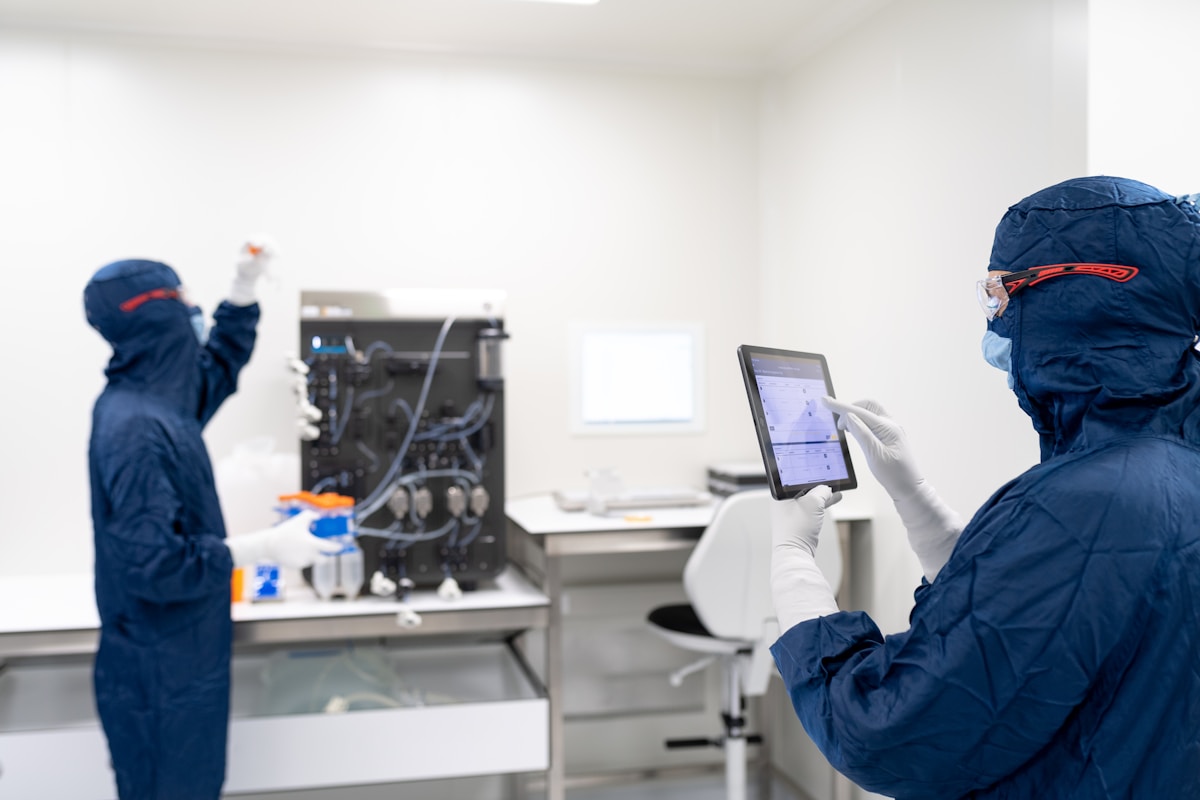
Chemical clean room walls must withstand aggressive sterilants without degrading, outgassing, or trapping contaminants. Panel selection hinges on matching facing chemistry, surface roughness, and core integrity to your specific cleaning protocol and ISO class.
Evaluate FACING CHEMISTRY AGAINST CLEANING PROTOCOLS
Laboratory environments rely on high-frequency wipe-downs using alcohols, hypochlorites, peracids, and quaternary compounds. When a wall panel lacks chemical inertia, these agents penetrate micro-fissures, causing blistering, delamination, or surface tackiness that harbors biofilms.
Glass-fiber reinforced polymers provide a reliable baseline when properly gel-coated, creating a continuous non-porous barrier against routine oxidizers and solvents. Continuous fiber-reinforced thermoplastics offer a thinner, lighter alternative that maintains structural integrity during repeated solvent exposure while resisting impact damage better than brittle alternatives.
Polypropylene honeycomb cores deliver near-total inertness against acids, alkalis, and quaternary sanitizers, making them ideal for wet-processing zones where moisture ingress would otherwise compromise standard foam cores. For facilities handling strong mineral acids or requiring extreme hygiene assurance, stainless steel facings eliminate porosity entirely and support the most rigorous GMP classifications.
- Barrier Integrity: The outer layer must remain non-porous after thousands of chemical cycles to prevent vapor absorption and subsequent off-gassing into the cleanroom air.
- Core Stability: Closed-cell foams or sealed honeycomb structures prevent liquid migration between facings, preserving thermal performance and structural rigidity.
- Seam Compatibility: Chemical resistance extends beyond the panel face; joint sealants and fasteners must match the panel’s tolerance to the same cleaning regimen.
CONTROL SURFACE ROUGHNESS FOR MICROBIAL PREVENTION
Achieving ISO 5 or ISO 6 cleanliness is impossible if the wall texture traps particles or microbes. Surface roughness, measured as average Ra value, directly dictates cleanability. High-class environments typically require smooth, non-textured finishes that allow wiping tools to remove particulates without mechanical interference.
A glossy gelcoat finish on composite panels reduces friction during sanitization, limiting static charge buildup that attracts airborne dust. Thermoplastic and polypropylene systems can be manufactured with consistently low Ra values across large panel runs, reducing variation that often occurs with hand-laid or post-formed surfaces.
Micro-pitting or grain patterns introduced during manufacturing create nucleation sites for microbial adhesion. Even if the underlying polymer is chemically resistant, a compromised surface texture will degrade sterility over time. Procurement teams should verify surface finish specifications before ordering, especially for aseptic processing areas where visual inspection alone cannot detect early biofilm formation.
MATCH PANEL CONSTRUCTION TO STERILIZATION DEMANDS
Not all chemical clean rooms operate at the same sterilization intensity. Facilities using mild quaternary cleaners require different panel systems than those deploying hydrogen peroxide vapor or periodic acid fogging. Over-specifying stainless steel for low-risk zones increases cost without measurable hygiene benefit, while under-specifying composite panels in high-risk zones leads to premature replacement and downtime.
Multi-facing foam core systems allow engineers to select the outer skin based on chemical exposure while optimizing thermal conductivity independently. This decoupling of thermal and chemical performance ensures that insulation targets are met without sacrificing surface durability.
Do not assume all “chemical-resistant” panels perform identically. Resistance to one agent does not guarantee tolerance to another. Always validate facing materials against your actual cleaning workflow, including contact time, concentration, and temperature variables.
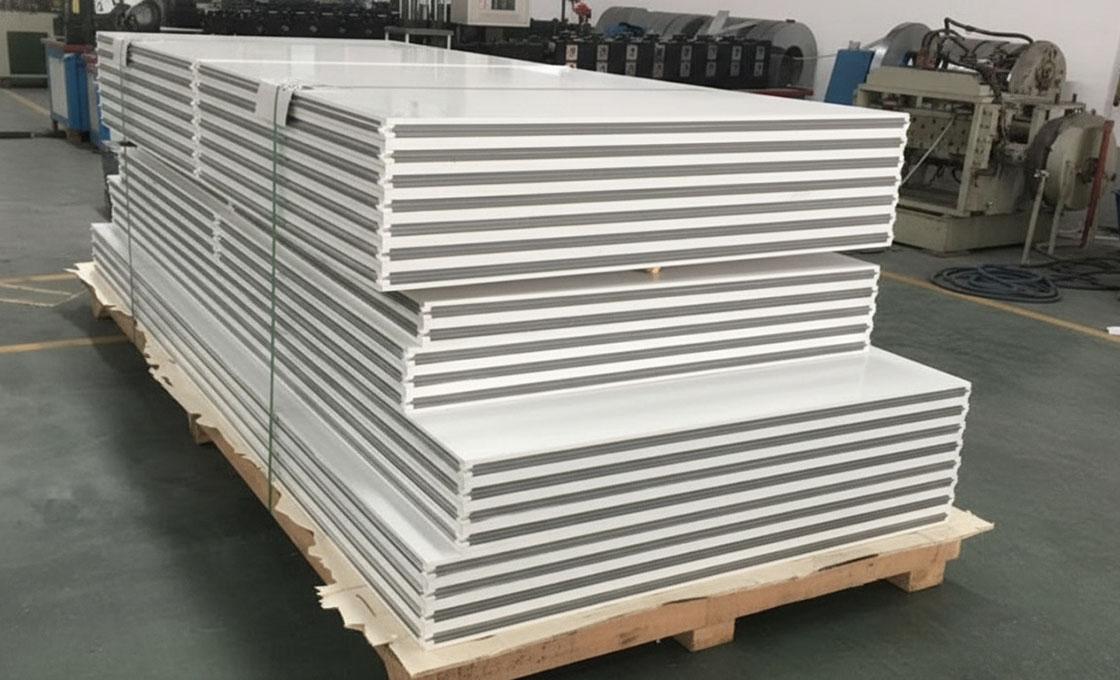
| Panel System | Surface Finish | Chemical Compatibility | Engineering Advantage |
|---|---|---|---|
| GRP/FRP Sandwich Panel | Chemical-resistant gelcoat or stainless steel facing | Withstands daily high-frequency exposure to IPA, sodium hypochlorite, hydrogen peroxide, PAA, and quaternary ammonium compounds | Prevents corrosion, blistering, and delamination; meets ISO 20743 antimicrobial standards |
| CFRT Sandwich Panel | Continuous fiberglass-reinforced thermoplastic facing | Maintains surface integrity against organic solvents and oxidizing agents during routine cleaning cycles | Reduces panel weight and thickness versus traditional FRP while delivering superior impact resistance and waterproof seal integrity |
| PP Honeycomb Sandwich Panel | Fiberglass-reinforced polypropylene composite skin over honeycomb core | Exhibits chemical inertness to peracetic acid, quaternary ammonium compounds, and alkaline detergents under repeated wipe-down protocols | Achieves zero moisture absorption and a high strength-to-weight ratio optimized for wet processing environments |
| Stainless Steel Sandwich Panel | 304 or 316 grade stainless steel facing | Provides maximum tolerance to aggressive sterilants, strong acids, and high-humidity laboratory environments | Delivers a non-porous, non-reactive surface that prevents cross-contamination and supports GMP Grade A–D compliance |
| Multi-Facing Foam Core Panel | Selectable facing materials including GRP, CFRT, aluminum, steel, ACP, PVC, or aluzinc | Resistance profile customized by facing material selection to match specific solvent, acid, or alkali exposure requirements | Provides fully waterproof thermal insulation with thermal conductivity ranging from 0.022 to 0.060 W/m·K |
<!– wp:html –>
<!– /wp:html –>
How HVAC and Pressure Controls Keep Chemicals Safe
HVAC and pressure controls maintain chemical safety by establishing directional airflow that prevents corrosive vapors from crossing zone boundaries. These systems only perform reliably when the panel envelope provides near-zero air permeability at joints and penetrations.
Establishing Controlled Pressure Gradients for Chemical Containment
In chemical processing environments, airflow direction determines whether hazardous compounds remain contained or migrate into adjacent spaces. Negative pressure zones exhaust slightly more air than they supply, creating a consistent inward airflow that traps corrosive fumes, particulates, and volatile organic compounds within the designated area. Positive pressure zones operate in reverse, pushing filtered air outward to protect sterile or critical handling areas from external chemical intrusion.
Modern differential pressure sensors detect fluctuations as small as 0.5 Pascals. These measurements feed directly into automated building management controllers, which continuously modulate supply and exhaust fan speeds. The system compensates for dynamic variables such as door openings, HEPA filter loading, and seasonal humidity shifts without requiring manual intervention.
The Role of Air-Tightness in Pressure Stability
An HVAC system can theoretically achieve any pressure setpoint, but certification depends on the physical envelope holding that gradient under sustained operation. Composite panel joining systems, gasketed utility penetrations, and sealant interfaces must resist air leakage across the full pressure range. Even minor leakage paths allow unconditioned or chemically contaminated air to bypass filtration, destabilizing ISO classifications and creating unsafe exposure risks.
- Panel-to-panel joints: Interfaces without adequate compression sealing allow steady-state pressure decay, forcing HVAC fans to work harder to compensate.
- Utility penetrations: Openings for cables, conduits, and ductwork require chemical-resistant gaskets that maintain elasticity under continuous vapor exposure.
- Door thresholds and access hatches: High-traffic entry points experience repeated mechanical stress, making proper weatherstripping and self-closing hardware essential.
- Sealant degradation: Standard silicones or polyurethanes can swell, crack, or lose adhesion when exposed to strong acids, bases, or solvents.
Integrating HVAC Demand with Panel Thermal and Structural Performance
Chemical cleanrooms typically operate at elevated air-change rates to dilute volatile compounds below occupational exposure limits. Higher turnover increases static pressure loads on wall assemblies. Sandwich panels with rigid polymer foam cores or honeycomb structures provide the bending stiffness required to resist deformation while keeping the installed weight low enough for standard framing systems.
Thermal insulation within the panel core also plays a direct role in pressure control. Uninsulated metal or composite surfaces can develop condensation when warm, humid air contacts cold exterior faces. Moisture accumulation at joint interfaces compromises sealant adhesion, accelerates corrosion of framing members, and introduces secondary contamination vectors that defeat the purpose of controlled HVAC operation.
Maintaining pressure differentials solely by increasing fan speed without resolving envelope leakage drives energy costs up and shortens filter service life. Leak detection and corrective sealing must be completed before final HVAC balancing.
Specify panel systems with documented air-permeability ratings and verify them against the target differential pressure prior to installation. A panel assembly rated for 50 Pa comfortably exceeds typical cleanroom operating ranges of 10–25 Pa, providing a reliable safety margin for long-term certification.
Routine Checks Keep Your Clean Room Compliant
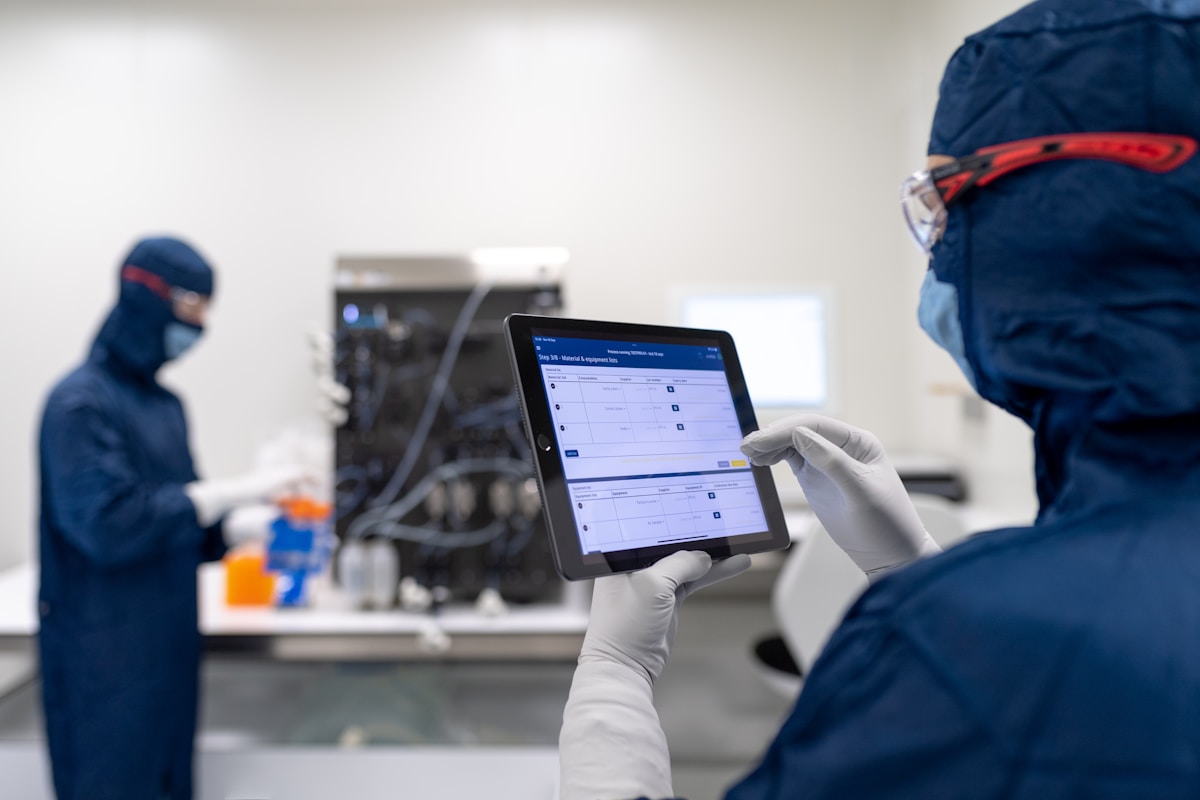
Routine checks are the only defense between a compliant facility and a costly shutdown. You must verify seals, pressure, and surface integrity quarterly to maintain ISO and GMP standards.
Inspecting Seals and Joints for Chemical Degradation
In chemical environments, the panel surface might resist corrosion, but the joints are often the first point of failure. Aggressive vapors from Isopropyl Alcohol (IPA), Sodium Hypochlorite, or Peracetic Acid (PAA) can gradually compromise the elasticity of polymeric sealants and gaskets.
During your quarterly audit, physically inspect the perimeter of every panel, specifically where the facing material meets the cam-lock or tongue-and-groove systems. Look for “crazing”—fine hairline cracks in the sealant—or discoloration that indicates the sealant has become brittle and is no longer providing an airtight barrier.
We have found that facilities using high-frequency VHP (Vaporized Hydrogen Peroxide) decontamination often experience accelerated sealant degradation. If you notice the sealant turning powdery or losing adhesion, it is time to reseal before your certification audit. Our chemical-resistant gelcoat facing holds up well, but the installed sealant requires regular maintenance.
Verifying Air Change Rates and Pressure Differentials
Air change rates (ACH) and pressure differentials are the vital signs of a clean room, but they rely heavily on the physical integrity of the envelope. Even a small breach in a panel joint can cause cascading pressure losses, rendering your HVAC system unable to maintain the required cascades (typically 15-20 Pa between GMP grades).
You should verify these metrics using calibrated manometers and vane anemometers. If the room struggles to hold pressure despite the HVAC running at capacity, suspect the panels rather than the filters. Unchecked leakage not only violates ISO 14644-1 but also drives up energy costs as the system works overtime to compensate for lost air volume.
- Smoke Test: Use a smoke pencil or smoke generator around panel joints and penetrations to visually detect air leakage that might not show up on digital monitors yet.
- Filter Integrity: While this is an HVAC task, ensure the panel interface around the HEPA filter housing is sealed; high-pressure differentials can shift panels over time, breaking the seal.
Scheduling Regular Surface Integrity Assessments
For GMP Grade A and B environments, the surface roughness (Ra value) is critical because micro-abrasions become breeding grounds for microbial contamination. Over time, abrasive cleaning protocols or impact from equipment can degrade the surface finish of even the most strong composite panels.
Schedule a bi-annual assessment where you physically examine the wall and ceiling surfaces for gloss loss, chalking, or scratches that expose the underlying core. If the surface is compromised, it can no longer meet ISO 20743 antimicrobial standards, posing a direct risk to product safety.
Our internal laboratory tests simulate years of chemical exposure to ensure our gelcoat and stainless-steel finishes retain their integrity. However, on-site conditions vary. If your assessment reveals surface damage that cannot be cleaned or repaired with approved touch-up kits, you must prioritize replacing that panel section immediately. Ignoring surface degradation is the fastest way to fail a swab test during a regulatory inspection.
Key Takeaways
Chemical clean rooms fail when teams treat wall panels like standard hospital partitions. Corrosive vapors eat through weak seams, pressure differentials shift overnight, and GMP audits catch degraded seals before your HVAC team even notices. Pick sandwich panels rated for molecular contamination, lock in acid-resistant joints, and schedule quarterly integrity checks. Your facility stays compliant when the materials match the chemicals you actually handle.
- Verify panel thermal conductivity ratings against your active vapor load.
- Confirm pressure differentials hold steady after each HVAC filter change.
- Treat our engineers as free technical backup for early design reviews, ISO grading questions, or seal material selection.
Frequently Asked Questions
This factor has a direct bearing on project performance and long-term cost. Addressing it with specific data rather than general assumptions leads to better outcomes.
How do cleanrooms differ from standard chemical laboratories?
Cleanrooms are engineered to strictly control airborne particulates through advanced filtration and controlled airflow, whereas standard laboratories prioritize chemical safety and containment. Standard labs do not typically mandate the rigorous particle-count monitoring required in cleanroom environments. A chemical cleanroom integrates hazardous material containment with the particulate control necessary for sensitive processes, product integrity, and regulatory compliance.
What is the difference between HEPA and ULPA filters for chemical cleanrooms?
HEPA filters capture 99.97% of particles at 0.3 microns, while ULPA filters offer higher efficiency for sub-micron contaminants. ULPA systems are generally reserved for ultra-high cleanliness classifications, such as semiconductor or biopharmaceutical manufacturing. For most chemical laboratory applications, HEPA filtration provides the optimal balance of contamination control, airflow efficiency, and lifecycle cost.
What surface finish is required to maintain cleanroom hygiene?
Smooth, non-porous surfaces with low roughness ratings are essential to prevent particle accumulation and enable effective sterilization. Smooth wall panels and high-quality chemical-resistant laminates provide the impermeability needed to withstand frequent disinfection without degrading. A continuous, joint-free finish minimizes microbial harborage points and simplifies compliance with ISO cleanliness standards.
What fire safety ratings are required for chemical laboratory cleanrooms?
Chemical laboratories typically require construction panels and finishes that meet stringent fire safety standards, such as Euroclass B-s1,d0 or Class A ratings, to support rapid evacuation and fire containment. Material selection must balance high fire retardancy with thermal insulation and chemical resistance. Proper compliance ensures the facility meets local building codes without compromising cleanroom performance or operational budgets.
How frequently should a chemical cleanroom be cleaned and maintained?
Cleaning frequency depends on the ISO classification, operational intensity, and specific process requirements, ranging from multiple daily sanitizations in critical zones to weekly protocols in lower-risk areas. Validated cleaning agents must be used to avoid damaging composite panels or leaving particulate residues. A structured maintenance schedule prevents contamination buildup, ensures consistent environmental control, and extends the lifespan of cleanroom infrastructure.