
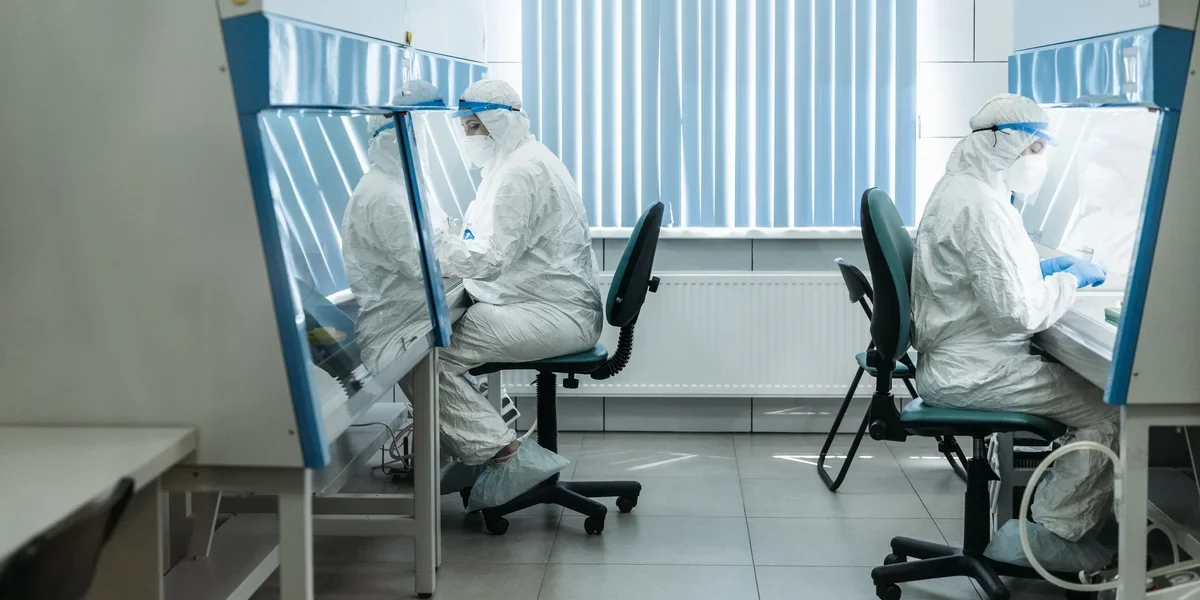
Most facility planners assume that meeting ISO 14644 particle counts automatically checks the box for EU GMP Annex 1 compliance, but that specific misunderstanding causes more audit failures than almost anything else. ISO tracks particulates in the air, while Annex 1 demands strict control of microbiological contamination through surface integrity.
If your wall panels lack the proper surface roughness or harbor shedding fibers, you fail the audit regardless of your air particle counts. Effective clean room classification requires looking past the air filtration systems and straight at the physical envelope.
Standard coated steel often fails to meet the “smooth, impervious and unbroken” standard required by regulators. We engineer GRP and stainless steel facings specifically to stay below the critical roughness threshold and eliminate the fiber shedding risks that cause joint-sealing audit failures. This piece maps the compliance gap between ISO 14644 and EU GMP grades, and it exposes why selecting a non-compliant panel core forces your HVAC system to work significantly harder to compensate for envelope leakage.
You will walk away with a technical supplier vetting checklist designed to spot fake test reports and identify the hidden costs of the HVAC-panel disconnect before they blow your budget.
Clean Room Classification Standards Overview
The panel envelope acts as the primary barrier for contamination control; without airtight joints and non-shedding surfaces, even the most advanced HVAC systems cannot maintain ISO classification integrity or pass GMP audits.
Modular panel systems are not merely passive partitions; they are the active pressure vessel that defines the cleanroom’s boundary. In the context of ISO 14644 and EU GMP standards, the physical envelope dictates whether the facility can sustain the required pressure differentials and prevent cross-contamination. A compliant panel system must offer structural rigidity, thermal stability to prevent condensation, and a surface finish that withstands rigorous chemical cleaning without degrading.
The Critical Role of Panel Envelopes in Classification
📋 Actionable Steps
- Step 1: ISO 14644 Compliance: Focuses strictly on airborne particulate cleanliness. Requires panels with airtight cam-lock connections and smooth, non-porous facings to prevent particle entrapment.
- Step 2: EU GMP Grade A-D Compliance: Requires ISO standards plus control of microbial and viable contamination. Demands impervious, washable surfaces (typically GRP or Stainless Steel) and non-shedding core materials to meet Annex 1 surface requirements.
Impact of Wall Airtightness and Material Shedding
The two most common failure modes in cleanroom certification are air leakage and internal shedding. Micro-leaks at panel joints or utility penetrations disrupt pressure cascades, allowing dirty air to infiltrate the critical zone. Simultaneously, low-quality core materials can shed fibers or outgas volatile organic compounds (VOCs), creating a persistent background contamination that skews particle count data.
Standard sandwich panels with organic paper or low-density foam facings often degrade under aggressive cleaning protocols. This shedding releases micro-particles that are invisible to the eye but will cause an immediate ISO 5 or ISO 7 certification failure during particle counting.
In our R&D lab, we have identified that Rockwool cores with GRP facings are the superior choice for ISO 5 environments due to zero fiber shedding and A1 non-combustibility. Our engineers pre-validate joint sealing profiles to ensure airtightness remains stable over 10+ years of thermal cycling, eliminating the risk of post-installation audit failures.
ISO 14644 Classes Explained
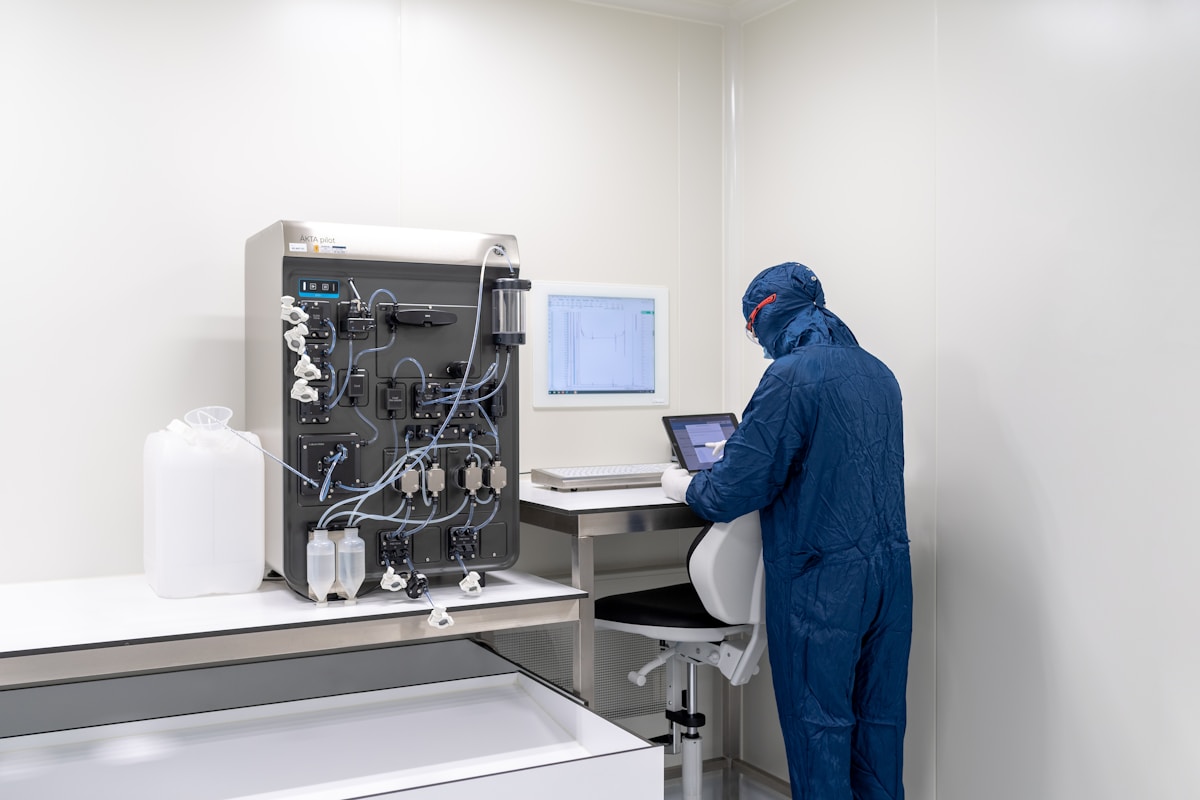
ISO 14644-1 defines air cleanliness by particle concentration per cubic meter. While higher classes (ISO 1-4) are reserved for advanced microelectronics, industrial cleanrooms rely on ISO 5 to ISO 8 envelopes to balance strict contamination control with operational feasibility.
Particle Count Limits for ISO 1 Through ISO 9
The ISO 14644-1 standard establishes a logarithmic scale for classifying airborne particle cleanliness. It is crucial to note that the permissible limits double for every integer increase in the class number.
For instance, ISO 4 permits twice as many particles as ISO 3, while ISO 9 allows significantly higher concentrations than ISO 8. In practice, most industrial pharmaceutical and biotech applications operate within ISO 5 through ISO 8, as achieving lower classes requires significant increases in HVAC energy consumption and filter surface area.
ISO classifications are primarily based on particle counts of ≥0.5 µm and ≥5.0 µm. However, modern GMP Annex 1 guidelines require a much stricter focus on ≥0.5 µm particles due to the increased risk of microbial attachment to fine particulates.
When designing a facility, buyers must understand that the physical envelope (the panels) does not create the cleanroom class; the HVAC system does. However, if the panel envelope leaks or sheds fibers, the HVAC system will constantly fight a losing battle. The ISO 14644 limits dictate how tightly sealed and smooth your physical barriers must be to prevent back-contamination.
Focus on ISO 5 to ISO 8 for Industrial Applications
For procurement, the most critical engineering battles occur between ISO 5 and ISO 8. ISO 5 (Grade A) is typically required for critical processing zones, such as aseptic filling areas. Here, the panel surfaces must be completely non-porous and airtight. In contrast, ISO 8 (Grade D) covers supportive logistics and low-risk preparation areas.
The transition from ISO 8 to ISO 7 or 6 represents the tipping point where standard building materials fail. At ISO 6 and above, the surface roughness of the panel facing becomes a primary vector for audit failure. Our engineering team emphasizes that any texture or porosity in the facing materials will accumulate dust, making it impossible for the air filtration system to maintain the mandated particle counts.
additionally, thermal bridging becomes a significant issue at these tighter classes. If the sandwich panel core has high thermal conductivity, condensation can form at the seams during rapid temperature fluctuations. This moisture acts as a magnet for airborne contaminants. therefore, selecting the right core material—such as PIR or Rockwool—is not just about fire safety, but about preserving the integrity of the ISO classification.
Pro Tip: Don’t just ask for ‘cleanroom panels.’ Ask for panels that have undergone full-scale environmental validation testing. A panel might pass a static fire test but fail a dynamic airtightness test under pressure cycling. Verify that your supplier provides test reports matching the ISO class you intend to achieve.
Maximum Particulate Limits Data Table for ≥0.5µm Particles
Refer to the accompanying data table to see the precise maximum allowable particle concentrations per cubic meter for ISO 5 through ISO 8. This table outlines the specific panel specifications recommended to defend against these limits during regulatory audits. Note that these figures represent the upper threshold; successful cleanroom operations should aim for particle counts well below these maximums to ensure a consistent safety margin.
| ISO_Class | Max_Particles_0.5um_m3 | Recommended_Rax_Panel_Spec | Audit_Defense_Benefit | Commercial_Advantage |
|---|---|---|---|---|
| ISO 5 | 3,520 | Stainless Steel or Anti-Static GRP Sandwich Panels | Meets EU GMP Annex 1 surface roughness (Ra ≤0.8μm) with smooth joint sealing to eliminate fiber shedding and contamination traps | Full-scale environmental validation testing included; 15-day expedited lead time for critical pharmaceutical projects |
| ISO 6 | 35,200 | PIR Core Aluminum/GRP Composite Panels | Euroclass B-s1,d0 fire rating prevents thermal bridge condensation and ensures HVAC load test compliance without compromising airtightness | Modular interlocking design reduces installation labor by 30%; scalable production capacity exceeding 1,700 m² daily |
| ISO 7 | 352,000 | Rockwool Core Steel-Faced Sandwich Panels | A1 non-combustible core guarantees strict fire code compliance while maintaining structural airtightness for long-term audit readiness | Cost-optimized for large-scale facility builds; free engineering CAD drawings provided for joint sealing verification |
| ISO 8 | 3,520,000 | XPS/PET Foam Core GRP/Aluminum Panels | Waterproof, thermally insulated envelope prevents microbial growth zones at panel seams and simplifies routine cleaning validation | Flexible MOQ for pilot cleanrooms; 24/7 multilingual technical support for installation guidance and risk elimination |
EU GMP Grades for Pharma
EU GMP Annex 1 defines four sterile manufacturing grades based on microbial tolerance and operational risk, with Grade A demanding unidirectional laminar airflow and zero viable contaminants, while Grades B, C, and D serve as progressively less controlled background environments. Achieving these thresholds requires validating panel airtightness and surface smoothness under both static ‘at rest’ and dynamic ‘in operation’ conditions.
Distinction Between EU GMP Grades A, B, C, and D
Grade A is the critical zone where exposure carries the highest contamination risk. It permits zero viable microorganisms and requires the most stringent physical barriers. Grade B functions as the controlled background environment for Grade A operations, allowing minimal microbial presence but still demanding rigorous cleanliness protocols. Grades C and D act as support areas with escalating permissible particulate and biological loads.
The physical difference between these grades lies in how the envelope handles cleaning cycles and chemical exposure. Standard coated steel panels often develop micro-pitting after repeated IPA wipe-downs, creating harborage points for biofilms. Our GRP/FRP and stainless steel panels feature integrated gelcoat finishes that meet Annex 1 surface roughness specifications exactly, ensuring the wall remains chemically inert and wipe-cleanable throughout the facility’s lifecycle without degrading into higher contamination tiers.
Procurement teams often undervalue surface finish validation. Before signing off on panel orders, request actual Ra (roughness average) measurements from the manufacturer’s lab. If they only provide ‘smooth’ descriptions without micrometer data, you are gambling with audit outcomes.
‘At Rest’ vs. ‘In Operation’ Monitoring States
These two states define when you actually validate your facility’s performance against GMP benchmarks. ‘At rest’ occurs after mechanical installation and HVAC commissioning, with all equipment in place but zero personnel or active production running. This baseline test isolates the structural envelope’s ability to hold pressure differentials without human interference. ‘In operation’ simulates worst-case production scenarios: full shifts, material transfers, door cycling, and thermal loads from machinery.
This is where modular systems typically fail. In our validation lab tests, we track dynamic air leakage across panel joints during simulated production runs. If a supplier doesn’t pressure-test their silicone seals under vibration and thermal expansion, your facility will lose positive pressure the moment the floor becomes busy, instantly violating Grade C or D baselines.
Panel joints expand and contract differently than concrete walls. Using standard construction-grade sealants instead of pharmaceutical-grade, non-curing compounds will cause hairline fractures within 18 months. These micro-fissures bypass HEPA filtration entirely, triggering immediate regulatory action during routine inspections.
Grade A Laminar Flow vs. Grade B Air Change Requirements
Structural integrity dictates whether your HVAC specifications can actually translate into compliant sterile environments. GMP Grade A environments mandate 20 to 40 complete air changes per hour using continuous laminar flow to physically sweep particles away from open vessels or needles before they settle. This high-volume exchange requirement replaces older turbulent dilution benchmarks, demanding a perfectly sealed enclosure to prevent flow disruption.
Here is the engineering reality: no HVAC system can sustain a consistent 20–40 ACH laminar stream through a compromised ceiling grid. Our PIR and Rockwool sandwich panels use interlocking tongue-and-groove joints that achieve near-zero static pressure decay. When our engineering team designs the enclosure, we guarantee the physical structure won’t bleed the designed airflow, keeping your sterile core compliant while sustaining these rigorous exchange rates during the most aggressive Phase II audits.
📋 Actionable Steps
- Step 1: Verify supplier provides third-party acoustic and pressure decay test reports for the specific panel thickness selected.
- Step 2: Confirm that all electrical penetrations and light fixture housings are pre-sealed to prevent edge-case air leaks.
- Step 3: Schedule mandatory ‘in operation’ re-validation annually, focusing specifically on door threshold seals and HVAC diffuser interfaces.
Panel Selection for Compliance
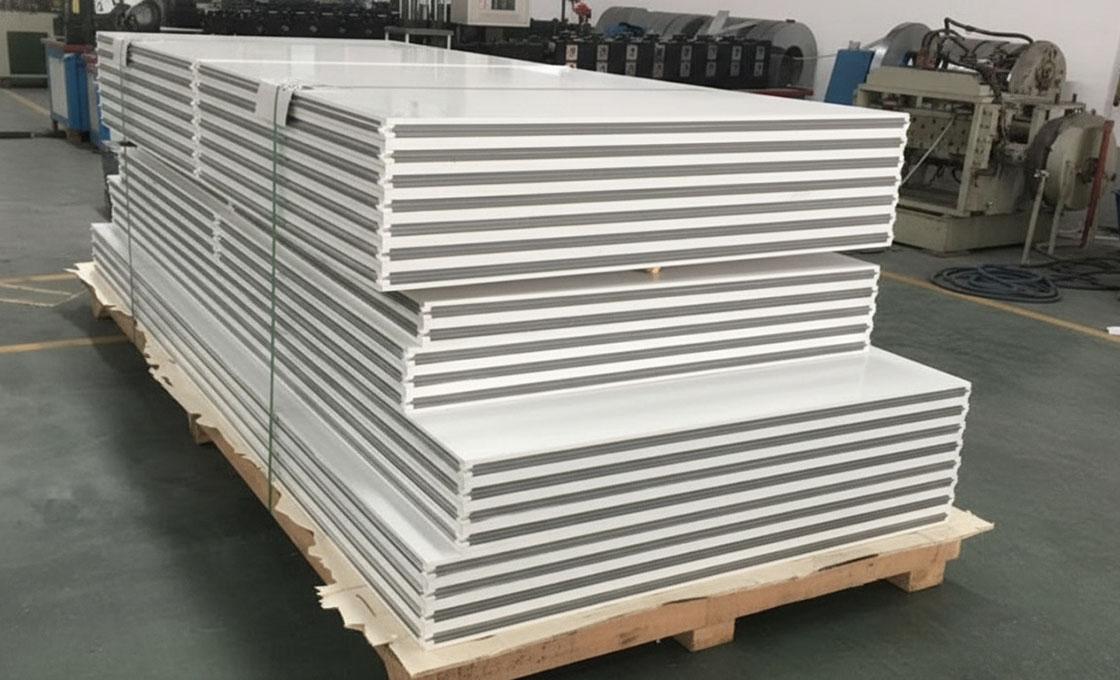
How to Choose cleanroom panels based solely on R-value or initial cost is a recipe for audit failure; the material must first survive fire safety protocols and microbial contamination risks.
The Fire Code Trap: Why Standard SIPs Fail
A critical error in facility design is attempting to retrofit standard Structural Insulated Panels (SIPs)—typically composed of Oriented Strand Board (OSB) skins with Expanded Polystyrene (EPS) cores—into regulated sterile environments. While these materials are cost-effective for residential housing, they are fundamentally incompatible with cleanroom fire codes.
OSB is organic wood; it acts as fuel. EPS is a thermoplastic that melts, drips, and releases thick black smoke when exposed to flame. In a fire event within a contained cleanroom, this combination creates a catastrophic toxicity risk and violates nearly every international building code for industrial facilities.
Many local authorities having jurisdiction (AHJ) will immediately reject designs specifying OSB/EPS for ISO 5 through ISO 8 environments. The risk is not just the fire itself, but the toxic outgassing that can compromise containment seals and endanger personnel.
To ensure compliance and safety, the envelope must be constructed from materials that do not contribute fuel to the fire and limit smoke development. In our of manufacturing, we have phased out organic core materials for sterile applications, focusing strictly on mineral and thermoset options that meet Euroclass fire ratings without compromising thermal performance.
Core Material Engineering: Rockwool vs. PIR
To mitigate fire risks, the industry standard pivots to two core materials: Rockwool (mineral wool) and Polyisocyanurate (PIR). Rockwool is the gold standard for non-combustibility, typically achieving Euroclass A1 classification. Being essentially spun stone, it does not burn, produce smoke, or melt. This makes it the mandatory choice for high-risk zones or facilities with strict non-combustible mandates. However, its density requires strong structural handling and precise joint detailing to maintain rigidity.
PIR cores offer a high-performance alternative, providing superior thermal insulation with a lighter weight profile. While not non-combustible like stone wool, high-quality PIR formulations are self-extinguishing and achieve Euroclass B-s1,d0 ratings—meaning they produce very limited smoke and no flaming droplets.
This “limited combustibility” is often acceptable for lower-risk cleanroom zones or exterior walls where thermal efficiency is a priority. We engineer our PIR sandwich panels specifically to prevent condensation—a common failure point that leads to mold growth behind walls—ensuring the thermal envelope remains dry and effective throughout the facility’s lifecycle.
The Microbial Frontier: Non-Porous Facings
Fire safety is visible, but microbial risk is invisible and often more dangerous to the product. Regulated environments like pharmaceutical or biotech facilities must adhere to EU GMP Annex 1, which mandates that surfaces be “smooth, impervious, and unbroken” to prevent bacterial colonization. Standard painted steel or rough-textured laminates can micro-fracture over time, creating crevices where spores lodge and resist cleaning agents. Additionally, low-grade facings can undergo outgassing—releasing volatile organic compounds (VOCs) that contaminate sensitive processes.
This necessitates the use of continuous, non-porous skins such as Glass Reinforced Plastic (GRP/FRP) with specialized gelcoats or Stainless Steel. These materials offer zero porosity, meaning chemicals and bacteria cannot penetrate the surface.
We strictly adhere to specific surface roughness (Ra) requirements in our GRP manufacturing, ensuring that the panels are not just waterproof, but chemically inert and easy to decontaminate. By eliminating the texture where microbes hide, we help our clients reduce the frequency of validation cycles and ensure their facility remains audit-ready at all times.
| Compliance Standard | Required Panel Spec | Key Advantage | Environmental Rating | Risk Mitigation |
|---|---|---|---|---|
| EU GMP Annex 1 / ISO 14644 | GRP/FRP or SS with Anti-static, Waterproof Facing | Meets ‘Smooth, Impervious, Unbroken’ Surface Roughness (Ra) Requirements | ISO 5 to ISO 8 Cleanroom Integrity | Zero-fiber shedding and sealed joints eliminate microbial harborage points |
| Euroclass B-s1,d0 / A1 Non-Combustible | PIR or Rockwool Core Options | Superior Fire Resistance & Thermal Insulation | Prevents Condensation and Meets Strict Local Fire Codes | Eliminates fire spread pathways and ensures structural stability during emergencies |
| Structural Airtightness / Pressure Differential | Engineered Joint Sealing Systems | Eliminates Air Leakage Pathways | Maintains Stable Pressure Gradients for Sterile Environments | Avoids common ‘Joint Sealing Failure’ audit risks and cross-contamination |
| Validation & Testing Protocols | Rigorous Experimental Validation | Full Test Reports Provided | Guarantees Compliance with Data Standards | Reduces supplier vetting time and eliminates audit anxiety |
| Customization Capability / Project Requirements | Tailored Core/Skin Combinations | Cost-Effective Composite Solutions | Optimized for Specific Project Temperature/Humidity Needs | Balances budget constraints with high-performance regulatory requirements |
Key Takeaways
Auditors reject panels because joints seal poorly and surfaces shed fibers. Your wall system must meet EU GMP Annex 1 surface roughness requirements strictly. Standard OSB sandwich panels fail fire codes instantly. You need Rockwool or PIR cores certified to Euroclass standards. Don’t confuse ISO 14644 particle limits with EU GMP microbial controls. Our engineers validate every joint to prevent audit failures.
Rax Panel delivers GRP and stainless steel solutions with zero-failure compliance. We have over 15 years experience manufacturing these specific systems. Our daily capacity exceeds 1,700 square meters for global pharma clients. Contact our engineering team now for custom quotes. Request physical material samples to verify surface smoothness yourself before committing to a full order.
Frequently Asked Questions
This factor has a direct bearing on project performance and long-term cost. Addressing it with specific data rather than general assumptions leads to better outcomes.
What is the difference between ISO and GMP?
ISO 14644 defines quantifiable particle count limits for air cleanliness, whereas EU GMP Annex 1 establishes qualitative and quantitative standards for microbial control and process validation. While ISO focuses on particulate matter, GMP encompasses the entire quality system, including personnel behavior and environmental monitoring. Both frameworks are often integrated in pharmaceutical manufacturing to ensure comprehensive sterility assurance.
What is the role of HVAC in GMP?
HVAC systems control temperature, humidity, and filtration to maintain the desired cleanroom classification and prevent contamination. They must be designed to avoid turbulence that could spread particles or microbes within the facility. Proper integration with panel systems ensures airtightness and efficient air exchange rates required for sterile processing.
How do you validate cleanroom classification?
Validation involves rigorous testing of airborne particles, microbial counts, pressure differentials, and airflow velocity according to ISO 14644 and EU GMP guidelines. Regular requalification ensures that the facility continues to meet specified cleanliness classes over its lifecycle. Documentation of these tests is crucial for regulatory audits and quality assurance compliance.
How does surface roughness affect cleanrooms?
Surface roughness directly impacts the ability to clean and disinfect effectively, influencing microbial retention and particle generation. EU GMP Annex 1 mandates smooth, non-shedding, and impervious surfaces to prevent contamination traps. Materials with high roughness values can harbor biofilms, making them unsuitable for Grade A and B areas where sterility is critical.
Why is joint sealing critical in cleanrooms?
Joint sealing prevents unfiltered air infiltration and cross-contamination between different cleanliness zones, maintaining the required pressure differentials. Leaks at seams can compromise the integrity of the cleanroom envelope, leading to particle and microbial ingress. High-quality sealants and proper installation techniques are essential for sustaining ISO classification levels over time.