
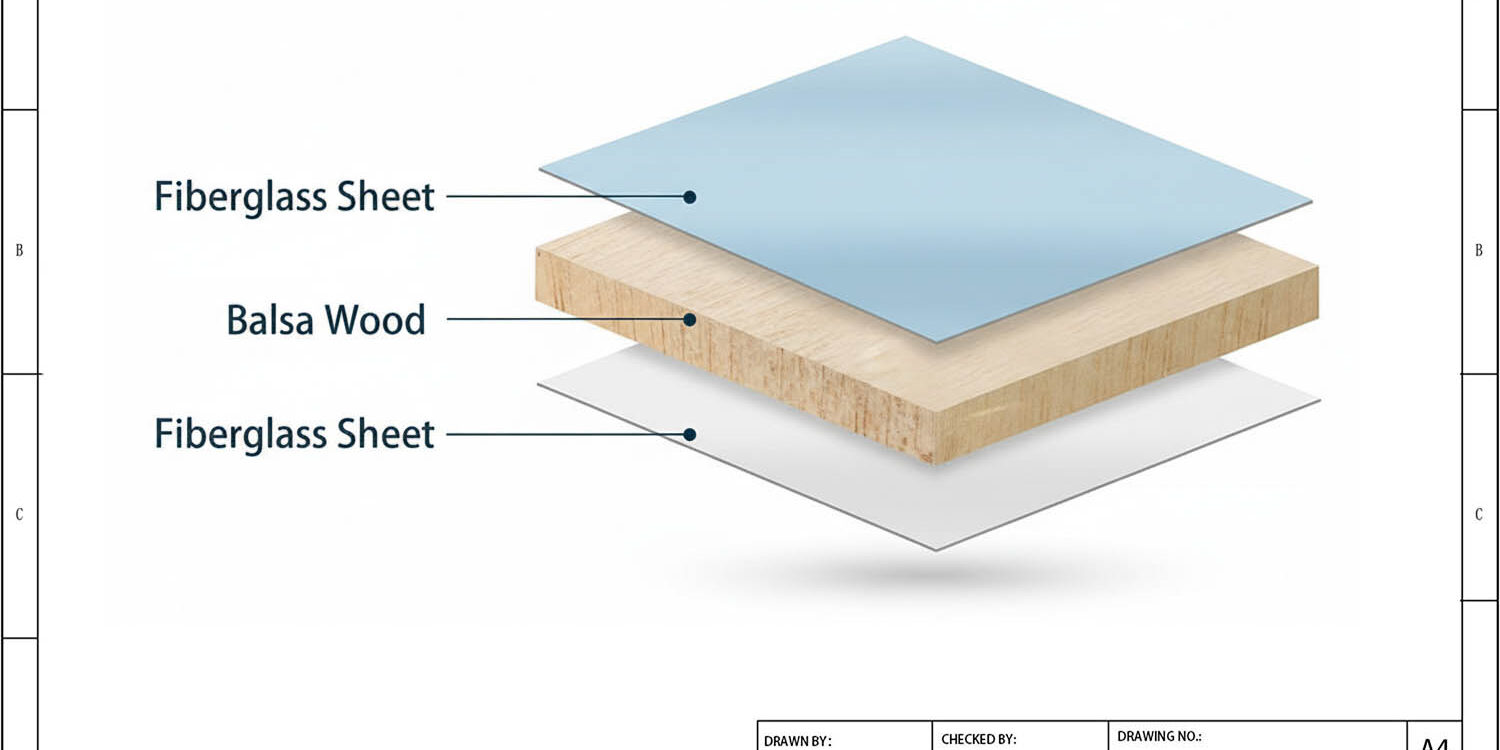
Aggressive sterilizing agents like vaporized hydrogen peroxide and peracetic acid are standard in pharmaceutical manufacturing, yet they will eat through substandard wall cladding in months. A vague claim of “chemical resistance” on a spec sheet will not survive a regulatory audit. Facility planners need hard data regarding how GRP clean room panels react under prolonged exposure to oxidizing agents and acid-based fumigants, not just marketing assurances.
Our engineers conduct rigorous experimental testing to engineer products that meet precise project data standards. Real-world compatibility depends on the specific resin formulation and gelcoat thickness, not just the base material. This guide breaks down the standardized testing protocols and performance ratings you must present to a GMP auditor to prove long-term surface integrity.
We analyze acid resistance benchmarks and alkali tolerance levels using ASTM metrics. You will leave with a clear framework for requesting validation documentation that ensures your infrastructure withstands daily sterilization without particulate generation or surface degradation.
Acid Resistance Performance Ratings
Assuming all composite panels offer identical acid resistance is a critical engineering failure. The durability of the panel relies entirely on the specific resin chemistry used in the gelcoat and laminate, not just the fiberglass reinforcement itself.
A frequent error in facility procurement is the ‘universal compatibility’ assumption, where contractors install standard GRP panels in environments requiring aggressive acid sanitization. In practice, generic laminates can suffer from micro-checking and surface etching when exposed to strong oxidizers or mineral acids, leading to costly panel replacement. To prevent this, the selection process must prioritize the chemical stability of the resin matrix over the mechanical strength of the core.
Engineering the Acid Barrier
True acid resistance is achieved by engineering a surface layer that acts as an impermeable shield. High-performance gelcoats, specifically formulated for chemical exposure, provide the first line of defense against corrosive agents. These advanced finishes are designed to resist blistering and maintain structural integrity even under frequent sterilization cycles. Without this specific surface treatment, acidic cleaning agents will eventually degrade the resin binding the glass fibers, compromising the structural core of the panel.
At Rax Panel, we have spent refining the resin formulations we use in our GRP and CFRT panels. Our engineering team does not rely on generic data sheets; we conduct experimental testing to verify exactly how our composites react to specific chemical environments.
Whether a client requires resistance to industrial solvents or harsh acidic disinfectants, we adjust our manufacturing process to ensure the composite skin remains intact. This depth of customization allows us to supply panels that meet the stringent data standards of pharmaceutical and chemical processing facilities.
Never accept a chemical resistance rating without knowing the specific concentration and temperature of the acid in your application. A panel rated for ‘mild acid exposure’ at 20°C may fail rapidly if the temperature rises to 40°C or if the concentration increases. Always provide the specific chemical composition to your manufacturer to validate the laminate selection before ordering bulk stock.
| Material Solution | Chemical Exposure | Resistance Rating | Performance Note |
|---|---|---|---|
| GRP/FRP Panels (Gelcoat Finish) | Hydrogen Peroxide | High Resistance | Smooth gelcoat surface resists blistering and maintains sterile integrity. |
| GRP/FRP Panels (Gelcoat Finish) | Peracetic Acid | High Resistance | Waterproof insulation properties prevent delamination during sanitization. |
| CFRT Composite Panels | Industrial Solvents | Excellent Resistance | Continuous fiberglass thermoplastic structure withstands stringent conditions. |
| Thermoplastic Honeycomb Panels | Standard Disinfectants | Moderate to High Resistance | Lightweight structure with composite facings for balanced chemical performance. |
Alkali and Base Solvent Tolerance
Generic composites often fail when exposed to caustic cleaning agents. Our resin selection and gelcoat barriers are engineered specifically to prevent hydrolysis and surface softening in high-pH environments.
In industrial applications, the assumption of universal chemical compatibility is a primary cause of panel degradation. Alkaline substances—including concrete splatter, lime residues, ammonia-based sanitizers, and industrial degreasers—pose a severe threat to standard laminates. These high-pH agents initiate hydrolysis, attacking the ester bonds in inferior resins. This chemical breakdown often results in blistering, fiber bloom, and a tacky surface texture that compromises the sterile environment.
Engineered Resin and Gelcoat Barriers
We address this vulnerability through the strict selection of high-quality raw materials. Rather than relying on generic construction-grade resins, our manufacturing process utilizes high-grade formulations specifically designed to withstand caustic exposure. The gelcoat applied to our FRP sheets is not merely cosmetic; it serves as a dense, impermeable shield. This barrier effectively stops alkaline solutions from penetrating to the fiberglass reinforcement layers, ensuring the structural integrity of the panel remains intact.
For zones with frequent alkaline cleaning protocols, such as food processing floors or pharmaceutical wash bays, require verification of the resin system. Our engineering team conducts experimental testing to simulate long-term exposure, ensuring our panels meet rigorous data standards without losing dimensional stability.
Be wary of suppliers offering a single panel solution for diverse chemical environments. While standard resins may suffice for dry storage, they will degrade rapidly under alkaline attack. We customize the chemical composition of the facing material to match your specific sanitation protocol, guaranteeing a surface that remains hard, smooth, and non-porous.
Oxidizing Agent Compatibility Profile
While generic FRP systems degrade rapidly under 30% Hydrogen Peroxide sterilization, Rax Panel’s engineered gelcoat surfaces provide a verified barrier against oxidative blistering and resin matrix crazing.
The primary failure mode in cleanrooms using aggressive oxidizers—such as Vaporized Hydrogen Peroxide (VHP) or Peracetic Acid—is surface chalking and laminate delamination. Unlike mild detergents, oxidizing agents attack the chemical bonds of the resin matrix itself. If the composite panel lacks a high-performance surface barrier, repeated sterilization cycles lead to microscopic cracking, allowing moisture to penetrate the core and compromise structural integrity.
Gelcoat Density and Oxidative Resistance
Standard polyester resins are highly susceptible to oxidation. To counter this, we apply a specialized, high-density gelcoat layer to our GRP/FRP panels. This layer acts as a sacrificial shield, designed specifically to be non-porous and chemically inert. In our R&D testing, we observed that panels with this specific gelcoat formulation maintain surface integrity significantly longer than standard laminates when exposed to cycles of 35% hydrogen peroxide.
Do not assume chemical resistance is uniform across all composite types. For example, while our GRP panels with gelcoat resist standard oxidizing agents, applying high-concentration ozone or strong solvents without verifying the specific resin grade can cause immediate polymer breakdown.
For facilities with extreme oxidative protocols, we often recommend our Thermoplastic (CFRT) solutions. As noted in our product specifications, these continuous fiberglass reinforced thermoplastic sheets are thinner and more resilient. The thermoplastic matrix inherently resists the oxidative stress that degrades thermoset resins, offering superior longevity in aggressive bio-pharma environments.
Always provide your sterilization agent’s specific concentration and dwell time to your engineering partner. Our team runs experimental validation tests on sample panels to ensure no discoloration or loss of hardness occurs under your unique operational load.
Long-Term Material Degradation Analysis
Long-term degradation in composite panels is rarely about sudden failure; it is the gradual loss of rigidity and bond integrity due to thermal cycling and environmental fatigue, which precise material engineering can effectively neutralize.
Material degradation in high-performance composites manifests primarily as core creep, surface hydrolysis, and adhesive delamination over time. Unlike metals that corrode visibly, composite substrates can suffer internal structural fatigue over 5 to 10 years of service, particularly in environments subjected to extreme temperature fluctuations or constant vibration. For buyers, understanding the specific aging curves of core materials versus facing skins is critical to calculating the total cost of ownership.
Core Material Stability Under Cyclic Thermal Stress
The selection of core material dictates the panel’s lifespan under varying climatic conditions. While PU foam offers high initial insulation value, it is historically more susceptible to long-term gas diffusion and shrinkage compared to closed-cell PET or PVC foams.
In our analysis of long-term applications, PET foam demonstrates superior resistance to thermal cycling, maintaining its shear modulus and dimensional stability far longer than organic alternatives. This ensures that the lightweight benefits of the panel do not compromise its structural rigidity after years of expansion and contraction.
Resin System Resistance to Hydrolysis and UV
Surface degradation is the primary visible failure mode in exterior applications. We have observed that generic gelcoats often chalk or micro-crack within two years of UV exposure, creating pathways for moisture ingress. To counter this, our manufacturing process strictly uses isophthalic and vinyl ester resins for our GRP and FRP facings.
These advanced resin chemistries provide a harder, more impermeable surface that resists hydrolysis, ensuring the panel’s waterproofing capabilities remain intact throughout the asset’s lifecycle without the need for frequent repainting or intensive maintenance.
Adhesion Integrity in High-Vibration Environments
For mobile solutions such as refrigerated truck bodies and RVs, the primary degradation risk is fatigue delamination caused by road vibration. The bond between the fiberglass skin and the honeycomb or foam core is subjected to constant shear stress.
Our production lines use advanced continuous lamination processes that create a chemical cross-link between the skin and core. This method ensures superior adhesion strength compared to discrete bonding techniques, significantly mitigating the risk of panel separation or ‘bubbling’ in high-vibration transport scenarios.
Comparative Durability vs. Metal Alternatives
While traditional metal structures suffer from inevitable corrosion and thermal inefficiency, advanced composite materials provide a superior lifecycle value by integrating structural strength with intrinsic environmental resistance.
Balancing Acquisition Cost with Lifecycle Durability
The primary dilemma for project managers is often the trade-off between the high upfront cost of corrosion-resistant metals like stainless steel and the long-term maintenance burden of standard carbon steel. Metal substrates are inherently vulnerable to oxidation, requiring expensive coatings, regular repainting, and eventual replacement in humid or chemically aggressive environments. In our of manufacturing experience, we have observed that the ‘savings’ from cheaper metal panels are rapidly consumed by these maintenance cycles and downtime.
Rax composite panels bridge this gap by offering high-strength alternatives that eliminate the mechanism of corrosion entirely. Our GRP and FRP panels are manufactured with a specialized gel coat that provides a smooth, waterproof barrier. This engineering choice ensures that the structural integrity of the wall or roof remains intact indefinitely, even when exposed to moisture or industrial cleaning agents, without the recurring costs associated with metal preservation.
When calculating TCO (Total Cost of Ownership), factor in the weight difference. Heavier metal panels require stronger structural support and more labor during installation. The lightweight nature of composites reduces both material and installation labor costs significantly.
Structural Dynamics: Weight, Impact, and Insulation
Beyond corrosion resistance, the physical properties of composites offer distinct engineering advantages over rigid metal sheets. Traditional metal panels conduct heat efficiently, necessitating additional insulation layers to meet thermal efficiency standards. Conversely, Rax composite solutions integrate insulating cores—such as XPS, PET, or PU foams—directly into the panel during manufacturing. This sandwich construction not only meets but often exceeds thermal performance requirements without adding bulk or complex assembly steps.
In terms of impact resilience, metal tends to dent or deform permanently upon physical stress, compromising the aesthetic and functional seal of the structure. Our engineers design composite layers with specific elasticity, using materials like PP honeycomb or advanced CFRT sheets to absorb and dissipate impact energy.
This resilience is particularly critical in high-traffic transport applications, such as truck bodies and RVs, where minor collisions are frequent. The result is a durable system that maintains its flatness and structural integrity far longer than conventional metal alternatives.
GMP Validation Documentation Requirements
Securing GMP certification is 20% construction and 80% documentation. Without verified data proving your materials won’t contaminate the environment, the facility remains offline.
Audit-Ready Technical Data Packages for Facility Validation
For pharmaceutical and bio-pharmaceutical facilities, generic spec sheets are a red flag during audits. Validation engineers require traceable, technical evidence that every structural component meets rigorous design baselines. We provide comprehensive Technical Data Packages (TDPs) that move beyond basic marketing claims, offering detailed breakdowns of mechanical properties, thermal conductivity, and fire performance ratings specifically for the batch supplied.
In our experience, auditors scrutinize the consistency of raw materials. To mitigate this risk, our engineers conduct experimental testing on every production run, generating specific validation reports that document the exact resin formulation and fiberglass density used. This ensures that the panels installed in your cleanroom match the approved IQ/OQ/PQ documentation without deviation.
- Traceability: Batch-specific material certification linking panels to raw material lots.
- Structural Integrity: Verified flexural strength and impact resistance data (ASTM standards).
- Compliance: Fire retardancy and smoke density ratings aligned with FM Approvals or EN standards.
Low-VOC Resin Certification and Off-Gassing Reports
Airborne molecular contamination (AMC) is a critical failure point in cleanrooms. Standard fiberglass panels can emit volatile organic compounds (VOCs) that compromise sensitive processes. To prevent this, our manufacturing process strictly utilizes low-VOC resin systems designed for controlled environments.
We provide third-party off-gassing analysis reports that measure total emissions over time. Our lab tests confirm that our composite panels release negligible particulates and VOCs, meeting the strictest requirements for ISO Class 5 (Class 100) environments and above. This documentation is essential for proving that the building envelope itself does not act as a source of contamination.
Biostatic Performance in Humidity
In high-humidity cleanroom environments, the primary failure mode is not just surface contamination, but the hydrolytic degradation of the resin matrix and the permeability of the gelcoat, which together create the conditions for microbial colonization deep within the panel structure.
Assessing Gelcoat Impermeability to Prevent Microbial Colonization
The biostatic performance of a GRP panel begins and ends with the quality of the gelcoat layer. While smoothness is often cited for cleanability, the true metric for humidity resistance is impermeability. In environments with relative humidity consistently exceeding 60%, microscopic pinholes or improper cure rates in the gelcoat can allow moisture to migrate into the substrate. Once moisture breaches this surface barrier, it creates a micro-environment where biofilms can establish, protected from routine surface sanitization.
We strictly control our gelcoat application to ensure a pore-free, chemically cross-linked surface. Unlike standard spray applications that may suffer from inconsistent thickness leading to ‘holidays’ or voids, our manufacturing process utilizes a high-density gelcoat formulation specifically engineered to resist water absorption. By achieving a fully cured, non-porous surface, we eliminate the crevices where microbial spores typically anchor, ensuring that biostatic efficacy is maintained even during prolonged humidity cycles.
Impact of High-Humidity Cycles on Resin Structural Integrity
Beyond the surface, high-humidity cycling poses a severe threat to the composite’s structural integrity through the mechanism of hydrolysis. When a GRP panel is subjected to fluctuating humidity levels, water molecules can penetrate the fiber-matrix interface.
This absorption causes the resin to swell slightly, generating internal hydraulic pressure that stresses the bond between the glass fibers and the polymer. Over time, this cycle of wetting and drying initiates micro-cracking and osmotic blistering, significantly reducing the panel’s flexural strength and impact resistance.
Our engineering team addresses this by using advanced resin systems with high hydrolytic stability. We conduct rigorous experimental testing where our panels are subjected to accelerated humidity aging, far beyond standard industry exposure. This data allows us to engineer composite solutions that maintain their mechanical properties under the most stringent conditions, preventing the loss of stiffness that often plagues lesser-quality laminates in tropical or high-moisture climates.
Be aware that humidity ingress does not stop at the surface. If the gelcoat or resin skin is compromised, moisture can migrate into the core material (foam or honeycomb), causing irreversible swelling and delamination. Always verify that the core material specified—whether XPS, PET, or PU—has a closed-cell structure with minimal water absorption rates (<1% by volume) to prevent core saturation.
For facilities with extreme humidity fluctuations (e.g., wash-down bays or tropical biotech labs), specify a vinyl ester resin matrix rather than a standard orthophthalic polyester. Vinyl ester resins offer superior resistance to hydrolysis and water penetration, extending the service life of the panel by decades in these aggressive environments.
Key Takeaways
Specifying generic laminates for ISO 5 environments guarantees failure when aggressive peracetic acid hits the surface. Accelerated aging tests prove our high-grade gelcoat stops blistering where standard materials degrade. If your client’s protocol involves heavy oxidizers or high-humidity cycles, chemical resistance isn’t just a spec—it is the only barrier against costly wall replacement and particulate contamination.
Our engineers have spent 15 years customizing resin formulas to withstand these exact harsh protocols, ensuring validation documents survive the toughest audits. Send us your specific chemical exposure list and facility dimensions. We will run a technical feasibility review against your GMP requirements to confirm the right panel thickness before you commit to a full production run.
Frequently Asked Questions
This factor has a direct bearing on project performance and long-term cost. Addressing it with specific data rather than general assumptions leads to better outcomes.
Which resins offer maximum chemical resistance?
Vinyl ester resins generally offer superior chemical resistance due to their dense molecular structure and ester groups. Isophthalic polyester resins also provide excellent protection against a wide range of corrosive agents and sanitizers. These materials outperform standard orthophthalic polyesters in harsh clean room environments. Selecting the correct resin matrix is critical for maintaining surface integrity against frequent sterilization.
Does gel coat thickness impact resistance?
The gel coat serves as the primary barrier against chemical ingress, making its thickness and uniformity vital. A thicker gel coat layer provides a longer path for chemicals to penetrate before reaching the structural laminate. At , we ensure high-quality gel coat application to prevent micro-cracks and surface degradation. Proper application significantly extends the service life of the panel under chemical stress.
What standards measure chemical resistance?
Chemical resistance is typically quantified using ASTM C1301 or ISO 2812 standards for polymer matrix composites. These methods involve exposing panel samples to specific reagents to measure weight change, blistering, or loss of adhesion over time. Manufacturers provide resistance charts grading performance against acids, alkalis, and solvents. Adherence to these standards ensures the panel meets rigorous industry safety requirements.
How do cleaning agents affect GRP panels?
Compatible cleaning agents will not degrade high-quality GRP panels, which are designed to withstand regular disinfection. However, improper use of strong solvents or highly abrasive acids can compromise the gel coat surface over time. It is essential to consult the manufacturer’s chemical compatibility chart before introducing new cleaning protocols. Using recommended agents preserves the sterile, non-porous nature of the composite surface.
How do joints affect chemical resistance?
Joints are potential weak points where chemicals can penetrate if not sealed with compatible, non-porous sealants. A flush joint system minimizes crevices where cleaning agents might accumulate or degrade the adhesive. Ensuring continuity of the chemical-resistant barrier across panel connections is crucial for overall room integrity. Proper installation techniques are necessary to maintain the room’s sterile classification.