
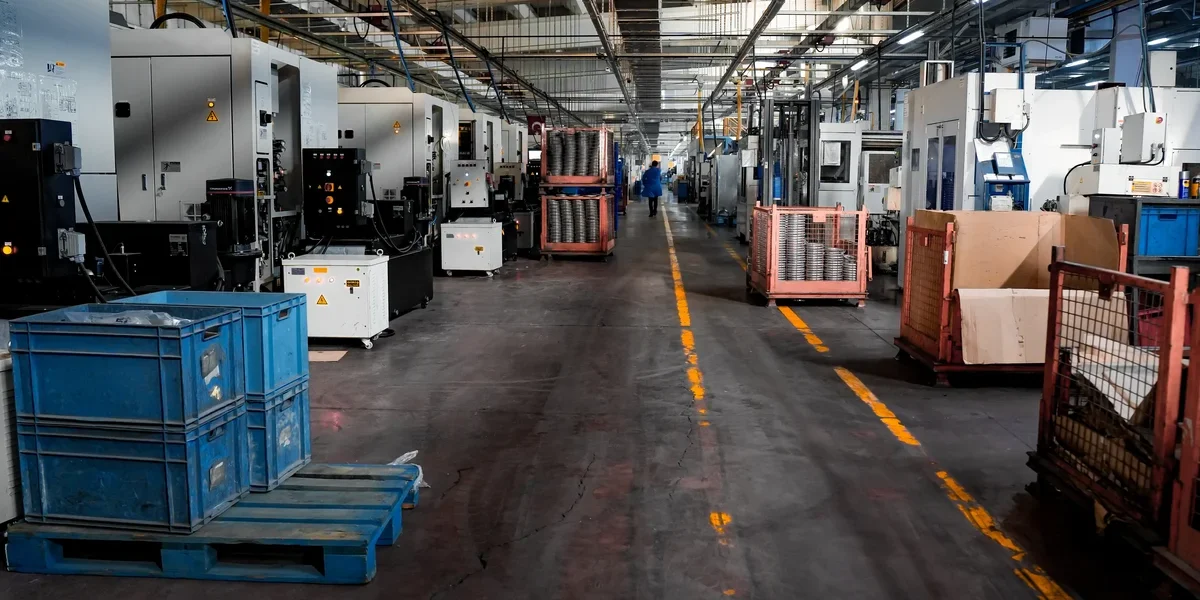
Quotations for the same panel specification can sit 45 to 65 percent apart depending on which side of the ocean they come from. That spread is real, and so is the list of ways an unmanaged import can give the saving back. Choosing between local and international clean room manufacturers is therefore not a hunt for the lowest number on a quotation sheet. For a full walkthrough of this topic, see this guide to modular and traditional ISO 8 clean rooms compared.
The decision turns on four dimensions: factory-gate price, verifiable quality, total lead time, and the service you can actually reach after commissioning. This article puts numbers on each dimension from 2026 market data, then converges them into a decision matrix you can defend in a procurement review.
Where Cost Gaps Between Suppliers Really Come From
Start with an equivalent specification: a 75 millimeter rock wool panel, 0.5 millimeter PVDF-coated steel faces, cam-lock joints. Published 2026 pricing sets put tier-1 Chinese factories at $48 to $58 per square meter with 25 to 35 day lead times. Regional Chinese factories quote $38 to $48. European mills sit at $85 to $125, and North American plants at $95 to $140.

The gap comes from labor rates, line scale, and market structure rather than material shortcuts. Tier-1 Chinese clean room manufacturers run multiple continuous lamination lines with annual capacities above four million square meters of sandwich panel. Scale amortizes coating and pressing capital across far more output, which is why the price difference survives an honest like-for-like comparison.
Beware the low end of any market, though. Directory listings show bare wall systems from $20 to $25 per square meter at 100 square meter minimums, and bundled GMP turnkey packages near $200 per square meter. Neither number is comparable to the mid-market band, because the first strips out skins and hardware while the second bundles HVAC and controls. Normalize the scope before you compare clean room manufacturers at all.
Comparing Panel Quality Across Manufacturing Regions
Price only matters if quality holds, and quality varies more within regions than between them. Vendor research published in 2026 ranks certification depth on documentation. The strongest Chinese vendors hold ISO 9001 plus GMP build documentation. They also name pharmaceutical references such as Abbott, Baxter, and AstraZeneca. Mid-tier vendors publish catalog claims without project evidence.
Three checks separate the tiers quickly. Ask for material traceability on the galvanized steel face sheet, including coil mill certificates. Ask which plant and line will produce your panels, then ask for that line’s test records. Finally, ask for the peel and flatness tolerances the factory commits to contractually, and compare them against the ISO 14644-1 cleanroom classification standard your facility must certify against.
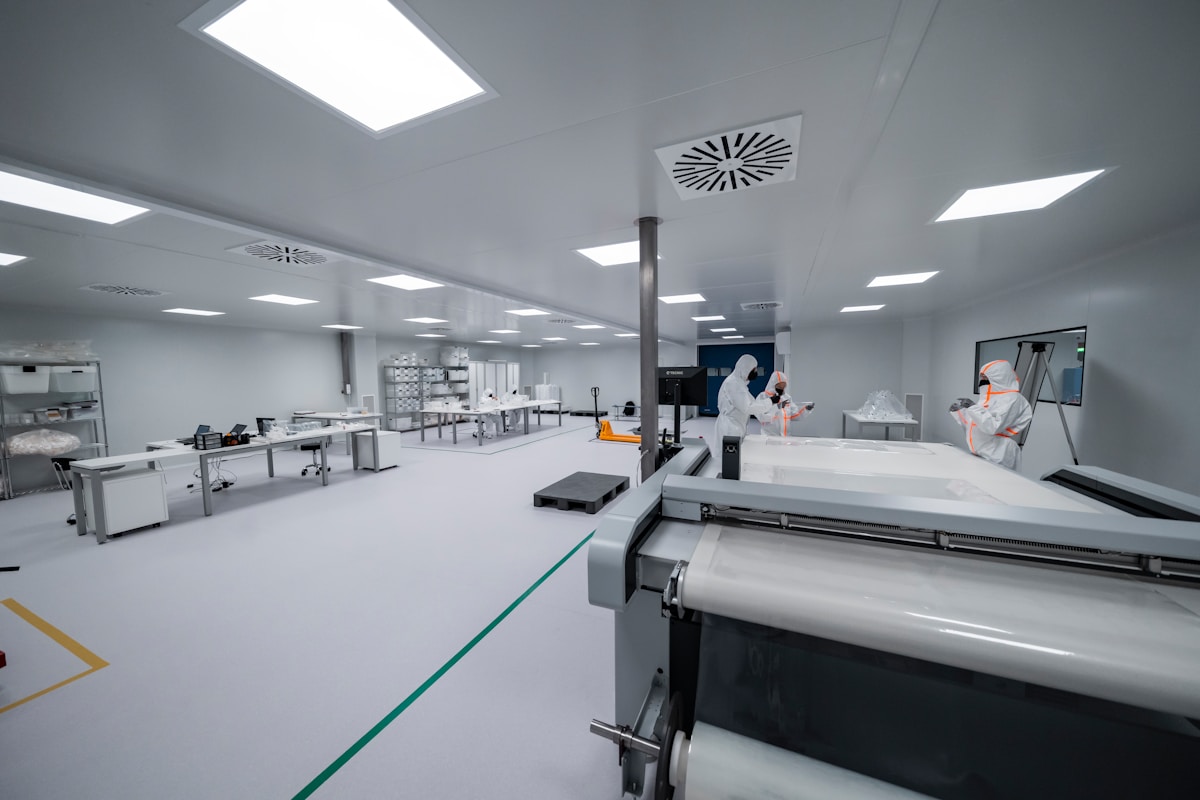
Buyers who run these three checks find that tier-1 international suppliers meet the same envelope specification their local mills do. The quality question is never “which country” but “which factory and which line”.
How Lead Times and Logistics Change the Decision
Factory lead time is only the first block of the schedule. Tier-1 Chinese clean room manufacturers quote around one month off-season and one to three months at peak, with FOB, CIF, and DDP terms available through Shanghai. Ocean freight then adds 25 to 35 days to a North American West Coast or Gulf project, plus inland haulage and customs clearance.
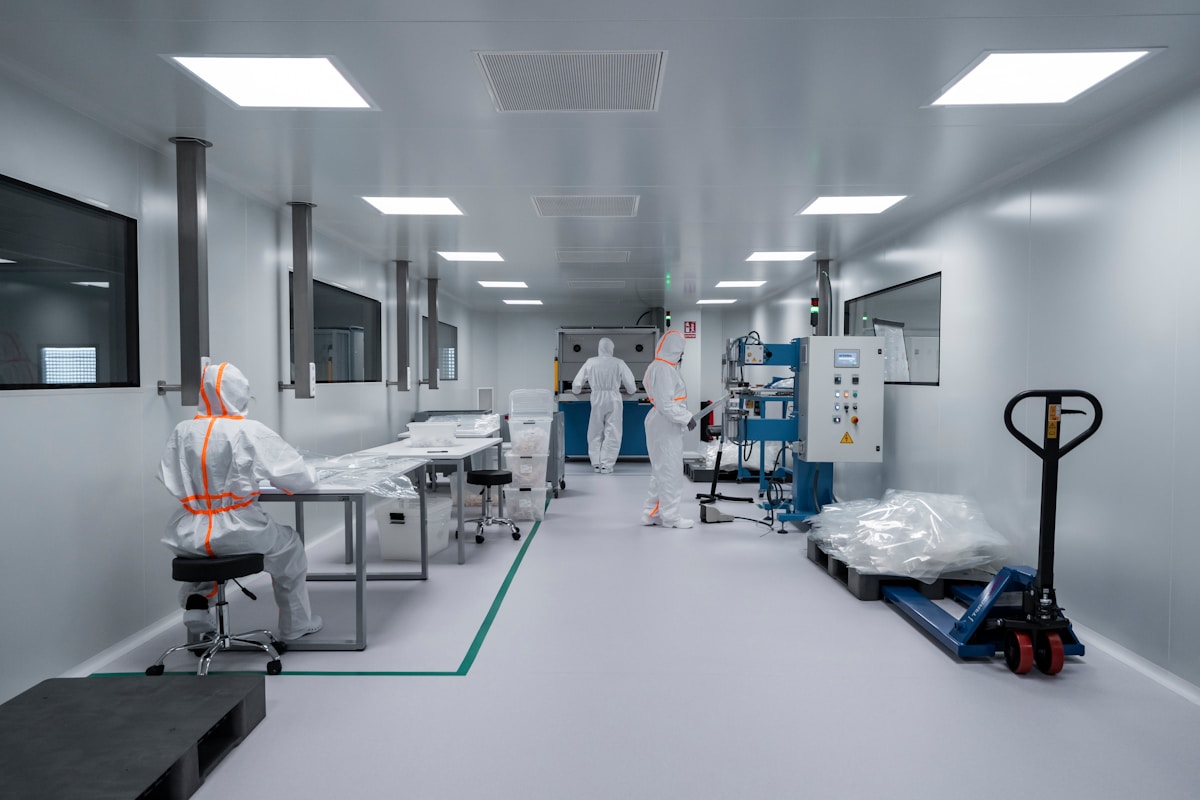
Schedule risk concentrates in communication lag. Seven or more time zones turn a drawing query into a 24-hour round trip. Disciplined importers nominate one engineering contact per side and freeze drawing revisions in writing. A weekly overlap call keeps both engineering teams synchronized on open points.
With those controls, panel imports feed a modular build comfortably. Published project data shows a 5,000 square foot ISO 7 modular fit-out completing in 14 weeks. Traditional construction on the same scope took 22 weeks, so the import route finished 36 percent faster overall.
Local suppliers still win pure schedule races. A regional fabricator with panels on the yard can replace a damaged run in days, and stick-built crews start tomorrow. If your driver is a commissioning date that cannot move, pay the local premium or hold buffer stock.
Certification and Audit Standards for Overseas Suppliers
Distance demands paperwork. Before a purchase order, commission a pre-shipment inspection through a third agency such as SGS or TÜV. The inspection covers particle count testing, airflow visualization, and electrical safety to IEC 61010-1 where equipment ships with the envelope. Make the report a condition of payment release, not an afterthought. For filtration components, require an independent HEPA scan report following IEST-RP-CC034 rather than factory self-declaration.
Audit the factory itself at least once, or accept a live video walkthrough of the specific production line with the camera steered by your own checklist. Check export history to your region, confirm serial traceability, and read Incoterms 2020 delivery terms carefully, because the term on your quotation decides who owns freight risk. Payment security follows the same logic, with letters of credit or escrow arrangements replacing open terms on first orders.
Documentation closes the distance gap. Request the producing line’s quality records with your offer, agree the inspection scope before the deposit, and nominate which witness tests you will attend in person or by video. Buyers who skip this stage discover at customs that a certificate cannot be retrofitted.
Hidden Costs Buyers Forget When Importing Panels
The quotation you compare is never the cost you pay. Accessories alone add 12 to 18 percent to base panel value. Aluminum trim runs $12 to $25 per linear meter, and hygienic coving $18 to $35. Pre-finished door frames cost $180 to $450 each. Ceiling suspension hardware adds $8 to $15 per square meter, and sealants $2 to $4 per square meter.
A 500 square meter room with 120 linear meters of coving and 12 doors carries $8,000 to $14,000 of accessory value that many first quotes exclude.
Installation is the second surprise. Certified cleanroom crews charge $45 to $75 per hour and install 20 to 30 square meters per day on cam-lock systems. General contractors install 8 to 12 square meters per day with a 15 to 25 percent rework rate, which lands at $35 to $60 per square meter installed plus contingency. Paying certified rates saves money overall because certification passes on the first attempt.
Run the full landed calculation before comparing against local mills. In one published 800 square meter example, $50 per square meter FOB from China became $75 per square meter landed. The delta covered freight, 7.5 percent duty, brokerage, and inland haulage. The domestic benchmark came in at $114, so the import saved 34 percent on true delivered cost. That saving is real, but only buyers who itemized every line captured it. For a full walkthrough of this topic, see this guide to clean room cost breakdown by ISO class.
Price Your Envelope With Full Landed Transparency
Send your panel schedule and destination port, and our engineers will return an itemized FOB quotation with freight, duty, accessory, and installation allowances built in.
Experienced importers also stress-test the quotation itself. Ask each shortlisted bidder to price the same bill of materials line by line, including trim profiles, coving, doors, and sealants, so the comparison stays honest. Request the producing line’s schedule window in writing, and tie the payment milestone to a pre-shipment inspection report rather than to shipment alone. Clean room manufacturers who resist that level of specification are telling you where the project will hurt later.
Service Response and Aftercare Expectations
Local clean room manufacturers win the aftercare dimension by geography. A regional firm can put a technician in front of a failed door seal the same day, and site crews remain available for modifications. International supply compensates with structure rather than proximity. Negotiated warranty terms of 18 to 24 months replace the drive-over guarantee. A bonded spare-parts pack ships with the panels, and a named service partner covers your country or region.
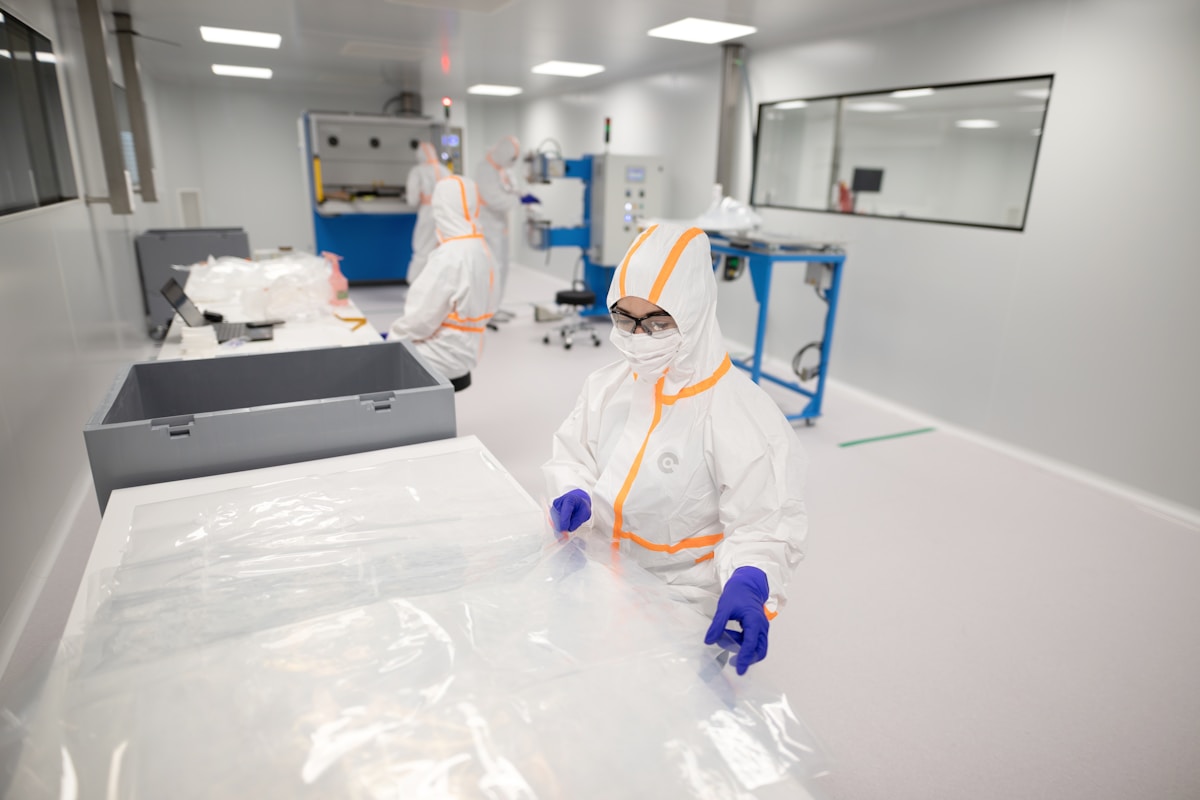
Test the service claim before you sign. Ask each bidder to name the response time for a leaked gasket, the location of spare panel stock, and how requalification support works after two years of operation. Manufacturers who answer those three questions in writing are safe to work with at any distance. Manufacturers who answer in generalities will be general when a wall panel fails, too.
For buyers weighing environments as well as vendors, application context changes the panel answer. Our guide to clean rooms for chemical laboratories covers how panel chemistry follows the reagent list. The industries that require Class 100 environments article explains where tighter classes change the envelope specification. Both feed directly into the specification you put in front of clean room manufacturers.
Warranty structure deserves the same rigor. Manufacturers typically offer 12 to 24 months on envelope components, and critical items such as gaskets, seals, and hardware deserve the top of that band. Negotiate the response commitment in hours for defined defect classes, and name the escalation contact in the supply agreement. A warranty you cannot invoke inside a week of a failure is a brochure, not a guarantee.
One more check separates professional suppliers from opportunistic ones. Ask how they handle a container that arrives with damaged panels. The professional answer includes photo documentation protocols, a replace-or-credit commitment inside a defined window, and packing specifications with corner guards and desiccant. These details cost little to promise and reveal everything about how the factory behaves under pressure.
Which Supplier Should You Choose
Weight the dimensions honestly before you read any quotation. A pharmaceutical envelope lives or dies on documentation depth, so quality assurance outranks a few dollars per square meter. A commercial electronics retrofit answers to a move-in date, so schedule dominates. Write the weighting down before bidders see it, and the sourcing decision makes itself. Buyers who run structured evaluations across clean room manufacturers consistently report the same result: two or three finalists emerge on paper before anyone visits a factory.
Converge the four dimensions on your project constraints, not on a brand preference. The matrix below maps common project shapes onto the sourcing route that usually wins.
| Project Situation | Primary Dimension | Recommended Route | Why It Wins |
|---|---|---|---|
| Large panel volume, standard ISO 7 to 8 | Price | Tier-1 international with PSI | 45-65% FOB gap survives landed-cost math at volume |
| GMP aseptic suite, first import | Quality assurance | International panels, local install supervisor | Factory pricing with regional certification support |
| Retrofit on a fixed commissioning date | Schedule | Local modular fabricator | 14-week modular builds and same-day service calls |
| Multi-site rollout program | Consistency | International line + regional stock | One specification repeated with bonded spares nearby |
| Small order under 100 square meters | Simplicity | Local supplier | Freight and duty erase the factory-gate saving |
The strongest procurement teams stop treating this as a binary choice. They buy the envelope from the factory that builds it best at volume, then contract local crews for installation, validation, and service. Those sourcing plans need a supplier that can map industries that require Class 100 environments against panel options. They also need documentation discipline matching the anti-static chemical resistant cleanroom panels used in demanding applications. RaxPanel supplies cleanroom wall, ceiling, partition, and door panels from its own lines to buyers in more than 30 countries and supports hybrid programs with export documentation and installation guidance. For a full walkthrough of this topic, see this guide to large-scale clean room project delivery.
Frequently Asked Questions About Clean Room Manufacturers
Are overseas cleanroom panels really 45 to 65 percent cheaper?
At the factory gate for equivalent specifications, yes. Published 2026 pricing puts tier-1 China at $48-58 per square meter FOB against $85-125 in Europe. Freight, duty, and installation recover part of that gap, leaving roughly a third saved on landed cost.
How do I verify an overseas cleanroom panel factory?
Demand face-sheet mill certificates, the producing line’s test records, and contractual tolerances. Then commission an SGS or TÜV pre-shipment inspection and an independent HEPA scan following IEST-RP-CC034 before shipment leaves the factory.
How long does an international panel order take?
Tier-1 factories quote about one month off-season and one to three months at peak. Ocean freight adds 25 to 35 days to North America, plus customs clearance and inland transport, so plan the site schedule around the landed date.
Budget accessories at 12 to 18 percent of panel value, certified installation at $45-75 per hour, duty and brokerage, and spare-parts stock. A 500 square meter room can carry $8,000-14,000 of accessory value missing from first quotes.
When should I choose a local manufacturer instead?
Choose local when a fixed commissioning date, a small order under roughly 100 square meters, or same-day service response outweighs the price gap. Regional fabricators deliver faster schedules and immediate aftercare at a higher unit price.