
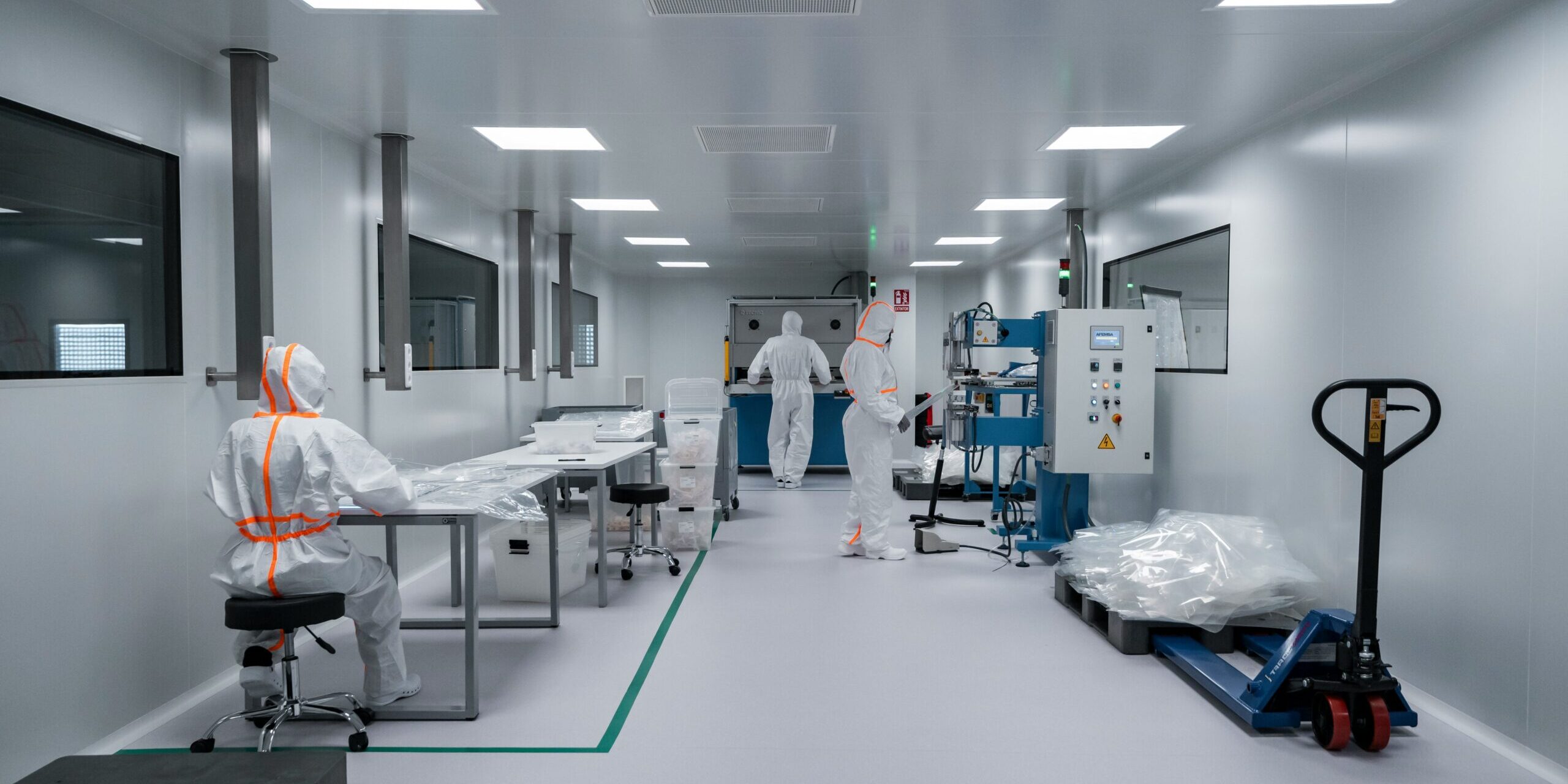
Contamination control at the sub-micron scale represents one of the most demanding engineering challenges in modern advanced manufacturing. Under the ISO 14644-1 standard and the historical US Federal Standard 209E, a Class 100 environment—equivalent to ISO Class 5—restricts airborne particulate concentrations to no more than 3,520 particles per cubic meter at particle diameters of 0.5 microns or larger. In contrast, standard ambient urban air routinely contains 35,000,000 particles per cubic meter in that same dimensional bracket. Achieving this ten-thousand-fold reduction requires unidirectional laminar airflow velocities calibrated strictly between 0.35 and 0.51 meters per second (70 to 100 feet per minute), sustained air exchange rates of 240 to 600 changes per hour, and high-efficiency filtration arrays operating at 99.997 percent efficiency. For a full walkthrough of this topic, see this guide to modular and traditional ISO 8 clean rooms compared.
While mechanical air handling systems extract airborne vectors, the physical architecture enclosing the critical process zone serves as the primary barrier against external contamination. Modern facilities rely on modular cleanroom wall panel systems for ISO Class 5 facilities constructed from continuous aluminum skins, structural aluminum honeycomb cores, and non-porous chemical-resistant surface coatings. These prefabricated assemblies maintain positive differential pressures from 12.5 to 25 Pascals across transition zones, resist aggressive sterilizing agents, and eliminate micro-fissure particle traps without costly structural over-design.
Understanding Class One Hundred Cleanroom Standards
Cleanroom classifications evaluate airborne particulate concentrations per unit volume of air, establishing a standardized baseline for operational safety. Federal Standard 209E originally designated cleanrooms based on the maximum allowable number of particles 0.5 microns and larger per cubic foot of air. In this legacy framework, Class 100 denotes an environment where air samples contain no more than 100 particles per cubic foot. The global standard, ISO 14644-1 cleanroom classification criteria, shifted classification metrics to the metric system, where Class 100 directly correlates with ISO Class 5. At ISO Class 5, the particle envelope mandates strict limits: 3,520 particles/m³ for particles ≥0.5 µm, 832 particles/m³ for particles ≥1.0 µm, and no more than 29 particles/m³ for particles ≥5.0 µm.
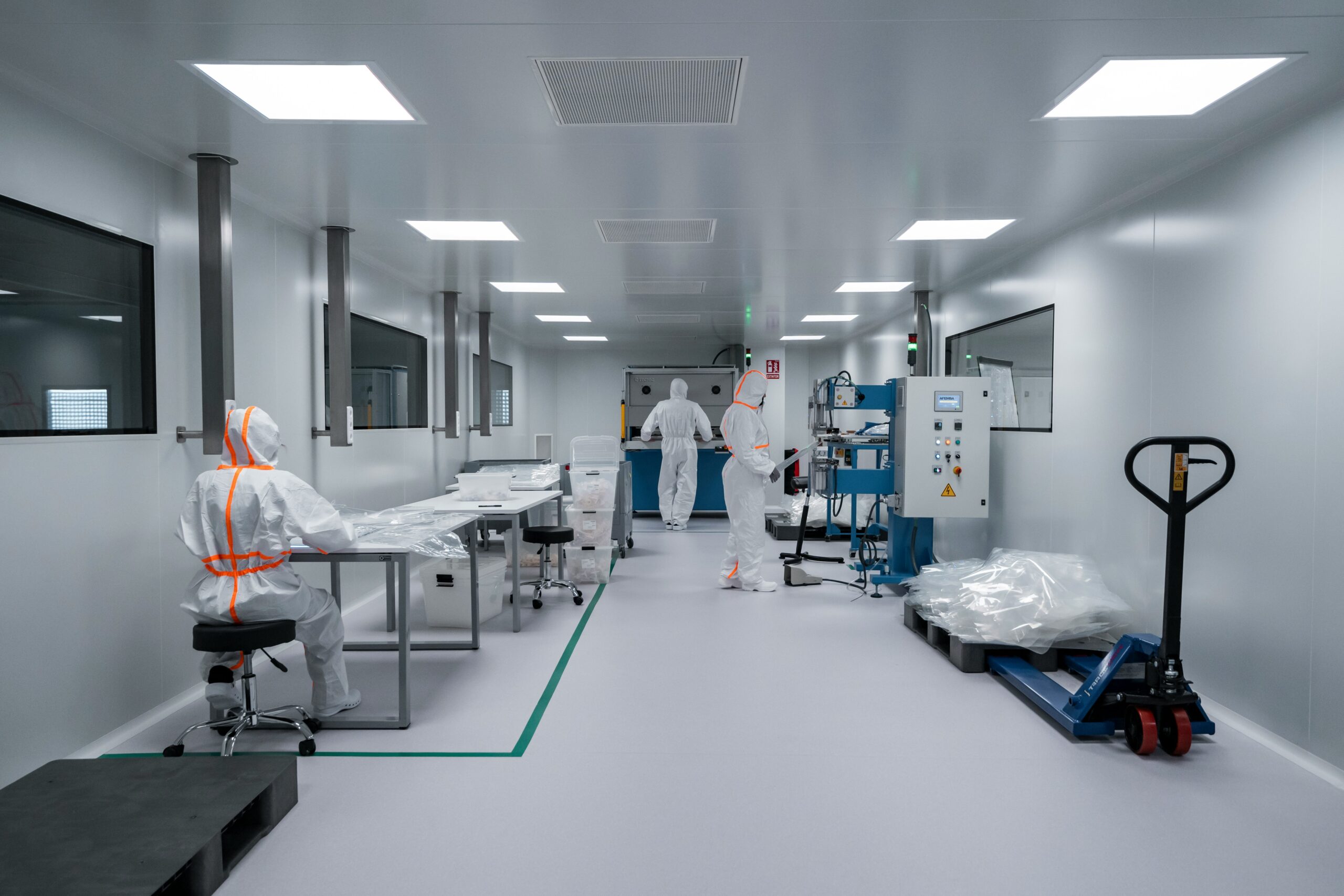
Attaining ISO Class 5 metrics demands continuous laminar airflow. Unlike the turbulent airflow utilized in ISO Class 7 or Class 8 environments, laminar flow directs filtered air through ceiling terminal filter grids across the room in uniform, parallel streamlines toward low-wall exhaust louvers. This laminar piston sweeps airborne particulate downward and out of the work area before contaminants settle onto exposed substrates. Maintaining this steady sweep requires ceiling coverage ratios ranging from 60 to 70 percent with high-efficiency filtration units, while precision flush modular wall panels preserve airtight integrity under continuous operating pressures.
Why Semiconductor Fabrication Demands ISO Five Environments
The semiconductor manufacturing sector represents a primary consumer of Class 100 cleanroom infrastructure. As integrated circuit lithography advances into single-digit nanometer gate geometries, any airborne speck larger than 0.1 microns functions as a catastrophic defect vector. A single particle landing on a 300 mm silicon wafer during photolithography, chemical vapor deposition, or plasma etching disrupts conductive circuits, creating short-circuits that destroy wafer yield. Semiconductor fabrication facilities localize ISO Class 5 microenvironments around automated wafer tracks and equipment front-end modules.
Beyond mechanical particle control, wafer processing requires strict electrostatic discharge mitigation. Static electrical charges accumulate rapidly on air boundary layers. When static builds up, it attracts airborne particulate and threatens sensitive dielectric gates. For this reason, cleanroom envelopes within semiconductor fabs require cleanroom wall panels with anti-static ESD properties. These specialized panels exhibit surface resistivity between 10^6 and 10^9 ohms per square. In addition, pre-cured fluoropolymer coatings and closed-cell aluminum honeycomb sandwich panels eliminate airborne molecular contamination and volatile outgassing.
Biopharmaceutical Aseptic Filling and Sterile Compounding Suites
In biopharmaceutical manufacturing, sterile injectable drugs, monoclonal antibodies, and vaccines cannot undergo terminal autoclave sterilization without destroying active molecular structures. As a result, compounding, sterile filtration, and vial filling must take place under aseptic processing conditions. Regulatory frameworks defined by the EMA GMP Grade A and the US FDA guidance on sterile drug products produced by aseptic processing mandate that critical zones where sterile products and closures are exposed must meet Class 100 (ISO Class 5) criteria under operational conditions.
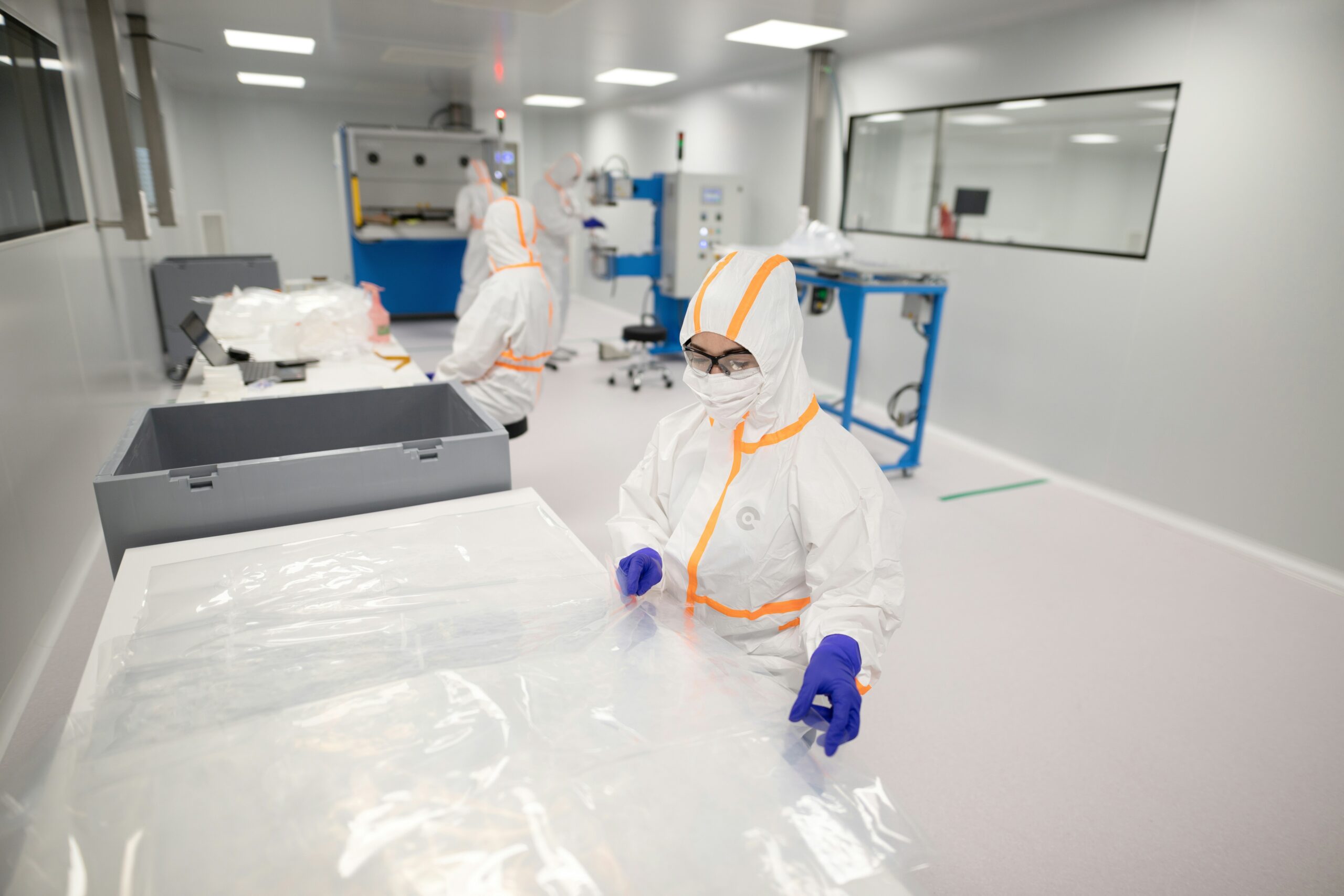
Microbiological limits within ISO Class 5 aseptic areas are rigorous: settle plates must register fewer than 1 colony-forming unit over a 4-hour exposure period, while contact plates demonstrate zero microbial growth. To maintain this near-zero bioburden, biopharmaceutical facilities undergo aggressive decontamination cycles utilizing vaporized hydrogen peroxide and concentrated disinfectants. Wall surfaces must withstand repetitive chemical washdowns without blistering or peeling. Architectural panel finishes such as 70 percent PVDF bonded to rigid aluminum substrates guarantee surface stability across thousands of cleaning cycles.
In biopharmaceutical cleanrooms, 90-degree internal wall-to-floor and wall-to-ceiling corners act as stagnant dead zones where moisture aggregates. Facilities implement coved transitions with minimum 50 mm radii fabricated from extruded aluminum or hygienic PVC. These coves integrate flush with modular sandwich wall panels, allowing automated surface scrubbers and liquid biocides to clean perimeter junctions thoroughly.
Specify Class One Hundred Zones for Medical Devices
The medical device industry relies heavily on ISO Class 5 cleanrooms for the manufacture, assembly, and packaging of critical implantable hardware. Cardiovascular stents, artificial heart valves, orthopaedic joint prostheses, and ophthalmic intraocular lenses contact internal human tissue directly. Any microscopic particulate adhering to a cardiovascular stent can trigger thrombosis or embolisms, while particulate contamination on an intraocular lens causes corneal inflammation. Consequently, device manufacturers construct ISO Class 5 assembly cells to execute final cleaning, surface coating, and primary sterile packaging steps.
Medical device manufacturing processes introduce thermal and vibrational energy from ultrasonic plastic welding machines and automated packaging arms. Cleanroom wall systems within these suites must deliver structural rigidity to prevent panel vibration from transferring across ceiling grids into sensitive balance scales or laser micro-machining stations. Modular panels featuring structural aluminum skins with high-density cores exhibit flexural rigidity exceeding 0.125 kN·m²/m, damping acoustic transmission and mechanical vibration while enabling rapid layout reconfigurations without dust generation.
Precision Optics and Aerospace Satellite Payload Assembly
Precision optical fabrication and space hardware manufacturing represent high-risk applications where minute particulate contamination ruins optical fidelity. Modern space telescopes, earth observation satellites, military infrared tracking systems, and high-energy laser optical benches require ISO Class 5 assembly environments. When a microscopic 1.0-micron dust particle settles onto the surface of a space-borne mirror or focal plane sensor array, it scatters incoming photons, causes signal distortion, or burns under high-power laser irradiation, blinding astronomical and defense sensors during orbit.
Aerospace cleanrooms present distinct dimensional challenges because satellite payloads require massive clearance volumes. Engineers construct Class 100 clean bays with ceiling heights reaching 8 to 12 meters. These tall envelopes experience significant static pressure differentials generated by recirculating fan filter arrays. Modular aluminum composite wall panels with tongue-and-groove connections deliver structural span capacity without secondary steel framing. Simultaneously, panels sealed with neutral-cure silicone comply with ASTM E595 standards, maintaining total mass loss below 1.0 percent to prevent vacuum outgassing in space.
How Nanotechnology and Quantum Computing Labs Benefit
Emerging frontiers in nanotechnology and quantum computing hardware fabrication operate at atomic scales where single-particle interference ruins research experiments. Quantum processor architectures rely on superconducting Josephson junctions fabricated with sub-10-nanometer layer tolerances. Physical particles landing on an open quantum chip disrupt superconducting circuit pathways or alter microwave resonator frequencies, destroying quantum coherence times. Advanced research laboratories construct ISO Class 5 cleanroom bays to maintain pristine substrate surfaces throughout electron-beam lithography and dilution refrigerator mounting.
In addition to airborne particulates, quantum computing laboratories require environmental isolation from electromagnetic interference. Aluminum-skinned cleanroom sandwich panels provide natural electromagnetic shielding performance when panel skins are bonded and grounded across wall seams. This integrated envelope serves as both an ISO Class 5 particulate barrier and an EMI attenuation envelope, simplifying laboratory architecture while specialized negative-pressure return bays isolate synthesized nanomaterials.
Upgrade Your High-Spec Cleanroom Envelope Architecture
Whether configuring an ISO Class 5 semiconductor bay, a biopharma aseptic packaging suite, or an aerospace optical assembly hall, our modular aluminum honeycomb cleanroom panels provide verified airtightness, chemical resistance, and non-outgassing structural integrity.
Comparing Cleanroom Classifications and Operational Parameters
Selecting the appropriate cleanroom classification requires balancing process contamination sensitivity against initial capital expenditure and ongoing operational energy costs. Cleanroom operating expenses increase with tighter classification bands due to the electrical power required to push air through high-density filter arrays and maintain continuous laminar flow velocities. Understanding how ISO Class 5 (Class 100) compares to surrounding standard classifications clarifies envelope and HVAC specifications.
| Cleanroom Class (ISO / FS 209E) | Max Particles/m³ (≥0.5 µm) | Airflow Pattern | Air Changes / Hour (ACH) | Recommended Envelope Specification |
|---|---|---|---|---|
| ISO Class 4 / Class 10 | 352 | Unidirectional Laminar | 300 – 720 | Flush aluminum honeycomb, anti-static ESD, zero outgas |
| ISO Class 5 / Class 100 | 3,520 | Unidirectional Laminar | 240 – 600 | Modular flush metal panels, coved corners, VHP resistance |
| ISO Class 6 / Class 1,000 | 35,200 | Laminar or Mixed Turbulent | 150 – 240 | Modular sandwich panels, smooth silicone sealed joints |
| ISO Class 7 / Class 10,000 | 352,000 | Turbulent / Non-unidirectional | 60 – 120 | PIR/PUR insulated metal panels, hygienic washdown finish |
| ISO Class 8 / Class 100,000 | 3,520,000 | Turbulent / Non-unidirectional | 20 – 60 | Standard insulated composite panels, commercial coving |
As illustrated in the comparison table, ISO Class 5 represents the exact engineering boundary where non-unidirectional turbulent airflow transitions into continuous unidirectional laminar airflow. This transition dictates ceiling coverage: while ISO Class 7 rooms require 15 to 25 percent filter coverage, an ISO Class 5 suite requires 60 to 70 percent ceiling filter coverage. Consequently, the ceiling grid system must support continuous arrays of fan filter units and integrated LED lighting, while low-wall return chases built directly into modular wall panel cavities preserve floor area.
Four Critical Cleanroom Envelope Design Mistakes
Engineering a Class 100 cleanroom envelope requires precision detailing across every structural interface. Even an advanced mechanical air handling system cannot compensate for architectural vulnerabilities that harbor particulate or leak air. Facility engineers frequently identify four common envelope design mistakes during commissioning and air certification testing.
Specifying Non-Flush Wall Joints and Recessed Covings
A primary failure mode in cleanroom envelopes involves panel joinery that leaves raised surface ledges or recessed caulking channels. In an ISO Class 5 laminar airflow environment, any horizontal surface ledge wider than 1.5 mm interrupts laminar streamlines, generating micro-vortices where sub-micron particles collect. Specifying interlocking modular panels with completely flush tongue-and-groove profiles and flush silicone fillets eliminates horizontal catch points, ensuring uninterrupted laminar airflow down to return grilles.
Permitting Particle Shedding from Core Materials
During utility rough-in, panels undergo on-site cutting to route electrical conduit and gas lines. If designers specify mineral wool or low-density expanded polystyrene panel cores, core fibers shred easily, discharging millions of microscopic particles into clean air cavities. For Class 100 environments, panels should feature non-shedding cores such as closed-cell polyisocyanurate (PIR) or aluminum honeycomb, safeguarding air quality during facility refits.
Overlooking Positive Pressure Cascades Between Clean Zones
Maintaining ISO Class 5 conditions requires establishing an active differential pressure cascade across surrounding access corridors. When doors open, air must rush outward from the Class 100 suite into the Class 10,000 ante-room at velocities exceeding 0.2 meters per second. A common design error involves using commercial hollow-metal doors without perimeter drop seals or unsealed service penetrations, dropping differential pressure below 10 Pascals and enabling reverse contamination.
Using Outgassing Sealants in Sensitive Optical Bays
In aerospace optics and microelectronics cleanrooms, standard acetic-cure silicone sealants and polyurethane joint compounds present severe chemical contamination hazards. Acetic-cure silicones release corrosive acetic acid vapors during curing, while polyurethanes outgas volatile plasticizers. These airborne contaminants condense onto optical mirror coatings and semiconductor silicon. Project specifications must mandate low-VOC, neutral-cure alkoxy silicones tested to ASTM E595 standards to prevent chemical outgassing.
Frequently Asked Questions About Cleanrooms
What is the difference between Class 100 and ISO 5 cleanrooms?
Class 100 and ISO Class 5 refer to the exact same airborne cleanliness level. Class 100 originates from the historical US Federal Standard 209E measuring particles per cubic foot, while ISO Class 5 is the modern international metric standard under ISO 14644-1 capping particles at 3,520 per cubic meter.
Can modular wall panels achieve ISO Class 5 compliance?
Yes, modular sandwich panels are preferred for ISO Class 5 environments. Prefabricated aluminum honeycomb or PIR panels feature flush joints, airtight silicone seals, and non-shedding surfaces that withstand high differential pressures and aggressive chemical sterilization without particle generation.
Why do semiconductor cleanrooms require anti-static ESD wall finishes?
High-velocity laminar airflow generates static electricity on non-conductive surfaces. Electrostatic charges attract microscopic airborne dust to walls and discharge suddenly into silicon wafers, destroying delicate nanometer circuits. Anti-static dissipative finishes safely bleed electrostatic charges to ground.
How often must HEPA or ULPA filters be certified in Class 100 areas?
Under ISO 14644-2 and FDA GMP guidelines, ISO Class 5 cleanrooms must undergo airborne particle counts, filter integrity leak tests, and airflow velocity profiling at least once every six months to guarantee ongoing compliance.
What pressure cascade should separate Class 100 and Class 1000 suites?
A positive differential pressure of 10 to 15 Pascals (0.04 to 0.06 inches of water gauge) should separate a Class 100 suite from an adjacent Class 1,000 ante-room, ensuring outward airflow when doors open.
For a full walkthrough of this topic, see this guide to clean rooms for chemical laboratories. For a full walkthrough of this topic, see this guide to clean room manufacturers compared.