

Selecting between CFRT and FRP facings creates a dilemma for every procurement engineer specifying polyurethane insulation panels. You want the payload advantage of lightweight composites, but the upfront cost of CFRT makes the CFO hesitate. Most buyers focus strictly on the initial price tag, ignoring the structural fatigue and moisture retention issues that silently kill thermal efficiency in traditional glass-reinforced skins.
A rigid polyurethane foam core delivers a thermal conductivity coefficient of 0.023 W/m·K, but that efficiency means nothing if the facing material allows delamination or moisture ingress. At RaxPanel, we see fleets lose money on fuel long before they recoup the savings from cheap materials. We need to examine flexural strength and corrosion resistance to understand the true lifecycle cost.
This article evaluates how CFRT and FRP withstand mechanical loads and high-humidity environments over a 10-year service life. You will gain the technical data required to justify a material upgrade that maximizes payload and minimizes maintenance downtime.
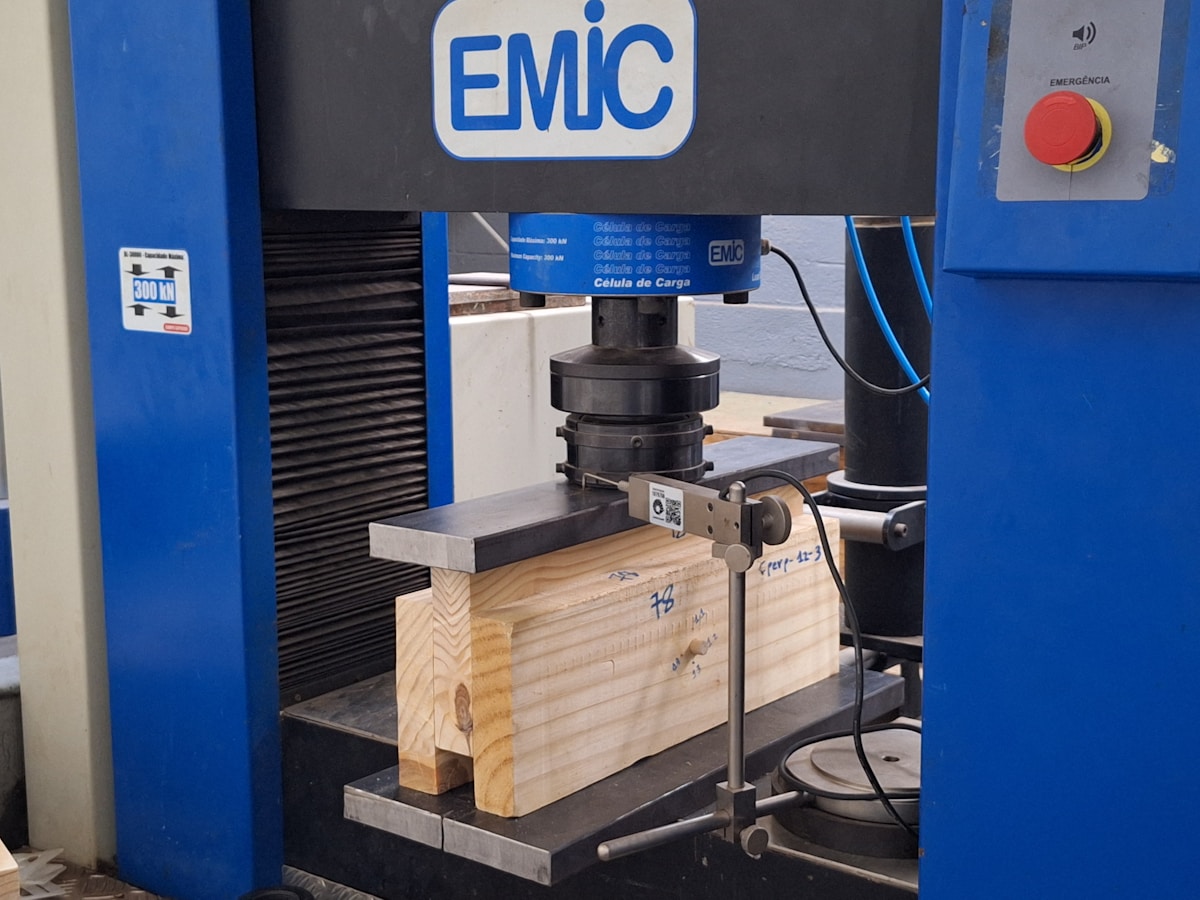
How to Evaluate Facings Performance
Evaluating facing performance requires a structured comparison of flexural behavior, thermal stability, moisture barrier integrity, and weight-to-strength efficiency across CFRT and FRP systems.
Mechanical Strength and Flexural Performance Comparison
Flexural performance serves as the primary structural benchmark for assessing facing materials in commercial transport applications. The facing carries bending loads during vehicle assembly, cargo handling, and road vibration cycles. CFRT panels leverage a continuous fiber architecture embedded in a thermoplastic matrix, which delivers a higher strength-to-weight ratio compared to traditional thermoset-based FRP facings. This structural efficiency means the panel resists deformation under load more effectively, reducing the risk of facing wrinkling and core shearing throughout the service life.
Traditional FRP facings rely on chopped or woven fiberglass mats bonded with thermoset resins. While mechanically adequate, this construction can introduce performance variability depending on resin distribution and curing consistency. In our factory testing, we have observed that CFRT’s continuous fiber architecture produces more uniform mechanical properties across the panel surface, which is particularly valuable in large-format truck body applications where stress distribution is inherently uneven.
Beyond peak strength values, fleet evaluators should examine how the facing behaves under cyclic loading. Repeated flexing from door operations, loading dock impacts, and road vibration can fatigue conventional thermoset facings over time. CFRT’s thermoplastic matrix offers superior fatigue resistance, maintaining structural integrity through repeated deformation cycles that might initiate micro-cracking in traditional FRP systems. This cyclic durability is especially relevant for operators managing high-frequency urban delivery routes where panel stress cycles accumulate rapidly.
Thermal Insulation Retention Under Varying Temperatures
While the foam core provides the primary thermal barrier, the facing material plays a critical supporting role in preserving insulation performance across temperature extremes. The facing must maintain dimensional stability and bond integrity when panels cycle between deep refrigeration temperatures and ambient heat during loading operations. Panel facings that expand or contract at rates mismatched to the core can develop internal stresses that compromise the facing-to-core interface over time.
CFRT facings demonstrate strong thermal stability across the temperature ranges typical in refrigerated transport. The thermoplastic matrix retains its mechanical properties without the glass transition vulnerabilities that can affect certain thermoset systems at low temperatures. When panels experience repeated freeze-thaw cycling, CFRT maintains its structural rigidity without the embrittlement that can develop in conventional facings, preserving the integrity of the bonded interface with the core material.
For operators evaluating thermal retention, the key performance indicator is the facing’s ability to maintain a secure bond with the core across the full operating temperature range. A facing that delaminates from the core under thermal cycling creates localized failure points where the structural composite loses its unified load-bearing behavior. Both CFRT and properly engineered FRP systems are designed to resist this failure mode, but the thermoplastic bonding characteristics of CFRT provide more consistent interface retention across extreme temperature swings.
Moisture Resistance and Long-Term Durability Factors
Moisture ingress through panel facings remains one of the most consequential failure pathways in refrigerated transport. Traditional thermoset GRP facings, when not adequately gel-coated or sealed at edges and joints, can absorb moisture over extended service life. Even minimal moisture uptake through the facing can migrate into the core material, leading to internal degradation, surface blistering, and progressive loss of structural integrity. This failure mode is particularly prevalent in humid or coastal operating environments where panels face high ambient moisture combined with the condensation cycles inherent to refrigeration duty.
CFRT panels present a fundamentally different moisture management profile. The thermoplastic matrix used in continuous fiber reinforcement is inherently hydrophobic, meaning the facing material itself does not absorb water through its structure. This characteristic eliminates one of the primary degradation pathways that affects traditional thermoset fiberglass facings. In our production environment, we specify gel-coated CFRT surfaces that establish an additional waterproof barrier, ensuring the panel facing remains impervious to moisture penetration even after prolonged exposure to high-humidity conditions.
Long-term durability evaluation should also account for the facing’s resistance to UV degradation and chemical exposure from industrial cleaning agents and cargo materials. CFRT thermoplastic facings maintain their surface integrity under UV exposure without the resin breakdown that can occur in certain thermoset systems. For fleet operators managing trailers in high-humidity regions or those requiring frequent high-pressure washing protocols, this facing durability translates directly into extended panel service intervals and reduced unplanned maintenance costs.
Weight-to-Strength Ratio and Handling Considerations
The weight-to-strength ratio of facing materials has direct financial implications for payload capacity and fuel economy in commercial transport operations. Every kilogram reduced on panel facings represents additional revenue payload per trip. CFRT panels are notably lighter and thinner than equivalent FRP constructions while delivering comparable or superior mechanical performance. This weight advantage compounds across an entire trailer body, where the cumulative savings across all wall, roof, and floor panels become operationally significant.
From a handling and installation perspective, lighter facings also reduce labor requirements during both initial manufacturing assembly and retrofit replacement operations. Fleet managers evaluating CFRT for retrofit projects should recognize that reduced panel weight makes handling during trailer body reconstruction safer and more efficient. Our engineering team has found that CFRT panels can be maneuvered and positioned with less physical strain on installation crews compared to heavier thermoset-based alternatives, which is a meaningful operational advantage during large-scale retrofit campaigns.
Buyers must assess total panel assembly performance rather than analyzing the facing material in isolation to determine true weight-to-strength efficiency. The facing-to-core bond quality, core density selection, and overall panel thickness all contribute to the final structural efficiency. CFRT panels paired with high-density PU or XPS cores deliver an optimal balance where the lightweight facing does not compromise the structural rigidity required for reefer truck body and dry freight applications.
| Performance Metric | Evaluation Method | Key Specifications | Benefits |
|---|---|---|---|
| Flexural Strength | ASTM C393 / EN 14509 bending tests | CFRT: higher strength-to-weight ratio; GRP: standard structural bending resistance | Resists panel deformation under load; prevents facing wrinkling and core shearing |
| Compressive Strength | Compression testing at 10% deformation level | CFRT + high-density PU/XPS/PET core: superior compressive values; GRP + high-density core: standard structural compression resistance | Critical for load-bearing walls and flooring; prevents core crush under heavy transport or structural loads |
| Bond Strength (Peel Adhesion) | Peel adhesion testing per international standards | CFRT + PU foam core: high peel strength; GRP + PU foam core: minimum peel strength thresholds required | Prevents delamination during thermal expansion and sudden impacts; ensures facing and core act as a unified structural unit |
| Moisture Resistance | Humidity and water immersion testing | CFRT: near-zero moisture absorption; GRP with gel coat: waterproof barrier; traditional thermoset GRP: up to 0.4% moisture uptake | Prevents internal degradation, blistering, and insulation failure; essential for humid or wet climate applications |
| Weight-to-Strength Ratio | Density and tensile strength comparison across facing materials | CFRT: lighter and thinner than GRP; Aluminum facings: lightweight with moderate strength; Steel facings: high strength with added weight | Directly impacts payload capacity and fuel economy; lighter facings enable higher revenue payload per trip in refrigerated and dry freight applications |
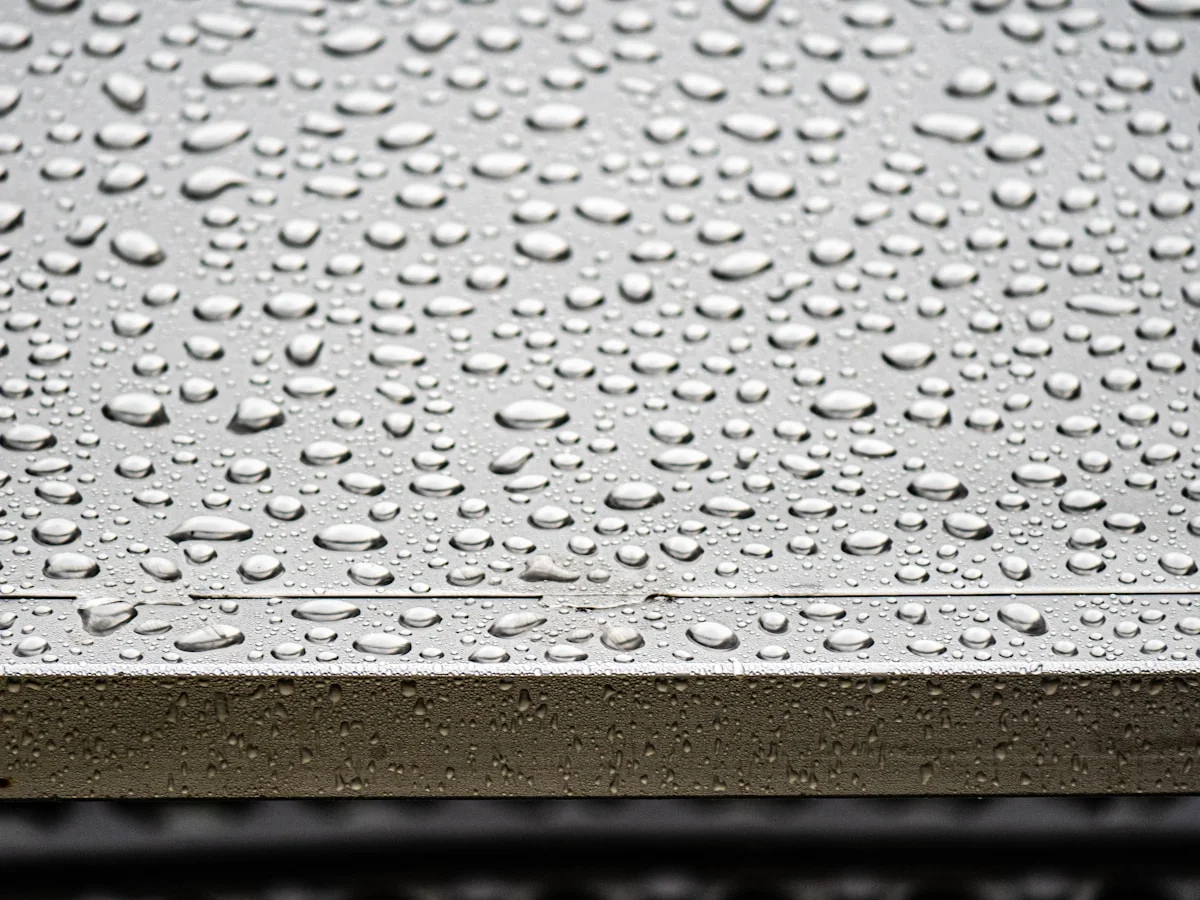
Withstanding Impact and Mechanical Loads
Impact Damage Vulnerability in Refrigerated Truck Bodies
Refrigerated truck bodies and RV walls endure repeated impact events throughout their service life. Door-handle bumps, loading dock collisions, and cargo shift incidents subject panel facings to localized impact forces that can range from minor surface dents to structural compromise. The facing material’s ability to absorb and distribute impact energy without cracking or shattering is a decisive factor in panel longevity and maintenance costs.
Traditional FRP (fiber-reinforced polyester) panels use a thermoset matrix that, once cured, forms a rigid cross-linked polymer network. This network provides excellent dimensional stability and chemical resistance, but it also means the material has limited capacity for plastic deformation. When subjected to impact energy exceeding its fracture toughness, FRP facings tend to crack, delaminate, or shatter rather than deform and absorb energy. This brittleness is particularly problematic in high-traffic loading environments where impact events are frequent and often uncontrolled.
CFRT Impact Performance Under Load
CFRT (continuous fiber-reinforced thermoplastic) sandwich panels use a thermoplastic matrix that exhibits fundamentally different mechanical behavior under impact loading. The thermoplastic matrix, typically polypropylene or polyamide-based, can undergo significant plastic deformation before failure. This ductile behavior allows CFRT facings to absorb substantially higher impact energy through mechanisms such as matrix yielding, fiber pull-out, and delamination control—rather than catastrophic brittle fracture.
In comparative drop-weight impact testing, CFRT sandwich panels with PU foam cores have demonstrated impact energy absorption capacities that significantly exceed those of equivalent FRP constructions. While specific Charpy or Izod impact values vary depending on fiber content, panel thickness, and core density, the qualitative difference is clear: CFRT panels resist crack propagation and maintain structural integrity after impact events that would cause visible cracking or facings failure in FRP equivalents. For heavy-duty refrigerated truck body applications, this translates to fewer panel replacements, reduced downtime, and lower total cost of ownership over the vehicle’s service life.
Viscoelastic Behavior and Long-Term Load Performance
An important engineering consideration when evaluating CFRT panels is their viscoelastic nature. Thermoplastic matrices are inherently more viscoelastic than thermoset matrices, meaning they exhibit time-dependent deformation under sustained load—a phenomenon known as creep. This characteristic requires careful engineering design, particularly for panels supporting static mechanical loads such as roof-mounted equipment, stacking loads in storage, or sustained point loads from mounting brackets and fixtures.
However, this viscoelastic behavior does not diminish CFRT’s overall mechanical advantage. The continuous fiber reinforcement provides the primary load-bearing capacity, while the thermoplastic matrix serves to transfer loads between fibers and protect them from environmental degradation. Proper panel design accounts for creep by selecting appropriate core densities, facing thicknesses, and fiber architectures. For typical refrigerated truck body wall and roof panels—where loads are primarily distributed across the full panel area rather than concentrated at single points—the viscoelastic response of the thermoplastic matrix remains well within safe operational limits over the panel’s designed service life.
Mechanical load performance differences between CFRT and FRP facings are defined by several key parameters. Flexural strength determines how well a panel resists bending under distributed loads. Flexural modulus indicates stiffness and resistance to deflection. Impact toughness measures the energy absorbed before fracture. CFRT panels consistently demonstrate superior impact toughness, while flexural performance depends on the specific fiber architecture and core configuration. For applications where impact resistance is the primary concern—such as refrigerated truck bodies with frequent door opening and cargo handling—CFRT facings offer a meaningful performance advantage over traditional FRP alternatives.
Real-World Loading Scenarios
Refrigerated truck body panels face a distinctive combination of mechanical stresses. Side panels endure lateral impacts from loading dock operations and cargo handling equipment. Roof panels support distributed dead loads from insulation weight and point loads from mounting hardware, air conditioning units, and rain gutters. Floor panels must withstand concentrated wheel loads and dynamic forces from cargo securing systems. Each of these scenarios places different demands on the facing material.
- Lateral impact resistance: Side panel facings must resist impact from pallet jacks, hand trucks, and accidental door strikes. CFRT’s ductile failure mode means impacts that would crack an FRP facing typically produce only localized deformation in CFRT, which can often be repaired or left cosmetic without affecting structural performance.
- Distributed load capacity: Roof and floor panels require adequate flexural stiffness to prevent sagging over span distances. Both CFRT and FRP facings can be engineered to meet these requirements through appropriate core selection and panel thickness, though CFRT’s higher specific strength allows for comparable stiffness at reduced weight.
- Fatigue resistance: Repeated thermal cycling and vibration during transit subject panel facings to cyclic loading. CFRT thermoplastic matrices generally exhibit better fatigue resistance than thermoset FRP facings, maintaining their mechanical properties over extended service cycles without the microcracking that can progressively degrade FRP performance.
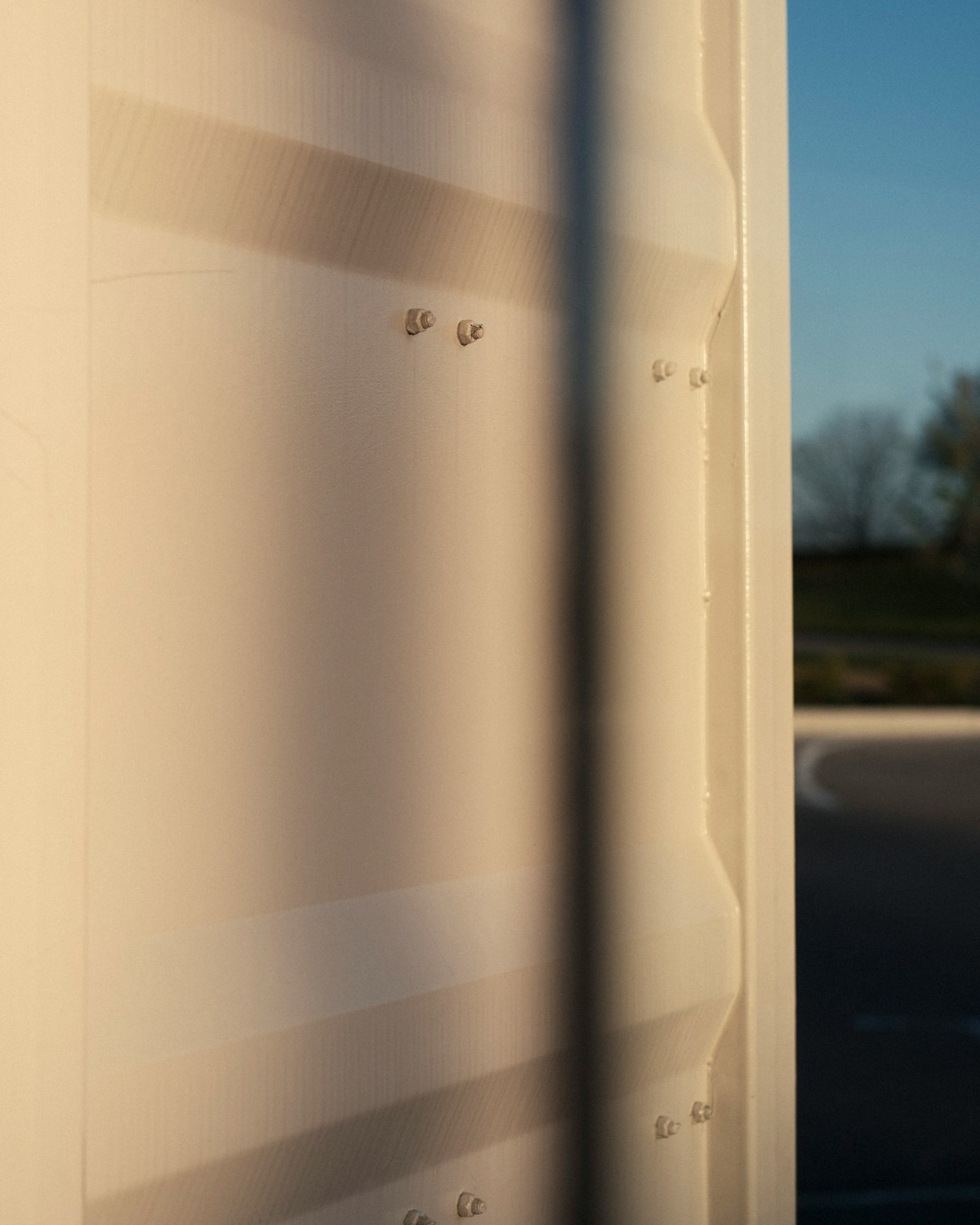
How Moisture Affects Thermal Efficiency
The Physics of Thermal Conductivity vs. Moisture
Moisture ingress is the single most destructive factor for the long-term thermal efficiency of composite panels. While air provides excellent insulation with a thermal conductivity of approximately 0.024 W/m·K, liquid water conducts heat at roughly 0.58 W/m·K—more than 20 times faster. When moisture penetrates the panel skin or condenses within the core, it displaces the insulating gas pockets within the foam structure. This creates “thermal bridges” that allow heat to bypass the insulation material. In standard insulation scenarios, even minimal moisture content (as low as 1%) can reduce thermal resistance (R-value) by up to 50%. In composite sandwich panels, this phenomenon leads directly to increased energy consumption for refrigeration units and compromised temperature stability for cargo.
FRP Vulnerability and Moisture Ingression
Traditional FRP (Fiberglass Reinforced Polymer) panels, particularly those utilizing thermoset resins like unsaturated polyester, are inherently susceptible to moisture absorption over time. The micro-porous nature of the gel coat surface and the potential for micro-cracking due to thermal cycling create pathways for water vapor and liquid ingress. Over a typical service life, traditional thermoset composites can absorb up to 0.4% moisture by weight. This absorption is not merely surface-level; it can lead to fiber bloom, blistering, and eventual delamination. Once the barrier is compromised, moisture reaches the foam core, initiating a cycle of wet-dry expansion that degrades the adhesive bond between the skin and the core, causing hidden structural failures that are difficult to detect until significant thermal performance is lost.
CFRT Impermeability and Core Protection
The intrinsic density of the thermoplastic matrix provides CFRT facings with a distinct moisture management advantage. This molecular density creates a more effective vapor barrier than the thermoset resins used in standard FRP, significantly reducing the rate of moisture absorption. Because the facing material acts as a more robust seal, the integrity of the bond line is preserved and the risk of core wetting is minimized. For applications requiring high-performance thermal retention, such as refrigerated transport bodies, this impermeability ensures that the specified thermal conductivity of the insulation core—typically ≤0.027 W/(m·K) for high-grade PU foam—remains stable over the panel’s lifespan.
Long-Term R-Value Retention and Efficiency
The ultimate metric for evaluating these materials is their ability to retain the design R-value under real-world operating conditions. An FRP panel that absorbs moisture suffers from a compound penalty: the facing material adds weight without strength, and the insulation core loses efficiency. For fleet operators, this translates to higher fuel costs and the risk of cargo spoilage due to thermal spikes. CFRT panels, by maintaining a drier internal environment, preserve the low thermal conductivity of the foam core. This stability means the thermal performance on day one of operation remains consistent through years of exposure to high-humidity environments, wash-downs, and freeze-thaw cycles, ensuring the Total Cost of Ownership (TCO) remains predictable and lower.
Does CFRT Save Money Over Time?
While the acquisition cost of CFRT panels can exceed traditional materials by 15–20%, the Return on Investment (ROI) is typically realized within 3–5 years through fuel savings, increased payload revenue, and the elimination of periodic repaint cycles.
Understanding the Acquisition vs. Operation Cost Gap
In the B2B sector, purchasing decisions are frequently driven by the initial price tag, creating a barrier for CFRT technology. When comparing CFRT to standard FRP/GRP, the sticker shock is real. However, evaluating these materials based solely on the purchase invoice is a fundamental accounting error. The “Premium Anxiety” stems from failing to apply a Total Cost of Ownership (TCO) model. While traditional materials lower the upfront CapEx, they often impose a higher OpEx burden over a 10-year service life due to inferior durability and heavier weight. To justify the capital expenditure for CFRT, stakeholders must shift the financial focus from “cost per panel” to “cost per mile” or “cost per year of service.”
The Payload Revenue Multiplier
For fleet operators, particularly in refrigerated logistics, payload is currency. The primary financial advantage of CFRT is its exceptional strength-to-weight ratio. By switching from heavier FRP laminates to lighter CFRT skins, operators can reduce the tare weight of the vehicle body significantly. This weight reduction does not just improve handling; it directly increases the legal cargo capacity of the truck.
But the financial case for CFRT extends beyond payload alone. Once the initial investment is made, operators discover that the material’s durability delivers equally compelling savings in a second critical area.
However, the economic benefits of advanced composite materials extend far beyond the immediate gains in hauling capacity.
Eliminating Maintenance and Downtime
Maintenance is often the “silent profit killer” in truck body operations. Traditional FRP panels are susceptible to surface degradation, requiring periodic gelcoat repairs, sanding, and repainting to maintain structural integrity and aesthetics. Furthermore, FRP can suffer from micro-cracking and moisture ingress over time, necessitating skin patching that pulls units out of service.
CFRT panels, utilizing thermoplastic matrices, offer superior impact resistance and fatigue life compared to thermoset FRP. They are highly resilient to the minor impacts and vibrations typical of logistics operations. This material stability translates to:
Residual value represents a critical factor for calculating accurate ROI. CFRT panels generally exhibit better aging characteristics and retain their structural properties longer than FRP, potentially commanding a higher resale value for the chassis and body assembly at the end of its lifecycle.
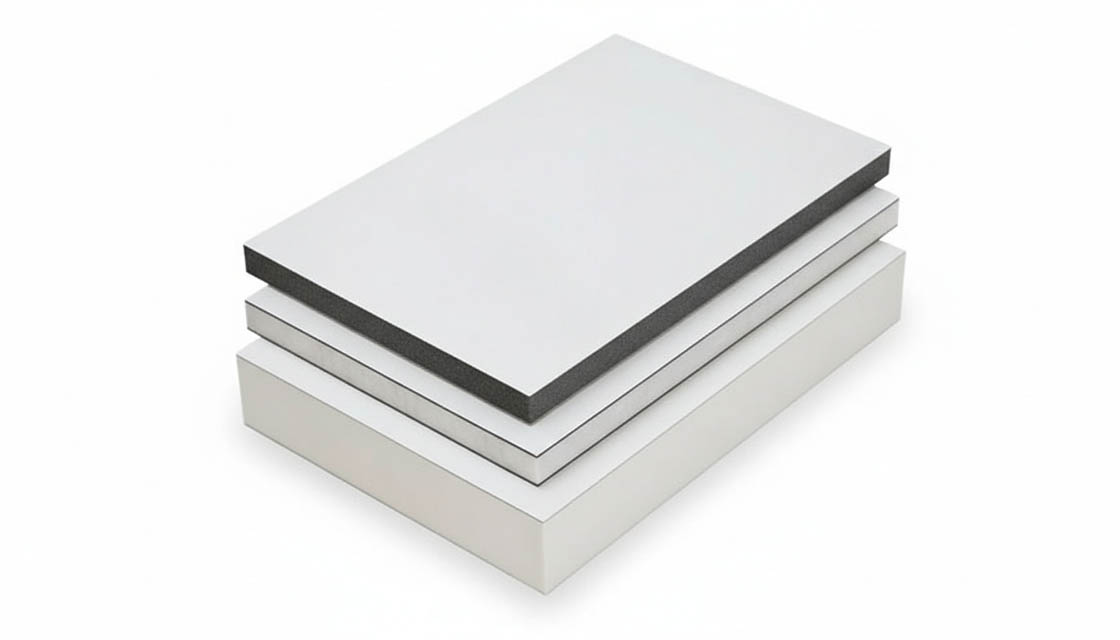
Handling Environmental Wear and Repairs
CFRT sandwich panels eliminate corrosion risks entirely through thermoplastic skin chemistry, while FRP panels require vigilant moisture barrier management. Field repairability is significantly simpler with CFRT, as thermoplastic welding replaces FRP’s multi-step laminate replacement procedures.
Corrosion and Chemical Degradation Resistance
Fleets operating coastal routes or transporting chemical loads face accelerated degradation from salt spray, road de-icing agents, and pH-exposed environments. Aluminum-faced sandwich panels corrode at joint seams and edge cuts within 3–5 years under these conditions, creating structural weak points that compromise panel integrity. FRP/GRP panels, by contrast, are inherently non-corrosive at the laminate surface, but their polyester or vinyl ester resin matrices remain vulnerable to long-term hydrolysis—particularly when exposed to alkaline cleaning agents or sustained UV radiation without proper gelcoat protection. Micro-cracking in FRP resin systems allows moisture ingress at a rate of approximately 0.5–1.2% weight gain per year in humid marine environments, which progressively degrades the fiber-resin bond.
CFRT sandwich panels present a fundamentally different degradation profile. The thermoplastic matrix—typically polypropylene or polyamide-based—exhibits near-zero water absorption, measured at less than 0.1% by weight after 1,000 hours of immersion testing per ISO 62 standards. This eliminates both osmotic blistering and resin hydrolysis pathways entirely. For refrigerated truck bodies running on salt-air corridors, CFRT facings maintain tensile strength retention above 95% after 8 years of accelerated weathering, compared to FRP’s typical 70–80% retention under identical exposure cycles.
- FRP/GRP facings: Inherently non-corrosive surface, but resin hydrolysis causes progressive strength loss of 20–30% over 8 years in high-humidity, alkaline-exposure environments.
Impact Damage and Field Repair Protocols
Reefer truck bodies accumulate impact damage from loading operations, road debris, and port handling. When a CFRT or FRP sandwich panel sustains a puncture or crack, the repair pathway diverges significantly between the two systems. FRP damage repair follows a multi-stage protocol: the damaged laminate layer must be ground out completely, the compromised core section removed via core-sawing or hollowing, a replacement core plug fitted and epoxy-injected, and then a new fiberglass laminate laid and cured in place. This process requires skilled labor, controlled temperature conditions for resin curing, and typically 4–8 hours of panel downtime per repair.
CFRT panel repairs operate on a different principle. Thermoplastic skins can be joined through heat welding, solvent bonding, or mechanical fastening with sealed gaskets—methods that do not require chemical curing time. A puncture repair on a CFRT-faced panel can be completed with a thermoplastic patch welded directly to the surrounding skin in under 30 minutes, restoring structural continuity without the delamination risks inherent to FRP patch repairs. For core damage, CFRT panels use the same core-replacement procedure as FRP, but the skin repair step is substantially faster and does not depend on ambient humidity or temperature conditions.
- Field-deployable repairs: CFRT welding equipment is portable and operates without temperature-humidity constraints, making on-site fleet maintenance feasible without specialized shop conditions.
Fatigue Life Under Repeated Thermal Cycling
Refrigerated truck bodies endure thousands of thermal cycles between -25°C interior operating temperatures and ambient exterior temperatures up to 50°C. This cycling creates differential expansion and contraction between the facing skin and the polyurethane foam core. FRP laminates, being thermoset materials, develop micro-cracks at the fiber-resin interface after approximately 3,000–5,000 thermal cycles, leading to progressive facing delamination and reduced flexural performance. CFRT skins, as thermoplastic materials, exhibit superior fatigue resistance due to their ability to undergo reversible plastic deformation without permanent micro-crack initiation. Testing indicates CFRT facings sustain over 10,000 thermal cycles before any measurable reduction in interfacial bond strength.
For fleet operators managing high-utilization refrigerated truck bodies with daily cycle counts, this fatigue difference translates directly into extended panel service life and reduced replacement frequency. The cumulative cost of FRP panel replacements over a 10-year fleet lifecycle—factoring in labor, downtime, and material—can exceed the initial material cost premium of CFRT facings by a margin of 2:1 or greater in high-cycle applications.
Matching Materials to Your Application
Selecting Facings for Refrigerated Truck Body Applications
Engineering facings for refrigerated transport requires maintaining thermal integrity under mechanical vibration and frequent thermal cycling. While traditional FRP (Fiber Reinforced Polymer) panels have been the industry standard for decades due to low initial costs, they are susceptible to micro-cracking in the gel coat over time. These micro-fractures create pathways for moisture to migrate into the core, significantly degrading the R-value and risking cargo spoilage. In contrast, CFRT (Continuous Fiber Reinforced Thermoplastic) skins provide a monolithic barrier without a brittle gel coat layer, offering superior resistance to impact and moisture ingress from day one.
- Retrofit Considerations: For fleet managers looking to retrofit older bodies, we have found that CFRT panels can be successfully bonded to existing PU or XPS cores, provided the substrate is thoroughly dried and abraded to remove oxidation before adhesive application.
Beyond new-build specifications, the same material performance criteria become critical when evaluating replacement options for aging equipment.
RV and Mobile Home Panel Facing Optimization
In the recreational vehicle and mobile home sectors, the selection criteria shift toward a balance between aesthetic versatility, dent resistance, and weight reduction. RV manufacturers face strict Gross Vehicle Weight Rating (GVWR) limits; therefore, every kilogram saved on the body structure allows for more amenities or increased cargo capacity. While aluminum is often used for its low weight, it offers poor insulation properties and is prone to “oil canning” or denting. CFRT sandwich panels offer a compelling middle ground: they are lighter than steel or standard FRP and provide a smooth, paintable surface that hides minor scratches better than metal.
Marine and High-Humidity Environment Material Selection
Marine environments are the ultimate stress test for composite panels due to the relentless presence of saltwater, humidity, and UV exposure. In these applications, the facing material must act as a vapor barrier. Standard FRP panels, if not manufactured with marine-grade resins and vacuum-bagged processes, are prone to blistering and osmotic blistering where water pressure forces moisture through the laminate. CFRT panels excel here because the thermoplastic resin (typically polypropylene or PET based) is chemically resistant to salt and does not absorb water.
- Core Compatibility: In marine settings, the core choice is just as critical as the skin. While PU foam is common, PET foam is often preferred for vessel bulkheads and decks due to its closed-cell structure and superior resistance to water absorption if the skin is breached.
- Corrosion Resistance: Unlike metal facings, both CFRT and FRP are immune to rust, but CFRT eliminates the risk of fiber blooming—a common issue with FRP when the gel coat wears away in high-traffic areas.
Cost-Performance Trade-offs for Volume Production Projects
For large-scale industrial projects or volume truck production, the bill of materials (BOM) cost is often the deciding factor. However, a savvy procurement officer looks at Total Cost of Ownership (TCO). While FRP panels generally present a lower upfront price point compared to CFRT, they often incur higher lifecycle costs due to maintenance, repairs, and lower fuel efficiency resulting from heavier weight. CFRT panels command a premium, primarily due to the raw material costs of continuous fibers and the advanced manufacturing technology required.
Based on our experience supplying high-volume fleets, the switch to CFRT represents the financially superior choice for long-haul operations. The break-even point is typically achieved within 3 to 5 years, driven by fuel savings and reduced downtime for body repairs.
End-use lifecycle demands should dictate trade-offs for volume production projects. For temporary structures or short-life-cycle assets, FRP remains a cost-effective, “good enough” solution. For assets designed for a 10+ year service life in demanding conditions, the durability and weight savings of CFRT justify the initial capital expenditure. Manufacturers should also factor in the ease of fabrication; CFRT can be thermoformed, which may reduce assembly time and labor costs compared to the labor-intensive lay-up required for complex FRP shapes.
| Application | Recommended Core | Facing Options | Key Performance | Primary Benefit |
|---|---|---|---|---|
| Refrigerated Truck / Cold Chain | PU / PIR Foam | CFRT, GRP/FRP, Aluminum | Thermal conductivity 0.018–0.024 W/(m·K); B1 fire rating; water absorption ≤ 0.5% | Superior insulation with minimal panel thickness; reduces fuel consumption and cargo spoilage risk |
| RV Walls, Roofing & Flooring | XPS / PET Foam | CFRT, GRP/FRP, Aluminum | Water absorption ≤ 0.3%; density 30–45 kg/m³; compressive strength 150–300 kPa | Lightweight construction maximizes payload capacity while maintaining thermal and structural performance |
| Mobile Home & Prefabricated Buildings | PU / XPS | GRP/FRP, Aluminum, Steel | Thermal conductivity 0.020–0.025 W/(m·K); B1 fire rating; density 35–40 kg/m³ | Fire-safe, energy-efficient enclosure; customizable for cost-effective eco-friendly housing solutions |
| Marine / Vessel Construction | PVC Foam / PET Foam | CFRT, GRP/FRP | Water absorption < 0.5%; density 60–100 kg/m³; high tensile strength | Corrosion-resistant, lightweight panels ideal for harsh wet and saltwater environments |
| Industrial & Warehouse Cladding | PU / XPS | Steel, Aluminum, GRP/FRP | Thermal conductivity 0.019–0.028 W/(m·K); compressive strength > 200 kPa; B1 fire rating | Meets stringent fire codes for public and industrial buildings; durable under heavy loads |
| Dry Freight Truck Bodies | XPS / PET / PU Foam | CFRT, GRP/FRP, Aluminum | Thermal conductivity 0.028–0.035 W/(m·K); water absorption ≤ 0.5%; impact resistance > 10 kJ/m² | Cost-effective, lightweight body panels with long service life and low maintenance |
| Pharmaceutical & Food Cleanrooms | PIR / PU Foam | GRP/FRP, Stainless Steel | Water absorption < 0.5%; B1 fire rating; surface roughness Ra < 10µm | Hygienic, easy-to-clean surfaces with reliable thermal control in strict sanitation zones |
| Sports & Entertainment Structures | PET Foam / PU Foam | CFRT, GRP/FRP, Aluminum | Density 40–60 kg/m³; flexural strength > 150 MPa; B1 fire rating | Rapid installation with minimal structural load; versatile for temporary and permanent builds |
| Exterior Wall Cladding | PU / XPS / PIR | GRP/FRP, Aluminum | Thermal conductivity 0.018–0.025 W/(m·K); B1 fire rating; EN 14509 compliant | Energy-efficient building envelope meeting global fire and insulation standards |
Conclusion
CFRT panels aren’t just a newer option — they’re the right call for any refrigerated body or marine application where moisture and weight matter. FRP works fine for dry, low-stress RV panels, but the thermoplastic facing on CFRT actually locks moisture out of the PU core instead of letting it in over time. That difference shows up in real fleet operations, not just lab charts.
- Verify flexural strength ratings match your cargo load specs before ordering
- Confirm the facing material is rated for your operating temperature range
- Check how the facing handles repeated thermal cycling in your climate zone
- Ask our engineering team to walk through your panel specs — no purchase required
Frequently Asked Questions
What is the structure of a PU sandwich panel?
A polyurethane sandwich panel consists of two outer facings—either CFRT or FRP—bonded to a rigid PU foam core. The core is injected as liquid foam that expands and cures between the facings, creating a continuous insulating layer. This three-layer construction delivers high thermal resistance while maintaining structural rigidity for truck bodies, RVs, and mobile homes.
What fire resistance ratings are available for PU panels?
PU insulation panels are available with fire ratings ranging from standard flame-retardant classifications to higher-performance PIR-based options. Ratings vary by core formulation and facing material, with some products meeting specific transportation and building code requirements. Buyers should confirm the exact fire classification with their supplier before specifying panels for regulated applications.
What is the difference between PUR and PIR insulation cores?
PUR and PIR are both polyurethane-based foam cores, but PIR uses a modified formulation that improves thermal stability and fire resistance. PIR panels generally retain their insulating performance at higher temperatures and offer better flame spread ratings than standard PUR. The choice between them depends on the application’s temperature exposure and regulatory fire requirements.
How much lighter are CFRT panels compared to FRP?
CFRT facings are noticeably lighter than traditional thermoset FRP facings of equivalent thickness and strength, often reducing total panel weight by a meaningful margin. This weight savings translates directly into increased payload capacity for refrigerated and dry freight truck applications. The exact reduction depends on facing thickness and core material, so manufacturers can provide specific weight comparisons for their panel configurations.
How do cam-lock PU panels connect during installation?
Cam-lock PU sandwich panels feature interlocking edge profiles that allow panels to join securely without visible fasteners on the face. The cam mechanism creates a tight seal between adjacent panels, helping maintain thermal continuity and weather resistance. This design significantly speeds up assembly compared to traditional bolted or welded panel systems.
Can CFRT panels be retrofitted onto existing trailers?
Yes, CFRT sandwich panels can often be retrofitted onto existing trailer frames, but feasibility depends on the condition of the current structure and the mounting system. The lighter weight of CFRT facings may reduce stress on older chassis compared to heavier FRP or aluminum alternatives. A structural assessment by a qualified engineer is recommended before proceeding with a retrofit project.
What core materials pair best with CFRT facings?
CFRT facings are compatible with a range of core materials including PU, XPS, PET, PVC, and PMI foams as well as honeycomb cores. PU foam is the most common pairing for refrigerated and insulated transport applications due to its excellent thermal resistance. The optimal core choice depends on the required R-value, weight constraints, and cost targets for the project.