
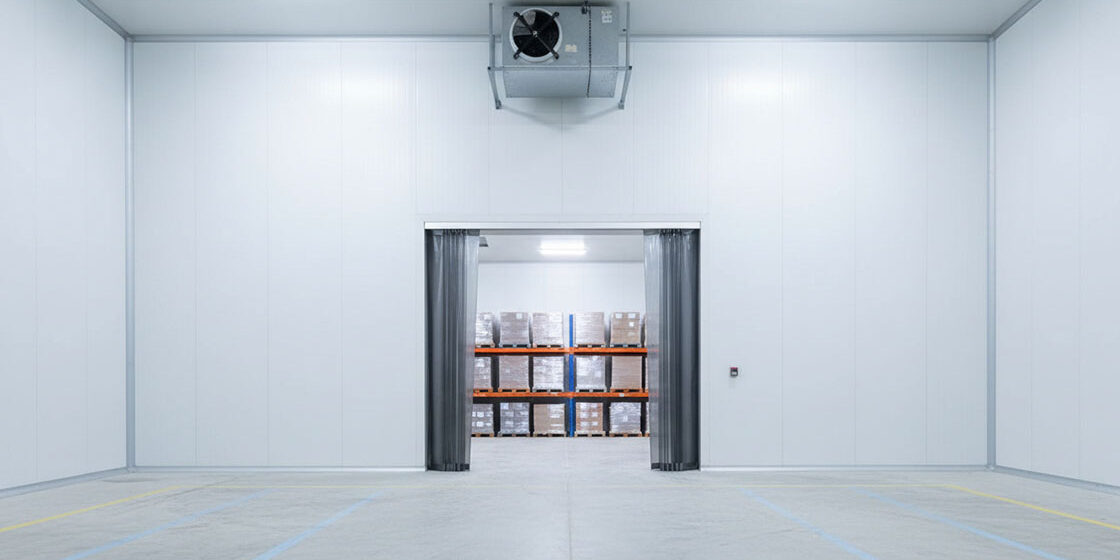
Thermal inconsistency is the single biggest cause of inventory write-downs in the industrial supply chain, yet cold rooms are frequently treated as an afterthought in facility planning. You can run the most sophisticated logistics software available, but if your insulated envelope fails, product spoilage is inevitable. A purpose-built cold room provides the scale and thermal stability that scattered standard refrigeration units cannot match.
High-performance insulated panels built with polyisocyanurate (PIR) cores offer significantly better fire resistance and thermal stability compared to standard polyurethane models. That specific material choice often dictates whether a facility meets strict regulatory compliance standards or fails a safety audit. We cover how panel composition and door sealing directly impact your energy consumption figures and temperature variance consistency.
Modular and walk-in configurations serve distinct operational roles within cold storage infrastructure. Modular systems offer scalability, allowing facilities to expand capacity as demand grows, while walk-in designs prioritize internal workflow efficiency through optimized spatial arrangements. Understanding these structural differences is essential for aligning your cold room choice with specific facility layout requirements, ensuring that thermal performance and operational logistics are both effectively managed.

What Is a Cold Room and Why Use One?
The practical payoff shows up in operating costs over time. Lower energy consumption, minimal maintenance, and a service life measured in decades typically recover the initial investment within a few years.
Definition of a Controlled Cold Storage Environment
A cold room is not simply an insulated box; it is a fully integrated thermal containment system designed to maintain precise atmospheric stability regardless of external weather fluctuations. From an industrial engineering perspective, the cold room acts as a continuous barrier against heat transfer, using advanced composite panel technology to prevent thermal bridging and condensation formation at the joints.
The structural integrity of this environment relies heavily on the material properties of the wall panels. For instance, standard construction materials like OSB (Oriented Strand Board) are fundamentally unsuitable for these high-humidity zones because organic facings will rot and mold within months. In our facility’s production experience, we strictly enforce the use of non-porous facings—such as Food-Grade FRP (Fiberglass Reinforced Plastic) or Stainless Steel—to ensure the walls remain impermeable to moisture while withstanding rigorous hygiene standards.
Do not just look at insulation thickness. A strong cold room must utilize specialized locking mechanisms (like concealed pins) to eliminate gaps between panels, ensuring 100% airtightness.
Core Benefits of Temperature Stability for Preservation
For industrial facility planners, temperature stability is directly correlated to operational ROI and product safety. Micro-fluctuations in temperature can trigger rapid microbial growth and cause cellular damage in frozen goods, leading to devastating inventory losses. By maintaining a strictly controlled environment, facilities achieve maximum preservation efficiency.
- Extended Shelf Life: Consistent cold room insulation panels prevent thaw-refreeze cycles, ensuring that perishable goods (meats, dairy, pharmaceuticals) retain their structural and biological integrity for significantly longer periods compared to uncontrolled storage.
- Operational Cost Reduction: High-quality cold room design minimizes the workload on refrigeration compressors. When the thermal envelope is perfectly sealed, energy consumption drops drastically, lowering your monthly kWh expenses.
- Regulatory Compliance: Strict temperature adherence ensures compliance with international food safety standards (such as FDA and EU regulations) and GMP (Good Manufacturing Practice) requirements.
Key Differences Between Cold Rooms and Standard Refrigeration
It is a common misconception that “refrigeration equipment” alone creates a cold room. While the compressor and evaporator remove heat, the room itself acts as the critical thermal barrier. Standard household refrigerators are pre-fabricated units with built-in low-grade foams, whereas an industrial cold room is a custom-engineered system where the building materials dictate the overall efficiency.
| Feature | Standard Refrigeration Unit | Industrial Cold Room System |
|---|---|---|
| Primary Focus | Active cooling via internal mechanics | Passive thermal retention + active cooling |
| Insulation Material | Thin styrofoam/polyurethane layer | High-density PU/PIR sandwich panels (up to 200mm thick) |
| Thermal Bridging | Minimal due to small surface area | A critical engineering challenge requiring specialized joint designs |
| Hygiene Standards | Basic plastic interiors | Food-grade FRP or stainless steel cladding resistant to harsh detergents |
Our engineering team frequently notes that buyers focus excessively on the BTU rating of the cooling unit while ignoring the R-value of the walls. The true power of an energy-efficient cold room design lies in its ability to act as an impenetrable thermal shield, allowing the refrigeration system to operate purely to offset minor ambient heat leaks rather than fighting a poorly insulated structure.
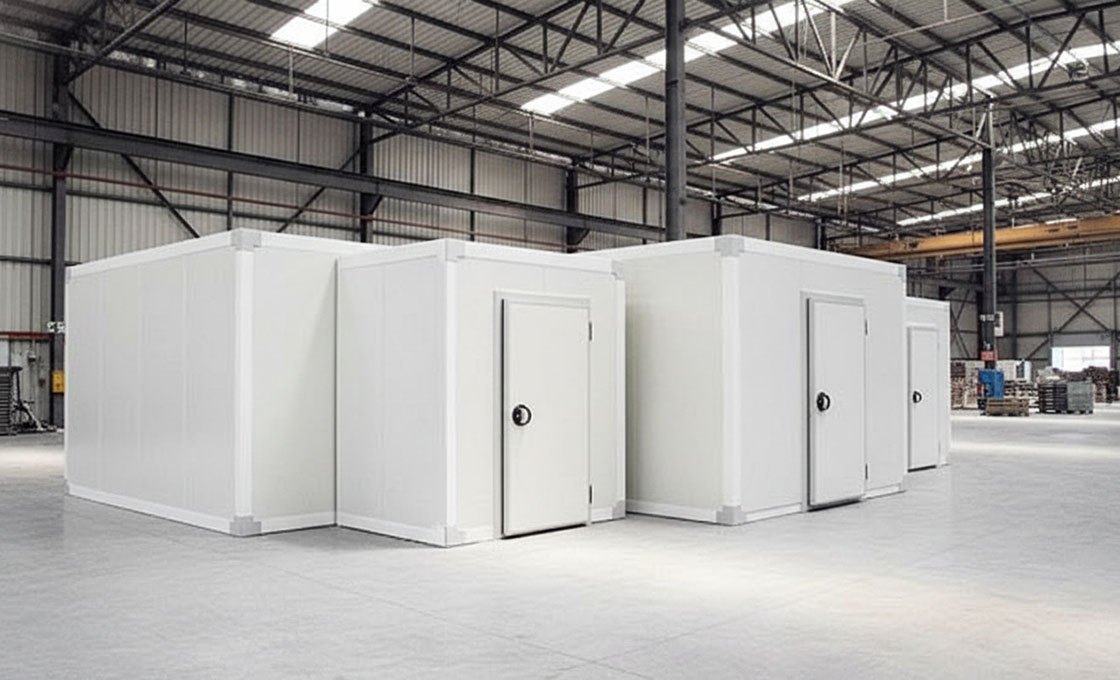
How Cold Room Parts Keep Food Fresh
This factor has a direct bearing on project performance and long-term cost. Addressing it with specific data rather than general assumptions leads to better outcomes.
Role of High Thermal Insulation Core Materials
The heart of a cold room’s efficiency lies in its core insulation material, which serves as the primary barrier against heat transfer. Think of this core as the “thermal shield” that stops the external environment from warring with your internal storage temperature. High-quality insulation materials act like a high-performance thermos flask, trapping the cold air inside while refusing to let ambient heat penetrate.
Without a high-density, thermally resistant core, the refrigeration compressors would be forced to run continuously to compensate for heat gain. This constant cycling not only skyrockets energy costs but also introduces fluctuating temperatures that accelerate food spoilage and dehydration. The core’s job is to provide consistent thermal resistance, ensuring the cold air stays put without massive energy expenditure.
In terms of physics, these core materials work by trapping gas in tiny cellular structures that prevent heat convection. The lower the thermal conductivity of the core, the better it prevents the movement of heat energy.
For a operator, the choice of core material is strictly a math problem: better insulation equals lower lifetime operational costs and more stable product weights (as food loses moisture through evaporation in unstable environments). It is the difference between storing fresh produce and simply storing dehydrated ice.
Function of Durable Composite Panel Facings
While the core handles the temperature, the facings—the “skin” of the sandwich panel—handle the physical abuse and hygiene requirements. In an industrial setting, cold room walls are constantly exposed to impacts from pallet jacks, forklifts, and heavy machinery. Durable facings act as armor, preventing dents or breaches that would expose the fragile insulation core underneath.
If a panel skin is punctured, moisture infiltrates the insulation, causing it to rot, lose its insulating value, and eventually mold. Therefore, the structural integrity of the facings is directly tied to the longevity of the entire thermal envelope.
Beyond physical strength, these facings are critical for food safety regulations. The internal surfaces must be non-porous and easy to clean, preventing bacteria from hiding in microscopic cracks. High-quality materials, such as stainless steel or food-grade fiberglass reinforced plastics (FRP), offer smooth, washable surfaces that resist corrosion from frequent cleaning chemicals. A superior facing material does not rust or degrade in high-humidity environments, ensuring that the sanitary conditions of the cold room remain intact over years of heavy use.
Importance of Airtight Seals in Temperature Maintenance
Even the thickest insulation and strongest facings will fail if the connections between panels are not perfectly sealed. The joint system is arguably the most vulnerable point in any cold room construction. If there are gaps at the seams, warm air will infiltrate, and cold air will escape.
This phenomenon, often referred to as thermal bridging, creates weak spots where heat bypasses the insulation. These spots cause condensation to form on the walls, which inevitably leads to mold growth and even dangerous ice buildup on the floors.
Airtight seals, typically achieved through interlocking designs and specialized gaskets, ensure the room acts as a single monolithic unit rather than a box of separate tiles. By eliminating these leakage points, the internal humidity remains strictly controlled.
When humidity spikes due to poor sealing, food surfaces become wet, creating a breeding ground for bacteria and rapid decay. In high-volume logistics, a properly sealed room means the refrigeration system doesn’t have to work overtime to remove excess moisture, protecting both the product quality and the bottom line.
| Component | Specification | Advantage |
|---|---|---|
| Insulation Core | PU (0.022 W/m·K) or PIR (0.024 W/m·K) | Superior thermal resistance minimizes energy consumption and maintains precise temperature control for perishables. |
| Panel Facings | Food-grade FRP, Stainless Steel, or CFRT | Non-porous, hygienic surfaces prevent mold growth and resist corrosion in high-humidity environments. |
| Joint System | Interlocking Boltless Design with Airtight Seal | Eliminates thermal bridging at seams, preventing condensation and structural ice buildup. |
| Operating Range | -40°C to +80°C Service Temperature | Ensures material integrity and consistent performance across refrigerated and frozen storage zones. |
| Fire Safety Rating | B1/B2 Certified Flame Retardancy | Meets strict industrial safety codes while providing strong insulation against external heat transfer. |
Walk-in vs. Modular Cold Room Types
Each option differs in material composition, thermal resistance, and load-bearing capacity. The right choice depends on your climate zone, building use, and whether the priority is energy efficiency or structural span.
Structural Classifications: Modular vs. Built-in Cold Rooms
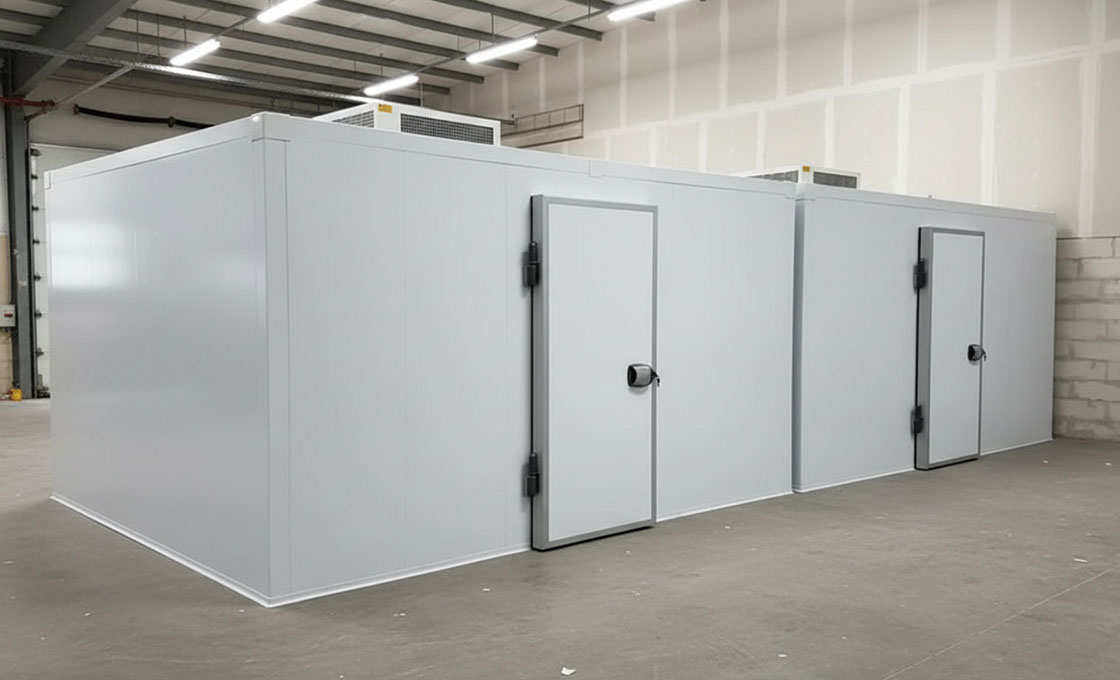
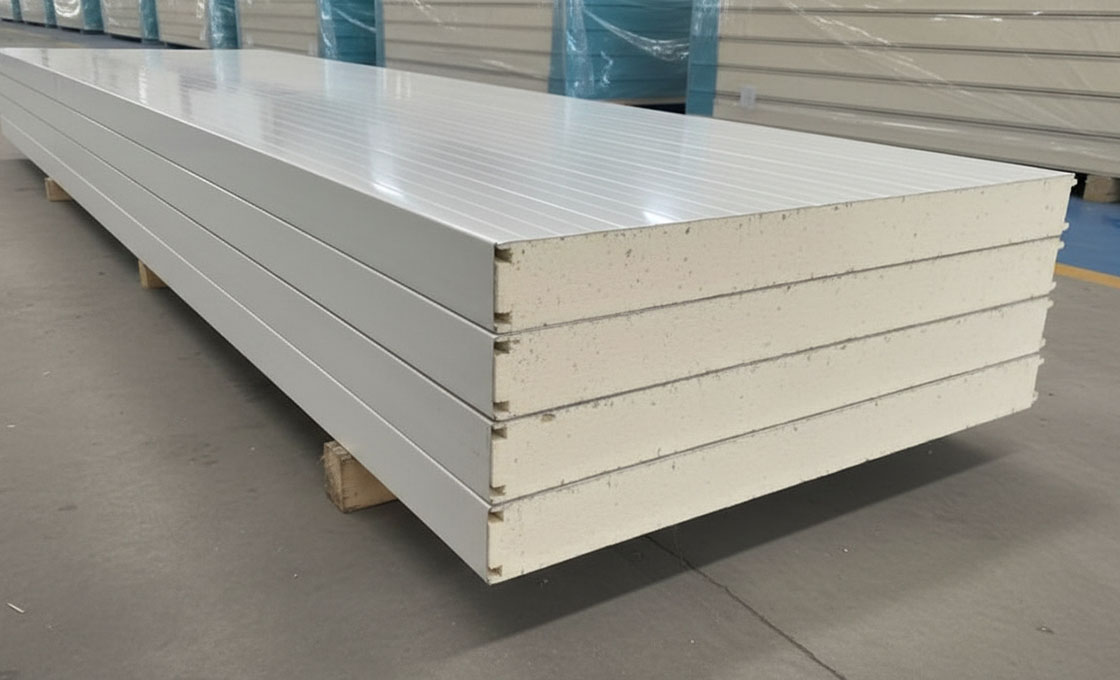
The primary distinction in industrial cold storage construction lies in the assembly methodology: Modular versus Built-in (often referred to as civil work or site-built). Selecting the wrong structural type results in escalated capital expenditure and prolonged downtime. Modular cold rooms utilize prefabricated composite sandwich panels—typically consisting of a core material like Polyurethane (PU), Polyisocyanurate (PIR), or XPS foam bonded between two facings—which are locked together on-site using cam-lock systems. This “kit-of-parts” approach significantly reduces construction time compared to traditional methods.
In contrast, built-in cold rooms are constructed integrally with the building’s architecture. They often employ concrete walls with internal insulation layers or sprayed polyurethane foam applied directly to a substrate. While this offers permanence for mega-scale facilities, it lacks the flexibility of modular systems. Built-in rooms are permanent; modular rooms are assets that can be dismantled, relocated, or expanded as logistical needs evolve.
Defining Walk-in vs. Reach-in Access Styles
Construction methodology and access style represent two independent technical variables in cold room design. Modular versus built-in refers to assembly physics, whereas walk-in versus reach-in dictates ergonomic workflow and racking density, ensuring buyers evaluate these specs separately.
- Walk-in Cold Rooms: These are fully enclosed chambers large enough for a human to enter vertically. They are designed for high-volume storage and bulk handling. This classification typically utilizes modular composite panels to create a smooth thermal envelope. The space allows for the use of pallet jacks, forklifts, and mobile racking systems, making them the standard for industrial distribution and food processing facilities.
- Reach-in Cold Rooms: These are smaller, standalone units where personnel access stored items from the exterior without fully entering the storage space. They are essentially highly insulated cabinets or large reach-in refrigerators. While they may utilize similar insulation technologies, they are not constructed from modular wall panels in the same sense as a walk-in room. They are designed for smaller inventory turnover and manual stocking, not for vehicular traffic or bulk pallet storage.
Material Specifications for Modular Walk-in Solutions
For buyers focusing on modular walk-in cold rooms, the technical specification of the composite panel is the deciding factor for energy efficiency. The industry standard centers on the insulation core’s thermal conductivity.
- Core Materials: Polyurethane (PUR) and Polyisocyanurate (PIR) foams are the dominant choices due to their low thermal conductivity, typically ranging from 0.021 to 0.023 W/(m·K). PIR offers improved fire retardancy compared to standard PUR, often meeting stricter building codes. For high-humidity applications or specific load-bearing requirements, cores like XPS (Extruded Polystyrene) or PET may be utilized.
- Panel Facings: The protective skins dictate durability and hygiene standards. Galvanized steel (GI), Stainless Steel (SS304 or SS316), and Aluminum (Al) are common. In high-hygiene environments (pharmaceuticals or food processing), Stainless Steel facings are preferred for their corrosion resistance and ease of cleaning. For lightweight or transportation applications, Glass Fiber Reinforced Polymer (GRP/FRP) facings offer high strength-to-weight ratios.
- Cam-lock Assembly: Modular systems rely on eccentric cam-locks for rapid joining. This mechanism compresses the gaskets between panels to ensure an airtight seal, which is critical for preventing thermal bridging and moisture ingress at the joints.
When evaluating modular cold rooms, verify the density of the insulation core. A higher density core (e.g., 40kg/m³ to 45kg/m³ for PU/PIR) provides better dimensional stability and compressive strength, ensuring the floor panels can withstand the dynamic loads of forklift traffic without deforming over time.
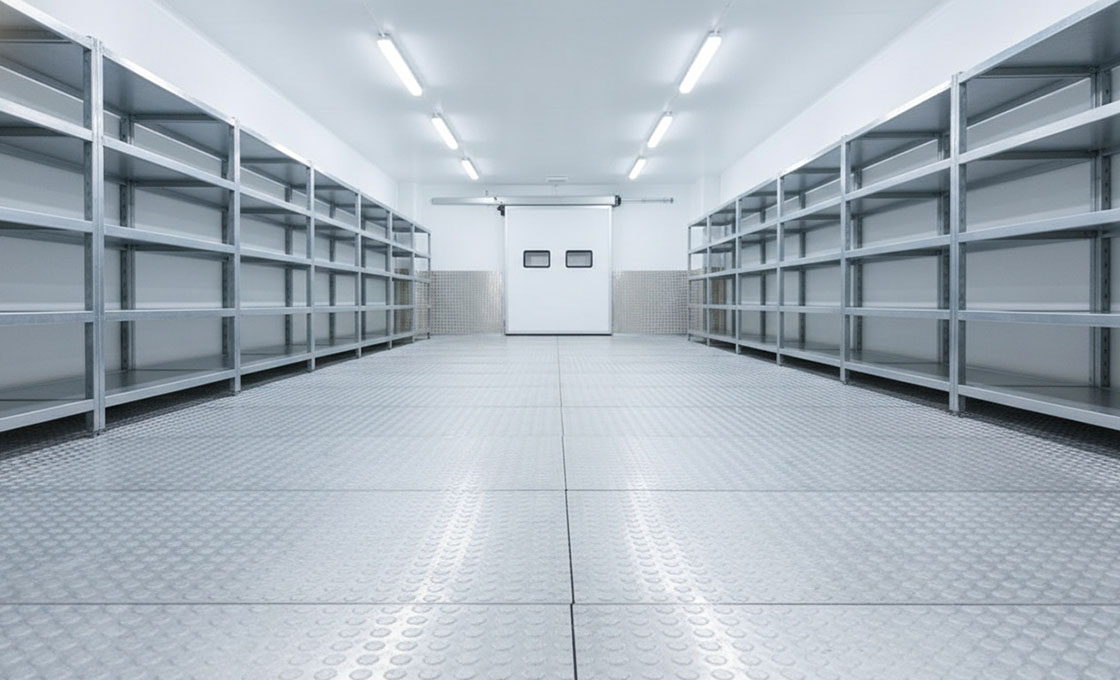
Matching Temperature Zones to Your Products
This factor has a direct bearing on project performance and long-term cost. Addressing it with specific data rather than general assumptions leads to better outcomes.
What Is Standard Temperature Zones?
Industrial cold storage is generally divided into four distinct temperature zones, each designed for specific biological and chemical preservation needs. The most common ranges include Ambient (0°C to 15°C), Chilled (0°C to 4°C), Frozen (-18°C to -25°C), and Deep Freeze (-25°C to -60°C). Understanding these boundaries is the first step in selecting the correct composite panel specifications.
- Ambient Zones (0°C to 15°C): Used for non-perishable goods, electronics, or specialized pharmaceuticals that degrade at extreme cold.
- Chilled / Fresh Produce (0°C to 4°C): The standard range for fruits, vegetables, dairy, and beverages. This zone requires precise humidity control to prevent desiccation (drying out) of water-rich products.
- General Frozen (-18°C to -25°C): The baseline for long-term storage of meat, seafood, and prepared foods. Thermal stability here prevents “temperature fluctuation damage,” which causes ice crystals to expand and rupture food cell structures.
- Blast Freezing & Deep Freeze (-30°C to -60°C): Used for rapid freezing of fresh products (to lock in quality) and long-term storage of highly sensitive biologics or premium commodities like bluefin tuna.
Core Material Selection by Zone
Not all insulation materials perform equally across these temperature spectrums. The physical properties of the foam core inside your sandwich panels dictate their efficiency and structural integrity as temperatures drop.
📋 Recommended Core Materials by Application
- For Chilled Rooms (0°C to 4°C): PUR (Polyurethane) or PU (Polyurethane) cores are highly efficient and cost-effective. They provide an excellent balance of thermal resistance (R-value) and moisture resistance suitable for high-humidity environments.
- For General Frozen Rooms (-25°C): PIR (Polyisocyanurate) is often preferred for its superior fire rating and slightly better thermal resistance compared to standard PU at lower temperatures. XPS (Extruded Polystyrene) is also a viable, budget-friendly option for standard frozen storage.
- For Blast Freezing & Deep Freeze (-30°C+): High-density PET (Polyethylene Terephthalate), PMI (Polymethacrylimide), or XPS cores are recommended. These materials maintain their structural rigidity and low thermal conductivity even under severe thermal stress where standard foams might become brittle or lose insulating properties.
When operating below -25°C, the risk of thermal bridging (heat leaking through structural joints) increases significantly. Ensure that your composite panels utilize a stepped-edge design with integrated rubber gaskets or silicone sealants. Standard butt-joint connections will fail quickly in deep-freeze environments, leading to massive energy waste and ice buildup on walls.
Matching Product Type to Zone Duration
Product shelf-life requirements must dictate the selection of specific temperature zones. Misaligning product types with zones causes spoilage or unnecessary energy waste. Effective inventory management relies on precise thermal zoning that is calibrated to the biological decay rates of the stored goods.
- Short-Term Holding (Processing/Sorting): If you are moving goods through a facility rapidly (less than 48 hours), chilled zones (0°C to 4°C) using PUR panels are sufficient. The focus here is on speed of access rather than long-term preservation.
- Medium-Term Storage (Retail Distribution): For inventory lasting weeks to months, standard frozen zones (-18°C to -25°C) using PIR or XPS panels are the industry standard. This balances preservation quality with operational costs.
- Long-Term Strategic Reserve (Months/Years): For items requiring maximum shelf-life extension (e.g., high-grade seafood, biopharmaceuticals), deep freeze environments (-30°C to -60°C) are required. In these scenarios, investing in high-performance, closed-cell foams like PMI or high-density PET is mandatory to prevent structural degradation over time.
The Role of External Facings
While the core provides the insulation, the external facings protect the structure. For cold rooms, Galvanized Steel (GI) or Stainless Steel facings are typically used due to their resistance to corrosion and condensation. In wet-chill environments (like fresh produce packing), stainless steel is preferred to prevent rust from persistent moisture. In dry-frozen environments, coated aluminum or mild steel with a protective paint finish offers a more economical solution without sacrificing durability.
Daily Cleaning and Basic Maintenance Tips
A short quarterly inspection catches most problems early. Check sealant joints, fastener tightness, and surface condition—small fixes now prevent panel replacement later.
Daily and Weekly Hygiene Protocols for Cold Room Surfaces
Preventative cleaning of cold room walls, floors, and ceilings is the single most effective strategy to maintain thermal efficiency and ensure food safety compliance. For industrial facilities using composite sandwich panels, daily hygiene protocols should focus on preserving the integrity of the panel facings—such as GRP, aluminum, or steel—while eliminating biological contaminants.
- Daily Sanitation: Wipe down high-touch surfaces and floors using a mild, non-acidic detergent. Avoid harsh acidic or alkaline cleaners that can degrade gel coats, strip protective coatings from metal facings, or cause micro-cracking in polymer cores.
- Weekly Deep Clean: Perform a comprehensive scrub of all composite panel walls to remove accumulated dust and residue. Ensure the entire surface is rinsed thoroughly to prevent chemical residue buildup.
- Floor Maintenance: If using composite floor panels, sweep to remove abrasive debris before washing to prevent scratching the surface layer, which can harbor bacteria over time.
Monthly Inspections for Seals and Joints
In cold storage environments, maintaining airtight seals is critical to preventing thermal bridging and energy waste. Monthly visual inspections should be conducted by operations managers to check the continuity of gaskets, joints, and edge connections between composite panels.
- Gasket Checks: Inspect door seals and panel joints for cracks, tears, or brittleness caused by continuous exposure to freezing temperatures. Damaged gaskets must be replaced immediately to stop air infiltration.
- Joint Integrity: Look for any signs of separation or gaps at the seams where panels meet. Even a small gap can lead to significant frost buildup on the foam core (PU or PIR), which destroys insulation performance and invites structural rot.
Checklist for Choosing Your Cold Room
Accurate cubic volume calculation is the foundational step in selecting appropriate core foam specifications. This measurement determines your capacity needs, which then informs the choice of insulation core (PIR vs PU) based on operating temperatures and budget constraints, ensuring structural integrity matches load requirements.
Establishing a cold room requires more than just selecting a compressor; it begins with accurately defining the storage environment’s physical requirements and engineering standards. For procurement managers and facility planners, a successful installation relies on precise dimensional planning, appropriate material selection, and a clear understanding of customization capabilities. This checklist provides the foundational operational considerations necessary to ensure your cold room delivers long-term efficiency and compliance.
Determining Required Storage Capacity and Dimensions
The most common error in cold room design is miscalculating the internal usable volume versus the external footprint required. Because these structures are modular, every inch counts toward your overall return on investment. You must determine how much product will be stored simultaneously and account for the racking systems that will hold them.
When calculating capacity, use the cubic volume formula (Length × Width × Height) based on your maximum inventory load, not just your current average. It is critical to subtract the space occupied by shelving or pallet racks from this total, as wall-mounted racking consumes interior volume but does not lower the required ceiling height.
accurate dimensions extend beyond the storage floor. You must evaluate the physical constraints of the delivery site. The entrance door width must be wide enough to accommodate the largest shipping pallets, forklifts, or hand trucks entering the unit. Additionally, verify the height clearance of the building to ensure the completed structure fits without requiring costly structural modifications to the roof or ceiling supports.
Measure your maximum pallet dimensions and fork truck turning radius before finalizing the room’s internal footprint.
Designing with a slight buffer—typically around 10% additional cubic footage—is standard practice. This margin prevents overcrowding, which restricts airflow, and ensures that future inventory surges do not compromise the thermal efficiency of the unit.
How to Choose Appropriate Core Foam Types for Efficiency
The insulation core of the panels is the primary barrier against external heat transfer. Choosing the wrong material will result in higher energy consumption and potential temperature fluctuations. The two industry-standard foams are Polyurethane (PU) and Polyisocyanurate (PIR). While both provide excellent thermal resistance, they possess distinct chemical properties suited for different operating environments.
Polyurethane (PU) is widely regarded as the cost-effective standard for general refrigeration applications. It provides reliable thermal performance for moderate cooling environments, such as fresh produce storage or ambient-temperature cool rooms. Its closed-cell structure effectively resists moisture ingress under normal operating conditions, making it a highly practical choice for many food-grade warehouses.
For ultra-low temperature applications, such as blast freezing or deep freeze storage operating below -25°C, Polyisocyanurate (PIR) is generally the superior choice. PIR panels exhibit a higher resistance to thermal conductivity at extreme lows compared to PU. Furthermore, PIR possesses inherent self-extinguishing properties, meaning it is less likely to contribute to flame spread if exposed to an open fire. This makes PIR the preferred specification for regions with stringent fire safety codes or facilities storing highly combustible materials.
Match the core foam strictly to your lowest target temperature: PU for standard refrigeration, PIR for extreme cold and high fire safety requirements.
Beyond the foam type, the thickness of the panel must correspond to the intended temperature zone. A thinner panel may suffice for a simple dry store, but standard operating depths usually range from 100mm to 200mm for active freezing and cooling. Ensuring the panel thickness aligns with the chosen foam guarantees that your cooling equipment operates efficiently rather than constantly fighting through inadequate insulation.
Evaluating Customization Options for Specific Product Needs
A one-size-fits-all approach rarely succeeds in industrial logistics because every supply chain has unique mechanical, sanitary, and spatial demands. Evaluating a supplier’s ability to provide bespoke solutions allows you to optimize the cold room specifically for your operational workflow rather than forcing your workflow to adapt to a generic unit.
Customization extends far beyond standard dimensions. You should assess whether the manufacturing process can accommodate specialized internal configurations. For example, integrating heavy-duty shelving brackets directly into the panel cores during production is far superior to drilling holes on-site, which risks compromising the insulation seal and aesthetic finish. Specialized internal partitions can also be designed to create multi-zone environments within a single structure, allowing for the simultaneous storage of goods at different temperatures.
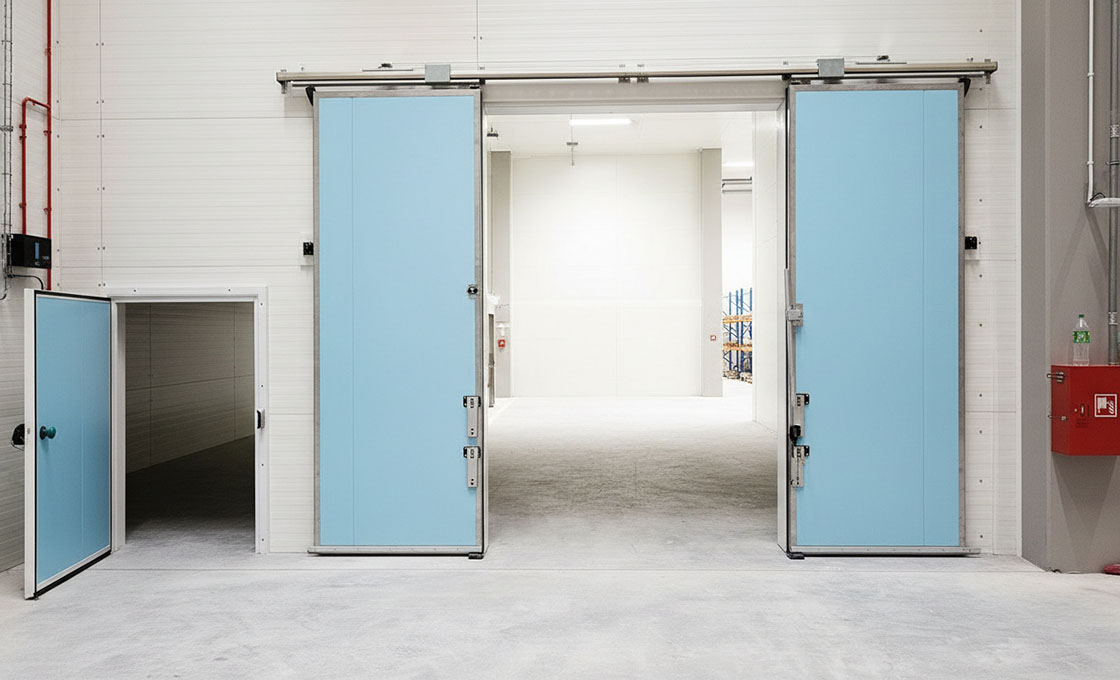
Additionally, the exterior and interior finishes of the panels can be customized to meet strict hygiene standards. Industries handling raw meat or seafood often require smooth, easily washable facings that resist corrosion and chemical cleaners. If your operation involves transporting goods via road, specialized doors with thermal breaks or automated sliding mechanisms may be necessary to minimize heat loss during frequent entry and exit.
Prioritize manufacturers who offer engineering support to tailor panel facings, internal reinforcements, and door specifications to your exact sanitary and logistical needs.
Before finalizing your contract, request technical drawings that reflect these customizations. Verifying that the custom elements do not interfere with the structural integrity or the thermal continuity of the panels is essential. Engaging with experienced engineers early in the process ensures that your specific product requirements are translated into a physically viable and highly efficient cold storage solution.
| Checklist Factor | Critical Parameter | Operational Impact | Target Specification |
|---|---|---|---|
| Core Insulation Type | Thermal Conductivity | Minimizes energy consumption (kWh) and ensures temperature stability | PU (0.022 W/m·K) or PIR (0.024 W/m·K) |
| Panel Facing Material | Porosity & Cleanability | Prevents mold growth and meets food safety compliance | Non-porous FRP, Stainless Steel, or Aluminum |
| Joint System Design | Airtightness & Psi-value | Eliminates thermal bridging and condensation risks at seams | Precision interlocking or cam-lock mechanisms |
| Fire Safety Rating | Reaction to Fire | Ensures compliance with strict industrial building codes | B1/B2 Fire Rating (Self-extinguishing) |
| Moisture Resistance | Water Absorption Rate | Maintains structural integrity and long-term insulation performance | <1% Volume absorption rate |
Key Takeaways
Technical precision in panel specification prevents premature thermal failure in cold storage facilities. PIR cores offer superior thermal resistance compared to PU alternatives for most food-grade applications, significantly reducing long-term energy bills. Matching specific temperature zones to the correct wall panels is critical for compliance and preventing costly retrofits. The distinction between a correctly engineered facility and one that
- Request detailed technical specifications for custom wall panel configurations tailored to your unique throughput needs.
fails to meet operational standards often hinges on precise engineering choices. To ensure your facility avoids this fate and operates at peak efficiency, you need to transition from general concepts to specific technical planning.
Frequently Asked Questions
This factor has a direct bearing on project performance and long-term cost. Addressing it with specific data rather than general assumptions leads to better outcomes.
Energy efficient cold room design
How to Get the Most from energy efficiency requires a complete approach combining high-R-value cores, airtight joint sealing, and minimized thermal bridges through precise engineering. Designers must also account for vapor barrier integrity to prevent moisture ingress, which drastically reduces insulation performance over time. Continuous monitoring of temperature variance ensures the refrigeration system operates at peak load only when necessary.
Panel thickness vs R-value
While thicker panels generally provide higher R-values, efficiency is equally dependent on the core material’s intrinsic thermal conductivity and density. A thinner PIR panel may outperform a thicker EPS panel due to superior insulating properties and better fire ratings. Engineers must calculate total thermal resistance rather than relying solely on physical thickness to optimize space and cost.
Industrial cold room insulation panels
Standard construction materials like OSB are unsuitable for cold rooms due to their organic nature, which leads to rot and mold in high-humidity environments. Industrial panels utilize non-porous facings such as FRP or aluminum bonded to foam cores to ensure durability and hygiene. Selecting specialized panels designed for sub-zero temperatures prevents structural failure and maintains consistent internal climates.
Food grade cold room wall panels
Food-grade panels require non-porous, smooth facings such as stainless steel or gel-coated FRP to prevent bacterial growth and facilitate rigorous cleaning protocols. These surfaces must resist corrosion from acidic cleaners and withstand high-pressure washdowns without degrading. Ensuring hygienic skins are integral to the panel structure prevents moisture infiltration and mold formation within the insulation core.
Fire ratings for cold room panels
Industrial facilities typically require panels with B1 or B2 fire ratings to comply with safety regulations and minimize liability. PIR cores naturally offer better flame retardancy compared to standard PU or EPS options, making them preferable for high-risk storage areas. Verifying certification documents with local fire codes is a mandatory step before procurement to ensure legal compliance.