
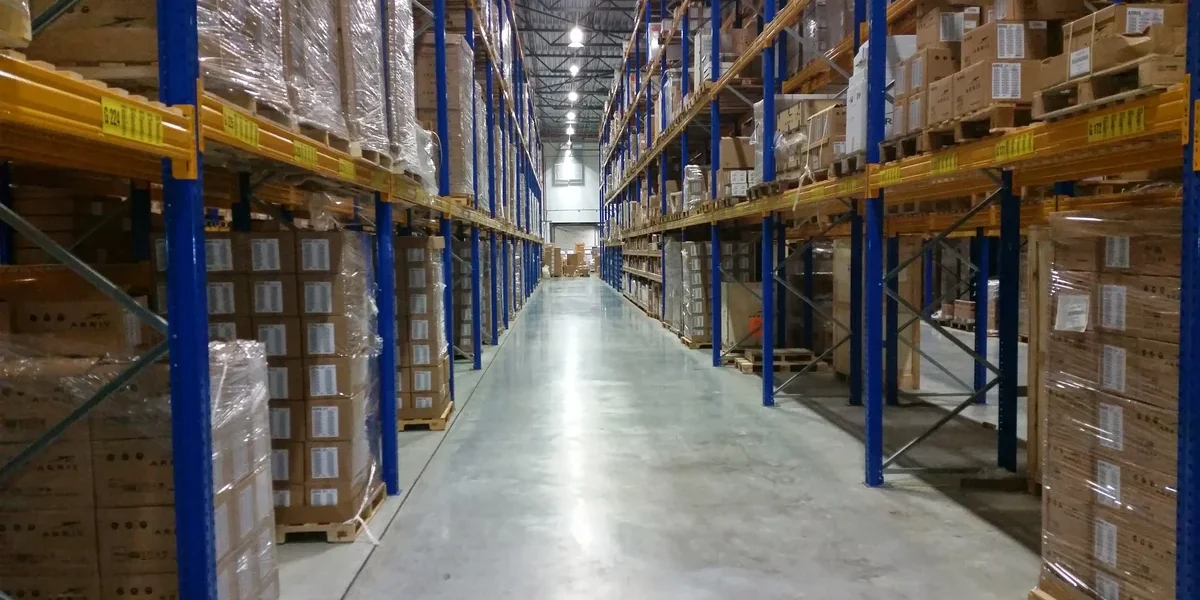
Cold storage warehouses are the heart of the modern supply chain, acting as the primary line of defense against spoilage for temperature-sensitive inventory ranging from pharmaceuticals to frozen foods. If the building envelope fails, no amount of downstream logistics sophistication can recover the lost value.
A standard refrigerated warehouse, known as a chill store, must maintain a tight temperature band between 2 and 8 degrees Celsius to prevent bacterial growth and extend product shelf life. This guide details the technical specifications you need to enforce during construction, specifically focusing on composite panel core materials and the insulation performance metrics required to maintain that stability.
Most energy loss in these facilities happens at the seams, not through the panel faces. We examine the critical differences between chilled and frozen environments and how wall thickness impacts thermal conductivity. You will walk away with a clear understanding of how to select facing materials and installation methods that prevent condensation and pass rigorous health audits.
What Makes Up a Cold Storage Facility?
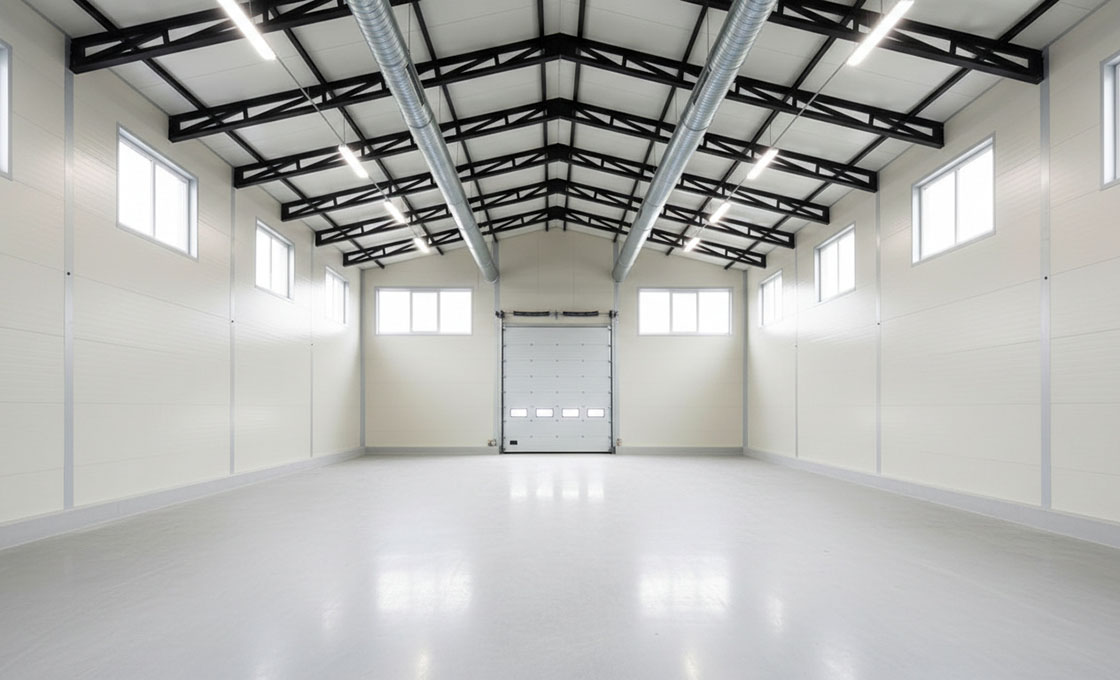
The efficiency of a cold storage facility relies entirely on the integrity of its insulated envelope, specifically the composite sandwich panels that form the walls and ceiling.
Composite Panel Core Materials for Thermal Retention
At the heart of every cold storage panel lies the core material, which is responsible for the vast majority of thermal resistance. In industrial applications, the choice of core is not merely about insulation thickness but about material physics under extreme conditions. The industry standard differentiates between open-cell and closed-cell structures. Closed-cell foams, such as Polyurethane (PU) and Polyisocyanurate (PIR), are engineered to trap gas within microscopic bubbles, drastically slowing down heat transfer.
Assessing material suitability for deep-freeze applications reveals critical performance gaps in Expanded Polystyrene (EPS). While EPS may perform adequately in chilled spaces, its thermal efficiency drops significantly as temperatures fall below 0°C. Although EPS features a closed-cell structure, it possesses higher moisture permeability than advanced alternatives.
In a cold storage environment, moisture ingress is the enemy of insulation; when water vapor penetrates the matrix and freezes, it degrades the insulation’s efficiency. We strictly adhere to PU and PIR cores for deep-freeze applications because their superior closed-cell structure offers better moisture resistance and maintains structural density even in cryogenic conditions.
Facing Material Options for Cold Storage Walls
While the core provides insulation, the facing materials—often referred to as “skins”—provide the structural defense and hygienic barrier necessary for industrial compliance. The selection of facings depends heavily on the specific operational hygiene requirements and the internal humidity levels of the facility.
- Stainless Steel: Typically reserved for high-hygiene zones such as meat processing or pharmaceutical storage. It offers the highest resistance to corrosion and is easy to sanitize, though it comes at a premium weight and cost.
- GRP/FRP (Glass Reinforced Plastic): A favored solution for aggressive environments. Unlike metal, GRP does not rust, making it ideal for facilities with high humidity or chemical exposure. Crucially, GRP facings act as a continuous vapor barrier.
- Aluminum or Steel: Common for general dry storage and logistics centers. These offer high impact resistance and rigidity but require strict protective coatings to prevent condensation-related corrosion over time.
The “vapor barrier continuity” is the most critical engineering aspect of the facing. If the warm, humid air from the warehouse penetrates the panel facing and reaches the cold core, it will condense inside the wall assembly. This hidden condensation leads to mold, structural rot, and eventual panel failure. In our manufacturing process, we prioritize the lamination quality of the facing to the core to eliminate delamination risks that would break this vapor seal.
Insulation Performance Metrics of Sandwich Panels
For facility planners, understanding the metrics that define panel performance is essential for calculating operational expenditure (OpEx) and ensuring safety compliance. These metrics move beyond simple thickness measurements and define the actual physics of the building envelope.
Thermal Conductivity (K-value): This metric measures the rate at which heat passes through a material. A lower K-value indicates better insulating power. For cold storage, every fraction of a point improvement in K-value translates directly into reduced kilowatt-hour consumption. High-performance PU/PIR cores are engineered to minimize this value, ensuring the refrigeration systems do not overwork to compensate for poor insulation.
Fire Resistance Ratings: Thermal insulation and fire safety are often in tension, as organic foams are combustible. Industrial panels must achieve specific fire ratings (such as Class A or specific Euroclass standards) to be legally compliant. This involves modifying the chemical composition of the foam to resist ignition and limiting flame spread. Our formulations are tested to ensure they meet strict fire safety codes without sacrificing the low thermal conductivity required for energy efficiency.
Flexural Strength: This measures the panel’s ability to resist bending forces. In large-scale cold storage warehouses, panels must span significant distances between structural supports or withstand the impact of forklifts and pallet stacking. A high flexural strength rating ensures that the “sandwich” construction acts as a unified structural element rather than just a cladding, preventing warping under load or extreme temperature differentials.
| Feature | Specification | Advantage |
|---|---|---|
| Core Material | PU/PIR Foam (Closed-cell) | Superior thermal stability below 0°C vs EPS; prevents moisture absorption |
| Facing Material | GRP/FRP or Aluminum Composite | Vapor barrier continuity prevents internal condensation and structural degradation |
| Thermal Conductivity (K-value) | < 0.022 W/m·K | Minimizes heat transfer for reduced energy consumption in deep-freeze applications |
| Fire Resistance Rating | Class B1 | Meets strict cold storage fire safety codes without compromising insulation performance |
| Structural Integrity | High Flexural Strength (Sandwich Panel) | Maintains shape under extreme temperature differentials and heavy loading conditions |
Chilled vs. Frozen: Temperature Needs
Understanding the specific temperature requirements for chilled versus frozen environments is critical for maintaining product integrity in cold storage applications.
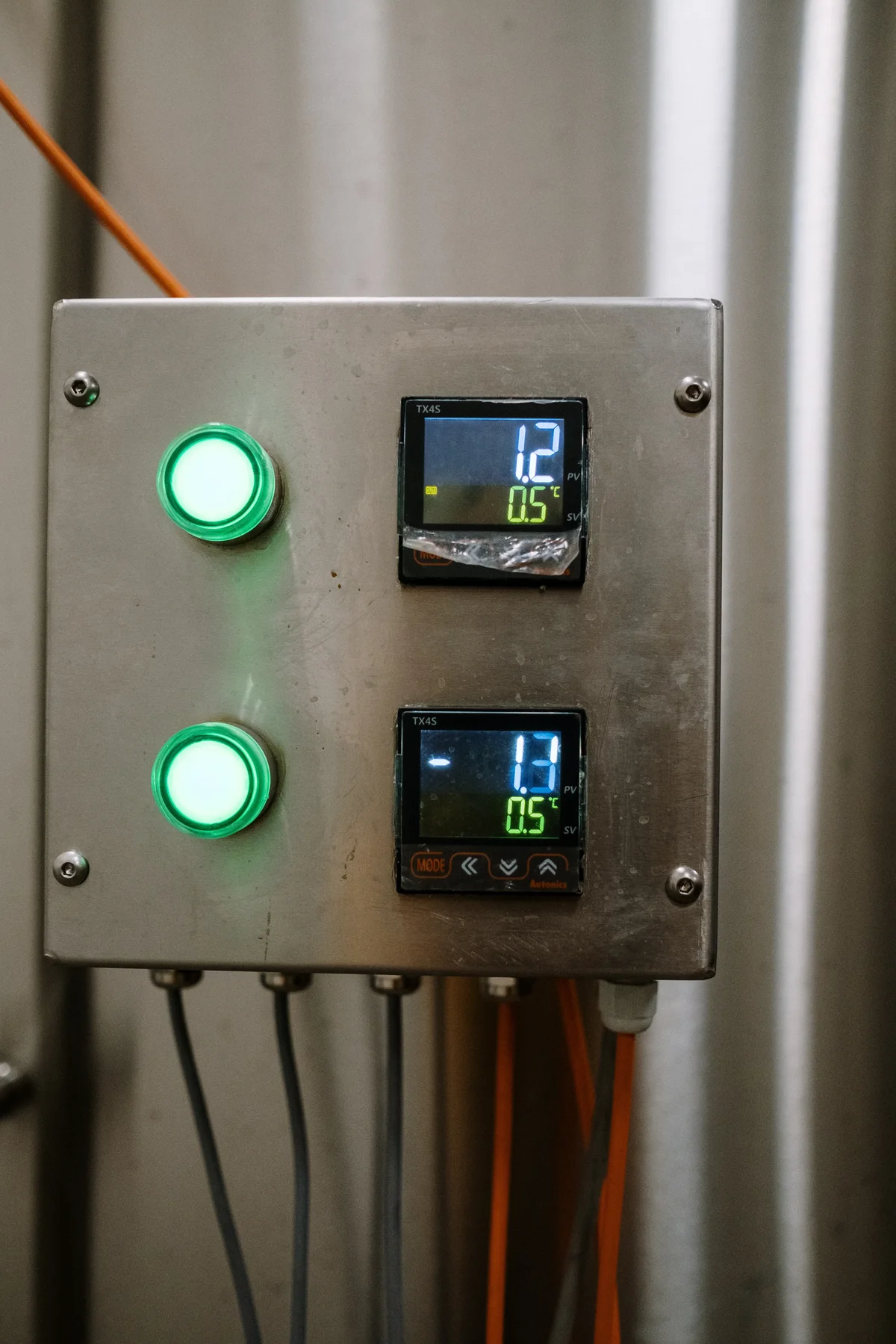
Chilled temperatures typically range from 0°C to 5°C (32°F to 41°F), while frozen conditions require -18°C or lower (-0.4°F).
Temperature Ranges and Industry Standards
Bridging the gap between operational requirements and construction, these thermal thresholds directly determine the necessary insulation specifications.
- Chilled Environments: Maintain temperatures between 0°C and 5°C (32°F to 41°F). Ideal for perishable goods like dairy, fresh produce, and meats that require refrigeration but not freezing.
- Frozen Environments: Operate at -18°C (0°F) or below. Essential for long-term preservation of frozen foods, pharmaceuticals, and other temperature-sensitive materials.
Pain Points for Buyers
- Selecting panels with insufficient thermal resistance for frozen conditions leads to excessive energy consumption.
- Using chilled-rated panels in sub-zero environments causes condensation, ice buildup, and structural degradation.
- Inadequate panel thickness compromises insulation values, increasing operational costs over time.
Technical Specifications for Thermal Performance
Composite panels used in cold storage must meet specific thermal conductivity requirements based on the target temperature range.
- Thermal Conductivity (k-value): Polyurethane (PU) and polyisocyanurate (PIR) foam cores typically achieve k-values between 0.022–0.024 W/(m·K), making them suitable for both chilled and frozen applications when properly thickened.
- Minimum Panel Thickness: For chilled storage, 50mm is generally sufficient; frozen environments require at least 80–100mm to maintain consistent internal temperatures.
- Vapor Barrier Requirements: All sandwich panels in cold storage must include an integrated vapor barrier to prevent moisture ingress and thermal bridging.
Real-World Application Examples
Different industries rely on precise temperature control to preserve product quality and comply with safety regulations.
- Food Processing Facilities: Often use PIR or PU-core panels with stainless steel facings for frozen meat processing, requiring continuous operation at -25°C.
- Pharmaceutical Cold Chains: Demand strict adherence to WHO guidelines, where even slight deviations during transport or storage can render vaccines ineffective.
- Distribution Centers: Frequently operate dual-zone facilities with adjacent chilled and frozen areas, necessitating high-performance separation walls to prevent cross-contamination of air temperatures.
Safety, Hygiene, and Legal Rules
In cold storage construction, safety and hygiene are not just operational preferences; they are legal mandates determined by the building envelope material itself.
Fire Safety Standards and Material Flammability
The primary anxiety for facility planners is balancing thermal efficiency with fire resistance. Insulating materials act as fuel loads in a fire scenario, making the choice of core material critical for passing strict building codes. Traditional polyurethane (PUR) foams offer excellent insulation but can present significant fire risks if not modified. To address this, Polyisocyanurate (PIR) foam has become the industry standard for environments requiring higher fire safety ratings.
PIR foams exhibit a distinct chemical difference from PUR that results in “limited combustibility” and a high char formation. When exposed to flame, PIR creates a protective carbon layer (char) that insulates the underlying material and slows down the spread of fire. This property allows PIR panels to often meet more stringent European norms (EN 13501-1) and achieve Class 1 fire ratings in many jurisdictions, whereas standard polystyrene (XPS/EPS) cores may require additional fire barriers or be restricted in use.
Smoke toxicity is equally critical. In the confined space of a refrigerated warehouse, smoke generation is often more lethal than the fire itself. Advanced core materials like PET foam and PMI foam are increasingly specified for high-risk applications because they produce significantly less smoke and contain zero halogens. Compared to standard PVC cores, these materials provide a safer evacuation environment for personnel.
| Core Material | Fire Performance | Smoke Emission | Typical Use Case |
|---|---|---|---|
| PIR (Polyisocyanurate) | High; Self-extinguishing & High Char Formation | Moderate to Low | General Cold Storage, Public Areas |
| PUR (Polyurethane) | Standard; Requires retardant additives | Moderate | Dry Freight, Low-Risk Storage |
| PET Foam | Good; Thermoset behavior prevents melting | Very Low | Marine, High-Safety Transport |
| XPS/EPS (Polystyrene) | Lower; Melts/drips; Requires barriers | High (Dense smoke) | Restricted use in public buildings |
Hygiene Protocols and Food-Grade Facings
Regulatory bodies like the FDA (US) and EFSA (EU) enforce strict hygiene codes (HACCP) that dictate the internal surfaces of a cold room. Panels must not support bacterial growth, nor should they allow chemical contamination of the food stored inside. This is where the “skin” or facing of the sandwich panel is just as important as the core.
For food-grade environments, smooth, non-porous surfaces are mandatory. Stainless Steel (specifically AISI 304 or 316 grades) is the gold standard for high-hygiene zones like slaughterhouses or dairy processing due to its resistance to corrosion from cleaning agents.
However, Fiberglass Reinforced Polymer (FRP/GRP) facings with a high-quality gel coat are widely accepted for general cold storage and dry freight. The gel coat creates a sealed, waterproof barrier that prevents moisture ingress—which prevents mold and mildew growth within the panel structure—and can withstand rigorous high-pressure washdowns without degrading.
Avoid using raw plywood or unsealed organic facings in direct food environments. These materials can absorb moisture from condensation, creating hidden pockets of listeria and salmonella that are impossible to sanitize, leading to facility shutdowns.
Regulatory Compliance and Documentation
Beyond the physical attributes, legal compliance rests on verification. Industrial buyers must demand specific documentation to prove materials meet local codes. This includes “Reaction to Fire” test reports (such as ASTM E84 in the US or BS 476 in the UK) and “Food Contact” certifications.
- Material Safety Data Sheets (MSDS/SDS): Essential for understanding the toxicity of smoke and the chemical composition of the core, especially relevant for facilities employing large numbers of staff.
- Thermal Conductivity Certification: Legal energy codes often mandate a maximum U-value or R-value. Panels must be certified by an independent lab to verify their claimed insulation performance (e.g., Lambda value).
- Load-Bearing Test Reports: To ensure safety, panels must prove they can support the static loads of suspended meat rails or stacking systems without deformation.
Ignoring these regulatory checkpoints invites legal liability. For instance, using non-fire-rated panels in a public-access cold storage facility can result in insurance voidance and criminal negligence charges in the event of a fire. Therefore, selecting panels that come with a comprehensive “Technical Dossier” is not an administrative preference—it is a risk management necessity.
Walls, Floors, and Structural Strength
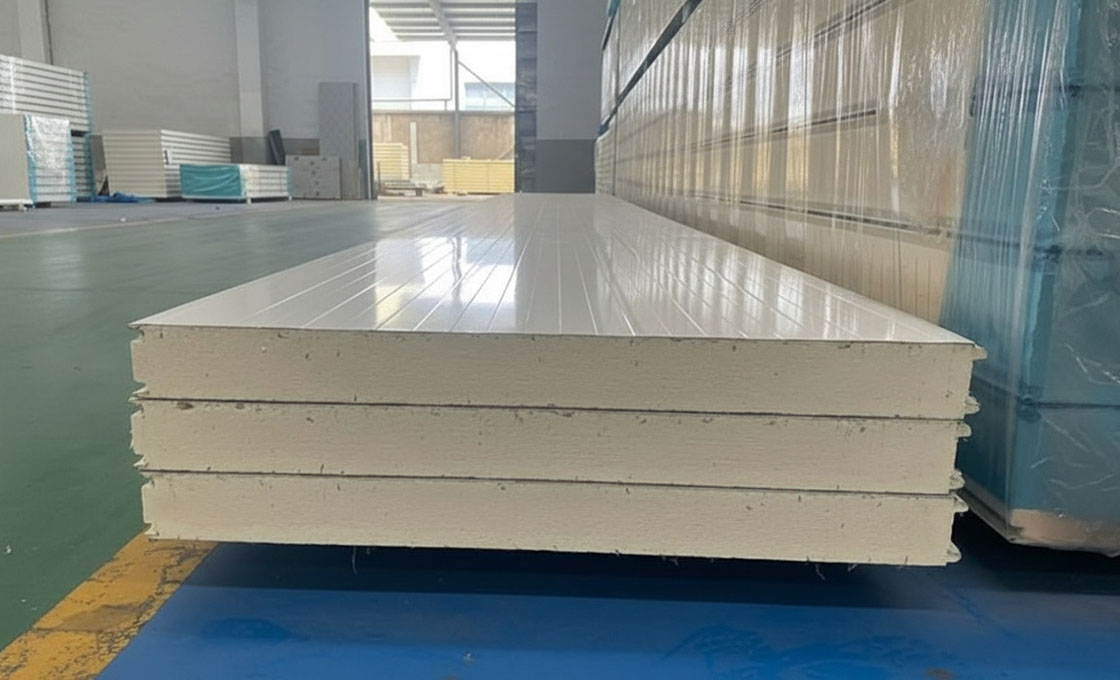
For cold storage applications, the physical integrity of walls and floors is just as critical as thermal insulation. A panel that fails structurally under load or allows moisture intrusion through fasteners will compromise temperature control regardless of its R-value. The primary concern for buyers is ensuring the sandwich panel system maintains structural rigidity while preventing thermal bridging and condensation formation at junction points.
Floor systems require special consideration compared to vertical wall panels due to dynamic live loads from forklifts and static loads from stored inventory. Unlike wall panels which primarily resist wind and self-weight, floor panels must distribute concentrated point loads across a wider area without deflection that could crack interior finishes or damage suspended ceiling systems below. This necessitates higher core density or additional structural reinforcement in floor-specific designs.
Material Selection for Structural Integrity
The choice of facing materials directly impacts the overall strength-to-weight ratio of composite panels. For demanding environments where structural performance is paramount, certain combinations offer superior mechanical properties:
-
To ensure optimal structural performance, it is essential to evaluate how the chosen core material interacts with the overall design requirements. This understanding directly informs decisions on material selection for enhanced durability and load-bearing capacity.
Core Material Influence on Performance
The core material serves as the structural backbone determining shear strength and bending resistance. Different core types exhibit distinct mechanical behaviors that should guide selection based on application requirements:
-
The effectiveness of core materials in mitigating thermal bridging directly influences the likelihood and severity of condensation formation within cold storage assemblies. Consequently, understanding how these materials perform under real-world temperature differentials is essential before implementing targeted moisture control measures.
Condensation Management Strategies
Moisture management represents one of the most persistent challenges in cold storage construction. When warm exterior air contacts cold internal surfaces within the panel assembly, condensation can form within cavities leading to corrosion, mold growth, and degraded thermal performance. Effective prevention requires addressing multiple factors simultaneously throughout the building envelope.
Critical design considerations include maintaining continuous vapor barriers on the warm side of insulation, using appropriate sealants at penetrations and joints, and selecting core materials resistant to moisture absorption. Particularly problematic are metal facings that conduct heat directly through fastener points, creating localized thermal bridges that encourage condensation formation even when overall insulation values meet specifications.
Structural Load Considerations
Designing composite panel systems for structural adequacy requires accounting for both dead loads (self-weight of construction materials) and live loads (occupancy, equipment, snow accumulation). For vertical walls, wind pressure typically governs design while floors must accommodate concentrated wheel loads from material handling equipment. Panel stiffness depends heavily on thickness-to-span ratios and connection methods between individual elements.
In practice, manufacturers often provide load-deflection curves specifying maximum allowable spans under various loading conditions. These values assume proper installation including adequate support spacing and secure attachment to underlying structural framing. Deviations from recommended installation practices can dramatically reduce actual performance below published specifications regardless of inherent material quality.
How Cooling Systems and Inventory Work
This factor has a direct bearing on project performance and long-term cost. Addressing it with specific data rather than general assumptions leads to better outcomes.
Temperature Control and Humidity Management in Cold Storage
The foundation of any cold storage system is maintaining a consistent temperature profile while managing humidity to prevent condensation on interior surfaces. Standard refrigeration cycles remove both sensible heat (temperature) and latent heat (moisture) from the air.
In facilities designed for food-grade storage, relative humidity is typically maintained between 75% and 85%. If the wall panels or seals fail to maintain thermal integrity, warm, moist air enters and contacts cold metal surfaces, causing frost accumulation that reduces insulation efficiency over time.
Thermal conductivity is the primary metric used to evaluate panel performance in this context. Polyurethane (PU) cores generally offer lower thermal conductivity values compared to expanded polystyrene (EPS), allowing for thinner profiles to achieve the same R-value. When selecting materials for walk-in coolers operating at -18°C or below, engineers must account for increased thermal bridging risks at structural connection points where the core material meets metal facings.
Airflow Distribution and Temperature Uniformity
Uneven airflow within the chamber is one of the most common causes of localized hot spots that compromise product safety. Proper design requires high-velocity air to be distributed evenly across all stored goods using evaporator coils positioned strategically along ceiling grids.
The return air path must be unobstructed to ensure continuous circulation without creating stagnant zones where temperatures might drift above setpoints. For high-density storage configurations, vertical airflow channels are often incorporated into rack designs to minimize pressure drops that reduce cooling effectiveness.
Temperature monitoring systems should include calibrated sensors placed at multiple heights—typically near the floor, mid-level, and ceiling—to detect stratification effects. Modern controllers utilize these inputs to modulate compressor capacity via variable frequency drives (VFDs), reducing energy consumption during periods when the thermal load decreases due to door closures or reduced product turnover rates.
Inventory Rotation Practices and Airflow Integrity
Effective inventory management relies heavily on First-In, First-Out (FIFO) principles combined with adequate clearance around palletized loads to allow proper air circulation. Blocking airflow paths by stacking products too close together against walls or near evaporator coils can significantly degrade temperature uniformity across the entire storage volume. Industry best practices recommend maintaining at least 6 inches of clearance between product stacks and cooled surfaces to facilitate efficient heat exchange.
Automated warehouse solutions increasingly integrate IoT-enabled tags that track individual item locations alongside real-time environmental data. These systems alert operators when specific items approach expiration thresholds based on their position within temperature gradients established during facility commissioning. Such integration supports compliance audits by providing verifiable records demonstrating adherence to chain-of-custody requirements throughout the storage lifecycle.
Building Right and Keeping It Running
Ensuring long-term operational efficiency in cold storage requires addressing structural integrity, moisture control, and thermal bridging during the installation phase.
Seam Integrity and Air Leakage Prevention in Panels
The most critical factor in maintaining a stable temperature within a cold storage facility is preventing air leakage through the panel joints. When sealing composite sandwich panels, the gasketing material must be carefully selected to remain pliable at extremely low temperatures.
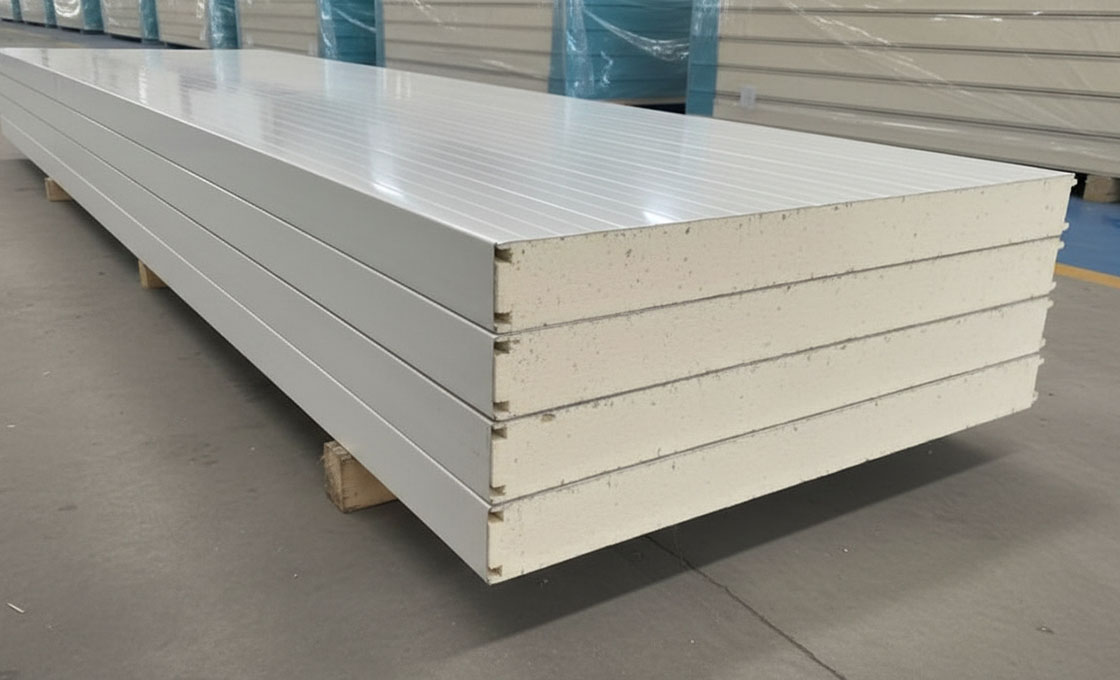
Many standard sealants become brittle under sub-zero conditions, leading to micro-cracks that allow warm, humid exterior air to infiltrate. This infiltration causes rapid frost buildup on the interior surfaces and compromises the insulation layer. Proper alignment of the tongue-and-groove or interlocking mechanisms before applying sealant is essential to ensure a continuous, airtight barrier across walls, floors, and ceilings.
Air leakage not only increases energy consumption by forcing the refrigeration system to work harder but also creates pressure differentials that can draw in contaminants. To mitigate this, installers should utilize compression seals specifically designed for refrigerated environments. These materials accommodate minor thermal expansion and contraction cycles without losing their sealing properties. Regular inspection of seams after commissioning helps identify early signs of separation caused by building settling or vibration from heavy machinery nearby.
Moisture Resistance Testing for Long-Term Durability
Cold storage facilities operate in high-humidity environments where condensation is inevitable. Therefore, the ability of panel materials to resist moisture absorption becomes paramount during design and selection phases. Moisture ingress into core materials like polyurethane (PU) or extruded polystyrene (XPS) degrades their thermal resistance over time—a phenomenon known as “thermal drift.” As water accumulates within the foam matrix, its insulating value drops significantly, resulting in higher operating costs and inconsistent internal temperatures.
To verify durability, manufacturers often conduct accelerated aging tests exposing samples to repeated wet-dry cycles under controlled humidity levels. Panels used in walk-in coolers or freezer zones should demonstrate minimal weight gain post-exposure (<5%) and no visible delamination between facings and cores. Additionally, vapor retarder membranes integrated into panel construction help prevent internal condensation from forming inside the cavity itself. For food-grade applications, non-toxic, mold-resistant coatings on inner surfaces further safeguard against microbial growth linked to prolonged dampness.
Installation Best Practices to Avoid Thermal Bridging
Thermal bridging occurs when conductive materials create direct paths for heat transfer through otherwise insulated assemblies—a common issue if metal fasteners penetrate deep into thick insulation layers without proper isolation. In cold storage settings, even small gaps around anchor points can lead to localized freezing spots that weaken structural integrity and promote corrosion beneath cladding layers. Strategic use of thermal break materials—such as plastic washers, neoprene pads, or specially engineered standoff clips—helps interrupt these conduction pathways effectively.
Another frequent culprit is improper support framing attached directly to exterior steel members that extend into interior space. Engineers recommend using thermally broken purlins or isolating brackets whenever possible to maintain continuity of the insulation envelope. additionally, all penetrations—including electrical conduits, plumbing lines, and sensor wiring—must be carefully sealed with flexible foams compatible with low-temp service. Failure to address these details uniformly throughout the facility results in uneven cooling patterns and increased susceptibility to icing issues near corners and junctions.
| Design_Factor | Technical_Parameter | Engineering_Implication | Operational_Risk |
|---|---|---|---|
| Foundation Insulation Thickness | 200mm (Chill) / 300mm (Freeze) | Accommodates required thermal resistance and prevents sub-grade frost heave | Floor sweating, energy loss, and structural foundation damage |
| Roof Panel Dead Load | 18-25 kg/m² | Defines structural support requirements for purlins and main frames | Structural deflection, roof collapse, and waterproofing failure |
| Evaporator Suspension Capacity | 100-500 kg per point | Mandates reinforced steel connection points within ceiling assembly | Equipment detachment, catastrophic falling hazards, and operational downtime |
| Ceiling Maintenance Clearance | 1.2m (<300m²) / 2.0m (>500m²) | Ensures safe access for HVAC servicing and proper air circulation | Restricted airflow causing hotspots and unsafe maintenance conditions |
| Wall Installation Clearance | 20-50mm (Fit & Expansion) | Allows for structural tolerances and thermal expansion of panels | Installation binding, compromised thermal envelope, and panel buckling |
| Electrical Load Density | 0.3-0.6 kW/m² | Ensures power infrastructure supports compressor start-up peaks and lighting | System overload, voltage drops, and temperature fluctuation leading to spoilage |
Conclusion
Choosing the right cold storage panels requires understanding core material density, facing durability, and thermal performance. We focus on polyurethane sandwich panel specs that balance insulation values with structural integrity for frozen and chilled environments. Your facility’s temperature stability depends heavily on seam integrity and moisture resistance during installation. These elements directly impact long-term energy efficiency and product safety compliance.
- Verify fire-rated PU panel certifications match local building codes before finalizing design.
- Request thermal conductivity charts from our engineers to validate insulation thickness against your target temperature range.
- Confirm moisture resistance testing results align with your facility’s humidity exposure levels to prevent degradation over time.
Frequently Asked Questions
This factor has a direct bearing on project performance and long-term cost. Addressing it with specific data rather than general assumptions leads to better outcomes.
Food grade panel certification needed?
Yes, panels contacting food must meet FDA 21 CFR and NSF/ANSI Standard 51 requirements. Surfaces must be smooth, non-porous, cleanable, and resistant to microbial growth. Gel-coated GRP or stainless steel facings on PU cores are commonly used for hygienic compliance in food processing zones.
Fire rating requirements for cold storage?
Cold storage facilities must comply with FM Global and ASTM E84 standards, requiring Class A fire ratings for wall panels. Panels should achieve a flame spread index of ≤25 and smoke-developed index of ≤45. Fire-rated PU/PIR cores with non-combustible facings are recommended for compliance.
Walk-in cooler wall thickness guidelines?
Typical walk-in cooler walls range from 50mm to 100mm depending on ambient temperature and insulation needs. For commercial freezers (-25°C), minimum 80mm PIR core with aluminum facings is advised. Thickness selection should align with local energy codes and target U-values below 0.3 W/m²·K.
Energy efficiency comparison: EPS vs PU?
EPS loses significant insulating capacity below 0°C due to increased thermal conductivity. PU maintains stable performance down to -40°C, offering up to 30% better energy efficiency in deep-freeze applications. For long-term operational savings, PU is preferred despite slightly higher initial cost.
How to prevent condensation in walls?
Condensation prevention requires continuous vapor barrier integration within the panel assembly, not just on one side. Use panels with integrated foil facings or apply external vapor retarders at warm-side interfaces. Ensure all seams are sealed with compatible sealants to maintain integrity against moisture migration.