
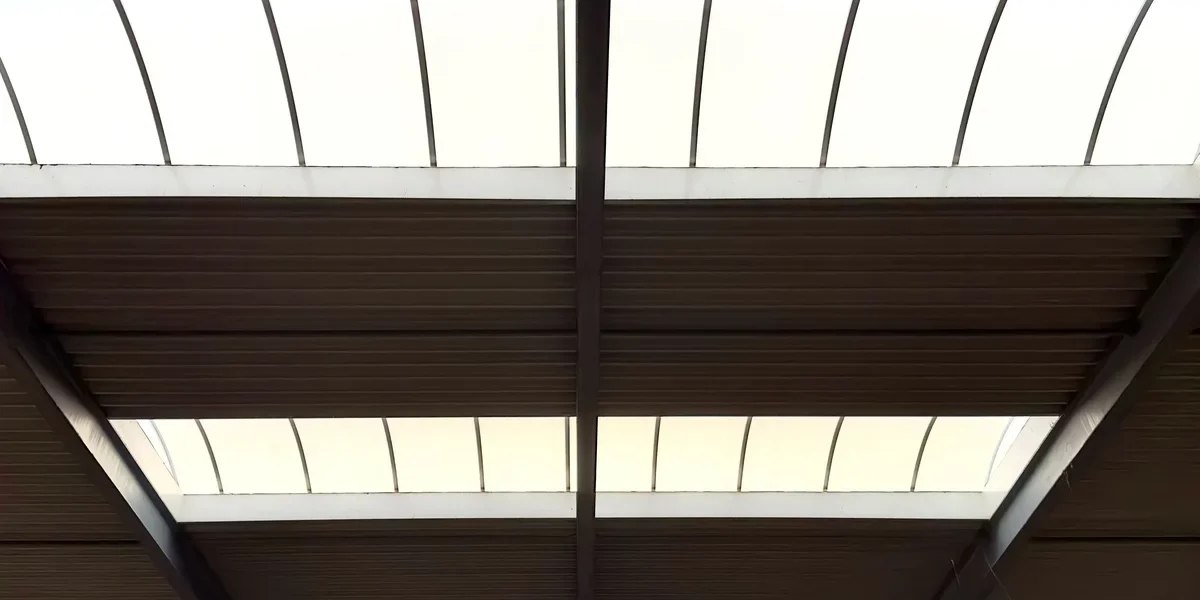
Most specifiers I work with cut corners on roof lights the moment procurement takes over. They see a corrugated GRP sheet and assume it’s interchangeable with any cladding panel. It’s not. Panels that skip the co-cured gel coat layer lose 40% of their light transmission within three years, and by the time you catch that, you’re either retrofitting or eating the cost of a full replacement.
At RaxPanel, we hold every batch to Euroclass fire ratings and track UV retention and light output against the original spec on production pulls. This piece covers what actually matters when you’re specifying these panels — matching corrugation profiles to your metal cladding, accounting for thermal expansion at fastener points, and reading fire certification documents without getting swept up in marketing language. The takeaway is practical: you’ll know exactly which parameters to demand in your spec and which ones suppliers are counting on you to overlook.
What Are Industrial GRP Roof Lights?
Industrial GRP roof lights are composite structural glazing elements manufactured from glass-reinforced polyester, engineered to provide high-strength daylighting while matching the profile of standard metal roof cladding.
GRP Material Composition and Manufacturing Process
At their core, Industrial GRP (Glass Reinforced Plastic) roof lights are composite materials consisting of a structural matrix of thermosetting resin reinforced with continuous glass fibers. Unlike simple extruded plastics, the manufacturing process involves a layering technique where fiberglass matting is impregnated with resin. The critical component for industrial longevity is the UV-inhibited gelcoat surface. This layer is applied during the molding process and serves as the primary barrier against weathering. In our manufacturing experience, the quality of this gelcoat determines the long-term surface integrity; a premium formulation prevents the fiber blooming and surface chalking often seen in lower-grade sheets. We utilize a controlled curing process to ensure the composite cures uniformly, providing a sheet that is rigid yet lightweight enough for manual handling during installation.
Key Technical Specifications for Industrial Roof Lights
When evaluating specifications for industrial applications, the focus must shift beyond basic dimensions to performance attributes that affect the build’s operational life. A critical specification is the “Class of Surface” or gelcoat quality. A high-quality finish maintains its smooth texture, which resists dirt accumulation and ensures the self-cleaning effect of rain remains effective over the lifespan of the roof. Furthermore, the color consistency of the resin is vital; while many assume “clear” is universal, industrial-grade GRP is often tinted to specific diffusion levels to control glare and heat gain. We strictly monitor the resin mix ratios in our production to ensure every batch delivers consistent optical properties, avoiding the patchiness that can occur with automated, high-volume extrusion methods.
Structural Performance and Load-Bearing Capabilities
In an industrial context, roof lights are not just windows; they are structural load-bearing elements. They must withstand snow loads, wind uplift, and maintenance foot traffic. The strength of GRP comes from the cross-directional orientation of the glass fibers within the resin matrix. This creates a material with a high strength-to-weight ratio, allowing it to support significant loads without adding excessive dead weight to the building’s steel structure. We engineer our GRP sheets to have high flexural rigidity, ensuring they span standard purlin distances without excessive deflection. This is particularly important in wide-span industrial buildings where roof sagging can lead to water ponding. By utilizing high-grade fiberglass reinforcements, we provide a panel that resists impact damage from hail or falling tools better than brittle alternatives.
Comparison with Alternative Industrial Glazing Materials
Selecting the correct glazing material requires understanding how GRP performs relative to other industrial options:
- GRP vs. Polycarbonate: While polycarbonate offers high impact strength, it suffers from high thermal expansion and contraction. This movement often leads to noisy “creaking” during temperature changes and can stress the sealing washers on fixings. GRP has a coefficient of thermal expansion much closer to steel, resulting in a more stable, quiet roof that maintains seal integrity over time.
- GRP vs. PVC/U-PVC: PVC is a cost-effective option for short-term needs, but it lacks the structural rigidity for large industrial spans. It tends to become brittle and discolor rapidly under UV exposure. GRP provides vastly superior weatherability and impact resistance, making it suitable for heavy-duty environments where PVC would fail.
- GRP vs. Glass: Glass provides excellent clarity but is significantly heavier and poses a safety risk if shattered. It also requires specialized, expensive framing systems. GRP offers a lightweight, shatterproof solution that can be fixed directly into standard metal sheeting profiles, simplifying the structural design and reducing installation costs.
| Attribute | Technical Performance | Material Composition | Application Value |
|---|---|---|---|
| Light Transmission | 85-92% diffused light transmission | Clear polyester resin reinforced with glass fiber and UV-inhibited gelcoat surface | Delivers glare-free natural daylighting, reducing artificial lighting energy consumption in industrial facilities. |
| Durability & Lifespan | 20+ years UV stability without yellowing or chalking | GRP/FRP sheets with premium UV-inhibited gelcoat surface | Maintains optical clarity and surface integrity in harsh weather and high-UV environments. |
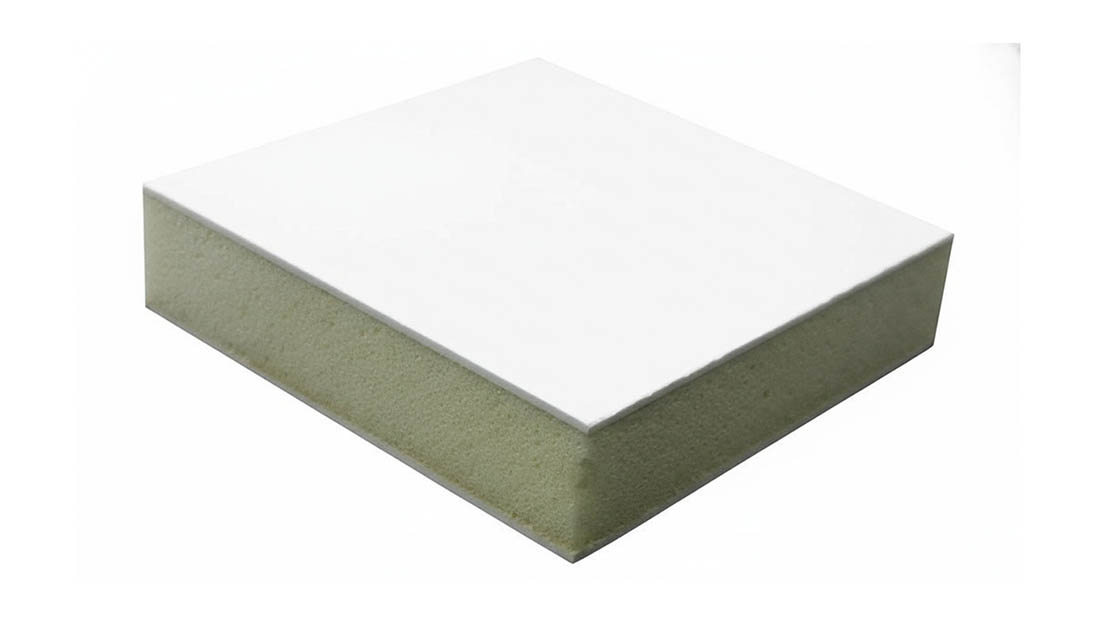
| Thermal Efficiency | U-values from 1.8 to 0.8 W/m²K (twin-skin systems) | Twin-skin or sandwich panels with XPS, PET, or PU foam cores | Minimizes heat loss and gain while preventing condensation in climate-controlled facilities. |
| Fire Safety Compliance | Class 1 (internal) and Class 3 (external) fire ratings compliant with BS 476 Part 7. | Fire-retardant resin formulations in composite GRP sheets | Satisfies industrial building code requirements for fire spread classification and regulatory compliance. |
| Structural Profile | Custom lengths up to 6.1m single-piece without joints | Molded GRP/FRP facings matched to standard metal roof profiles | Ensures watertight integration with existing cladding and serves as a direct replacement for asbestos cement profiles. |
Why GRP Outperforms Other Materials
While glass offers initial clarity and polycarbonate boasts high impact strength, GRP (Glass Reinforced Polyester) provides the optimal balance of long-term UV stability, thermal compatibility with steel structures, and cost-efficiency for harsh industrial environments.
Superior UV Resistance and Longevity
A critical failure point in industrial roofing is the degradation caused by prolonged UV exposure. Polycarbonate sheets, while initially impact-resistant, often suffer from surface embrittlement and yellowing over time because their UV protection is typically a thin co-extruded layer. Once this layer weathers, the structural integrity of the sheet declines rapidly. In contrast, GRP utilizes a specialized gel coat that serves as a sacrificial barrier. This coat is chemically bonded to the glass fibers and is significantly thicker than standard film protections on plastics. High-quality GRP roof lights maintain light transmission levels—up to 92% initially—for decades, with a typical service life approaching 30 years before significant degradation occurs.
- Gel Coat Integrity: The premium gel coat on GRP surfaces prevents surface chalking and fiber bloom, ensuring the panel remains waterproof and aesthetically consistent throughout its lifecycle.
- Re-coatability: Unlike polycarbonate, which cannot be effectively restored once weathered, GRP surfaces can be cleaned and re-coated to extend their service life even further.
Impact Resistance and Hail Durability
In industrial environments, the risk of falling tools or severe hail events makes material toughness a non-negotiable requirement. While glass provides hardness, it is brittle and poses a significant safety risk when shattered. Polycarbonate offers high impact resistance but lacks the rigidity to support heavy loads without substantial framing. GRP delivers a “best of both worlds” scenario: it possesses high tensile strength due to the fiberglass reinforcement, allowing it to absorb significant kinetic energy without puncturing or shattering. This resilience ensures operational continuity for factories and warehouses, as GRP panels can withstand hail impacts that would typically rupture standard glazing materials.
Thermal Expansion and Structural Compatibility
One of the most overlooked technical specifications is the Coefficient of Thermal Expansion (CTE). Polycarbonate has a high CTE, meaning it expands and contracts significantly with temperature fluctuations. This movement places immense stress on fixings and flashings, often leading to “creep” (permanent deformation) and eventual water ingress. GRP has a thermal expansion rate much closer to that of steel cladding. This compatibility minimizes differential movement between the roof light and the surrounding roof sheets, ensuring that sealants and fixings remain secure over wide temperature ranges. For B2B specifiers, this translates to reduced maintenance costs and fewer call-backs for leak repairs.
Light Transmission Uniformity and Glare Control
Beyond durability, the quality of light affects worker productivity and safety. Clear glass or smooth polycarbonate can create intense “hotspots” of direct light and harsh glare, which is hazardous in operational environments. GRP is inherently diffusive; the light enters the material and is scattered by the fiberglass matrix within. This property creates a soft, even distribution of natural light that eliminates high-contrast shadows. By maximizing uniform illumination, GRP reduces the reliance on artificial lighting during daylight hours without creating the visual fatigue associated with direct, beams of sunlight.
How Much Light GRP Lets Through — and How Tough It Is
Effective industrial daylighting requires balancing initial luminosity with long-term structural integrity. The optimal GRP solution maximizes diffuse natural light while resisting the surface degradation that compromises performance over time.
The Physics of Light Diffusion vs. Transmission
Achieving optimal industrial illumination extends beyond simple light transmission metrics. In an industrial environment, the *quality* of that light is equally critical. Unlike clear glass or polycarbonate, which transmit direct solar radiation creating harsh “hotspots” and glare on workbenches, Glass Reinforced Polyester (GRP) is engineered to scatter light. This diffusion occurs because the glass fibers within the resin matrix refract light rays as they pass through.
This scattering effect eliminates the need for workers to squint or for additional blinds to be installed, thereby enhancing workplace safety. For B2B buyers, this means a GRP installation can often achieve acceptable ambient light levels with a smaller footprint compared to transparent materials, as the usable light is distributed more evenly across the floor plan rather than concentrated in specific zones.
Engineering Impact Resistance and Hail Durability
Industrial roofing faces significant threats from falling tools, maintenance foot traffic, and severe weather events such as hailstorms. The toughness of GRP is derived from its composite nature: the high tensile strength of the glass fibers is locked within a durable resin matrix. Unlike brittle glass, GRP does not shatter; unlike some thermoplastics, it possesses a high “memory” that allows it to withstand impact deformation without permanent crazing or cracking.
For facilities in regions prone to extreme weather, the density of the reinforcement mat and the quality of the resin cure are the primary determinants of impact performance. A robust GRP sheet absorbs the kinetic energy of a hailstone by distributing it across the panel’s surface, effectively “catching” the impact. This capability is crucial for operational continuity, as it prevents the sudden catastrophic failures that can halt production lines and expose inventory to water damage.
The Battle Against UV Degradation and Yellowing
The most common failure mode for inferior GRP products is surface chalking and yellowing, which directly correlates to a loss of light transmission. It is vital to understand that UV radiation primarily attacks the *resin*, not the glass fibers. As the resin breaks down, micro-cracks form on the surface, reflecting light away rather than letting it through.
To counter this, high-performance industrial GRP utilizes a UV-inhibited gel coat layer on the weather-facing side. This layer acts as a sacrificial barrier, containing stabilizers that absorb UV radiation before it can penetrate the structural laminate. Without this specific surface engineering, a sheet can lose a significant portion of its light transmission capability within just a few years of service. Buyers should look for surfaces that remain smooth, as pitted or chalky surfaces are a visual indicator of reduced efficiency and impending material failure.
When assessing samples, perform a simple flex test. High-quality GRP will feel stiff and resilient. If a sample feels “spongy” or shows white stress marks easily when bent, it indicates low fiber density or poor resin wetting—both are red flags for longevity and impact resistance.
| Performance Metric | Specification | Advantage |
|---|---|---|
| Impact Resistance | High-impact Grade GRP rated for hail and maintenance foot traffic | Withstands severe weather events and routine roof access without cracking or failure |
| Thermal Performance | Twin-skin and triple-skin factory-assembled systems; U-values comparable to insulated panels | Reduces thermal bridging at roof light interfaces; triple-skin FAIRs cut heating costs by 15–20% versus single-skin installations |
Roof or Wall: Where GRP Works Best
GRP panels excel in both roofing and vertical cladding applications, but the choice between the two is dictated by distinct engineering constraints: roof installations prioritize load-bearing capacity and exact water shedding, whereas wall applications focus on thermal compatibility and impact resistance.
Structural Load and Weather Exposure Dynamics
When selecting GRP for roofing, the primary driver is the ability to withstand significant static and dynamic loads. Roof applications must support the weight of accumulated snow, maintenance personnel, and equipment without excessive deflection. Unlike vertical walls, roof sheets are constantly subjected to gravity loads and ponding water, requiring a denser fiber reinforcement matrix and often a thicker gauge or deeper profile geometry to maintain structural integrity over long spans.
Weather exposure varies drastically by orientation. On the roof, GRP is bombarded by full-spectrum UV radiation and extreme thermal cycling. This necessitates a premium UV-resistant gel coat layer to prevent surface degradation and yellowing, which can reduce light transmission over time. In vertical wall installations, the angle of incidence for UV rays is less direct, which slows the rate of photo-degradation. However, walls face unique challenges such as high-velocity wind driven rain and potential impact from low-level machinery or carts, requiring a surface toughness that differs from the flexibility needed for roofing.
Integration with Insulated Composite Panels
A critical failure point in modern industrial construction is the junction between translucent GRP sections and opaque insulated sandwich panels. When GRP is used in walls or roofing alongside composite panels utilizing cores like XPS, PET, or PU, thermal performance must be calculated precisely. A standard GRP sheet has significantly lower thermal resistance than a 50mm or 100mm insulated PU panel. If the GRP section is too large or improperly detailed, it becomes a thermal bridge, negating the energy efficiency of the surrounding insulated envelope.
For wall applications, this is particularly acute. The R-value of the GRP area should ideally be boosted, or the area ratio minimized, to prevent condensation and heat loss. additionally, the differential expansion rates between GRP and insulated metal panels must be accommodated in the detailing; failure to account for this movement can lead to sealant failure or gasket cracks at the interface, compromising the waterproofing of the entire system.
Profile Matching and Drainage Priorities
The requirement for profile matching is absolute in roofing but slightly more relaxed in wall cladding. On a roof, the GRP profile must exactly mirror the adjacent metal roofing sheets (e.g., box profile, corrugated, or tile effect) to ensure fasteners align correctly and water sheds efficiently. Even a minor mismatch in corrugation depth or pitch can create gaps where capillary action draws water inward, leading to leaks.
In wall applications, while visual alignment is important for aesthetics, the sealing mechanism often relies more on overlap and flashings than purely on profile geometry. therefore, wall cladding offers slightly more flexibility, allowing for the use of secret-fix GRP systems that provide a cleaner aesthetic without the interruption of exposed fasteners. However, for roof lights, the structural integrity gained by matching the metal profile’s load-span characteristics is non-negotiable for safety and compliance with building codes.
Matching GRP Profiles to Your Roof Cladding
TL;DR: Profile matching is a geometric non-negotiable. Even a millimeter of variance in pitch or depth between the GRP roof light and the metal cladding creates capillary gaps that lead to leaks. Always verify the exact profile code (e.g., 32/1000, 40/6) rather than relying on visual similarity.
The Geometry of Compatibility: Pitch, Depth, and Gauge
In industrial roofing, “close enough” is the primary cause of installation failure. A GRP profile must conform to three critical dimensions to integrate smoothly with existing steel or aluminum cladding: the pitch (center-to-center distance of corrugations), the depth (height of the profile), and the cover width (effective width of the sheet). If the GRP panel’s pitch is even 2mm off from the adjacent metal sheet, the fasteners will not align with the crowns of the corrugations. This forces installers to drill through the valleys—a critical failure point—or stress the material to force a fit, compromising the structural integrity of the sheet.
Additionally, the drip of the profile (the lip at the bottom edge) must be identical to the cladding to ensure correct water shedding into the gutter system. A mismatched drip edge disrupts the laminar flow of water, causing it to track back under the sheet or overflow the gutter, leading to fascia damage and internal dampness.
Differentiating Corrugated and Box Profiles
While the market uses the term “corrugated” loosely, technically there is a distinct difference between traditional sinusoidal corrugated sheets and modern box profile (trapezoidal) sheets. Mixing these types on a roof is technically impossible due to their geometric incompatibility.
- Corrugated Profiles: Typically featuring a sinusoidal wave, these are common on agricultural buildings and older industrial units. Standard variants often include the “3-inch” (75mm pitch) or “big six” profiles used frequently in asbestos cement replacements. The curve requires a flexible GRP formulation to avoid micro-cracking during installation.
- Box / Trapezoidal Profiles: Defined by flat-topped ridges and angular valleys, these are the standard for modern industrial warehouses (e.g., 32/1000, 34/76, or 40/6 profiles). The flat crown allows for more secure fixing, but the GRP thickness must be strictly controlled to sit flush with adjacent metal sheets without creating a “lip” that can catch wind-driven rain.
The Risks of “Universal” Profiles
Specifiers should be wary of suppliers claiming “universal” or “multi-fit” profiles. While adjustable flashing kits exist for details like ridge caps and abutments, the roof light sheet itself cannot be universal. A generic profile that does not perfectly mimic the host cladding will result in an uneven roof plane. This creates differential wind loading; the wind lifts the mismatched sheet differently than the rigid metal sheets, eventually working fasteners loose and tearing the GRP around the fixing points.
Never match profiles based on a photo or a visual glance. Two profiles may look identical to the naked eye but have vastly different under-cloak dimensions. Always request the technical drawing showing the exact pitch and depth dimensions, and cross-reference them with the existing cladding manufacturer’s specification sheet.
Asbestos Replacement Protocols
A significant portion of retrofit work involves replacing brittle asbestos cement roofing with GRP. This is a high-risk scenario for profile matching. Many legacy asbestos profiles, such as the “Big Six” (approximately 6 inches pitch) or smaller “Small Profile” variants, are no longer standard in modern steel cladding catalogs. Specialized GRP manufacturers must tool specific molds to replicate these legacy dimensions exactly. Using a standard modern profile to patch an asbestos roof creates severe thermal bridging and gaps, as the geometry of the old sheets often does not align with contemporary fixings or flashing systems. Success in these projects depends entirely on sourcing a GRP sheet that replicates the *exact* cadence of the original hazardous material being removed.
Fixing GRP Panels and Accounting for Thermal Expansion
Proper fastening and thermal expansion management are the two most common failure points in GRP roof light installations. Ignoring either leads to leaks, structural fatigue, and premature panel failure — typically within 2 to 5 years.
Fastener Selection and Washer Specification
The fastener system is the primary defense against water ingress at every penetration point. GRP panels require specifically engineered fasteners with EPDM or silicone-sealed washers rated for continuous UV exposure. Standard construction fasteners with basic rubber washers degrade within 18 to 24 months under solar radiation, creating the most common source of leak points in industrial roof light installations.
The correct approach uses stainless steel or hot-dip galvanized fasteners paired with EPDM washers compressed to a 25% to 30% deflection rate. Over-torquing is equally damaging — excessive compression crushes the GRP surface around the hole, creating stress concentration points that lead to cracking under thermal cycling. A torque limit of 3 to 5 Nm for M8 fasteners is the practical industry standard for most corrugated GRP profiles.
- Fastener material: A2 or A4 stainless steel, or hot-dip galvanized to minimum 50 microns coating thickness
- Sealing washer: EPDM rubber, 50 durometer minimum, with a 25% to 30% compression tolerance
- Washer diameter: Minimum 25mm outer diameter to distribute load across the GRP corrugation crest
- Torque specification: 3 to 5 Nm depending on fastener gauge; never exceed manufacturer maximum
Thermal Expansion and Contraction Allowances
GRP panels expand and contract significantly with temperature variation. The linear thermal expansion coefficient for glass-reinforced polyester typically ranges from 18 to 25 × 10⁻⁶ per degree Celsius, depending on the fiberglass content and resin system. For a 6-meter panel spanning a 40°C temperature swing, this translates to approximately 4.3 to 6.0mm of total length change — movement that must be accommodated or it will manifest as buckling, fastener pull-through, or seal failure.
The standard mitigation is the combination of oversized drill holes and slotted fixing points. Drill holes should be 2mm to 3mm larger than the fastener shank diameter, and where panels span multiple support members, slotted holes oriented along the panel length axis allow free longitudinal movement. At the panel overlap joint, a minimum 50mm lap with proper sealing tape is required, and the upper panel must always overlap the lower panel in the direction of water flow.
Installation temperature is a critical variable. Panels installed at 10°C will expand significantly when ambient temperatures reach 45°C in summer. Best practice is to install within the midpoint of the expected temperature range, or to pre-calculate the expansion allowance based on the difference between installation temperature and maximum service temperature. Many specifiers build in a 1.5mm per meter expansion gap at fixed end points as a conservative baseline.
- Thermal expansion coefficient: 18–25 × 10⁻⁶/°C for standard GRP corrugated panels
- Hole oversize: 2–3mm larger than fastener diameter for free movement
- Slot orientation: Long slots parallel to panel length at fixed support points
- Panel overlap: Minimum 50mm with compatible sealing tape at all laps
- Installation temperature strategy: Aim for midpoint of local seasonal range when possible
Flashing and Sealant Integration at Transitions
The transition between GRP roof lights and adjacent metal cladding is the highest-risk zone for water ingress. This junction experiences the greatest differential movement because metal and GRP have different expansion coefficients — typically steel expands at approximately 12 × 10⁻⁶/°C, roughly half the rate of GRP. Without proper accommodation, this differential movement breaks sealant bonds and compromises flashing integrity.
The correct detail uses a combination of mechanical flashing and flexible sealant. Aluminum or galvanized steel flashing should be mechanically fixed to the metal cladding with the GRP panel side left unfastened, allowing the GRP to move independently. A high-quality polysulfide or silicone sealant rated for ±25% joint movement should be applied in a chamfered bead profile — not a flat fillet — to maximize surface adhesion and accommodate movement without tearing.
Sealant compatibility with GRP is another factor often overlooked. Solvent-based sealants containing ketones or esters can attack the resin surface of GRP panels, causing stress cracking over time. Only sealants explicitly rated as GRP-compatible should be specified, and a compatibility test on a scrap piece is recommended for any new product introduction.
- Flashing material: Aluminum or galvanized steel, mechanically fixed only to metal cladding side
- Sealant type: Polysulfide or neutral-cure silicone, ±25% movement capability minimum
- Bead profile: Chamfered, not flat fillet, for optimal adhesion and movement tolerance
- GRP compatibility: Avoid solvent-based sealants with ketone or ester content
- Differential movement: Account for the ~2:1 expansion ratio between GRP and steel at transitions
Condensation Management and Ventilation Breaks
Condensation on and around GRP roof lights is a persistent issue in industrial buildings, particularly in climates with high humidity swings or where warm, moist air rises and contacts cooler translucent surfaces. Without adequate ventilation, condensed water accumulates at fastener points, accelerates UV degradation of sealants, and creates conditions for mold growth on supporting structures.
The solution combines thermal break detailing and passive ventilation. A thermal break between the GRP panel and the metal support structure — typically a closed-cell EPDM or neoprene gasket strip — prevents direct conductive heat transfer that drives condensation. Additionally, maintaining a minimum 25mm air gap between the GRP panel underside and any insulation or vapor barrier allows airflow that carries moisture away from the panel surface.
In enclosed or poorly ventilated roof spaces, the condensation risk increases proportionally. Buildings with internal heat sources — such as manufacturing processes, boiler rooms, or high-density storage — should specify additional ventilation provisions such as ridge vents or powered exhaust, as the relative humidity differential across the GRP panel can exceed 40% in worst-case scenarios.
- Thermal break: Closed-cell EPDM or neoprene gasket between GRP and metal support
- Air gap minimum: 25mm between GRP underside and insulation or vapor barrier
- Ventilation requirement: Ridge vents or powered exhaust in spaces with internal heat loads
- Relative humidity risk: Can exceed 40% differential across the panel in enclosed, heat-generated environments
Fire Ratings and Compliance for GRP Roof Lights
GRP roof lights are rated from Class 1 to Class 3 for surface spread of flame under British Standard BS-476, with Euroclass A1/A2 options available for projects requiring non-combustible or limited-combustibility classifications. Compliance with local building codes is mandatory and varies by jurisdiction.
Understanding Fire Rating Classifications for GRP Roof Lights
Fire ratings for GRP (Glass Reinforced Plastic) roof lights are primarily determined by how quickly flames spread across the surface of the material when exposed to fire. The classification systems differ depending on the region and the building code that applies to your project. Industrial buyers must match the correct rating to their local regulatory requirements to avoid costly retrofits or failed inspections.
British Standard Fire Ratings (BS-476)
Under BS-476 Part 7:1997 and BS-476 Part 3:2004, GRP roof lights are tested for surface spread of flame and assigned a Class rating from 1 to 4. Class 1 represents the lowest spread of flame and is the most favorable rating for fire safety. Class 2 and Class 3 ratings indicate progressively greater surface flame propagation. Class 4 is the highest spread and is generally not suitable for most industrial or commercial applications without additional fire protection measures.
- Class 1: Minimal surface flame spread. Preferred for most industrial and commercial buildings.
- Class 2: Moderate flame spread. Acceptable in many applications but may require supplementary fire barriers.
- Class 3: Significant flame spread. Typically restricted to low-risk or auxiliary structures.
- Class 4: High flame spread. Generally unsuitable for occupied or regulated buildings.
Single, double, and triple skin GRP roof light constructions can achieve different fire rating classes depending on the resin formulation, the thickness of the laminate, and the inclusion of fire-retardant additives during manufacturing. Triple skin panels, with their additional layers and enclosed core, often deliver superior fire performance compared to single skin equivalents of the same base material.
Euroclass Fire Ratings (EN 13501-1)
For projects in Europe and regions adopting Euroclass standards, GRP roof lights may be classified under EN 13501-1. The relevant categories for roofing applications are:
- A1: Non-combustible. No contribution to fire. This is the highest fire performance rating.
- A2: Limited combustibility. Very minimal contribution to fire.
- B: Combustible with limited flame spread.
- C: Combustible with moderate flame spread.
Standard GRP materials typically fall into the C or D classification range unless specially formulated with fire-retardant resins. Achieving A1 or A2 classification usually requires a composite construction where the core material (such as XPS, PET, or PVC foam) is selected for its inherent non-combustibility or limited combustibility, combined with a glass-rich outer laminate that resists ignition.
American and Other Regional Standards
In North America, fire performance is assessed under ASTM E84 (Surface Burning Characteristics of Building Materials), which assigns a Flame Spread Index (FSI) and a Smoke Developed Index (SDI). GRP roof lights tested under this standard typically achieve an FSI between 25 and 75, placing them in Class A or Class B depending on the formulation. Other jurisdictions may reference their own national standards, and buyers should always verify which test method applies to their project location.
Building Regulation Compliance for Industrial Facilities
Compliance with local building regulations is not optional. Industrial buildings are subject to fire safety codes that govern the use of translucent roof lighting, and these codes vary significantly between countries and even between states or provinces. Key compliance considerations include the maximum allowable flame spread rating, the required distance between roof lights and fire-rated walls or compartments, and whether the roof light assembly must contribute to a Smoke and Heat Exhaust Ventilation (SHEV) system.
In the United Kingdom, for example, Approved Document B of the Building Regulations specifies fire performance requirements for rooflights in relation to the building’s use, height, and proximity to boundaries. In the United States, the International Building Code (IBC) and NFPA 101 Life Safety Code set forth requirements that vary by occupancy type. European projects must comply with the relevant national annex to EN 13501-1.
- Flame spread rating: Verify the minimum class required by your local code (e.g., Class 1 or Euroclass C minimum).
- Area restrictions: Many codes limit the percentage of the roof area that can be covered by roof lights.
- Compartmentation: Roof lights installed near fire compartments or boundaries may need higher ratings or additional protective measures.
- Certification and test reports: Reputable manufacturers provide third-party tested fire rating certificates that inspectors will require.
Fire-Retardant Additives and Material Formulation
The fire performance of GRP roof lights is directly influenced by the resin system used during manufacturing. Standard orthophthalic or isophthalic polyesters offer baseline fire performance but may only achieve Class 3 or Euroclass D. To meet stricter requirements, manufacturers incorporate halogen-free fire-retardant additives such as aluminum trihydroxide (ATH) or phosphorus-based compounds into the resin. These additives release water vapor or form char layers when exposed to heat, which suppresses flame propagation and reduces smoke density.
The gelcoat layer on the exterior surface also plays a role. A fire-retardant gelcoat can improve surface spread of flame performance without significantly affecting light transmission. However, the gelcoat alone is insufficient for achieving the highest ratings; the core laminate and resin system are the primary determinants of fire performance.
SHEV Systems and Roof Light Integration
In many industrial buildings, roof lights are integrated into Smoke and Heat Exhaust Ventilation (SHEV) systems. These systems are designed to automatically open during a fire event, allowing hot smoke and gases to escape and improving visibility for evacuation and firefighter access. GRP roof lights used in SHEV applications must meet both the fire rating requirements for the building material and the performance criteria for operable vent units, including wind loading, water tightness, and cycle durability.
When specifying roof lights for SHEV integration, buyers should confirm that the selected product has been tested as part of a complete vent assembly, not just as a standalone panel. Certification from an accredited testing laboratory under the relevant standard (such as BS EN 12101-2 for natural smoke and heat exhaust ventilators in European markets) is essential for compliance approval.
Verification and Documentation for Buyers
Before purchasing GRP roof lights for an industrial project, buyers should obtain and verify the following documentation from the manufacturer:
- Fire rating certificate: Issued by an accredited independent laboratory, specifying the test standard, classification result, and panel construction (single/double/triple skin, core material).
- Structural test report: Confirming load-bearing capacity under snow, wind, and point loads relevant to the installation site.
- UV resistance and light transmission data: Long-term performance retention specifications, especially if the project requires a minimum luminous flux over a defined service life.
- Installation guidelines: Manufacturer-recommended fixing patterns, sealant compatibility, and thermal expansion allowances to ensure the fire rating is not compromised by improper installation.
Building inspectors and insurance underwriters increasingly require that fire rating documentation be retained on site for the lifetime of the building. Buyers should ensure that certificates are issued in English or include a certified translation if the project is in a non-native-language jurisdiction.
What fire rating do industrial GRP roof lights typically achieve?
Standard GRP roof lights typically achieve Class 1 to Class 3 surface spread of flame under BS-476, with Class 1 being the most common for industrial applications. Under Euroclass standards (EN 13501-1), they typically fall in the C to D range unless fire-retardant formulations are used, which can achieve A2 or higher.
Can GRP roof lights meet Euroclass A1 non-combustible requirements?
Achieving Euroclass A1 is extremely difficult for GRP materials because the fiberglass reinforcement is embedded in a polymer resin matrix, which is inherently combustible. A1 classification generally requires mineral-based or fully inorganic materials. However, A2-s1/d0 ratings are achievable with specially formulated fire-retardant resins and non-combustible core materials such as mineral wool or certain phenolic foams.
How do I verify that a GRP roof light complies with my local building code?
Request the manufacturer’s fire test certificate from an accredited laboratory, confirm the test standard matches your jurisdiction’s requirements, and verify that the panel construction (skin count, core material, resin type) in the test report matches the product you are purchasing. If in doubt, consult a qualified fire engineer or building control authority before placing the order.
Do fire-retardant GRP roof lights lose light transmission over time?
High-quality fire-retardant GRP roof lights with UV-stable gelcoat surfaces maintain stable light transmission over their service life. The fire-retardant additives are incorporated into the resin matrix and do not migrate to the surface. However, prolonged UV exposure without adequate gelcoat protection can cause yellowing and a gradual reduction in luminous transmittance, which is why UV-resistant coatings are recommended for all exterior-facing GRP products.
Are double and triple skin GRP roof lights more fire-resistant than single skin?
Multi-skin constructions generally offer improved fire performance because the additional layers and enclosed core provide greater thermal mass and slower heat transfer to the unexposed side. Triple skin panels, in particular, can achieve higher fire ratings than equivalent single skin panels because the core material is better protected from direct flame impingement. However, the final rating depends on the specific resin formulation and core material used, not just the number of skins.
How GRP Saves Energy and Reduces Environmental Impact
Life Cycle Assessments confirm that GRP systems can reduce primary energy consumption by over 50% compared to metal alternatives, primarily due to lower manufacturing energy and significant operational lighting savings.
Daylight Transmission and Operational Energy Reduction
The primary driver for energy savings in industrial roofing is the substitution of artificial lighting with natural daylight. High-transparency GRP rooflights can transmit up to 90% of visible light, directly displacing the need for electric illumination during daylight hours. Research from the Rooflight Association indicates that, when correctly specified, the carbon savings from reduced lighting usage significantly outweigh the modest thermal losses associated with glazing.
For B2B specifiers, this translates to a measurable reduction in operational expenditure (OpEx). By maximizing the ratio of rooflight area to roof area—within the bounds of thermal regulations—facilities can achieve a net negative energy balance regarding lighting loads. The correlation is direct: higher daylight transmission factors lead to lower kWh consumption for lighting, which constitutes a substantial portion of energy use in warehouses and factories.
Thermal Insulation and Condensation Management
While GRP is prized for light transmission, its thermal performance is critical for preventing energy loss and maintaining building integrity. Standard single-skin GRP panels have a U-value similar to single glazing, meaning they are less insulating than insulated metal cladding. However, the net energy equation remains positive because the heat lost in winter is often offset by the reduction in electrical heat gain from lighting and the cooling load in summer through effective solar management.
A critical technical consideration is the management of condensation. Without adequate thermal breaks or ventilation, warm interior air condenses on the cooler surface of the rooflight, creating risks of mold growth and dripping. To mitigate this and preserve energy efficiency, specifiers often utilize:
- Thermal Breaks: Using non-conductive spacers between the GRP sheet and the steel structure to reduce heat transfer.
- Condensation Control Solutions: Incorporating breathable membranes or anti-condensation coatings that trap moisture and allow it to evaporate naturally.
- Insulated GRP Variants: Utilizing double or triple-skin GRP panels with air cavities or foam infills to lower U-values and match the thermal performance of the surrounding roof deck.
UV-Resistant Coatings and Long-Term Performance
Sustainability is intrinsically linked to service life. A rooflight that degrades quickly creates environmental impact through premature replacement and waste disposal. Raw fiberglass is susceptible to UV degradation, leading to surface chalking, fiber blooming, and a significant drop in light transmission. This forces the HVAC and lighting systems to work harder to compensate for lost efficiency.
To counter this, high-quality GRP panels are manufactured with co-cured, UV-resistant gel coats on the weather-facing surface. These coatings act as a barrier, absorbing UV radiation before it can attack the structural glass fibers. By preventing yellowing and surface erosion, these coatings ensure that the light transmission rates remain stable over decades. This longevity is a key component of environmental performance, as it extends the replacement cycle and reduces the lifetime carbon footprint of the roofing asset.
Lifecycle Environmental Advantages of Fiberglass Composites
When evaluated through Life Cycle Assessment (LCA), GRP demonstrates distinct environmental advantages over traditional metal roofing alternatives like galvanized steel. The production of fiberglass composites generally requires lower temperatures and less primary energy compared to the smelting and rolling of steel.
- Lower Embodied Carbon: Industry LCAs suggest GRP consumes approximately 53% less primary energy and generates 63% fewer greenhouse gases during manufacturing compared to galvanized steel equivalents.
- Lightweight Transport: The low density of GRP reduces transportation weight, allowing more material to be shipped per trip and lowering logistics-related emissions.
- Manufacturing Efficiency: Modern GRP production allows for made-to-order manufacturing across various profiles, minimizing factory waste and avoiding the environmental cost of overproduction.
For industrial projects targeting green building certifications, the ability to specify a roofing material that offers both high operational savings (daylighting) and low embodied energy makes GRP a technically sound choice for reducing the overall environmental footprint of the building envelope.
Conclusion
Industrial GRP corrugated roof lights deliver daylight where it matters most — without the weight, fragility, or maintenance headaches of glass. The science is straightforward: fibreglass reinforcement in a resin matrix gives you impact resistance, UV-stable transmission, and a material that expands and contracts predictably with temperature swings. Match the profile to your existing cladding, seal it properly, and you’ve got a roof system that cuts lighting costs and stays transparent for decades.
Our engineering team has spent years refining GRP panel specifications for warehouse, factory, and agricultural buildings across demanding environments. Before you finalize a specification, run these checks:
- Verify the light transmission rating matches your space’s daylighting targets.
- Confirm the fire rating meets local building code requirements for your project type.
- Match the corrugation profile and panel width to your existing roof cladding.
- Account for thermal expansion gaps in your fixing schedule.
- Request technical data sheets from our engineering team for any compliance questions.
Frequently Asked Questions
Can GRP roof lights replace asbestos roofing?
Yes, GRP corrugated roof lights are a leading replacement for decommissioned asbestos profiles, including Big 6 and traditional corrugated shapes. They eliminate health hazards while delivering equal or superior light transmission and structural performance. RaxPanel manufactures GRP sheets designed specifically for asbestos profile replacement in industrial refurbishment projects.
How do I prevent condensation under GRP roof lights?
Condensation forms when warm, moist air contacts cold GRP surfaces without adequate thermal breaks or ventilation. Proper installation requires sealed joints, thermal break washers at fixings, and sufficient roof ventilation to balance temperature differentials. Twin-skin or triple-skin factory-assembled units significantly reduce thermal bridging and condensation risk in cold storage and climate-controlled facilities.
What maintenance do GRP roof lights require?
High-quality gelcoat-protected GRP sheets require minimal maintenance beyond periodic cleaning with non-abrasive materials and inspection of sealants and flashings every two to three years. UV-inhibited resins and quality gel coats prevent yellowing and surface chalking for over 20 years. Replacing damaged panels is straightforward since GRP sheets are lightweight and can be cut on-site.
Are walk-on GRP roof lights available?
Yes, high-impact grade GRP panels are engineered to withstand maintenance foot traffic and light point loads when properly supported. These panels require appropriate purlin spacing and walkway pads at designated access points to distribute weight safely. Always verify the specific impact rating and load-bearing specifications with your supplier before specifying walk-on variants.
What is the expected lifespan of industrial GRP roof lights?
Quality gelcoat-protected GRP roof lights typically last 20 to 30 years in industrial environments when properly installed and maintained. Lifespan depends on resin quality, gelcoat thickness, UV exposure intensity, and installation correctness. Inhibited resin formulations and premium gel coats significantly extend service life by resisting yellowing, chalking, and transmission loss.