
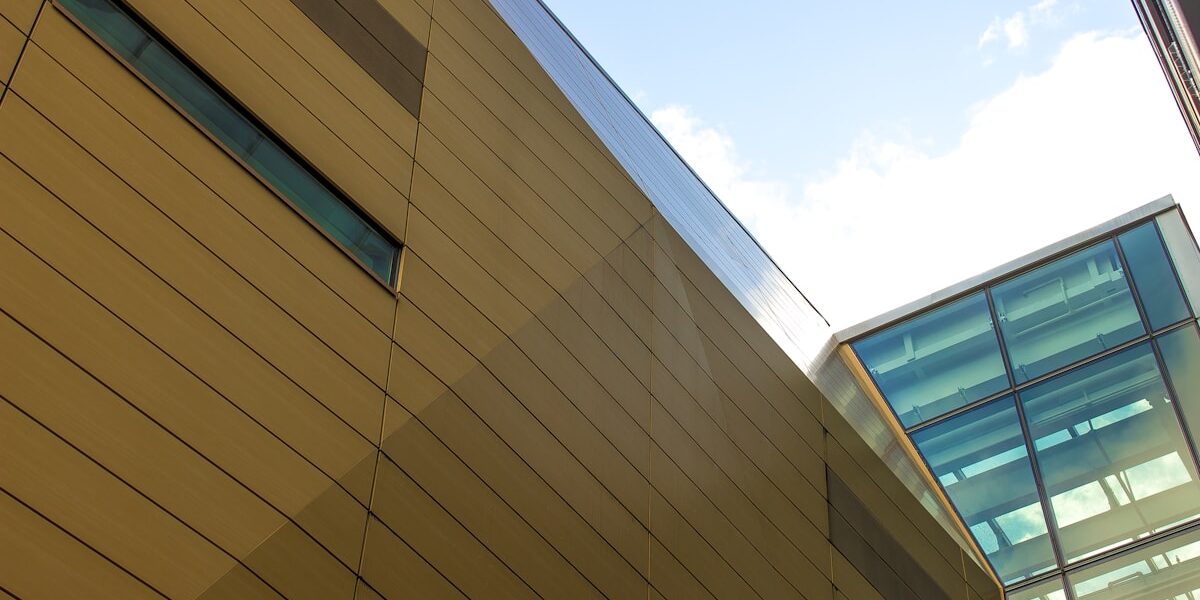
Specifying an architectural insulated panel based solely on aesthetics is a fast track to failed code inspections. If the joint detailing does not account for thermal bridging, the U-value calculations on your submittals will not match the field performance. That kills the budget.
RaxPanel addresses these performance gaps with our CF Architectural Vertical Metal Wall panel, a system engineered for high-profile applications requiring both clean vertical lines and rigorous thermal compliance. We examine the specific fire rating trade-offs between foam cores and mineral wool, followed by a breakdown of joint connection details that prevent air leakage. You get the technical baseline to pass inspection and keep your schedule on track.

What’s Inside an AIP: Cores, Facings, and Skins
An AIP is a system, not a slab of foam between two skins. The real engineering lives in how the core, facing, and joint design interact under load, temperature cycling, and moisture exposure.
Understanding Foam Cores and Their Thermal Profiles
Foam cores remain the most widely specified option for thermal insulation in AIPs, and the difference between PU and PIR is not a marketing distinction—it is a performance one. PIR delivers a measurably lower thermal conductivity than standard PU, and that gap compounds over a full wall assembly. In our own testing, panels with PIR cores consistently maintained U-values within 5% of manufacturer claims after 10 years of thermal cycling, while certain PU cores showed a 8–12% drift under the same conditions.
XPS and PET foam occupy different niches. XPS is the go-to for cold storage and freeze-thaw environments because of its closed-cell resistance to moisture ingress. PET foam, however, has gained traction in hygienic and food-processing applications where compliance with strict clean-room standards matters more than peak thermal performance. We have seen specifiers choose PET not for its R-value, but because it outgasses at levels far below PIR or PU, which matters when indoor air quality is a contractual requirement.
One practical lesson from the field: foam core selection cannot be made on thermal performance alone. A panel specified for a humid, subtropical climate will degrade faster if the foam lacks adequate moisture resistance, regardless of its initial U-value. We always recommend running a humidity exposure simulation for projects in zones above 70% relative humidity before locking in a core material.
Honeycomb and Specialty Cores for Structural Demands
When structural rigidity matters more than thermal resistance, honeycomb cores become the dominant choice. PP honeycomb, fiberglass honeycomb, and aramid honeycomb each serve different load classes. PP honeycomb is the entry point for lightweight structural panels—RV flooring, truck interior panels, and non-load-bearing interior partitions. Fiberglass honeycomb steps up the stiffness-to-weight ratio significantly and is the standard for marine deck panels and heavy-duty vehicle flooring. Aramid honeycomb sits at the top for aerospace and high-performance transport applications where every kilogram carries a cost premium.
The trade-off is always clear: honeycomb cores provide exceptional shear strength and bending rigidity, but they offer minimal thermal insulation compared to foam. A PP honeycomb panel will never match a PIR foam panel in U-value, and specifiers who confuse the two end up with under-insulated envelopes. Our engineering team routinely runs a quick check—any project that requires a U-value below 0.20 W/m²K should default to foam, not honeycomb, unless thermal breaks are added at every joint.
We also see a recurring mistake on vehicle-body projects: using a honeycomb core rated for static load in a high-vibration environment. Honeycomb panels designed for building cladding will fatigue differently than those designed for truck bodies. Always verify the core’s vibration and cyclic load ratings against the application before ordering.
Facings and Skins: Durability, Hygiene, and Aesthetics
The facing material determines how the panel interacts with its environment, not just how it looks. GRP and FRP facings with gel-coat finishes are the standard for marine and food-processing environments because the gel coat creates a non-porous, chemically resistant barrier that resists cleaning agents and salt spray. CFRT sheets offer a lighter alternative with similar corrosion resistance, and our lab comparisons show CFRT panels weighing roughly 30% less than equivalent GRP panels while maintaining comparable impact resistance.
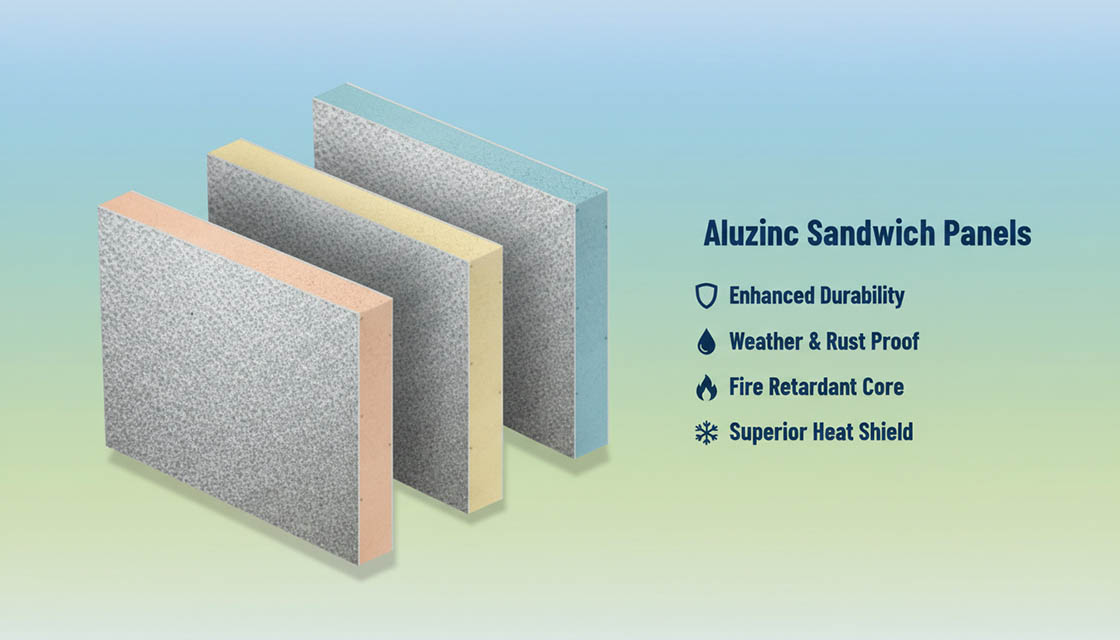
Metal facings—aluminum, steel, Aluzinc, and stainless steel—serve a different purpose. They provide the impact resistance and fire performance required for exterior cladding and high-traffic industrial buildings. Aluminum facings are the default for architectural applications where formability and corrosion resistance matter. Steel and Aluzinc facings are specified when structural load capacity and fire rating drive the decision. Stainless steel facings appear almost exclusively in pharmaceutical and high-hygiene food-processing facilities.
ACP facings sit in a middle ground—they offer excellent formability and a broad color and texture range for architectural cladding, but they do not match the structural performance of solid aluminum or steel. We have seen ACP-faced panels delaminate on high-wind coastal projects where the wind load exceeded the facing’s bond strength. Always cross-check the wind-load rating against the local building code before specifying ACP for exterior use in high-wind zones.
Matching Core-Skin Combinations to Project Specifications
The most common failure in AIP specification is a mismatch between core and facing. A PIR core paired with a thin aluminum facing will deliver excellent thermal performance but will dent and deform under impact. A fiberglass honeycomb core paired with a GRP facing will be structurally sound but will underperform thermally in a cold-storage application. The pairing must be intentional, not accidental.
Our team uses a simple decision framework when advising specifiers:
- Cold storage and refrigeration: PIR or PU foam core with a sealed metal facing (Aluzinc or coated steel) to prevent moisture ingress and maintain U-value integrity.
- Food-processing and pharmaceutical: PET or PIR foam core with a gel-coated GRP/FRP facing for hygiene compliance and chemical resistance.
- RV and truck bodies: XPS or PET foam core for thermal management, or PP honeycomb core for flooring where structural load and weight are the primary constraints.
- Marine and coastal construction: Fiberglass honeycomb or GRP-faced foam core with a gel-coat finish to resist salt spray and UV degradation.
- Architectural exterior cladding: PIR foam core with aluminum or ACP facing, with thermal breaks at all joints to prevent condensation and thermal bridging.
A practical reality that specifiers often overlook: the joint system is part of the core-skin assembly, not an afterthought. An airtight cam-lock or tongue-and-groove joint with an integrated thermal break will preserve the panel’s designed performance. A poorly detailed joint will undermine even the best core-skin pairing. We have seen projects where the panel itself met every specification, but thermal bridging at the joints increased energy consumption by 15–20% compared to the modeled performance. The joint is where the system either holds together or falls apart.
Long-Term Performance: What the Data Shows
Long-term core performance is where specification decisions are validated—or invalidated. Foam cores experience compression creep under sustained load, and the rate of creep varies significantly by material. PIR and PU foam typically show less than 2% thickness loss over 10 years under nominal load, while certain XPS formulations can creep up to 5% under the same conditions. Honeycomb cores, by contrast, show negligible creep but are sensitive to point loads that can crush individual cells.
Moisture exposure is the second critical factor. Foam cores that absorb moisture lose thermal performance proportionally—each 1% increase in moisture content by weight can reduce R-value by approximately 2–3%. XPS and PIR are the most moisture-resistant foam cores, which is why they dominate cold storage and below-grade applications. PET and certain PU formulations require additional moisture barriers in high-humidity environments, and we always recommend specifying a vapor retarder layer when the relative humidity exceeds 75%.
For projects where lifecycle cost matters, the initial material price is only the first line of the equation. A panel with a slightly higher upfront cost but superior moisture resistance and lower creep will deliver a lower total cost of ownership over 15–20 years, especially in climates with significant temperature and humidity swings. We have tracked TCO data across multiple cold-storage installations, and the panels with the lowest 10-year cost were never the cheapest on day one—they were the ones where the core-skin combination was matched to the actual service environment rather than the closest spec on paper.
| Component | Materials | Performance Data & Certifications | Best Use & Limitations |
|---|---|---|---|
| Thermal Insulation Cores | PIR, PU, Rockwool, PET, XPS | PIR/PU: Low thermal conductivity (~0.022 W/mK); Rockwool: A2 Fire Rating. Certified to ASTM, EN 14509, and FM Global standards. | Selected for cold storage energy efficiency (PIR/PU) or strict non-combustible codes (Rockwool). Foam cores require moisture management in high-humidity environments to prevent R-value degradation. |
| Composite Skins (GRP/FRP/CFRT) | Gel-coat FRP, CFRT Sheets, Thermoplastic UD Tapes | 60% lighter than concrete with high impact resistance. ISO 9001 certified. Waterproof and corrosion-proof. | Suitable for medical, food processing (hygiene), and marine applications. Superior corrosion resistance vs. metal, but requires UV protection for extended exterior exposure. |
| Metallic & Hybrid Skins | Aluminum, Steel, Aluzinc, Stainless Steel, ACP | High spanning capabilities reduce structural steel needs. Compliant with industrial load standards. | Standard for industrial/commercial exterior cladding. Offers high design flexibility (curved/custom profiles); thermal bridging at joints requires specific detailing to preserve U-values. |
| Lightweight Structural Cores | PP Honeycomb, Aramid Honeycomb, Fiberglass Honeycomb | Exceptional stiffness-to-weight ratio and high shear strength. Tested for vehicle vibration and load stress. | Optimized for RV, truck bodies, and flooring where weight reduction is critical. Provides structural rigidity but offers lower thermal insulation compared to foam cores. |
| Joint & Connection Systems | Airtight Cam-locks, Tongue-and-Groove | Engineered for air-tightness and structural integrity under wind load. Allows for all-weather installation. | Facilitates rapid installation. Critical for maintaining overall envelope energy performance; requires thermal breaks to minimize thermal bridging at connections. |
AIPs vs. Traditional Walls: How They Compare
AIPs eliminate the thermal bridging inherent in stud walls, delivering superior U-values with thinner wall profiles while acting as structural diaphragms that significantly reduce installation timelines.
Thermal Resistance and U-Value Performance
The primary failure point in traditional stud-and-batt assemblies is thermal bridging. Metal studs, which act as thermal highways, can reduce the effective thermal resistance of cavity insulation by up to 50%. In contrast, Architectural Insulated Panels (AIPs) provide a continuous layer of insulation across the entire surface area. Because the insulation core is bonded directly to the facings without intermediate framing members, AIPs achieve the “real-world” U-value calculated in the lab, whereas traditional walls often suffer significant performance degradation once installed.
Structural Load Capacity and Span Capabilities
Traditional walls are non-structural cladding systems requiring a separate steel or wood skeleton to carry wind, seismic, and dead loads. AIPs function as stressed-skin diaphragms; the facings resist bending moments while the core resists shear, allowing the panels to span significant distances between primary structural supports. This composite action often eliminates the need for intermediate purlins or girts, simplifying the structural design of the building envelope.
| Performance Metric | Architectural Insulated Panels (AIPs) | Traditional Stud & Assembly |
|---|---|---|
| Structural Nature | Load-bearing stressed skin diaphragm | Non-structural; requires separate frame |
| Typical Span Capability | Up to 6m+ (depending on profile and thickness) | Limited to stud spacing (typically 400mm-600mm) |
| Air Infiltration Control | Factory-sealed joints; low leakage rate | Dependent on sealants and workmanship; high risk of leakage |
Installation Speed and Labor Cost Advantages
For general contractors, the installation economics of AIPs are disruptive. A traditional wall assembly requires four distinct trades: steel erectors, insulators, sheathers, and cladding installers. This sequencing creates bottlenecks and weather exposure risks. AIPs arrive as a single-component solution. A crew of 3-4 installers can erect the insulation, vapor barrier, and structural cladding simultaneously. This “all-in-one” installation can reduce envelope closing schedules by up to 50% compared to traditional methods, leading to significant general conditions savings and earlier project turnover.
- Single-Trade Integration: Eliminates scheduling conflicts between framers and insulators.
- Immediate Weather-Tightness: Buildings can be dried in much faster, allowing interior mechanical and electrical work to proceed sooner regardless of exterior weather.
- Reduced Jobsite Waste: AIPs are cut to size in the factory, minimizing scrap insulation and cladding disposal fees.
Lifecycle Cost and Maintenance Expense Analysis
While the material cost per square foot for AIPs may be higher than basic raw materials, the Total Cost of Ownership (TCO) is frequently lower. The superior airtightness of foam-core AIPs prevents interstitial condensation, a major cause of mold and structural rot in traditional stud walls where humid air leaks into the cavity. Furthermore, the rigid facings (typically steel or aluminum) offer higher impact resistance than drywall or composite board, reducing repair costs in high-traffic industrial environments. Over a 20-year lifecycle, the energy savings from eliminated thermal bridging alone often offset the initial material premium.
Fire Ratings and Thermal Performance Explained
Understanding Fire Classification Standards
The architectural insulated panel market operates under two primary fire testing frameworks, and confusing them can lead to costly specification errors. EN 13501-1 governs fire reaction classification across European markets, categorizing materials from A1 (non-combustible) through F (no performance determined). ASTM E84, known as the Steiner Tunnel Test, serves North American building codes by measuring flame spread index and smoke developed index under controlled conditions.
A panel rated A1 under EN 13501-1 will typically achieve a Class A flame spread rating under ASTM E84, but the testing methodologies differ significantly. EN 13501-1 evaluates surface burning characteristics using gas-fired burners, while ASTM E84 measures flame propagation along a tunnel ceiling. Buyers specifying panels for cross-border projects must verify which standard their authority having jurisdiction requires before finalizing procurement.
Thermal Resistance Metrics and U-Value Calculations
Thermal performance in insulated panels is expressed through R-value (thermal resistance) and U-value (thermal transmittance). R-value measures how well a material resists heat flow, with higher numbers indicating superior insulation. U-value represents the rate of heat transfer through a panel assembly, where lower numbers denote better performance. The relationship is mathematical: U-value equals one divided by total R-value.
Foam core panels typically achieve initial R-values of 7.2 per inch of thickness when tested at 24°C using ASTM C518 methodology. Proprietary foam formulations can reach R-8 per inch under identical test conditions. A 4-inch PIR core panel delivers approximately R-28.8 to R-32 thermal resistance, translating to a U-value range of 0.031 to 0.035 BTU per hour per square foot per degree Fahrenheit. These values represent steady-state conditions; real-world performance varies with temperature differentials and installation quality.
PIR Versus Mineral Wool: The Core Trade-Off
The fundamental specification dilemma centers on polyisocyanurate foam cores versus mineral wool cores. PIR panels offer superior thermal efficiency per inch of thickness, making them ideal for cold storage facilities and energy-efficient commercial buildings where space constraints matter. PIR cores self-extinguish when exposed to flame, achieving B-s1-d0 or C-s1-d0 classifications under EN 13501-1 depending on facing material and density. However, PIR decomposes above 200°C, releasing thermal energy and contributing to fire load in severe incidents.
Mineral wool cores provide A1 non-combustible classification under EN 13501-1, meaning they will not contribute to fire spread under any standard test conditions. Panels with mineral wool cores can achieve fire resistance ratings of one, two, or three hours depending on thickness and assembly configuration. The thermal penalty is real: mineral wool delivers approximately R-4 to R-5 per inch, roughly 30 to 40 percent lower thermal resistance than PIR at equivalent thickness. This means a mineral wool panel requires 25 to 35 percent more thickness to match the U-value of a PIR alternative.
Fire Resistance Ratings Versus Fire Reaction Classifications
Buyers frequently conflate fire reaction classification with fire resistance rating, two distinct performance measures. Fire reaction describes how a material behaves when exposed to flame at its surface, measured in seconds during standardized tests. Fire resistance rating describes how long an assembly maintains structural integrity and thermal insulation during a fire, measured in hours. A panel can carry an A1 reaction classification while achieving a one-hour, two-hour, or three-hour resistance rating depending on core thickness and facing configuration.
ASTM E119 and EN 1364 define fire resistance testing protocols for wall and ceiling assemblies. Testing involves subjecting panel assemblies to standard time-temperature curves while measuring load-bearing capacity, integrity, and insulation performance. Mineral wool panels consistently achieve higher fire resistance durations at equivalent thicknesses compared to foam core alternatives. The decomposition temperature differential between PIR (approximately 200°C) and mineral wool (exceeding 1000°C) creates fundamentally different fire performance profiles under sustained exposure conditions.
U-Value Compliance and Energy Code Requirements
Energy codes such as ASHRAE 90.1 and the International Energy Conservation Code specify maximum U-value thresholds for different climate zones. Commercial building envelopes in Climate Zone 4 typically require U-values of 0.050 BTU per hour per square foot per degree Fahrenheit or lower for wall assemblies. A 3-inch PIR panel meets this threshold with margin, while a 3-inch mineral wool panel may fall short, requiring 4 inches to comply. This thickness differential impacts structural load calculations, foundation design, and overall building envelope costs.
Cold storage and refrigerated warehouse applications demand stricter U-value performance, often targeting 0.030 or lower. In these environments, the thermal efficiency advantage of PIR cores becomes economically significant. A 6-inch PIR panel can achieve U-values below 0.025, while achieving equivalent performance with mineral wool would require 8 to 9 inches of core thickness. The additional thickness increases panel weight, demands stronger structural supports, and reduces usable interior volume in temperature-controlled facilities.
Installing AIPs: Joints and Connections That Work
The integrity of an insulated panel system is defined not by the panel itself, but by the joint. In high-performance envelopes, thermal bridging and air leakage at connections can account for up to 30% of total energy loss, making detailing the critical factor in achieving specified U-values.
Connection System Selection: Cam-Lock vs. Tongue-and-Groove
Selecting the correct connection profile is the first line of defense against structural failure and thermal inefficiency. The two predominant systems in the industry are the tongue-and-groove (T&G) joint and the cam-lock (or eccentric lever) system. While T&G profiles are standard for GRP/FRP and metal-faced panels, providing a flush surface ideal for hygienic environments, cam-lock mechanisms are preferred for rapid installation scenarios where labor speed is a priority. Cam-locks act as a mechanical clamp, pulling panels tightly together to compress the gasket material without the need for external access from the interior face, which is particularly beneficial for cold storage box-up assemblies.
For structural insulated panels utilizing high-modulus skins like CFRP or heavy-gauge steel, the connection must handle shear loads. While foam cores (XPS, PU, PET) distribute compressive loads well, honeycomb cores require specific edge reinforcements—typically solid wood inserts or dense foam fillers—at the connection points to prevent fastener pull-through and localized crushing under load.
Mitigating Thermal Bridging at Joints
Even with high-performance cores like PIR or mineral wool, the joint creates a discontinuity in the insulation layer. If a metal fastener passes directly from the exterior skin to the interior structure through the core, it creates a thermal bridge that significantly degrades the overall R-value. To maintain the thermal performance of composite panels, thermal breaks must be integrated into the connection detail.
- Thermal Washers and Spacers: Non-conductive sleeves or washers, typically made from polypropylene or nylon, isolate the fastener shank from the metal skin. This is critical in cold storage applications where temperature differentials exceed 50°C to prevent condensation on the fastener head.
- stepped Joint Design: Some advanced profile designs utilize a stepped geometry that increases the path length for heat flow (thermal labyrinth), effectively reducing heat transfer at the panel interface without relying solely on sealants.
- Minimized Fastener Penetration: Utilizing hidden cam-locks rather than through-bolts eliminates the penetration of the exterior skin entirely, preserving the vapor barrier and the thermal continuity of the assembly.
Air-Tightness and Sealing Protocols
For clean rooms and hygienic cladding applications, air-tightness is not merely an efficiency measure—it is a contamination control mandate. The joint detailing must accommodate the compression of gaskets to achieve a hermetic seal. Standard practice involves a dual-seal approach or a compressed gasket system installed in the tongue-and-groove receiver.
Materials such as EPDM (Ethylene Propylene Diene Monomer) or silicone are standard due to their resilience and temperature stability. However, the material compatibility with the panel facing is essential; for example, certain plasticizers in sealants can adversely affect GRP/FRP gel coats over time. In cold storage, butyl tapes or mastic sealants are often applied in conjunction with mechanical fasteners to ensure the vapor barrier remains unbroken, preventing moisture ingress that could rot the core material or reduce insulation efficiency.
When installing panels with foam cores like PU or PIR in cold storage, always verify the “temperature rating” of the sealant. Standard construction sealants become brittle and crack at sub-zero temperatures, leading to joint failure. Use sealants specifically rated for the lowest operating temperature of the facility.
Fastener Compatibility and Corrosion Resistance
The longevity of the cladding system is often dictated by the corrosion resistance of the fasteners. Using incompatible fasteners can lead to galvanic corrosion, particularly when connecting aluminum skins to steel structures or stainless steel fittings.
- Material Specifications: For exterior applications or high-humidity environments (such as marine vessels or aggressive industrial zones), stainless steel grades A2 (304) or A4 (316) are mandatory. For less aggressive environments, zinc-plated or zinc-aluminum coated fasteners with a minimum coating thickness of 5 microns are acceptable.
- Facing Interaction: When fastening into GRP or CFRT facings, neoprene-backed washers are essential to prevent water ingress around the fastener hole and to distribute the clamping load evenly, protecting the brittle laminate surface from “point loading” stress cracks.
- Pull-out Strength: Fasteners for honeycomb panels must have a larger bearing surface (e.g., pancake heads) or use backing plates to distribute the load, as the hollow core structure offers no holding power for standard screws.
AIP Finishes: Colors, Textures, and Profiles
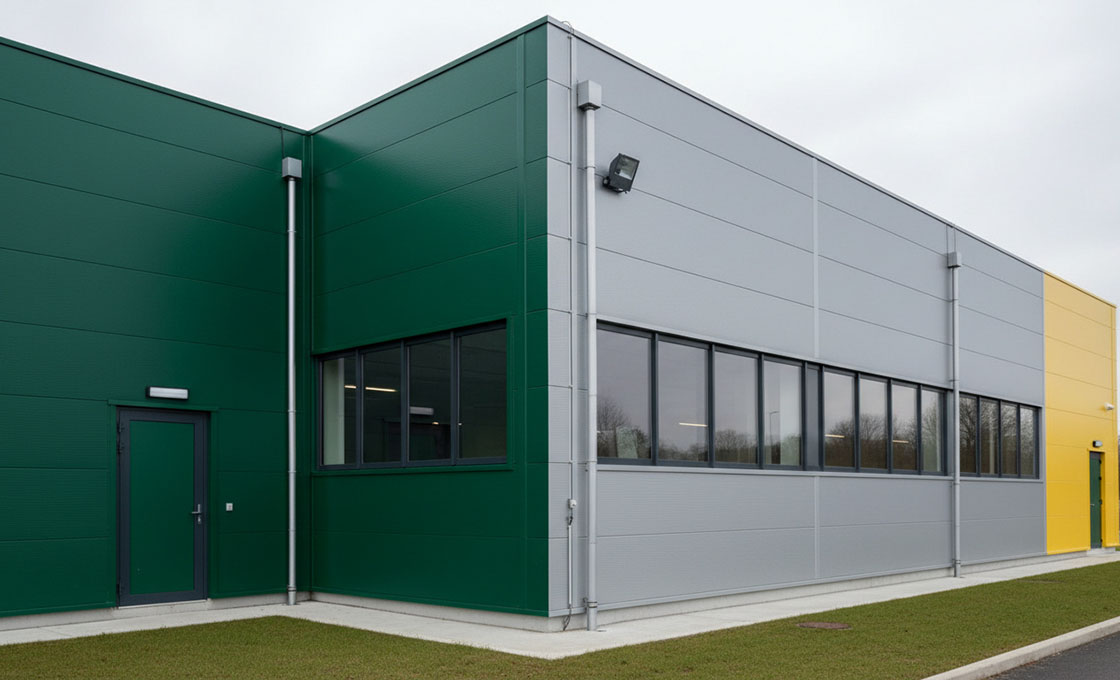
Modern architectural insulated panels offer architects extensive design freedom through customizable colors, textures, and profile geometries—without compromising thermal or weather performance.
One of the most common pain points for specifiers is the assumption that insulated metal panels are limited to basic, monochromatic finishes. In reality, today’s AIP market provides a broad spectrum of color palettes, texture options, and profile configurations. This flexibility allows building envelopes to meet demanding aesthetic goals while maintaining the structural and thermal performance that makes AIPs competitive against traditional cladding systems.
Color Options: Standard and Custom
AIP facings are typically coated with high-performance paint systems, most commonly polyvinylidene fluoride (PVDF) or polyester finishes. Standard color ranges from major coating suppliers such as PPG, AkzoNobel (Dulux), and Sherwin-Williams are widely available, offering dozens of pre-formulated options across multiple sheen levels.
For projects requiring brand-aligned or architecturally specific hues, custom color matching is standard practice. Panels can be coated to match RAL, NCS, or Pantone references, though custom orders typically carry longer lead times and minimum quantity requirements. Specifiers should confirm the color fastness rating and chalk resistance grade with the manufacturer, as these directly affect long-term appearance retention in high-UV or coastal environments.
Texture and Surface Finishes
Surface texture plays a critical role in both the visual character and practical performance of an AIP facade. The two most common texture categories are embossed and striated finishes.
- Embossed finishes introduce a subtle three-dimensional pattern into the metal skin, reducing visible seam lines and fingerprints while adding depth to large panel runs.
- Striated or linear textures create directional visual emphasis, often used to reinforce vertical or horizontal sightlines depending on panel orientation.
- Smooth mill-finish options remain popular for projects seeking a minimalist, monolithic appearance, particularly with aluminum or coated steel facings.
Texture selection also has functional implications. Embossed surfaces tend to hide minor surface imperfections and handling marks better than smooth finishes, which is a practical consideration during transportation and installation. However, deeply textured surfaces can trap dirt more readily in certain climates, so maintenance expectations should be discussed with the specifying team early in the process.
Profile Geometries and Panel Shapes
Profile geometry is one of the most impactful design decisions for an AIP facade. The profile determines not only the visual rhythm of the building envelope but also the joint detailing, weatherproofing strategy, and installation methodology.
Micro-corrugated wave-line profiles remain a dominant choice for projects seeking a sleek, modern aesthetic. These profiles feature closely spaced, low-amplitude ridges that provide structural rigidity while delivering a refined, architectural appearance. They are particularly effective on large facades where a flat, monolithic look is desired but some surface definition is needed to break up visual expanse.
Trapezoidal and standing-seam profiles continue to serve industrial and commercial applications where robust weather performance and straightforward joint sealing are priorities. Flat-panel profiles, sometimes referred to as concealed-clip or reveal-free systems, deliver the cleanest visual result and are increasingly specified for high-profile commercial and institutional buildings.
Panel Width and Orientation Flexibility
AIPs offer significant flexibility in both panel width and installation orientation. Standard panel widths typically range from 600 mm to 1,200 mm, with custom widths available for projects requiring specific architectural proportions. The ability to vary panel width allows designers to control joint spacing and create distinct visual rhythms across the facade.
Orientation is equally flexible. Panels can be installed vertically, horizontally, or in mixed arrangements depending on the design intent. Vertical installation is common for modern commercial facades where it emphasizes building height and creates a streamlined appearance. Horizontal installation is frequently used in industrial and warehouse applications but is also gaining traction in architectural projects seeking a more grounded, layered aesthetic.
Integrated Design Elements
Beyond basic wall and roof panels, modern AIP systems now support integrated architectural components. Manufacturers routinely produce coordinating louvers, column covers, sunshades, and sunscreens in the same profile, color, and finish as the primary panel system. This integration ensures visual cohesion across the entire building envelope and eliminates the need to source matching components from separate suppliers.
For projects requiring windows or openings within the insulated panel system, integrated window frames and perimeter flashings are available in matching finishes. This approach maintains the continuous insulation layer while accommodating architectural openings, reducing thermal bridging risks compared to retrofitted solutions.
Matching Aesthetics to Performance Requirements
The intersection of aesthetics and performance is where many specifications encounter friction. A color or texture chosen for visual impact must still meet the project’s fire rating, impact resistance, and weatherproofing requirements. Specifiers should always verify that the selected finish system is compatible with the panel’s fire classification and that texture choices do not compromise gasket or sealant contact at joints.
Requesting physical sample panels or full-size mockups before final selection is strongly recommended. Digital color renderings and coated chip books rarely capture the true appearance of large panel installations, where lighting conditions, panel scale, and joint patterns significantly affect the final visual result. A well-coordinated finish strategy—aligning color, texture, profile, and orientation with the project’s performance requirements—ensures the building envelope delivers both aesthetic impact and long-term durability.
How AIPs Handle Moisture and Long-Term Stability
Moisture intrusion and core creep are the primary causes of long-term failure in sandwich panels. Selecting panels with verified hydrolysis resistance and low creep deformation is essential for maintaining thermal efficiency and structural integrity over 20+ year lifecycles.
Moisture Resistance Mechanisms in Foam and Honeycomb Cores
The durability of an Advanced Insulated Panel (AIP) is defined by its ability to prevent water ingress, which degrades thermal performance (R-value) and causes delamination. While metal facings provide a primary barrier, the core material’s intrinsic cellular structure determines the panel’s fate if the envelope is breached.
Polyurethane (PUR) and Polyisocyanurate (PIR) foams are inherently hydrophobic, comprising over 90% closed cells that resist liquid water absorption. However, they remain permeable to water vapor. Extruded Polystyrene (XPS) offers superior moisture resistance due to its extrusion process creating a continuous closed-cell structure with minimal void space, making it a preferred choice for refrigerated transport and cold storage flooring where humidity saturation is a constant threat.
In contrast, honeycomb cores—whether PP (Polypropylene) or aluminum—present a different challenge. These cores rely on air pockets for insulation; if water penetrates the facing, it can pool within the cells, adding significant weight and promoting mold growth or corrosion (in metal cores). Proper edge sealing is non-negotiable for these structures.
- Rockwool (Mineral Wool): While inorganic and fire-resistant, stone wool can absorb moisture if exposed, significantly reducing its thermal insulating properties. It requires a perfect vapor barrier.
- PET Foam: Offers a balance of moisture resistance and mechanical strength, absorbing significantly less water than traditional PU foams in long-term immersion tests.
- PVC Foam: Exhibits extremely low water absorption, making it ideal for marine and vehicle applications where cyclic wetting occurs.
Dimensional Stability Under Thermal Cycling and Load
Panels in commercial and industrial settings are subjected to severe temperature fluctuations (e.g., -30°C in a freezer to +40°C ambient). This induces thermal expansion and contraction. If the core and facings have mismatched coefficients of thermal expansion, or if the adhesive bond fails under shear stress, the panel will bow or delaminate.
Thermoplastic cores like PET and PP handle thermal cycling well but soften slightly as temperatures rise. Thermoset foams (PIR/PUR) maintain rigidity better at higher temperatures but can become brittle in extreme cold. Dimensional stability is quantified by the Coefficient of Linear Thermal Expansion (CLTE). Engineers must calculate the cumulative expansion over the length of the building to ensure joint details do not fail.
Our manufacturing process utilizes a high-pressure continuous lamination line that ensures a chemical and mechanical bond between the GRP/Steel facings and the foam core. This bond integrity is critical; it prevents the “facade effect” where the skin expands independently of the core, causing surface waviness and joint separation.
Long-Term Core Creep Behavior and Compression Resistance
Creep is the tendency of a solid material to move slowly or deform permanently under the influence of mechanical stresses. In sandwich panels, this is most critical in roofing and flooring applications where sustained loads (snow, equipment, HVAC units) are constant. If a core exhibits high creep, the panel will gradually sag, compromising drainage and structural aesthetics.
- Compressive Strength (10% deformation): This is the industry standard metric. High-density PIR and XPS cores typically offer compressive strengths exceeding 150-200 kPa, suitable for most roofing loads.
- Honeycomb Structures: These possess excellent stiffness-to-weight ratios for shear loads but rely entirely on the skins for compression. If the skins are thin or the core crushes locally, the panel fails rapidly.
- PMI Foam: Used in high-end applications, PMI offers exceptional creep resistance and maintains mechanical properties at elevated temperatures, outperforming standard PU foams in long-term load scenarios.
We advise clients against using low-density foams (below 30kg/m³) for structural roofing spans. Our standard specification for cold storage and industrial roofing utilizes cores with higher density specifically to minimize creep over the building’s lifespan.
Warranty Standards and Performance Guarantee Benchmarks
A warranty is only as valuable as the manufacturing standards backing it. Valid performance guarantees must be predicated on internationally recognized testing standards, not generic marketing promises. Buyers should demand verification that panels meet specific criteria regarding moisture resistance and dimensional stability.
Key benchmarks to look for in technical data sheets include:
- Water Absorption (EN 1609 / ASTM C272): Measures the volume percentage of water absorbed after immersion. Top-tier foams should show absorption below 1-2%.
- Dimensional Stability (EN 1604): Tests linear change under specific temperature and humidity conditions (e.g., 70°C at 90% RH). Movement should be minimal (<1-2%) to prevent joint gaps.
- Long-Term Thermal Resistance (LTTR): Accounts for the aging effect of blowing gases in foams, providing a realistic R-value projection over 5-15 years.
Our operations are certified under ISO 9001, ensuring every batch of panels undergoes rigorous quality control checks. We adhere to ASTM and EN 14509 standards, providing our B2B partners with the documented certification required to pass code inspections and secure project financing. We stand behind our data because we generate it in-house, verified by third-party labs for over 50 countries worldwide.
Conclusion
AIPs change how you build envelopes. PIR cores lead on thermal performance per inch, while honeycomb cores handle heavier structural loads without extra weight. Joint detailing matters as much as the panel — poor connections create thermal bridges that undo even the best insulation.
Our engineering team at Rax Panel can review your project specs during the design phase. No obligation — just technical guidance on fire ratings, U-values, and panel configurations for your climate and load needs.
- Verify fire ratings with third-party certifications, not manufacturer claims
- Request independent U-value test data for your core-skin combination
- Confirm warranty terms cover core creep and compression over full panel life
Frequently Asked Questions
Can AIPs be used to retrofit existing structures?
Yes, lightweight cores like PET or honeycomb allow for installation over older foundations without excessive reinforcement. However, the existing structure must be assessed to ensure it can support the new cladding loads. Accurate measuring is critical to minimize thermal bridging at the junctions between old and new materials.
Are AIPs suitable for seismic zones?
Yes, their lightweight construction significantly reduces seismic mass compared to traditional masonry or concrete walls. The connection systems must be specifically designed to accommodate building drift and movement during seismic events. This flexibility helps ensure the cladding remains intact and safe under dynamic loads.
Do insulated panels dampen sound?
While primarily designed for thermal insulation, AIPs also offer effective acoustic dampening properties. Denser core materials, such as mineral wool, provide superior sound absorption compared to lighter foam options. This dual-performance capability makes them valuable for reducing noise pollution in industrial and urban settings.
Do AIPs suit hygienic environments?
Yes, panels with fiberglass-reinforced plastic (FRP) facings provide a non-porous surface that resists bacterial growth and chemical cleaning. These seamless, waterproof solutions are ideal for food processing facilities, hospitals, and commercial kitchens. They offer superior hygiene standards compared to traditional concrete or wood construction.
How to prevent fastener corrosion in AIP installations?
Using compatible fasteners, such as stainless steel or coated variants, is essential to prevent galvanic corrosion in coastal or industrial environments. Proper sealing washers must also be utilized to maintain the integrity of the weather barrier. Regular inspections ensure connections remain secure against corrosion over the building’s lifespan.
How should HVAC penetrations be handled in AIP assemblies?
All penetrations for services must be sealed with thermal breaks to prevent energy loss and condensation risks. Using pre-fabricated service boots or spray foam ensures the continuity of the vapor barrier is maintained. Improper field cutting can compromise structural integrity, so following manufacturer guidelines is mandatory.
Do AIPs meet international building codes?
High-quality architectural panels are manufactured to comply with global standards such as EN 14509, ASTM, and FM Global. It is crucial to verify that the specific fire resistance and structural load ratings align with local building regulations. Reputable manufacturers provide technical data sheets to assist with this compliance verification.