
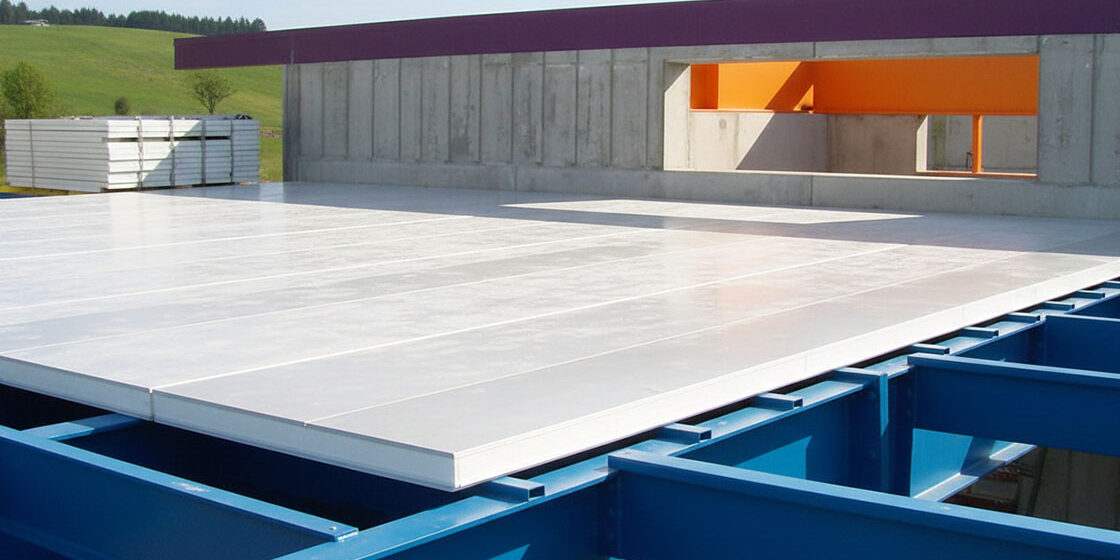
Specifying a cold storage facility often boils down to a single, costly mistake: trusting the lambda value on a data sheet over real-world performance. An insulated metal panel manufacturer might present a winning thermal conductivity number, but that metric does not reveal how the foam handles moisture at the joints or how it reacts under compression loads. The difference between XPS and PU cores determines whether you see condensation on your walls or a stable energy bill.
Many engineers assume the facing material assists in thermal resistance, yet FRP conducts heat at roughly 0.52 W/mK—effectively zero insulation compared to the core. At RaxPanel, we prioritize the foam chemistry because that is the only variable preventing thermal bridging in high-humidity environments. This article contrasts the water absorption rates of XPS against the superior R-value per inch of PU, while also dissecting fire performance classifications.
We analyze the compressive strength required for structural loads and the specific scenarios where the rigidity of XPS outweighs the thermal efficiency of Polyurethane. You will finish with a technical framework for selecting the core material that balances code compliance with long-term lifecycle costs.
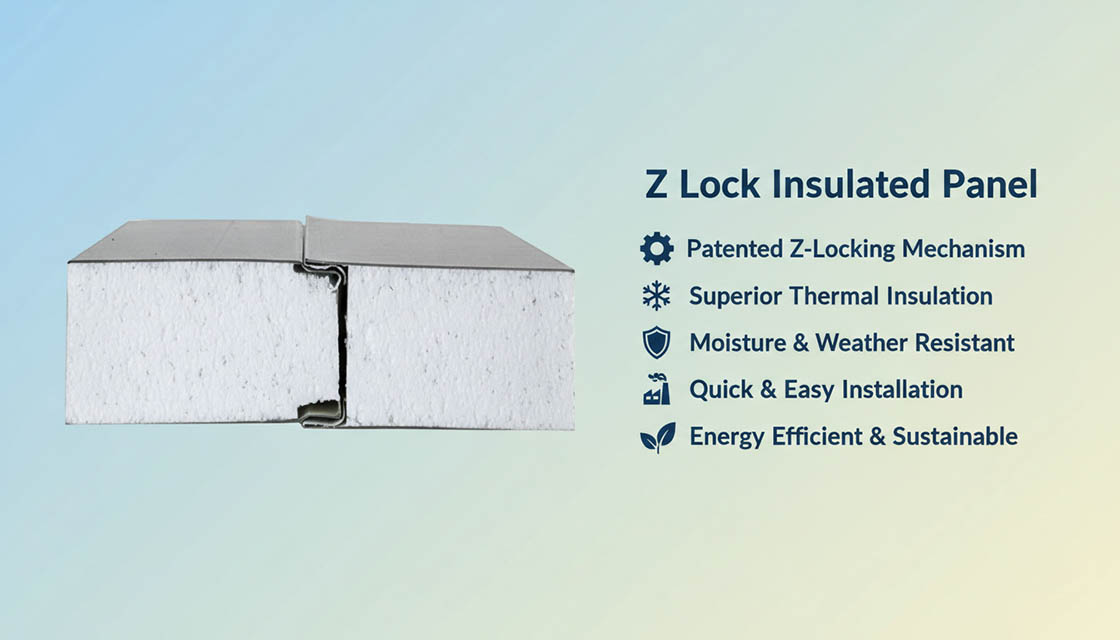
How to Choose Between XPS and PU Cores
The choice between XPS and PU cores isn’t about picking the “best” material — it’s about matching the right core to your system-level performance requirements, installation reality, and total cost framework.
Thermal Resistance Ratings Compared
In practice, the thermal resistance gap between XPS and PU cores is less about the foam itself and more about what that gap means for your panel design. PU cores deliver superior insulation per inch, which directly translates to thinner panels for the same thermal performance. This matters enormously in refrigerated transport and cold storage where every millimeter of panel thickness competes with payload volume and internal cubic capacity.
However, we consistently see buyers making a critical error: selecting panels based on quoted lambda values from data sheets without accounting for how the complete panel system performs in the field. A PU core with an excellent lab-rated conductivity can still underperform in a real cold room if the joint sealing is inadequate, the facing bonds degrade, or thermal bridging occurs at corner details and fastener points. The core material sets the ceiling, but the installation and system design determine the floor.
XPS, while requiring greater thickness to achieve equivalent thermal resistance, offers a different advantage. Its closed-cell structure provides consistent performance across a broader range of temperatures and humidity levels without the same sensitivity to facing bond integrity. When panel thickness is not a constraining factor — such as in stationary building applications — this consistency can make XPS the more reliable choice despite the lower per-inch efficiency.
Moisture Absorption and Water Resistance
Moisture management is one of the most misunderstood aspects of core selection. The conversation rarely stays focused on the foam and drifts toward the facing materials, but the facing’s role is structural and weatherproofing — not insulating. FRP facings, for instance, have a thermal conductivity around 0.52 W/m·K, which places them far above the threshold for any material considered a true insulation layer. The core foam is what matters thermally, yet procurement teams sometimes allocate budget toward facing upgrades instead of core performance.
XPS inherently resists water absorption better than PU, which gives it a structural advantage in high-humidity environments and applications where condensation is a constant concern. But here is what most buyers overlook: PU cores are not vulnerable to moisture in well-designed systems. The key is the facing bond. When the PU core is permanently bonded to a high-quality facing during manufacturing under controlled conditions, the resulting panel creates a barrier that prevents moisture ingress for the life of the product. The vulnerability only emerges when that bond is compromised — through poor manufacturing, physical damage during transport, or improper cutting and field modification during installation.
Our engineering team sees this play out repeatedly in the field. Panels that are cut on-site without proper edge sealing, panels where fastener penetrations are not correctly sealed, and panels installed with inadequate joint tape — these are the scenarios where PU core moisture risk becomes real. XPS, by contrast, tolerates these installation imperfections more forgivingly because of its inherent hydrophobicity. For projects where installation quality control is uncertain or where panels will face direct water exposure, XPS provides a wider margin of safety.
Fire Performance and Safety Classifications
Fire performance is another area where the core material tells only part of the story. Both XPS and PU cores are combustible materials by nature. The fire safety of a sandwich panel system depends on the complete assembly — the core, the facings, the joint sealing, and the overall panel construction. Treating fire rating as a core-only specification is a fundamental misreading of how these systems perform.
PU-based cores are available in PIR (polyisocyanurate) formulations that offer significantly improved fire resistance and self-extinguishing characteristics compared to standard PU. This is why PIR-core panels have become the default specification in applications with strict building codes, public transit vehicles, and environments where fire safety regulations are non-negotiable. XPS panels, meanwhile, rely more heavily on their facings — whether GRP, metal, or other materials — to contribute to the overall fire rating of the assembly.
The system-level nature of fire performance means that two panels with different cores can achieve the same fire rating if their complete assemblies are engineered appropriately. Conversely, a panel with a fire-retardant core can fail a fire test if the joint seals and facing materials do not support the overall system rating. We always advise our clients to evaluate fire performance at the panel system level, not at the core material level, and to request full assembly test reports rather than core-only certifications.
Cost per Square Foot and Budget Impact
The cost conversation between XPS and PU cores requires looking beyond the price per square foot of the panel. XPS panels are generally more cost-effective on a per-unit basis, but they require greater thickness to achieve the same thermal performance. This creates a cascade of secondary costs — more material weight, larger vehicle or building dimensions to accommodate thicker panels, and potentially higher insulation costs for edge details and thermal bridging areas.
PU panels carry a higher initial cost per square foot, but the thickness advantage can offset this in several ways. In refrigerated transport, thinner panels mean more cargo volume, which directly translates to revenue capacity. In building applications, thinner walls can mean more leasable or usable interior space. Over the lifecycle of the asset, the energy savings from superior insulation efficiency often dwarf the initial price difference, particularly in continuously operating cold storage environments.
What we consistently find is that buyers who evaluate only the unit price of the panel are making a short-sighted decision. The total cost of ownership includes installation labor — thicker panels are heavier and more cumbersome to handle, increasing labor time and cost. It includes potential remediation — panels that fail in the field due to moisture ingress or thermal bridging require expensive retrofitting. It includes operational energy — the difference in insulation efficiency between XPS and PU compounds across every hour the refrigeration system runs.
The decision framework is straightforward: if your project prioritizes maximum thermal efficiency in a space-constrained application and you can ensure proper installation and joint sealing, PU is the stronger choice. If your project involves high moisture exposure, less controlled installation conditions, or budget constraints that make the lower unit cost of XPS compelling, it remains a reliable and proven solution. The wrong choice is not picking PU over XPS or vice versa — it is picking based on a single factor without considering the complete system.
| Decision Factor | XPS Core Characteristics | PU Core Characteristics | Best For | Key Engineering Note |
|---|---|---|---|---|
| Thermal Efficiency | Stable thermal resistance; good R-value but lower than PU per inch | Superior insulation; lowest lambda value, ideal for minimal thickness | PU: Deep freeze/Cold storage; XPS: General dry freight | Avoid equating thickness alone with performance; high-density PU prevents thermal drift |
| Moisture Resistance | Extremely low water absorption; retains structure when wet | Resistant but requires perfect facing bond to prevent ingress | XPS: High humidity/Flooring; PU: Controlled dry environments | XPS is preferred for applications with high condensation risk or direct water exposure |
| Mechanical Strength | High compressive strength; rigid structure resists crushing | Good strength-to-weight; can be brittle if low density | XPS: Heavy load flooring; PU: Wall and Roof panels | XPS offers better point-load performance; verify core density specs for structural loads |
| Fire Performance | Combustible; relies on facings (GRP/Metal) for fire rating | Available as PIR for improved fire resistance and self-extinguishing | PU: Strict building codes/Public transit; XPS: Industrial applications | System fire safety depends on the joint seal and facing quality as much as the core |
| Cost & Application | Cost-effective solution; requires thicker panels for same R-value | Higher initial cost; saves space and operational energy long-term | XPS: Budget-sensitive projects; PU: Energy-efficient high-performance vehicles | Evaluate Total Cost of Ownership; PU often yields lower lifecycle costs in refrigeration |
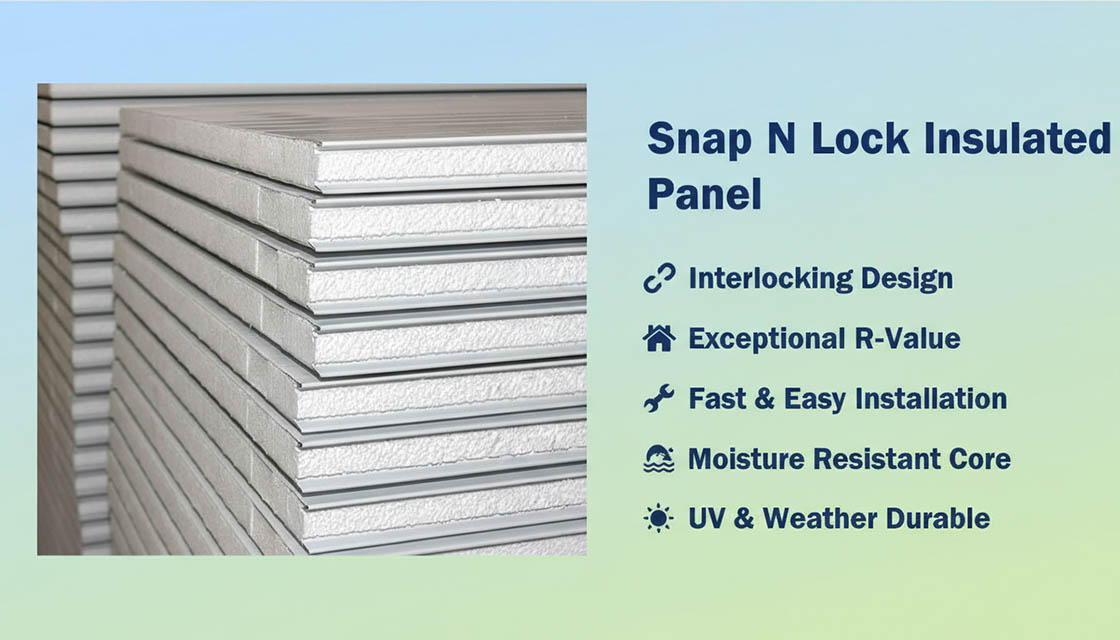
R-Value, Thermal Conductivity, and Long-Term Stability
XPS offers consistent insulation with superior moisture resistance, while PU (specifically PIR) generally delivers higher initial thermal resistance but requires rigorous evaluation of long-term thermal drift and facing conductivity.
R-Value vs. Thermal Conductivity: The Core Metrics
When evaluating sandwich panels for cold storage or climate-controlled environments, understanding the distinction between R-Value (thermal resistance) and Thermal Conductivity (lambda or k-value) is non-negotiable. Lambda represents the rate at which heat passes through a material; the lower the number, the better the insulator. R-Value is the inverse—the material’s ability to resist heat flow.
Regarding raw thermal efficiency, Polyurethane (PU) cores generally outperform Extruded Polystyrene (XPS), though accurate lambda values are critical for valid comparison. High-quality PU cores typically exhibit a lambda value between 0.022 and 0.028 W/m·K, whereas XPS generally ranges from 0.031 to 0.040 W/m·K. This means that for an identical thickness, a PU core will theoretically provide a higher R-value, allowing for thinner wall sections in space-constrained designs. However, this number alone is insufficient for specifying a system intended for -20°C environments.
Long-Term Thermal Resistance and Drift
A critical oversight in B2B procurement is relying on “initial” R-values. Both XPS and PU foam cores undergo thermal drift, a process where the blowing agents trapped within the closed-cell structure slowly diffuse out and are replaced by air, which has lower insulating properties.
- XPS Thermal Drift: XPS foam relies on air mixing with blowing agents during manufacturing. Over time, the remaining blowing agents diffuse, causing the R-value to decrease gradually. It is essential to consult the “LTTR” (Long-Term Thermal Resistance) values, typically projected over a 5-year or 15-year period, rather than the lab-tested initial value.
- PU/PIR Thermal Drift: Polyisocyanurate (PIR) foam utilizes blowing agents with low global warming potential that diffuse more slowly. However, if the facing is compromised or the gas barrier is ineffective, thermal performance can degrade faster than expected. PIR generally maintains a higher percentage of its initial R-value over the long term compared to XPS in controlled environments.
For cold room applications operating at -20°C, the impact of this drift is magnified. A panel that loses significant thermal resistance over 5 years will increase the refrigeration load, directly impacting operational expenditure (OPEX).
| Property | XPS Core | PU (PIR) Core |
|---|---|---|
| Initial Lambda (W/m·K) | ~0.031 – 0.040 | ~0.022 – 0.028 |
| LTTR R-Value (per inch) | ~R-4.0 – R-4.5 | ~R-5.6 – R-6.0 |
| Primary Failure Mode | Gradual gas diffusion | Facing delamination / core gap |
The System Effect: Why Lambda is Not Enough
Selecting a sandwich panel based solely on the core’s lambda value is a fundamental error. A panel with excellent laboratory-rated insulation can still fail in the field due to thermal bridging. Every joint, corner, and connection point penetrates the insulation layer. If the joint design is poor, or if the cam-locks are highly conductive, the overall assembly U-value can be significantly higher (worse) than the core material suggests.
Furthermore, buyer confusion often surrounds the role of facings. Many procurement officers assume that upgrading the thickness of the FRP (Fiberglass Reinforced Plastic) facing improves thermal performance. This is false. FRP has a thermal conductivity of approximately 0.52 W/m·K—far higher than the insulation threshold of 0.2 W/m·K. In fact, FRP is a thermal conductor relative to the foam core. Investing in thicker facings without optimizing the core thickness or joint sealing adds structural cost but negligible thermal benefit.
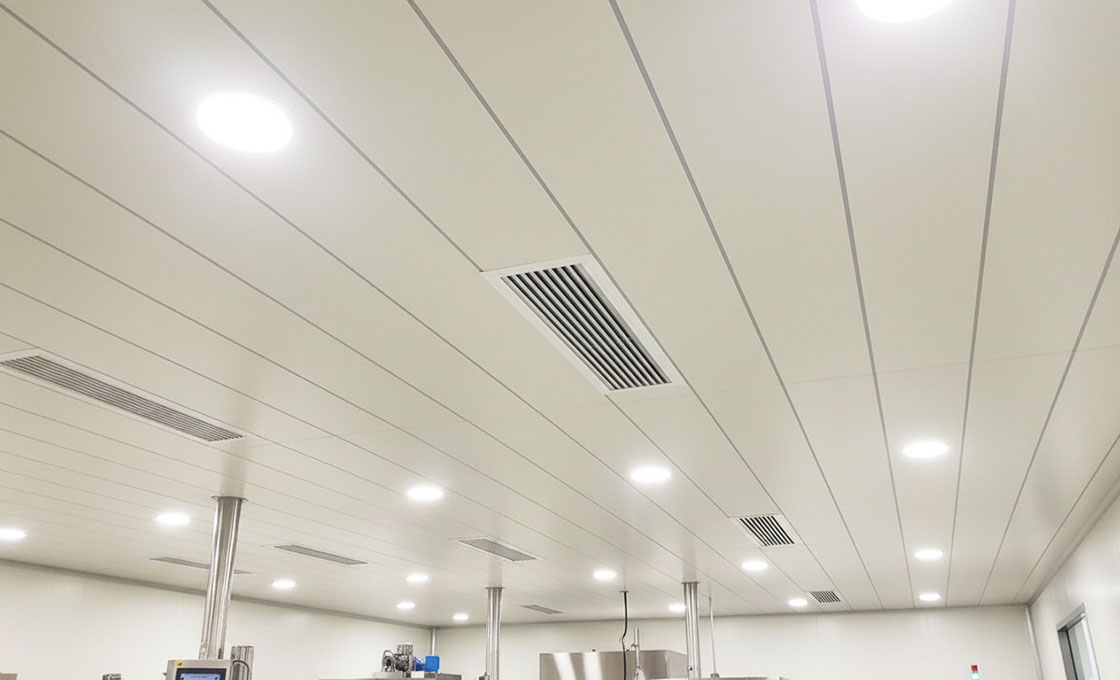
Fire Ratings and Code Compliance for XPS and PU
Fire safety compliance is the most critical non-negotiable in industrial construction. While XPS offers cost advantages, PU (specifically PIR) remains the superior choice for stringent fire codes due to its thermoset char-forming properties and Class A flame spread capabilities.
The Fundamental Difference: Thermoplastic vs. Thermoset
When evaluating fire safety, the most critical distinction between Extruded Polystyrene (XPS) and Polyurethane (PU) cores is their chemical reaction to extreme heat. XPS is a thermoplastic material. When exposed to high temperatures, it softens and eventually melts. In a fire scenario, this can lead to panel shrinkage and the potential for the melted material to contribute to the fuel load of the fire. Conversely, PU, particularly when formulated as Polyisocyanurate (PIR), is a thermoset. It does not melt; instead, it forms a layer of surface char when exposed to flame. This char layer acts as an insulating barrier, significantly slowing down heat transfer to the core of the panel and protecting the structural integrity of the assembly for a longer duration.
ASTM E84 and Fire Classifications
Compliance with ASTM E84 (Standard Test Method for Surface Burning Characteristics of Building Materials) is the baseline for code approval in most jurisdictions. This test measures two primary metrics: Flame Spread Index (FSI) and Smoke Developed Index (SDI). The performance profiles of XPS and PU differ markedly here:
- XPS Performance: Standard XPS foam typically achieves a Class C rating (FSI 76–200). In rigorous testing, it often records a Flame Spread Index around 75 to 450 depending on density and additives, without significant modification. This generally limits its use in non-combustible construction unless protected by thermal barriers.
- PU/PIR Performance: Polyurethane cores, especially modified PIR, are engineered to achieve a Class A rating (FSI 0–25). High-quality PIR cores frequently test below an FSI of 25 and often maintain a Smoke Developed Index below 450, meeting the strict requirements for egress corridors and high-occupancy areas.
FM Global Compliance and Assembly Approvals
For industrial and commercial projects requiring FM Global approval (specifically Data Sheets 1-44 and 1-55), the core material’s behavior under fire load is scrutinized heavily. FM 4880 and 4881 standards evaluate the entire sandwich panel assembly.
- FM Standards for XPS: To meet FM 4470 Class 1 Fire Rating requirements, assemblies using XPS cores usually necessitate the inclusion of a thermal barrier, such as gypsum board or specific fire-resistant facings, to protect the foam. Unprotected XPS cores are rarely approved for interior wall or roof applications without significant additional fire-stopping measures.
- FM Standards for PU: PIR sandwich panels are widely recognized in FM Global approvals for roof and wall assemblies. Because the material chars rather than melts, PIR cores are more likely to pass the severe fire resistance tests, including the large-scale calorimeter tests, without the need for additional heavy thermal barriers in many approved configurations.
Smoke Density and Toxicity
While flame spread is often the primary focus, smoke development is equally lethal in real-world fire scenarios. XPS combustion typically produces dense, black smoke consisting of carbon particles and styrene monomers, which can obscure visibility and create toxicity hazards rapidly. While PU combustion also releases toxic gases (including carbon monoxide and hydrogen cyanide), the formation of the char layer in PIR systems generally slows the rate of combustion, potentially reducing the total volume of smoke generated in the early stages of a fire compared to the rapid melt-drip behavior of thermoplastics. For projects with stringent smoke control requirements, verifying the Smoke Developed Index (SDI) against the ASTM E662 (Standard Test Method for Specific Optical Density of Smoke) is essential for both core types.
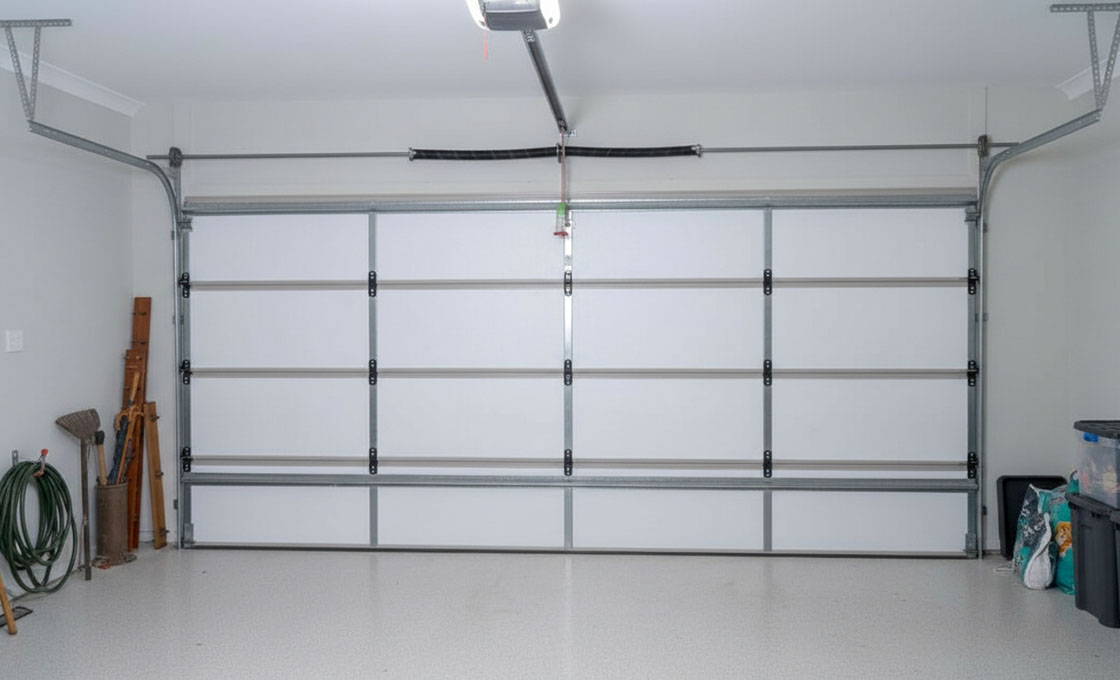
Moisture Resistance and Durability in Cold Storage
TL;DR: For cold storage environments, XPS cores offer superior inherent moisture resistance with water absorption rates typically below 0.3%, whereas PU cores rely heavily on perfect facing integrity to prevent vapor ingress, making XPS the safer choice for high-humidity or sub-zero applications where thermal stability is critical.
Water Absorption and Vapor Diffusion Rates
In cold storage facilities, the temperature differential between the interior (-20°C or lower) and the exterior creates a powerful vapor drive. If the core material absorbs moisture, the thermal conductivity (k-value) increases immediately, as water conducts heat approximately 20 times faster than stagnant air. This leads to a significant drop in R-value over time, forcing refrigeration systems to work harder and increasing operational costs.
When comparing the two core materials, XPS (Extruded Polystyrene) exhibits a distinct advantage due to its manufacturing process. The extrusion method creates a uniform closed-cell structure that resists water absorption far better than the chemically foamed structure of PU (Polyurethane). Under ASTM C272 standards, high-quality XPS typically demonstrates water absorption by volume of less than 0.3%, even after full immersion. In contrast, standard PU foam, if the facing is compromised, can absorb between 1.5% to 3.0% by volume, drastically degrading its insulating properties.
| Performance Metric | XPS Core | PU Core |
|---|---|---|
| Water Absorption (Vol %) | ~0.2% – 0.3% | ~1.5% – 3.0%+ |
| Moisture Resistance Mechanism | Intrinsic Closed-Cell Structure | Dependent on Facings (Metal/FRP) |
| Long-term R-Value Retention (Wet) | High Stability | Moderate to Low (if exposed) |
Durability and Brittleness in Sub-Zero Environments
Durability in cold storage is not just about impact resistance; it is about the material’s ability to withstand thermal contraction and mechanical stress without cracking or delaminating. At temperatures of -20°C and lower, polymers undergo a transition where they can become brittle. XPS maintains high compressive strength in these conditions, often ranging from 250 to 500 kPa depending on density, making it highly resistant to crushing from stacked goods or forklift impact.
PU cores, while offering excellent initial adhesion to metal or GRP facings, can become more susceptible to brittle fracture at extreme low temperatures compared to XPS. If a panel suffers an impact, a PU core is more likely to crack internally, creating pathways for moisture migration. Furthermore, while modern formulations have improved, PU is more prone to dimensional instability (shrinking or expanding) over long thermal cycles than XPS. This movement can stress the joint seals of the insulated metal panels (IMPs), potentially breaking the vapor barrier and allowing humidity to penetrate the building envelope.
The Critical Role of Facings in Composite Performance
While the core material dictates the baseline moisture resistance, the facings act as the primary shield. In a sandwich panel assembly, the integrity of the bond between the foam core and the outer skin—whether it is Galvanized Steel, Stainless Steel, or GRP (Glass Reinforced Plastic)—is paramount. PU foam generally adheres more aggressively to metal skins during the lamination process than XPS, which creates a strong bond but can lead to tearing of the foam core rather than debonding during impact.
However, for applications utilizing GRP or fiberglass facings (common in hygienic environments or corrosive atmospheres), XPS is often the preferred substrate. If the gelcoat or fiberglass layer is breached, the underlying XPS core prevents water from wicking into the panel structure. Conversely, a breached PU panel with a fiberglass facing can suffer from core rotting significantly faster if the facing is not perfectly watertight. For B2B buyers evaluating lifecycle costs, XPS typically offers a lower risk profile for long-term durability in humid or wash-down environments.
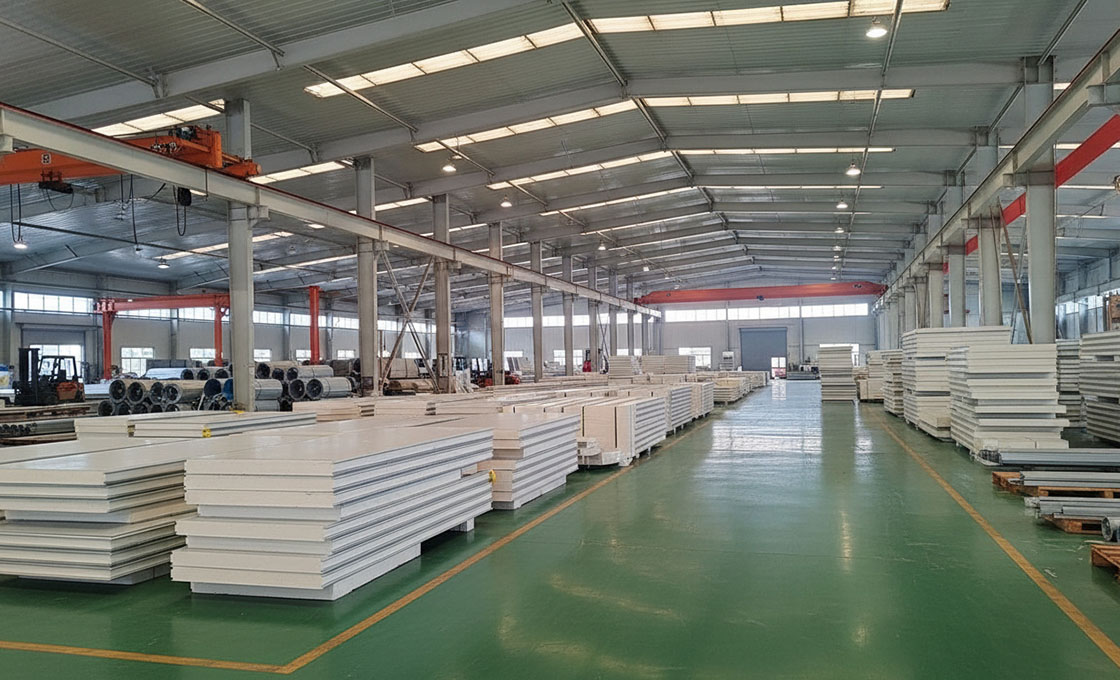
Compressive Strength and Impact Resistance Compared
For B2B buyers, the choice between XPS and PU comes down to a critical trade-off: XPS provides superior resistance to static crushing loads, whereas PU offers significantly higher bond strength to metal facings and better energy absorption against impacts.
Compressive Strength Under Static Loads
In applications involving heavy stacking or high-density cold storage flooring, compressive strength is the primary limiting factor for panel longevity. Extruded Polystyrene (XPS) generally exhibits higher compressive strength compared to standard Polyurethane (PU) foam of equal density. This is due to the closed-cell extrusion process of XPS, which creates a more rigid and homogeneous cellular structure capable of withstanding higher point loads without permanent deformation.
While standard PU foam performs adequately for wall and roof applications, it typically deflects more under heavy point loads than XPS. For warehouses storing heavy goods on high racking systems, XPS cores are often preferred to prevent panel “creep” or crushing over time, ensuring the structural integrity of the building envelope remains intact under static weight.
Flatwise Tensile Bond to Facings
One of the most critical failure modes in sandwich panels is delamination—the separation of the core material from the metal or GRP facings. Polyurethane foam creates a chemical bond with the facings during the foaming process. This adhesion is exceptionally strong, resulting in high flatwise tensile strength that often exceeds the cohesive strength of the foam itself. This makes PU panels highly resistant to peeling or debonding caused by thermal expansion and contraction cycles.
Conversely, XPS cores are typically laminated to facings using adhesives. While modern adhesive technologies are strong, the bond strength in XPS panels is fundamentally limited by the adhesive layer rather than a chemical fusion. In scenarios with extreme temperature fluctuations, such as frequent -20°C freezethaw cycles, XPS panels carry a higher risk of adhesive fatigue and delamination compared to the monolithic chemical bond of PU.
Impact Resistance and Handling Durability
Impact resistance differs significantly between the two materials, particularly during transportation, installation, and service life. Polyurethane foam possesses a higher degree of toughness and elasticity. When subjected to impact—such as a forklift hitting a wall panel or a dropped tool during installation—PU absorbs the energy through elastic deformation, often cracking but maintaining its bond to the facings.
XPS, while rigid, is more brittle. Upon sharp impact, XPS tends to shatter or crumble locally rather than deform. This brittleness can lead to immediate structural damage to the core, compromising the insulation value at the point of impact and potentially creating a weak spot for moisture ingress. For high-traffic environments like loading docks or interior truck bodies where physical abuse is inevitable, the ductile nature of PU usually provides better service life performance.
Technical Performance Comparison
| Attribute | XPS Core | PU Core |
|---|---|---|
| Compressive Strength | Higher rigidity; excellent for heavy static flooring loads. | Adequate for walls/roofs; lower point-load resistance. |
| Bond Mechanism | Adhesive lamination (mechanical bond). | Chemical fusion during foaming (monolithic bond). |
| Impact Behavior | Brittle; prone to shattering or crumbling under sharp impact. | Elastic; absorbs energy, resists delamination. |
| Best Use Case | High-load flooring, dry storage, exterior cladding. | Refrigerated walls, hygiene-critical areas, vehicle bodies. |
When handling XPS panels on-site, strict protocols must be followed to prevent edge impacts. Chipped edges in XPS cores are difficult to repair smoothly and can drastically reduce the thermal efficiency of the joint. PU panels are more forgiving during installation but require precise mixing ratios during manufacturing to ensure consistent density and strength throughout the panel.
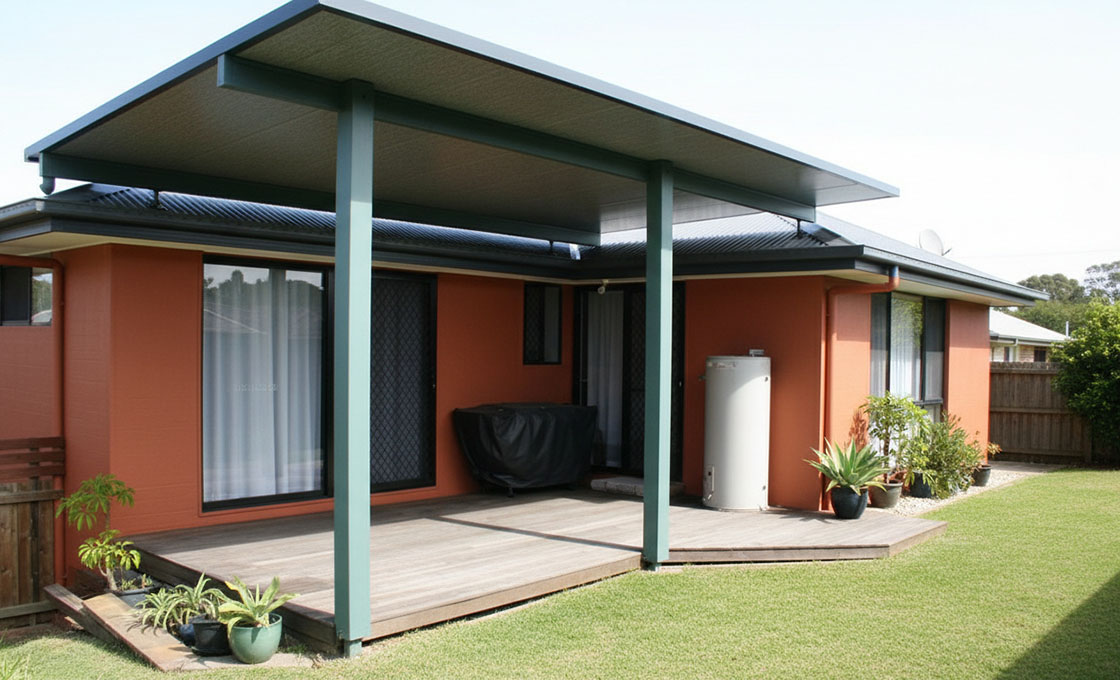
Upfront Cost versus Long-Term Energy Savings
Analyzing Capital Expenditure (CapEx) versus Operational Expenditure (OpEx)
While XPS cores offer a lower initial unit price, Polyurethane (PU) cores typically deliver a lower Total Cost of Ownership (TCO) through superior thermal efficiency and reduced wall thickness requirements.
In the insulated metal panel market, the purchasing decision often stalls on the initial invoice price. It is an objective reality that XPS (Extruded Polystyrene) foam cores generally present a lower upfront material cost per square meter compared to Polyurethane (PU) cores. For budget-conscious projects or large-scale warehousing where thermal requirements are moderate, XPS can appear to be the logical financial choice. However, this perspective ignores the operational reality of the building’s lifecycle. B2B buyers must shift their analysis from a simple “price per square foot” comparison to a “cost per thermal unit” calculation.
Thermal Performance and Energy ROI
The primary driver of long-term savings is thermal conductivity. PU foam possesses a closed-cell structure with a lower thermal conductivity value (lambda) compared to XPS, typically ranging between 0.022 and 0.025 W/(m·K) for PU, versus 0.029 to 0.034 W/(m·K) for XPS. This scientific difference means that PU panels provide higher R-value (thermal resistance) per inch of thickness. therefore, a facility built with PU cores requires less energy to maintain internal temperatures, directly reducing HVAC operational loads. Over a 10 to 20-year lifecycle, the cumulative savings on electricity consumption often eclipse the initial premium paid for the PU material.
| Financial/Technical Metric | XPS Core Panels | PU Core Panels |
|---|---|---|
| Initial Material Cost | Lower (Approx. 15-25% less than PU) | Higher (Premium for raw materials) |
| Thermal Conductivity | ~0.031 – 0.040 W/(m·K) | ~0.022 – 0.028 W/(m·K) |
| Wall Thickness for Target U-Value | Greater thickness required | Reduced thickness required |
| Long-term Operational Cost | Higher energy consumption | Optimized energy efficiency |
Maximizing Revenue per Square Foot
A frequently overlooked aspect of cost analysis is the “space cost.” Because PU delivers higher thermal efficiency in a thinner profile, architects can specify a thinner panel to achieve the same energy code compliance as a much thicker XPS panel. In a cold storage facility or refrigerated truck, every millimeter of wall thickness consumes potential internal storage volume. By choosing PU, the facility owner gains usable internal floor and cubic volume without increasing the building’s physical footprint. This translates directly into revenue generation—more pallet positions, more storage capacity, and better utilization of the land asset.
Hidden Costs: Installation and Air Infiltration
The “sticker price” of XPS panels also fails to account for installation precision costs. XPS is a rigid board product that must be precisely cut and fitted; joints create potential thermal bridges if not sealed perfectly. PU, applied as a liquid foam that expands and cures within the panel, creates a monolithic bond with the facings (metal, GRP, or FRP). This foaming action ensures 100% gap filling, drastically reducing air infiltration. Poor air sealing is a silent killer of energy efficiency, often causing HVAC systems to work overtime. additionally, XPS panels can be more susceptible to jobsite damage during handling due to their rigid nature compared to the structural integrity of cured PU, potentially increasing waste factors and replacement costs during construction.
Buyers must account for “thermal drift,” particularly with XPS. Over time, the blowing agents in XPS can diffuse out and be replaced by air, causing the R-value to degrade by 10% to 15% over the lifespan of the panel. PU systems, especially modern formulations, generally exhibit better long-term R-value retention, meaning your energy savings remain stable for decades.
When to Choose XPS and When to Choose PU
The right core choice comes down to environment, structural demand, and total lifecycle cost — not just lab-rated R-values. PU wins where space is tight and thermal performance is critical; XPS excels where moisture exposure is constant and budget is constrained.
Cold Storage and Refrigerated Facilities
Cold storage and refrigerated transport are where the XPS versus PU decision carries the most financial weight. These environments demand sustained thermal performance under repeated thermal cycling — doors opening, product loading, defrost cycles — and the core material’s response to that rhythm determines long-term energy spend.
PU-based cores, particularly PIR formulations, are the default choice for deep-freeze applications and refrigerated truck bodies. Their higher thermal resistance per inch means you can achieve the required insulation level in a thinner panel, which directly translates to more payload volume in a refrigerated trailer or more storage space in a cold room. For freezer operations running at -25°C or below, this thickness advantage is not a luxury — it’s a operational necessity.
However, there is a critical nuance that many specifiers miss. The overall thermal performance of a cold room or refrigerated body is not determined by the core alone. Joint sealing, corner details, fastener placement, and the quality of the panel-to-panel connection system all contribute to what engineers call the “installed R-value.” Our engineering team has seen cases where a premium PU panel system, poorly sealed at the joints, performed worse in real-world testing than a correctly installed XPS panel of lower nominal rating. The thermal bridge created by an unsealed joint or an exposed metal fastener can negate the core’s theoretical advantage.
For refrigerated truck bodies specifically, we recommend PU/PIR cores as the primary selection, paired with a rigorously tested joint sealing system. The combination of high thermal resistance and the ability to produce panels in thinner profiles makes PU the better fit for mobile refrigeration where every centimeter of interior volume affects revenue per trip.
High-Humidity and Coastal Environments
When panels are exposed to persistent moisture — whether from ambient humidity, direct water contact, or salt-laden coastal air — the core’s water absorption characteristic becomes a primary selection criterion. XPS is chemically closed-cell by manufacturing process, which gives it an inherently low water absorption rate. This makes it a reliable choice for applications where the panel will face damp conditions over its entire service life.
Marine vessel components, RV flooring installed over damp substructures, and industrial buildings in tropical or coastal climates are the environments where XPS consistently outperforms other foam cores in long-term moisture resistance. The core maintains its structural integrity and thermal properties even when exposed to high humidity, because the extruded manufacturing process produces a uniform, non-open-cell structure that resists water ingress.
PU and PIR cores, while offering superior thermal performance, are more vulnerable to moisture-related degradation over time if the panel facing is compromised. A scratch, a poorly sealed joint, or a fastener hole that is not properly gasketed can allow moisture to reach the core. Once water enters a PU/PIR core, the thermal performance degrades and the structural bond between the facing and the core can weaken. This does not mean PU is unsuitable for humid environments — it means that in high-moisture applications, the integrity of the facing and the quality of the installation become even more critical.
For marine and coastal applications where the panel may face direct water exposure or splash, XPS remains the more forgiving choice. When PU is specified for these environments, we insist on a high-quality gelcoat-treated FRP facing and a joint design that minimizes the risk of water penetration at connections.
Standard Warehouse and Dry Storage Buildings
Not every building requires the highest thermal performance per inch of thickness. For standard warehouses, dry storage facilities, agricultural buildings, and general-purpose industrial structures, the thermal demand is modest. These buildings primarily need a weather-tight envelope and basic temperature stabilization, not the aggressive insulation levels required for cold chain applications.
XPS is the economically rational choice for these applications. The lower upfront cost per square meter, combined with excellent moisture resistance and sufficient thermal performance for non-climate-controlled spaces, makes XPS the go-to core for dry freight truck bodies, general storage buildings, and agricultural facilities. The total cost of ownership in these scenarios favors XPS because the premium paid for PU’s higher R-value per inch delivers little to no operational benefit in a building that does not require precise temperature control.
We frequently specify XPS for dry freight truck bodies and general-purpose warehouse cladding because the thermal requirement is low and the moisture resilience provides long-term durability with minimal maintenance. In these applications, the budget saved on the core material can be redirected toward better joint detailing, higher-quality facings, or improved installation practices — all of which contribute more to overall building performance than a marginal improvement in core R-value.
Structural Load and Thickness Requirements
The thickness-to-strength relationship is a decisive factor in panel selection, particularly for applications where interior volume is at a premium or where structural load capacity must be maximized within a fixed thickness envelope. PU and PIR cores deliver higher thermal resistance in thinner profiles, which means a 50mm PU panel can match the thermal performance of a 75mm or 80mm XPS panel. This thickness efficiency is critical in mobile applications like RVs, mobile homes, and refrigerated trucks, where every millimeter of panel thickness reduces usable interior space.
From a structural standpoint, both XPS and PU cores can be engineered to meet specific compressive strength requirements by adjusting the core density. XPS is available in density ranges that provide strong load-bearing performance, making it suitable for flooring applications in RVs and commercial vehicles where the panel must support foot traffic, equipment, and cargo loads. Our engineers routinely design XPS-core panels for RV flooring and vehicle floor systems where compressive strength and moisture resistance are equally important.
When space constraints are severe — such as in luxury RVs, mobile homes, or precision-manufactured refrigerated bodies — the thickness efficiency of PU becomes a competitive advantage that goes beyond energy savings. A thinner panel with equivalent thermal performance allows for larger interior dimensions, more efficient layout design, and in the case of vehicles, greater payload capacity. This is the scenario where PU justifies its higher unit cost: the value is realized in the system-level outcome, not just in the insulation material itself.
Conversely, when structural depth is not constrained and the building or vehicle design can accommodate thicker panels, XPS becomes a compelling option. The ability to achieve the required thermal performance with a thicker, more robust panel — combined with lower material cost and superior moisture resistance — makes XPS the pragmatic choice for standard construction and dry freight applications where thickness is not a limiting factor.
| Primary Scenario | Best Core Choice | Technical Specification | Strategic Reason | Ideal Rax Panel Application |
|---|---|---|---|---|
| High-Efficiency Thermal Control | PU / PIR (Polyisocyanurate) | R-Value 5.6 to 6.5 per inch (ASTM C518 @ 75°F) | Delivers superior insulation in thinner profiles; essential for meeting strict energy codes and minimizing thermal bridging. | Refrigerated truck bodies, Cold storage freezers, Data center envelopes |
| Stringent Fire Safety Compliance | PU / PIR (Specialized Formulation) | FM 4880 Class 1 rated; limiting oxygen index ≥32% | Required by insurance specs for high-risk facilities; PIR formulations offer better fire resistance than standard polymer foams. | Cannabis facilities, Industrial cold rooms, Public transit structures |
| Budget-Conscious Projects | XPS (Extruded Polystyrene) | R-Value 3.8 to 4.3 per inch; density 28–40 kg/m³ | Cost-effective solution for projects where extreme thermal efficiency is not the primary driver, lowering total material cost. | Dry freight truck bodies, General partitioning, Agricultural storage |
| High Moisture / Humidity Exposure | XPS (Extruded Polystyrene) | Water absorption <0.3% by volume; compressive strength 25–50 psi (ASTM C165) | Maintains dimensional stability and R-value in damp environments better than many other foams. | RV flooring, Marine vessel components, High-humidity industrial zones |
| Space-Constrained Design | PU / PIR (Polyisocyanurate) | R-Value 5.6 to 6.5 per inch; panel thickness 40–80 mm | Maximizes interior usable volume without sacrificing thermal performance. | Mobile homes, Luxury RVs, Prefabricated housing units |
Conclusion
Deep-freeze facilities require PU cores to maintain lower utility costs and consistent temperatures. XPS cannot compete with that R-value per inch in cold storage. Keep XPS for high-humidity environments where moisture resistance outweighs thermal performance. The choice depends on whether your priority is long-term energy efficiency or handling extreme moisture exposure.
Let our engineering team run the specific thermal load calculations for your facility layout. We have decades of experience optimizing core thickness for -20°C environments. Reach out to us for a technical consultation on your specs before locking in the final order.
Frequently Asked Questions
Do FRP facings contribute to panel insulation?
No. FRP facings are structural and protective layers with minimal thermal resistance. The insulation value comes almost entirely from the core material—XPS or PU. Buyers should not expect the facing to improve R-value, and specifying thicker cores is the correct approach for better thermal performance.
Can XPS and PU panels be used in the same project?
Yes. Different building zones often have different thermal and structural requirements, and mixing cores can optimize cost and performance. For example, XPS may be specified for foundation-contact areas while PU is used for wall cavities. A qualified manufacturer can design a hybrid panel schedule tailored to each zone.
How do you prevent thermal bridging at panel joints?
Thermal bridges form at panel connections where metal fasteners or gaps expose the interior to outside temperatures. Using interlocking tongue-and-groove profiles, applying continuous sealant gaskets, and ensuring proper installation technique significantly reduce cold-bridge risk. This is especially critical in refrigerated and cold-storage applications.
What hygiene factors matter for cold-room panels?
Cold-room panels must resist microbial growth, tolerate frequent sanitization, and prevent moisture retention in seams or cores. Smooth, non-porous facings and cores that do not absorb water support effective cleaning and reduce contamination risk. RaxPanel offers surface treatments and core options suited to food-grade and pharmaceutical cold storage.
Lower-priced panels often incur higher total costs through increased labor for on-site sealing, greater transit damage rates, more frequent replacements due to core degradation, and higher energy bills from thermal drift. A panel that appears economical upfront may require additional insulation, repair, or energy compensation over its service life.
What should you verify when selecting an IMP manufacturer?
Key verification points include factory audit capability, production capacity, quality certifications, core material sourcing, and experience in your target application. A manufacturer with in-house R&D and testing can provide customized solutions and consistent quality. RaxPanel operates a 15-year facility with daily output exceeding 1,700 square meters and serves clients across 50+ countries.