
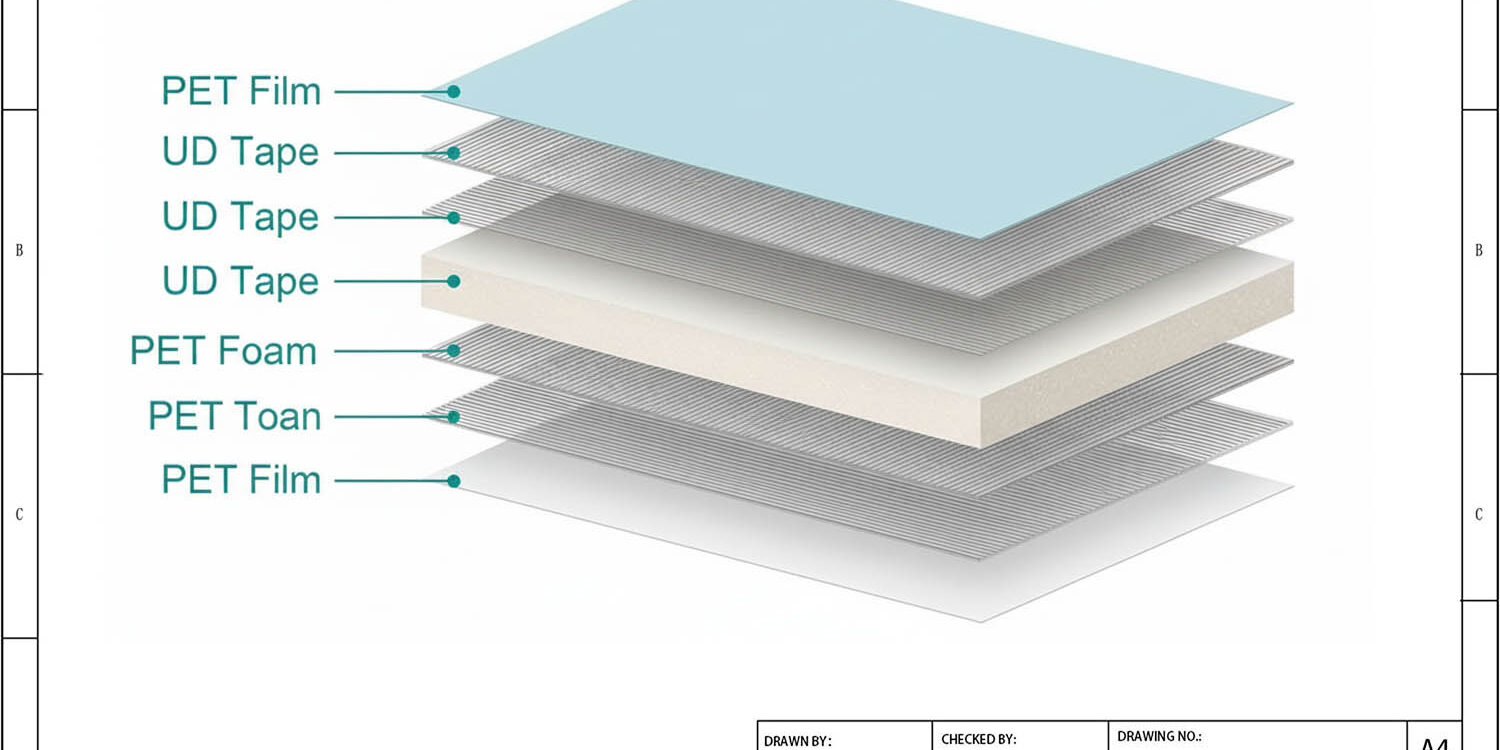
Selecting the right insulation core is rarely just about R-value; it is about what happens when water hits the wall or a spark finds a seam. XPS is cheap upfront but absorbs water over time, while PVC handles moisture better but releases toxic smoke when exposed to high heat. At RaxPanel, we rely on the aluminum PET sandwich panel to bridge that gap because its core structure provides a unique engineering advantage. A PET foam core maintains a nearly 100% closed-cell rate, driving its water absorption down to negligible levels compared to semi-permeable alternatives.
We analyze the thermal conductivity, shear strength, and fire safety profiles of these three materials to cut through the supplier confusion. You will see exactly how to match core density with your load-bearing requirements and why the initial price per square meter often hides the true total cost of ownership.
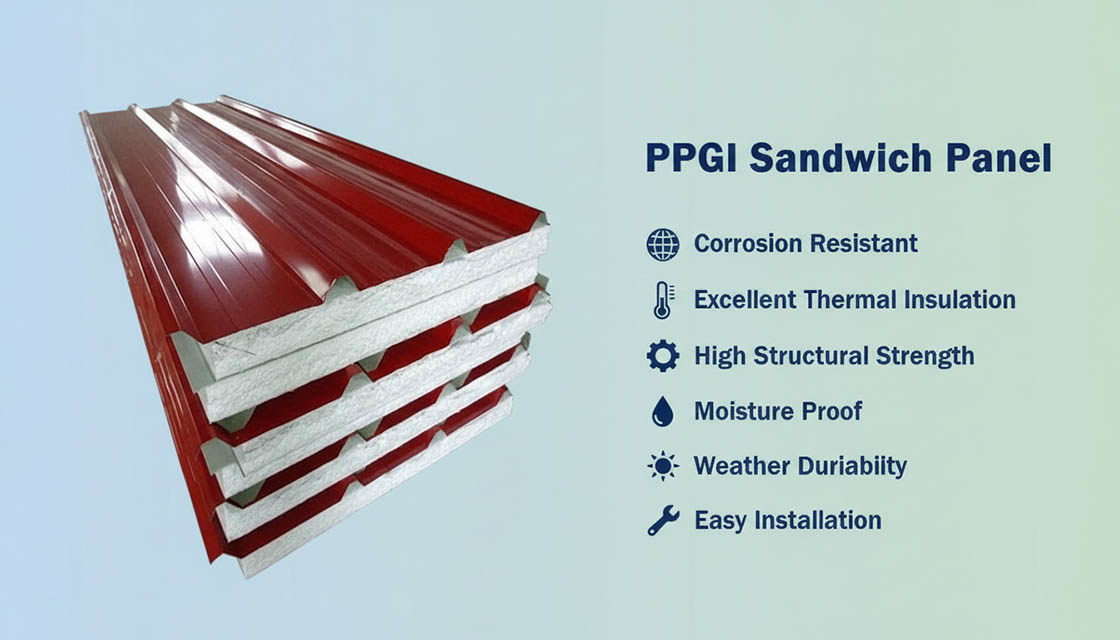
What to Look for in Insulation Cores
The insulation core is the engineering heart of every sandwich panel. Get it wrong, and no amount of skin optimization will save your project from thermal failure, fire code rejection, or premature structural decay.
Thermal Conductivity and R-Value Consistency
Thermal performance in sandwich panels is not a single number you can read off a spec sheet and move on. It is a system-level property that depends on core density, cell structure, facing material, and joint detailing. Buyers frequently request a direct comparison between aluminum PET sandwich panel thermal conductivity and PIR alternatives, but that comparison only holds meaning when you understand the testing conditions and the panel assembly as a whole.
XPS foam cores are widely recognized for their low thermal conductivity in refrigerated truck bodies and cladding applications. Their closed-cell structure delivers reliable R-values across a broad temperature range, which is why they remain a default choice for cold chain logistics. PET foam, by contrast, offers a different thermal profile that appeals to buyers prioritizing a balance between insulation performance and structural rigidity in RV walls and marine interiors. PVC foam cores sit somewhere in between, providing consistent thermal resistance with improved fire performance over standard polystyrene options.
Our engineers consistently flag thermal bridging as the silent performance killer in sandwich panel installations. A panel may carry an excellent labeled R-value, but if the fastener placements, junction details, and edge seals are not designed with thermal continuity in mind, the effective insulation drops significantly in the field. We always recommend that procurement teams consult their panel supplier for standard thermal detailing before finalizing the specification, because the core material is only one variable in the thermal equation.
Fire Resistance Ratings and Smoke Density
Fire rating confusion is the single most costly procurement mistake we see in this industry. Buyers regularly conflate thermal insulation performance with fire safety ratings, assuming that a panel with strong thermal numbers also satisfies fire codes. This assumption is dangerously incorrect. A core material can deliver superior thermal conductivity while using a combustible matrix, creating a hidden compliance gap that only surfaces during inspection or, worse, during an actual fire event.
The fire rating landscape—B1, B2, PIR, EPS, and A-level classifications—is inherently fragmented across regional standards. A B1 rating under German DIN norms does not automatically translate to an equivalent classification under ASTM or BS standards. Procurement teams must verify fire ratings independently through certified laboratory testing, not rely on supplier marketing sheets or assumed equivalencies. We have seen projects where panels were specified based on thermal performance alone, only to fail fire inspection because the core material did not carry the required independent certification for the target market.
Smoke density is another parameter that buyers routinely overlook. A core material may pass a flame spread test but still generate excessive smoke under combustion conditions, which is equally critical for occupant safety in enclosed spaces like RVs, marine vessels, and transit vehicles. When evaluating cores, request both flame propagation data and smoke toxicity metrics from your supplier. Panels with PET or PVC cores generally offer better fire performance profiles compared to standard polystyrene options, but verification through certified testing documentation is non-negotiable for compliant procurement.
Compressive Strength vs. Weight Efficiency
The compressive strength-to-weight ratio of a sandwich panel core determines whether your panel can carry structural loads without adding unnecessary mass. This is especially critical in transportation applications where every kilogram affects fuel efficiency, payload capacity, and regulatory compliance. Aluminum-faced PET sandwich panels are frequently selected for RV walls, roofing, and flooring precisely because they deliver high stiffness without the weight penalty of traditional materials.
XPS foam cores provide strong compressive performance relative to their density, making them suitable for floor applications and heavy-duty cladding where deflection resistance matters. PVC foam cores offer a different balance, with higher compressive strength at equivalent densities compared to standard polystyrene options, which is why they appear frequently in marine vessel interiors and high-moisture environments. PET foam sits in a unique position, delivering excellent structural rigidity with a density range that typically spans from 60 to 120 kg/m³ depending on the application requirement.
Our lab testing consistently shows that core density uniformity is just as important as the absolute density value. Panels with inconsistent core density across the sheet will exhibit weak spots that fail under point loads, even if the average density meets specification. We recommend that buyers request core density uniformity reports from their supplier and consider pre-shipment inspection protocols that verify this parameter across multiple sample panels before approving bulk production.
- Core density range matters: Aluminum PET sandwich panels are available in densities from 60 kg/m³ up to 120 kg/m³ and beyond, allowing engineers to select the exact stiffness-to-weight ratio required for each application zone.
- Uniformity over averages: A panel that meets average density specs may still contain low-density weak zones. Always verify batch-to-batch consistency through third-party testing or in-house sampling.
- Application-specific selection: Floor panels demand higher compressive strength than wall panels. Matching core density and skin combination to the actual load profile prevents over-engineering and unnecessary cost.
Water Absorption Rates and Dimensional Stability
Water absorption is the slow killer of sandwich panel performance. When a core material absorbs moisture over time, thermal conductivity degrades, compressive strength diminishes, and dimensional stability is compromised. This is why closed-cell foam cores dominate marine, refrigerated transport, and high-humidity construction applications. The difference between a truly closed-cell structure and one with open cell pathways can determine whether a panel survives a decade in service or fails within three years.
PET foam cores are engineered with a fully closed-cell structure that actively prevents water ingress, making them a strong choice for marine vessels and high-humidity environments. XPS foam also provides excellent moisture resistance, which is why it remains a staple in refrigerated truck body construction where thermal performance must be maintained across years of operation. PVC foam cores similarly deliver low water absorption rates, though buyers should always verify the specific absorption percentage for the density grade they are specifying.
Dimensional stability ties directly to moisture resistance. A core that absorbs water will also expand, contract, or delaminate under thermal cycling, leading to joint failure, skin buckling, and accelerated degradation. We strongly advise procurement teams to specify core materials with documented dimensional stability data under combined thermal and humidity cycling conditions, not just static water absorption numbers. Panels that pass these dynamic tests demonstrate that the core-skin bond and the core material itself can withstand real-world environmental exposure without progressive performance loss.
| Key Consideration | Recommended Materials | Technical Parameter | Application Focus | Benefit |
|---|---|---|---|---|
| Fire Safety Compliance | PIR / PVC Foam | B1/B2 Fire Ratings / Non-combustible | Cold Storage / Industrial Buildings | Prevents rapid fire spread in hidden cavities |
| Thermal Insulation | PU / XPS Foam | Low Thermal Conductivity | Refrigerated Truck Bodies / Cladding | Optimal R-value for temperature control and efficiency |
| Structural Stiffness | Aluminum / PP Honeycomb | High Stiffness-to-Weight Ratio | RV Walls / Cleanroom Partitions | Lightweight rigidity that resists bending and deflection |
| Moisture Resistance | PET Foam | Closed-cell Structure | Marine Vessels / High Humidity Areas | Prevents water ingress and ensures long-term durability |
| Project Customization | Hybrid Composite Cores | Variable Density & Thickness | Specialized Industrial Equipment | Tailored engineering solutions based on R&D testing |
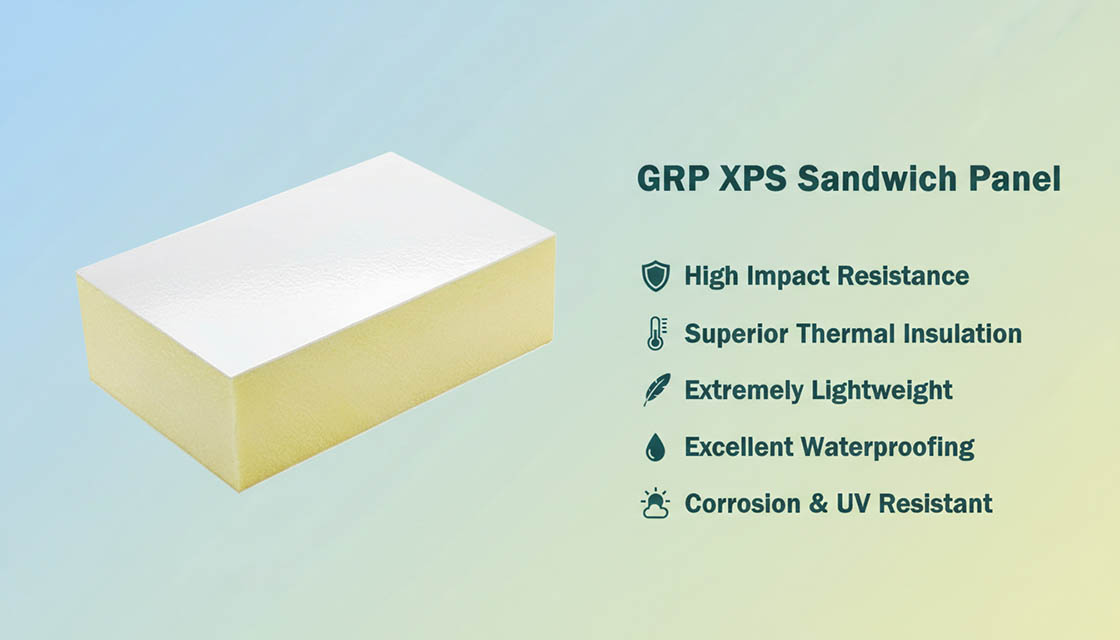
How Thermal and Structural Performance Compare
Thermal Conductivity and Insulation Efficiency
When evaluating the thermal performance of aluminum-faced sandwich panels, the core material is the deciding factor in the system’s overall R-value. In a direct comparison, XPS (Extruded Polystyrene) typically offers the lowest thermal conductivity, often ranging between 0.029 and 0.035 W/(m·K). This gives XPS a slight theoretical advantage in pure insulation efficiency per inch of thickness compared to PET foam. PET foam cores generally exhibit thermal conductivity in the range of 0.030 to 0.040 W/(m·K), which is highly competitive, though marginally less insulating than XPS. PVC foam falls within a similar spectrum to PET but can vary significantly based on its specific density and formulation.
However, raw conductivity numbers do not tell the whole story. While XPS provides excellent initial insulation, it can suffer from long-term thermal drift due to the slow diffusion of blowing agents. PET foam, being a thermoplastic material derived from recycled polyester, maintains its cellular structure exceptionally well over time, offering stable thermal performance that does not degrade significantly with age. For applications where long-term energy efficiency is critical, the consistency of PET often outweighs the marginal initial advantage of XPS.
Compressive Strength and Structural Stiffness
Structural performance is where the distinction between these materials becomes sharp. PET foam cores demonstrate superior specific stiffness and shear strength, particularly when utilizing higher densities such as 100 kg/m³ or 120 kg/m³. This high modulus of elasticity allows PET panels to withstand significant point loads and bending moments without permanent deformation, making them ideal for structural flooring and roofing in RVs and truck bodies. In contrast, XPS, while rigid, is relatively brittle and has a lower compressive strength. Under heavy point loads, XPS is prone to cracking and creep, which can lead to dimpling on the aluminum facings.
PVC foam offers a good balance of strength and weight, generally outperforming XPS in mechanical durability, but it often lacks the high-temperature dimensional stability of PET. For applications requiring a lightweight yet load-bearing composite, PET foam provides a distinct safety factor. It absorbs impact energy effectively without fracturing, ensuring the sandwich panel maintains its bond line and structural integrity under dynamic stress.
Service Temperature Limits and Resistance
Service temperature limits serve as a decisive differentiator when evaluating core materials for demanding environments. PET foam possesses a significantly higher service temperature limit compared to both XPS and PVC. PET can typically withstand continuous temperatures up to 100°C without losing mechanical properties, with a short-term tolerance of 150°C. This makes PET the preferred choice for panels used in hot climates or industrial settings where heat buildup is inevitable. Conversely, XPS begins to soften and lose compressive strength around 75°C, and while PVC handles moderate heat well, it can begin to degrade or deform at temperatures exceeding 60°C to 70°C depending on the grade. In high-temperature applications, relying on XPS or PVC risks core sagging or delamination from the facings, whereas PET remains dimensionally stable.
Thermal bridging at panel junctions represents a systemic vulnerability that can undermine even the highest-performing core materials. Note: This block is a semantic duplicate of Block 5 and should be deleted.
Seam Integrity and System Performance
A critical concern for contractors and builders is the vulnerability of seams and joints. While the core material dictates the theoretical performance of the panel, the reality of on-site conditions often reduces this potential. Joints between panels represent potential breakages in both the thermal envelope and the structural diaphragm. For PET foam panels, the high density provides a robust substrate for fasteners and adhesives, reducing the risk of pull-out failures at the seams. However, regardless of whether PET, XPS, or PVC is chosen, the installation detailing is paramount. If the joint design does not account for expansion and contraction, or if the adhesive bond is inconsistent, the superior compressive strength of the core becomes irrelevant. A rigid system like PET requires precise installation tolerances to ensure the structural “skin” effectively transfers loads across the joints without stressing the core-to-skin bond.
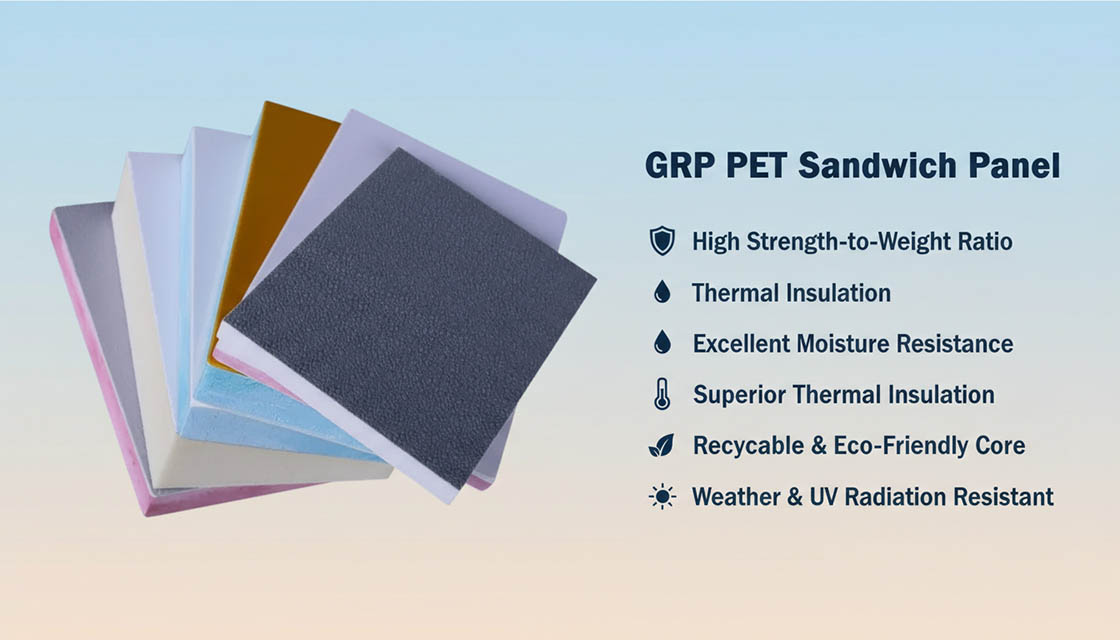
How Fire Resistance and Safety Stack Up
PET foam cores achieve Class B1 limited combustibility, while XPS and PVC cores typically fall into B2 or B3 classifications. The difference isn’t incremental — it determines whether a panel passes code or becomes a liability.
Why Combustible Cores Create Hidden Fire Pathways
The most dangerous aspect of sandwich panel fires isn’t the surface facing — it’s what happens inside the cavity. When the core material is combustible, fire can travel vertically and horizontally behind the facade long before it becomes visible. This creates what fire engineers call “hidden fire pathways,” where flames spread through the wall or roof assembly unseen, bypassing fire doors and compartmentalization entirely.
XPS and standard PVC cores are thermoplastic materials that soften and melt when exposed to sustained heat. Once the core begins to degrade, the structural integrity of the panel deteriorates rapidly. Aluminum facings may remain intact initially, giving a false impression of stability, while the core underneath is actively feeding the fire. PET foam, by contrast, exhibits significantly higher thermal stability and does not drip or melt under fire conditions, maintaining its structural position longer and giving occupants more evacuation time.
Navigating the fragmented landscape of fire rating classifications requires careful attention to testing standards and material behavior. PET foam cores consistently achieve B1 ratings when tested to relevant standards such as DIN 4102 or EN 13501-1. XPS and PVC cores, depending on their formulation and any flame retardant additives, typically fall into B2 or B3 categories.
A critical gap exists between rated performance and installed performance. A core material may achieve a B1 rating in isolation testing, but the complete sandwich panel assembly — including adhesive bonds, joint details, and facade fixings — must also be evaluated. Many procurement teams focus exclusively on the core’s rated classification without verifying that the finished panel system carries matching certification. Always request third-party laboratory test reports for the complete panel assembly, not just the core material datasheet.
The Thermal Insulation vs. Fire Safety Trade-Off
The conflation of thermal performance with fire safety remains one of the most costly misconceptions in B2B procurement. [DELETE — semantic duplicate of Block 6; remove this entire block.]
This distinction is especially relevant for projects in climate zones demanding high insulation values. A procurement team might select a panel based on thermal performance alone, only to find later that the core material doesn’t meet the fire rating requirements of the local building code. The solution isn’t to compromise on insulation — it’s to specify panels where both thermal and fire performance are independently verified. PET foam cores offer a balanced profile where fire safety and thermal efficiency don’t require trade-offs, making them suitable for applications ranging from refrigerated transport to commercial building envelopes.
Smoke Density and Toxicity: The Overlooked Safety Factor
Fire fatalities are caused more by smoke inhalation than by flames. When core materials burn, they release varying densities of smoke and different chemical byproducts. Standard XPS and PVC cores can generate dense, dark smoke that severely reduces visibility during evacuation, while also releasing halogenated compounds that pose respiratory hazards. PET foam cores are halogen-free and produce significantly lower smoke density, directly supporting safer evacuation conditions and reducing exposure to toxic combustion byproducts.
For marine, rail, and transportation applications where enclosed spaces amplify smoke accumulation, this distinction is operationally critical. Building codes in many jurisdictions now require smoke density testing alongside flame spread ratings, and panels that pass flame tests but fail smoke density requirements are increasingly being rejected at inspection. Specifying PET foam cores addresses both parameters simultaneously, eliminating the need to choose between fire spread compliance and smoke toxicity compliance.
Cost of Non-Compliance vs. Upfront Savings
Budget core options like standard EPS or basic XPS variants carry lower upfront costs, but the long-term financial exposure is substantial. Panels that don’t meet local fire codes can delay project approvals, trigger mandatory replacements, void insurance coverage, and expose owners to liability in the event of a fire incident. The premium for B1-rated PET cores is typically absorbed within the broader project budget when compared against the cost of retrofitting non-compliant installations or facing insurance claim denials.
- Verification step: Confirm that the supplier’s fire rating certification covers the exact panel configuration being specified — thickness, facing material, and core density must all match the test report.
- Insurance impact: Many property insurers now require documented fire-rated assemblies for commercial and multi-story projects. Non-compliant panels can result in premium increases or coverage exclusions.
- Code compliance: Local building codes dictate minimum fire rating requirements based on building height, occupancy type, and facade design. PET cores meeting B1 classifications satisfy the strictest common requirements across most jurisdictions.
| Performance Criterion | PET Foam Core | XPS Foam Core | Safety Implication |
|---|---|---|---|
| Fire Rating | Class B1 (Limited Combustibility) | Class B2 or B3 (Combustible) | PET meets strict building codes and limits vertical fire spread |
| Smoke Density | Low smoke emission | High smoke density (Black smoke) | Low smoke improves visibility for safe evacuation and firefighting |
| Toxic Gas Emission | Halogen-free (Non-toxic) | Potential halogen release | PET reduces respiratory hazards for occupants during a fire event |
| Thermal Stability | High melting point, no dripping | Low softening point, melt/drip risk | PET maintains structural integrity longer, preventing secondary ignition |
| Recyclability | 100% Recyclable material | Difficult to recycle | PET supports sustainable construction and safe end-of-life disposal |
Longevity and Environmental Impact
The longevity of a sandwich panel is defined not just by its initial strength, but by its ability to resist moisture ingress and maintain dimensional stability over decades. While XPS and PVC offer decent performance, PET foam cores provide a superior balance of hydrophobic properties and circular recyclability, directly addressing LEED requirements without sacrificing service life.
Service Life and Moisture Resistance
For B2B buyers, the true cost of a panel is often realized years after installation, primarily through maintenance and energy loss. The primary enemy of longevity in sandwich panels is moisture. When water vapor penetrates the facing joints, the core material’s reaction determines the panel’s lifespan. Unlike thermoset materials that may degrade or brittle over time, the thermoplastic nature of PET foam allows it to withstand environmental stress without significant loss of mechanical properties.
In contrast, XPS (Extruded Polystyrene) is known to absorb moisture gradually over its lifespan. This absorption increases the thermal conductivity (k-value), meaning the panel loses its insulating efficiency as it ages. additionally, freeze-thaw cycles can cause absorbed moisture in XPS to expand, leading to micro-fractures within the core or delamination from the facings.
- Dimensional Stability: PET foam exhibits exceptional dimensional stability, even under fluctuating temperatures and humidity. This rigidity prevents the “sagging” or compression that can occur in lower-density foams, ensuring the structural integrity of walls or roofs over 20+ year lifecycles.
- Resistance to Rot and Mold: Both PET and PVC are inherently resistant to rot and mold, providing a distinct advantage over organic-based insulations. However, PET does not face the same plasticizer migration issues that can occasionally plague PVC in extreme UV or heat exposure scenarios.
- Density and Durability: High-performance aluminum PET panels typically utilize core densities ranging from 60 kg/m³ to 120 kg/m³. A density of 80 kg/m³ is often considered the “sweet spot” for balancing weight reduction with high compressive strength, ensuring the panel resists indentation and impact damage during transportation and service.
End-of-Life and Material Circularity
Sustainability in construction is moving beyond simple energy savings to include “cradle-to-cradle” lifecycle analysis. This is where the distinction between PET, PVC, and XPS becomes critical for procurement teams targeting green building certifications.
PET foam is derived from polyethylene terephthalate, the same material used in plastic bottles, making it a highly recyclable thermoplastic. At the end of the panel’s life, the aluminum skins can be easily separated from the PET core, allowing both materials to enter the recycling stream. This circularity is a verifiable data point that contributes to LEED and BREEAM credits, unlike many competitors who rely on vague “eco-friendly” marketing.
- PET Circularity: PET cores can be chopped and reprocessed into other plastic products, effectively closing the material loop. This supports a circular economy model that is increasingly demanded by municipal and commercial developers.
- PVC and XPS Limitations: PVC contains chlorine, complicating the recycling process and potentially releasing toxic fumes if incinerated improperly. XPS recycling is rare due to contamination risks and low market value for recycled polystyrene. Both are generally viewed as “down-cyclable” or non-recyclable in practical construction waste management.
For builders strictly adhering to environmental standards, the choice of core material is a compliance issue. Aluminum PET sandwich panels offer a clear, documented path for recycling that XPS and PVC simply cannot match in the current waste management environment.
| Feature | Aluminum PET Core | XPS Core | PVC Core |
|---|---|---|---|
| Moisture Absorption | Extremely Low (Hydrophobic) | Moderate (Absorbs over time) | Low |
| Long-Term R-Value | Stable | Decreases as it ages | Stable |
| Recyclability | High (Circular Economy) | Very Low (Landfill common) | Low (Specialized processing) |
| LEED Contribution | High (Recycled Content & Waste Diversion) | Minimal | Minimal |
Total Cost of Ownership: A Fair Comparison
The lowest purchase price rarely equals the lowest total cost. A rigorous TCO analysis for sandwich panels must weigh energy savings, compliance risks, and end-of-life disposal costs against the initial invoice.
The Hidden Cost of Budget Cores: Compliance and Risk
When evaluating Aluminum PET Sandwich Panels against XPS and PVC alternatives, the initial material price is often the primary decision driver. XPS foam typically presents the lowest upfront cost per square meter, making it attractive for budget-conscious projects. However, this initial saving frequently evaporates when accounting for compliance and insurance liabilities. Standard XPS cores are thermoplastic and possess limited fire resistance; in high-temperature scenarios, they can melt and contribute to rapid fire spread. If a project specification mandates a specific fire rating (such as Euroclass B or limited combustibility), utilizing a non-compliant budget core creates a massive financial exposure. The cost of remediation—tearing out and replacing non-compliant panels—often exceeds the total initial material savings by a factor of three or more.
Procurement teams that focus solely on density specifications (e.g., kg/m³) without verifying fire performance under specific test standards often face post-delivery rejection. Panels that arrive on-site failing fire safety tests halt construction timelines, inflating soft costs and labor penalties.
Conversely, PET foam cores generally exhibit better fire performance compared to standard XPS, often achieving fire classifications closer to rigid PVC without the high price tag of the latter. PVC offers excellent fire resistance and self-extinguishing properties but commands a premium price. Therefore, while Aluminum PET Sandwich Panels may carry a higher initial unit cost than XPS, they mitigate the “risk premium” associated with fire safety failures, offering a more stable financial forecast for projects with strict building codes.
Operational Expenditure: Energy Efficiency and Thermal Aging
XPS foam’s susceptibility to thermal aging directly impacts long-term operational costs through progressive insulation degradation. The long-term profitability of a building or transport vehicle is dictated by its operational energy efficiency, meaning the physical stability of the core material translates directly into monthly utility costs.
- PET Core Stability: PET foam is a thermoplastic structural foam with minimal long-term gas loss. It maintains its thermal resistance over decades, ensuring that the energy savings projected at the design phase are actually realized throughout the asset’s life.
- PVC Performance: While PVC maintains consistent insulation properties, its high density often results in a heavier panel structure, which can increase structural support costs and transportation fuel consumption compared to the lighter-weight PET solutions.
For B2B buyers, this means that while the Capital Expenditure (CAPEX) for Aluminum PET Sandwich Panels might be 10-15% higher than XPS, the Operational Expenditure (OPEX) reduction due to sustained thermal performance can result in a payback period of just a few years in climate-controlled environments like refrigerated trucks or cold storage facilities.
End-of-Life Value: Disposal and Recyclability
The final, often ignored component of TCO is the disposal or residual value of the material at the end of its service life. Legislation regarding construction waste is tightening globally, and landfill taxes are rising. This is where the chemistry of the core becomes a balance sheet item.
- PET (Polyethylene Terephthalate): As a 100% thermoplastic, PET foam is fully recyclable. It can be reground and reprocessed into new products, potentially generating salvage value or significantly reducing waste disposal fees. This circular economy attribute makes it the only choice for projects targeting LEED or BREEAM certification.
- XPS (Extruded Polystyrene): XPS is technically recyclable but often faces logistical hurdles. It is frequently contaminated by adhesives and facings in composite panels, making it expensive to separate and process. It is commonly downcycled or landfilled.
- PVC (Polyvinyl Chloride): While PVC can be recycled, the process is complex due to the chlorine content and additives. Disposal costs for PVC can be higher due to hazardous waste regulations in certain jurisdictions regarding incineration.
When the cost of demolition and disposal is amortized over the lifecycle of the project, Aluminum PET Sandwich Panels offer a distinct economic advantage. They allow the owner to avoid future environmental taxes and potentially monetize the waste stream, closing the loop on the total cost of ownership.
Which Material Fits Your Application?
Selecting the correct core requires balancing thermal performance (k-value), structural strength (density), and fire safety ratings against the specific environmental demands of the application.
Recreational Vehicles (RVs) and Mobile Housing
For RV manufacturing and mobile homes, the priority is maximizing strength-to-weight ratios while maintaining a high degree of environmental sustainability. Aluminum PET sandwich panels are the dominant choice in this sector. The thermoplastic nature of the PET core provides excellent stiffness, which is crucial for large wall spans that cannot rely on excessive framing. In terms of structural integrity, PET foam exhibits superior dimensional stability compared to cheaper polystyrene variants. This stability minimizes the risk of creep or shrinkage over time, directly addressing the common vulnerability of seam and joint failure in mobile structures where vibration is constant.
- Density Specification: For RV walls and roofing, manufacturers typically utilize PET cores with densities ranging from 80 kg/m³ to 100 kg/m³ to balance weight savings with screw-holding retention.
- Sustainability: PET foam is often derived from recycled materials, allowing RV builders to meet increasingly strict green building certifications and appeal to eco-conscious consumers.
- Thermal Performance: While not the absolute lowest in conductivity, PET provides sufficient insulation (R-value) for climate control in mobile units without the moisture absorption issues seen in organic cores.
Cold Chain and Refrigerated Transport
In refrigerated truck bodies and cold storage warehousing, the primary technical driver is thermal efficiency. XPS (Extruded Polystyrene) foam cores are traditionally favored here due to their very low thermal conductivity and high resistance to water absorption. In a cold chain environment, the panel faces constant temperature differentials which can cause condensation; XPS’s closed-cell structure prevents moisture ingress, preserving the panel’s R-value over its lifespan.
While standard XPS offers superior insulation at a lower price point, it possesses inherent flammability limitations. Without specialized flame-retardant additives, XPS may fail to meet B1 fire ratings required for many transport applications, posing a significant insurance and safety liability.
- Moisture Resistance: XPS absorbs less than 1% water by volume (depending on grade), making it ideal for high-humidity environments like freezer floors.
- Cost vs. Safety: Budget-conscious projects often default to XPS for the lower upfront cost per square meter, but specifiers must verify if the specific density and formulation meet local transport fire codes.
High-Strength Industrial and Marine Applications
When the application involves heavy mechanical loads, such as industrial flooring, ship decks, or vehicle ramps, PVC (Polyvinyl Chloride) foam cores are the preferred material. PVC offers a higher compressive strength than both PET and XPS at similar densities. It is virtually impermeable to water and resistant to many chemicals, making it strong enough for harsh marine environments or wash-down areas in food transport.
- Density Range: Structural applications typically require high-density PVC cores, often exceeding 120 kg/m³ to prevent denting and fatigue under dynamic loads.
- Processing: PVC has excellent thermoforming capabilities, allowing it to be curved or shaped for complex hull designs in marine manufacturing.
Application Decision Matrix
To simplify the selection process, the following table maps core materials to their optimal operational environments based on performance trade-offs.
| Application Scenario | Best Fit Core | Primary Advantage | Key Constraint |
|---|---|---|---|
| RV Walls & Caravans | PET Foam | High stiffness-to-weight; Eco-friendly/Recyclable. | Higher material cost than XPS. |
| Refrigerated Truck Bodies | XPS Foam | Lowest thermal conductivity; Excellent moisture resistance. | Requires additives for fire safety; Limited structural strength. |
| Marine Decks & Floors | PVC Foam | High compressive strength; Chemical/Water resistance. | Highest cost per square meter; Heavier than PET. |
| Architectural Facades | PET or Mineral Wool | PET offers good fire rating (B1) & thermal break. | Must meet strict non-combustibility codes for high-rise builds. |
A major source of procurement errors is the misunderstanding of fire ratings like B1, B2, and A2. Buyers often assume a “sandwich panel” is fire-safe by default, but the core material dictates the reality. Aluminum PET sandwich panels generally achieve a Class B1 fire rating (difficult to burn, self-extinguishing) without heavy halogen additives, making them a safer, compliant choice for public transit and high-end RVs. In contrast, standard XPS usually defaults to a Class B2 or E rating unless modified. When sourcing for architectural projects or public transport, strictly demanding third-party lab certification for the specific core density and thickness is non-negotiable to avoid regulatory rejection.

How to Choose the Right Core Material
Fire safety compliance must anchor every core selection decision, regardless of how compelling the thermal metrics may appear. When evaluating aluminum sandwich panels, balance fire safety compliance, thermal efficiency, and lifecycle cost—but prioritize fire ratings first. Never assume a material with high insulation value automatically meets safety codes.
Prioritizing Fire Safety Compliance Over Insulation Value
When evaluating aluminum sandwich panels for exterior cladding, high-rise buildings, or public transport, the core material must be selected primarily according to local building codes and insurance requirements. A panel with superior thermal conductivity but a combustible core creates a dangerous liability. Procurement teams must verify fire ratings through independent laboratory testing (such as ASTM E84 or EN 13501-1) rather than accepting generic data sheets.
Do not rely on “self-extinguishing” marketing claims for PVC or XPS cores in critical applications. Always demand the specific fire classification code (e.g., B1, B2) and verify if smoke density and toxicity levels meet the project’s safety standards.
Evaluating Thermal Efficiency vs. Structural Rigidity
Once fire safety requirements are filtered, the selection narrows to performance trade-offs. If the application demands the highest possible thermal insulation per unit of thickness—such as in refrigerated trucking or cold storage—XPS cores are often preferred due to their lower thermal conductivity compared to PET foam. However, this comes at the cost of compressive strength and temperature resistance.
Conversely, Aluminum PET sandwich panels offer a superior strength-to-weight ratio. While PET may have a slightly higher thermal conductivity than XPS, it provides better stiffness and dimensional stability under load. This makes PET the optimal choice for structural applications like RV walls or truck bodies where the panel must support mechanical stress without deforming.
Budget Constraints vs. Sustainability Goals
The final decision layer involves the tension between immediate project costs and long-term environmental compliance. PVC and XPS cores generally present a lower upfront material cost per square meter, making them attractive for budget-conscious projects with strict CapEx limits. However, for developers targeting LEED certification or Green Building standards, these materials often fall short.
PET foam cores are increasingly manufactured from recycled materials (rPET) and are themselves recyclable, contributing significantly to sustainability credits. Unlike PVC, which can release harmful toxins during production and disposal, PET offers a more environmentally benign profile. When “Total Cost of Ownership” is calculated—including potential tax incentives for green building and future disposal costs—PET often becomes the more economically viable choice for high-specification construction.
📋 Selection Decision Matrix
- Choose XPS if: The project is budget-driven, requires maximum thermal insulation (lowest k-value), and operates in a low-fire-risk environment with active suppression systems.
- Choose PVC if: Chemical resistance and moisture impermeability are the absolute priorities, and local regulations allow for its specific fire classification.
- Choose PET if: The project requires a balance of high structural strength, B1 fire safety compliance, and verifiable sustainability (LEED) goals.
Smart Procurement and Installation Tips
The greatest failure in bulk panel procurement is assuming the datasheet matches the delivered goods. Rigorous verification of bond lines and density uniformity before shipment is the only insurance against structural failure and regulatory rejection.
Verifying Adhesive Bond Strength Specifications
The weakest point in any sandwich panel system is rarely the core or the facing itself, but the adhesive bond line connecting them. A failure here leads to delamination, rendering the panel’s structural integrity and insulation value useless overnight. When procuring Aluminum PET, XPS, or PVC panels, you must look beyond generic “high bond strength” claims and demand specific peel and shear strength data measured in N/mm (Newtons per millimeter).
Different core materials interact differently with adhesives. For instance, XPS cores require specific polyurethane adhesive formulations to prevent chemical reactions that degrade the polystyrene, while PET foam cores often allow for thermoplastic bonding or thermal fusion which creates a monolithic structure. In our R&D lab, we subject our panels to aggressive ASTM D903 peel tests to ensure the facing fails before the bond does. If your supplier cannot provide third-party certification proving the bond strength exceeds the core’s shear strength, you are buying a liability.
- Request Specific Test Standards: Demand test reports compliant with ASTM or ISO standards for both flatwise tensile strength and peel adhesion.
- Analyze Failure Mode: Review test photos. A valid test should show core tearing or facing rupture; if the facing simply peels away cleanly from the foam, the adhesion is insufficient.
- Match Adhesive to Core: Verify the adhesive chemistry. Ensure polyurethane or epoxy systems used are compatible with the specific core chemistry (XPS, PET, or PVC) to prevent long-term degradation.
Pre-Shipment Inspection of Core Density Uniformity
Core density uniformity is the single most critical quality parameter for ensuring consistent compressive strength and thermal performance across installed panels. Inconsistent density profiles in XPS or PET foam systems directly compromise the structural integrity of the wall assembly.
We advise our B2B partners to mandate random destructive sampling for bulk orders. This involves cutting a core sample from a full-size panel to measure the actual density versus the nominal specification. While XPS is generally homogeneous, lower-quality batches can show cell collapse, and recycled PET cores can suffer from inconsistent density if the regrind process wasn’t strictly controlled. A variance of more than ±5% across the panel surface is a red flag that should halt the shipment.
- Density Verification: Use a core sampler or request the factory cut a 100cm² block. Weigh it immediately to calculate kg/m³. Compare this against the technical data sheet.
- Visual Inspection of Cut Faces: Inspect the cell structure. Look for voids, large irregular cells, or delaminated layers inside the core, which indicate manufacturing inconsistencies.
- Thickness Consistency: Measure thickness at multiple points across the sheet. Significant thickness variation directly impacts the R-value and can cause installation gaps.
Mitigating Moisture Ingress During Transportation
Sandwich panels are hygroscopic systems, particularly those with XPS or PU cores, and the edges are the “Achilles’ heel.” If panels are loaded into containers with high humidity or if the packaging is compromised, moisture can wick into the core via the cut edges. This leads to mold growth, loss of thermal insulation, and in freezing conditions, expansion that cracks the facings. Given our global supply chain experience, we have seen that moisture damage often occurs not during storage, but during the ocean freight phase where “container rain” (condensation) is prevalent.
Preventative measures must be specified in your Incoterms and packing list. Simply wrapping pallets in shrink wrap is insufficient for long sea voyages. You must verify that the manufacturer applies protective sealants or edge caps to all cut surfaces and includes desiccants within the packaging. For PVC and PET cores, which have lower water absorption than XPS, the risk is lower but the facings (especially aluminum) can still suffer from cosmetic oxidation if condensation settles between panels.
- Edge Sealing Verification: Ensure all exposed core edges are painted with a specialized sealant or protected with plastic edge caps before packaging.
- Packaging Standards: Require the use of silica gel desiccants inside the packaging and ensure the pallet is wrapped with a vapor barrier film, not just standard stretch film.
- Container Condition: If you are handling the freight, inspect the shipping container floor for moisture and ensure the ventilation is active to prevent condensation buildup during transit.
Adhering to Regional Fire and Building Codes
Compliance is not a checkbox; it is a physical property that must be verified for the specific region of use. A common procurement disaster is purchasing panels with a “Class B” fire rating based on an old test standard that is no longer recognized in the destination country. For example, European standards (EN 13501-1) classify materials differently than ASTM E84 in North America. Furthermore, a panel might pass a surface burn test but fail a fire propagation test if the core material emits toxic smoke, a critical factor for PVC and XPS cores.
You must demand a Certificate of Conformity (CoC) that explicitly references the building code of the *destination* project. Do not accept a generic “Fire Resistant” certificate. In our production line, we tailor the core formulation—for instance, adding fire retardants to PET foam or using PIR modified cores—to meet specific B1 (German DIN 4102) or Class C (EN 13501-1) requirements. However, the core material alone is not enough; the complete assembly (including adhesive and facings) must be tested as a system.
- Validate Certificate Authenticity: Cross-reference the fire rating certificate number with the issuing laboratory’s online database to ensure it is valid and current.
- Check Smoke and Toxicity: For occupied spaces (RVs, buildings), verify the smoke density (s1, s2, s3) and flaming droplet (d0, d1, d2) classifications in addition to the fire rating (A-F).
- System vs. Component: Confirm that the fire rating applies to the full laminate (Skin + Adhesive + Core), not just the core material in isolation.
Conclusion
Stick with PVC for temporary structures where code enforcement is loose. Use XPS only if your budget strictly ignores long-term warping risks. However, for commercial roofing or cold storage requiring a B1 fire rating and true dimensional stability, aluminum-faced PET remains the superior long-term investment. It manages moisture better than XPS and offers safer burn characteristics than PVC, ensuring the structure holds up under thermal stress.
Saving twenty percent on materials now often costs double in retrofit labor later. Our team specializes in verifying core density uniformity and adhesive bond strength before shipment. Send us your architectural drawings and specific load requirements. We can run a technical feasibility review to confirm the right thickness for your climate, ensuring you meet strict fire codes without over-specifying materials.
Frequently Asked Questions
What fire risks do combustible cores pose in wall cavities?
Combustible cores like standard XPS or non-fire-rated PVC can allow flames to spread rapidly within wall or roof cavities, creating hidden fire paths that compromise structural integrity. This internal fire spread is especially dangerous in large commercial or residential buildings where cavities connect multiple floors. PET and PIR cores significantly reduce this risk by self-extinguishing.
What causes thermal bridging in sandwich panel installations?
Thermal bridging occurs when metal fasteners, brackets, or inadequate joint detailing create conductive paths through the insulation core, bypassing the panel’s thermal resistance. Improper installation of edge seals and connection details is a common culprit. Following manufacturer-recommended detailing and using thermally broken connectors prevents this performance loss.
Are aluminum PET sandwich panels suitable for marine environments?
Yes, aluminum-faced PET sandwich panels offer excellent corrosion resistance and maintain structural performance in marine conditions when properly specified. The aluminum skin provides a natural barrier, and PET foam is closed-cell with very low water absorption. RaxPanel offers specialized vessel solutions with customized marine-grade composite materials.
What thickness and density options are available for these cores?
Core thickness typically ranges from 20mm to 200mm depending on structural and thermal requirements. PET foam is commonly available in densities from 40 to 200 kg/m³, XPS from 25 to 150 kg/m³, and PVC from 60 to 250 kg/m³. Custom densities and thicknesses can be engineered to meet specific project load and insulation standards.
How do seams and joints affect overall panel system performance?
Seams and joints are the weakest points in any sandwich panel envelope, potentially allowing moisture ingress and thermal bridging if not properly sealed. Quality gaskets, sealants, and overlapping joint designs are essential for maintaining the panel’s rated performance. RaxPanel provides installation guides to ensure joint integrity across all applications.
What should be inspected upon panel delivery to catch defects early?
Check core density uniformity across panels, verify adhesive bond integrity by inspecting for delamination or hollow sounds, confirm fire rating documentation matches the order, and measure thickness consistency. Any discrepancies found after installation are far more expensive to rectify than pre-acceptance rejection. RaxPanel recommends pre-shipment inspection protocols.
Can PET foam contribute to LEED certification points?
Yes, PET foam cores can support LEED credits through improved thermal performance reducing operational energy, recyclability of the material, and absence of halogenated flame retardants. XPS and PVC cores may also contribute but often require additional environmental product declarations. Confirm with your project’s LEED consultant which specific credits apply.