
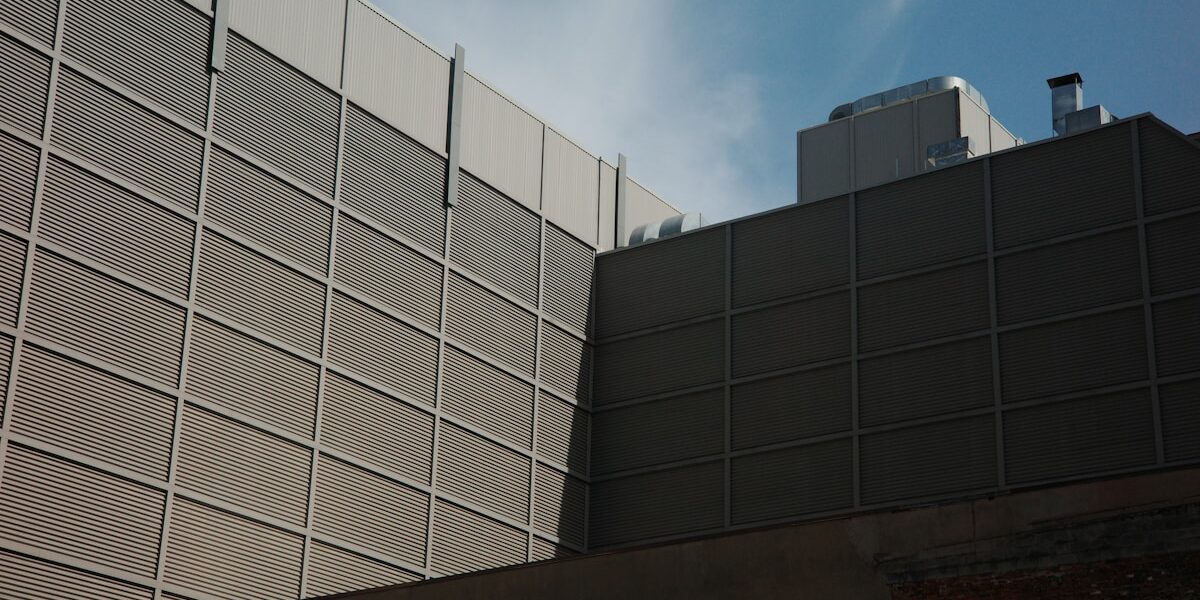
Every industrial noise complaint comes down to one of two failures: sound building up inside a space, or sound escaping through a surface into the next one. Acoustic panels fix the first problem. They absorb reflected energy and cut reverberation in hard-surfaced production halls — but they cannot stop compressor noise from reaching the office next door, no matter how many you hang. Barriers and acoustic wall builds exist for the second problem. Buying absorption to solve a transmission problem is the most common and most expensive spec error in plant noise control, and the person who signed the PO is usually the one explaining the failure to management.
Three categories, three different jobs. Panels absorb sound within a room. Barriers block it at a wall or screen line. A full acoustic wall build isolates an entire zone, whether you treat the source or the receiver. The test data separates them just as cleanly: NRC measures how much sound a panel soaks up inside a space, while STC measures how much a construction blocks between spaces. Two ratings, two tests, two entirely different problems — and a spec sheet that quotes only one of them is telling you half the story.
The comparison ahead covers function, materials, fire ratings, installation downtime, and lifecycle cost per decibel reduced, then narrows your choice with four questions that take under five minutes to answer. By the end, you’ll know which category your zone actually needs and which ratings to demand on every quote. We build these systems at RaxPanel, and what follows reflects what holds up on real plant floors, not just in lab reports.
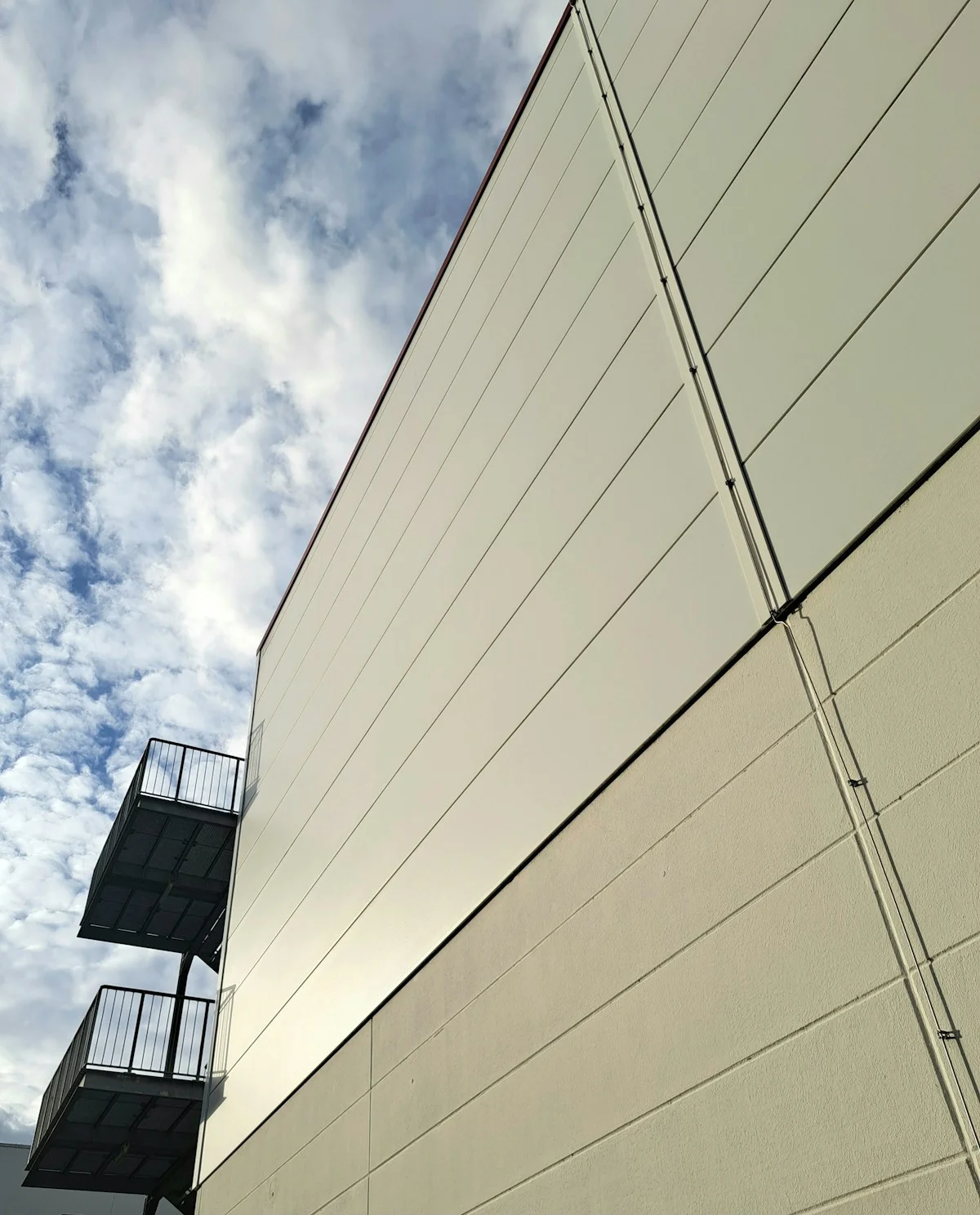
Absorb, Block, or Isolate: The Key Difference
Industrial noise control requires matching the right physical mechanism to your specific problem: absorption for echo reduction, blocking for transmission loss, or isolation for source containment. Using the wrong approach wastes budget and fails compliance.
How Sound Absorbing Panels Reduce Echo
Sound absorbing panels address reflected noise within a space, not noise crossing boundaries. They work by converting sound energy into negligible heat through friction within porous or resonant materials. The performance metric is the sound absorption coefficient, measured under ASTM C423 or ISO 354, with the Noise Reduction Coefficient (NRC) expressing the average across 250–2000 Hz frequencies.
In our testing of composite panel configurations, we found that open-cell foam cores—particularly PET and PU foams—deliver NRC values above 0.85 when paired with perforated or slotted facings. The perforations allow sound waves to enter the core material, where they dissipate. Solid-skin panels without perforations reflect rather than absorb, making them ineffective for echo control despite their mass.
- Core selection: Open-cell foams (PET, PU, XPS) absorb; closed-cell foams reflect.
- Facing requirement: Perforated aluminum or GRP facings with ≥20% open area enable absorption.
- Thickness threshold: Minimum 2-inch thickness required for meaningful low-frequency absorption below 500 Hz.
- Limitation: Absorbing panels do not reduce transmitted noise through walls or ceilings.
How Sound Barriers Block Noise Transfer
Sound barriers function on the mass law: transmission loss increases with surface density and panel stiffness. A barrier prevents acoustic energy from crossing from one zone to another, measured as Sound Transmission Class (STC) under ASTM E90-09 and rated per ISO 717-1. The STC rating summarizes laboratory transmission loss data into a single number, though it under-predicts low-frequency performance below 125 Hz.
For industrial applications, we evaluate sandwich panel constructions where aluminum skins of 1.0 mm thickness (approximately 2.7 kg/m² per skin) are bonded to foam or honeycomb cores. The resulting sandwich surface weight typically ranges from 5 to 14 kg/m² depending on core density and panel thickness between 15 and 100 mm. This lightweight construction delivers barrier-class transmission loss at fractions of the weight required for masonry or solid metal partitions, making rooftop and mezzanine retrofits structurally feasible where conventional materials fail building review.
When specifying for machinery rooms, we recommend targeting STC 35–45 for general compressor enclosures and STC 45–55 for high-noise equipment zones. The aluminum honeycomb acoustic panel configuration is particularly effective for generator enclosures, combining high stiffness with minimal weight for portable or semi-permanent installations.
How Acoustic Walls Build Full Isolation
Acoustic walls represent the most comprehensive solution, combining absorption, blocking, and structural isolation into a single system. They address the complete noise path: source containment, transmission prevention, and interior acoustic treatment. For industrial facilities, this typically means floor-to-ceiling partitions with sealed penetrations, resilient channel mounting, and multi-layer constructions that decouple structural vibration paths.
The critical distinction lies in the assembly approach. Turnkey vendors often sell installed systems without disclosing the panel layer specifications—the core material and skin combination that determines whether the wall absorbs, blocks, or both. We emphasize that engineers should request test data for the specific panel construction, not just the installed assembly rating. Composite sandwich panels with GRP or aluminum facings over PMI or PET foam cores can achieve STC 50+ while maintaining surface weights under 12 kg/m², enabling retrofit applications where structural capacity is limited.
When evaluating acoustic wall proposals, demand ASTM E90-09 transmission loss data for the specific panel-core combination, not just installed STC ratings. Request evidence of fire ratings (ASTM E84 Class A or EN 13501-1 B-s1,d0) and structural load calculations for your specific mounting scenario.
Echo vs Transmitted Noise: Know Your Problem
The most common specification error occurs when buyers confuse echo reduction with noise transmission blocking. If your issue is reverberation within a space—where sound bounces off hard surfaces creating a noisy, indistinct environment—you need absorbing panels. If your issue is noise crossing from one area to another—where machinery noise disrupts adjacent work zones or exceeds occupational exposure limits—you need blocking barriers or isolation walls.
We have reviewed retrofit specifications where facilities ordered high-NRC panels for what turned out to be a transmission problem, resulting in measurable noise levels unchanged across partitions. The diagnostic question is straightforward: measure sound pressure levels on both sides of the boundary. If levels are similar, the problem is absorption; if the source side is significantly higher, you need blocking or isolation.
For industrial facility planners managing multiple noise zones, the optimal approach often combines all three mechanisms: absorbing panels in open work areas to reduce overall reverberation, barrier walls around high-noise equipment to prevent transmission, and isolation enclosures for the most problematic sources. This layered strategy addresses occupational health compliance (85 dBA TWA targets), operational clarity, and regulatory requirements simultaneously.
Do not assume high-NRC panels provide noise reduction across partitions. A panel rated NRC 0.95 may have an STC of only 20–25, offering minimal blocking performance. Always verify both absorption and transmission ratings for your specific application.
Understanding this fundamental distinction prevents costly specification errors and ensures your noise-control investment addresses the actual problem. Whether you are designing a new facility or retrofitting an existing space, matching the acoustic mechanism to your measured noise profile is the first step toward compliance and operational improvement.
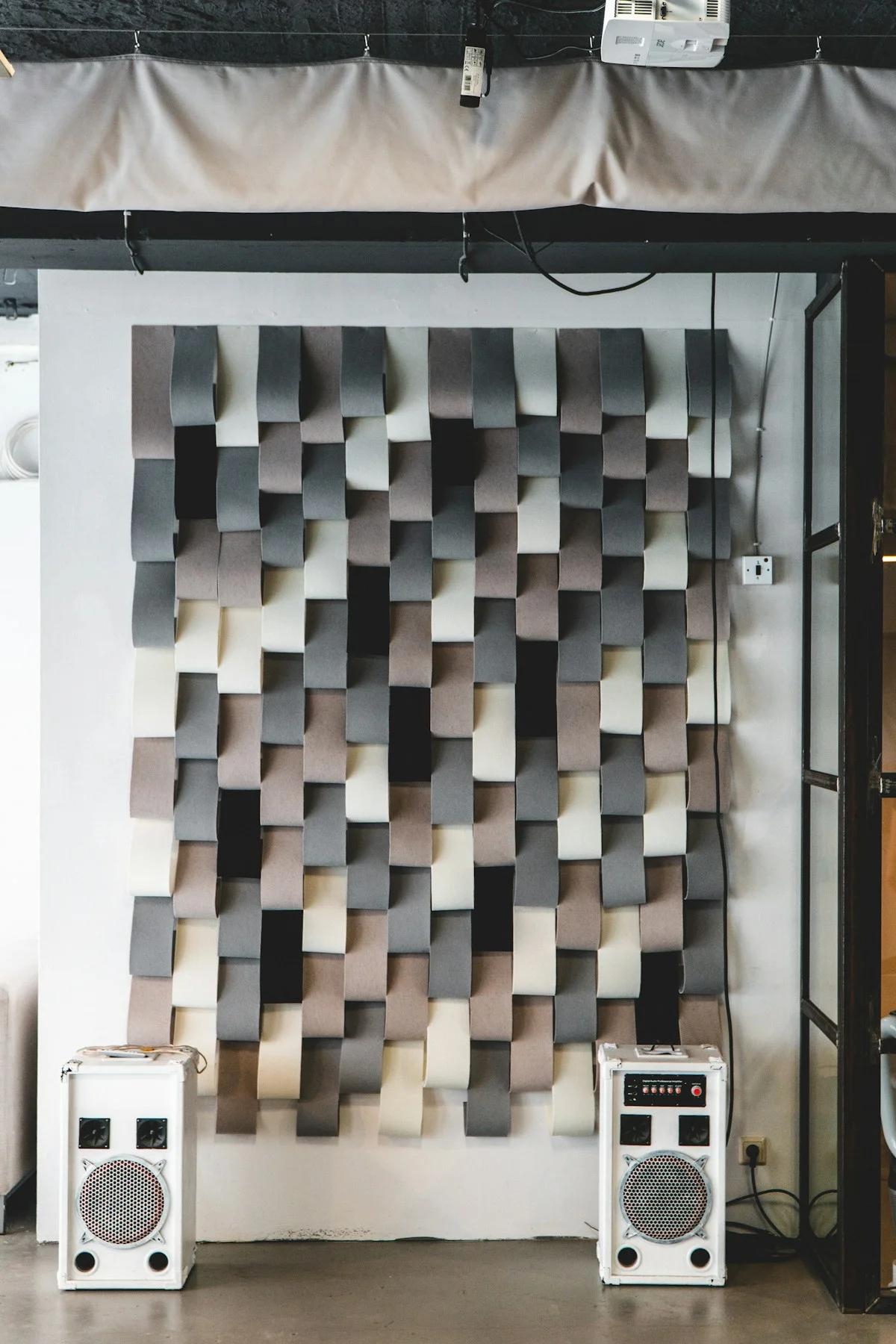
Panels, Barriers, and Walls: How They Compare
Acoustic panels absorb reflections, barriers block transmission paths, and walls deliver full-height isolation. Picking the wrong one wastes budget and leaves noise problems unsolved.
Performance Type: What Each Solution Actually Does
The most common mistake buyers make is treating these three categories as interchangeable price tiers of the same product. They are not. Each category solves a fundamentally different acoustic problem, and confusing them leads to incorrect selection, wasted procurement spend, and noise issues that persist despite the investment.
Genuine absorption is a construction spec, not a surface finish: NRC 0.85+ only materializes with 40–50 mm of open-cell or honeycomb core behind a perforated facing. Thin solid-skin panels, by contrast, reflect over 90% of incident sound energy — they look like absorbers but perform as reflectors. This distinction is critical during procurement, because a panel marketed as “acoustic” may carry a respectable NRC label while doing nothing to dampen reverberation. The physics limit remains unchanged: a high NRC adds zero STC, since absorption and transmission loss are governed by entirely different mechanisms.
If the rated STC number is to survive contact with a real building, the installation must deny sound every flanking path — over the top, around the edges, and through each penetration. A barrier with an STC rating of 35 or higher reduces the amount of sound energy transmitted through it, but that rating only holds when those routes are properly sealed. A standard 50 mm double-skin aluminum sandwich panel reaches only STC 28–34 at 8–14 kg/m², so the 35+ barrier tier implies added mass consistent with the ~6 dB per density-doubling mass law. Barriers also do not reduce reverberation in the space behind them.
Where a panel manages one mechanism and a barrier another, a purpose-built acoustic wall engineers all three — mass, decoupling, and cavity absorption — into one continuous assembly. The contrast is sharpest in performance per kilogram: a lightweight composite wall system delivers STC 25–40 across its full height at roughly 8–14 kg/m² of surface mass, whereas a 100 mm concrete block wall requires approximately 230 kg/m² to reach STC 45. Masonry earns that rating through mass law alone, gaining about 6 dB of transmission loss for every doubling of surface density. That relationship is precisely why lightweight systems cannot chase masonry performance by adding mass; instead, they deploy decoupled framing and cavity absorption to interrupt the transmission path, closing the STC gap at a fraction of the weight per square meter.
Coverage Scope: What Problem Each Solution Addresses
Understanding coverage scope means matching the solution to the actual noise problem, not the assumed one. Buyers often target the wrong problem type, which explains why some noise control installations fail to deliver expected results despite using premium materials.
Acoustic panels address reverberant interiors. They are the right choice when the complaint is echo, muddy speech, or excessive background noise caused by reflections bouncing between hard surfaces. Typical applications include press shops, compressor halls, and production floors where sound bounces off concrete walls and steel structures. Panels do not solve the problem when the complaint is transmission — sound passing through a partition to an adjacent space.
Sound barriers address direct transmission paths. They work well for equipment yards, property-line screens, and partial-height machine walls where the noise source and receiver have a clear line of sight. The barrier interrupts that direct path. They fail when sound travels over the top, around the edges, or through gaps and penetrations. Proper barrier design requires attention to sealing, flanking paths, and height relative to the source and receiver positions.
Acoustic walls address full-room or full-height isolation requirements. They are suitable for machinery rooms, generator enclosures, and rooftop retrofits where masonry construction is not structurally viable. Walls deliver continuous transmission loss from floor to ceiling without the flanking issues that plague partial-height barriers. They also integrate structural finishes and fire ratings into a single assembly.
Typical Cost Range: Budget Planning Reality
Cost comparison requires normalizing across different measurement bases. Panels are typically priced per square meter of surface coverage. Barriers are priced per square meter of blocking area plus installation hardware. Walls are priced per square meter of wall assembly including structural supports and finishes.
Absorptive acoustic panels with an NRC above 0.85 typically run in the lower cost range per square meter because they consist of relatively simple sandwich constructions with perforated or slotted facings over open-cell cores. The core thickness required to achieve high NRC values is generally 50 millimeters or more, which increases material costs.
Sound barriers require higher mass or decoupled constructions to achieve meaningful STC ratings. A solid-skin barrier that delivers STC 35 or higher typically costs more per square meter than a comparable absorptive panel because it uses denser core materials and more sturdy framing systems. The cost gap widens when fire-rated or weather-rated barrier constructions are required.
Acoustic wall systems sit in the middle-to-upper cost range depending on construction type. A lightweight composite wall with aluminum skins over foam or honeycomb core costs significantly less per square meter than a masonry wall when you account for structural support requirements. However, masonry walls deliver higher STC values at a lower per-square-meter material cost, though they require continuous footings and full structural load paths that increase total installed cost.
Installation Complexity: On-Site Reality
Installation complexity varies dramatically across the three categories and directly affects total project cost and timeline. Buyers who underestimate installation requirements often face budget overruns and schedule delays.
Acoustic panels are the simplest to install. They mount directly to existing walls or ceilings using standard fasteners. Perforated or slotted panel faces require no additional finishing. The main installation consideration is coverage area — achieving the target NRC improvement requires sufficient panel density across reflective surfaces. A typical installation crew can mount panels on a standard production floor within one to two days for a medium-sized space.
Sound barriers require more careful installation planning. They must be positioned to interrupt the direct line of sight between source and receiver, which often requires structural supports or freestanding frames. Sealing at the base and top is critical to prevent flanking paths. Louver penetrations, access doors, and machinery interfaces require custom CNC-cut openings. A barrier installation typically takes longer than panel mounting due to framing, sealing, and interface customization.
Acoustic wall systems require the most complex installation. Lightweight composite walls need structural supports, floor-to-ceiling mounting tracks, and careful sealing at all joints and penetrations. Fire-rated assemblies require certified closure systems. Masonry walls require foundation work, block laying, and plaster finishing. Retrofit applications often reject masonry due to structural load limitations, making lightweight composite walls the preferred choice for rooftop or mezzanine installations.
Specifying only NRC for a barrier application or only STC for a reverberation problem is the most common procurement error. Always verify that the metric you are purchasing matches the actual noise problem you are trying to solve.
Real-World Selection Guidance
The right selection depends on a clear diagnosis of the noise problem before any procurement begins. Facility managers should ask three questions: Is the complaint about echo and clarity inside a space, about sound passing through a partition, or about both? Is the noise source stationary and contained, or does it require ongoing access for maintenance and operation? Are there structural or fire-rating constraints that rule out certain construction types?
When the problem is internal reverberation only, absorptive panels are the most cost-effective solution. When the problem is transmission through a partition, a barrier or wall system is required. When both reverberation and transmission are concerns, a hybrid approach combining absorptive panels inside an enclosure with a barrier or wall system provides the most thorough solution.
Leading composite panel manufacturers in China, such as Rax Panel, provide both absorptive and blocking solutions across their product lines. Their CFRT sandwich panels with XPS, PET, PU, and PVC cores deliver lightweight constructions suitable for barrier and wall applications. Their GRP and aluminum honeycomb panels offer high-strength-to-weight ratios for retrofit installations where structural loads are constrained. Their experienced technical teams conduct experimental testing to develop composite products that meet specific NRC, STC, and fire-rating requirements for each project.
- Reverberation-only problem: Specify panels with NRC above 0.85 per ASTM C423. Verify core thickness is 50 millimeters or greater for high absorption.
- Transmission-only problem: Specify barriers or walls with STC ratings per ISO 717-1. Ensure flanking paths are sealed and penetrations are acoustically treated.
- Combined problem: Specify hybrid assemblies with both NRC and STC data. Verify that both metrics are tested and reported for the complete assembly, not just individual components.
The comparison between panels, barriers, and walls is not about which solution is universally better. It is about matching the right acoustic tool to the right noise problem. Panels absorb, barriers block, and walls isolate. Understanding this distinction prevents procurement errors, optimizes budget allocation, and delivers measurable noise reduction that addresses the actual complaint rather than an assumed one.
| Solution Category | Primary Acoustic Function | Metric & Test Standard | Typical Construction & Weight | Best-Fit Application & Failure Mode |
|---|---|---|---|---|
| Absorptive Acoustic Panel | Absorb — dissipates reflected sound energy and cuts reverberation time (RT60) inside the zone | NRC 0.00–1.00 per ASTM C423 / ISO 354; NRC >0.85 requires perforated or slotted facing over an open-cell core, typically ≥50 mm thickness | Perforated skin over open-cell foam or mineral wool core; sandwich builds run 5–14 kg/m² | Reverberant interiors: press shops, compressor halls, production floors; fails when the complaint is transmission — high NRC adds no STC |
| Sound Barrier (Line-of-Sight Wall or Curtain) | Block — interrupts the direct airborne path from source to receiver | STC per ISO 717-1; laboratory transmission loss per ASTM E90-09; note STC under-predicts performance below 125 Hz | Solid-skin sandwich or decoupled mass layers; solid skins reflect rather than absorb, so line the source side with absorptive material | Equipment yards, property-line screens, partial-height machine walls; fails via flanking paths over or around the barrier |
| Lightweight Composite Acoustic Wall System | Block + finish — full-height transmission loss with integrated structural skins | STC ~25–40 for 15–100 mm builds, verified per-panel by ASTM E90 report; ASTM E84 Class A (flame spread ≤25, smoke developed ≤450); EN 13501-1 B-s1,d0 achievable with FR skins and PIR core | Aluminum/steel/FRP skins over honeycomb or XPS/PET/PU/PVC foam core; 1.0 mm aluminum skin ≈2.7 kg/m²; total surface weight 5–14 kg/m²; widths to 6 m with CNC cutouts for doors, louvers, machinery interfaces | Machinery rooms, generator enclosures, rooftop and mezzanine retrofits where masonry fails structural review; fails if no ASTM E90/ISO 717-1 data backs the spec |
| Masonry / CMU Wall | Block via mass law — transmission loss gains ≈6 dB per doubling of surface mass | STC ~45–55 depending on block density, grouting, and plaster coats | Concrete block ≈200–270 kg/m² for 200 mm ungrouted; continuous footing and full structural load path required | New-build perimeter and demising walls; typically rejected for rooftop or mezzanine retrofit loads |
| Full Acoustic Enclosure | Contain — wraps the noise source; performance measured as insertion loss (dBA) at receiver positions | Shell STC (ISO 717-1) plus internal NRC (ASTM C423); ventilation silencers and sealed doors govern real-world loss | Sandwich-panel shell lined with absorptive material; CNC-cut interfaces for access doors, vision panels, and louver/silencer penetrations | Generators, compressors, blowers, test cells; fails when cooling airflow or cable/pipe penetrations bypass the acoustic path |
| Hybrid Absorb-Block Composite Panel | Absorb + block in one build-up — perforated source-side skin over open core with mass-bearing skin toward the receiver | Specify both: NRC per ASTM C423 on the source side and STC per ISO 717-1 for the full assembly | Sandwich stack 50–100 mm; 5–14 kg/m²; skin options include aluminum, steel, GRP/FRP, and CFRT over honeycomb or foam cores | Enclosure interiors and machinery rooms needing reverberation control and wall-level transmission loss together; fails if only one of the two metrics is reported |
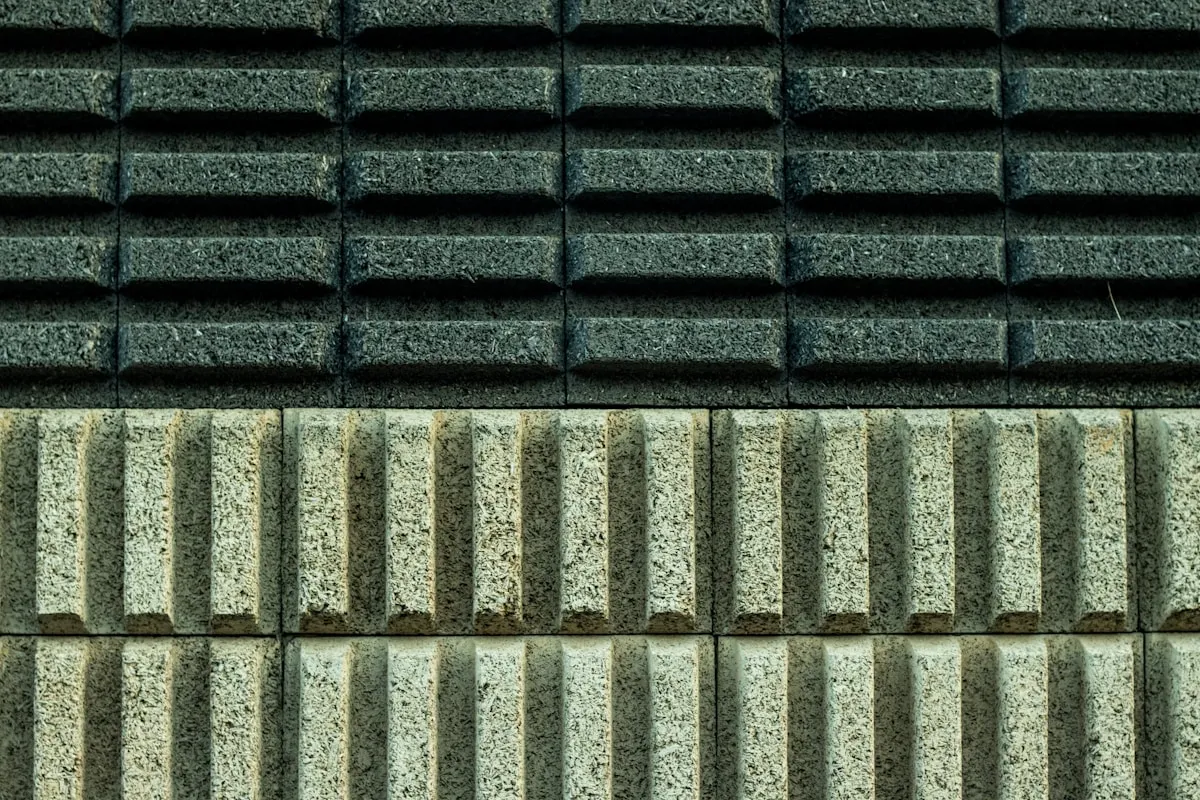
What Each Solution Can and Can’t Do
Acoustic panels absorb sound inside a room. Sound barriers block noise between rooms. Acoustic walls combine both functions. No single product can do the other’s job — the rating on the spec sheet tells you which is which.
Acoustic Panels: Great for Echo, Useless for Transmission
Acoustic panels are engineered to absorb sound waves that bounce off hard surfaces — concrete floors, glass windows, bare drywall. When sound energy hits a porous panel, it dissipates as heat inside the material rather than reflecting back into the room. The result is a noticeable drop in reverberation time and a clearer acoustic environment.
This is where the most expensive misconception in the industry lives. A panel rated NRC 0.85 will dramatically improve speech intelligibility inside a machinery room. It will not, however, prevent that machinery noise from leaking through the wall into the office next door. The physics is straightforward: absorption treats reflected sound; it does not add mass or seal gaps to stop transmitted sound.
Buyers who install acoustic panels expecting them to function as sound barriers consistently report disappointment. The noise level in the adjacent space drops by less than 1 decibel — a difference no human ear can detect. The panel absorbed the reflection, but the direct sound wave traveled through the wall anyway.
Sound Barriers: Block Transmission, Do Nothing for Echo
Sound barriers operate on the opposite principle. They add mass, density, and airtight seals to a partition so that sound energy cannot pass through it. A well-constructed barrier rated STC 50 or higher will reduce transmitted noise by roughly 47 decibels — a dramatic and measurable isolation effect.
But a barrier has zero absorption capacity unless it is specifically designed with an absorptive facing. A solid concrete block wall and a steel plate both block sound effectively, yet neither reduces echo. In a large generator enclosure lined only with barrier materials, the sound bounces endlessly between hard surfaces, creating a harsh, unusable acoustic environment even though the noise level outside the enclosure has dropped significantly.
This is the second common failure mode: buyers who install barriers expecting them to fix the roar inside the room. They don’t. Barriers control what leaves the space. They do not control what happens inside it.
Acoustic Walls: The Combined Solution
Acoustic walls — also called sound isolation enclosures or modular barrier systems — integrate both absorption and blocking in a single unit. The outer shell provides mass and airtight construction for transmission control. The inner surface is lined with absorptive material to manage reverberation.
This dual-function approach is why acoustic walls appear in applications where both problems exist simultaneously: generator rooms, compressor enclosures, industrial machinery surrounds, and modular workcells. The wall structure itself may use sandwich panel construction with a dense core such as PMI foam or XPS foam, facings of GRP or aluminum, and an internal absorptive liner rated for the target NRC range.
The specification that matters here is not a single number. A complete acoustic wall system is rated by both its STC value — indicating how much sound it blocks — and its internal NRC value — indicating how much echo it absorbs. A panel with STC 45 and NRC 0.80, for example, tells you it blocks nearly 43 decibels of transmission while also reducing reverberation inside the enclosure by a significant margin.
Reading the Right Rating for the Right Job
Datasheets make this comparison deliberately hard, because absorption-led products advertise NRC up front while barrier-led products headline STC. The confusion is commercial rather than accidental: every vendor leads with whichever rating flatters its own product, so an absorption panel showing NRC 0.90 and a barrier showing STC 35 can sit side by side on a quotation and read like interchangeable numbers. The physics behind each figure tells you what you are actually paying for. NRC is engineered into the panel’s internal core — a 40–50 mm perforated-faced core is what delivers absorption of 0.85 and above — while STC is a function of assembly mass, gaining roughly 6 dB for every doubling of that mass. Here is what each rating actually measures.
- NRC (Noise Reduction Coefficient): Measures sound absorption within a room. Rated from 0.00 to 1.00. An NRC of 0.85 means 85 percent of incident sound energy is absorbed, not reflected. This is the number that matters for echo control.
- STC (Sound Transmission Class): Measures sound blocking between spaces. Rated on a scale where higher numbers indicate greater isolation. An STC of 50 reduces transmitted noise by approximately 47 decibels. This is the number that matters for transmission control.
Never let one rating stand in for the other: a 0.95-NRC panel can pass speech through almost unchanged, and an STC 45 wall can leave its own room ringing like a drum. Absorption and transmission loss are governed by entirely different mechanisms. A high-NRC panel achieves its rating by dissipating sound energy within a thick, perforated-faced core — typically 40–50 mm of fibrous or foam material — which has little to do with blocking sound from crossing into the next space. Conversely, a high-STC barrier wall gains its rating from assembly mass, airtight seals, and decoupled layers that resist vibration transfer, not from any ability to absorb sound within the room. Specifying one metric without verifying the other will produce an installation that looks right on paper but fails on both fronts. The procurement consequence is straightforward: order the wrong rating and you pay for a product that does not solve the problem you actually have.
Practical Application Boundaries
Understanding what each solution can and cannot do translates directly into correct application selection. The following boundaries are based on measured performance, not marketing claims.
- Reverberation, speech intelligibility, and sound quality inside a single room define the entire territory of stand-alone acoustic panels. The boundary test is twofold: the noise source and the listener must share the same room, and the problem must be reverberation, speech clarity, or sound quality, as conference rooms and home theaters demonstrate. Acoustic panels alone are inappropriate when machinery noise must not reach adjacent spaces: even NRC 0.85+ absorption from a 40–50 mm perforated-faced core contributes no transmission loss, so the noise still passes through.
- Containment at the source — a generator set, an HVAC plant, a compressor that must stay quiet beyond its own envelope — is the working definition of a stand-alone sound barrier. The barrier’s job is one-directional: keep noise in. The failure case is equally one-directional but internal. When the barrier faces a room with hard, reflective surfaces, over 90% of incident energy bounces right back into the source space, turning an already loud room into an acoustically harsh one. That is precisely the problem combined wall systems in Block 102 solve — by pairing a dense barrier layer with an absorptive interior lining, they contain the source while taming the reflections that a bare barrier alone would return.
- Occupied rooms on one side, a high-output source on the other — when both conditions hold, neither a panel nor a barrier alone closes the gap. Acoustic walls address this dual demand, but they must be specified on paired ratings: STC for assembly transmission loss and NRC for the absorptive interior face. Product Bible data shows lightweight composite systems achieve this at STC 25–40 and 8–14 kg/m², a fraction of the ~230 kg/m² masonry route. This is the standard configuration for industrial machinery enclosures, generator rooms, and modular work cells where operator comfort and neighbor compliance are both requirements.

Which Solution Is Right for Your Space?
If the noise lives inside the room, absorb it. If it crosses a boundary, block it. If one machine is the source, enclose it. Every correct specification starts with that three-way sort.
The most expensive mistake in noise control isn’t buying a bad product—it’s buying a good product for the wrong problem. Absorptive acoustic panels treat sound that stays inside a room: echo, reverberation, the smeared, hollow quality that hard surfaces like glass, concrete, and bare plaster create. Barriers and acoustic walls treat sound that crosses a boundary—a shared wall, a machinery-room partition, a floor between apartments. And when one identifiable machine is the offender, an enclosure wraps the source itself.
That gives any buyer a fast diagnostic. Is the noise created and heard in the same space? Is it traveling from one space into another? Or does it come from a single piece of equipment? The five scenarios below apply that sort to the most common real-world situations—find the one that matches your space, and the right category becomes obvious.
Home Office: Absorption, Placed With Intent
A home office with hard floors, a bare desk, and parallel drywall walls produces reflections that make voices sound thin and distant on calls. The sound source sits inside the room, so absorption is the correct category. Placement matters more than volume here: panels mounted at first-reflection points—the wall surfaces a microphone or seated listener “sees” directly—intercept energy before it can bounce again, which is why a few well-chosen positions outperform covering every wall edge to edge.
Recording Studio and Podcast Room: Deeper Absorption
Studios follow the same physics but push the requirement further, because a microphone captures everything the human brain instinctively filters out. Reflections between parallel walls color recordings, and low-frequency energy collects in room corners, where thin panels barely register. The proven recipe pairs standard absorptive panels at reflection points with noticeably thicker porous material in corner junctions—same category as the home office, executed with more depth.
Open-Plan Workspace: Ceiling and Wall Absorption
Open offices, classrooms, and cafeterias fail for one reason: speech bounces off glass partitions, concrete floors, and hard ceilings until people struggle to understand each other from just a few meters away. The goal is clarity for people inside the space, which makes absorption the only relevant category. Wall panels and suspended ceiling treatments remove the reflected energy; there is no boundary to defend, so barriers contribute nothing to this specific problem.
The complaint changes completely when the sound arrives from outside the room—a next-door television, music through a party wall, footfalls from the unit above. Thin foam inside the affected room does close to nothing here, because the energy is crossing a structure, not echoing off a surface. The fix lives in the wall assembly itself: a mass-loaded barrier layer or a properly built acoustic wall adds density and separation into the partition so less energy survives the crossing. Surface panels can still tidy up in-room echo afterward, but they will never resolve the shared-wall complaint on their own.
Industrial and Machinery Sites: One Space, Three Possible Answers
Industrial facilities are where mis-specification costs the most, because a single building can contain all three problem types. Sort the complaint before requesting a single quote:
- A loud machine next to operators: When a compressor or generator is the defined source, containment at the source is the correct move. Enclosure builds typically lean on honeycomb-core or sandwich-panel construction for a practical reason: the panels must stay light enough for hinged access doors, handling, and—on mobile equipment—constant transport.
- Noise crossing into occupied zones: When a machinery room bleeds into adjacent offices, a barrier wall between the two zones is the answer. In older buildings this is also where lightweight panel construction earns its place—masonry additions are often structurally impossible on existing floors and rooftops, while panel-based barrier walls carry a fraction of the load.
- Reverberation inside the hall itself: When workers shout to be heard across a production floor, the enemy is reflected energy ricocheting between steel decking and concrete. Only absorptive panels address that; barriers installed inside the same hall change almost nothing, because the sound was never trying to leave.
That third case trips up facility managers most often. The hall feels loud, so someone budgets for a “soundproof” wall inside the space—and the perceived noise barely drops, because reflections still accumulate off every hard surface. Internal loudness is an absorption problem; transmission between zones is a barrier problem. Confusing the two is how noise budgets get spent twice.
| Solution Category | Primary Function | Key Performance Metric | Typical Weight Range | Ideal Application |
|---|---|---|---|---|
| Absorptive Acoustic Panels | Reduce reverberation and reflections within a space | NRC 0.60–0.95 (ASTM C423); perforated facings over open-cell PET or mineral-wool cores required for NRC >0.85 | 3–8 kg/m² | Control rooms, compressor-room interiors, spaces with hard reflective surfaces where speech clarity or measurement accuracy is the goal |
| Mass-Loaded Acoustic Barriers (Sandwich Panels) | Block sound transmission between zones or across a partition | STC 32–52 (ASTM E90 / ISO 717-1); 15–100 mm core thickness; sandwich surface weight 5–14 kg/m² | 5–14 kg/m² (aluminum skins ≈2.7 kg/m² each plus core) | Machinery-room partitions, rooftop or mezzanine retrofits where masonry is structurally prohibited; lightweight barrier walls for STC-target compliance |
| Honeycomb-Core Acoustic Panels | Lightweight structural panels with tunable absorption or reflection depending on facing | NRC 0.30–0.85 (open-cell honeycomb + perforated facing); aluminum honeycomb variants noted for strength-to-weight ratio | 4–10 kg/m² depending on core material (PP, fiberglass, aramid) and facing | Generator enclosures, mobile equipment housings, and OEM-built acoustic panels where weight-to-strength ratio is critical |
| Acoustic Enclosures (Turnkey) | Contain noise at the source by surrounding equipment | Dependent on panel construction; typically STC 35–45 when built with sandwich-panel construction; AmCraft specifies ≥2-inch thickness and ASTM E84 Class A | 5–14 kg/m² (panel layer weight; total enclosure weight varies by size) | Large generators, compressors, and industrial machinery where source containment is required rather than room treatment |
| Fire-Rated Acoustic Sandwich Panels | Provide both acoustic attenuation and fire compliance in a single assembly | ASTM E84 Class A (flame spread ≤25, smoke developed ≤450); EN 13501-1 B-s1,d0 achievable with FR skins and PIR core | 6–14 kg/m² depending on core (PIR, XPS, PET) and facing material | Facilities requiring fire-inspection compliance alongside noise control; cold-room and plant-interior applications where both thermal and acoustic performance are specified |
| Solid-Skin Reflective Panels | Reflect sound rather than absorb; used where diffusion or reflection is desired | NRC <0.10; high reflection coefficient; no perforations or open core | 5–12 kg/m² (metal or composite facings over foam/honeycomb core) | Spaces requiring sound reflection toward specific zones; NOT suitable for reverberation control or NRC-driven specifications |
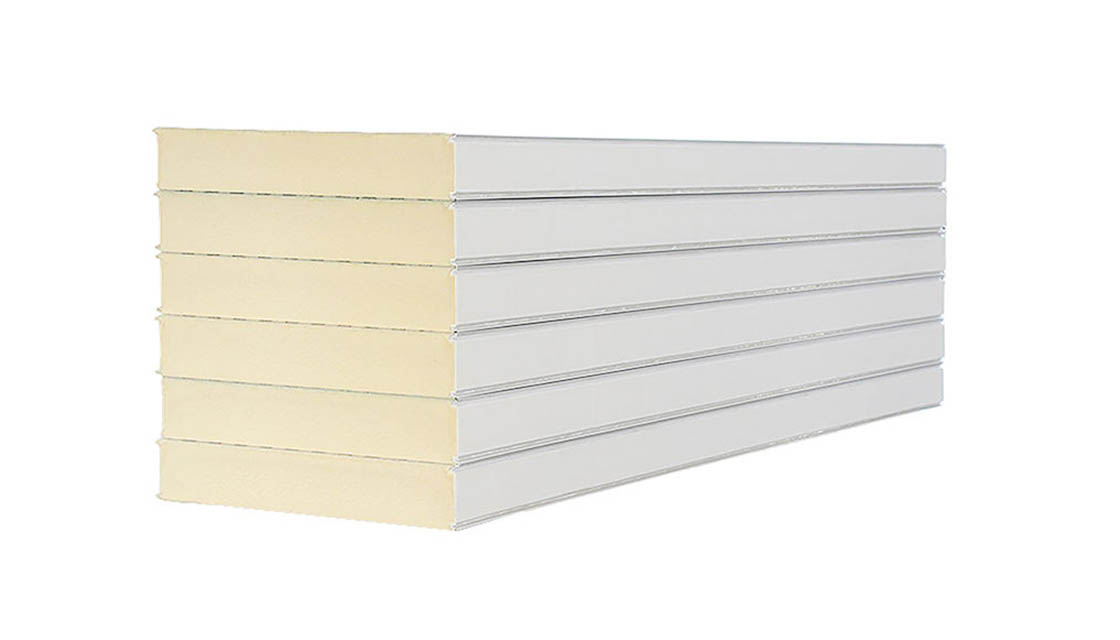
Find Your Best-Fit Solution in 4 Questions
Four quick questions can eliminate guesswork and point you toward the right noise control category before you evaluate materials, ratings, or suppliers.
Industrial noise problems look similar on the surface but demand fundamentally different solutions. A compressor room, a loading dock, and a machinery floor each require a distinct approach. Skipping the diagnostic step often leads to purchasing panels that look right but perform poorly, or barriers that block the wrong frequency range. The following checklist forces you to answer four specific questions that narrow your options from “everything” to the single category that actually fits your space.
Question 1: What Is Your Primary Noise Source?
The origin of your noise determines whether absorption, blocking, or isolation is the dominant strategy. Continuous broadband noise from fans, compressors, and generators typically requires mass and airtight sealing to prevent transmission through walls. Impulsive or intermittent noise from stamping presses, hammer mills, and material drops often needs resilient mounting and decoupling to stop structure-borne energy from radiating into adjacent spaces.
- Rotating machinery: Broadband noise between 125 Hz and 4 kHz. Airborne barriers and sealed enclosures are usually the first layer of control.
- Impact equipment: Stamping, punching, and dropping actions generate low-frequency structure-borne energy. Isolation pads, resilient channels, and floating walls become essential alongside any surface treatment.
- Airflow and ventilation: Ducted systems and exhaust stacks produce tonal and broadband noise that travels through ductwork. Silencers and lined duct sections are often more effective than wall panels alone.
If your site has limited access for heavy equipment or constrained ceiling heights, modular pre-assembled panels often solve the problem faster than site-built constructions. You can roll in framed panel sections and bolt them together without welding or concrete work. This matters significantly in retrofit scenarios where downtime per day carries real cost.
Question 2: Is Your Noise Airborne or Impact-Dominated?
This distinction separates solutions that fail from solutions that work. Airborne noise travels through the air as pressure waves and responds to mass, density, and airtight seals. Impact noise travels through solid materials as vibration and requires decoupling, damping, or resilient layers to interrupt the path.
A common mistake is treating an impact problem with standard acoustic panels rated only for NRC improvement. Those panels absorb reverberant sound inside a room but do nothing to stop vibration from traveling through floor slabs or structural steel into adjacent offices. If you can feel the floor vibrating when machinery runs, you are dealing with impact energy, and your solution must address that path first.
- Airborne-dominant spaces: Conference rooms, open-plan offices, and restaurant dining areas benefit most from sound-absorbing panels and baffles that reduce echo and improve speech clarity.
- Impact-dominant spaces: Machinery rooms, manufacturing floors, and spaces above occupied areas need isolation mounts, floating floors, and resilient wall constructions to break vibration transfer.
- Combined scenarios: Many industrial environments contain both types. A generator enclosure, for example, requires a sealed mass barrier for airborne noise and isolation pads underneath for structure-borne vibration.
Question 3: What Is Your Budget Range Per Square Meter?
Noise control solutions span a wide cost range depending on material density, core construction, fire rating, and finishing requirements. Lightweight foam-core sandwich panels offer cost-effective absorption for low-to-moderate noise environments. Higher-density fiber-reinforced panels with fire-rated facings command a premium but deliver measurable STC improvements in demanding industrial settings.
Budget decisions should align with the performance gap you need to close. A space requiring a 5-point STC increase will cost more per square meter than one needing only NRC improvement for echo reduction. Understanding this difference prevents over-specifying on absorption when blocking is what actually solves the problem, or vice versa.
- Entry-level absorption: Standard fabric-wrapped panels and basic foam-core sandwiches suit low-noise environments and echo reduction where STC ratings above 30 are not critical.
- Mid-range industrial: Fiber-reinforced sandwich panels with XPS or PET foam cores deliver stronger performance for machinery rooms and generator enclosures with moderate budget constraints.
- High-performance isolation: Multi-layer constructions combining mass-loaded barriers, resilient isolation, and fire-rated facings address the most demanding environments where regulatory compliance and operator safety drive the specification.
Question 4: Is This a Permanent or Temporary Installation?
Permanence dictates construction method, mounting hardware, and long-term maintenance expectations. Permanent installations typically use fixed wall-mounted panels, built-in ceiling baffles, and structurally anchored barrier systems. Temporary or semi-permanent solutions rely on freestanding panels, modular barrier walls, and demountable enclosure frames that can be reconfigured as production layouts change.
Rental spaces, pop-up manufacturing cells, and facilities undergoing frequent reconfiguration benefit from modular systems. These solutions deliver measurable noise reduction without permanent modifications to existing structure. They also reduce relocation risk since the acoustic treatment moves with you rather than staying behind.
- Permanent installations: Fixed wall and ceiling assemblies designed for decades of service. Ideal for owned facilities, permanent machinery enclosures, and spaces where layout will not change.
- Semi-permanent solutions: Modular barrier walls and freestanding acoustic panels that can be repositioned within weeks. Suitable for facilities with planned layout changes every one to three years.
- Temporary deployments: Demountable enclosures and portable barrier systems for short-term projects, seasonal operations, or rental spaces where no permanent modification is permitted.
Answering these four questions in sequence moves you from a broad category to a specific solution type. Question one identifies the noise origin. Question two separates airborne from impact requirements. Question three aligns performance with budget. Question four locks in the construction approach. Once those answers are recorded, material selection, rating targets, and supplier evaluation become straightforward comparisons within a clearly defined scope.
From Category to Product: Your Next Steps
Once you understand whether you need absorption, blocking, or isolation, the next step is translating that into a specific product — right material, right rating, right quantity, and the right supplier process.
Matching Panel, Barrier, or Wall to Your Space
The gap between knowing your category and selecting the right product comes down to a few concrete decisions. Each solution — acoustic panel, barrier, or wall — serves a different mechanism, and picking the wrong one for your space is the most common mistake made at this stage.
Acoustic panels are your starting point when the problem is internal noise — echo, reverberation, and muddied speech. They absorb sound waves before they bounce back into the room. If your machinery room, generator enclosure, or open-plan office sounds harsh or fatiguing after a few minutes, panels address that directly. They do not stop sound from leaving the room, however. That requires a barrier or wall.
Acoustic barriers are designed to block noise transfer between spaces or from a source to a receiver. Think of a barrier as a wall that lives in the middle of a room or between two zones — it doesn’t absorb sound, it reflects and blocks it. Industrial buyers often choose barriers for sandwich panel configurations around compressors, generators, or packaging lines where the goal is to keep noise from reaching adjacent work areas.
Acoustic walls are the full-isolation solution. They enclose or partition a space entirely, combining absorption on the interior face with mass and sealing on the structure itself. Walls are the go-to when you need a self-contained acoustic enclosure — a generator room, a plant screen, or a retrofit partition that must meet both NRC and STC targets simultaneously.
NRC and STC Ratings in Plain Language
Two numbers appear on every acoustic product spec sheet, and they answer two different questions. Confusing them is like measuring temperature in Fahrenheit when your recipe calls for Celsius — the number is there, but it’s telling you the wrong thing.
NRC (Noise Reduction Coefficient) measures how much sound a material absorbs. It ranges from 0.00 (nothing absorbed, like a concrete wall) to 1.00 (everything absorbed). An NRC of 0.80 means the material absorbs 80% of the sound that hits it. This is the number you look at when your concern is echo, reverberation time, and how “live” a room sounds.
STC (Sound Transmission Class) measures how much sound a barrier or wall blocks from passing through it. It ranges from roughly 25 (a standard interior partition) to 60+ (a professional studio wall). A higher STC means less noise gets through. This is the number you look at when your concern is keeping noise contained — whether it’s a generator enclosure keeping sound in, or a barrier keeping plant noise away from an office.
- For rooms whose problem is internal — echo, muddled speech, reverberant ringing — NRC is the governing datasheet line. When the diagnosis points at in-room acoustics, treat NRC 0.85+ as the threshold and verify the quote specifies the Product Bible’s 40–50 mm open-cell or honeycomb core with perforated facing.
- Once the concern shifts to whether occupants beyond a partition can hear the source, STC becomes the governing number and NRC recedes to a secondary line. For calibration, a 50 mm double-skin aluminum sandwich panel reaches STC 28–34 at 8–14 kg/m² — a practical ceiling for this class of panel. Containment targets above that band demand heavier assemblies, since the mass law yields roughly 6 dB of additional blocking per doubling of surface density.
- One product category refuses to pick a side: a full acoustic wall system ships with two ratings, NRC for its absorptive inner face and STC for the complete assembly. When you’re comparing quotes, use this quick map: a full wall system demands both numbers; a stand-alone barrier panel will headline STC; an absorption panel will headline NRC. Once you’ve identified which rating to expect, move to the per-surface measurement instruction that follows.
For industrial applications, a target NRC of 0.70 or higher is typical for echo control in machinery rooms and generator enclosures. For STC, anything above 45 provides meaningful noise reduction for most commercial and industrial settings, and above 55 is considered high-performance for environments like generator rooms adjacent to occupied spaces.
Estimating Coverage Area and Panel Quantity
Getting the quantity right prevents two costly mistakes: ordering too little and leaving acoustic dead zones, or ordering too much and wasting budget on material that sits in a warehouse. The calculation itself is straightforward, but the details matter.
Start by measuring the total surface area where treatment is needed. For panels, this is typically the wall or ceiling area facing the noise source. For barriers and walls, it’s the total linear run multiplied by the installed height. A generator enclosure wall that is 8 feet high and 20 feet long requires 160 square feet of panel material, before accounting for doors, vents, or cutouts.
- Measure each treated surface individually — walls, ceilings, and any partial enclosures.
- Subtract non-treatable areas such as doors, windows, ventilation openings, and access panels.
- Divide total square footage by the coverage area of the panel size you’ve selected (e.g., a 2 ft × 4 ft panel covers 8 sq ft).
- Add 10–15% waste factor for cuts, fittings, and on-site adjustments — this is standard industry practice, not guesswork.
For barrier and wall systems, the calculation shifts slightly because these products are often sold by linear foot or as modular panel kits. A 20-foot acoustic barrier at 8 feet tall might come as five 4-foot-wide modular panels, or as a continuous sheet material that is cut to size on-site. Confirm the packaging format with your supplier before placing the order — it affects both quantity and cost.
Requesting Samples and Comparing Supplier Quotes
The final step before committing to a purchase is validating performance and price against real samples and detailed quotes. This is where many buyers skip ahead and lose leverage, so taking the time here pays off immediately.
When requesting samples, ask for a full-spec sample card that includes the NRC and STC ratings tested to the relevant standard — ASTM C423 for NRC and ASTM E90 or ISO 10140 for STC. A supplier who cannot provide test reports on request is a red flag. Reputable manufacturers and distributors will have these documents available within 24 hours.
For outdoor or semi-outdoor installations, sample requests should also include weathering and material durability data. Acoustic barriers and plant screens mounted externally must withstand wind loads, UV exposure, and moisture over years of service. Ask your supplier for wind resistance ratings — structures in high-wind zones may need to be rated for hurricane or typhoon-force conditions up to 160 mph. Materials should also be evaluated for resistance to rot, mold, and bacterial growth, since these degrade both appearance and acoustic performance over time.
- Request a sample of the exact product you intend to order, not a different variant from the same line.
- Ask for test reports — NRC per ASTM C423, STC per ASTM E90, and any fire rating documentation (e.g., Class A / UL 723).
- For outdoor barriers, request wind load ratings and material durability data for UV, moisture, and biological resistance.
- Provide your site data when requesting quotes: noise source level (dB), distance to receiver, target noise reduction, and any spatial constraints. This is the information suppliers need to give you an accurate, comparable quote.
When comparing quotes, do not look at unit price alone. A lower per-square-foot price on a panel with an NRC of 0.60 may cost more in the long run than a higher-priced panel at NRC 0.85, because you may need more material to achieve the same acoustic result. Compare apples to apples: same rating, same thickness, same fire classification, same finish, and same warranty terms.
Once you have samples in hand, inspect the finish, check the edge construction, and verify that the core material matches what was described in the spec sheet. For honeycomb-core panels, the core should be visible at the cut edge and show uniform cell structure. For mineral fiber or PET felt panels, the density should feel consistent throughout — not soft or compressed in spots. Any discrepancy between the sample and the specification is grounds for requesting a replacement or walking away.
The transition from category to product is where theory meets reality. Get the ratings right, order the correct quantity with a waste factor, validate with samples, and compare quotes on equal terms. That process alone separates a well-specified acoustic solution from one that underperforms or requires costly rework.
Conclusion
Getting noise control right starts with a correct diagnosis. Echo inside a machinery room calls for absorption — panels rated by NRC. Noise bleeding into neighboring spaces calls for blocking — barriers rated by STC. Serious isolation demands a full wall build-up, often a lightweight sandwich panel with a honeycomb core. Pick the wrong category and you’ll spend real money treating a symptom you don’t have. That’s the costliest mistake we see on industrial retrofits.
- Diagnose first: reverberation problem or transmission problem?
- Match the metric — NRC for absorption, STC for blocking.
- Confirm Class A fire ratings before specifying.
- Measure coverage area early; panel counts drive budget.
- Stuck on a spec? Put your questions to our engineering team — early-stage design help, zero obligation.
Frequently Asked Questions
Can acoustic sandwich panels work outdoors?
Yes, when the core and facing are selected for environmental resistance. GRP or aluminum facings with PVC, PET, or XPS cores resist moisture, UV degradation, and temperature cycling. These combinations are commonly specified for outdoor plant barriers and generator enclosures where weather exposure is a factor.
What is the fire rating for acoustic sandwich panels?
Fire performance depends on the core material. PIR cores can achieve EN 13501-1 B-s1,d0 classification, while aluminum-faced panels with mineral-based cores meet ASTM E84 Class A requirements. Always verify test reports from accredited laboratories before specifying panels for enclosed or occupied spaces.
How much weight do acoustic sandwich panels add to a retrofit?
Sandwich panels typically weigh between 5 and 14 kg per square meter, depending on core density and facing material. This is a fraction of the load imposed by masonry or concrete barriers, making them suitable for mezzanine and rooftop retrofits where structural capacity is limited.
Do perforated facings improve sound absorption?
Perforated or slotted facings are required to achieve NRC ratings above 0.85. Solid facings reflect sound rather than absorb it. The perforation pattern and backing core material together determine the absorption coefficient across frequency bands.
Can acoustic panels reduce low-frequency machinery noise?
Standard absorptive panels are less effective below 250 Hz. Low-frequency noise requires mass, constrained-layer damping, or sealed barrier constructions. Sandwich panels with dense cores and tightly sealed joints provide better low-frequency transmission loss than open-cell absorptive panels alone.
How do honeycomb cores compare to foam cores for acoustics?
Honeycomb cores provide high stiffness at low weight, making them ideal for barrier and enclosure panels where structural rigidity matters. Foam cores offer broader sound absorption across mid and high frequencies. The choice depends on whether your priority is transmission loss or reverberation control.
What installation constraints apply to acoustic sandwich panels?
Panels up to 6 meters wide can be CNC-cut for louvers, doors, and machinery interfaces. Installation must account for existing structural anchors, access routes, and production downtime windows. Lightweight panels reduce anchor load but still require proper sealing at joints to maintain STC performance.