
A modern industrial building with a red facade and a seagull perched on the roof under clear blue skies.

SIPs vs Stick Framing: Maximizing Lifecycle Energy Savings

Stick framing is a legacy practice that leaves procurement officers exposed to unpredictable thermal performance and labor volatility. Structural insulated panels (SIPs) replace that uncertainty with a unified, factory-engineered building envelope. The difference is measurable. Rax Panel’s graphite-enhanced EPS cores deliver whole-wall R-values 44% higher than traditional stick framing, a gap that fundamentally alters a…

Abstract view of a modern building facade with geometric design and blue accents under a clear sky.

Aluminum Composite Panel Installation: Engineering Protocols

Procurement contracts for Aluminum Composite Panel installations frequently collapse due to overlooked subframe alignments and thermal gap calculations. Rax Panel’s engineering team draws on fifteen years of field data from high-volume production to identify the exact installation errors that cause warping, delamination, and fire code failures. This guide distills those insights into actionable protocols. Substrate…

Minimizing Lifecycle Costs with Custom Insulated Metal Panels

Operational margins in cold chain logistics are being eroded by the hidden costs of thermal bridging and uncontrolled condensation, turning standard building envelopes into liabilities. A custom insulated metal panel manufacturer like Rax Panel addresses this by engineering continuous insulation systems that eliminate the structural gaps inherent in traditional stick-built walls. The difference is not…

Aluminium Sandwich Panel vs Traditional Cladding

Aluminum sandwich panels weigh roughly 65 percent less than equivalent steel-faced panels — and a fraction of what brick or precast concrete imposes on your structural frame. That weight gap drives every major cost line downstream: footing depth, steel tonnage, crane capacity, container count, and the number of weeks your facade sits on the critical…

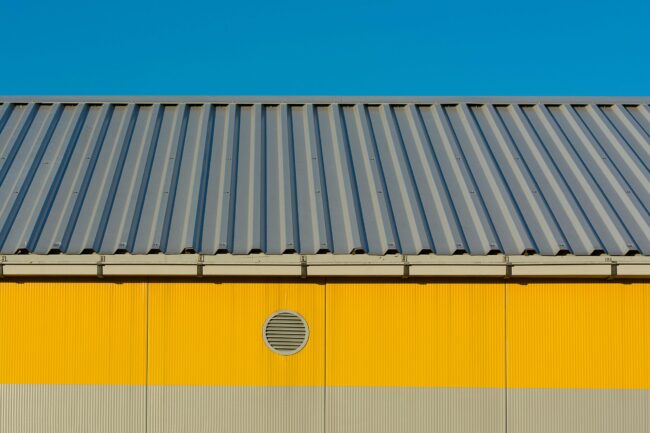
Modern industrial building's yellow facade with metal roof against clear blue sky.

Aluminium Sandwich Panels: Benefits and Applications

The aluminum sandwich panel market is projected to hit $71.4 billion by 2026, driven by the urgent need for high-performance building envelopes. Rax Panel manufactures composite sandwich panels with over 1,700 square meters of daily production capacity, delivering lightweight yet structurally rigid solutions for commercial and industrial projects. The core difference between a successful build…

Crop Storage Insulated Panel Thickness Guide

Selecting the correct crop storage panel thickness is the single most critical variable for long-term crop viability and energy efficiency in 2026. We see too many procurement engineers underspecify insulation for lateral bulk loads, leading to compressor overloads and rapid product spoilage. Rax Panel manufactures high-density composite panels with daily capacities exceeding 1,700 square meters,…

Aluminum Frame Cleanroom Door: Lab/Hospital Selection Guide

Procurement veterans know the silence of a failed inspection is louder than any budget overrun. We see it constantly: facilities managers defaulting to steel because they assume aluminum lacks the structural integrity for high-traffic hospital zones, unaware that modern alloy grades have fundamentally changed the durability equation. The real risk isn’t the door material itself,…

Best Time to Order Sandwich Panels for Your RV Build

Your assembly line goes dark for three weeks because a container of composite panels sits at port. Sound familiar? This plays out every quarter at facilities that treat panel procurement as a line item instead of a critical path. RV sandwich panel ordering deserves the same scheduling rigor as your chassis delivery — miss the…

How to Protect Structural Insulated Panels for the Long Term

More than 95% of all structural insulated panels in North America rely on oriented strand board and expanded polystyrene. That combination delivers exceptional thermal performance but introduces a specific vulnerability: moisture intrusion at the panel interfaces. Protecting structural insulated panels requires addressing the weak points where the building envelope meets the rigid foam core, not…