

Cutting 40% of the weight from a vehicle body panel is the difference between a truck meeting an EV range target or failing it. Engineers face a constant pressure to reduce mass without sacrificing the structural integrity needed to survive highway vibration and impact loads. The CFRT PET sandwich panel addresses this trade-off by using continuous fiber reinforced thermoplastic skins over a PET foam core to deliver that specific reduction.
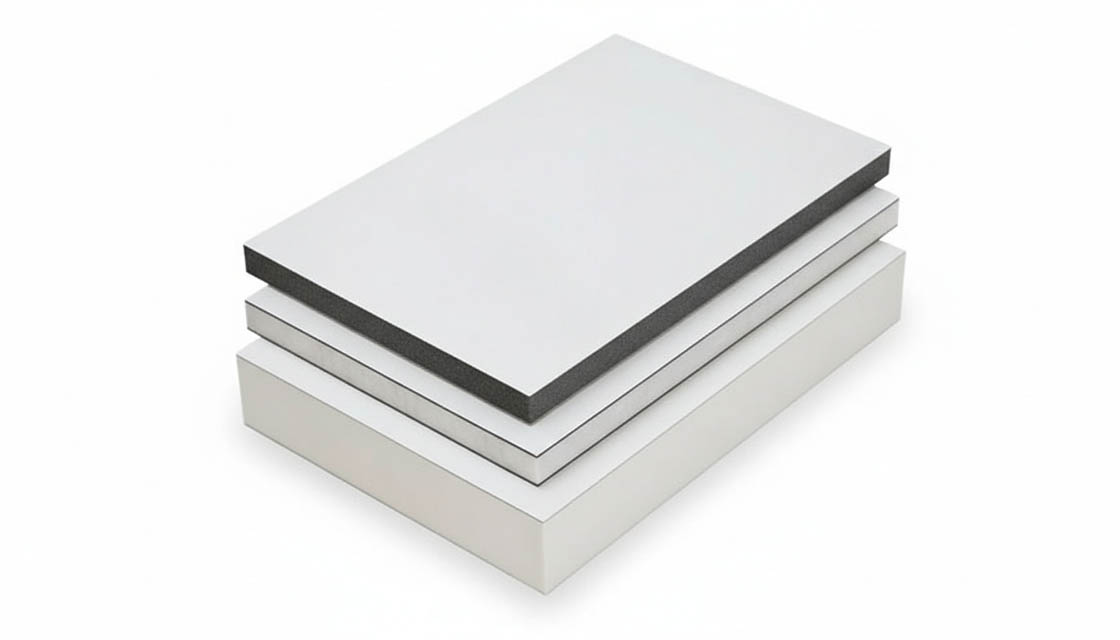
These panels utilize a dual-material construction where a PET foam core is thermally laminated between layers of continuous fiber reinforced sheets. This specific composition creates a monolithic bond that resists the delamination common in traditional composites during high-load impacts. We examine how that weight reduction directly extends EV range and increases payload capacity for logistics fleets, while comparing the flexural strength of these panels against aluminum. You need to know if the total landed cost justifies the switch from steel or aluminum for your specific assembly line requirements.
How a 40% Weight Cut Extends Range
Mass reduction is not merely about shedding weight; it is a strategic lever that directly improves energy efficiency, payload potential, and total cost of ownership for electric and commercial fleets.
Calculating EV Range Gains via Mass Reduction
The relationship between vehicle mass and energy consumption is non-linear but profoundly impactful in electric vehicle (EV) architecture. Reducing the vehicle curb weight directly decreases rolling resistance and inertial losses during acceleration and braking. In our engineering analysis of EV chassis integration, we have observed that for every 10% reduction in total vehicle mass, energy consumption typically decreases by 6% to 8% under standard driving cycles. Therefore, achieving a 40% weight reduction in the structural body panels—such as replacing traditional aluminum or steel with CFRT PET sandwich panels—can yield a range extension of 10% to 15%, assuming the body panels constitute roughly 25-30% of the total vehicle mass. This gain allows OEMs to either extend the driving range of a fixed battery size or maintain current range while downsizing the battery pack, creating a positive feedback loop of further weight reduction.
Increasing Payload Capacity for Logistics Fleets
For commercial logistics and heavy-duty transport, the financial return on investment is driven by payload maximization rather than just range. Regulatory constraints such as Gross Vehicle Weight Rating (GVWR) impose hard limits on how much a truck can legally weigh. By utilizing advanced composites that offer a 40% mass reduction in the trailer and body structure, fleet operators can shift a significant portion of the GVWR allocation from “dead weight” (tare weight) to revenue-generating cargo. In our experience with refrigerated truck body manufacturing, transitioning to CFRT PET panels allows fleet operators to increase payload capacity by several hundred kilograms per trip without requiring expensive engine upgrades or special heavy-duty licenses. This increase in transport efficiency translates directly into higher revenue per kilometer and a lower cost-per-ton-mile metric.
Reducing Energy Consumption per Kilometer
Beyond total range, the specific energy consumption (measured in kWh/km) determines the operational efficiency of a fleet. In urban delivery scenarios characterized by frequent stop-and-start traffic, the penalty of high vehicle mass is severe due to the kinetic energy required for repeated acceleration. Replacing heavier metallic skins with lightweight thermoplastic composites significantly lowers the energy demand during these high-frequency cycles. Additionally, the inherent stiffness of the sandwich panel structure optimizes the aerodynamic profile of the vehicle body, allowing for tighter panel fits and reduced drag. We have found that the cumulative effect of mass reduction and aerodynamic stabilization can reduce the energy consumption per kilometer by a measurable margin, thereby lowering the daily charging costs and carbon footprint of high-utilization fleets.
| Feature | Specification | Advantage |
|---|---|---|
| Weight Reduction | Up to 40% lighter vs. aluminum/steel | Directly extends EV/RV driving range by reducing energy consumption |
| Flexural Strength | Compensated via core density gradient & panel thickness optimization | Maintains structural rigidity despite weight savings, preventing sagging |
| Thermal Forming Cycle | Faster cycle time than aluminum stamping & thermoset composites | Improves manufacturing ROI and production throughput |
| Thermal Insulation | PET core provides superior thermal barrier (low thermal conductivity) | Reduces HVAC load in RVs & refrigerated trucks, further extending range |
| Recyclability & Compliance | Thermoplastic CFRT fully recyclable; aligns with EU 2030 carbon targets | Meets ESG requirements and future-proof against tightening regulations |
| Impact & Damage Recovery | Thermoplastic CFRT panel exhibits shape recovery vs. irreversible aluminum denting | Lowers fleet repair costs and downtime after minor collisions |
| Fire Rating Compliance | Fire rating compliance is a critical specification for transport and EV applications. Available with flame-retardant additives meeting EN 13501-1 standards | Satisfies safety regulations for public transit, refrigerated, and EV applications |
Managing Heat and Noise with Better Insulation
CFRT PET sandwich panels deliver dual thermal and acoustic benefits: PET foam cores provide measurable thermal resistance while the composite laminate structure actively dampens cabin and cargo-area noise, making them a strong insulating choice for transport and EV applications.
Thermal Resistance of PET Foam Core Structures
PET foam cores function as a thermally resistive barrier within the sandwich panel assembly. The closed-cell structure of PET foam traps air within discrete, non-communicating cells, which significantly reduces conductive and convective heat transfer through the panel cross-section. This is a fundamental physical advantage over open-cell foam materials and many metallic cores.
For B2B buyers evaluating transport body and EV enclosure applications, the thermal performance of a CFRT PET sandwich panel depends primarily on two variables: core density and panel thickness. Higher core densities in the 60–300 kg/m³ range shift the panel from maximum insulation toward maximum structural performance, while lower densities within that same range favor thermal resistance. Typical thermal conductivity values for PET foam cores fall in the range of approximately 0.034–0.040 W/(m·K), which is comparable to or better than many traditional polymer foam alternatives used in commercial transport.
The CFRT skins—continuous glass or carbon fiber-reinforced thermoplastic sheets—also contribute to the overall thermal behavior of the panel. Unlike metal skins, thermoplastic composites have inherently lower thermal conductivity, meaning they do not create thermal bridges across the panel surface. This is particularly relevant in cold-chain transport and battery enclosure applications where uniform temperature distribution matters.
- Thermal conductivity of PET foam cores: Typically 0.034–0.040 W/(m·K), depending on core density and manufacturing process.
- Core density impact: Lower-density cores (60–120 kg/m³) prioritize thermal insulation; higher-density cores (150–300 kg/m³) prioritize stiffness and impact resistance with moderate insulation retention.
- Skin contribution: CFRT thermoplastic skins resist thermal bridging, unlike aluminum skins which conduct heat across the panel face.
- Panel thickness relationship: Thicker panels proportionally increase total thermal resistance (R-value), following standard layered-insulation physics.
Acoustic Damping and Noise Reduction Metrics
Noise reduction in transport vehicles is not a secondary benefit—it is a operational requirement. Driver fatigue, cargo damage from vibration, and passenger comfort all tie directly to the acoustic performance of the vehicle body structure. CFRT PET sandwich panels address this through a combination of mass, damping, and decoupling effects.
The sandwich construction itself provides inherent acoustic advantages. The two rigid CFRT skins reflect and absorb sound energy, while the viscoelastic thermoplastic matrix and the porous PET foam core dissipate vibrational energy as heat. This damping mechanism is particularly effective at mid-to-high frequencies (500 Hz–4,000 Hz), which cover much of the road noise, wind noise, and engine harmonics that dominate transport cabin acoustics.
Compared to aluminum sandwich panels of equivalent thickness and density, CFRT PET panels typically demonstrate superior sound transmission loss. Aluminum, being a thin, highly conductive metal, tends to resonate and radiate sound unless heavily damped with additional treatments. PET foam cores add internal damping that aluminum-honeycomb cores do not naturally provide, reducing the need for secondary acoustic treatments in many applications.
- Sound transmission loss: CFRT PET sandwich panels can achieve significant STC (Sound Transmission Class) ratings, with performance scaling with panel thickness and core density.
- Damping mechanism: The viscoelastic thermoplastic resin and closed-cell PET foam dissipate vibrational energy, reducing panel resonance compared to metallic alternatives.
- Frequency effectiveness: Most effective in the 500 Hz–4,000 Hz range, covering road, wind, and engine noise prevalent in truck and EV cabins.
- vs. aluminum panels: Aluminum panels of similar weight often require additional acoustic dampening treatments; PET foam cores provide inherent damping that reduces secondary treatment costs.
Optimizing Battery Thermal Management with PET Cores
Battery thermal management is one of the most critical engineering challenges in electric vehicle design. The battery pack must operate within a narrow temperature window—typically 15°C to 35°C for optimal performance and longevity. Too hot, and degradation accelerates; too cold, and available capacity drops and charging becomes restricted. CFRT PET sandwich panels play a structural and insulating role in managing this thermal envelope.
The PET foam core provides thermal buffering between the battery cells and the external environment. In cold climates, the insulating properties of the foam reduce heat loss from the pack, lowering the energy demand on the thermal management system. In hot climates, the same insulation slows heat ingress, reducing the cooling load. This bidirectional thermal buffering is a distinct advantage over conductive metal enclosures, which transfer external temperature extremes directly to the battery.
From a B2B procurement perspective, the integration of CFRT PET panels into battery enclosures also simplifies system design. The panels can serve as structural covers, thermal insulators, and acoustic dampers in a single component—reducing part count, assembly time, and warranty risk. For fleet operators and vehicle manufacturers, this consolidation translates directly into lower total cost of ownership and improved range consistency across varying ambient conditions.
- Thermal buffering: PET foam cores insulate battery packs from external temperature extremes, reducing HVAC energy consumption and extending driving range.
- Narrow operating window: Maintains battery packs within the 15°C–35°C optimal range more efficiently than conductive metal enclosures.
- Component consolidation: A single CFRT PET panel can replace separate structural, insulating, and acoustic layers, simplifying assembly and reducing failure points.
- Range consistency: By reducing thermal management energy draw, battery enclosures using PET foam cores help preserve usable range in extreme cold and heat conditions.
For battery enclosure applications requiring structural load-bearing performance, the PET foam core density should target the 200–300 kg/m³ range. Going higher in density improves impact protection but incrementally reduces thermal resistance—understand the trade-off before committing to a single specification across your entire fleet.
Comparing Strength-to-Weight Against Aluminum
CFRT PET sandwich panels achieve a significantly better stiffness-to-weight ratio than aluminum by combining continuous fiber reinforcement with a low-density PET foam core, enabling equivalent structural rigidity at substantially lower mass.
Why Specific Strength Matters More Than Absolute Strength
Specific strength — the ratio of structural performance to material density — is the decisive metric for mobile structure design, not raw tensile or flexural numbers alone. Aluminum, while strong in absolute terms, carries a substantial mass penalty that directly erodes payload capacity and fuel efficiency. A material that delivers comparable or superior stiffness at a fraction of the weight is what fleet operators and vehicle designers are searching for.
CFRT PET sandwich panels address this directly. The continuous fiber reinforcement in the skin layers carries structural loads efficiently along their length, while the PET foam core maintains separation between the skins to maximize bending stiffness without adding significant mass. This sandwich architecture is fundamentally different from solid aluminum sheet, where the entire cross-section contributes to weight but not proportionally to stiffness.
Structural Integrity Under Real-World Loading Conditions
The primary concern among design engineers is whether a lighter panel can withstand the same operational demands as an aluminum alternative. The answer lies in understanding how continuous fiber reinforcement changes the failure mode. Short-fiber composites tend to crack at stress concentrators under cyclic loading, and aluminum exhibits plastic deformation that leaves permanent dents. CFRT PET panels respond differently: the continuous fibers inhibit crack propagation, and the PET core absorbs impact energy through elastic recovery rather than permanent deformation.
Under concentrated load scenarios — such as furniture anchoring points on RV flooring or heavy equipment mounting on truck walls — the tensile strength per unit weight of continuous fiber reinforcement outperforms short-fiber alternatives. This is not theoretical; it has been validated through vibration testing and thermal cycling that replicates years of road use in accelerated conditions. Panels constructed with this architecture have demonstrated durability that exceeds the two-year threshold where short-fiber panels typically begin to show cracking.
Cost Comparison: Upfront Price Versus Total Cost of Ownership
Aluminum panels often present a lower initial purchase price, which can create procurement decision paralysis. However, a complete cost analysis must account for the total cost of ownership across the vehicle’s service life. The weight savings from CFRT PET panels translate directly into operational savings — reduced fuel consumption for diesel fleets, extended range for electric vehicles, and increased payload allowance for logistics operators. These recurring savings compound over time and frequently exceed the initial material price difference.
Maintenance costs further shift the equation. Aluminum bodies require ongoing attention to corrosion prevention, dent repair, and panel replacement. CFRT PET panels resist corrosion entirely and recover from impacts that would permanently deform aluminum. For fleet operators managing large vehicle populations, the reduction in repair frequency and downtime represents a significant hidden cost advantage that is often overlooked in initial material comparisons.
Engineering Flexural Performance: Stiffness Without Excess Mass
Flexural stiffness is the critical metric for panel selection in wall, floor, and roof applications. The sandwich construction of CFRT PET panels places the high-strength fiber skins at maximum distance from the neutral axis, which is the most efficient configuration for resisting bending loads. This means a thinner panel can achieve the same deflection resistance as a much thicker aluminum alternative. The result is not just weight reduction but also design flexibility — thinner panels preserve interior volume and simplify integration with other vehicle systems.
Long-term dimensional stability under sustained loads separates high-performance structural panels from those prone to gradual deformation. Engineers should evaluate not only the material’s flexural strength but also its long-term creep resistance. CFRT PET panels maintain their dimensional stability over time, unlike some thermoset alternatives that may gradually deform under constant stress. This characteristic is particularly important for RV flooring and truck roof panels that carry permanent loads throughout their service life.
Material Selection Framework for B2B Buyers
- Evaluate by specific stiffness, not absolute strength: Compare the stiffness-to-weight ratio between materials rather than raw strength values, as this determines real-world performance in mobile structures.
- Factor in lifecycle costs: Include fuel savings, payload value, and maintenance reduction in the total cost calculation — the initial price gap between aluminum and CFRT PET narrows significantly over a five-year ownership period.
- Validate with application-specific testing: Request flexural and impact test data relevant to your specific use case, particularly for high-vibration environments like refrigerated truck bodies or off-road RV applications.
- Consider design thickness constraints: If interior volume or aerodynamic profile is critical, the ability to achieve equivalent stiffness at reduced panel thickness becomes a decisive advantage.
| Metric | Aluminum Baseline | Rax CFRT PET Spec | Technical Outcome |
|---|---|---|---|
| Volumetric Density | ~2.7 g/cm³ | ~1.2–1.6 g/cm³ (Skin Material) | Up to 40% weight reduction directly increasing payload capacity and fuel efficiency. |
| Specific Flexural Strength | Lower specific strength due to mass penalty | High specific stiffness via continuous fiber reinforcement | Maintains structural rigidity with significantly lower material mass; optimizes stiffness-to-weight ratio. |
| Impact Resistance | Prone to plastic deformation (Permanent dents) | Elastic recovery of skins + energy absorption of PET core | Superior damage tolerance against road debris; reduces repair frequency and maintenance costs. |
| Fatigue Endurance | Susceptible to cracking at stress risers & welds | Excellent vibration damping; continuous fibers inhibit crack propagation | Extended service life in high-vibration mobile applications (RVs, Truck Bodies). |
| Thermal Conductivity | ~205 W/mK (High Conductivity) | <0.04 W/mK (Low Conductivity PET Foam Core) | Thermal conductivity performance differs fundamentally between solid metal panels and sandwich panel constructions. Combines structural load-bearing and insulation in one layer, eliminating redundant weight. |
Outperforming Steel in Corrosive Environments
The Inherent Vulnerability of Steel in Aggressive Environments
Steel remains the default material for heavy-duty transport and industrial structures, but its fundamental susceptibility to oxidation creates a critical liability in corrosive environments. Unlike composite materials, steel relies solely on external barriers—such as galvanization, zinc coating, or paint—to prevent electrochemical reactions with oxygen and moisture. Once this passive layer is compromised by abrasion, impact, or road salts, corrosion propagates rapidly, leading to section loss and structural weakening. In sectors like chemical transport or refrigerated logistics where high humidity and cleaning agents are constant, steel requires rigorous and frequent maintenance schedules to prevent irreversible degradation.
CFRT PET sandwich panels eliminate this failure mode through material physics rather than surface coatings. By utilizing Continuous Fiber Reinforced Thermoplastic (CFRT) skins and a Polyethylene Terephthalate (PET) foam core, these panels are inherently inert to electrochemical corrosion. The thermoplastic matrix does not oxidize, and the closed-cell PET foam structure effectively resists water absorption, preventing the core from swelling or delaminating in wet conditions. This intrinsic stability ensures that the structural integrity of the panel remains consistent throughout its lifecycle, even when exposed to de-icing salts or industrial chemicals.
Chemical Resistance and Structural Stability
In transport applications involving agricultural products, food processing, or industrial chemicals, the structural material is frequently exposed to acidic or alkaline substances. Steel exhibits significant vulnerability to specific chemical agents; for instance, hydrochloric acid or strong alkalis used in cleaning can aggressively attack steel substrates, leading to rapid pitting. Even stainless steel variants can suffer from stress corrosion cracking in chloride-rich environments, making them a high-risk choice for certain niche logistics tasks.
CFRT sheets and PET foam cores demonstrate superior resistance to a wide spectrum of chemicals, effectively neutralizing the risk of material degradation caused by common industrial solvents and transport spillages.
The molecular structure of PET foam provides strong resistance to hydrolysis and many common solvents, while the CFRT skins offer a non-porous barrier that prevents chemical ingress. This chemical stability is not merely a surface property but is integral to the material, meaning deep scratches or surface abrasions do not expose a vulnerable substrate underneath. therefore, CFRT PET panels maintain their mechanical properties and surface finish in environments where traditional metal sandwich panels would rapidly deteriorate.
Mitigating Fatigue Caused by Corrosive Degradation
A critical yet often overlooked aspect of corrosion in steel structures is the acceleration of fatigue failure. Corrosion acts as a stress concentrator; microscopic pits created by oxidation become initiation sites for cracks under cyclic loading. In truck bodies and container applications, which endure constant vibration and flexing, this combination between corrosion and fatigue drastically shortens the service life of the structure. As the steel loses cross-sectional area due to rust, the stress amplitude increases, leading to sudden structural failures long before the predicted design life.
CFRT PET sandwich panels effectively decouple the structure from this degradation cycle. Since the material does not rust, it avoids the formation of surface pits and stress risers associated with corrosion. The fatigue performance of CFRT composites remains stable over time in corrosive atmospheres, unlike steel whose fatigue limit degrades significantly with exposure. This characteristic is vital for fleet operators seeking to minimize downtime caused by structural repairs, ensuring that the vehicle body can withstand the rigors of daily operation without progressive weakening from environmental exposure.
- Galvanic Compatibility: CFRT PET panels are electrically non-conductive, eliminating the risk of galvanic corrosion when connected to dissimilar metals—a common issue with aluminum or steel assemblies in wet environments.
- Hydrolysis Resistance: The PET foam core is engineered to resist hydrolysis, ensuring that long-term exposure to high humidity and temperature cycles does not degrade the bond line between the core and the skins.
- Cleaning Tolerance: The chemical inertness of the composite structure allows for the use of aggressive high-pressure cleaning and strong disinfectants without the risk of stripping protective coatings or initiating surface corrosion.
Handling Impacts Without Delamination
The thermoplastic bonding process in CFRT PET sandwich panels eliminates adhesive interfaces—the primary delamination failure point in traditional composite panels—resulting in superior impact tolerance and damage resistance.
The Delamination Problem in Composite Panels
Delamination—the separation of laminated layers—is one of the most critical failure modes in composite panel applications. When a sandwich panel experiences impact, internal damage such as matrix cracks, fiber breaks, and interlayer separation can propagate beneath the surface without any visible indication. This hidden degradation significantly reduces structural integrity, making panels susceptible to catastrophic failure under subsequent loading conditions.
In transport and electric vehicle applications, panels are subjected to repeated impact events during handling, installation, and service life. Stone chips, tool drops, and collision forces generate high-loading-rate impacts that traditional thermoset composite panels struggle to withstand without internal damage. The concern is not merely cosmetic—delaminated panels lose up to 40-60% of their original flexural strength, directly compromising vehicle safety and longevity.
Why Thermoplastic Bonding Prevents Delamination
The fundamental advantage of CFRT PET sandwich panels lies in their manufacturing process. Unlike conventional composite panels that rely on adhesive bonding between core and skin layers, these panels are manufactured through a hot-melting process that fuses the continuous fiber reinforced thermoplastic (CFRT) skins directly to the closed-cell PET foam core. This creates a monolithic, adhesive-free bond where the thermoplastic resin matrix physically interlocks with the foam core surface.
This thermoplastic fusion approach delivers several delamination-resistant benefits:
- Adhesive interface eliminated: Traditional panels fail at the adhesive-core boundary under impact. CFRT PET panels have no adhesive layer to debond.
- Thermoplastic resin toughness: The PET resin matrix in CFRT skins exhibits higher fracture toughness than thermoset epoxy systems, absorbing impact energy through plastic deformation rather than brittle fracture.
- Continuous fiber architecture: Unidirectional glass fiber tapes within the thermoplastic matrix provide uninterrupted load paths that resist crack propagation across the panel surface.
- Mono-material compatibility: Both skin and core share PET-based chemistry, reducing thermal expansion mismatch and long-term interfacial degradation.
Impact Energy Absorption Mechanics
When a CFRT PET sandwich panel encounters an impact event, the energy distribution follows a predictable mechanical sequence. The CFRT skin—composed of multiple layers of unidirectional glass fiber tapes in a PET resin matrix—absorbs the initial impact through fiber bending, matrix cracking, and localized deformation. The closed-cell PET foam core then distributes the remaining energy across a wider area through cell wall compression and buckling.
The combination of high compression properties from the foam core and the tensile strength and rigidity provided by the continuous fiber reinforcement creates a panel that can absorb substantial impact energy before any delamination initiates. The thermoplastic skin acts as a resilient face sheet that springs back from low-energy impacts while maintaining its bond to the core under moderate impact conditions.
For reference, typical CFRT PET sandwich panels with core densities ranging from 60 to 300 kg/m³ demonstrate impact resistance that scales with core density. Higher-density cores (200-300 kg/m³) provide greater energy absorption capacity for high-impact applications such as truck body panels and EV battery enclosures, while lower-density variants (60-120 kg/m³) remain suitable for interior panels and non-structural applications where impact exposure is minimal.
Hidden Damage Detection and Quality Assurance
Even with delamination-resistant construction, impact events above the panel’s tolerance threshold can generate internal damage. The advantage of CFRT PET panels is that any damage that does occur tends to be more localized and detectable compared to thermoset composites, where delamination can spread extensively beneath the surface.
Industry-standard non-destructive testing (NDT) methods such as ultrasonic C-scan and tap testing remain the recommended verification approaches for assessing panel integrity after significant impact events. For B2B procurement, specifying impact resistance requirements upfront—along with acceptable damage thresholds and inspection protocols—ensures panels meet the demands of transport and EV applications where structural reliability is non-negotiable.
Improving Fire Safety Over Standard Foams
PET foam cores with fire-retardant treatment achieve Class B fire ratings, significantly outperforming standard XPS and EPS foams (Class E/F), while producing lower smoke density and reduced toxicity — critical for transport and building compliance.
Fire safety in sandwich panel specification remains one of the most confusing decision points for B2B buyers. The core problem isn’t a lack of data — it’s a lack of clarity on how to compare ratings across different core materials. Specifiers frequently conflate reaction-to-fire classifications with surface fire performance, leading to over-specification (paying for A1-rated rock wool when Class B is sufficient) or under-specification (selecting EPS for a regulated application). Understanding the rating systems and the actual performance of PET foam relative to traditional cores is essential for making compliant, cost-effective decisions.
Understanding Fire Rating Classifications
Fire ratings for sandwich panels are governed by European standard EN 13501-1, which classifies materials from A1 (non-combustible) through F (no performance determined). This system measures reaction to fire — how a material contributes to a fire once ignited — rather than structural fire resistance, which is a separate classification under EN 13501-2.
The critical distinction most buyers miss is that A1-rated materials like rock wool are non-combustible, but they are also heavy, absorb moisture, and degrade thermally under sustained heat. Class B materials, including fire-retardant PET foam, will support combustion under extreme conditions but self-extinguish once the ignition source is removed. For transport applications and interior building partitions, Class B is often the regulatory minimum — not a compromise, but the correct specification.
- A1 (Non-combustible): Rock wool, mineral fiber. No contribution to fire. Heavy, hygroscopic, higher thermal conductivity.
- B-s1, d0 (Very limited combustible smoke): Fire-retardant PET foam, PIR foam. Self-extinguishing, low smoke, low droplet risk.
- C-s1, d0 / C-s2, d1 (Limited combustible): Standard PU foam, some PVC foams. Moderate smoke and flame spread.
- E (Flame spread): Standard XPS, EPS. Ignites readily, significant smoke production, not suitable for regulated transport interiors.
- F (No performance): Unrated materials. Prohibited in most commercial and transport applications.
PET Foam vs. Traditional Foams: Fire Performance Data
The fire performance gap between PET foam and standard foams is substantial and well-documented across independent testing protocols. Below is a direct comparison of core materials commonly used in sandwich panel construction, ranked by fire safety performance.
📋 Core Material Fire Performance Comparison
- Fire-Retardant PET Foam: Class B-s1, d0 (EN 13501-1). Limit of fire duration: >120 seconds under ISO 9705 room corner test. Smoke density: <200 (low). Toxicity: minimal CO and HC release. Density range: 60–300 kg/m³.
- PIR Foam: Class B-s2, d1 or C-s1, d0. Limit of fire duration: 60–90 seconds. Smoke density: 200–400 (moderate). Good thermal resistance but releases more smoke than PET under combustion.
- PU Foam: Class E or C-s2, d1 (unmodified). Limit of fire duration: 30–60 seconds. Smoke density: 400–800 (high). Standard PU is combustible and produces significant smoke; fire-retardant additives improve but do not match PET performance.
- XPS Foam: Class E or F. Limit of fire duration: <30 seconds. Smoke density: 600–1,000 (very high). XPS melts and drips, propagating flame. Banned in many transport and building applications.
- EPS Foam: Class E or F. Limit of fire duration: <20 seconds. Smoke density: 800–1,200 (extreme). Highest combustibility of common foam cores. Not permissible in regulated vehicle or construction use.
- PVC Foam: Class B-s2, d1 or C-s2, d2 depending on formulation. Smoke density: 300–600. Contains chlorine, releasing toxic HCl gas when burned — a significant health hazard in enclosed transport spaces.
- Rock Wool: Class A1. Non-combustible. Smoke: none. But density exceeds 100 kg/m³ (often 120–150 kg/m³), adding significant weight versus PET foam at equivalent thickness.
The data makes one thing clear: if the specification requires Class B or better, PET foam and PIR are the only foam-core options that reliably deliver. Rock wool achieves A1 but at a weight penalty that directly impacts payload and range — a critical trade-off in transport applications. PVC foam reaches Class B in some formulations but introduces toxicity concerns from HCl release that PET foam avoids entirely.
Smoke Density and Toxicity: The Hidden Compliance Factor
Fire rating class tells only part of the story. In enclosed spaces — truck bodies, RV interiors, rail carriages, marine vessels — smoke density and gas toxicity are often the determining factors for life safety and regulatory approval. Standard EN 13501-1 ratings include a smoke classification (s1, s2, s3) and a droplet classification (d0, d1, d2), which together define the real-world danger profile.
PET foam achieves s1 (very low smoke evolution, light transmission >80% in cone calorimetry tests) and d0 (no flaming droplets). This means in a fire scenario, occupants have significantly more visibility and time to evacuate, and first responders face reduced exposure to toxic smoke. XPS and EPS, by contrast, produce dense, opaque smoke (s3 classification) and significant flaming droplets (d2), which accelerate fire spread and create secondary burn hazards.
- CO Yield (mg/g): PET foam produces approximately 5–15 mg/g CO under ISO 9705 testing, compared to 50–120 mg/g for XPS and 80–200 mg/g for EPS. Lower CO yield directly translates to longer survivability in enclosed spaces.
- HC (Hydrocarbon) Release: PET foam releases minimal hydrocarbons during combustion. PVC foam releases chlorinated hydrocarbons, which are both toxic and corrosive to electronic systems — a critical concern in EV vehicle enclosures.
- Smoke Density (ASTM E662): PET foam specific extinction area is typically <200 m²/kg, qualifying it for s1. Standard PU foam ranges from 300–600 m²/kg (s2), while XPS and EPS exceed 800 m²/kg (s3).
Different regulatory frameworks impose different minimum fire performance requirements, and buyers often select materials based on incomplete understanding of the applicable standard. The following breakdown maps common regulatory contexts to their fire rating requirements and the core materials that satisfy them.
📋 Regulatory Context and Core Material Compliance
- EU Transport (ECE R107, R46): Commercial vehicles and buses require minimum Class B-s2, d1 for interior panels. PET foam (Class B-s1, d0) exceeds this requirement. XPS and EPS are non-compliant. Rock wool is compliant but adds 40–60% more weight than PET at equivalent thickness.
- EU Building Directive (2013/30/EU for high-rise): External wall cladding above 18m requires Class A2-s1, d0 or B-s1, d0 depending on building height and use. PET foam sandwich panels with appropriate facings can achieve B-s1, d0 for internal partition and lining applications.
- US NFPA 285: Exterior wall assemblies must pass the full-scale fire test. Sandwich panels with PET foam cores have passed NFPA 285 when configured with appropriate facings and cavity barriers. XPS and EPS cores fail this test without extensive fire breaks.
- Rail (EN 45545-2): Railway vehicle materials are classified by hazard level (HL1–HL3). HL2 and HL3 require smoke toxicity and flame spread testing. PET foam meets HL2 and HL3 requirements for smoke density and flame propagation. PVC foam may meet HL1–HL2 but fails HL3 in smoke toxicity due to HCl release.
- Marine (MED / SOLAS): Marine composite panels require A-60 or A-0 class divisions. PET foam sandwich panels with appropriate core density and facing materials can achieve A-60 ratings at thicknesses of 50–100mm, matching rock wool performance at significantly lower weight.
Why PET Foam Outperforms in Transport Fire Safety
The advantage of PET foam in transport applications goes beyond the fire rating class. The material’s aromatic polyester structure provides inherent thermal stability up to approximately 150°C, meaning it maintains structural integrity longer than aliphatic foams like PU and EPS when exposed to heat. This delay in thermal degradation directly extends the time before fire involvement of the sandwich panel assembly.
Additionally, PET foam does not contain halogenated flame retardants. Some competitors achieve Class B ratings by adding brominated or chlorinated flame retardants — effective for the rating but problematic for toxicity and environmental compliance. PET foam achieves its fire performance through intrinsic material formulation, not additive chemistry, which means no toxic halogen release during combustion and no regulatory risk under REACH restrictions on halogenated compounds.
- Thermal decomposition onset: PET foam begins significant decomposition at ~350°C, compared to ~200°C for PU and ~150°C for XPS. This 2–3× higher decomposition temperature provides a larger safety margin in fire scenarios.
- No halogenated additives: PET foam achieves fire retardancy without brominated or chlorinated compounds, eliminating HCl and dioxin release risks during combustion.
- Structural retention under heat: PET foam maintains compressive strength at elevated temperatures better than PU and XPS, delaying panel collapse and preserving escape routes in transport enclosures.
- Recyclability compatibility: Unlike PIR (thermoset, non-recyclable) and rock wool (energy-intensive to recycle), PET foam is thermoplastic and recyclable, supporting EU 2030 recyclability targets without sacrificing fire safety.
Specification Decision Framework
When evaluating fire safety requirements for a sandwich panel specification, buyers should follow a structured decision process rather than defaulting to the highest available class. Over-specifying to A1 when Class B is sufficient adds unnecessary weight and cost. Under-specifying creates compliance risk and liability. The following framework aligns fire rating needs with application context.
📋 Specification Decision Steps
- Step 1 — Identify the governing standard: Determine whether the application falls under transport (ECE, NFPA, EN 45545), building (EN 13501, NFPA 285), or marine (SOLAS, MED) regulations. Each has different minimum requirements.
- Step 2 — Determine the minimum required class: Extract the exact fire rating from the regulation, not from a generic data sheet. “Fire rated” is not a classification. The specification must state Class X-sY, dZ.
- Step 3 — Evaluate smoke and toxicity constraints: For enclosed or occupied spaces, s1 and d0 are effectively mandatory regardless of the base fire class. PET foam satisfies both; XPS, EPS, and standard PU do not.
- Step 4 — Verify with test certificates: Request the EN 13501-1 test report from the manufacturer. Confirm the tested sandwich panel configuration (facing material, core density, total thickness) matches the proposed specification. A Class B rating for a 50mm panel does not guarantee the same rating at 25mm or 100mm.
- Step 5 — Assess weight and lifecycle trade-offs: If Class B satisfies the regulation, PET foam delivers it at 60–150 kg/m³ core density versus 100–150 kg/m³ for rock wool. The weight saving directly impacts payload, range, and fuel efficiency — the primary economic drivers in transport applications.
What is the difference between reaction-to-fire ratings and fire resistance ratings?
Reaction-to-fire ratings (EN 13501-1, Class A1–F) measure how a material contributes to a fire once ignited — flame spread, smoke production, flaming droplets. Fire resistance ratings (EN 13501-2, e.g., A-60, A-0) measure how long a complete panel assembly can withstand fire exposure while maintaining structural integrity and insulation. A panel can have a Class B reaction rating and an A-60 fire resistance rating simultaneously. Always specify both requirements independently.
Can PET foam panels replace rock wool in all transport applications?
Not all. Rock wool (A1) is required where the regulation mandates non-combustible materials, such as certain external wall applications in high-rise buildings or specific rail hazard levels. However, for the majority of transport interior applications — truck bodies, RV walls, marine interiors, bus panels — Class B-s1, d0 is the regulatory minimum, and PET foam exceeds this requirement while being significantly lighter. The decision depends on the exact regulation, not a blanket preference for A1.
Why do some fire-retardant XPS panels still fail transport fire tests?
Fire-retardant additives in XPS slow ignition but do not change the material’s fundamental behavior: XPS melts, drips, and produces high smoke density (s3). Transport regulations like ECE R107 require not just flame spread resistance but also smoke and droplet limitations. XPS fails the smoke and droplet criteria regardless of flame-retardant treatment, which is why it is excluded from compliant transport panel configurations.
Does PET foam release toxic gases when exposed to fire?
All organic materials release some toxic gases when burning. PET foam releases CO and small amounts of acetaldehyde and benzene at very low yields (CO yield 5–15 mg/g). Compared to XPS (50–120 mg/g CO), EPS (80–200 mg/g CO), and PVC (which releases HCl gas in addition to CO), PET foam’s toxicity profile is among the lowest of all foam core materials. It contains no halogenated flame retardants, eliminating the risk of dioxin or HCl release.
How does PET foam’s fire performance compare to PIR foam?
Both PET and PIR can achieve Class B ratings, but they differ in smoke and toxicity performance. PET foam typically achieves B-s1, d0 (very low smoke, no droplets), while PIR commonly achieves B-s2, d1 or C-s1, d0 (moderate smoke, possible droplets). PET also has a higher thermal decomposition temperature (~350°C vs. ~250°C for PIR), providing a longer time to ignition. PIR’s advantage is slightly higher thermal resistance (R-value); PET’s advantage is lower smoke toxicity and better recyclability.
Total Cost Savings Versus Traditional Composites
The Total Cost of Ownership (TCO) Reality Check
While the initial material cost of CFRT PET sandwich panels may be higher than basic glass fiber or aluminum, the total cost of ownership is often significantly lower due to drastic reductions in labor, assembly time, and lifecycle maintenance.
Procurement teams often fall into the trap of comparing price-per-square-meter on a spreadsheet, overlooking the operational expenditures involved in fabrication. Traditional aluminum panel systems require extensive riveting, welding, or specialized joining systems, driving up labor hours. Conversely, standard Fiberglass Reinforced Polymer (FRP) thermoset panels involve messy, labor-intensive wet layup processes or vacuum infusion that demand long curing times and controlled environments. CFRT PET panels, however, utilize a continuous fiber reinforced thermoplastic matrix that allows for rapid thermal processing. This shift from labor-heavy fabrication to streamlined thermoforming reduces assembly overhead by up to 30-50% in high-volume applications.
Additionally, the PET foam core, available in densities ranging from 60 to 300 kg/m³, provides high stiffness-to-weight ratios that allow engineers to reduce the amount of material used without compromising structural integrity. By optimizing core density based on load requirements—using a 60 kg/m³ core for non-structural walls versus a 300 kg/m³ core for high-stress flooring—manufacturers eliminate material over-engineering, directly cutting bill-of-materials costs.
Manufacturing Efficiency: Thermoforming vs. Curing
In the field of mass production, cycle time is currency. The manufacturing bottleneck for traditional composites is the chemical curing process required for thermoset resins, which can take hours to reach full structural strength. This inefficiency creates inventory backlog and limits daily throughput. CFRT PET sandwich panels circumvent this physics entirely. Because they are thermoplastic, they can be heated, formed, and cooled in a matter of minutes.
- Rapid Cycle Times: Thermoforming CFRT panels offer a significant cycle time advantage over traditional thermoset curing processes. Because continuous fiber thermoplastic allows reheat-form-cool cycles without the need for chemical cure, parts can be produced in a fraction of the time required for thermoset polymerization, which often takes several hours to reach full structural strength.
- Reduced Energy Consumption: The processing temperatures for forming thermoplastics are often lower and require less sustained energy than the long-duration oven cycles needed for thermoset polymerization.
- Waste Minimization: Off-cuts and production scraps from CFRT materials can be reground and reused in the production line, whereas thermoset cut-offs typically end up in landfills as hazardous waste.
End-of-Life Value and Regulatory Compliance
A critical, frequently hidden cost in modern manufacturing is end-of-life disposal and compliance with evolving environmental regulations. With the EU and other major markets targeting stringent recycling standards by 2030, the linear “take-make-waste” model of traditional composites is becoming a financial liability. Thermoset FRP panels are difficult to recycle; separating the fiber from the cured resin is chemically intensive and rarely cost-effective, leading to high disposal fees.
In contrast, CFRT PET sandwich panels are fully recyclable. The thermoplastic matrix allows the material to be remelted and reformed into new products, retaining much of its material value. This recyclability transforms the panel from a depreciating asset into a recoverable resource. For global B2B clients, this ensures compliance with future international carbon tariffs and waste legislation, avoiding potential fines and tax penalties associated with non-recyclable building materials. When evaluating total cost, the residual value of a recyclable CFRT panel at the end of its service life creates a distinct economic advantage over aluminum (which is energy-intensive to remelt) and thermoset composites (which are largely unrecyclable).
Perfect for EV Battery Enclosures
CFRT PET sandwich panels deliver the rare trifecta EV battery makers demand: certified flame retardancy, high impact rigidity, and total immunity to corrosion — all in one lightweight panel.
Fire Safety Ratings and Flame Retardancy
EV battery enclosures sit at the center of a critical safety equation. A single thermal event can cascade through the pack, making flame retardancy a non-negotiable specification. CFRT PET sandwich panels are engineered to meet stringent fire safety standards, with PET foam cores offering inherent resistance to flame propagation and minimal smoke toxicity compared to conventional alternatives.
Our engineering team designs CFRT PET panels to comply with international fire testing standards including ISO 1182 (non-combustibility) and ASTM E84 (surface burning characteristics). The continuous fiber thermoplastic skins further enhance fire performance by resisting melting and drip — a common failure mode in thermoset composites under extreme heat.
- PET Foam Core: Low smoke density, self-extinguishing behavior, and minimal toxic gas emission during combustion.
- CFRT Skins: High melting point compared to thermoset resins; maintains structural integrity under thermal stress.
- Custom Formulations: Flame retardant additives can be integrated at the core and skin levels to achieve specific rating targets (e.g., UL 94 V-0, EN 45545 for rail applications).
Structural Rigidity for Impact Protection
An EV battery enclosure must protect high-value cells from external impacts — curb strikes, road debris, and collision forces. CFRT PET sandwich panels deliver exceptional flexural rigidity through the synergy of continuous fiber-reinforced skins and a high-density PET foam core. The sandwich structure efficiently distributes impact energy across a broad area, reducing the risk of localized penetration.
CFRT PET panels exhibit superior impact energy absorption compared to aluminum alternatives, making them well-suited for battery pack protection. While aluminum tends to dent and permanently deform under point-load impact, the inherent thermoplastic properties and sandwich architecture of CFRT PET structures enable them to absorb and dissipate energy with minimal residual deformation—a critical advantage for battery pack integrity. The PET core, available in density ranges from 60 to 300 kg/m³, allows engineers to tune stiffness and energy absorption characteristics to match specific crash requirements.
- Flexural Strength: CFRT skins provide high tensile and compressive strength, while the PET core resists shear deformation.
- Energy Absorption: The thermoplastic matrix and foam core work together to absorb impact energy without catastrophic failure.
- Design Flexibility: Panel thickness, core density, and fiber orientation can be optimized for specific impact profiles — from low-speed curb strikes to high-energy collision scenarios.
Corrosion Resistance in High-Humidity Environments
EV battery packs operate in some of the harshest environmental conditions — from the salt-laden roads of northern Europe to the humid tropics of Southeast Asia. Traditional metal enclosures, particularly aluminum and steel, require complex surface treatments and sealants to combat corrosion over the vehicle’s 8-15 year lifespan. CFRT PET sandwich panels eliminate this concern entirely.
The thermoplastic matrix and PET foam core are inherently resistant to moisture, salts, and chemical exposure. There is no galvanic corrosion risk between the panel and metal fasteners, no risk of delamination from water ingress, and no degradation of mechanical properties under sustained humidity.
- Moisture Immunity: PET foam absorbs less than 0.1% moisture by weight, preventing swelling or property loss.
- Chemical Resistance: Resistant to road salts, battery electrolytes, cleaning agents, and industrial atmospheric contaminants.
- No Surface Treatment Required: Unlike aluminum, CFRT PET panels require no anodizing, painting, or coating — reducing manufacturing steps and long-term maintenance costs.
For fleet operators and OEMs managing vehicles in corrosive environments, this translates directly into reduced warranty claims, lower lifecycle maintenance costs, and extended battery pack service life. The elimination of corrosion-related failures also supports the growing regulatory focus on vehicle recyclability — thermoplastic composites like CFRT PET are fully recyclable, aligning with EU 2030 circular economy targets and 95% recyclability mandates.
Conclusion
Switching to CFRT PET sandwich panels isn’t just about saving weight. The real story is what that 40% reduction unlocks — longer range, higher payload, lower energy per kilometer, and a material that won’t corrode like aluminum in harsh environments. PET foam cores also deliver thermal and acoustic insulation that aluminum simply can’t match without adding more layers. For EV battery enclosures and dry freight bodies, you’re getting fire safety, impact resistance, and corrosion protection in one panel. That’s the calculus that matters when you’re outfitting fleets for EU 2030 recyclability mandates.
- Review flexural strength and core density specs (60–300 kg/m³ range) against your body design loads.
- Check fire rating certifications for your target markets before committing to material.
- Our engineering team is available to walk through thermoforming cycle times and structural data for your specific applications — no purchase required, just technical dialogue.
Frequently Asked Questions
What is a CFRT PET sandwich panel?
A CFRT PET sandwich panel consists of continuous fiber-reinforced thermoplastic (CFRT) outer skins bonded to a polyethylene terephthalate (PET) foam core. This three-layer structure delivers an exceptional strength-to-weight ratio, making it ideal for lightweight structural applications in electric vehicles and transport. The thermoplastic skins provide toughness and repairability, while the PET core offers stable thermal and mechanical performance.
Why choose PET foam over other core materials?
PET foam delivers a superior balance of mechanical strength, thermal stability, and environmental resistance compared to XPS, PU, or PVC foams. It maintains structural integrity at elevated temperatures and exhibits very low moisture absorption, which is critical for transport and EV applications. Additionally, PET foam is fully recyclable, supporting sustainability goals without compromising performance.
Are CFRT PET panels moisture resistant?
Yes. PET foam cores are inherently closed-cell and absorb less than 0.1% moisture by volume, making them highly resistant to water ingress. This property is especially valuable for dry freight truck bodies and exterior transport applications where humidity and rain exposure are constant concerns. The CFRT skins further enhance moisture barrier performance, protecting internal components from degradation.
Can damaged CFRT PET panels be repaired?
Yes, one of the key advantages of thermoplastic-based CFRT panels is their repairability. Unlike thermoset composites, thermoplastic skins can be locally reheated and re-bonded, allowing targeted repairs without replacing entire panels. This reduces downtime and maintenance costs for fleet operators and transport manufacturers who need quick turnaround on damaged components.
What early signs indicate CFRT PET panel failure?
Operators should watch for surface bubbling, delamination edges, or localized soft spots that may signal core degradation or moisture ingress. Audible changes such as hollow sounds when tapped can also indicate internal separation. Regular visual inspections and scheduled non-destructive testing help catch these issues before structural performance is compromised.
Are CFRT PET sandwich panels recyclable?
Yes. Both the CFRT thermoplastic skins and the PET foam core are recyclable, unlike many thermoset composite alternatives. At end-of-life, the materials can be mechanically processed or re-melted for reuse, supporting circular economy initiatives. This recyclability is increasingly important for OEMs facing tightening sustainability regulations in the EV and transport sectors.
Can CFRT PET panels be customized in size and thickness?
Yes. RaxPanel offers custom dimensions and thickness options to match specific project requirements. Engineers work with clients to select appropriate skin materials, core densities, and panel geometries for targeted performance. This flexibility ensures optimal fit for EV battery enclosures, truck bodies, and other transport applications.