
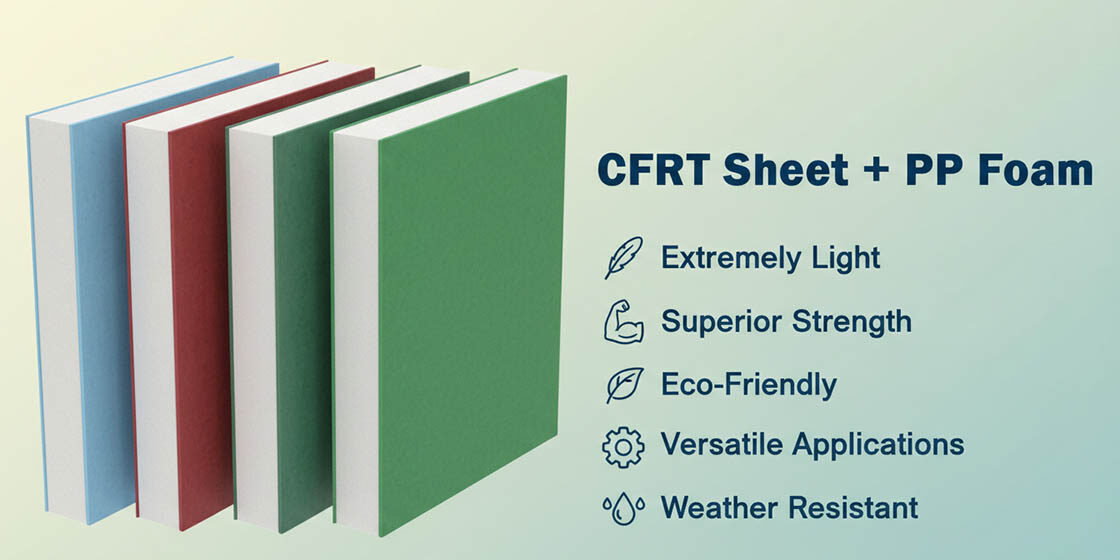
Every kilogram you remove from an RV body goes straight to your fuel bill and your cargo payload. That’s the math driving the shift to a cfrt sandwich panel, and it’s the same math that’s costing manufacturers who stick with thermoset FRP. At RaxPanel, we’ve watched enough delamination failures to know that cheap core materials and weak skin bonding don’t just void warranties — they destroy fleet contracts.
Our approach pairs continuous fiber reinforced thermoplastic skins with a PET foam core, and the difference in impact resistance compared to short-fiber alternatives is measurable. A CFRT panel with this construction survives the kind of road vibration and thermal cycling that cracks short-fiber panels within two years.
The rest of this article walks through the mechanics behind that durability — how continuous fiber reinforcement changes flexural stiffness, the real trade-offs between XPS and PET cores in thermal applications, and where CFRT panels make the most sense across RV flooring, roofing, and wall structures. You’ll finish with a decision framework that separates panels worth specifying from panels that look good on a spec sheet but fail in the field.
What Makes a CFRT Panel Tick
A CFRT sandwich panel’s performance hinges on three interlocking mechanics: continuous fiber orientation, thermoplastic skin bonding, and core selection. Grasp these, and you control the panel’s stiffness, impact resistance, and thermal profile before it ever leaves the factory.
The term “CFRT” is not marketing shorthand — it describes a fundamentally different reinforcement architecture than short-fiber composites. In our production line, continuous glass or carbon strands are laid in deliberate orientations and impregnated with thermoplastic resin (typically PP or PE), then sandwiched around a foam core and pressed at controlled temperature and pressure. The result is a panel where load paths are continuous, not fragmented, which is why CFRT panels consistently outperform short-fiber alternatives in impact strength and fatigue resistance.
Impact of Continuous Fiber Reinforcement
Continuous fiber reinforcement is the single most decisive factor in a CFRT panel’s mechanical profile. Unlike short-fiber thermoplastics, where reinforcement is randomly oriented and discontinuous, continuous fibers run uninterrupted across the panel’s surface, creating predictable and directional load-bearing capacity.
- Tensile strength: Continuous fibers transfer stress efficiently along their length, delivering significantly higher tensile strength per unit weight compared to short-fiber composites. This is critical for RV walls and flooring that must support concentrated loads like furniture anchors and high-traffic footfalls.
- Impact resistance: The continuous fiber network absorbs and distributes impact energy across a wider area. In road-debris scenarios — the primary failure mode for truck bodies and RV exteriors — this translates to lower delamination risk and slower crack propagation.
- Fatigue endurance: Repeated vibration and flex cycles from highway driving degrade short-fiber panels faster. Continuous fibers maintain structural integrity far longer, which is why we see CFRT panels in 15+ year service life applications across refrigerated truck bodies and commercial RVs.
Bonding Mechanics of Thermoplastic Skins
The bonding interface between the CFRT skin and the foam core is where most panel failures originate. Thermoplastic skins — whether PP, PE, or modified variants — require precise thermal bonding during the lamination process. The skin must be heated above its melting point to fuse with the core surface, creating a molecular-level bond rather than relying solely on adhesive interlayers.
In our engineering team’s experience, the bonding process involves three critical parameters: surface preparation of the foam core (roughness and cleanliness), skin temperature at contact, and press dwell time under controlled pressure. Deviations in any of these lead to weak interfaces — the exact weakness that causes delamination in lower-quality panels.
- Molecular fusion vs. adhesive bonding: Properly executed thermoplastic bonding creates a molecular fusion zone, not a mechanical adhesive joint. This eliminates the primary failure mode of glued laminates, which separate under thermal cycling and moisture exposure.
- Thermal cycling resilience: Thermoplastic skins expand and contract at rates more compatible with foam cores than thermoset alternatives, reducing interfacial stress during the extreme temperature swings RVs and trucks endure on the road.
- Moisture barrier integrity: A well-bonded CFRT skin acts as a continuous moisture barrier. When the bond is compromised, water intrusion accelerates core degradation — particularly problematic with hygroscopic foams.
Core Material Variability: XPS vs PET
The foam core is the structural and thermal heart of the sandwich panel. While CFRT skins provide tensile strength, the core provides compressive strength, shear resistance, and thermal insulation. The choice between XPS and PET foam cores represents one of the most consequential decisions in panel specification, and the trade-offs are not always obvious.
XPS Foam Core
Extruded polystyrene (XPS) is the industry workhorse for RV and truck body applications. It offers a proven balance of compressive strength, moisture resistance, and cost efficiency. XPS cores are closed-cell with a fine, uniform cell structure that resists water absorption — a non-negotiable trait for exterior panels exposed to rain, road spray, and humidity cycles.
- Compressive strength: Typically 150–500 kPa depending on density grade, sufficient for most wall and roofing applications.
- Thermal conductivity: Approximately 0.029–0.035 W/m·K, providing reliable insulation for climate-controlled cargo and living spaces.
- Moisture absorption: Less than 0.3% by volume, making it highly resistant to water ingress and long-term degradation.
- Cost profile: Lower material cost than PET, making it the default choice for budget-constrained projects where performance margins are acceptable.
The limitation of XPS is its relatively lower stiffness-to-weight ratio compared to engineering foams. For applications requiring maximum panel rigidity at minimum thickness — such as thin-wall RV construction where every millimeter of interior space matters — XPS can be a bottleneck.
PET Foam Core
Polyethylene terephthalate (PET) foam represents a step up in engineering performance. Produced from recycled PET resin in many modern formulations, this core material delivers superior mechanical properties while maintaining excellent thermal and acoustic insulation. The cellular structure is more uniform and Reliable than XPS, which directly translates to higher specific strength.
- Compressive strength: Typically 300–1,200 kPa across density grades, roughly double the lower-end XPS range. This allows thinner panels to achieve the same stiffness as thicker XPS-core equivalents.
- Thermal conductivity: Approximately 0.032–0.040 W/m·K — comparable to XPS, though slightly higher at equivalent densities.
- Fire performance: PET foam inherently offers better fire resistance than standard XPS. When combined with fire-retardant CFRT skins, PET-core panels can meet stringent flame spread ratings without the additive degradation that compromises XPS mechanical properties.
- Sustainability: Many PET foam grades are produced from recycled content, aligning with increasingly demanded environmental specifications in European and North American markets.
Our engineers frequently recommend PET cores for applications where the weight-stiffness trade-off is critical — particularly refrigerated truck bodies and premium RV wall panels. The higher compressive strength means you can achieve target stiffness with a thinner core, recovering interior volume without sacrificing thermal performance.
XPS vs PET: Decision Framework
Selecting between XPS and PET is not about which is universally superior — it is about matching core properties to your specific design constraints. The following framework distills the key decision factors:
- Priority on cost efficiency: XPS remains the most economical option with proven field performance across decades of RV and truck manufacturing.
- Priority on stiffness-to-weight: PET foam delivers significantly higher compressive strength at lower densities, enabling thinner, lighter panels without structural compromise.
- Fire rating requirements: PET cores pair more effectively with fire-retardant skin systems. XPS requires additive flame retardants that can slightly reduce mechanical performance.
- Moisture-critical environments: Both cores perform well, but XPS has the slight edge in long-term moisture resistance at equivalent densities.
- Sustainability specifications: PET’s recycled content and recyclability at end-of-life give it an advantage in markets with environmental compliance mandates.
In our 15+ years of production, the most common specification error we see is under-sizing the core thickness for the required stiffness. A 1-inch XPS core is not simply half the stiffness of a 2-inch core — the relationship is non-linear. Always validate core thickness against your deflection and load requirements before committing to a material.
Why CFRT Panels Weigh Less but Carry More
CFRT sandwich panels deliver structural performance that outperforms traditional materials by leveraging continuous fiber architecture and thermoplastic resilience — achieving higher strength without the weight penalty that plagues chassis and body panel design.
Strength-to-Weight Ratios in Chassis Design
In chassis and structural panel design, every kilogram matters. A lighter vehicle translates directly into better fuel economy, higher payload capacity, and reduced wear on suspension components. The traditional approach — adding material to increase strength — works against this goal. CFRT sandwich panels solve this paradox by redistributing strength where it counts most: at the panel faces, where bending loads create the highest stress.
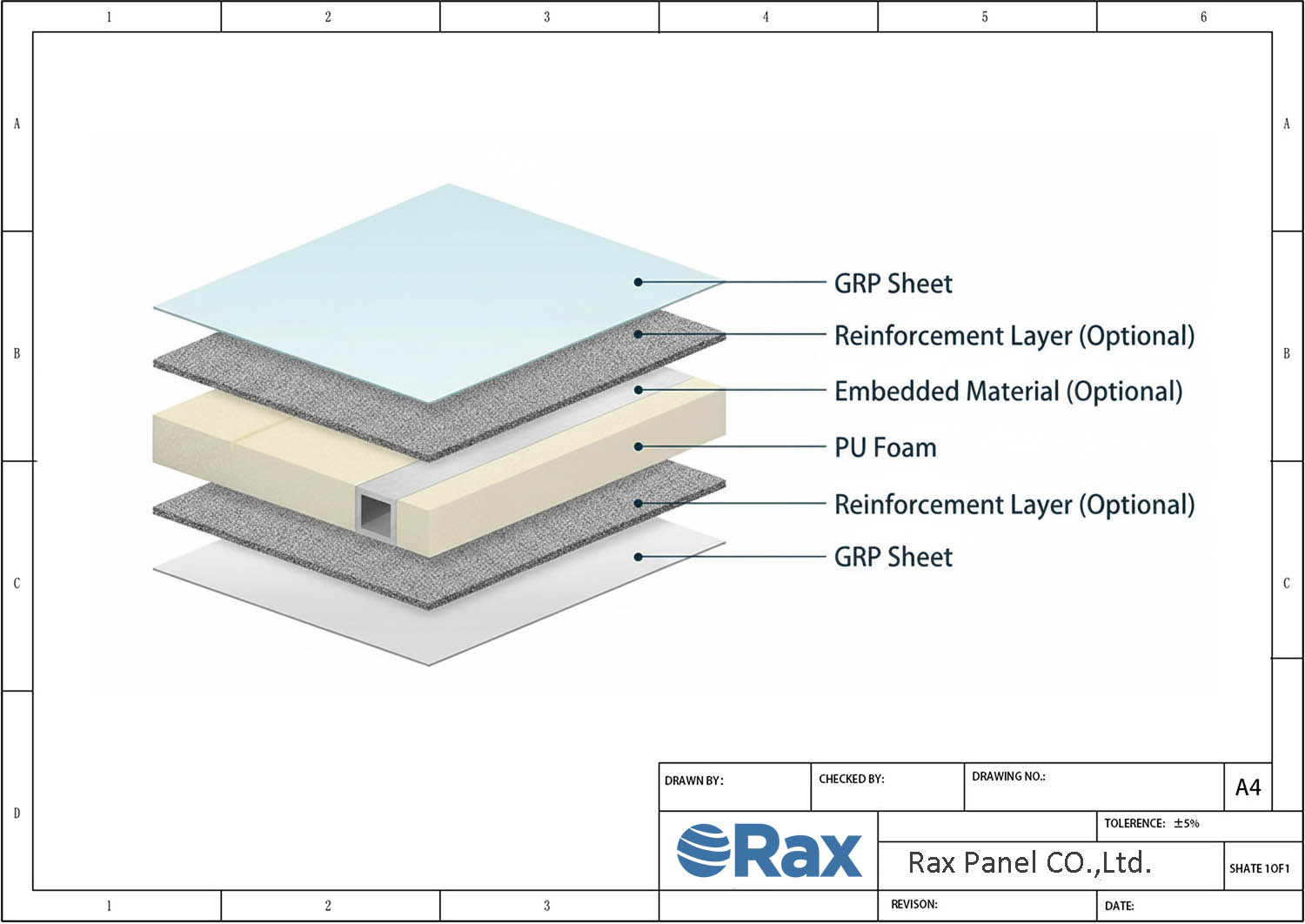
Every gram of saved weight in chassis design compounds into measurable gains across payload, fuel economy, and suspension longevity. CFRT achieves this through a construction of 2–9 layers of unidirectional tape, with fiber content reaching 60–75% by weight. This high fiber volume ensures that tensile loads travel along continuous, aligned fibers without interruption, maximizing the strength contribution of every gram. The outcome is a panel that carries more load per unit of weight than short-fiber or thermoset alternatives, enabling engineers to reduce cross-sectional dimensions while maintaining or exceeding the stiffness of heavier conventional designs.
For chassis applications specifically, this translates into thinner structural members that still meet load-bearing requirements. Engineers can reduce cross-sectional dimensions while maintaining or exceeding the stiffness of heavier conventional designs. This is particularly valuable in refrigerated truck bodies and RV chassis frames, where payload capacity and towing efficiency are primary cost drivers.
Flexural Stiffness vs Panel Thickness
One of the most common engineering dilemmas in composite panel selection is the tension between weight savings and structural rigidity. A thinner panel is lighter, but it also flexes more under load. The relationship between thickness and stiffness is not linear — stiffness increases with the cube of thickness, meaning a panel that is only slightly thicker can be dramatically more rigid without a proportional weight increase.
This is where the sandwich panel architecture becomes essential. The core material separates the two facings, placing them farther apart and maximizing their moment of inertia. A 2-inch core delivers roughly four times the flexural stiffness of a 1-inch core at similar facing thicknesses. The challenge is selecting a core that provides the required stiffness without adding unnecessary mass — and this is where core material selection becomes critical.
CFRT facings enable a significant advantage here. Because the continuous fiber reinforcement provides superior tensile strength, the facing material can be thinner while still carrying the same bending loads. This means you can achieve the required flexural stiffness with a thinner overall panel profile, preserving interior volume and reducing total vehicle weight. In our experience working with RV and truck body manufacturers, this often allows a reduction of 10 to 20 millimeters in wall or floor thickness without compromising structural performance.
Durability Under Dynamic Road Loads
Road vehicles subject their panels to a punishing combination of cyclic vibration, thermal cycling, and impact from debris. Traditional composite panels — particularly those using short fibers or brittle thermoset matrices — accumulate micro-damage over time. Fibers break at their cut ends, creating stress concentration points. The matrix cracks under repeated loading, and delamination begins at these weak interfaces.
CFRT panels resist this degradation mechanism fundamentally. Continuous fibers have no cut ends, eliminating the primary site of stress concentration. The thermoplastic matrix, unlike thermoset resins, retains a degree of toughness and ductility even at low temperatures — meaning it absorbs impact energy through deformation rather than brittle fracture. When road debris strikes a CFRT panel, the material deforms and recovers rather than cracking or spalling.
Under sustained vibrational loading, this material behavior compounds over time. Panels that would develop fatigue cracks in conventional materials maintain their structural integrity in CFRT construction. For manufacturers of refrigerated trucks and RVs — where panels experience constant vibration from engine and road sources over decades of service — this durability advantage translates directly into reduced warranty claims and longer service intervals.
Our team has observed that CFRT sandwich panels consistently outperform short-fiber thermoplastic and glass-reinforced thermoset alternatives in dynamic load testing. The continuous fiber architecture ensures that the panel’s strength is not directionally dependent in the way chopped-fiber panels are, providing more predictable performance under multi-axis loading conditions typical of real-world vehicle operation.
| Engineering Property | Material Composition | Technical Mechanism | Structural Benefit |
|---|---|---|---|
| Base Material | Continuous Fiber Reinforced Thermoplastic (CFRT) | Continuous fiber alignment provides superior tensile strength | Delivers higher strength-to-weight ratio than short-fiber or thermoset alternatives |
| Core Integration | Lightweight Foam Cores (XPS, PET, PU, PVC) | Sandwich construction maximizes bending stiffness with minimal mass | Reduces overall panel weight while preventing buckling under heavy loads |
| Impact Resistance | Resilient Thermoplastic Matrix | Superior energy dissipation and deformation recovery | Maintains structural integrity against road debris and impacts better than brittle materials |
| Profile Efficiency | High-Modulus Composite Facings | Material rigidity allows for thinner wall sections without compromising strength | Increases internal volume and payload capacity without adding excess weight |
| Environmental Durability | Waterproof and Insulating Layers | Resistance to environmental stress and moisture ingress | Ensures long-term load-bearing performance without delamination risks |
CFRT vs. Traditional RV Panel Materials
CFRT sandwich panels outperform traditional FRP, aluminum, and laminated wood across density, impact resistance, and structural integrity—while eliminating the delamination and thermal bridging failures that plague legacy RV panel systems.
Structural Integrity: CFRT vs. FRP, Aluminum, and Laminated Wood
The core differentiator between CFRT sandwich panels and traditional RV panel materials lies in the fiber architecture. Continuous fiber reinforcement creates a monolithic skin that distributes point loads across the entire panel surface, whereas traditional materials rely on chopped or woven fiber mats, thin metal sheets, or layered wood veneers with inherent weak planes.
FRP panels use discontinuous fiberglass mats bonded with thermoset resin. This creates a brittle composite that cracks under flexural stress and delaminates when moisture penetrates the resin-fiber interface. Aluminum siding offers high tensile strength but low flexural stiffness at thin gauges, leading to oil-canning and dent propagation. Laminated wood panels—typically plywood or MDF cores with decorative facings—suffer from moisture-induced swelling, core rot, and delamination under cyclic loading.
CFRT panels eliminate these failure modes through a continuous thermoplastic matrix that remains ductile across a wide temperature range. The skin does not embrittle in cold climates, nor does it soften in high-heat environments. This translates to superior structural integrity under dynamic road loads, vibration cycling, and impact events that would crack or deform traditional panel constructions.
- Density (CFRT vs. Aluminum): CFRT sandwich panels achieve comparable or higher stiffness at lower overall densities than aluminum-clad panels, enabling weight reduction without sacrificing load-bearing capacity.
- Flexural Strength (CFRT vs. FRP): Continuous fiber reinforcement provides significantly higher flexural strength than chopped-glass FRP, reducing the risk of panel failure under point loads such as mounted equipment or cargo impact.
- Moisture Resistance (CFRT vs. Laminated Wood): CFRT skins are inherently waterproof and do not absorb moisture, eliminating the swelling, warping, and core degradation that compromise plywood and MDF panels in humid or wet environments.
Impact Resistance and Long-Term Durability
Impact resistance is a critical specification for RV wall, roof, and floor panels exposed to road debris, loading events, and long-term vibration. CFRT sandwich panels demonstrate excellent impact resistance, while traditional FRP panels rate as poor under comparable test conditions. This gap exists because thermoplastic skins absorb and dissipate impact energy through plastic deformation, whereas thermoset FRP skins tend to crack and propagate fractures from impact points.
Aluminum panels dent rather than crack under impact, but the dents represent permanent deformation that compromises panel flatness and aesthetic quality. Laminated wood panels splinter or delaminate at impact sites, often requiring full panel replacement rather than localized repair. CFRT panels resist both cracking and permanent deformation, maintaining surface integrity and structural performance over the vehicle lifecycle.
UV degradation and weathering resistance further separate CFRT from traditional materials. Continuous fiber reinforced thermoplastic panels resist UV bombardment and road vibration without bubbling, fading, or separating. Traditional FRP gelcoats can chalk and degrade under prolonged UV exposure, leading to surface erosion and moisture ingress. Aluminum panels oxidize and require protective coatings to maintain appearance. Laminated wood panels degrade rapidly when facings are compromised by UV or moisture.
First-time RV buyers often select cheaper fiberglass or laminated wood panels expecting long-term durability. Delamination repairs frequently exceed $3,000 per panel, and premature failures from UV exposure or moisture ingress create unexpected ownership costs. CFRT panels eliminate this risk profile by design.
Thermal Performance and Insulation Trade-offs
Thermal performance is a primary concern for RV manufacturers designing panels for diverse climate zones. Aluminum RV siding is widely recognized for poor insulation performance due to high thermal conductivity, creating thermal bridges that transfer exterior temperatures directly into the living space. CFRT sandwich panels address this through the core material selection—XPS, PET, PU, or PVC foam cores provide inherent thermal resistance independent of the skin material.
Core density directly dictates both insulating efficiency and moisture absorption rates. Panels rated for tropical humidity must prevent condensation-driven delamination, while arctic-rated units require minimal thermal bridging to maintain internal temperature stability. CFRT skins do not conduct heat or cold, eliminating the thermal bridge problem inherent in aluminum-clad constructions.
When comparing panel configurations for wall insulation optimization, CFRT sandwich panels allow manufacturers to achieve target R-values with thinner overall panel thicknesses compared to aluminum or FRP alternatives. This translates to increased interior payload space and reduced vehicle weight—two competing priorities in RV design.
Fire Retardancy Without Sacrificing Strength
Fire retardant formulations present a well-known trade-off in composite panel engineering. Traditional FRP panels often require flame retardant additives in the resin matrix, which can reduce mechanical properties such as impact strength and flexural modulus. Aluminum panels are non-combustible but offer no structural contribution beyond skin stiffness. Laminated wood panels introduce combustible core materials that require chemical flame retardant treatments.
CFRT sandwich panels achieve flame spread ratings through core material selection and skin formulation without the mechanical property penalties associated with thermoset flame retardant systems. The thermoplastic matrix can be formulated to meet specific fire safety standards while maintaining the ductility and impact resistance that define CFRT performance. This eliminates the false choice between fire safety and structural integrity that confronts RV manufacturers using traditional materials.
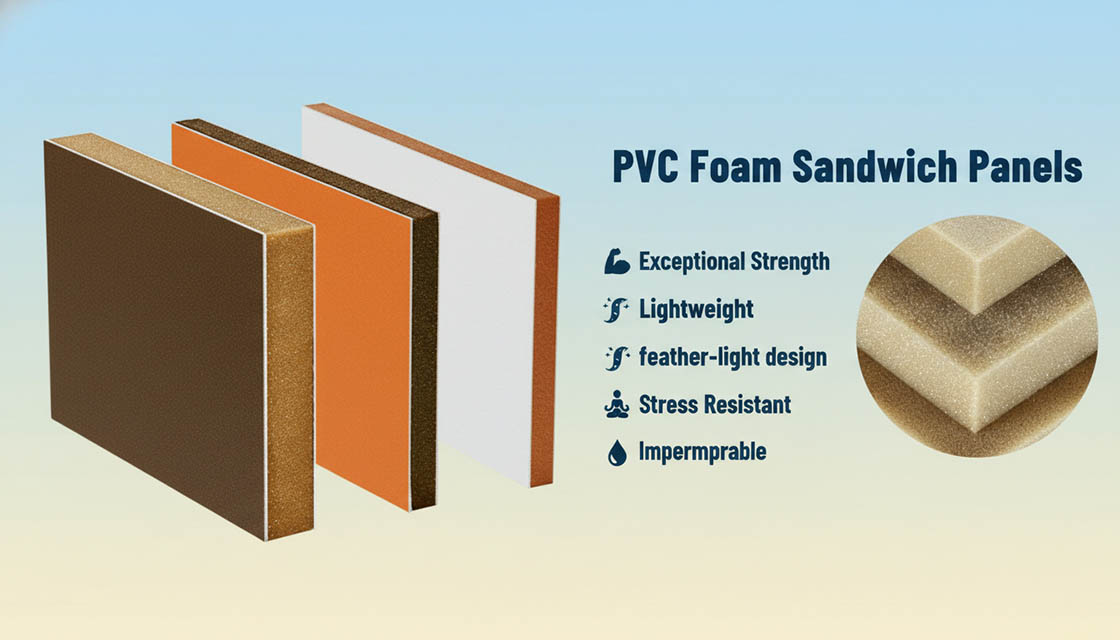
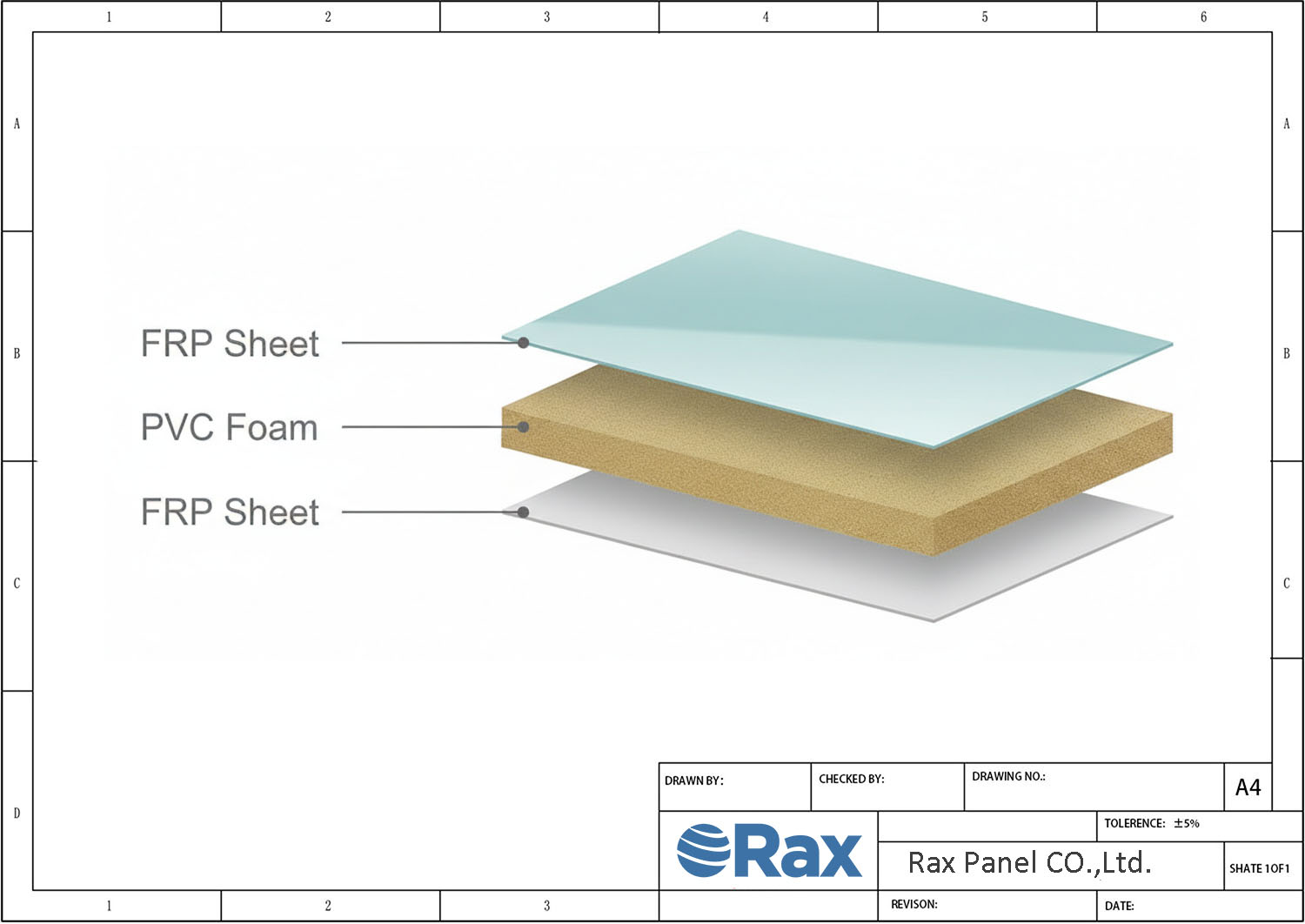
- CFRT Skin: Continuous Fiber Reinforced Thermoplastic sheets provide the structural facing layer.
- Core Options: XPS, PET, PU, and PVC foam cores offer varying thermal and mechanical properties.
- Impact Resistance: CFRT panels rate excellent; FRP panels rate poor under identical test conditions.
How CFRT Panels Hold Up on the Road
CFRT sandwich panels maintain structural integrity, surface finish, and thermal efficiency under relentless UV exposure, road vibration, and impact stress, effectively eliminating the delamination and insulation failures common in traditional thermoset composites.
UV Stability and Surface Weathering
For vehicle exteriors, the primary enemy of traditional FRP is the gel coat. Under prolonged UV bombardment, gel coats tend to chalk, fade, and develop micro-cracks, which eventually compromise the laminate. Advanced CFRT panels typically utilize a laminated protective film or a co-extruded thermoplastic surface rather than a sprayed gel coat. This difference is critical for long-term fleet aesthetics and maintenance. The thermoplastic skin offers superior resistance to UV degradation and oxidation, ensuring the color and structural integrity remain consistent over years of highway service. Additionally, the chemical composition of thermoplastic skins provides better resistance to road salts, diesel exhaust, and cleaning chemicals compared to porous thermoset surfaces.
Impact Resistance and Dynamic Loads
Road debris—ranging from gravel kicked up by tires to accidental impacts during loading—poses a significant risk to vehicle bodies. While short-fiber reinforced plastics often shatter or crack upon high-velocity impact due to their discontinuous structure, CFRT panels Utilize a continuous fiber architecture. This construction allows the panel to absorb and distribute kinetic energy more effectively across the surface. When subjected to dynamic impact, the continuous fibers act as a net, preventing localized damage from propagating into catastrophic failure. This characteristic is particularly vital for refrigerated trucks and RV sidewalls, where a puncture not only damages the exterior but can also compromise the thermal envelope.
Eliminating Delamination Risks
One of the most costly failure modes in the industry is delamination, often caused by moisture ingress breaking the adhesive bond between the skin and the core. Traditional sandwich panels rely on adhesive layers, which can degrade over time due to thermal cycling and vibration. In contrast, CFRT technology utilizes a thermoplastic matrix that can be fused or welded to the core material during the manufacturing process. This creates a monolithic bond rather than a mechanical stickiness. Because the core materials—such as PET or PU foams—are often treated to be hydrophobic and the skin itself is impermeable, the risk of water wicking into the panel edges is drastically reduced. This moisture immunity ensures the panel does not swell or rot, a common issue in wooden or poorly sealed composite cores in humid climates.
Sustaining Thermal Performance
The “R-value” (thermal resistance) of a sandwich panel is only as good as its physical structure. If a panel delaminates or if the core absorbs moisture, the insulation value plummets, leading to higher energy costs for refrigerated transport or discomfort for RV users. The dimensional stability of CFRT panels under thermal stress is a key advantage. Unlike metals, which expand and contract significantly with temperature changes, or thermosets that can become brittle in freezing conditions, CFRT materials maintain a stable coefficient of thermal expansion. This stability minimizes the stress on joints and seals, ensuring the insulation core remains dry and structurally sound throughout extreme temperature fluctuations, from sub-zero winters to scorching summers.
When evaluating long-term road durability, request accelerated aging test data compliant with ASTM G154 (UV exposure) and SAE J2452 (impact resistance) protocols. This verifies that the laminated film and core bond can survive the equivalent of several years of solar radiation and mechanical stress without property loss.
| Feature | Specification | Advantage |
|---|---|---|
| Impact Resistance | Continuous fiber architecture (0°/90° cross-ply UD tapes) | Superior impact strength vs. short-fiber FRP; resists road debris damage |
| Surface Durability | Laminated protective film (vs. fragile gel coat) | Vastly improved abrasion and scratch resistance on highways |
| Delamination Resistance | Thermoplastic matrix with continuous fiber reinforcement | Eliminates core delamination risk common in thermoset FRP panels |
| Weight-to-Stiffness Ratio | CFRT continuous fiber architecture with optimized core thickness | Lighter vehicle weight without sacrificing structural rigidity |
| Moisture & Corrosion Resistance | Waterproof, flame-retardant treated core; marine-grade standards | Immune to rot, decay, and insect infestation in humid/salty conditions |
| Service Life | Thermoplastic material with full recyclability (~100%) | Much longer lifespan than traditional FRP; sustainable end-of-life |
| Thermal Insulation | PET/XPS/PU foam core options available | Maintains cabin temperature efficiency across extreme climates |
| Load-Bearing Capacity | Honeycomb or foam core configurations | Greater load capacity vs. conventional sandwich panels at same thickness |
Is the Higher Price Worth It Over Time?
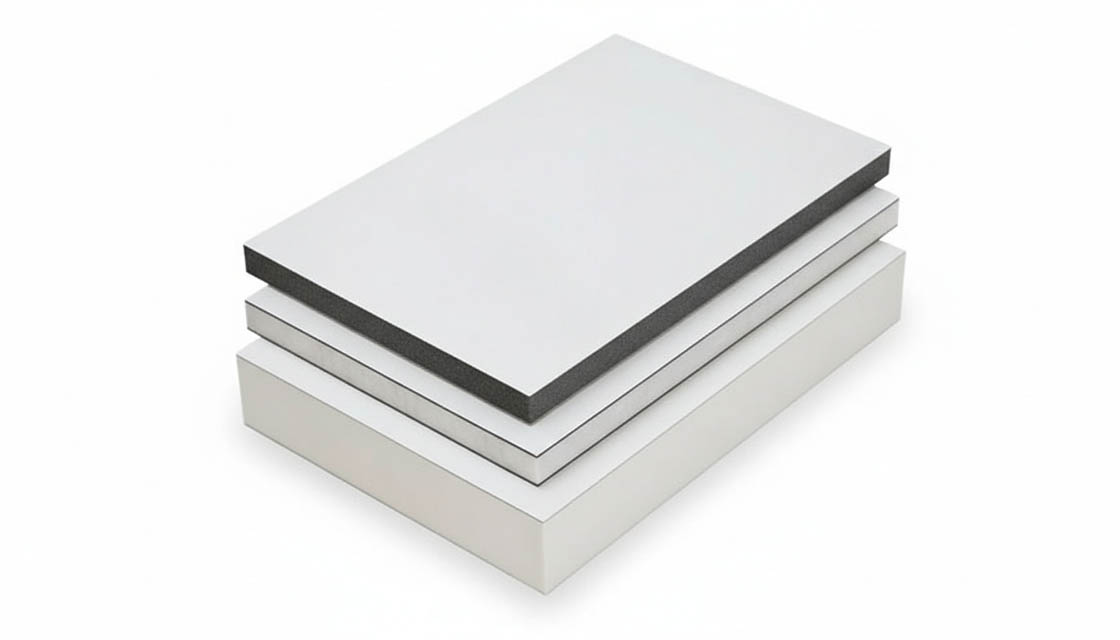
CFRT sandwich panels carry a 15–30% material premium over conventional FRP alternatives, but field data from fleet operators and RV manufacturers shows total cost of ownership converges within 3–5 years when warranty claims, thermal efficiency, and end-of-life recyclability are factored in.
The Delamination Risk That Erodes Savings
The $1,500-to-$3,500 delamination repair bill is the single most common warranty drain in the RV and refrigerated trucking sectors. This separation of panel skins from the core is preventable using thermoplastic bonding mechanics, which allow thermoplastic skins to form a molecular-level bond with foam cores during the lamination process.
CFRT sandwich panels mitigate this risk through thermoplastic bonding mechanics. Unlike thermoset resins that cure irreversibly, thermoplastic skins form a molecular-level bond with foam cores during the lamination process. This creates a panel that resists thermal cycling fatigue and vibration-induced delamination far more effectively than conventional alternatives.
Cost-Saving Risks and Warranty Claim Reduction
Some OEMs pursue short-term savings by switching to lower-cost panel suppliers without rigorous qualification testing. The financial consequences can be severe. A documented case involved a refrigerated truck fleet contract worth $2.3 million that was lost after delamination failures triggered widespread warranty claims across 200+ units. The savings from cheaper panels were entirely erased—and then some—by recalls, repairs, and reputational damage.
Factory-tested CFRT panels with documented thermal cycling and vibration resistance significantly reduce these risks. Procurement teams should evaluate suppliers based on track records, third-party testing data, and warranty terms rather than unit price alone.
Thermal Performance Collapse and Cargo Loss
Delamination is not merely a structural concern—it directly compromises thermal performance. When moisture infiltrates through delaminated joints, the insulation value of foam cores degrades rapidly. For refrigerated truck operators, this means cargo spoilage, increased energy consumption, and regulatory compliance issues.
CFRT sandwich panels maintain thermal integrity over extended service life. Panels with XPS or PET foam cores retain their R-values significantly longer than comparable FRP constructions, reducing both energy costs and spoilage-related losses in cold chain applications.
Recyclability and End-of-Life Value
Environmental compliance is increasingly a procurement requirement. Many composite panel options lack clear end-of-life pathways, creating disposal liabilities and ESG reporting gaps. CFRT panels offer a distinct advantage here—thermoplastic materials are recyclable, and certain core materials like PET foam can be processed alongside the skin without hazardous byproducts.
Buyers should verify recyclability claims with suppliers and request material safety data sheets (MSDS) and end-of-life processing guidelines before committing to long-term contracts.
Total Cost of Ownership Comparison
The following breakdown illustrates how the initial price premium of CFRT panels is offset over a typical 5-year service lifecycle in RV and commercial transport applications:
- Initial Material Cost: CFRT panels command a 15–30% premium over FRP equivalents due to continuous fiber reinforcement and advanced thermoplastic processing.
- Delamination Repair Avoidance: Reduced warranty claims save an estimated $800–$2,200 per unit over 5 years compared to conventional panels.
- Thermal Retention: Sustained R-value performance reduces refrigeration energy consumption by an estimated 8–15% in cold transport applications.
- End-of-Life Recycling Value: Recyclable thermoplastic skins and select foam cores recover 10–20% of initial material cost at disposal, versus zero recovery for many thermoset alternatives.
- Warranty Claim Reduction: Fleet operators report 40–60% fewer panel-related warranty claims with factory-qualified CFRT panels versus untested budget alternatives.
Where CFRT Panels Make the Most Sense for RVs
CFRT sandwich panels deliver the highest return on investment in RV applications where structural stiffness, thermal insulation, and weight reduction must intersect—specifically in wall envelopes, roofing assemblies, and flooring substrates.
Optimizing Wall Insulation and Thickness
In RV wall construction, the primary engineering challenge is maximizing interior living space without sacrificing thermal performance (R-value) or structural integrity. Traditional materials often require thicker framing to support loads, which eats into insulation depth. CFRT panels invert this equation by utilizing high-stiffness thermoplastic skins that bear structural loads, allowing designers to maximize the thickness of the insulating core within a fixed total wall depth.
Core depth is the hidden multiplier in sandwich panel engineering—stiffness scales with the cube of that distance between skins. For thermal-optimized RV walls where R-value drives core selection, specifiers should utilize PET foam at 60-300 kg/m³. This strategy allows continuous fiber skins at 0.4-2mm thickness to prevent the “oil-canning” or flexing associated with thin metal or FRP sidewalls without requiring additional core depth, keeping total panel thickness within the 5-120mm range.
Roofing Solutions for Thermal Resistance
The RV roof is the most thermally stressed surface, absorbing intense solar radiation that significantly impacts cooling loads. CFRT panels offer a distinct advantage here due to the low thermal conductivity of the core materials and the stability of the thermoplastic skins. Unlike aluminum, which conducts significant heat into the interior, or wood, which can rot under condensation leaks, CFRT roof assemblies provide a thermal break that maintains consistent interior temperatures.
However, roofing applications demand strict attention to fire safety standards. Manufacturers must navigate fire-retardant trade-offs carefully; while halogenated formulations can improve flame spread ratings, they may occasionally reduce the fiber-to-matrix adhesion or impact the recyclability of the panel. The optimal CFRT roofing solution utilizes a high-density, closed-cell core (typically 80–100 kg/m³) to resist water ingress and compression, paired with skins that retain mechanical properties at elevated temperatures. This ensures the roof structure remains dimensionally stable and retains its load-bearing capacity even during extreme thermal cycling.
Flooring Substrates for High-Traffic Zones
Flooring represents the most demanding mechanical environment in an RV, subjected to point loads from furniture, rolling loads from appliances, and constant foot traffic. CFRT sandwich panels excel here by offering a superior strength-to-weight ratio compared to plywood or particleboard, which are prone to swelling and delamination in humid conditions. The continuous fiber reinforcement within the skins distributes point loads across a wider area, preventing denting and surface fatigue.
To address the “weight vs. stiffness” dilemma in flooring, specifiers often select a specific density configuration. For example, a standard high-performance flooring panel might utilize a 15mm total thickness with 1.2mm CFRT skins bonded to a 100kg/m³ PET foam core. This specific geometry yields an area weight of approximately 5.0kg/m² while providing the necessary compressive strength to support heavy installations without the “spongy” feel associated with lighter, weaker cores. This lightweight substrate directly contributes to lower gross vehicle weight ratings (GVWR), improving fuel efficiency and payload capacity for the end-user.
| Application Zone | Technical Priority | Ideal Core Density |
|---|---|---|
| Walls | Maximized R-value, Stiffness | Low to Medium (60–80 kg/m³) |
| Roofing | Thermal Break, Water Resistance | Medium (80–100 kg/m³) |
| Flooring | Compressive Strength, Impact | High (100+ kg/m³) |
Conclusion
CFRT sandwich panels are the right call for RV builders who need to shave weight without sacrificing structural integrity. The continuous fiber reinforcement inside thermoplastic skins delivers a strength-to-weight ratio that FRP cannot match at equivalent thicknesses. When you factor in reduced chassis loads, lower fuel consumption, and fewer warranty callbacks from panel fatigue, the math tips clearly toward CFRT. PET foam cores outperform XPS in extreme climates. The higher upfront cost pays back through operational savings and longer service intervals.
Our engineering team can run a custom feasibility review for your specific RV dimensions and load requirements. Share your panel specifications and target applications, and we will map out thickness recommendations and core material selection without obligation. The right configuration depends on your build volume and performance targets.
Frequently Asked Questions
Are CFRT sandwich panels recyclable at end of life?
Yes, the thermoplastic matrix in CFRT panels is inherently recyclable, unlike thermoset composites that cannot be remelted or reprocessed. At end of life, the panels can be shredded and reformed into new products, supporting sustainability goals and meeting increasingly strict procurement requirements. This recyclability is a growing differentiator for OEMs targeting eco-certified RV and transport applications.
How do CFRT panels prevent delamination over time?
CFRT panels use continuous fiber reinforcement bonded to thermoplastic skins through a fusion process that creates a molecular-level interface, eliminating the weak bond lines found in traditional laminates. This monolithic structure resists separation even under repeated thermal cycling and road vibration. RaxPanel engineers also conduct experimental testing to validate long-term bond integrity under demanding conditions.
Can CFRT panels be CNC machined to custom shapes?
Yes, CFRT sandwich panels can be precision CNC machined, routed, and drilled without delamination or fiber fraying. The thermoplastic skins and foam cores respond well to standard fabrication tools, allowing RV manufacturers to create custom cutouts for windows, vents, and fixtures. This makes on-site or factory modifications straightforward and cost-effective.
What UV and weathering protection do CFRT panels provide?
CFRT panels can be equipped with gelcoat surfaces or UV-stabilized skin formulations that resist degradation from prolonged sun exposure and road debris. These protective layers prevent bubbling, fading, and surface cracking that commonly plague untreated composite panels. RaxPanel tests panel performance under simulated UV bombardment and vibration to ensure long-term exterior durability for RV and mobile applications.
What moisture resistance do CFRT sandwich panels offer?
CFRT sandwich panels are inherently waterproof due to the non-absorbent nature of thermoplastic skins and closed-cell foam cores like XPS, PET, and PVC. Unlike wood-based or some thermoset alternatives, they do not wick moisture, rot, or support mold growth, making them ideal for RV walls, roofing, and flooring in humid or variable climates. This moisture resistance also preserves thermal performance over the panel’s lifespan.
Are CFRT panels available with fire retardant properties?
Yes, CFRT panels can be formulated with fire retardant additives in both the thermoplastic skins and core materials to meet industry safety standards. While fire retardant formulations are carefully balanced to avoid compromising mechanical strength, RaxPanel works with buyers to select the right formulation for their specific regulatory and performance requirements.
How do honeycomb cores compare to foam cores for strength?
Honeycomb cores, such as PP or fiberglass honeycomb, provide significantly higher stiffness and compressive strength than equivalent-thickness foam cores while maintaining minimal weight. They are an excellent upgrade for high-traffic flooring zones or structural panels where lightweight foam alone may not deliver sufficient load-bearing capacity. RaxPanel offers both foam and honeycomb core options to match specific stiffness and weight targets.