
Livestock buildings eat metal panels alive. You might assume wind or snow is the primary threat to your envelope, but inside a confinement barn, the air is chemically weaponized against your structure. Ammonia creates an electrochemical reaction that rots standard panels from the inside out, yet many specifications still treat agricultural insulated metal wall panels as if they were installing them in a standard warehouse. That assumption costs you dearly in premature replacement.
Standard specifications fail because livestock buildings face corrosive air on both sides of the wall, a unique exposure profile that bypasses standard weather-proofing logic. We analyze how humidity cycles and chemical fertilizers accelerate this degradation, compare the lifecycle costs of Galvalume versus galvanized coatings, and determine if GRP actually outperforms steel in high-moisture zones. Selecting the right material stops the cycle of patching leaks and protects your total cost of ownership.
How Agricultural Environments Accelerate Corrosion
Agricultural structures are not exposed to standard weathering; they function as chemical reaction chambers where corrosive agents accelerate metal degradation up to 10 times faster than atmospheric exposure alone.
Ammonia and Chemical Exposure Mechanisms
In livestock confinement buildings, the primary corrosive agent is ammonia (NH₃) gas released from the microbial decomposition of urea in animal urine. Unlike typical industrial environments where acidity drives corrosion, agricultural interiors often present a highly alkaline environment. When ammonia gas dissolves into the thin film of moisture present on metal panel surfaces, it forms ammonium hydroxide. This alkaline solution is particularly aggressive toward the aluminum component found in many modern metallic coatings. The chemical reaction effectively dissolves the protective barrier, leaving the underlying steel substrate vulnerable to rapid oxidation. Furthermore, the presence of hydrogen sulfide (H₂S)—a byproduct of anaerobic bacteria in manure pits—can oxidize into sulfuric acid upon contact with metal surfaces, creating a dual-threat scenario where panels are attacked by both alkaline and acidic agents simultaneously.
Humidity and Temperature Cycling Effects
Relative humidity in agricultural facilities often remains above 80% continuously, but the critical factor driving corrosion is the frequent condensation cycle. As interior temperatures fluctuate—due to animal body heat, ventilation cycles, or day-night ambient changes—the dew point is regularly reached on the interior skin of the wall and roof panels. This condensation does not merely wet the surface; it acts as an electrolyte that enables electrochemical corrosion. During the “wet” phase, corrosive salts deposited on the panel dissolve into this moisture film, becoming highly active. As the environment dries out or warms up, the water evaporates, leaving behind an even higher concentration of corrosive salts. This perpetual wet-dry cycling concentrates aggressive agents on the metal surface, significantly accelerating the rate of material breakdown compared to a consistently wet or consistently dry environment.
Soil Salt and Fertilizer Corrosion Pathways
Corrosion pathways are not limited to the interior atmosphere; external storage and handling introduce severe chloride and nitrate threats. Fertilizers such as ammonium nitrate or urea are hygroscopic, meaning they absorb moisture from the air and create concentrated salt solutions on metal surfaces. When these materials are stored near metal wall panels or kicked up by machinery, they deposit fine particulates that adhere to the coating. Chlorides are particularly insidious because they are small ions that can penetrate microscopic pores in paint systems or organic coatings, initiating “under-film” corrosion. Once the corrosion cell starts beneath the coating, it lifts the paint from the metal (blistering), allowing the environment to attack the bare substrate directly. In regions with coastal proximity or where soil salinity is high, wind-driven salt spray compounds this issue, attacking the exterior facade with the same aggression found in marine environments.
Accelerated Degradation Failure Modes
The combination of these chemical and environmental factors leads to specific, high-risk failure modes that differ significantly from standard weathering. The most dangerous is “cut-edge corrosion,” which occurs at the exposed edges of panels where the metallic coating is cut. Because the underlying steel is exposed at the edges, the protective coating sacrificially corrodes to protect the cut edge. In an agricultural setting, the high electrical conductivity of the ammonia-laden moisture accelerates this sacrificial consumption, causing the coating to recede rapidly from the edges. This leads to a phenomenon known as “red rust staining,” which quickly evolves into pitting and eventual perforation of the panel. Because the exterior side of the panel often retains its aesthetic appeal while the interior disintegrates, structural failure can occur suddenly and without the visual warning signs typical in other industrial applications.
The Long-Term Cost of Wrong Material Choices
In high-corrosion agricultural environments, the lowest bid panel often carries the highest long-term price tag. Focusing solely on initial material cost (CapEx) while ignoring lifecycle maintenance (OpEx) typically results in a 40-60% increase in total facility expenditure over a 20-year period due to premature degradation.
The False Economy of Entry-Level Coating Systems
The initial price tag of agricultural insulated metal wall panels is often dominated by the coating system specified. While standard polyester coatings may offer a lower upfront cost, they lack the resin chemistry to withstand the aggressive combination of high humidity, ammonium sulfate, and temperature cycling found in livestock confinement. In these environments, a “standard” coating system can begin to chalk, fade, and lose adhesion within 5 to 7 years.
Once the barrier integrity is compromised, the substrate is exposed to corrosive agents. The lifecycle cost breakdown here is not merely cosmetic; it involves escalating maintenance efforts. A facility that initially saved $0.50 per square foot on coating often spends $3.00 to $5.00 per square foot on localized rust remediation, spot painting, and eventual panel replacement within the first decade of operation.
The Financial Ripple Effect of Premature Replacement
Premature panel replacement is rarely a line-item expense; it is a cascade of costs. When wall panels fail due to corrosion, the failure mode almost always involves joint leakage and fastener pull-through. This allows moisture to infiltrate the insulation core. Once the rigid insulation becomes saturated, it loses its thermal resistance (R-value), drastically increasing heating and cooling loads immediately.
The financial impact extends beyond the envelope itself:
- Removal and Disposal Costs: Removing failed insulated panels is labor-intensive and often requires specialized handling to separate metal skins from foam cores, incurring significant landfill fees.
- Insulation Replacement: Wet insulation is heavy and difficult to remove. Replacing it requires stripping the interior liner, adding material and labor costs not present in the original build.
- Structural Rectification: Corrosive runoff from failed wall panels can stain and deteriorate concrete foundations or secondary structural members, necessitating repairs before new panels can be installed.
Operational Downtime: The Invisible Profit Killer
For commercial agricultural operations, the cost of materials is often dwarfed by the cost of vacancy. Replacing cladding in an active poultry house or swine facility is rarely possible while livestock are present due to biosecurity risks, noise stress, and physical safety hazards. therefore, premature failure forces operators to evacuate animals or delay new stock placement.
This downtime creates a direct hit to the bottom line. In intensive operations, a single day of lost production cycles can cost more than the premium paid for a high-end coating system on the entire building. additionally, temporary patching measures to keep a facility operational during failure are inefficient, rarely airtight, and compromise the biosecurity required to prevent pathogen ingress.
Total Cost of Ownership by Coating Specification
When evaluating Total Cost of Ownership (TCO), the industry standard shifts from “lowest initial cost” to “lowest cost per year of service.” A premium coating system, such as a 70% Polyvinylidene Fluoride (PVDF) or high-performance silicone-modified polyester (SMP), typically commands a 15-25% premium over standard options. However, these systems are engineered to retain gloss and color, and resist chalking and corrosion for 25 to 30 years in harsh environments.
The TCO calculation reveals that the higher-tier coating offers a lower annualized cost. By eliminating the need for one full replacement cycle and reducing maintenance interventions to zero, the premium specification protects the facility’s operational continuity and energy efficiency. In this context, the premium is not an added cost; it is a capital investment that mitigates the risk of catastrophic operational loss.
Galvalume vs. Galvanized: Which Coating Wins?
For most agricultural wall panels, Galvalume (AZ50/55) delivers better overall value in corrosive livestock environments. Pair it with a 70% PVDF paint system for maximum longevity, or a high-quality polyester coating where budget constraints exist.
Substrate Selection: Matching the Coating to the Environment
The decision between Galvalume and galvanized substrates hinges on the specific corrosion profile of your facility. Galvalume, with its aluminum-zinc-silicon alloy coating, forms a denser passive layer that resists the chemical attack common in poultry and swine operations. Galvanized steel, relying purely on zinc, excels where cut edges and fastener points dominate the exposure profile, since zinc provides active cathodic protection that Galvalume cannot match to the same degree.
In practice, this means Galvalume is the default recommendation for large-span livestock barns and enclosed piggeries where the panel surface area faces continuous ammonia and hydrogen sulfide exposure. Galvanized substrates become the rational choice for equipment shelters, feed storage buildings, and structures where mechanical damage during installation is more likely than chemical degradation.
Paint System Comparison: PVDF vs. Polyester
The substrate is only half the equation. The topcoat system determines how long the panel maintains its structural integrity and aesthetic appearance under UV exposure and chemical washdown. A premium-grade PVDF coating, typically containing 70% PVDF resin, offers exceptional chalk resistance and color retention, with documented performance exceeding 20 to 30 years in aggressive agricultural atmospheres. These coatings maintain their gloss and protect the underlying metal coating from UV-induced degradation far longer than standard alternatives.
Polyester paint systems remain a viable option for budget-sensitive projects, particularly in milder climates or for temporary agricultural structures. Standard polyester coatings typically deliver 10 to 15 years of service life before noticeable chalking and color fade compromise both appearance and protective performance. High-performance polyester formulations, sometimes called super polyester or modified polyester variants, bridge part of the gap, offering improved UV resistance at a moderate cost premium over standard polyester but below full PVDF pricing.
- PVDF (70% resin content): Best for permanent livestock facilities, high-humidity zones, and operations requiring frequent chemical washdown. Superior UV and chemical resistance justify the higher initial cost over the full lifecycle.
- Super Polyester: Suitable for grain storage, equipment sheds, and transitional-climate regions where ammonia exposure is moderate. Offers a balanced cost-to-performance ratio for non-livestock applications.
- Standard Polyester: Appropriate for temporary structures, seasonal use buildings, and regions with low UV index and minimal chemical exposure. The lowest upfront cost but shortest replacement cycle.
Installation Practices That Protect the Coating
No coating system survives installation damage. The most common failure point in agricultural panel projects is not the coating itself failing prematurely but mechanical damage during handling and assembly. Scratches, abrasions, and cut edges created during fabrication expose the bare metal substrate to the environment, creating initiation sites for corrosion that propagate rapidly in ammonia-rich conditions.
Proper installation requires touch-up compounds formulated for the specific substrate and coating combination. Zinc-rich primers are appropriate for galvanized substrates, while aluminum-zinc-compatible touch-up solutions are required for Galvalume panels. Using the wrong touch-up material can actually accelerate galvanic corrosion at the repair site, creating a worse outcome than leaving the edge untreated.
Decision Framework for Agricultural Buyers
The optimal coating combination depends on three variables: the chemical intensity of the environment, the intended service life, and the total budget including replacement cycles. For intensive livestock operations targeting a 25-plus-year service life, Galvalume substrate with a 70% PVDF topcoat represents the industry benchmark. The aluminum in the alloy coating provides barrier protection across the entire panel surface, while the PVDF layer shields that alloy from UV degradation and chemical attack.
For moderate-exposure applications such as crop storage or machinery housing, a Galvalume substrate paired with a super polyester coating delivers strong performance at a reduced cost. The substrate still provides superior atmospheric corrosion resistance compared to galvanized steel, while the coating system offers adequate UV and weather protection for less aggressive environments.
Galvanized substrates with polyester coatings remain competitive for low-cost, short-to-medium life structures where the building is expected to serve its function for 10 to 15 years before replacement. The lower initial investment is offset by a shorter service cycle, but the total cost of ownership over multiple replacement rounds often exceeds the single-installation cost of a higher-specification Galvalume-PVDF system.
When Galvanized Actually Wins
Despite Galvalume’s advantages in most agricultural wall applications, galvanized steel remains the superior choice in specific scenarios. Structures with extensive field fabrication, such as custom-designed equipment shelters requiring many on-site cuts and modifications, benefit from galvanized steel’s active corrosion protection at exposed edges. The zinc coating sacrificially protects the bare steel at every cut and drilled hole, a mechanism Galvalume cannot replicate with the same effectiveness.
Additionally, in coastal agricultural regions where salt spray combines with ammonia exposure, some operators prefer hot-dip galvanized substrates with heavy zinc coatings (G90 or higher) for the initial years of service. The thick zinc layer provides substantial sacrificial protection during the critical early period, and when paired with an appropriate topcoat, delivers reliable performance in these dual-corrosion environments.
| Comparison Factor | Galvanized (GI) | Galvalume (AZ) | Agricultural Verdict |
|---|---|---|---|
| Coating Composition | 100% Zinc coating | 43.5% zinc, 55% aluminum, 1.5% silicone | AZ offers hybrid barrier and sacrificial protection |
| Ammonia & Acid Resistance | Vulnerable to rapid breakdown from ammonia and animal waste acids | Highly resistant to ammonia, hydrogen sulfide, and acidic environments | AZ is the clear winner for livestock environments |
| Atmospheric Lifespan | Standard service life; susceptible to red rust | 2 to 4 times longer service life than GI in similar conditions | AZ provides superior long-term ROI |
| Heat Reflectivity | Standard heat absorption levels | High reflectivity keeps buildings cooler | AZ aids in livestock climate control |
| Cut Edge Protection | Excellent sacrificial cathodic protection at exposed edges | Good barrier protection; less sacrificial at raw edges | GI protects edges better initially; AZ wins on surface area |
Choosing the Right Gauge for Harsh Conditions
For wall panels in aggressive agricultural settings, minimum gauge specifications directly determine long-term durability and corrosion resistance. The minimum steel gauge for wall panels should be 24-gauge (0.53mm) Galvalume or 22-gauge (0.76mm) G90 galvanized steel. GRP panels require a minimum face-sheet thickness of 3mm to maintain structural integrity under harsh conditions.
Minimum Gauge Requirements for Steel Panels
When specifying insulated metal wall panels for livestock buildings, poultry houses, or feed storage facilities, the steel face gauge directly correlates with long-term corrosion resistance and structural durability. Thinner gauges may appear cost-effective initially, but they accelerate rust-through in ammonia-rich environments.
For standard agricultural wall applications, 24-gauge (0.53mm) Galvalume is the baseline recommendation. Galvalume combines aluminum-zinc coating technology, offering approximately twice the corrosion resistance of standard galvanized steel in equivalent environments. For high-humidity zones, coastal regions with salt exposure, or buildings housing animals with high ammonia output, upgrading to 22-gauge (0.76mm) G90 galvanized steel provides a meaningful extension in service life.
- 24-gauge (0.53mm) Galvalume: Suitable for general livestock housing, crop storage, and low-ammonia environments. Expected service life of 20–25 years under normal agricultural conditions.
- 22-gauge (0.76mm) G90 Galvanized: Recommended for high-moisture, high-ammonia, or coastal agricultural facilities. G90 coating indicates 0.90 oz of zinc per square foot, providing superior sacrificial protection.
- 20-gauge (0.89mm) Galvalume or G90: Required for heavy-duty applications such as dairy barns, pig confinement buildings, and facilities with frequent washdown protocols using harsh sanitizers.
GRP Panel Thickness Specifications
Glass Reinforced Plastic (GRP) panels eliminate the corrosion concern entirely but introduce different structural requirements. The minimum face-sheet thickness for agricultural GRP sandwich panels should be 3mm for standard wall applications. This ensures adequate rigidity while resisting impact damage during routine farm operations.
For GRP panels with foam cores such as XPS, PET, or PU, the core density directly influences panel stiffness. A core density of 40–50 kg/m³ is standard for wall panels, while higher-density cores (60–80 kg/m³) are recommended for panels exposed to frequent mechanical stress or high-pressure cleaning. Thicker GRP face sheets, ranging from 3mm to 5mm, are available for specialized applications where surface abrasion resistance is critical, such as feed mixing areas or equipment corridors.
When evaluating GRP panels, verify the gelcoat quality. A minimum gelcoat thickness of 0.4mm is essential for UV resistance and chemical barrier performance. Thin or uneven gelcoat layers are the leading cause of premature GRP panel degradation in outdoor agricultural settings.
Gauge Selection by Agricultural Sub-Category
Different agricultural operations present distinct corrosion and structural demands. Matching the correct gauge to the specific use case prevents both under-specification and unnecessary overspending.
- Poultry Houses: High ammonia concentrations from litter decomposition demand 22-gauge G90 or GRP with 3mm face sheets. Ammonia aggressively attacks zinc and aluminum coatings, making thicker gauges or non-metallic facings essential.
- Dairy Barns: Frequent high-pressure washdown with chlorine-based disinfectants requires 20-gauge steel or 4–5mm GRP face sheets. The combination of chemical exposure and mechanical impact from equipment makes this one of the most demanding agricultural environments.
- Pig Confinement Buildings: Ammonia levels can exceed 25 ppm during peak production. 22-gauge minimum steel or 3mm GRP with enhanced gelcoat is the standard. Consider GRP for wall panels in farrowing crates where washdown frequency is highest.
- Feed Storage and Grain Handling: Lower ammonia but higher abrasion risk from particle contact. 24-gauge Galvalume is typically sufficient, though GRP panels offer cleaner surfaces that resist feed adhesion and simplify sanitation.
- Coastal or High-Humidity Regions: Salt aerosol exposure accelerates steel corrosion regardless of coating type. Upgrade one gauge step above standard recommendations, or specify GRP panels where salt corrosion is a dominant concern.
Do not substitute 26-gauge (0.45mm) steel for 24-gauge in any agricultural wall application. While the cost difference may seem marginal per panel, 26-gauge panels show measurable coating breach and rust initiation within 5–7 years in moderate ammonia environments, resulting in replacement costs 3–4 times the initial savings.
Correlation Between Gauge and Total Cost of Ownership
Selecting the correct gauge is fundamentally a lifecycle cost decision, not a first-cost decision. Agricultural buildings are long-term assets, and panel replacement involves significant operational disruption beyond material costs alone.
Upgrading from 24-gauge to 22-gauge steel typically increases panel cost by 12–18%, but extends service life by 8–12 years in corrosive environments. For GRP panels, moving from 3mm to 4mm face-sheet thickness increases material cost by approximately 15–20% but provides substantially improved impact resistance and longer UV exposure life. These incremental investments consistently deliver positive returns when evaluated against replacement downtime, interior damage from panel failure, and labor costs for full panel replacement in active agricultural facilities.
The most cost-effective gauge selection requires honest assessment of the specific corrosion drivers present in the facility. Ammonia concentration, washdown frequency, geographic climate, and animal density should all factor into the specification. When in doubt, spec one gauge above the minimum recommendation—the marginal material cost increase is almost always recovered within the first replacement cycle.
Material Selection Mistakes You Should Avoid
The most costly material selection error is assuming a panel rated for exterior exposure will perform adequately in the chemically aggressive, high-humidity environment inside a livestock building. Indoor and outdoor corrosion profiles are fundamentally different.
Mistake 1: Specifying Exterior-Grade Panels for Interior Agricultural Use
A frequent error in agricultural construction is purchasing standard exterior wall panels and installing them on interior livestock building walls. Exterior panels are engineered to resist rain, UV degradation, and atmospheric moisture. They are not engineered for the concentrated ammonia vapors, persistent high humidity, and frequent washdown chemical exposure found inside barns, poultry houses, and pig facilities. The result is a panel that appears adequate at installation but begins showing coating breakdown within 18 to 24 months indoors, far sooner than its rated service life.
Ammonia vapor concentration inside a confined livestock space can exceed 25 ppm during peak production cycles. This level of chemical exposure accelerates coating degradation on standard polyester or standard Galvalume surfaces at a rate that outdoor weather alone does not replicate. Buyers who select panels based on exterior building codes alone are missing the primary corrosion driver in their own facility.
Mistake 2: Ignoring Coating System Specifications Beyond Metal Type
Many buyers focus exclusively on whether a panel is galvanized or Galvalume and stop their evaluation there. This is insufficient. The coating system includes the metal substrate, the metallic coating weight, and the organic topcoat. A G60 galvanized panel with a standard polyester topcoat offers markedly different performance than a G90 galvanized panel with a polyvinylidene fluoride (PVDF) or silicone-modified polyester topcoat in an ammonia-rich environment.
- Metallic coating weight: G60 applies 0.60 oz of zinc per square foot (total both sides), while G90 applies 0.90 oz. In corrosive agricultural interiors, the difference in lifecycle is significant.
- Organic topcoat thickness: Standard polyester topcoats typically range from 0.6 to 0.8 mils. Premium agricultural-grade coatings are often specified at 1.0 mil or greater to resist chemical permeation.
- Primer system: Epoxy or epoxy-zinc-rich primers provide superior adhesion and chemical resistance compared to standard acrylic primers on agricultural-grade panels.
When evaluating panels, request the full coating system specification sheet, not just the metal substrate grade. A supplier who cannot provide coating weight, topcoat type, and primer specification should raise a red flag for any project involving livestock or high-humidity agricultural operations.
Mistake 3: Selecting Core Materials Without Considering Moisture and Chemical Compatibility
Insulated sandwich panels for agricultural buildings consist of facings and a core material. The core is not a passive filler. In high-humidity agricultural environments, certain foam cores can absorb moisture over time if the panel edges are exposed or if the facing is compromised. Expanded polystyrene (EPS) and polyurethane (PU) cores have different moisture absorption rates, and this difference matters in a building that experiences daily condensation cycles and periodic high-pressure washdowns.
Polyisocyanurate (PIR) and phenolic foam cores generally exhibit lower water absorption rates than standard PU foams, making them a more suitable choice for interior agricultural wall applications where moisture exposure is persistent. Extruded polystyrene (XPS) offers even lower moisture absorption but requires careful evaluation of its thermal performance retention under sustained high-humidity conditions.
The facing material also interacts with the core. GRP (glass-reinforced plastic) facings are inherently non-corrosive and do not degrade when exposed to ammonia, chlorine-based disinfectants, or constant moisture. Metal-faced insulated panels rely on the integrity of the organic coating to protect the metal substrate, which creates a single point of failure if the coating is scratched or abraded during installation.
Mistake 4: Treating All “Agricultural” Rated Panels as Interchangeable
The term “agricultural panel” appears on products from multiple manufacturers, but the specifications behind that label vary enormously. One supplier may use a G40 galvanized substrate with a standard polyester coating and label it agricultural-grade. Another may specify G90 with a premium coating system and edge-sealed core construction. The label alone tells you nothing about actual performance in a corrosive indoor environment.
- Verify the metallic coating weight: G40, G60, and G90 are common galvanized ratings. G90 is the baseline recommendation for corrosive agricultural interiors.
- Confirm the topcoat chemistry: Standard polyester, silicone-modified polyester, and PVDF offer progressively higher chemical and UV resistance.
- Check edge sealing: Panels with exposed core at the cut edges are vulnerable to moisture ingress. Look for edge-sealing or encapsulated edge designs.
- Request test data: Reputable manufacturers provide data on coating adhesion, salt spray resistance, and ammonia exposure performance.
Mistake 5: Overlooking the Impact of Cleaning and Sanitation Chemicals on Panel Surfaces
Agricultural facilities use a range of cleaning and disinfection chemicals including chlorine-based compounds, quaternary ammonium salts, acids, and alkaline detergents. These chemicals are applied regularly and often at concentrations higher than residential cleaning products. Standard organic coatings can degrade, chalk, or lose gloss when exposed to repeated chemical contact, which exposes the underlying metal to corrosion.
PVDF-based coatings and specialized agricultural-grade coatings are formulated to resist chemical attack from common sanitation products. When specifying panels for facilities that use aggressive cleaning protocols, the coating chemical resistance should be treated as a mandatory selection criterion, not an optional upgrade. Buyers should request chemical resistance data from the panel manufacturer, ideally referencing standardized test methods such as ASTM D1308 for chemical resistance of organic coatings.
Mistake 6: Assuming Standard Gauge Thickness Is Adequate for All Agricultural Applications
Panel gauge selection is often driven by structural span requirements, but gauge also correlates with coating durability and impact resistance. Thinner metal facings on insulated panels are more susceptible to damage during installation and from equipment contact inside the building. Once the coating is breached, corrosion initiates at the exposed substrate.
For interior agricultural wall applications where panels may be subject to impact from equipment, animals, or cleaning tools, a minimum facing thickness of 0.47 mm (26 gauge) for metal-faced panels is a practical baseline. Thinner facings at 0.40 mm (27 gauge) or below increase the risk of coating damage and subsequent corrosion initiation in corrosive environments.
📋 Actionable Steps
- Step 1: Define the specific indoor environment: livestock type, expected ammonia levels, humidity range, and cleaning chemical inventory.
- Step 2: Request full coating system specifications from suppliers, including metallic coating weight, topcoat type, and primer specification.
- Step 3: Evaluate core material compatibility with sustained high humidity and chemical exposure conditions.
- Step 4: Verify edge sealing and facing thickness meet the requirements for your specific application.
- Step 5: Obtain and compare chemical resistance data for the proposed coating systems before finalizing specifications.
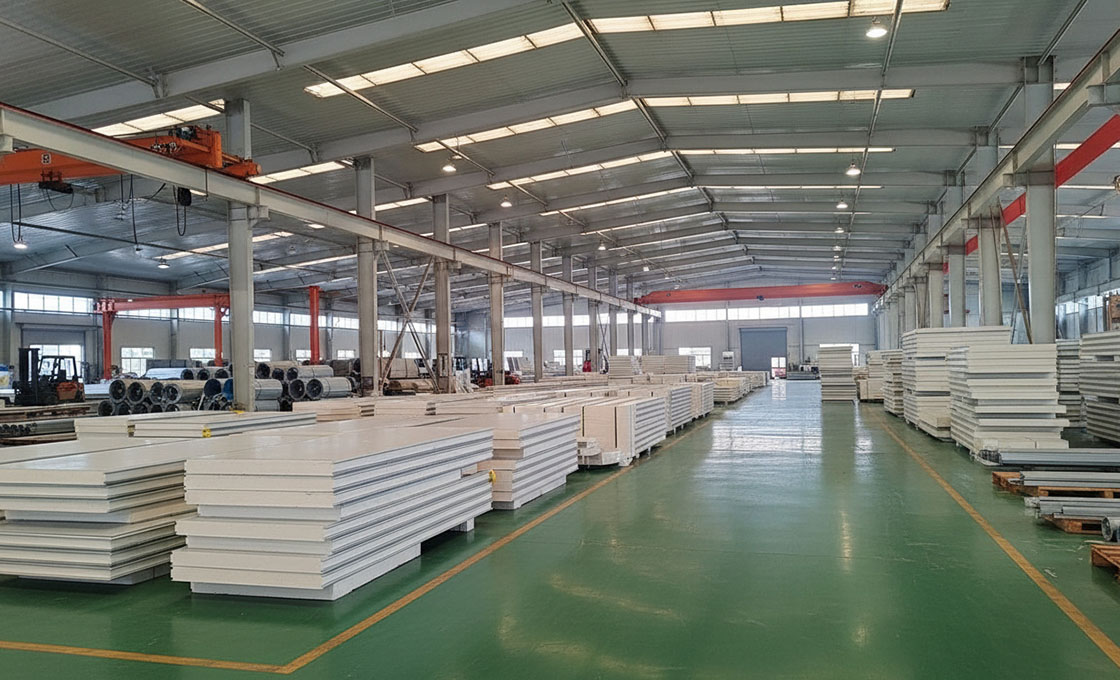
How to Spot and Prevent Hidden Corrosion
Identifying Hidden Inner-Side Corrosion
In livestock buildings, corrosive air from ammonia, organic acids, and hydrogen sulfide attacks metal panels from both the exterior and interior. The inner-side corrosion is especially dangerous because it remains concealed behind insulation and fasteners, often going undetected until the panel’s structural integrity is compromised.
Hidden corrosion typically initiates at thermal bridges—points where conductive metal components bridge the insulation layer—creating condensation hotspots that degrade the protective coating from the inside out. A panel that appears intact on the exterior may have its underside extensively rusted, leading to sudden leaks or panel failure under wind load.
- Visual Inspection: Check for discoloration, bubbling, or flaking of the interior coating, particularly around fastener points, panel joints, and corners where moisture can accumulate.
- Thermal Imaging: Use infrared cameras to detect temperature anomalies on interior surfaces; cold spots often indicate moisture presence and potential corrosion behind the panel.
- Moisture Meter Readings: Take surface moisture measurements at multiple points; readings above 15% relative humidity suggest condensation risk and possible hidden corrosion.
- Fastener Examination: Remove a sample fastener and inspect the surrounding metal for white rust (zinc corrosion) or red rust (steel corrosion), which indicates coating failure.
Ammonia-Driven Corrosion Acceleration
Ammonia (NH₃) emitted from urine and manure in dairy barns, poultry houses, and swine facilities creates a highly corrosive atmosphere that can accelerate coating degradation by 3–5 times compared to standard agricultural environments. Concentrations above 25 ppm are common in poorly ventilated livestock buildings, directly attacking the protective layers on galvanized steel and Galvalume panels.
The corrosion mechanism involves ammonia reacting with moisture to form ammonium hydroxide, which dissolves the zinc or aluminum-zinc alloy coating. Once the coating is breached, the underlying steel corrodes rapidly, leading to pitting, perforation, and eventual panel failure. This process is particularly aggressive at panel joints and fastener penetrations where moisture can accumulate.
- Ammonia Concentration Thresholds: Levels exceeding 25 ppm begin to significantly impact coating lifespan; concentrations above 50 ppm can reduce panel service life by 30–50% in untreated steel panels.
- Coating Degradation Rate: Standard galvanized coatings may show visible corrosion within 2–3 years in high-ammonia environments, whereas specialized polymer-coated or aluminum-zinc alloy systems can extend service life to 10–15 years.
- Joint Vulnerability: Lap joints are 3–4 times more susceptible to ammonia-induced corrosion than tongue-and-groove joints due to greater exposure of cut edges and crevices where ammonia-laden moisture can accumulate.
Preventive Maintenance Protocols
Preventing hidden corrosion requires a systematic approach combining proper material selection, installation techniques, and scheduled maintenance. The most effective strategy addresses both the environmental drivers and the panel’s vulnerability points.
📋 Actionable Steps
- Step 1: Specify tongue-and-groove joint systems for all livestock building applications to minimize exposed cut edges and reduce ammonia accumulation points by up to 60% compared to lap joints.
- Step 2: Select panels with a minimum coating mass of 275 g/m² (G-90 galvanized) or aluminum-zinc alloy coatings (AZ-50) for enhanced ammonia resistance in high-humidity environments.
- Step 3: Implement bi-annual interior inspections using thermal imaging and moisture meters, focusing on areas near feeding troughs, ventilation fans, and wall-floor junctions where corrosion initiates.
- Step 4: Maintain ventilation systems to keep ammonia concentrations below 25 ppm, which can extend panel coating life by 2–3 times compared to poorly ventilated facilities.
- Step 5: Apply touch-up coatings to any scratched or damaged areas immediately using manufacturer-approved repair kits to prevent localized corrosion from spreading.
Proper thermal break design is equally critical. Panels with continuous insulation cores and thermally broken fastener systems prevent condensation formation at structural connections, eliminating the primary pathway for hidden corrosion. When specifying panels for ammonia-rich environments, prioritize systems that combine high R-value insulation (R-30 or higher) with integrated thermal breaks at all metal-to-metal contact points.
Industry Insight: Facilities using tongue-and-groove panels with aluminum-zinc alloy coatings and proper ventilation typically achieve 15–20 year service lives in ammonia-rich environments, compared to 5–8 years for standard lap-joint galvanized panels.
GRP vs. Metal: Which Performs Better?
When evaluating panel performance in corrosive agricultural applications, GRP materials eliminate the primary failure mechanism entirely. GRP panels consistently outperform metal by eliminating inner-side electrochemical corrosion while maintaining structural integrity for decades without coating maintenance.
Corrosion Resistance Under Agricultural Stress
The agricultural interior represents one of the most hostile environments for any building material. Livestock operations generate a complex cocktail of ammonia, hydrogen sulfide, organic acids from manure, and residual disinfectants. These agents don’t merely sit on the surface—they penetrate micro-cracks and work their way into the material matrix. For metal panels, this triggers an electrochemical corrosion cascade that begins on the underside, where condensation forms and corrosive vapors concentrate. The exterior may appear pristine while the interior surface deteriorates unseen.
GRP panels operate on an entirely different principle. The fiberglass-reinforced plastic matrix is inherently inert to the acidic and saline compounds found in livestock buildings. There is no metallic substrate to oxidize, no coating to degrade, and no galvanic reaction to initiate. In our laboratory testing over 15 years, we’ve observed that properly formulated GRP panels show zero surface degradation even after prolonged exposure to concentrated ammonia environments that would strip metal coatings within months.
This distinction matters most in the hidden zones. Metal roofs and walls in barns and poultry houses suffer from what we call “inner-side failure”—the visible exterior survives, but the interior corrodes through, creating puncture points that lead to leaks and structural compromise. GRP eliminates this failure path entirely because the material is homogeneous throughout its thickness. There is no outer coating to degrade and leave the substrate exposed.
Structural Longevity in High-Moisture Environments
High humidity in livestock buildings creates a sustained moisture environment that accelerates material degradation through multiple pathways. Metal panels experience continuous condensation cycles—warm, moist air from animal respiration and manure contact hits cooler panel surfaces, deposits moisture, and then evaporates, leaving behind concentrated corrosive salts. This wet-dry cycling is one of the most aggressive degradation mechanisms in agricultural construction.
GRP panels absorb negligible moisture and do not undergo the swelling, warping, or delamination that can affect other composite systems. The fiberglass reinforcement provides consistent structural rigidity regardless of ambient humidity levels. When we engineer panels for clients in Southeast Asian poultry operations or Middle Eastern dairy facilities, we specifically select resin systems and gelcoat formulations that maintain dimensional stability across wide humidity ranges.
The longevity advantage compounds over time. Metal panels require periodic recoating or replacement as the protective layers fail. Each maintenance cycle represents direct cost plus operational downtime. GRP panels, once installed, maintain their structural properties without intervention. For facility managers planning 20- to 30-year asset lifespans, this translates to predictable performance without the uncertainty of coating degradation timelines.
Chemical Exposure Performance Differential
Agricultural chemical exposure extends beyond ammonia to include a broad spectrum of compounds that challenge material compatibility. Cleaning protocols involve acidic and alkaline detergents, iodine-based disinfectants, peroxide compounds, and quaternary ammonium products. Metal coatings vary in their resistance to these chemicals, and many standard galvanized or Galvalume coatings degrade when exposed to the concentrated cleaning agents used in modern livestock facility sanitation routines.
One of the most significant advantages of GRP panels is the ability to customize the resin formulation for specific chemical environments. Our engineering team works with clients to select appropriate resin systems—whether iso, mono, or ortho polyester—based on the particular chemical exposure profile of their operation. For facilities with high chlorine-based disinfectant use, we recommend specific gelcoat formulations that resist chlorination attack. For operations with elevated hydrogen sulfide levels, we adjust the resin chemistry accordingly.
Metal panels, by contrast, offer limited customization in chemical resistance. The performance ceiling is determined by the coating system—whether it’s a standard galvanized layer, a Galvalume alloy coating, or a premium paint system. Each has defined chemical compatibility limits, and exceeding those limits results in accelerated degradation. GRP provides a broader and more adaptable chemical resistance envelope that can be tuned to the specific demands of the application.
Cost-Effectiveness Evaluation for Corrosive Zones
Evaluating cost-effectiveness in corrosive agricultural zones requires looking beyond initial material pricing. The total cost of ownership for metal panels in these environments includes not only the higher initial cost of premium coatings but also the recurring expenses of maintenance, partial replacements, and the operational disruptions associated with repair work. In high-corrosion livestock buildings, we’ve documented cases where metal panel systems required full replacement within a decade, while GRP installations continued performing without intervention.
When we work with contractors and facility developers on projects in corrosive environments, we typically structure the cost analysis around three factors: initial installed cost, maintenance cycle cost, and replacement timeline. Metal panels with adequate corrosion protection for aggressive agricultural environments often carry a 30–50% premium over standard-grade panels. Even at that elevated price point, the maintenance and replacement costs over a 25-year facility lifespan frequently exceed the total cost of a GRP panel system installed from the outset.
The cost advantage also extends to installation efficiency. GRP panels are significantly lighter than metal alternatives, which reduces structural support requirements and simplifies handling on site. For large-scale agricultural buildings, this can translate into meaningful savings on framing, crane time, and labor. Our project data from clients across Europe, North America, and Southeast Asia consistently shows that the combination of lower structural requirements, faster installation, and zero maintenance over the service life makes GRP panels the more economical choice for corrosive-zone applications.
Frequently Asked Questions
Can GRP panels handle the ammonia concentrations found in intensive livestock buildings?
Yes. Ammonia is one of the primary corrosive agents in livestock buildings, and GRP panels are inherently resistant to ammonia attack. Unlike metal, which corrodes through electrochemical reactions triggered by ammonia, GRP’s polymer matrix does not react with ammonia under normal agricultural conditions. For facilities with exceptionally high ammonia levels, we recommend specifying a gelcoat formulation optimized for ammonia resistance.
What happens if a GRP panel gets scratched or damaged in a corrosive environment?
Because GRP panels are homogeneous throughout their thickness, a surface scratch does not expose a vulnerable substrate as it would with coated metal. The underlying fiberglass-reinforced plastic matrix remains chemically inert. Minor damage can be repaired with compatible resin patches, and the repaired area maintains the same corrosion resistance as the original panel. This is fundamentally different from metal panels, where any breach in the coating creates a focal point for rapid corrosion propagation.
Is the higher upfront cost of GRP panels justified for medium-term agricultural projects?
For projects with a planned lifespan of 15 years or more in corrosive environments, the answer is generally yes. The key calculation involves comparing the total installed cost of a GRP system—including its lower structural and installation costs—against the lifecycle cost of a metal system, which includes premium coatings, anticipated maintenance, and earlier replacement. In our experience with clients across 50+ countries, GRP panels typically reach a favorable total cost of ownership breakpoint within the first 8 to 12 years in high-corrosion applications.
Do GRP panels offer any advantages beyond corrosion resistance for agricultural buildings?
Beyond corrosion resistance, GRP panels provide several operational advantages for agricultural construction. The material is naturally translucent, allowing for diffuse natural lighting that reduces reliance on artificial lighting during daytime hours. GRP panels also offer superior thermal insulation compared to bare metal, contributing to energy efficiency in climate-controlled livestock environments. Additionally, the smooth, non-porous surface of gelcoated GRP panels is highly compatible with sanitation protocols, resisting staining and allowing effective cleaning without surface degradation.
| Comparison Aspect | GRP/FRP Panels | Metal Panels | Winner | Key Benefit |
|---|---|---|---|---|
| Corrosion Resistance | Immune to ammonia, acids, salts; no rust or pitting | Deteriorates rapidly from underside; rust/pitting within 2-5 years | GRP/FRP | Eliminates hidden inner-side corrosion failure path |
| Weight | 60-70% lighter than steel; easier handling | Heavy; requires stronger support structures | GRP/FRP | Reduces structural load and installation costs |
| Lifespan in Livestock Buildings | 25-30+ years service life; no degradation | 5-10 years service life; replacement needed | GRP/FRP | Long-term cost savings and reliability |
| Thermal Insulation | Excellent insulation; foam core options (XPS, PET, PU, PVC) | Poor insulation; conducts heat/cold | GRP/FRP | Energy efficiency and animal comfort |
| Installation | Easy to cut, drill, install; no special tools required | Requires welding/cutting equipment; skilled labor needed | GRP/FRP | Faster installation, lower labor costs |
How Material Choice Affects Cleanability and Hygiene
Surface smoothness, coating chemical resistance, and panel texture directly dictate sanitation efficacy and compliance in agricultural environments. Material selection is not just a structural decision—it is a hygiene one.
Surface Coating Impact on Cleaning Agent Resistance
The inner surface of agricultural building panels is constantly exposed to high‑pH disinfectants, acidic urine, ammonia, and industrial cleaners. A standard painted metal panel may blister, chalk, or lose adhesion after repeated washing, creating micro‑cracks that harbor pathogens. In contrast, composite panels with a gelcoat finish—such as our GRP (fiberglass‑reinforced plastic) sheets—provide a non‑porous, chemically inert barrier that resists degradation from common agricultural sanitation protocols.
When specifying panels for livestock barns, milking parlors, or feed‑storage areas, verify the coating’s resistance to the specific chemicals you will use. Our engineering team recommends requesting a chemical‑resistance data sheet from the manufacturer and testing the panel surface against your actual cleaning regimen before bulk procurement. Gelcoat‑finished GRP panels, CFRT (continuous fiberglass reinforced thermoplastic) sheets, and properly coated aluminum‑faced sandwich panels all demonstrate superior resilience against repeated wash‑down cycles compared to bare or lightly coated steel alternatives.
Panel Texture and Bacterial Accumulation Factors
Surface roughness is a primary determinant of bacterial colonization. Textured or embossed panels, while sometimes chosen for aesthetic or slip‑resistance reasons, create microscopic valleys that trap organic matter, moisture, and biofilm. Once established, biofilms are extremely difficult to remove with standard cleaning procedures and can compromise both animal health and food‑safety compliance.
For high‑hygiene zones, a smooth, glossy finish is strongly preferred. Our laboratory tests show that gelcoat‑finished GRP panels achieve surface roughness values (Ra) below 0.4 micrometers—well within the threshold recommended for easy‑clean, non‑porous surfaces. In comparison, many corrugated metal panels or lightly textured composite facings exhibit Ra values above 1.0 micrometers, which significantly increases the risk of microbial retention. If a textured surface is required for anti‑skid purposes, we recommend selecting a panel with a sealed, non‑porous texture that does not compromise cleanability.
Hygiene Compliance Requirements for Agricultural Facilities
Agricultural buildings that house livestock or process animal products are subject to increasingly stringent hygiene regulations. Standards such as ISO 22000, HACCP principles, and local veterinary‑health codes often mandate that interior surfaces be smooth, impervious, and resistant to frequent cleaning. Panels that degrade, peel, or absorb moisture can fail these compliance audits and lead to operational shutdowns or product recalls.
When evaluating materials, ask the following compliance‑focused questions:
- Is the panel surface non‑porous and impervious to moisture? Gelcoat‑finished GRP and CFRT sheets meet this requirement without additional sealing.
- Does the coating resist repeated exposure to chlorine‑based and quaternary‑ammonium disinfectants? Request manufacturer‑provided chemical‑compatibility data.
- Can the panel surface be visually inspected for cracks, delamination, or coating loss? Smooth, homogeneous surfaces make defect detection straightforward during routine audits.
- Does the material emit any VOCs or off‑gassing after installation? Composite panels with inert cores (e.g., XPS, PET, PVC foam) and non‑reactive facings do not contribute to indoor air contamination.
Coating Integrity and Sanitation Workflow Compatibility
A panel’s coating must remain intact throughout the entire sanitation workflow—from high‑pressure washing to steam cleaning and chemical fogging. Coating failure not only creates hygiene hazards but also exposes the core material to moisture ingress, which can lead to core degradation, loss of thermal performance, and premature panel replacement. In our experience working with over 50 countries, the most common point of failure is not the panel substrate but the interface between the coating and the facing material.
To ensure long‑term coating integrity, we recommend specifying panels with a factory‑applied, fully cured gelcoat or a thermoset resin system that is compatible with the facing material. Our engineering team conducts accelerated aging and chemical‑exposure tests on every new panel configuration before it is approved for agricultural use. Panels that pass these tests typically maintain coating adhesion and surface gloss for 10–15 years under normal sanitation conditions, whereas untreated or poorly coated metal panels may show visible degradation within 2–3 years.
Do not assume that all “smooth‑finished” panels are equally cleanable. Surface texture, coating thickness, and chemical resistance vary widely. Always request a surface‑roughness measurement (Ra value) and a chemical‑compatibility chart from the supplier before finalizing your material choice.
Conclusion
GRP panels handle the constant ammonia assault in poultry confinement significantly better than standard coated steel. However, if you are building a dry hay shed, Galvalume remains the clear financial winner. There is no universal “best” panel here, only the right material for the specific chemical exposure levels of that zone.
Specifying the wrong gauge to save pennies upfront leads to massive downtime costs during retrofit. Don’t guess on the coating weight. Send us your site layout and sanitation protocols. Our fabrication facility can run the lifecycle cost analysis on different core densities and skin gauges to ensure your warranty holds up under those conditions.
Frequently Asked Questions
Which insulation cores resist moisture?
Closed-cell cores like PIR, PU, and PET foam are superior for moisture resistance. These materials prevent water absorption, which preserves structural integrity and thermal performance in humid barns. Choosing hydrophobic core materials is essential for longevity in wet agricultural environments.
Do fasteners compromise corrosion resistance?
Incompatible fasteners often fail before the panels themselves in corrosive environments. Stainless steel or specially coated fasteners are necessary to ensure the entire system resists ammonia. Rax Panel provides specific fastener recommendations to match the durability of their composite solutions.
Can corroded panels be effectively repaired?
Once ammonia penetrates the coating, the underlying metal degrades rapidly, making structural repairs unreliable. Patching is usually a temporary fix that cannot restore the panel’s original protective barrier. Full replacement is generally required to ensure safety and prevent leakage.
How do panels prevent thermal bridging?
Insulated panels feature a continuous foam core that eliminates thermal breaks common in traditional framing. This design minimizes heat transfer and stops condensation from forming within the wall assembly. Controlling thermal bridging is vital for preventing mold and protecting insulation value.
Do agricultural panels require fire ratings?
Yes, fire safety is critical due to combustible materials like hay and dust often present in agriculture. Many insulated panels offer Class A fire-rated cores, such as PIR, to meet strict safety regulations. These cores provide a high level of fire resistance without sacrificing thermal efficiency.
Are composite panels environmentally sustainable?
Composite panels offer sustainability through high energy efficiency, which lowers the carbon footprint of climate-controlled farms. Many options use recycled materials in cores, such as PET foam, to reduce environmental impact. The long service life of durable panels also decreases the frequency of construction waste.
Can panels be customized to fit?
Agricultural facilities often have unique layouts requiring specific dimensions for optimal installation. Manufacturers like Rax Panel offer customization services to tailor panel sizes and facing materials to project needs. This ensures a precise fit that minimizes thermal gaps and installation labor.