

Spec sheets often list impressive thermal resistance, but if you do not verify the calculated U-value for the full assembly, you risk installing a system that fails local energy codes. Many distributors assume an insulated metal panel manufacturer validates these metrics in-house. That is a dangerous assumption. Unverified fabricators frequently copy raw material data without testing the finished composite panel, causing delays that destroy your landed cost per unit.
Misunderstanding the difference between a material’s R-value and the finished assembly’s U-value remains a leading cause of thermal performance gaps, even in facilities claiming full compliance. We will walk you through auditing production lines to confirm factory ownership, validating that daily output capacity matches your project timeline, and distinguishing manufacturers from trading companies. You will learn to verify ISO and UL certifications against actual test reports rather than taking a sales representative at their word.
This approach moves your vetting process beyond price quotes to a technical assessment that prevents reputational damage and margin erosion.

How Supplier Failures Drive Up Costs and Delay Timelines
Supplier failures in insulated metal panel production compound across material defects, bonding inconsistencies, and compliance gaps—adding 15% to 40% in hidden costs and delaying project timelines by weeks. Due diligence before bulk ordering is the only reliable cost control.
Cost of Material Defects and Rework in Composite Panel Production
Material defects in composite panels are among the most expensive failures in construction projects. When a batch of insulated metal panels arrives with inconsistent core density, warping, or surface imperfections, the cost does not stop at replacement. Rework on-site requires demobilization of crews, additional lifting equipment, and extended project schedules—all expenses that cascade far beyond the original panel price.
A single defect discovered after installation can cost five to ten times the original panel value when factoring in labor, crane time, and material waste. Panels that fail flatness tolerances or exhibit visible core exposure demand complete removal and replacement. The structural integrity of the building envelope is compromised, and insurance claims or warranty disputes often follow.
- Core density variation: Panels with inconsistent foam density create thermal bridging and reduced R-value, requiring full replacement rather than spot repair.
- Surface coating defects: Peeling, discoloration, or inadequate paint thickness on metal facings necessitate replacement panels and delay exterior finishing.
- Dimensional inaccuracies: Panels outside tolerance bands create installation gaps, compromising weather sealing and requiring custom modifications on-site.
Timeline Delays from Inconsistent Foam Core and Facing Bonding
The lamination process that bonds foam core to metal facings is the most critical quality checkpoint in sandwich panel manufacturing. Inconsistent bonding—caused by inadequate adhesive application, improper curing time, or temperature fluctuations during production—creates delamination risks that are not always visible at delivery.
When panels with weak core-to-facing bonds are installed and exposed to thermal cycling, delamination can occur months later. This triggers emergency rework, structural reassessment, and potential liability claims. The timeline impact is severe: a project that should take eight weeks can extend to sixteen weeks or more when bonding failures are discovered post-installation.
Delivery delays from production bottlenecks compound these issues. Suppliers without adequate capacity or poor production scheduling cannot meet committed delivery dates. When a supplier misses a deadline by two to four weeks, the entire construction sequence shifts. Subcontractors are rescheduled, equipment rentals extend, and financing costs increase. For projects with high minimum order quantities, delayed deliveries also tie up capital in uninstalled inventory.
Hidden Expenses of Unverified GRP and CFRT Panel Suppliers
GRP (Glass Reinforced Plastic) and CFRT (Continuous Fiber Reinforced Thermoplastic) panels offer lightweight, corrosion-resistant solutions for demanding environments. However, suppliers who cannot verify their raw material sources or production capabilities introduce significant hidden costs.
Unverified suppliers may substitute materials—using lower-grade resins, reduced fiber content, or recycled thermoplastics—without disclosure. The panels appear acceptable at delivery but degrade prematurely in service. Chemical exposure, UV degradation, or mechanical stress reveals the substitution, requiring full replacement at two to three times the original cost when accounting for removal and reinstallation.
- Material substitution risk: Unverified suppliers may use non-specification resins or fiber types, reducing panel lifespan by 40% to 60% in corrosive environments.
- Testing gaps: Suppliers without in-house testing cannot provide batch-specific performance data, forcing buyers to fund third-party verification after delivery.
- Custom specification failures: Panels ordered to specific fire ratings, thermal performance, or dimensional requirements may not meet specifications when sourced from unverified manufacturers.
Financial Impact of Non-Compliant Sandwich Panel Deliveries
Non-compliant sandwich panel deliveries represent one of the most financially damaging scenarios in construction procurement. Panels that fail to meet certified fire ratings, thermal performance standards, or structural requirements cannot be used as specified—and they cannot be easily modified on-site.
The financial impact extends across multiple dimensions. First, the cost of replacement panels includes not only the new material but also disposal fees for non-compliant inventory. Second, project delays trigger liquidated damages in many construction contracts, typically ranging from $500 to $5,000 per day depending on project scale.
Insurance implications are equally significant. Non-compliant panels may void building insurance coverage or result in premium increases. In some jurisdictions, installation of non-compliant materials can trigger regulatory penalties and mandatory removal orders.
- Replacement costs: Non-compliant panels require full removal and replacement, with costs typically 2.5 to 4 times the original panel price when including labor and disposal.
- Delay penalties: Construction liquidated damages for project delays caused by non-compliant deliveries can reach $500 to $5,000 per day.
- Insurance and regulatory risk: Non-compliant materials may void coverage or trigger penalties, adding hidden costs that far exceed the panel purchase price.
- Cash flow impact: High minimum order quantities from unverified suppliers tie up capital in unusable inventory, creating liquidity strain during project execution.
📋 Actionable Steps
- Step 1: Request batch-specific test reports and third-party certifications before order placement, not after delivery.
- Step 2: Conduct pre-shipment inspections or hire third-party quality control firms to verify panel specifications against purchase order requirements.
- Step 3: Include penalty clauses in contracts for non-compliant deliveries, covering replacement costs, delay damages, and inspection fees.
- Step 4: Verify supplier production capacity and quality control processes through facility audits before committing to bulk orders.
How to Tell If a Supplier Is a Real Manufacturer
A real manufacturer owns the factory, controls the process, and can prove it. Trading companies resell; they don’t build.
Verifying Factory Ownership Through Production Line Evidence
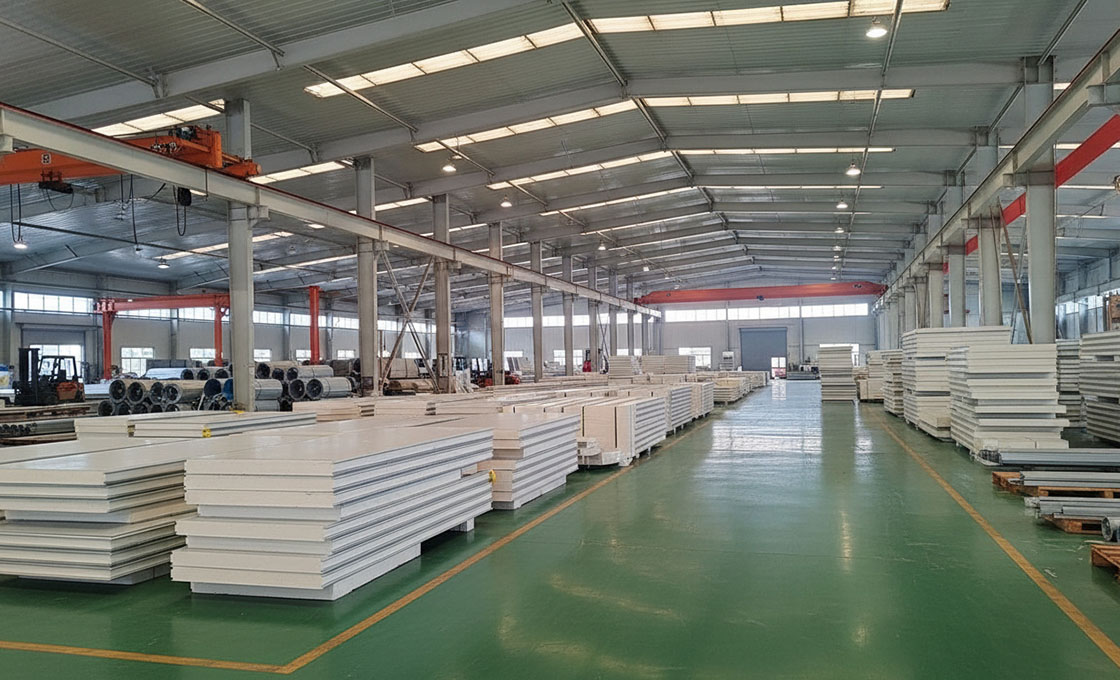
The first question you need answered is simple: do they actually own the facility, or are they leasing a warehouse for assembly? Factory ownership is the most reliable proxy for quality control, because a company that owns its production line has skin in the game. You can verify this in three ways—business license matching the factory address, production line photographs with timestamps, and, ideally, a live video walkthrough.
When we first vetted our own facility for international buyers, we found that the single most effective proof point was a real-time video call through the production floor. Anyone can send polished photos. Anyone can show a finished panel. But walking you down the line, showing raw material intake, lamination stations, curing zones, and quality checkpoints—that tells you everything about who they are.
One red flag to watch for: suppliers who can only share images from a corporate showroom or a single product display area. A manufacturing operation spans far more than a finished goods floor. If they can’t show you the incoming material bay, the core cutting station, or the press area, that’s a signal worth noting.
Assessing In-House R&D and Engineering Team Capabilities
Composite panel manufacturing sits at the intersection of materials science and applied engineering. A supplier that only produces off-the-shelf panels from a catalog is likely following others’ designs, not creating them. The real differentiator is an in-house R&D team that can engineer solutions around your specific project requirements—core density, facing material selection, thermal performance targets, and structural load ratings.
Our engineering team works directly with procurement specialists from RV manufacturers, truck body builders, and marine fabricators to develop custom panel configurations. We don’t just hand them a standard spec sheet. We run experimental tests, validate performance data, and adjust material combinations until the product meets the exact requirements of the application. That level of customization doesn’t come from a trading desk—it comes from people who understand the material science behind what they’re building.
When evaluating a supplier’s engineering capability, ask these direct questions: Do they have a dedicated design team? Can they walk you through a past customization project from brief to delivery? Do they maintain a material library of core and facing combinations, or are they limited to a fixed catalog?
- Dedicated engineering team: Look for engineers who specialize in composite materials, not general sales staff who can only relay information.
- Prototype development process: A serious manufacturer will have a documented process for moving from concept to production sample to full-scale manufacturing.
- Material library breadth: Suppliers with deep expertise typically offer a wide range of core materials—XPS, PET, PU, PVC, PMI, EPP, MPP—and multiple facing options including GRP, CFRT, aluminum, steel, and plywood.
Confirming Daily Output Capacity and Facility Scale
Production capacity is one of the most frequently inflated claims in the B2B composite panel space. Sales teams will say “large output” or “high capacity” because those phrases are easy to say and impossible to verify from a brochure. The buyers who protect themselves are the ones who ask for specific, measurable figures.
Capacity isn’t just a number—it’s a reflection of your supplier’s operational maturity. A facility running a single shift with basic equipment will have a fundamentally different output ceiling than one operating multiple shifts with automated production lines and continuous quality monitoring. When we evaluated our own capacity planning, we found that the most honest way to communicate scale is through verifiable metrics: daily production area, equipment inventory, and shift arrangements.
To assess a supplier’s real capacity, request their production schedule, equipment list, and shift structure. Cross-reference their stated capacity against these documents. If the numbers don’t align, that’s a gap you need to understand before committing to a bulk order.
A supplier may claim high capacity but lack the quality control infrastructure to sustain it. Always verify that their production volume claims are matched by evidence of process monitoring and inspection protocols.
Distinguishing Manufacturers from Trading Companies in Panel Supply
This is where the distinction matters most—and where buyers get burned most often. A trading company is not inherently a bad choice. They can offer convenience, consolidate orders from multiple factories, and handle logistics. But they are not a manufacturer, and they cannot guarantee what a manufacturer can: process control, material traceability, engineering responsiveness, and accountability when something goes wrong.
The practical test is straightforward. Ask a technical question about a panel specification—something that requires knowledge of the manufacturing process, not just the product catalog. A trading company will defer to their factory contact and come back with a generic answer. A manufacturer will answer directly, often with nuance that only someone on the production floor would know.
- Business license vs. factory address: A manufacturer’s license will list a factory address that matches their production facility. A trading company’s license will typically show a commercial office address.
- Product range depth: Manufacturers with in-house R&D typically offer extensive customization across multiple panel types and material combinations. Trading companies are limited to what their contracted factories can produce.
- Response time and technical depth: When you describe a custom project requirement, a manufacturer’s engineering team can engage immediately. A trading company must route your question through another company’s team, adding delay and the risk of miscommunication.
- Sample-to-bulk consistency: Manufacturers control the process from raw material to finished panel. Trading companies rely on the quality systems of whichever factory they’ve sourced from that order—and that factory may change between samples and production runs.
The bottom line: if your project demands consistency, customization, and accountability, you need a manufacturer—not a middleman. The verification steps above aren’t just due diligence. They’re the difference between a reliable supply chain and a costly lesson in supplier selection.
| Verification Checkpoint | What to Look For | Red Flag | Rax Panel Proof Point | Action Step |
|---|---|---|---|---|
| Factory Ownership & Physical Presence | Own factory address, production line photos/videos, factory tour availability | Only a trading company address or no verifiable factory location | 15+ years in-house manufacturing with 1,700+ sqm/day advanced production line | Request video factory tour and verify business license matches factory address |
| Production Capacity Claims | Specific daily/monthly output figures, equipment list, shift arrangements | Vague capacity statements like ‘large output’ without numbers | 1,700+ sqm/day advanced production line with continuous quality monitoring | Ask for production schedule and equipment inventory; cross-check with stated capacity |
| Quality Certifications & Test Reports | Valid ISO, EN 13501-1, FM 4471 certificates with traceable certificate numbers | Expired certificates, no certificate numbers, or certificates not matching factory name | In-house R&D with experimental testing to meet various data standards and industry certifications | Verify certificate numbers on issuing body websites; confirm coverage matches ordered product batch |
| R&D and Customization Capability | Dedicated engineering team, material library, prototype development process | No in-house design team; only off-the-shelf standard products offered | Professional design team with customized solutions across 6+ panel types and 15+ core/facing combinations | Discuss a custom project requirement and evaluate response time and technical depth |
| Sample-to-Bulk Quality Consistency | Clear sample policy, batch testing records, third-party inspection options | No mention of bulk quality control; unwillingness to allow third-party inspection | Continuous quality monitoring on production line with experienced technician oversight | Request sample first, then specify third-party inspection clause in purchase contract |
| Production Traceability System | Batch tracking from raw material to finished panel, material source documentation | No traceability records; cannot link product batch to raw material supplier | Advanced production line with full process monitoring and raw material quality control | Ask for a sample batch traceability record as a test of their system |
| Warehouse & Storage Conditions | Climate-controlled storage, proper stacking, moisture protection for foam cores | Products stored in open yards or uncontrolled environments | Advanced production facility managing XPS, PET, PU, PVC, PMI foam cores with quality control oversight | Request warehouse photos or include storage condition audit in factory visit checklist |
| Global Experience & After-Sales Support | Export history to your region, multilingual support, response time commitment | No international references; single-language only support with no SLA | 15+ years of specialized production experience with in-house manufacturing and R&D capabilities | Verify business license longevity and request client references to assess support capability |
Are Their ISO, UL, and FM Certifications Legit?
Valid certifications require active registration with the issuing body, not just a PDF on a wall. Verification means checking certificate numbers against official registries, confirming scope covers your specific panel type, and ensuring test reports reference current standard versions—not outdated editions.
Certifications are the single most reliable signal that an insulated metal panel manufacturer operates with documented quality systems and fire-tested product assemblies. Yet the market is saturated with expired certificates, out-of-scope approvals, and fabricated documents. Procurement teams need a practical verification framework—not marketing claims. The following breakdown covers ISO 9001, UL listings, and FM Approvals ratings, what each actually certifies, and how to confirm legitimacy before signing a purchase order.
ISO 9001: What It Actually Proves (and What It Doesn’t)
ISO 9001 is the global baseline for quality-management systems. It requires a documented process for design control, production monitoring, corrective actions, and continuous improvement. For insulated metal panel manufacturers, ISO 9001 certification signals that every panel produced follows a controlled, repeatable process—not an ad-hoc workshop operation.
However, ISO 9001 certifies the management system, not the product. A factory can hold a valid ISO 9001 certificate and still produce panels that fail fire or structural tests. The certificate proves process discipline, not panel performance. Always check the certificate’s scope statement to confirm it covers sandwich panel manufacturing, not just trading or distribution activities.
- Certificate number: Request the unique registration number and verify it against the certifying body’s online directory (e.g., UKAS, ANAB, or IAF Credibility Database).
- Scope statement: Must explicitly mention “manufacture of insulated panels” or “sandwich panel production.” Vague scopes like “trading of construction materials” are red flags.
- Expiry date: Certificates are typically valid for three years with annual surveillance audits. An expired certificate means the quality system is no longer under audit.
- Certifying body accreditation: The issuer should be an IAQF-accredited certification body, not a self-issued or unrelated third party.
UL Listings: Fire-Rated Panel Assemblies
UL (Underwriters Laboratories) listings apply to specific panel assemblies that have passed fire resistance and flame spread tests under UL standards such as UL 1702 (Standard for Safety for Thermal Insulation Panels) or UL 263 (Fire Tests of Building Construction Materials). A UL listing is product-specific—it certifies that a particular panel construction (core type, facing material, thickness, and profile) meets a defined fire rating when tested as an assembly.
The critical distinction: a manufacturer may claim “UL certified” while only holding a certificate for a different panel configuration than what you are ordering. Core material substitutions, facing gauge changes, or thickness variations can invalidate a listing. Always cross-reference the UL certification number in the UL Product iQ database to confirm the exact panel assembly being supplied matches the listed design.
- UL file number: Every listed product has a unique file number. Search it at UL Product iQ to view the tested configuration, rated assembly details, and conditions of acceptability.
- Fire rating correspondence: Verify that the listed rating (e.g., 1-hour, 2-hour) matches the requirement in your local building code and project specifications.
- Core material specificity: A UL listing for PU-foam-core panels does not automatically cover XPS, PET, or PIR cores. Each core type requires separate testing and certification.
- Conditions of Acceptability: These documents specify installation constraints—fastener patterns, joint treatments, support spacing—that must be followed for the rating to remain valid.
FM Approvals: FM 4881 and the Four Key Standards
FM Approvals ratings are the insurance industry fire safety standard for insulated metal panels. FM Global and other insurers require these ratings because panel fire performance directly affects property insurance terms and claim outcomes. FM Approvals tests insulated metal panel assemblies under four primary fire safety standards, each targeting a specific application and failure mode.
- FM 4880 (Accessory and Flashing Fire Test): Evaluates the fire performance of panel edge details, flashings, and accessories that penetrate or abut the panel assembly—common failure points in real fire scenarios.
- FM 4881 (Exterior Wall System Fire Propagation): Tests whether flames spread across the exterior face of the panel assembly and whether fire penetrates through the wall cavity. This is the primary standard for exterior cladding applications.
- FM 4410 (Roof Deck Assemblies): Applies to insulated panels used in roof deck configurations, assessing fire exposure from the underside and structural integrity under fire conditions.
- FM 4861 (Fire Test of Insulating Board): Covers non-metal-faced insulating board materials used within panel assemblies, verifying core material fire behavior independently.
Most commercial buildings need a combination of these ratings, not just one. A panel assembly with an FM 4881 rating for exterior walls may lack the FM 4880 rating for flashing details, creating a compliance gap that building inspectors and insurance underwriters will identify. Always request the complete FM classification report, which lists every standard the assembly has been tested against and the resulting rating (Class 1 being the highest).
The FM Approvals database is publicly searchable at FM Approvals Online. Enter the manufacturer’s name or product classification number to pull the official test report. If a supplier cannot provide an FM classification number, they likely do not hold a current FM approval for the specific panel being offered.
How to Verify Certification Legitimacy: A Step-by-Step Audit
Before committing to a bulk order, apply this verification sequence to every certification the manufacturer presents. This process takes 30 minutes and prevents costly compliance failures after delivery.
📋 Verification Checklist
- Step 1 — Request original certificates: Ask for high-resolution scanned copies with visible watermarks, issuer seals, and QR codes or verification URLs. Screenshots from WhatsApp or WeChat are not acceptable evidence.
- Step 2 — Cross-check registration numbers: Enter each certificate number into the issuing body’s public registry (IAF for ISO, UL Product iQ for UL listings, FM Approvals Online for FM ratings). Confirm the manufacturer name, certificate status (active/suspended/withdrawn), and expiry date match the document provided.
- Step 3 — Confirm scope alignment: Verify the certificate scope explicitly covers the product category you are procuring (e.g., “GRP sandwich panels with PU core,” not just “composite materials”).
- Step 4 — Request test reports: Certificates summarize results; test reports contain the raw data. Ask for the full FM 4881 or UL 1702 test report, including photos of the tested assembly, furnace temperature curves, and pass/fail criteria.
- Step 5 — Verify with a third-party inspector: For orders exceeding standard MOQ thresholds, engage an independent inspection agency (SGS, TÜV, BV) to verify certificate authenticity and conduct a pre-shipment quality audit at the factory.
Some manufacturers display certificates from unrecognized or self-created “certification bodies.” Only accept certificates issued by ILAC-MRA signatory accreditation bodies (e.g., UKAS in the UK, DAKKS in Germany, ANAB in the US, CNAS in China). A certificate from an unaccredited issuer has no legal or insurance standing, regardless of how professional it looks.
Common Certification Red Flags in the IMP Supply Chain
Experienced procurement teams encounter the same certification fraud patterns repeatedly. Recognizing these warning signs early prevents specification failures, insurance claim denials, and project delays.
- Expired certificates still in circulation: Manufacturers often continue displaying certificates that lapsed 6–18 months earlier. Always confirm the current status in the issuer’s database, not just the document date.
- Scope mismatch: A certificate covering “aluminum composite panels” does not validate “GRP foam-core sandwich panels.” The product category must match your order exactly.
- Generic test reports: Reports that describe a “typical panel” without specific dimensions, core density, facing gauge, or fastener details are not valid for compliance purposes. Test reports must reference the exact assembly being supplied.
- Missing conditions of acceptability: UL and FM listings always include Conditions of Acceptability that define installation limits. A certificate without these conditions is incomplete and non-compliant with most building codes.
- “Certified by” vs. “Certified to”: Legitimate certifications use the phrasing “Certified to ISO 9001:2015” or “Listed under UL 1702.” Vague phrasing like “certified by our quality team” indicates internal self-certification, not third-party validation.
Why Certification Verification Matters for Bulk Orders
For B2B buyers sourcing insulated metal panels in volume, certification verification is not an administrative formality—it is a financial and legal safeguard. Non-compliant panels fail building code inspections, trigger insurance policy voidances, and require costly rework or replacement after installation. The unit cost difference between verified and unverified panels is typically 8–15%, but the downstream cost of a compliance failure can exceed 300% of the original order value when demolition and reinstallation are required.
Manufacturers that maintain active ISO 9001 registration, current UL listings, and FM Approvals ratings for their complete product range demonstrate a commitment to documented quality systems and fire-tested assemblies. These certifications require ongoing surveillance audits, periodic retesting, and published conditions of acceptability—none of which can be faked at scale. When evaluating potential suppliers, treat certification verification as a non-negotiable gate before any sample request or quotation deep-dive.
Is the Supplier Financially Stable and Here to Stay?
Analyzing Financial Stability in Composite Panel Manufacturing
In the high-stakes environment of B2B construction and industrial manufacturing, evaluating a supplier’s financial health is not merely an administrative step—it is a critical risk mitigation strategy. When dealing with specialized composite materials such as CFRT, GRP, or advanced foam core sandwich panels, the financial stability of the supplier dictates their ability to procure raw materials, maintain consistent quality, and honor long-term warranties. A supplier that integrates research and development (R&D), design, and production demonstrates a more robust economic model than a fragmented trading entity. This vertical integration serves as a buffer against market volatility, ensuring that the manufacturer can absorb fluctuations in raw material costs without passing sudden price hikes to the buyer or halting production mid-contract.
Financial resilience is best evidenced by asset depth and operational longevity. Manufacturers with over 15 years of production experience and a daily production area exceeding 1,700 square meters have demonstrated the ability to sustain capital-intensive operations through multiple economic cycles.
Operational Longevity as a Proxy for Solvency
The composite panel industry is characterized by significant barriers to entry, including the cost of advanced production lines and technical expertise. A manufacturer that has maintained operations for more than 15 years has likely weathered industry downturns, regulatory shifts, and raw material shortages. This longevity suggests a proven track record of prudent financial management and a loyal customer base. Buyers should be wary of new entrants offering aggressive pricing on complex products like fiberglass honeycomb panels or thermoplastic composites without a demonstrable history. Long-standing presence in the market correlates directly with the reliability needed for bulk orders of RV solutions, truck bodies, and marine components.
Asset Depth and Production Infrastructure
True financial commitment in manufacturing is visible in physical infrastructure. A supplier with a daily production area exceeding 1,700 square meters has made substantial capital investments in their facility. These sunk costs act as a stabilizer; companies with heavy asset investment in advanced composite panel production lines have a vested interest in maintaining operations and are less likely to liquidate or vanish overnight compared to asset-light trading companies. When verifying financial stability, request evidence of facility ownership and the scale of production equipment. A manufacturer capable of producing a diverse range of products—from CFRT sheets to PU and PVC foam core panels—under one roof possesses the financial agility to switch production lines based on demand, ensuring revenue continuity and supply reliability.
Global Diversification and Revenue Resilience
Geographic market diversification is a key indicator of a supplier’s financial health. Manufacturers that have established supply chain cooperation with over 50 countries and regions—including Europe, North America, Southeast Asia, and the Middle East—are insulated from regional economic recessions. If a supplier relies solely on a single domestic market, a local policy change or economic downturn could threaten their solvency and disrupt your supply of materials like aluminum honeycomb panels or rockwool sandwich panels. A global footprint, supported by a multilingual sales service team, indicates that the company generates revenue from multiple streams, significantly reducing the risk of bankruptcy.
R&D Investment as a Leading Indicator
Active investment in research and development is a luxury only financially healthy companies can sustain. A supplier that continuously monitors market trends to launch new products—such as lightweight thermoplastic honeycomb panels or eco-friendly HDPE sandwich panels—is reinvesting profits into the business rather than extracting them. This innovation cycle implies positive cash flow and a strategic focus on long-term growth. To assess this, evaluate the supplier’s portfolio for recent advancements. The presence of specialized engineering teams that conduct experimental testing to meet specific data standards suggests a company with the resources to prioritize quality and technical advancement over short-term survival.
- Operational History: Prioritize manufacturers with over 15 years of experience in the composite panel industry.
- Production Scale: Verify assets such as a daily production area exceeding 1,700 square meters.
- Global Reach: Ensure the supplier exports to over 50 countries to mitigate regional economic risks.
- Innovation Pipeline: Confirm active R&D in new materials (e.g., CFRT, PMI foam) as proof of reinvestment.
Does Their Factory Have the Capacity You Need?
A factory’s production capacity is not just about volume — it is about whether the facility can consistently deliver the right specs, in the right quantities, on the right timeline. Buyers must verify daily output, MOQ alignment, lead time reliability, and customization flexibility before committing to bulk orders.
When sourcing insulated composite panels at scale, the single most consequential question is whether the manufacturer’s factory can actually handle your project demands. Capacity is not a single number — it is a combination of daily output volume, minimum order thresholds, production flexibility, and delivery reliability. A factory that looks impressive on paper may still struggle to meet your timeline if its production lines are already booked solid or if it lacks the engineering bandwidth to accommodate custom specifications.
Production Scale and Daily Output Capacity
The foundation of capacity verification is understanding how much a factory can produce on a daily basis. For composite panel manufacturers, this metric directly determines whether they can support large-scale projects without causing supply bottlenecks. A facility with an advanced composite panel production line capable of exceeding 1,700 square meters of daily production area demonstrates the industrial scale required for major construction, vehicle manufacturing, and infrastructure projects.
However, daily output alone does not tell the full story. The type of panel being produced matters significantly — CFRT sandwich panels, GRP/FRP panels, foam core panels, and honeycomb panels each require different production processes, curing times, and handling procedures. A factory that produces 1,700 square meters of standard XPS foam core panels per day may not have the same throughput for PMI foam core variants or aramid honeycomb configurations, which involve more specialized layup and bonding processes.
- Daily Output Range: Verify the manufacturer’s stated daily production area in square meters and confirm whether this figure applies to standard panels or represents peak capacity under ideal conditions.
- Production Line Configuration: Factories with multiple dedicated lines for different panel types (CFRT, GRP, foam core, honeycomb) can handle simultaneous orders without cross-contamination or scheduling conflicts.
- Core Material Versatility: A facility that processes multiple foam types — XPS, PET, PU, PVC, PMI, EPP, and MPP — in addition to honeycomb cores (PP, fiberglass, aramid, PC) indicates broader production capability.
Minimum Order Quantities and Cash Flow Alignment
One of the most overlooked capacity mismatches occurs between a factory’s MOQ requirements and a buyer’s actual project needs. When a manufacturer imposes high minimum order quantities, it creates direct cash flow pressure and inventory risk for the buyer. A typical bulk composite panel supplier may set MOQ thresholds around 500 pieces for standard configurations, but custom specifications often carry higher minimums due to the setup complexity and material ordering constraints.
For project-based buyers — such as refrigerated truck body manufacturers, RV producers, or mobile home builders — the risk is particularly acute. Ordering 500 panels when only 300 are needed for a production run ties up capital in excess inventory and increases the likelihood of material degradation during storage. Conversely, ordering below MOQ may result in significantly higher per-unit pricing or outright order rejection.
Lead Time Reliability and Project Timeline Matching
Supply chain and delivery delays represent one of the most damaging capacity failures in the composite panel industry. A manufacturer may advertise a 15-day lead time, but this figure is only meaningful if the factory has the bandwidth to honor it consistently. Lead time reliability depends on three interconnected factors: current production schedule occupancy, raw material inventory depth, and quality control throughput.
Factories that serve over 50 countries and regions typically maintain more robust supply chain protocols, including strategic raw material reserves and staggered production scheduling. However, global reach also means these facilities may be managing competing priorities across multiple time zones and customer segments. Buyers should request current production capacity availability rather than relying on advertised lead time estimates, which often assume ideal conditions with no concurrent orders.
- Realistic Lead Time Inquiry: Ask the manufacturer for their current estimated lead time for your specific panel configuration, not their standard advertised timeframe.
- Concurrent Order Capacity: Inquire about how the factory manages multiple simultaneous orders and whether production is staged or batch-oriented.
- Raw Material Stock Levels: Manufacturers with in-house raw material reserves for common cores (XPS, PET, PU, PVC foams) and facings (GRP, aluminum, steel, ACP) can typically respond faster to orders than those requiring custom material procurement.
Custom Production Flexibility for Non-Standard Specifications
The most sophisticated capacity verification involves assessing whether a factory can handle custom specifications without sacrificing delivery timelines or quality consistency. Composite panel applications span an extraordinary range — from refrigerated truck bodies and dry freight configurations to marine vessel components, aerospace structures, sports equipment, and medical devices. Each application may require unique combinations of core material, facing material, panel thickness, density, and mechanical performance thresholds.
A truly capable factory integrates research, development, design, and production under one operational umbrella. This integration enables engineers to evaluate custom requirements against existing production capabilities before committing to timelines. Factories that lack in-house engineering teams often outsource design validation, introducing additional lead time and reducing accountability for final product performance.
The panel product range itself reveals important clues about capacity depth. Manufacturers offering CFRT sandwich panels with XPS, PET, PU, and PVC cores alongside GRP/FRP variants with fiberglass foam, honeycomb, and plywood cores demonstrate multi-material production competency. Similarly, the ability to produce aluminum sandwich panels (foam core, honeycomb, ACP variants), stainless steel panels, HDPE panels, and specialized building panels such as rockwool and PUR configurations indicates a facility equipped for diverse material processing.
- Multi-Material Production Lines: Factories that process fiberglass reinforced thermoplastic (CFRT), continuous fiber reinforced thermoplastics, thermoplastic UD tapes, and LWRT sheets alongside traditional GRP and aluminum facings have broader capacity flexibility.
- Engineering Validation Process: Qualified manufacturers conduct experimental testing to develop composite products that meet specific data standards, rather than relying solely on theoretical calculations.
- Application-Specific Expertise: Factories with documented experience across RV, truck, mobile home, vessel, and industrial equipment applications demonstrate adaptive capacity across different performance requirements and regulatory environments.
Ultimately, verifying factory capacity requires moving beyond superficial metrics like total square meterage or product catalog breadth. The decisive factors are whether the facility can align its daily output with project timelines, accommodate MOQ requirements without excessive cash flow strain, maintain lead time reliability under real-world production conditions, and execute custom specifications through in-house engineering and testing capability. Buyers who validate these dimensions before committing to bulk orders significantly reduce the risk of supply chain disruption, rework costs, and project delays.
How They Test Panel Quality
Quality testing for composite and insulated panels revolves around verifying three critical parameters: core density, facing-to-core bond strength, and thermal performance consistency across production batches.
When sourcing insulated panels from overseas manufacturers, buyers face genuine quality assurance anxiety. A batch of panels that looks uniform on the surface can harbor voids, inconsistent core density, or weak adhesive bonds that fail under thermal cycling or structural load. The difference between a reliable supplier and a risky one often comes down to what happens inside the factory testing lab.
Core Density Verification
Core density is the single most important indicator of panel performance. It directly affects thermal resistance, compressive strength, and weight. Reputable manufacturers measure core density using gravimetric methods—cutting a known-volume sample and weighing it to calculate density in kg/m³. This test is typically performed on every production batch, not just randomly selected samples.
- XPS foam cores: Expected density range of 28–45 kg/m³. Panels below 28 kg/m³ often show reduced compressive strength and higher water absorption.
- PET foam cores: Typically range from 80–200 kg/m³ depending on the grade. Higher-density PET variants are used for structural applications.
- PU/PIR foam cores: Target density of 30–45 kg/m³ for insulation panels; structural variants may reach 60–80 kg/m³.
- Honeycomb cores (PP, fiberglass, aramid): Density is measured differently—cell wall thickness and cell size (typically 3–10 mm) are verified under microscopy, and core density is reported as kg/m³ of the completed honeycomb structure, often 40–120 kg/m³.
Buyers should request core density test reports for the specific material grade they are ordering. A supplier that can provide batch-specific density data demonstrates a controlled manufacturing process. One that only provides generic “industry standard” claims without documentation is a red flag.
Panel Thickness and Dimensional Tolerance
Panel thickness consistency determines whether panels will install correctly and perform as engineered. Variations in thickness create thermal bridges, uneven surfaces, and installation gaps. Quality manufacturers measure thickness at multiple points across each panel using digital calipers or automated laser gauges.
- Standard tolerance: ±1.0 mm across the panel surface is acceptable for most construction and transport applications.
- High-precision tolerance: ±0.5 mm is achievable with advanced production lines and is required for applications like refrigerated truck bodies and aerospace components.
- Core thickness verification: The internal core layer thickness is measured separately from the total panel thickness to ensure the core-to-facing ratio matches the engineering specification.
When evaluating a supplier, ask how they control thickness during production. Continuous pressing lines with automated thickness feedback systems maintain tighter tolerances than batch-production methods. The daily production capacity of a facility—often exceeding 1,700 square meters per day for established manufacturers—also correlates with the level of process control investment.
Facing-to-Core Bond Strength Testing
The adhesive bond between the facing material (GRP/FRP, CFRT, aluminum, steel, stainless steel, ACP, PVC, plywood, or Aluzinc) and the core is what gives sandwich panels their structural integrity. A weak bond leads to delamination—a panel that looks fine on arrival but separates under thermal expansion, moisture exposure, or mechanical stress.
- Peel bond test: Measures the force required to separate the facing from the core. Minimum values typically range from 200–400 N/m depending on the facing material and core type.
- Shear bond test: Evaluates the bond under lateral stress, critical for panels used in structural wall and floor applications.
- Thermal aging test: Panels are cycled through temperature ranges (e.g., -40°C to +80°C) to simulate years of thermal expansion and contraction, then re-tested for bond strength retention.
Suppliers that perform bond testing on every production batch—not just prototype samples—significantly reduce the risk of delamination failures in the field. Buyers should request bond strength test certificates and verify that testing follows recognized standards such as ASTM C297 for peel strength or ASTM C273 for shear strength.
Thermal Performance Verification
Thermal performance is the primary value proposition of insulated panels, especially for refrigerated transport, cold storage, and energy-efficient building applications. Manufacturers test thermal resistance using guarded hot plate methods (ASTM C518) or heat flow meter methods (ASTM C1030) to determine U-values and R-values for their panel configurations.
- U-value testing: Measures the rate of heat transfer through the panel. Lower U-values indicate better insulation. Typical ranges for sandwich panels are 0.15–0.50 W/m²K depending on core material and thickness.
- K-value (thermal conductivity): Intrinsic property of the core material. XPS typically ranges from 0.028–0.035 W/mK, PU/PIR from 0.022–0.030 W/mK, and PET from 0.030–0.040 W/mK.
- Temperature gradient testing: Verifies that the panel maintains consistent thermal performance across the full operating temperature range, critical for refrigerated truck and cold chain applications.
For B2B buyers specifying panels for refrigerated trucks, cold storage warehouses, or exterior wall cladding, thermal test reports from an accredited laboratory are non-negotiable. Third-party certification from bodies such as UL, FM, or TÜV adds an additional layer of verification, but the underlying test data should always be reviewed directly.
Compressive and Flexural Strength Testing
Structural performance testing ensures panels can withstand the loads they will encounter in service—whether stacked in a shipping container, loaded onto a truck floor, or installed as a load-bearing wall panel. Two key tests are standard practice:
- Compressive strength: Measured in kPa or psi, this test applies perpendicular force to the panel surface. Values typically range from 150–600 kPa for construction panels and 300–1,200 kPa for structural honeycomb panels used in transportation.
- Flexural strength: Measured using a three-point bend test, this determines the panel’s resistance to bending under load. Critical for flooring applications in RVs, trucks, and mobile homes where panels span between support frames.
The choice of core material significantly affects these values. PMI foam cores offer the highest strength-to-weight ratios, followed by aramid honeycomb, fiberglass honeycomb, XPS, and standard PU foam. Buyers should match the test data to their specific application load requirements rather than accepting generic “high strength” claims.
Water Absorption and Moisture Resistance
Water absorption testing is essential for panels used in exterior cladding, marine applications, and refrigerated transport where condensation and moisture exposure are constant. Panels that absorb moisture lose thermal performance, gain weight, and become susceptible to mold and structural degradation.
- XPS foam: Very low water absorption, typically below 0.3% by volume, making it ideal for wet environments.
- PU/PIR foam: Low water absorption around 0.5–1.5% by volume with proper closed-cell structure.
- PET foam: Near-zero water absorption, making it suitable for marine and outdoor applications.
- Open-cell cores (some honeycomb structures): Require sealed facing materials and edge sealing to prevent moisture ingress through the core.
The gel coat layer on GRP/FRP facings provides an additional waterproof barrier. Quality manufacturers verify gel coat integrity through holiday detection testing—using high-voltage spark testing to identify pinholes or thin spots in the coating that could allow moisture penetration.
What Buyers Should Request Before Ordering
To mitigate quality assurance anxiety, buyers should request the following documentation from potential suppliers before placing a bulk order:
- Batch-specific test reports: Core density, bond strength, and thermal performance data from recent production runs, not just generic certificate templates.
- Third-party certification records: ISO 9001 quality management certification, along with product-specific certifications such as UL, FM, or CE marking where applicable.
- Factory audit findings: Evidence of in-house testing capabilities, including photos or videos of the testing laboratory and production line monitoring systems.
- Sample panel testing: Independent testing of pre-production samples through a third-party laboratory to verify the supplier’s claims before committing to a full order.
Tracing Where Their Raw Materials Come From
The Hidden Risks of Unverified Supply Chains
For B2B buyers, the anxiety over receiving substandard composite panels often stems from a lack of visibility into the upstream supply chain. A manufacturer may possess advanced continuous production lines, but if the raw feedstocks—specifically the chemical formulations for foams and the resins for facings—are inconsistent, the final structural integrity will fail. In the insulated panel industry, the “Source of Truth” is not the factory floor; it is the chemical composition of the core and skin materials. Verifying these origins is the primary defense against thermal failure and delamination.
The most critical failure point in composite panel manufacturing is the inconsistency of raw material density and purity. When sourcing insulated metal panels or fiberglass reinforced panels, buyers must understand that a 5% variance in the density of a foam core can lead to a disproportionate drop in compressive strength. If a supplier switches to a lower-grade polyol for PU foam or uses recycled plastic compounds in PET cores without notification, the thermal conductivity (K-value) shifts, rendering the panels non-compliant with building codes or cold chain logistics requirements.
Auditing Core Material Specifications
To mitigate quality assurance risks, the audit process must drill down into the specific technical grades of the core materials. A generic purchase order for “XPS Foam” is insufficient; the specification must call out the exact density class and flame retardant grade. Manufacturers committed to high-quality output will source their raw materials—such as XPS, PET, PU, PVC, and PMI foams—from certified chemical producers rather than spot-market brokers who offer inconsistent batches.
- Foam Density Consistency: Verify that the foam core (e.g., PU or PET) adheres to a strict density tolerance, such as 40kg/m³ ±2%. Significant deviations here directly impact the panel’s load-bearing capacity and insulation performance.
- Fire-Retardant Additives: Confirm the use of Halogen-free or specific fire-retardant grades (e.g., B1 or B2 Class) in the core material. Unverified fillers often compromise fire safety ratings to reduce material costs.
- Honeycomb Integrity: For PP or Aramid honeycomb cores, trace the origin of the adhesive bonding the core itself. Low-strength adhesives in the core structure can lead to panel crushing under point loads.
Verifying Facing Materials and Resin Quality
While the core provides insulation, the facings provide the structural modulus and environmental protection. In GRP (Glass Reinforced Plastic) or CFRP panels, the quality of the fiberglass roving and the thermosetting resin dictates the panel’s lifespan. A common practice among lower-tier suppliers is to reduce the resin content or use fillers (like calcium carbonate) to cut costs, which makes the skin brittle and prone to micro-cracking during thermal cycling.
Buyers should request “Certificates of Analysis” (COA) for the resin batches used in their production run. For metal-faced panels, one must verify the aluminum alloy grade or the galvanization coating weight of steel facings. Simply specifying “Aluminum” is inadequate; specifying “Alloy 3003 with H14 temper” or “Aluzinc with 150g/m² coating” ensures the material will withstand corrosion and mechanical stress. High-standard manufacturers maintain traceability logs linking the final panel serial number back to the raw material batch numbers of the resin, fiberglass, and foam.
Executive Insight: Consistent panel performance relies on “Batch Traceability.” If a supplier cannot immediately produce the material batch records for the resin and foam used in your specific order, they lack the quality control systems necessary for high-stakes industrial applications.
The Adhesive Bonding Factor
Often overlooked in material sourcing is the adhesive or lamination process that bonds the core to the facings. Even with premium XPS and GRP facings, a panel is only as strong as its bond. The source of the adhesive—whether it is a two-component polyurethane adhesive or a hot-melt system—must be compatible with the chemical properties of both the core and the skin.
Incompatible adhesive formulations are a leading cause of delamination in humid or high-temperature environments. Always demand peel-strength test data specific to the material combination (e.g., Aluminum-to-PET) rather than generic adhesive spec sheets.
Rigorous buyers will ask for evidence of long-term storage stability for the raw adhesives. If a manufacturer is using adhesives near the end of their shelf life or storing them in uncontrolled temperatures, the cross-linking reaction during curing will be incomplete. This results in a panel that passes initial QC but fails structurally after six months in the field. Tracing the raw material chain means verifying that the adhesive is sourced from reputable chemical manufacturers and handled according to strict technical protocols.
Red-Flag vs. Qualified Manufacturers: A Quick Comparison
Core Material Transparency and Foam Variety Offerings
When sourcing composite panels, the range of core materials a manufacturer can supply reveals far more than simple product variety—it signals engineering depth and supply chain maturity. Buyers should look beyond a narrow catalog of standard foams. A credible supplier will offer a broad spectrum of core options including XPS, PET, PU, PVC, PMI, EPP, and MPP, each selected for specific performance profiles rather than as generic fillers.
Red-flag manufacturers often push a limited set of standard cores regardless of application demands, which typically indicates they lack the R&D capacity to engineer custom solutions. In our experience, we’ve seen buyers who settled for a one-size-fits-all XPS core only to discover later that their project required the superior thermal and moisture resistance of PET foam. The mismatch resulted in panel failure under thermal cycling.
Qualified manufacturers engage in material matching conversations before quoting. They’ll ask about your thermal requirements, moisture exposure, load-bearing needs, and facing compatibility before recommending a core. This consultative approach reflects genuine engineering support rather than inventory clearance.
Quality Control Processes and Testing Standards
The gap between a red-flag manufacturer and a qualified one becomes most visible in how quality control is structured and documented. Reliable suppliers maintain continuous monitoring throughout production, not just final inspection. This includes in-process checks for bond integrity, core density uniformity, and dimensional stability.
We’ve audited facilities where the quality department operated in isolation from production—a common red flag. In those environments, quality checks became retrospective paperwork exercises rather than real-time process controls. The result was consistent batch-to-batch variation that caught buyers off guard during assembly.
Qualified manufacturers typically maintain documented equipment maintenance records, climate-controlled warehousing for semi-finished and finished panels, and a dedicated QC team with authority to halt production. When evaluating a supplier, request to see their quality manual and ask about their non-conformance tracking process. A manufacturer that cannot demonstrate a closed-loop corrective action system should raise immediate concerns.
Customization Flexibility and Engineering Support
Customization capability separates commodity suppliers from solution providers. The most demanding projects—whether for refrigerated truck bodies, marine vessels, or specialized RV components—require engineered solutions that standard catalogs simply cannot deliver. Buyers should assess whether a manufacturer has an in-house engineering team capable of experimental testing and custom core-facing combinations.
Red-flag manufacturers typically respond to customization requests with generic product sheets or outright refusal. They lack the laboratory infrastructure to validate custom material combinations and have no track record of experimental testing for non-standard projects. This limitation becomes costly when buyers discover too late that their unique application requirements cannot be met.
Strong manufacturers offer structured engineering consultation from project onset. Our team regularly conducts experimental testing to validate composite solutions against specific performance standards before production begins. We evaluate core-facing combinations, validate thermal and structural performance under simulated conditions, and provide documentation that supports your project’s compliance requirements. This level of support is not optional—it’s essential for complex applications.
Global Experience and Multilingual Service Capability
International supply chain reliability requires more than export documentation—it demands cultural fluency, responsive communication, and proven experience across diverse markets. Manufacturers serving global customers should demonstrate long-term cooperation across multiple continents and maintain multilingual technical and sales support.
Buyers frequently encounter suppliers with vague or unverifiable export histories. Red-flag indicators include an inability to provide past project case studies, limited references from international clients, and communication bottlenecks caused by language barriers. These issues compound during production, where delayed responses can cascade into schedule disruptions and quality misunderstandings.
Qualified manufacturers operate with dedicated international service teams fluent in key languages and available around the clock for project coordination. They maintain documented cooperation histories spanning Europe, North America, Southeast Asia, and other major markets. When vetting suppliers, request references from clients in your region and verify their experience with applications similar to yours—whether in RV, truck, marine, or building sectors.
| Category | Red-Flag Manufacturer | Qualified Manufacturer (Rax Panel) |
|---|---|---|
| Pricing & Payment | Unclear or no written quotation; demands 100% upfront payment before any commitment | Transparent written quotation with itemized costs; flexible payment terms; no pressure for full prepayment |
| Sample vs. Bulk Quality | Samples pass inspection but bulk production shows density inconsistency, delamination, or dimensional deviation | Consistent sample-to-bulk quality; in-process third-party inspection available; quality guarantee mechanism in place |
| Fire & Safety Certifications | Provides expired, forged, or generic certificates (EN 13501-1, FM 4471) without batch-specific coverage; cannot verify certificate numbers | Valid, verifiable certificates with batch traceability; certificates cover specific product ranges; supports on-site witness testing |
| Technical Documentation & R&D | No engineering team; cannot conduct experimental testing; lacks lab reports for R-value, thermal conductivity, or load-bearing specs | Dedicated R&D and engineering team; experimental testing for custom projects; full lab test reports for thermal, fire, and structural performance |
| Production Capacity & Traceability | Inflates production capacity claims; no batch traceability system; cannot track raw materials to finished panels | 1,700+ sqm/day advanced production line; full production batch traceability from raw material to finished panel; real-time production progress updates |
| Quality Control & Facility Audit | No dedicated quality department; poor warehouse conditions (no humidity/temp control); no maintenance records for equipment | Professional QC team with continuous monitoring; climate-controlled warehousing for semi-finished and finished goods; documented equipment maintenance and lifespan management |
| Communication & Responsiveness | Slow or inconsistent communication; language barriers; no dedicated account manager; 24-hour response not guaranteed | Multilingual sales team (English, French, Russian, Japanese, Korean); 24-hour one-to-one service; dedicated project manager for design, production, and logistics |
| Customization & Solution Support | One-size-fits-all products; no engineering consultation; cannot adapt core/facing combinations to project specs | Customized composite solutions with rich core (XPS, PET, PU, PVC, PMI, EPP, MPP) and facing (GRP, CFRT, Aluminum, Steel, ACP, Plywood, SS, Aluzinc) options; cost-effective material matching |
| Global Experience & References | No verifiable export history; limited or no international references; cannot provide past project case studies | 15+ years experience; supply chain cooperation with 50+ countries across Europe, North America, South America, Southeast Asia, Central Asia, Japan, Korea, and Middle East; proven track record in RV, truck, marine, mobile home, and building applications |
| Quality Incident Response | No documented process for handling quality issues; refuses responsibility for defects; no historical case records | Established quality incident response mechanism; historical case records available; proactive resolution and continuous improvement commitment |
Conclusion
Skipping the deep dive into raw material sourcing guarantees a headache later. You save pennies upfront on unverified foam cores, but you pay tenfold in rework costs when the bond fails. We see this constantly. Buyers rely on a shiny ISO certificate instead of walking the production floor to check the bonding line. That is a critical mistake. Real verification demands you see the daily output with your own eyes. If the supplier hesitates to show you the raw material logs or the engineering team’s prototypes, walk away. They are hiding the capacity issues that will derail your timeline.
Our engineering team at Rax Panel treats every facility audit as an open book because transparency builds trust. We can help you understand what high tolerances actually look like on the floor, even if you are just in the early planning stages. Ask us about the specific raw material tests we run for honeycomb panels or how we structure our custom manufacturing runs. We are here to answer your technical questions without obligation. Just get the specs right before you sign that contract.
Frequently Asked Questions
How are U-values verified?
Manufacturers should provide third-party lab reports confirming thermal performance calculations. Independent testing ensures stated R-values match actual panel efficiency under various conditions. Avoid suppliers relying solely on theoretical data without physical test evidence.
Do manufacturers provide installation support?
Reliable manufacturers offer detailed technical drawings and installation manuals alongside the products. Some may provide on-site supervision or remote video guidance for complex projects. Proper support ensures structural integrity and maintains the validity of the product warranty.
What guarantees weather resistance longevity?
Look for manufacturers using high-quality gel coats or facings that withstand UV exposure. Accelerated weathering tests should simulate long-term environmental conditions to verify durability. Ask for case studies or references from projects in similar climates to ensure longevity.
What warranty terms should I expect?
High-quality panels often come with a manufacturer warranty spanning 5 to 10 years. The warranty scope should cover delamination, thermal performance degradation, and material defects. Ensure the agreement is backed by a legally binding entity for security.
How are panels protected for export?
Manufacturers must use reinforced packaging suited specifically for long-distance ocean freight transport. Proper protection prevents edge damage and moisture ingress during transit to the site. Robust packaging strategies significantly minimize the risk of claims and material loss upon arrival.
Can you handle complex custom designs?
Rax Panel utilizes an in-house engineering team to create bespoke solutions for clients. We conduct experimental testing to ensure products meet specific project data standards. Our facility supports diverse facing and core combinations to meet unique requirements.