

You are budgeting a commercial facility and need to know if your current supplier’s quotes actually protect against energy losses or failed fire inspections. Sandwich panels solve that exact problem by combining two thin metal facings with a thick insulating core to create lightweight exterior cladding. They do not carry structural loads for the building frame.
Their job is strictly to seal the envelope while meeting strict thermal and fire ratings. Most procurement teams assume standard polyurethane and PIR cores perform identically. That assumption is wrong. PIR cores consistently deliver superior fire resistance and maintain thermal stability at higher temperatures, which directly determines whether your project passes commercial building codes on the first attempt.
We break down how to match core density and panel thickness to your specific climate zone, walk through the differences between protective gelcoat finishes and ribbed metal skins, and explain why thermal bridging at fastener points ruins theoretical U-values before the roof is even sealed. You will learn to read manufacturer spec sheets without guessing, select the right facing and core combination for cold storage or general industrial use, and size panels correctly so you never overspend on unnecessary thickness. Making the right technical choice during the specification phase prevents warranty claims and keeps your construction timeline intact.
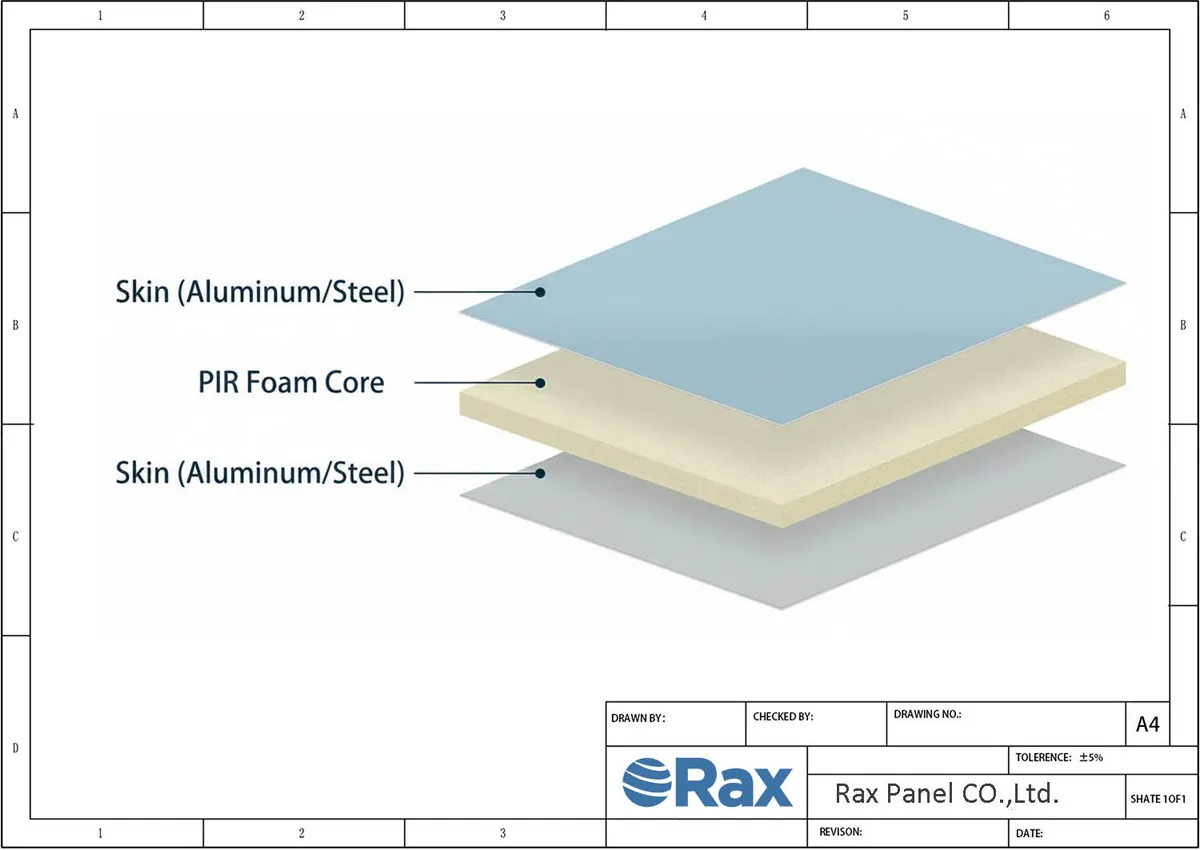
What Are Sandwich Panels?
A sandwich panel is a structural composite material consisting of three distinct layers: two rigid, high-strength facings (also known as skins) bonded to a lightweight core material. This configuration is engineered to provide exceptional stiffness and insulation while minimizing weight.
Unlike traditional solid materials, the strength of a sandwich panel does not come from the density of the material itself, but from the distance between the two facings, which significantly increases the panel’s moment of inertia—a principle similar to that of an I-beam in structural engineering.
Sandwich panels utilize a three-layer composite structure where stiff facings carry bending loads and a lightweight core resists shear stress, maximizing strength-to-weight ratio.
The Three-Layer Composite Structure
To understand the anatomy of these panels, one must look at the distinct roles played by each layer. The system relies on the symbiotic relationship between the faces and the center. If any one layer fails, the structural integrity of the entire panel is compromised.
- The Two Facings (Skins): These are the outer layers that provide durability, weather resistance, and the primary structural strength. They carry the tensile and compressive stresses generated when the panel is loaded.
- The Core Material: This is the inner layer that separates the two facings. Its primary job is to maintain a constant distance between the skins and provide shear rigidity, preventing the facings from sliding past one another.
- The Adhesive Bond: This is the critical interface that transfers shear stress between the core and the facings. In our manufacturing experience, the quality of this bond is often the determining factor in a panel’s lifespan and load-bearing capacity.
How Facings and Cores Create Lightweight Strength
The “sandwich” concept is a masterclass in physics optimization. In solid beams, the material near the center (the neutral axis) contributes very little to bending strength but adds significant weight. By removing this heavy, underutilized center material and replacing it with a lightweight core, manufacturers can drastically reduce mass without sacrificing stiffness.
When a load is applied to the panel, the facings act as the flanges of an I-beam—one face resists compression while the opposite face resists tension. The core acts as the web, holding the flanges apart and resisting buckling. This allows for incredibly lightweight structures that can span vast distances, making them ideal for applications like refrigerated truck bodies, RV walls, and aircraft interiors where every kilogram impacts efficiency.
The Basic Anatomy of a Composite Wall Panel
While the materials may vary depending on the application—from cold storage to industrial cladding—the fundamental anatomy remains consistent across high-performance panels. We analyze this structure in three parts:
- Exterior and Interior Facings: Typically composed of metals (steel, aluminum), fibrous composites (GRP, FRP), or rigid thermoplastics. These layers are treated to resist corrosion, impact, and UV exposure, serving as the first line of defense against the environment.
- Insulating Core: The central filling, which can be rigid foam (PU, PIR, XPS), mineral wool (Rockwool), or honeycomb structures (PP, Aluminum). This dictates the panel’s thermal performance (R-value), fire rating, and acoustic properties.
- Joint and Connection System: While not a “layer,” the profile of the panel edges—tongue and groove, cam-lock, or step joints—is anatomically essential. This detailing ensures airtightness and structural continuity when panels are assembled on-site.
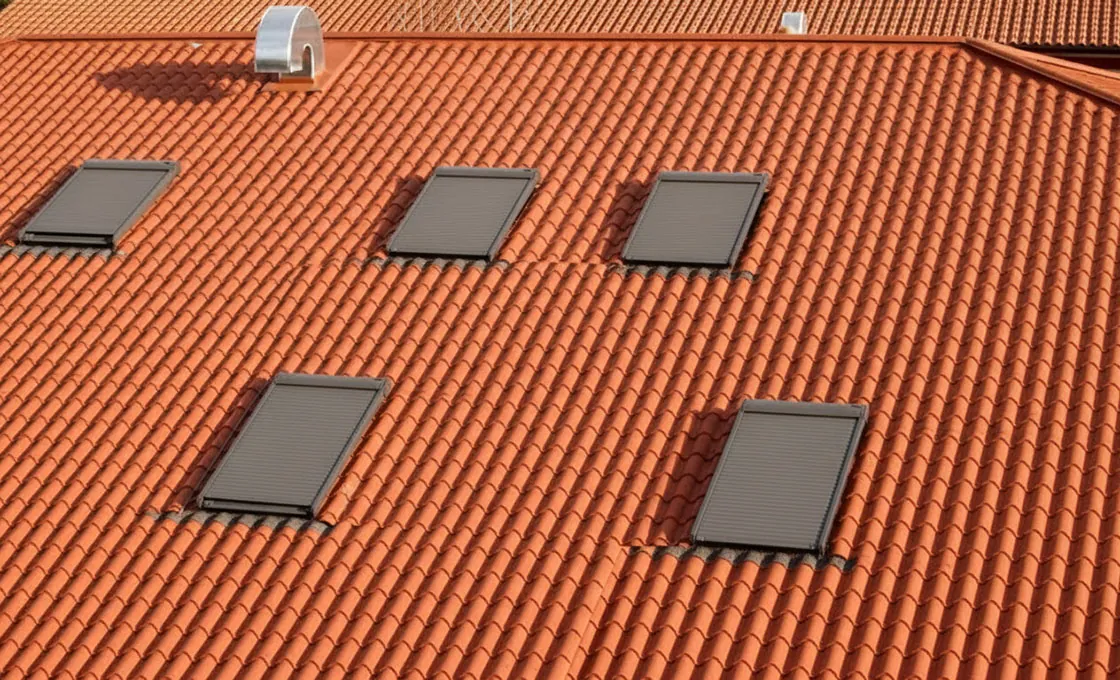
Core Materials and Facings
How to Choose the right core and facing combination dictates whether a panel prioritizes continuous thermal resistance or structural stiffness. Proper matching prevents premature failure, optimizes lifecycle costs, and aligns physical properties with your specific project loads.
Rigid Foam Cores Against Honeycomb Structures: Which Should You Choose?
The fundamental choice between a monolithic foam core and a honeycomb architecture comes down to thermal continuity versus mechanical stiffness. Continuous foam cores, such as polyurethane (PU) or polyisocyanurate (PIR), trap gas within closed cells to create an unbroken thermal barrier. A common industry misconception is treating PU and PIR as interchangeable.
In practice, PIR undergoes a controlled chemical cross-linking process during manufacture that significantly improves fire resistance and long-term thermal stability. Our lab tracking shows PIR retains roughly 90% of its initial R-value after a decade, whereas standard PU formulations typically degrade toward 75–80% due to gradual gas diffusion and cell structure relaxation.
Honeycomb cores operate on a completely different engineering principle. Instead of relying on trapped insulation gas, they use a geometric lattice structure—often polypropylene, aramid, or PVC—that distributes shear forces and bending loads across a minimal surface area. This creates an exceptional stiffness-to-weight ratio.
When we engineer panels for heavy-load applications like refrigerated truck floors or marine deckings, we frequently pair these lattice cores with high-modulus facings. The trade-off is clear: honeycombs win on structural rigidity and impact absorption, while continuous foams dominate when minimizing heat transfer is the primary objective. For sustainable operations, modern PIR variants increasingly use zero-ODP blowing agents, addressing earlier environmental concerns without sacrificing thermal performance.
Choosing Between Fiberglass and Aluminum Exterior Skins
Exterior skin selection directly impacts corrosion resistance, thermal bridging, and overall system longevity. Aluminum remains the default for standard construction and dry freight applications due to its predictable formability and cost efficiency. However, aluminum is highly conductive, meaning it readily transfers temperature extremes across the panel thickness. Without properly engineered thermal breaks or compatible joint sealing, this conductivity accelerates condensation risk inside the core material, particularly in climates with wide daily temperature swings.
Fiberglass Reinforced Plastic (FRP) offers a distinct alternative, especially for corrosive or high-humidity environments. Unlike metal skins, FRP is inherently non-conductive and highly resistant to salt spray, chemical exposure, and UV degradation. We consistently recommend FRP facings for coastal infrastructure, chemical processing facilities, and marine vessels where galvanic corrosion would rapidly compromise metal alternatives.
The primary drawback is lower impact resistance compared to thick-gauge metals, making FRP less ideal for high-traffic industrial loading zones unless paired with reinforced backing layers. Selecting the wrong facing for the operational environment is a frequent procurement error that leads to premature warranty claims and costly retrofits.
Matching Core Density to Thermal Insulation Needs
Core density is frequently misunderstood as a simple indicator of “heavier equals stronger,” but the reality involves a precise balance between compressive strength and thermal resistance. Lower-density foam cores (typically 30–35 kg/m³) maximize closed-cell volume per cubic meter, delivering peak R-values while keeping total assembly weight down. These specifications are optimal for roof cladding or partition walls where dead load is the limiting factor.
Conversely, increasing density to the 40–50 kg/m³ range packs more polymer matrix into the same volume, significantly boosting compressive strength and puncture resistance. This comes at the cost of slightly reducing the theoretical maximum R-value, though the practical energy difference often becomes negligible once the panel reaches standard construction thicknesses.
- Load-Bearing Priority: Specifying higher density cores for flooring or cold storage racking supports prevents core crush deformation under static warehouse loads.
- Thermal Priority: Using lower density formulations for vertical wall assemblies maximizes insulation efficiency while maintaining manageable shipping volumes for large-scale commercial projects.
- Climate Adaptation: Denser cellular structures inherently resist moisture ingress better than open or low-pressure foam matrices, extending service life in high-humidity tropical markets.
What Is Protective Gelcoat Finishes for Weather Resistance?
A gelcoat is not merely a decorative paint layer; it functions as the primary hydrophobic shield for composite assemblies. Applied as a thick, liquid resin matrix before the outer reinforcement cures, it forms a continuous, non-porous surface that actively blocks water vapor transmission and ultraviolet penetration. For fiberglass-faced panels operating in harsh maritime or industrial atmospheres, gelcoat integrity is the single most critical defense against osmotic blistering and core saturation.
When inspecting panel quality or specifying finishes for long-term deployment, verify that the gelcoat formulation includes stabilized UV inhibitors and anti-osmotic properties. Standard architectural coatings often lack sufficient cross-linking density, leading to micro-cracking after repeated thermal expansion cycles.
In our production environment, we enforce rigorous adhesion testing because even microscopic breaches allow moisture to migrate inward. Once water penetrates the skin, it compromises the foam core’s insulating gas and accelerates structural delamination. Properly formulated gelcoats maintain smooth, cleanable surfaces that drastically reduce long-term maintenance overhead for fleet operators and facility managers.
| Material Category | Available Options | Key Technical Properties | Primary Use Cases |
|---|---|---|---|
| Metal Facings | Steel, Aluminum, Aluzinc, Stainless Steel | High tensile strength, excellent load-bearing capacity, corrosion-resistant surface treatments, durable weatherproof finishes | Structural walls, roofing systems, industrial facades, cold storage exteriors |
| Composite Facings | GRP/FRP, HPL, PVC, Acrylic | Lightweight profile, high impact resistance, waterproof gelcoat finish, superior fatigue resilience | Marine vessels, RV bodies, aerospace components, transport flooring |
| Foam Cores | PU, PIR, XPS, PET, EPS | Closed-cell thermal insulation, high R-value stability, flame retardant (B1/B2 ratings), moisture impermeable | Energy-efficient buildings, refrigeration units, HVAC ducting, modular housing |
| Mineral Cores | Mineral Wool, Rockwool, Calcium Silicate | Non-combustible composition, superior acoustic damping, high temperature tolerance, fire-safe structural integrity | High-fire-safety zones, noise-critical environments, extreme heat applications |
| Honeycomb Cores | Paper, Aluminum, Fiberglass, Aramid, PVC | Exceptional stiffness-to-weight ratio, optimal shear transfer between skins, impact absorption, low thermal bridging | Aerospace panels, lightweight transport floors, high-load bearing surfaces, precision engineering components |
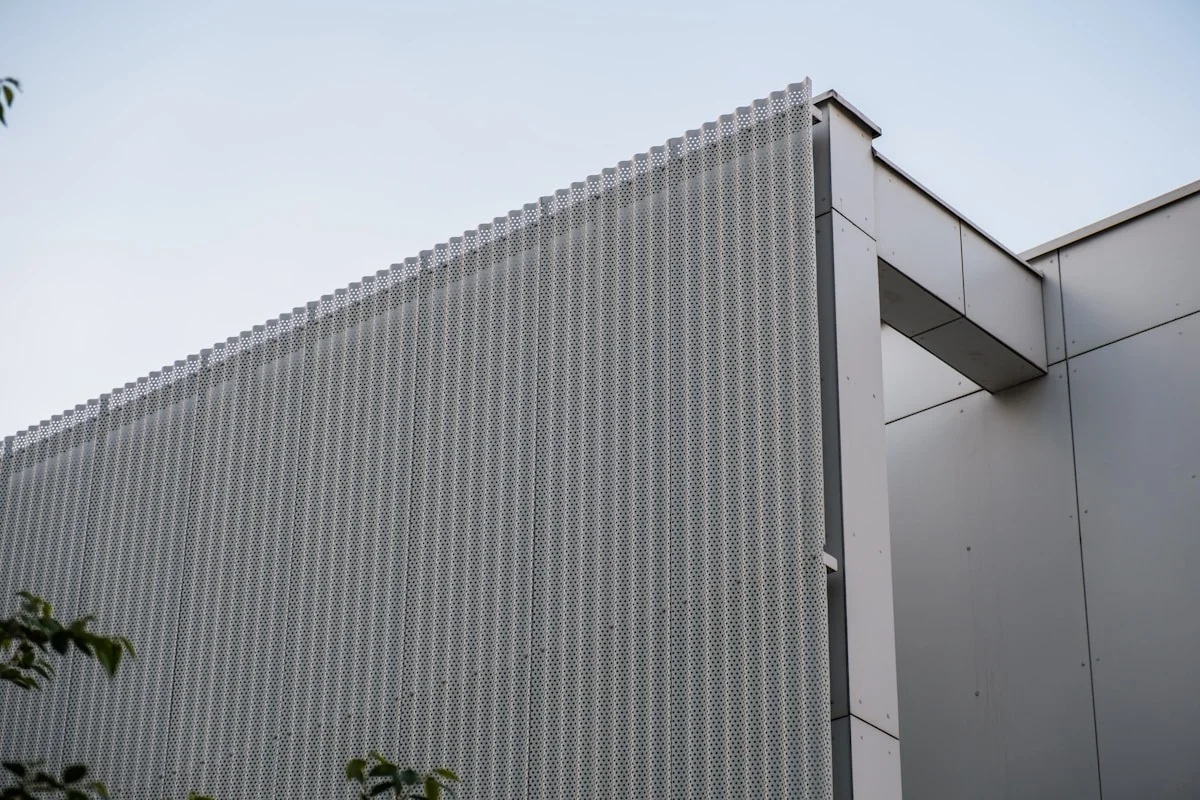
Industrial and Commercial Applications
Industrial and commercial sandwich panels are engineered to meet distinct operational demands across four primary sectors: warehousing, cold storage, clean rooms, and modular buildings. Selecting the correct composite configuration requires matching core density, facing material, and joint sealing protocols to the facility’s specific environmental stressors. Each application carries unique engineering constraints that, if overlooked, lead to premature system failure, regulatory non-compliance, or excessive lifecycle costs.
Warehousing & Light Industrial Structures
Standard warehouse cladding often prioritizes upfront cost over long-term acoustic dampening. When buyers overlook sound insulation requirements, facility noise levels can exceed occupational safety thresholds. Medium-density foam cores paired with steel or aluminum facings effectively mitigate this, delivering measured acoustic reductions (Rw 26–34 dB) that absorb machinery and logistics noise. A common pitfall involves fire rating misinterpretation. Many operators assume “fire-rated” means the material cannot burn.
In technical terms, most polymer-foam cores carry a “reaction to fire” classification (B-s1,d0), which measures flame spread and smoke production rather than structural survival under direct heat. For true fire containment, projects require “resistance to fire” ratings (EI30–EI120), typically achieved with mineral wool or phenolic cores. Properly specified, these panels reduce structural steel tonnage by up to 40% compared to traditional masonry, significantly accelerating erection timelines.
Cold Storage & Refrigerated Logistics
Moisture vapor transmission is the most frequent cause of failure in refrigerated environments. Think of a vapor barrier like a rain jacket: if water molecules pass through seams or inadequate seals, they condense inside the panel core. This trapped moisture degrades insulation efficiency, promotes internal mold growth, and causes structural swelling. Thermal performance dictates the core material here.
Polyisocyanurate (PIR) cores generally deliver higher R-values (thermal resistance) per inch compared to standard polyurethane (PU), making them the preferred choice for freezing zones. Standard PU and PIR configurations safely operate between -40°C and +80°C. If a facility requires cryogenic storage below -196°C or handles high-heat industrial processes exceeding +150°C, engineers must switch to specialized cores like vacuum insulation panels (VIP) or expanded polypropylene (EPP) to prevent thermal bridging and core fracture.
Clean Room & Pharmaceutical Facilities
Clean room environments demand surfaces that resist chemical degradation, eliminate microbial harborage, and integrate smoothly with structural framing and building automation systems. Fiberglass reinforced plastic (GRP) or continuous fiber thermoplastic (CFRT) facings with integrated gelcoat finishes provide the necessary hygienic, non-porous surface. Unlike painted metals, gelcoat coatings remain flat, waterproof, and chemically inert, surviving rigorous daily washdowns without delaminating.
Composite panels also minimize thermal expansion mismatch when attached to adjacent glass or aluminum curtain walls. Joint detailing remains absolute critical; even microscopic gaps compromise air filtration efficiency. Specifying factory-sealed tongue-and-groove profiles ensures hermetic performance, maintaining ISO Class 5–8 environmental control across all penetrations and wall intersections.
Modular Commercial & Rapid Construction
Modular construction relies on panels that balance lightweight transportability with rapid on-site assembly. Aluminum honeycomb and PP (polypropylene) honeycomb cores deliver exceptional strength-to-weight ratios, reducing overall structure mass by 60–70% compared to conventional concrete or brick. This weight reduction allows smaller foundation footprints and faster crane installation, lowering logistics costs.
However, commercial building codes strictly regulate acoustic separation between units and fire egress routes. Procurement teams must verify that the chosen panel thickness and facing gauge meet local load-bearing and acoustic isolation requirements before manufacturing begins. When specifying these systems, engineers should prioritize panels with pre-applied EPDM gaskets or integral mechanical locking profiles to guarantee weather-tight performance during stacking, transit, and final assembly.
Frequently Asked Questions
This factor has a direct bearing on project performance and long-term cost. Addressing it with specific data rather than general assumptions leads to better outcomes.
How do I choose between PU and PIR cores for my facility?
Choose based on operating temperature and budget. PU offers cost-effective thermal insulation for standard warehousing and general-purpose buildings. PIR provides superior fire resistance and higher R-values per millimeter, making it the standard for cold storage, high-rises, and regions with strict fire safety regulations.
What causes condensation inside sandwich panels?
Condensation occurs when warm, moist air penetrates the panel assembly and hits a cold surface, turning into liquid water. This happens due to missing vapor barriers, poor joint sealing, or installing panels in climates outside their designed thermal rating. Proper detailing and continuous insulation layers prevent internal moisture accumulation.
Are fire-rated sandwich panels actually non-combustible?
No. Most foam-core panels are classified as “limited combustible” or “flammable” depending on the core. True non-combustible panels use mineral wool or rockwool cores. Always verify whether a specification requires “reaction to fire” (flame spread/smoke rating) or “resistance to fire” (structural integrity under direct heat), as they measure completely different safety metrics.
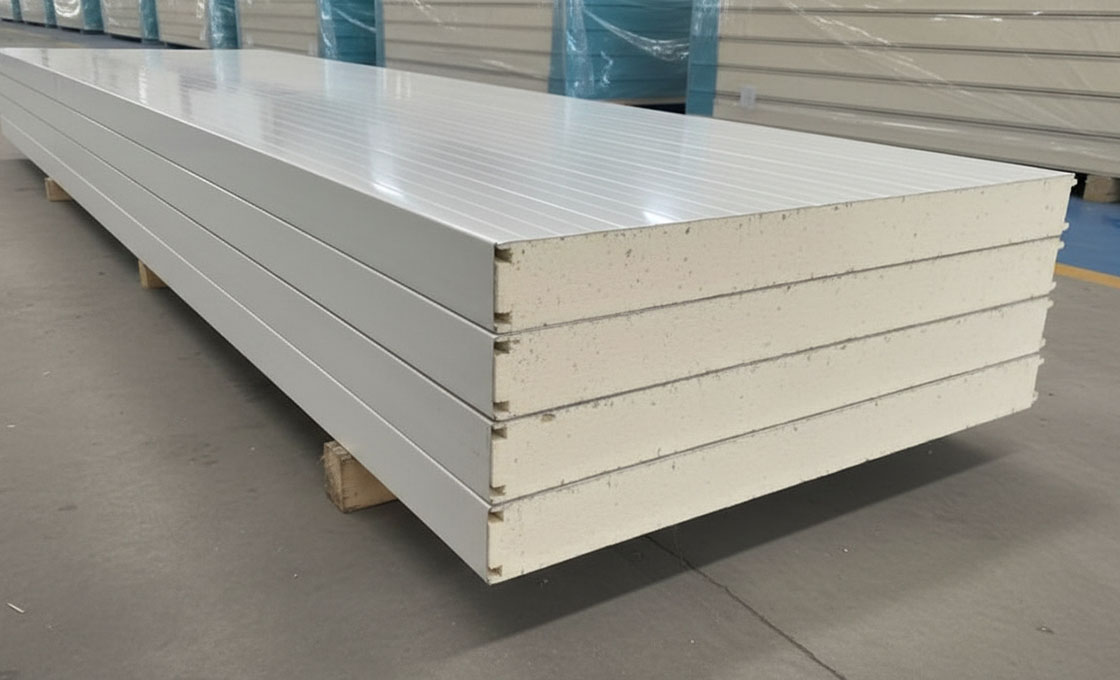
Advantages Over Traditional Materials
Sandwich panels replace heavy masonry and multi-layer insulation systems by delivering superior thermal breaks, cutting construction timelines by up to 50%, and reducing long-term energy expenditures through advanced core materials like PIR foam.
Thermal Performance and Total Cost of Ownership
Traditional construction relies on thick masonry walls and separately applied insulation layers, which inevitably suffer from thermal bridging where heat escapes through structural elements like steel studs or concrete pillars. A sandwich panel eliminates this flaw by fusing rigid insulation directly between protective facings, creating a continuous thermal break that keeps indoor climates stable.
For industrial buyers, chasing the lowest upfront material price often triggers poor return-on-investment decisions. While basic expanded polystyrene (EPS) or standard polyurethane (PU) cores offer initial budget appeal, premium polyisocyanurate (PIR) cores typically carry a 15% to 20% higher purchase cost. However, that premium pays back quickly by delivering 25% to 30% better long-term energy savings, lower refrigeration loads for cold storage facilities, and extended operational lifespans.
What Is the thermal conductivity coefficient is critical when evaluating bids. This metric measures how easily heat passes through a material; the lower the number, the better the insulation. Modern composite panels achieve tight tolerances in density and foam cell structure, ensuring consistent R-values across large batch orders. This predictability allows facility managers to accurately calculate HVAC sizing and utility budgets without fear of mid-project insulation failures.?
- PIR Foam Cores: Delivers the highest thermal resistance per inch, making it the industry standard for refrigerated warehouses and climate-controlled manufacturing.
- PET Foam Cores: Offers a fully recyclable, closed-cell alternative with exceptional compressive strength and zero moisture absorption.
- PP Honeycomb Cores: Combines rigid structural load distribution with minimal weight, optimizing span ratios for heavy-duty truck beds and industrial flooring.
Installation Velocity and Structural Load Reduction
Moving away from brick, concrete blocks, or site-applied spray foam drastically changes project logistics. Sandwich panels function as prefabricated structural skins that arrive ready to bolt onto a steel frame. Think of it like swapping a slow, multi-step kitchen renovation for assembling a high-end modular cabinet system.
Because these panels integrate structure, weather shielding, and insulation into a single component, installation crews can close a building envelope in a fraction of the time required for conventional methods. This accelerated timeline directly reduces labor expenses, minimizes weather-related delays, and gets assets operational faster.
Weight management is equally vital for infrastructure projects. Traditional masonry demands heavy foundations and strong supporting frameworks to bear dead loads. Composite panels, particularly those using fiberglass-reinforced plastic (GRP) facings or lightweight aluminum skins paired with foam or balsa cores, significantly reduce overall building mass.
Lower structural loads translate to smaller, less expensive steel columns, reduced foundation pouring volumes, and the ability to retrofit older structures without reinforcing the base. For large-scale logistics hubs or modular housing projects, this weight differential directly impacts material procurement costs and crane rental fees.
Long-Term Durability and Maintenance Profiles
Conventional building materials degrade under repeated exposure to moisture, temperature cycling, and chemical stress. Traditional plaster and masonry absorb water over time, leading to mold growth, spalling, and compromised structural integrity. In contrast, engineered sandwich panels use chemically inert facings and closed-cell foam cores that resist water absorption almost entirely.
When a specialized gelcoat or protective finish is applied to exterior panels, it creates a smooth, non-porous barrier that deflects rain, UV radiation, and corrosive environments common in marine or coastal industrial settings.
This inherent resilience directly lowers the total cost of ownership over a facility’s lifecycle. Cladding and roofing systems do not require frequent repainting, resealing, or insulation replacement. Manufacturing protocols routinely verify these assemblies against strict fire ratings, impact resistance benchmarks, and compressive strength standards to ensure compliance with regional building codes. The result is a unified building envelope that maintains its structural and thermal properties throughout decades of operation, minimizing unplanned downtime and expensive repair invoices.
| Performance Metric | Traditional Masonry / Multi-Layer Systems | Modern Composite Sandwich Panels |
|---|---|---|
| Thermal Bridging Risk | High due to separate structural and insulation layers | Eliminated via continuous core integration |
| Structural Dead Load | Heavy, requiring reinforced foundations and dense steel framing | Lightweight, reducing foundation and support costs by up to 40% |
| Installation Sequencing | Multi-trade coordination, highly weather-dependent | Prefabricated modules, accelerates enclosure by 30–50% |
| Lifecycle Energy Overhead | Higher operational costs due to thermal leaks and moisture damage | Optimized with PIR/PET cores, stabilizing utility budgets long-term |
Key Selection Criteria
Three criteria drive the decision: thermal or structural performance for your specific use case, total project budget across the asset lifecycle, and the technical support your supplier provides after delivery.
Evaluating Load Capacity for Vehicle and Structural Use
How to Choose the correct panel starts with understanding the mechanical demands of the application. For static structures like warehouses or cleanrooms, the primary load is often wind pressure or snow load on the roof. However, for mobile applications such as truck bodies, RVs, and vessels, the dynamics shift entirely. You are dealing with torsional rigidity and vibration fatigue. A panel that works perfectly on a stationary wall might delaminate under the constant flexing of a highway trailer.
The “sandwich” effect relies on the bond between the facings and the core. If the core density is too low, it cannot resist shear forces, causing the heavy facings to slide past each other. Conversely, using a core that is too dense adds unnecessary weight—a critical penalty in transport applications.
In our experience manufacturing for the RV and truck industries, we prioritize cores like honeycomb or CFRT which offer an exceptional stiffness-to-weight ratio, ensuring the vehicle maintains a high payload capacity without compromising structural wall integrity.
Always calculate the Shear Modulus of the core material for vehicle applications. A foam core might have great compressive strength for a warehouse wall, but a honeycomb core will typically outperform it in shear rigidity for flooring or truck decks.
Assessing Climate Compatibility for Marine and Refrigerated Use
Climate compatibility is not just about temperature; it is about moisture management and UV exposure. In marine environments, the constant threat is saltwater corrosion and humidity ingress. A standard aluminum facing might corrode if the coating is compromised, while a standard foam core can act like a sponge if water penetrates the joints.
This is why the facing material becomes as critical as the insulation. For our vessel solutions, we strictly use GRP/FRP facings with a specialized gel-coat finish. This layer provides a waterproof, non-porous barrier that prevents osmotic blistering and UV degradation, which are the silent killers of composite panels at sea.
For refrigerated transport and cold storage, the challenge is thermal cycling. The panel must maintain its adhesive bond and dimensional stability despite constantly contracting and expanding. If the core material absorbs moisture, it will freeze and expand, destroying the panel from the inside. We have found that closed-cell foam cores are essential here, as they resist water absorption far better than open-cell alternatives, ensuring the thermal efficiency remains stable over the lifecycle of the project.
Determining Optimal Panel Thickness for Structural Integrity
A common misconception in the industry is that “thicker is always better.” While thickness does correlate with insulation value and stiffness, it also drives up material costs and reduces usable internal space. The goal is to find the Minimum Viable Thickness that meets both the structural span requirements and the thermal target. Overspecifying thickness on a cold room wall that doesn’t need it is simply burning capital.
Structural integrity follows a cubic relationship with thickness in many bending scenarios—doubling the thickness can increase stiffness by a factor of eight. However, this assumes the core can handle the shear.
Our engineering team frequently advises clients that switching to a slightly higher density core or a stronger facing material can often allow for a thinner profile while achieving the same structural performance. This optimization is crucial for mobile homes and RVs where every millimeter of wall thickness impacts the interior floor plan.
Consulting Engineers for Project-Specific Material Testing Standards
Generic data sheets are a starting point, not a guarantee. Real-world performance depends on connection details, fastener types, and installation tolerances. Before finalizing a specification for a large-scale project, you must verify that the chosen panel system complies with the specific regional testing standards—whether that is ASTM C578 for core properties, EN 14509 for factory-made metal-faced panels, or specific fire safety protocols for high-rise buildings.
At our facility, we move beyond standard catalog items by conducting experimental testing tailored to the client’s project data. We simulate load scenarios and environmental stressors to validate the composite layup before mass production begins. This step eliminates the risk of “value engineering” failures where a panel looks good on paper but fails under the specific loads of a unique architectural design or a specialized industrial application.
📋 Pre-Purchase Verification Checklist
- Step 1: Define the maximum Span and Load requirements to calculate necessary bending stiffness.
- Step 2: Cross-reference the environmental exposure (Humidity, UV, Salinity) with the facing material’s corrosion resistance.
- Step 3: Request certification proving compliance with relevant Fire Safety (e.g., B1/B2) and Thermal standards for your region.
- Step 4: Validate the Shear Strength of the core material, specifically for dynamic or flooring applications.
| Selection Factor | Technical Specification | Core & Facing Materials | Performance Advantage | Target Application |
|---|---|---|---|---|
| Thermal Efficiency | R-value ≥ 6.5 per inch; U-value ≤ 0.15 W/(m²·K) | PU, PIR, XPS Foam Cores; Steel, Aluminum, GRP Facings | Delivers up to 60% energy reduction and 47% higher R-value versus traditional framing | Cold storage, climate-controlled buildings, RVs |
| Fire Safety Compliance | B1/B2 fire rating standards; Flame spread index < 25 | PIR, Rockwool, Mineral Wool Cores; FRP, Stainless Steel Facings | Maintains structural integrity and limits flame spread under high heat exposure | Industrial facilities, cleanrooms, commercial construction |
| Structural Thickness & Load | 40mm to 150mm customizable range; Density 30–60 kg/m³ | Honeycomb, Foam Cores; Aluminum, Steel, Plywood Facings | Optimizes weight-to-strength ratio while ensuring adequate load-bearing capacity | Roof/wall cladding, mobile homes, truck bodies, vessel decks |
| Acoustic & Hygiene Control | Non-porous surface finish; STC rating ≥ 35 dB | Rockwool, Glasswool Cores; Gel-coated GRP, ACP Facings | Provides effective noise dampening and prevents contaminant accumulation | Pharmaceutical cleanrooms, food processing, medical facilities |
| Long-Term Environmental Stability | Retains >90% insulation performance over 10 years; UV-resistant coating | PMI, EPP, MPP Foams; CFRT, Thermoplastic UD Tapes | Resists UV degradation, moisture ingress, and thermal cycling fatigue | Marine vessels, outdoor infrastructure, sustainable architecture |
Key Takeaways
Pick PIR cores over standard PU when your projects demand strict fire ratings or tighter thermal envelopes. PU foam degrades faster under heat stress and fails modern building codes. Your buyers need panels that hold their R-value across changing climates without adding dead weight to the structural steel. We validate every density grade through our own lab testing because guessing compromises the whole assembly.
- Confirm the exact fire classification required by local codes before finalizing the order.
- Match core thickness to your target R-value instead of standardizing on one dimension.
- Ask our engineering team at Rax Panel for early-stage thermal calculations. We bring fifteen years of composite material expertise to review your blueprints and answer design questions without any purchase obligation.
Frequently Asked Questions
This factor has a direct bearing on project performance and long-term cost. Addressing it with specific data rather than general assumptions leads to better outcomes.
How are sandwich panels classified?
Sandwich panels are primarily categorized by their core material composition, facing type, and intended structural application. Common classifications include foam-core variants for thermal efficiency, honeycomb structures for high strength-to-weight ratios, and mineral wool options for fire resistance. Each classification serves distinct engineering purposes across construction, transportation, and industrial manufacturing sectors.
Pu versus pir core differences?
Polyurethane cores offer reliable baseline insulation at a lower cost, while polyisocyanurate cores provide enhanced fire resistance and superior thermal stability. PIR materials maintain their insulating properties longer under high temperatures compared to standard PU formulations. Selecting the appropriate core depends on your specific fire safety requirements and budget constraints.
What does fire rated actually mean?
Fire ratings classify how building materials react to flame exposure and heat transfer during standardized laboratory tests. A fire-rated panel typically limits combustion, reduces smoke production, and maintains structural integrity for a specified duration. Always verify certification standards with local building codes before installation.
R value versus u value difference?
R-value measures thermal resistance, indicating how well a material resists heat flow, while U-value measures thermal transmittance, showing how much heat passes through. Higher R-values indicate better insulation, whereas lower U-values denote superior thermal performance. Understanding both metrics ensures accurate energy efficiency calculations for building projects.
Why do thermal bridges matter?
Thermal bridges occur when conductive materials bypass insulation at joints, fasteners, or framing connections, significantly increasing heat loss. Ignoring these weak points can degrade overall wall performance by twenty to forty percent compared to theoretical calculations. Proper detailing and insulated mounting systems prevent condensation and improve long-term energy efficiency.