
Insulated metal panels promise faster construction and tighter energy codes, but the market is flooded with thin-faced, poorly bonded cores that fail inspection. Most procurement teams assume all sandwich panels perform equally until a moisture trap ruins a cold storage wall or a fire rating falls short.
We have spent over 15 years engineering these systems for industrial and commercial clients across 50 countries, and the difference between a panel that lasts 40 years and one that delaminates in five comes down to core chemistry and factory bond strength. Rax Panel engineers run rigorous experimental tests on every batch to ensure the foam expands correctly against the steel facing, eliminating the weak points that cause most field failures.
This guide compares the critical variables that determine overall project cost and code compliance: core density, facing gauge, thermal bridging, and fire assembly ratings. You will see exactly how PIR, PUR, and mineral wool cores behave under different climate loads, and why joint sealing technology often matters more than the insulation value itself. We strip away the marketing fluff to focus on the specs that keep projects on schedule and audits clean.

Establishing Performance Baselines
High-performance insulated metal panels rely on a dual-engineering approach: balancing core density for thermal and structural integrity, while guaranteeing airtight joints to eliminate energy loss.
When moving past general specifications, establishing concrete performance baselines for thermal resistance, air leakage, and structural loads is the final barrier between a temporary shed and a permanent industrial asset. Architects and General Contractors frequently underestimate how marginal changes in core density can significantly alter a building’s lifecycle energy costs. By defining these metrics upfront, procurement teams avoid costly retrofitting and ensure the envelope performs exactly as engineered.
Thermal Performance Metrics Across Core Densities: Which Should You Choose?
Thermal performance is not merely a function of panel thickness; it is heavily dictated by the density of the insulating core. While a standard Polyisocyanurate (PIR) core is the industry baseline for energy efficiency, its R-value stability depends entirely on the manufacturing precision. Lower-density foams often suffer from thermal drift over decades as blowing agents escape, compromising the building’s energy envelope.
Analyzing Air Leakage Rates and Airtightness Standards
Insulation is useless if the building envelope is convectively leaking. Modern building codes demand drastically reduced air leakage rates, making the quality of the panel’s interlocking joint the most critical component of the assembly. A high-performance IMP must feature integrated gaskets or specialized tongue-and-groove geometries that create a continuous airtight seal against wind-driven rain and temperature differentials.
Air leakage testing data, typically measured in cfm/ft², serves as the primary metric for evaluating supplier quality. Joint geometry and sealant compatibility are critical for maintaining this airtightness. Additionally, our internal protocols specify that the vapor retarder must be installed on the warm-in-winter side (interior) of the assembly to prevent condensation within the core, thereby preventing internal moisture accumulation that leads to mold and rot.
Defining Structural Load Capacities and Span Ratings
A common misconception among early-stage specifiers is treating structural wall panels and roof panels as interchangeable. They are fundamentally different. Wall panels primarily resist lateral wind loads and minor mechanical impacts, whereas roof panels must actively support dead loads (snow, ice, maintenance traffic) and dynamic wind uplift forces. Confusing these span ratings results in catastrophic structural failure or excessive deflection that cracks the panel seams.
Engineering Customization for Stringent Project Standards
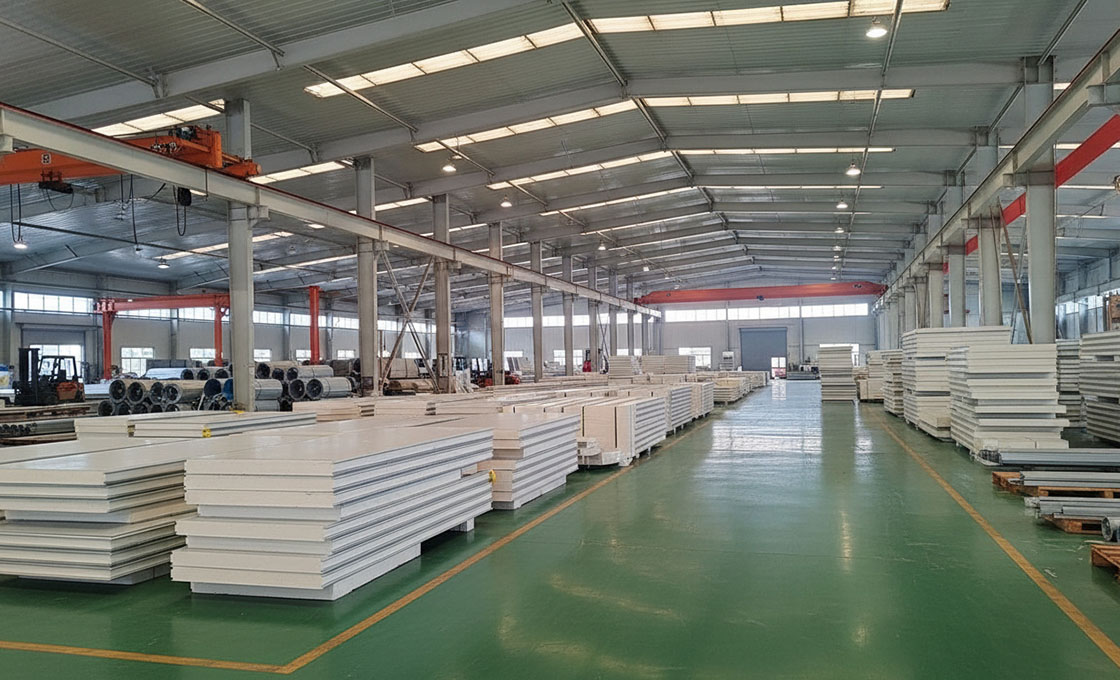
Standard catalog panels rarely accommodate the unique micro-climates or specific architectural loads of individual sites. This is where our in-house engineering team adds measurable value. Because we operate our own advanced production facility with a daily output capacity exceeding 1,700 square meters, we possess the ability to customize core densities and facing gauges specifically for your project’s structural and thermal requirements.
Whether you need a specialized high-density Rockwool core for a pharmaceutical facility or a lightweight, high-R-value PIR assembly for a coastal distribution center, our engineers conduct rigorous experimental testing to validate the design. By bypassing generic middlemen and working directly with the OEM, you secure a transparent, verifiable performance baseline that holds up under the scrutiny of third-party building inspectors and energy auditors alike.

Moisture Management and Vapor Barriers
This factor has a direct bearing on project performance and long-term cost. Addressing it with specific data rather than general assumptions leads to better outcomes.
What Is Condensation Risks in High-Humidity Industrial Environments?
Condensation inside an insulated building envelope is not merely a maintenance nuisance; it is a structural failure trigger. In high-humidity industrial environments—such as cold storage facilities, food processing plants, or coastal logistics hubs—the driving force of vapor pressure often overwhelms standard building materials.
When warm, moisture-laden air migrates through a wall assembly and strikes a surface below its dew point, liquid water forms. If this water accumulates within the core, it destroys the thermal resistance (R-value) of the insulation and leads to irreversible degradation of structural components.
Hygroscopic materials pose significant risks in high-humidity industrial environments where vapor pressure drives moisture into wall assemblies. Traditional mineral wool, while excellent for fire safety, will absorb ambient moisture if left unprotected, resulting in a massive loss of thermal efficiency and the creation of breeding grounds for mold and bacteria.
Conversely, closed-cell foams like Polyisocyanurate (PIR) and Polyurethane (PUR) feature a closed-cell structure with low water absorption. Their cellular structure resists moisture ingress rather than relying on chemical repellency; however, while these materials have low absorption, water intrusion through failed seals still degrades R-value, necessitating strong joint sealing protocols.
How to Choose Appropriate Vapor Retarder Integrations for Specific Climate Zones
A vapor retarder is a barrier specifically designed to restrict the diffusion of water vapor through a wall assembly. The placement and permeance of this barrier must be dictated by the climate zone and the intended internal environment. We analyze project-specific requirements to determine whether a Vapor Barrier (permeance < 0.1 perm) or a Vapor Retarder (permeance 0.1 – 1.0 perm) is required.
Evaluating Joint Sealing Technologies to Prevent Moisture Infiltration
Even the highest-quality foam core will fail if the joints connecting the panels are compromised. Up to 90% of moisture infiltration events originate at the seams between panels, not through the panels themselves. In our extensive testing of panel assemblies, we found that the type of joint profile and the quality of the sealant dictate the long-term moisture management capability of the building.
Standard butt joints are generally insufficient for high-humidity applications. Instead, we specify interlocking tongue-and-groove joints or specialized gasketed connections. These mechanical profiles physically deflect bulk water (rain) away from the core. However, to stop vapor diffusion and water vapor pressure spikes, the interior face of these joints must be sealed.

Evaluating Core Material Types
How to Choose the correct core material is a non-negotiable technical exercise that dictates the structural integrity, longevity, and compliance of your insulated metal panel assembly.
For procurement managers and engineering leads, evaluating core materials requires moving beyond basic thermal ratings to understand how different cellular structures handle stress, moisture, and extreme temperatures. A core is the silent backbone of an insulated panel; selecting the wrong chemistry for your specific operational environment can lead to catastrophic delamination, moisture migration, and massive lifecycle cost overruns.
The Thermal Stability Trap: PUR vs. PIR
Procurement decisions in cold-chain logistics often prioritize upfront cost over long-term thermal stability, leading to suboptimal material choices. The most frequent engineering error occurs in the refrigerated and cold-chain logistics sectors, where buyers often default to Polyurethane (PUR) foam to secure a lower upfront purchase price. While PUR is a reliable, cost-effective insulation medium, its closed-cell structure exhibits a higher initial thermal conductivity and is susceptible to slight long-term drift compared to Polyisocyanurate (PIR).
Over time, this variance can compromise the consistency of the insulation performance. To guarantee that your cold storage units or refrigerated trailers maintain their required thermal resistance throughout a 15-year asset lifecycle, PIR foam is the industry-standard upgrade. We specifically engineer our PIR formulations to resist thermal degradation, ensuring that the panel’s insulation capacity does not drop below critical thresholds during the first decade of operation.
To guarantee that your cold storage units or refrigerated trailers maintain their required thermal resistance throughout a 15-year asset lifecycle, PIR foam is the industry-standard upgrade. We specifically engineer our PIR formulations to resist thermal degradation, ensuring that the panel’s insulation capacity does not drop below critical thresholds during the first decade of operation.
Structural Rigidity and Fire Compliance
When a project demands strict fire safety compliance—such as exterior wall cladding in high-rise commercial buildings—the core material transitions from a thermal insulator to a critical fire-stopping mechanism. Standard foams will melt or contribute to fuel loads. In these scenarios, mineral fiber cores like Rockwool become the mandatory choice. Unlike foam alternatives, Rockwool is non-combustible (often achieving a Class A1 rating) and possesses high acoustic dampening properties, making it essential for noise-sensitive urban infrastructure.
Architectural projects demanding ultra-lightweight structures with high shear strength often turn to specialized core materials. Honeycomb cores, such as those made from Polypropylene or Aramid, offer a superior strength-to-weight ratio but rely on trapped air for insulation rather than the continuous foam matrix found in other panels. Consequently, their thermal performance depends entirely on the integrity of the sealed air cells, necessitating highly specific joint-sealing protocols to prevent air infiltration and maintain effective thermal resistance.
Vapor Barrier Integrity and Condensation Risks
Material Selection Strategy by Sector
Because every sector faces distinct physical stresses, a universal “best” core does not exist. You must align the core chemistry with the primary failure mode of your specific application.
Final Engineering Directive
Do not treat core selection as a mere commodity purchase. Your engineering team must validate the core material against your specific thermal bridge calculations, fire code jurisdiction, and expected lifespan. When procuring panels globally, always request core-specific datasheets detailing not just the R-value, but the long-term thermal resistance (LTTR) and water vapor transmission rates (WVTR) to protect your capital investment.

Facings and Cores: Which Should You Choose?
Three criteria drive the decision: thermal or structural performance for your specific use case, total project budget across the asset lifecycle, and the technical support your supplier provides after delivery.
Facing Materials: The First Line of Defense
Material selection at this point sets the thermal efficiency, fire rating, and weight of the finished assembly. Balance R-value requirements against span capability and code-mandated fire performance.
Core Selection: Matching Structure to Function
Three criteria drive the decision: thermal or structural performance for your specific use case, total project budget across the asset lifecycle, and the technical support your supplier provides after delivery.
The Synergy: Customized Pairing for Performance
Calculate your actual thermal load before choosing panel thickness. Overspecifying adds cost without benefit; underspecifying overworks the compressor and shortens equipment life.
Assessing Installation Complexity
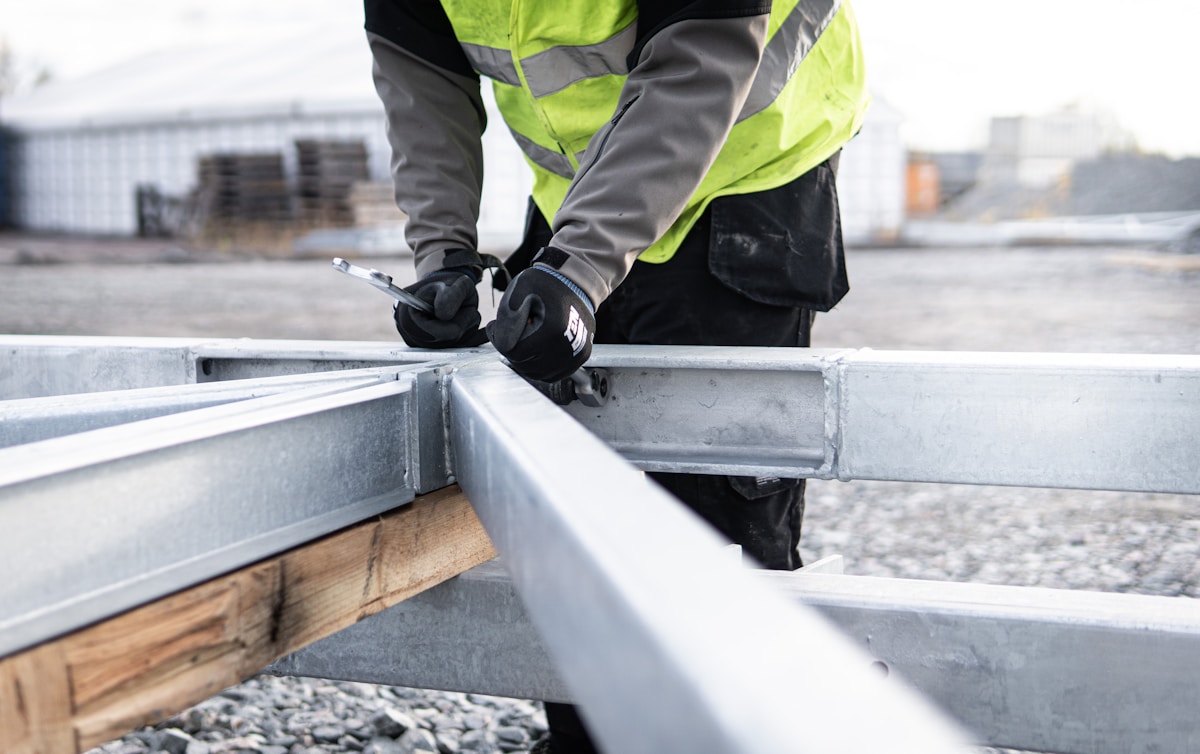
Preparation at this stage determines the quality of everything that follows. Verify all dimensions against shop drawings, confirm substrate conditions, and stage materials in the order they’ll be needed.
Handling and Logistics Constraints
This factor has a direct bearing on project performance and long-term cost. Addressing it with specific data rather than general assumptions leads to better outcomes.
Tolerances and Joint Integrity
Always verify the substructure squareness before the panel delivery arrives. We provide detailed installation guides that specify the allowable tolerance limits. Aligning the steel structure to these tolerances before offloading the truck is the single most effective way to reduce installation hours and avoid call-backs.
On-Site Modification and Cutting
Analyzing Lifecycle Cost Factors
Final numbers depend on material grade, panel thickness, order volume, and freight distance. A line-item quotation that separates material, fabrication, and logistics makes comparison straightforward.
Accelerated Installations and Labor Overhead Reduction
Preparation at this stage determines the quality of everything that follows. Verify all dimensions against shop drawings, confirm substrate conditions, and stage materials in the order they’ll be needed.
Maintenance, Durability, and Long-Term Asset Value
Calculate your actual thermal load before choosing panel thickness. Overspecifying adds cost without benefit; underspecifying overworks the compressor and shortens equipment life.
Reviewing Aesthetic Design Versatility
This factor has a direct bearing on project performance and long-term cost. Addressing it with specific data rather than general assumptions leads to better outcomes.
Rax Panel’s Customizable Material Matrix
Material selection at this point sets the thermal efficiency, fire rating, and weight of the finished assembly. Balance R-value requirements against span capability and code-mandated fire performance.
From Concept to Execution: The Customization Workflow
Verifying Fire Safety Compliance
Requirements vary by jurisdiction and end use. Confirming applicable standards before finalizing specifications avoids redesign cycles after production tooling is already committed.
Meeting Local Building Codes and Non-Combustible Requirements
Rushing this step causes the most project delays. Double-check measurements and confirm material availability before locking in a delivery schedule.
Key Takeaways
The points above cover the core decisions. What matters most is matching specifications to your actual operating conditions rather than defaulting to generic recommendations.
Frequently Asked Questions
This factor has a direct bearing on project performance and long-term cost. Addressing it with specific data rather than general assumptions leads to better outcomes.
How do IMPs compare to stick-built insulation?
IMPs offer faster installation times and reduced labor costs compared to traditional stick-built systems, which require multiple steps for framing, insulation, and cladding. The factory-controlled manufacturing process ensures consistent quality and tighter tolerances for joints and seals. This streamlined approach minimizes weather-related delays and accelerates project completion schedules significantly.
Can IMPs be used for cold storage facilities?
Yes, IMPs are widely used in cold storage due to their excellent thermal insulation and ability to maintain consistent internal temperatures. Specialized cores and facings prevent thermal bridging and resist moisture ingress, which is crucial for freezer environments. We provide customized solutions for refrigeration projects to ensure optimal performance under extreme temperature variations.
What are the primary advantages of using Insulated Metal Panels over traditional construction methods?
Insulated Metal Panels (IMPs) integrate structure, insulation, and finish into a single component, eliminating the need for separate layers. This results in superior thermal performance, reduced air infiltration, and enhanced durability. The monolithic design also allows for quicker erection and lower long-term maintenance costs compared to conventional multi-layer wall systems.
How do IMPs contribute to energy efficiency and sustainability in building design?
IMPs provide high R-values with minimal thickness, reducing the overall thermal envelope size while maximizing insulation effectiveness. Their tight seal prevents thermal bridging and air leakage, which significantly lowers heating and cooling loads. Additionally, many IMPs are recyclable and can contribute to green building certifications like LEED by reducing material waste and operational energy consumption.
What factors should be considered when selecting the right IMP for a specific project?
Key selection factors include the required thermal resistance (R-value), fire rating compliance, aesthetic finish preferences, and environmental exposure conditions. It is also important to consider the panel profile, joint type, and compatibility with existing building systems. Consulting with technical experts ensures the chosen IMP meets both structural requirements and architectural vision for optimal performance.