
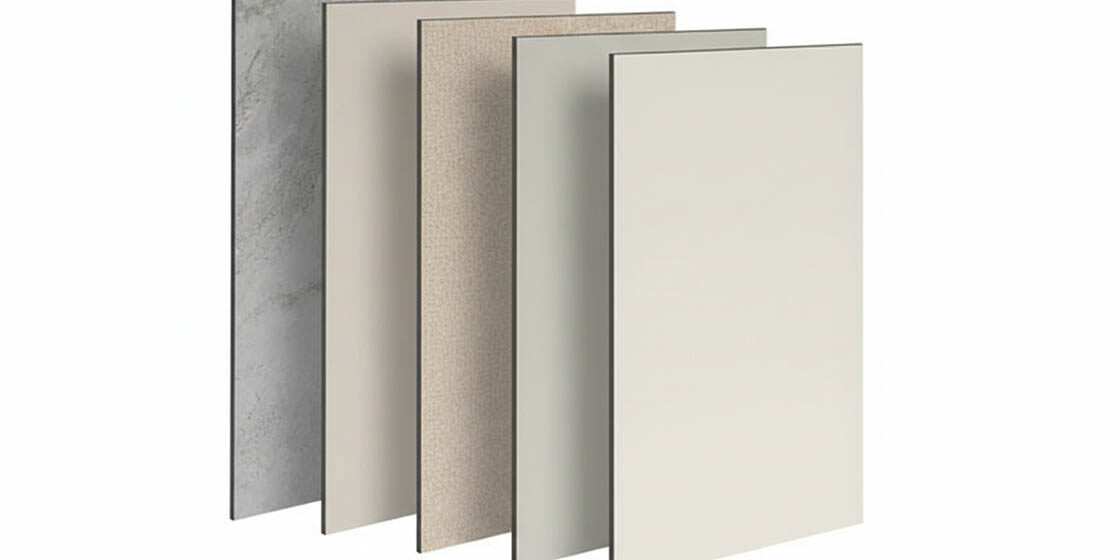
The constant tension between Rockwool vs PU panels creates a difficult tradeoff for procurement engineers: chasing thermal efficiency or securing absolute fire compliance. PU cores offer superior insulation values around 0.022 W/m·K, which is critical for temperature-controlled environments, yet they inherently carry a combustibility risk that mineral wool simply does not. Rockwool guarantees a Euroclass A1 non-combustible rating, but that safety comes with a weight penalty and slightly lower thermal performance that impacts long-term energy costs.
We analyze the specific failure modes of each material, from toxic smoke generation in cleanroom evacuations to structural collapse at high temperatures. This article provides a technical breakdown of fire ratings, smoke density classifications, and payload implications to help you select the right core for pharmaceutical, marine, or specialized vehicle applications. You will leave with a clear framework for balancing insurance mandates against operational efficiency.
Fire Ratings and Smoke Toxicity: Rockwool vs PU
Rockwool panels provide a definitive non-combustible barrier that actively removes fuel from the fire equation, whereas PU cores act as an accelerant that drives rapid flashover. In high-occupancy cleanrooms, the lethal factor isn’t just flame spread—it is the density and toxicity of the smoke generated within minutes.
Decoding EN 13501-1 and GB 8624 Fire Classifications
Navigating international fire codes requires precise material specification. Under the European EN 13501-1 standard and the Chinese GB 8624 framework, Rockwool cored panels consistently achieve the highest A1 or A2-s1,d0 non-combustible ratings. This means the mineral wool core will not contribute to the fire load under any circumstance. PU and PIR cores, being organic thermoset polymers, typically cap at B-s2,d0 or C-s3,d0. While they pass baseline commercial insulation tests, their combustible nature fundamentally alters the facility’s fire dynamics.
We frequently see contractors assume a thicker PU panel offers better fire protection, but this is a dangerous misconception. Adding thickness to a combustible organic foam simply increases the available fuel load. Once the metal facing compromises due to heat, the exposed PU core ignites rapidly, accelerating localized flashover and structurally compromising the cleanroom envelope long before fire suppression systems can activate.
PU and PIR are thermoset materials. They do not melt like thermoplastics; instead, they undergo rapid thermal decomposition, charring, and collapsing into flaming droplets (d1 or d2 classification). These burning remnants drop onto cleanroom equipment, bypass critical fire stops, and create secondary ignition paths that easily defeat perimeter containment strategies.
Smoke Generation, Toxicity, and Evacuation Viability
The most severe threat in a facility fire isn’t the flame itself, but smoke generation (the ‘s’ classification). PU cores degrade into a massive, blinding black cloud rated s2 or s3. In the confined, highly controlled geometry of a pharmaceutical or semiconductor cleanroom, visibility can drop below 10 meters within the first few minutes of ignition. This rapid visibility loss completely paralyzes emergency evacuation protocols.
Beyond visibility, the chemical toxicity of burning polyurethane is catastrophic. As the material breaks down, it releases lethal concentrations of Carbon Monoxide (CO), Hydrogen Cyanide (HCN), and unburned Isocyanates. In our lab testing, the concentration of these toxicants exceeds safe human exposure thresholds almost immediately. This poses a massive life-safety hazard and directly violates the strict environmental health and safety (EHS) regulations governing medical and high-tech manufacturing spaces.
Insurance Compliance and Real-World Liability
Specifying the wrong core material directly impacts insurability and loss prevention compliance. High-value cleanroom facilities are almost always subject to strict FM Approvals or equivalent local regulatory frameworks. PU panels frequently fail strict combustibility and smoke load thresholds required by these insurers, leading to denied claims, massive liability, or mandatory retrofitting if a localized fire occurs.
When calculating the cost-risk tradeoff, weigh the upfront savings of PU against the total risk of loss. We advise high-risk facilities to strictly mandate Rockwool cores. In the event of a fire, an A1-rated Rockwool panel acts as a true thermal barrier, preventing structural collapse, protecting sensitive HEPA filtration systems from molten debris, and ensuring full compliance with global loss prevention standards.
| Performance Metric | Rockwool Core | PU / PIR Core | Risk & Impact Analysis | Best Fit Application |
|---|---|---|---|---|
| Fire Reaction & Spread (EN 13501-1) | A1 or A2-s1,d0 (Non-combustible) | B-s2,d0 or C-s3,d0 (Combustible) | PU cores contribute actively to fire load and can trigger rapid flashover. Rockwool acts as a true fire barrier, preventing structural collapse and containing the fire locally. | Rockwool for high-risk / strict compliance; PU for standard thermal insulation |
| Smoke Generation & Visibility | s1 (Negligible smoke emitted) | s2 or s3 (Massive dense black smoke) | PU smoke reduces evacuation visibility to under 10 meters within minutes, causing severe disorientation in confined spaces like cleanrooms. This often fails strict insurance smoke load requirements. | Rockwool for high-occupancy/cleanrooms; PU for open or low-occupancy areas |
| Smoke Toxicity & Chemicals | Non-toxic (Inert composition, no toxic fumes) | High toxicity (Releases HCN, CO, Isocyanates) | Burning PU emits highly toxic gases that rapidly incapacitate occupants, exceeding safe toxicity thresholds. This poses massive liability and life-safety hazards in pharmaceutical or semiconductor facilities. | Rockwool for Pharma/Medical/Semiconductor; PU for general storage |
| Melting & Flaming Droplets | d0 (Zero flaming droplets) | d1 or d2 (Melts and produces flaming drips) | PU melting causes secondary ignition paths and severe equipment damage. Molten drops can bypass fire stops, clog HEPA filters, and destroy sensitive cleanroom machinery. | Rockwool for Electronics/Aviation; PU for non-critical structural zones |
| Thickness vs. Fire Rating Limit | Maintains A1/A2 rating regardless of thickness | Rating capped; thickness only adds weight/cost | Increasing PU thickness does not improve its fire rating but adds unnecessary structural weight and cost. Rockwool provides reliable, non-degrading fire performance without hitting a combustibility threshold. | Rockwool for fixed assets; PU for weight-sensitive mobile assets |
| Insurance & Compliance Risk | Fully compliant with strict loss prevention standards (e.g., FM Approvals) | Often fails strict combustibility and smoke load thresholds | How to Choose PU in strictly regulated environments can lead to denied insurance claims or mandatory retrofitting. Rockwool ensures full compliance, protecting the overall investment. | Rockwool for insurable high-value assets; PU for general non-critical areas |
Thermal Efficiency vs Fire Resistance Trade-offs
The fundamental conflict in cleanroom envelope design is binary: Polyurethane (PU) offers superior thermal efficiency per millimeter, while Rockwool offers absolute non-combustibility. You cannot maximize interior volume and minimize fire risk simultaneously without accepting a trade-off in material thickness or energy cost.
Thermal Conductivity: The Physics of the Trade-off
Let’s cut through the marketing fluff and look at the physics. The thermal conductivity (Lambda value) of PU foam typically ranges between 0.022 and 0.024 W/m·K. Rockwool, being a mineral fiber, sits higher, usually between 0.035 and 0.040 W/m·K. This means PU is roughly 40% more efficient at insulating than Rockwool for the same thickness.
This efficiency gap dictates your wall assembly. To achieve a mandated R-value (thermal resistance), a Rockwool panel must be significantly thicker than a PU panel. If your structural steel or building footprint has hard limits, choosing Rockwool to satisfy fire codes inevitably consumes your usable cleanroom interior volume. Conversely, if you prioritize volume with thinner PU panels, you must accept a higher thermal load on your HVAC system and the combustible classification of the core material.
Do not let the R-value argument obscure the fire classification. Rockwool cores achieve Euroclass A1 (non-combustible) and will not contribute to a fire load. PU cores, even with high-grade fire retardants, are generally limited to Class B or C (combustible). If the fire authority’s mandate is A1, thermal efficiency arguments become legally secondary. We never recommend PU cores where A1 is a code requirement; it is a risk vector that professional indemnity insurance will not cover.
How to Get the Most from Net Internal Area: The Thickness Variable
In high-value cleanroom construction, floor space is the primary cost driver—often exceeding the cost of the wall panels themselves. Every millimeter of wall thickness reclaimed translates directly into usable cubic meters for equipment, airflow paths, and personnel movement.
Volume Optimization Strategy: We frequently advise clients to calculate the ‘cost of space’ versus the ‘cost of insulation.’ By using a thinner PU panel in non-critical zones, you can increase the interior volume by up to 2-3% without expanding the building footprint. In pharmaceutical or electronics manufacturing, that reclaimed space often justifies the slight energy efficiency penalty required to maintain a thicker Rockwool envelope in high-risk zones.
Resolving the Fire Consultant vs. Energy Manager Conflict
The most common project bottleneck we encounter is the standoff between the fire consultant demanding A1 ratings and the energy engineer pushing for lower U-values to reduce CAPEX on chillers. Standard solutions often fail because they treat the cleanroom as a monolithic block.
📋 Actionable Steps
- Step 1: Implement a Zoning Strategy: Do not default to one material for the entire facility. Use Rockwool panels strictly in high-risk areas like production suites, solvent storage, or return air shafts to satisfy fire codes.
- Step 2: Apply Hybrid Solutions: Use PU or PIR panels in low-risk corridors, changing rooms, or administrative offices. Here, the superior thermal efficiency and reduced thickness optimize energy performance and recover internal volume without compromising safety.
- Step 3: Run Comparative LCCA: Present a Life Cycle Cost Analysis to the stakeholders. Demonstrate that the operational savings from thinner, higher-insulation walls (PU) in low-risk zones outweigh the material and structural costs of thicker Rockwool panels everywhere else.
Cleanroom Compliance and Strict Building Codes
Weight, Payload, and Structural Implications
Structural load calculations and vehicle payload capacities are dictated entirely by the density disparities of the chosen core material.
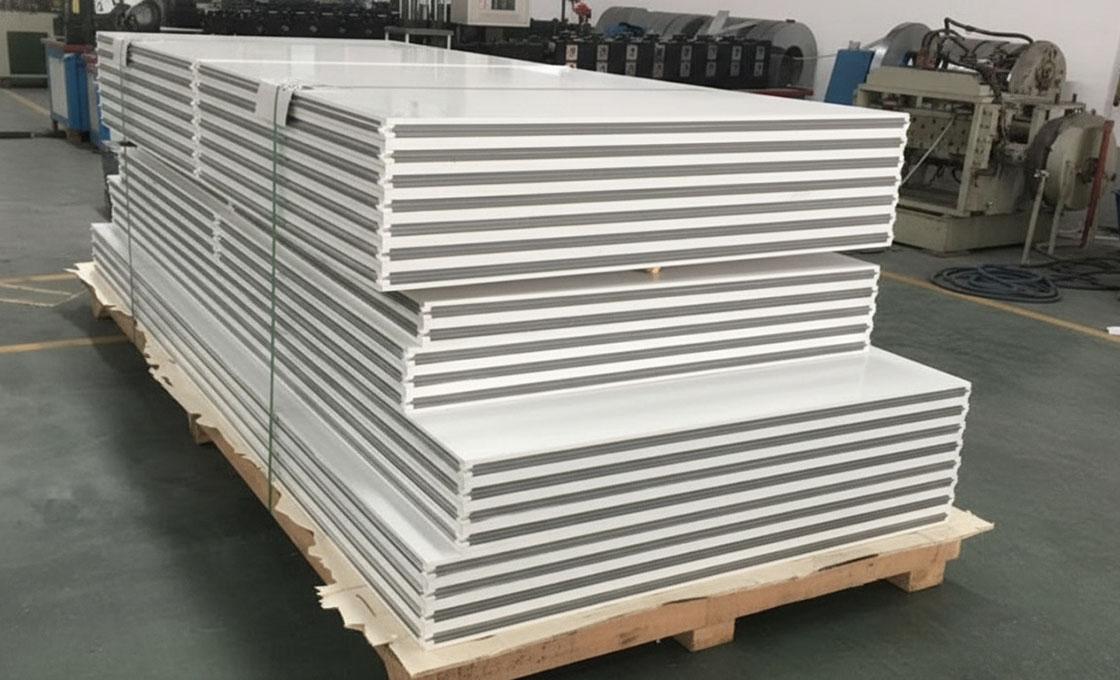
A standard 50mm PU panel with steel facings weighs 10–14 kg/m², whereas an equivalent Rockwool panel of the same configuration weighs 18–25 kg/m². This represents a 40–44% weight reduction for PU—a margin that propagates through every layer of project logistics and structural design. For modular cleanroom transports, the weight delta directly increases vehicle payload capacity, enabling more panels per load and reducing freight costs per square meter of installed envelope.
At the structural level, the lighter panels significantly reduce the required gauge of structural steel framing, shrinking column sizes, beam sections, and foundation demands in tandem. These are real, quantifiable savings—but they exist upstream of the factor that ultimately dominates the cost equation: where fire classification intersects with insurance underwriting and total cost of ownership.
Total Cost of Ownership and Insurance Pressure
The invoice price of a cleanroom panel is merely the down payment. True financial exposure is decided at the intersection of fire classification and your insurance underwriter’s risk model.
Let’s be blunt about Total Cost of Ownership (TCO) in controlled environments. buyers frequently fixate on the upfront material cost, lured by the 15-20% initial price reduction of PU or PIR foam cores over non-combustible Rockwool. However, this completely ignores the brutal reality of lifecycle financing.
A combustible core fundamentally alters the risk profile of the facility. When underwriters evaluate a cleanroom loaded with foam-core panels, they aren’t just looking at flame spread; they are calculating total fire load and the catastrophic financial impact of toxic smoke contamination.
Insurance providers and loss prevention consultants heavily penalize facilities that utilize materials susceptible to rapid fire propagation or dense smoke generation. A cleanroom fire involving combustible foam doesn’t just burn; it generates corrosive, soot-laden gas that immediately destroys multi-million-dollar HVAC HEPA systems and sensitive pharmaceutical or semiconductor inventories. Consequently, facilities using lower-rated foam panels frequently face inflated property insurance premiums—often 20% to 40% higher—and crippling deductibles compared to those built with A1-rated Rockwool systems.
The TCO Reckoning: Beyond the Purchase Order
📋 Actionable Steps
- Step 1: Initial Procurement: PU/PIR offers lower baseline material costs and slightly faster installation due to lower weight, presenting an attractive initial CapEx.
- Step 2: Insurance Premiums: Rockwool (A1 non-combustible) drastically reduces the facility’s fire risk profile, yielding significant long-term premium savings that typically recoup the initial material cost difference within 3 to 5 years.
- Step 3: Post-Incident Remediation: A minor thermal event in a Rockwool cleanroom remains localized. The same incident in a PU cleanroom results in total facility wipeout due to chemical smoke contamination, leading to massive capital losses and months of operational downtime.
- Step 4: End-of-Life Cycle: Moisture ingress in compromised foam panels degrades thermal efficiency, driving up energy costs; dense Rockwool maintains its structural and thermal stability longer without off-gassing or thermal drift.
We see this lifecycle math play out repeatedly in our global supply chain. When our engineering team at Rax Panel configures a cleanroom project for distributors, we stress that specifying our Rockwool sandwich panels isn’t merely about passing a local fire marshal inspection.
It is a strategic financial risk mitigation tool. By providing panels with verifiable non-combustible cores and precise joint engineering, we directly lower the operational risk ratio of the facility, making the asset significantly easier and cheaper to insure on the global market.
Selecting a cleanroom panel based purely on a manufacturer’s laboratory fire certificate is a dangerous financial gamble. If a fire occurs and post-incident investigators find that installation gaps, unsealed penetrations, or unapproved silicone sealants degraded the panel system’s fire integrity, the insurer can legally deny the multi-million dollar claim. The financial devastation of a denied claim will always dwarf any initial material savings. Always demand full-system fire certifications and strictly controlled installation guidelines.
Panel Joint Integrity and Long-Term Durability
A sandwich panel is only as durable as its joint system. While the core dictates fire and thermal metrics, the joint geometry and sealant adhesion ultimately determine whether your cleanroom maintains its ISO classification over a 15-year operational lifecycle.
The Physics of Joint Degradation
In controlled environments, panel joint failure is the primary catalyst for contamination and air leakage. Standard tongue-and-groove or cam-lock connections continuously degrade under thermal cycling, building settlement, and high-frequency vibrations from heavy HVAC systems. These micro-movements shear standard sealants, creating microscopic channels for microbial ingress and cumulative particle generation.
Long-term structural integrity relies on absolute adhesion between the metal skin and the core material. Poor lamination leads to blistering and delamination when exposed to aggressive chemical washdowns. In our manufacturing process, we mitigate this risk by using an advanced continuous composite panel production line. By strictly controlling lamination pressure and curing temperatures, we ensure the core and steel facings act as a monolithic structural unit, drastically reducing edge separation and micro-cracking at the joints over years of heavy use.
Laboratory pressure and fire ratings are conducted on pristine, single-panel samples. In actual modular assemblies, unsealed fastener penetrations, misaligned cam-locks, and poor wall-to-ceiling transitions create structural weak points that bypass the panel’s core defenses. Never assume a panel’s lab rating will automatically translate to field performance if the installation crew fails to use continuous gasketing and proper sealing at the joints.
📋 Actionable Steps
- Step 1: Specify high-density Rockwool cores (minimum 80-100 kg/m³) to prevent localized crushing around cam-lock fasteners, which causes panel misalignment and gapping over time.
- Step 2: Utilize low-VOC, high-modulus polyurethane sealants rather than standard silicone; they offer superior chemical resistance for frequent cleanroom washdowns while accommodating structural expansion.
- Step 3: Ensure joint grooves are continuously backed by core material. Hollow cavities at the tongue-and-groove interface trap moisture, harbor bacteria, and drastically reduce long-term structural integrity.
- Step 4: Conduct photometer smoke tests at all panel intersections annually to detect early signs of joint seal degradation before ISO 14644 compliance is compromised.
When specifying panels for complex cleanroom geometries, always request pre-cut factory miters instead of relying on field modifications. Factory machining guarantees that the core remains fully encapsulated by the facing material at the joint, eliminating raw core exposure that leads to moisture wicking, delamination, and eventual joint failure.
Application-Based Core Selection Decision Guide
Effective core selection is not about finding a universal ‘best’ material, but strictly matching the core’s physical properties to the operational risk profile and spatial constraints of the specific cleanroom zone.
General contractors and facility architects often default to a single panel type for an entire building to simplify procurement, which inevitably leads to either massive structural over-engineering or severe compliance failures. A strategic, application-based selection guide mitigates these risks by strictly categorizing facility zones according to their distinct hazard levels and operational priorities.
How to Choose Rockwool for High-Hazard and A1 Fire-Rated Zoning Requirements
In environments housing volatile chemicals, solvent storage, or high-energy processing equipment, the priority shifts entirely from thermal efficiency to absolute non-combustibility. Rockwool (mineral wool) cores are the mandatory specification for these high-hazard zones, particularly where local building codes and fire consultants strictly demand A1 fire-rated boundaries to prevent flashover.
However, raw material specifications only tell half the story. In our experience manufacturing these critical systems, achieving true compliance relies heavily on the core’s density consistency and the integrity of the joint systems. A high-density rockwool core effectively blocks flame spread and acts as a thermal barrier that maintains the structural stability of the partition during a catastrophic event.
Fire ratings achieved in laboratory settings assume perfectly sealed penetrations. If installers fail to properly fire-stop electrical outlets, HVAC ducts, and panel joints in rockwool partitions, the actual fire resistance of the wall drops drastically, completely negating the A1 core investment.
Specifying PU for Weight-Constrained and Thermal Efficiency-Driven Applications
Polyurethane (PU) or PIR foam cores serve a critical, albeit different, purpose in modern facility design. When engineering ceiling grids for large, open cleanroom spaces or constructing mezzanine-level modular rooms where structural load capacity is strictly capped, PU panels offer an excellent lightweight architecture. The reduced dead load significantly minimizes the requirement for heavy structural steel framing.
Beyond structural relief, PU cores are specified for applications requiring precise, uninterrupted thermal isolation. This is crucial for perimeter walls bordering unconditioned exterior environments. The closed-cell structure of PU provides exceptional moisture resistance and thermal stability, ensuring that the strict humidity and temperature controls demanded by sensitive manufacturing processes remain uncompromised.
When upgrading standard cleanroom walls to a PU core for weight reduction, always ensure the surface skin pairing matches the strict hygiene requirements. We typically recommend pairing PU cores with high-pressure laminate (HPL) or specific stainless-steel skins to maintain necessary sterility without adding unnecessary mass.
Implementing Hybrid Panel Solutions for Mixed-Risk Cleanroom Environments
Modern pharmaceutical and semiconductor facilities rarely feature a single risk profile. A standard building might include a general assembly area, a highly sterile quality control lab, and a separate high-hazard chemical dispensing room. Attempting to force a single panel specification across all these diverse zones is a fundamental engineering flaw that inflates budgets and compromises safety.
Hybrid panel solutions involve the strategic zoning of composite materials within the same facility footprint. By mapping the plant layout, engineers can specify non-combustible Rockwool sandwich panels to encapsulate the high-risk chemical zones, creating strict fire-rated compartments. Simultaneously, they can utilize lightweight PU core panels for the surrounding low-hazard, high-payload ceiling areas to optimize the building’s structural efficiency.
📋 Actionable Steps
- Step 1: Map Hazard Zones: Identify all areas with high combustible loads or strict A1 fire code requirements mandated by local authorities.
- Step 2: Calculate Load Limits: Determine ceiling and mezzanine structural weight capacities to see if heavy rockwool is structurally viable.
- Step 3: Establish Transition Walls: Where a PU panel wall meets a Rockwool partition, ensure the joint system is specially engineered to handle the differing thermal expansion rates and maintain an absolute air seal.
- Step 4: Optimize System Integration: Use PU panels in zones requiring heavy HVAC integration and thermal stability, while reserving Rockwool strictly for fire compartmentalization.
| Application | Recommended Core | Key Requirement | Skin Pairing | Performance Benefit |
|---|---|---|---|---|
| Refrigerated Truck Bodies | PU / PIR / XPS Foam | Thermal Insulation & Moisture Resistance | GRP / FRP Sheets | Minimizes heat transfer and maintains stable internal temperatures for perishable goods |
| Cleanrooms & Industrial Facilities | Rockwool / PU (PUF) Foam | Air Purity, Hygiene Control & Fire Safety | Stainless Steel / Compact Laminate HPL | Provides sterile surfaces and superior fire resistance meeting strict facility codes |
| RV Walls & Roofing | PET Foam / PP Honeycomb | Lightweight & High Structural Strength | GRP / CFRT Sheets | Maximizes vehicle payload capacity while ensuring high impact resistance |
| Marine Vessels | PVC Foam / Balsa Wood / Aramid Honeycomb | Waterproofing & High Buoyancy | FRP / Carbon Fiber Sheets | Ensures long-term durability and structural integrity in harsh water environments |
| Mobile Homes & Wall Cladding | Rockwool / Aluminum Honeycomb | Fire Protection & Acoustic Insulation | Aluminum / ACP Sheets | Delivers economical, energy-saving solutions meeting stringent building fire codes |
Key Takeaways
Look, here’s the honest bottom line after fifteen years in this industry: there’s no universal best panel — only the right panel for the right hazard zone. Rockwool’s A1 non-combustible rating is non-negotiable for high-risk cleanrooms where insurance carriers and fire consultants demand zero flame spread and minimal smoke toxicity.
PU panels earn their place when thermal efficiency, payload constraints, and cost optimization drive the specification. I’ve watched buyers choose PU to save fifteen percent upfront, only to face rejected insurance claims or failed compliance audits after a fire incident. That short-term savings evaporates instantly.
Here’s my parting checklist for any dealer stocking Rax Panel solutions:
– Match core to zone classification — Rockwool for A1-rated areas, PU for low-hazard spaces
– Demand full EN 13501-1 documentation — not supplier marketing brochures
– Verify insurance carrier compatibility before finalizing specifications
– Stock hybrid configurations to capture mixed-risk cleanroom projects
Frequently Asked Questions
This factor has a direct bearing on project performance and long-term cost. Addressing it with specific data rather than general assumptions leads to better outcomes.
How do Rockwool and PU panels differ in fire resistance?
Rockwool panels offer superior fire resistance, typically achieving an A1 or A2 fire rating because the mineral wool core is entirely non-combustible. PU (polyurethane) panels, while offering excellent thermal insulation, are derived from foam plastics and generally achieve a B1 or B2 fire rating. For clean rooms with strict fire safety codes, Rockwool is often the mandated choice to prevent fire propagation. However, modern fire-retardant PU formulations can still meet standard commercial building codes.
Do Rockwool panels offer better thermal insulation than PU?
PU panels generally provide better thermal insulation than Rockwool panels at standard thicknesses. Polyurethane foam has a lower thermal conductivity, meaning you can achieve the same insulation value with a thinner panel compared to Rockwool. If maximizing internal clean room space is a priority, PU provides a distinct spatial advantage. Rockwool requires greater thickness to match the thermal performance of polyurethane cores.
How do Rockwool and PU panels differ in moisture resistance and high humidity?
PU panels are highly suitable for high-humidity environments because the closed-cell structure of polyurethane foam inherently repels water, maintaining structural integrity and thermal efficiency. Rockwool cores are highly breathable and fire-resistant, but if the protective facing is punctured, they can absorb ambient moisture. Therefore, ensuring the absolute integrity of the surface layer and proper vapor barriers is critical when using Rockwool in damp or wash-down heavy clean room zones.
Which panel is lighter for clean room construction?
PU panels are significantly lighter than Rockwool panels, making them much easier to handle, transport, and install on-site. The polyurethane foam core has a much lower density than dense mineral wool. This weight reduction can lower transportation costs and simplify the structural support requirements for the clean room facility. If weight is a critical project constraint, lightweight composite solutions from can be customized to meet these needs.
Can these composite panels be customized for modular clean rooms?
Yes, both Rockwool and PU panels are routinely customized with precise dimensions, corner profiles, and specialized core thicknesses to fit modular clean room designs. Our engineering teams utilize advanced CNC cutting to ensure tight tolerances necessary for smooth modular assembly. This allows for rapid on-site installation and easy reconfiguration of the clean room layout. Customized facing materials, such as stainless steel or specialized gel coats, can also be applied based on hygiene requirements.