
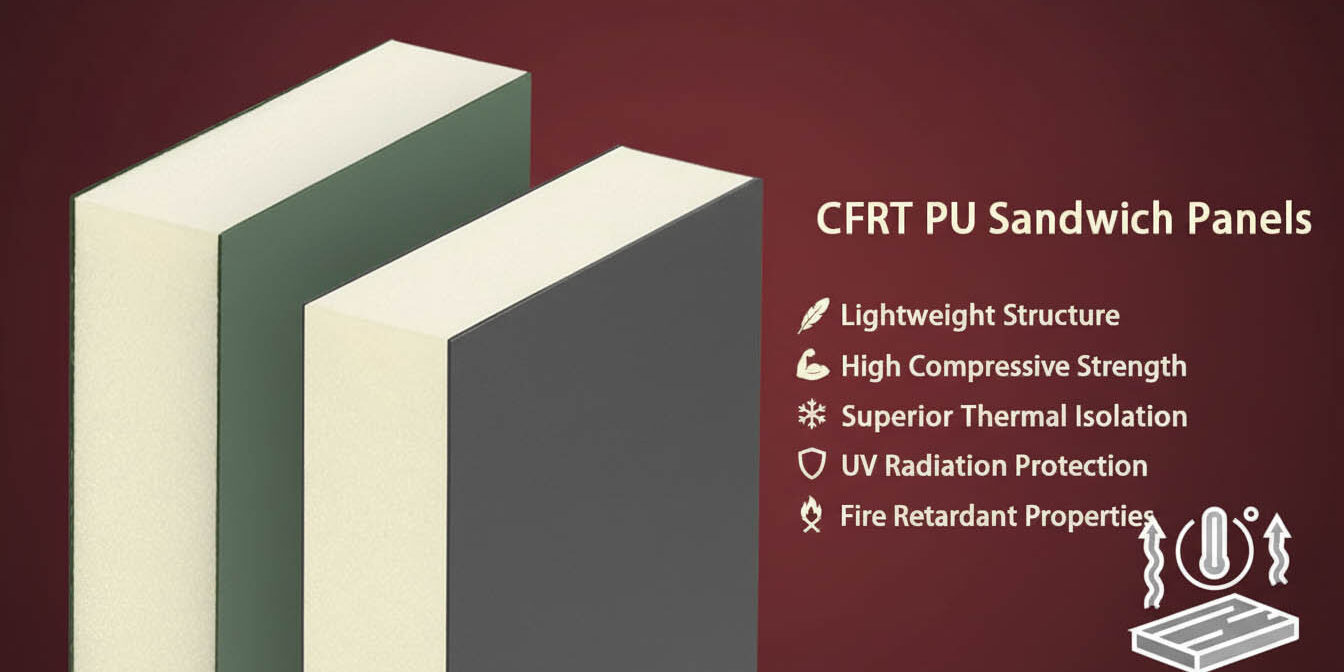
Suppliers quote FRP XPS sandwich panels at $11 to $15 per square foot. What they leave off that quote: $50 to $150 per reinforced crate, $500 to $3,000 in mold charges, and a 15 to 25 percent surcharge on orders below their preferred volume. That rv panel pricing figure covers the panel itself. It does not cover what it costs to land that panel on your production floor, in spec, and on schedule.
We manufacture composite panels at our facility — 1,700 square meters a day, shipped to buyers in 50 countries. We see where first-time importers get burned on hidden fees, and we see it every quarter.
Below, you will find real pricing broken down by core material, a plain-English translation of order minimums into actual camper-van units, and a line-by-line breakdown of the charges most factories bury until the final invoice arrives. By the end, you will have the landed-cost math your competitors are still guessing at.
RV Panel Pricing by Core Material
Core material accounts for 40-60% of your total RV sandwich panel cost. Choosing between XPS, PU, and PET isn’t just a thermal decision—it directly dictates your landed price per square meter and your vehicle’s lifetime fuel economics.
XPS Foam Core Panel Costs: The Baseline Option
Extruded Polystyrene (XPS) remains the most widely specified core for standard RV wall and roof panels due to its cost efficiency and adequate thermal resistance. Based on current supplier data, FRP XPS sandwich panels in a 50mm thickness range from $11 to $15 per square foot ($118–$161 per square meter) at an MOQ of 2,000 square feet. This price point assumes gelcoat-finished FRP facings and standard density XPS core between 30–38 kg/m³.
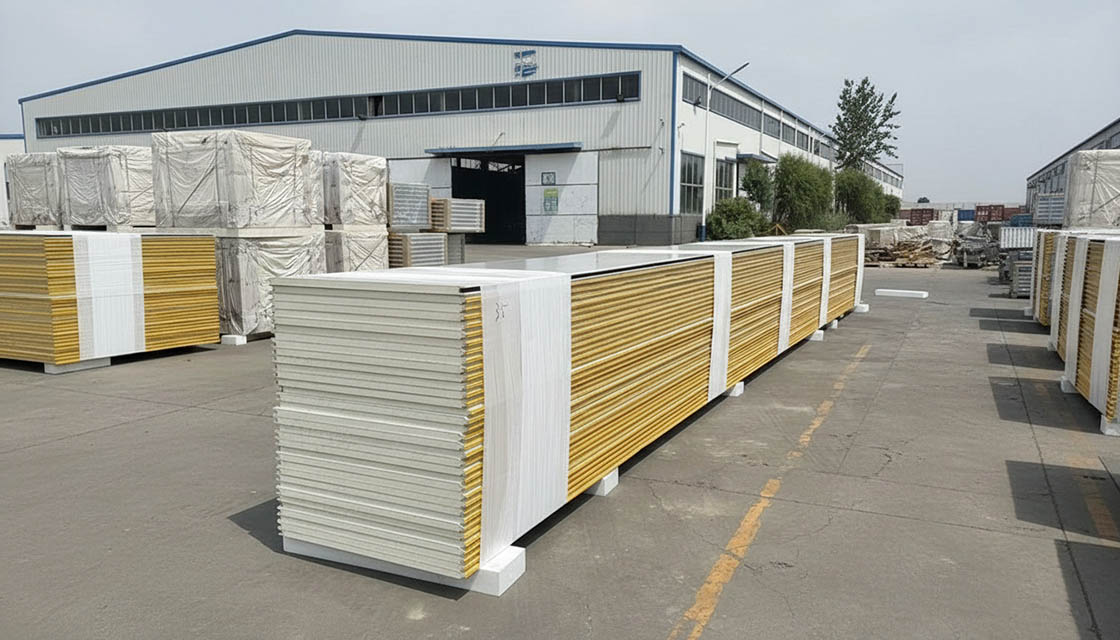
At Rax Panel, we produce CFRT and GRP/FRP sandwich panels with XPS cores on a continuous production line capable of exceeding 1,700 square meters daily. This capacity allows us to turn around standard MOQ orders within 7–10 working days, which is critical for RV manufacturers running tight production schedules. However, the quoted panel price rarely tells the full story.
- Panel price (50mm XPS FRP): $118–$161/sqm at MOQ 2,000 sq ft
- Reinforced wooden crate packaging: $50–$150 per crate, typically excluded from quotes
- Volume discount at 500 sqm: 5–8% reduction
- Volume discount at 1,000 sqm: 10–14% reduction
- Volume discount at 2,000+ sqm: 15–20% reduction
First-time importers often focus on the per-square-meter rate and overlook crate fees, customs brokerage, and inland freight. When a supplier quotes $12/sq ft, the actual landed cost can be 15–25% higher once these line items hit your invoice. We advise requesting an itemized FOB or CIF breakdown before committing to any order, which is standard practice we provide to all buyers.
PU Foam Core Panel Price Range: The Mid-Tier Thermal Performer
Polyurethane (PU) foam cores occupy the middle pricing tier and offer superior thermal insulation compared to XPS, making them the preferred choice for refrigerated truck bodies and four-season RV builds. PU cores at densities of 30–50 kg/m³ provide better R-values per inch of thickness, which means you can achieve the same insulation performance with a thinner panel profile—freeing up interior space without compromising thermal efficiency.
PU foam core panels typically command a 10–20% premium over equivalent XPS panels. For a CFRT sandwich panel with PU core in 50mm thickness, expect pricing in the range of $130–$185 per square meter at standard MOQ levels. The exact figure depends on facing material: gelcoat FRP skins cost less than aluminum or CFRT facings, but CFRT offers tighter thickness tolerances critical for automated assembly lines.
Our engineering team regularly tests PU core panels with both GRP and CFRT facings to verify bonding strength, dimensional stability, and thermal conductivity before shipping. This testing is not optional—batch inconsistency is the single fastest way to halt a production line. For RV manufacturers producing 50+ units per month, specifying PU cores with CFRT facings provides the best balance of insulation, weight, and assembly consistency.
PET Foam Core and Honeycomb: The Premium Lightweight Tier
PET foam cores and honeycomb structures represent the premium end of the RV panel pricing spectrum, and for good reason. These materials deliver significant weight reductions that translate directly into fuel savings over the vehicle’s operational life. Every 100 kg reduction in panel weight yields 0.3–0.5 L/100km in fuel savings, which equates to approximately $400–$800 in annual fuel cost savings per motorhome unit depending on usage patterns and regional fuel prices.
PET foam core panels typically range from $160–$220 per square meter, while PP honeycomb core panels with fiberglass sheet facings can exceed $200/sqm depending on cell size and facing specifications. For OEMs producing commercial motorhomes or specialty vehicles where payload capacity directly impacts revenue, the upfront premium pays for itself within 18–24 months of operation through fuel efficiency gains alone.
- PET foam core panel range: $160–$220/sqm (50mm, FRP or CFRT facing)
- PP honeycomb with fiberglass facing: $180–$240/sqm
- Weight savings vs. XPS equivalent: 15–30% reduction per panel
- Fuel savings ROI: 100 kg weight reduction = $400–$800/year per unit
The decision between PET foam and honeycomb ultimately comes down to your application. PET foam offers better sheer strength and impact resistance for wall panels subjected to road vibration. Honeycomb structures—particularly PP honeycomb cores composited with fiberglass sheet—excel in flat roof and flooring applications where compressive strength-to-weight ratio is the primary metric.
We stock both core configurations and can run test batches at smaller MOQs so your engineering team can validate the weight-to-strength data against your specific frame design before committing to a full production order.
| Core Material | Price Range (per sqm) | MOQ (sqm) | Best For | Key Advantage |
|---|---|---|---|---|
| XPS Foam | $118 – $161 | 200 – 500 | RV walls, roofing | Cost-effective, good thermal insulation |
| PET Foam | $130 – $175 | 200 – 500 | RV flooring, furniture panels | Eco-friendly, recyclable, high compressive strength |
| PU Foam | $125 – $170 | 200 – 500 | RV walls, insulated bodies | Superior thermal insulation, lightweight |
| PVC Foam | $140 – $195 | 200 – 500 | Marine-grade RV panels | Excellent water resistance, high strength-to-weight |
| PP Honeycomb | $155 – $210 | 300 – 500 | Lightweight structural panels | Extremely lightweight, high stiffness |
| PMI Foam | $180 – $250 | 300 – 500 | High-performance RV builds | Premium strength, aerospace-grade quality |
| Plywood (Balsa) | $110 – $145 | 200 – 500 | Heavy-duty RV flooring | Maximum impact resistance, proven durability |
| Aluminum Honeycomb | $200 – $280 | 300 – 500 | Premium RV structural panels | Fire-resistant, ultra-high rigidity |
What MOQ Levels Really Mean
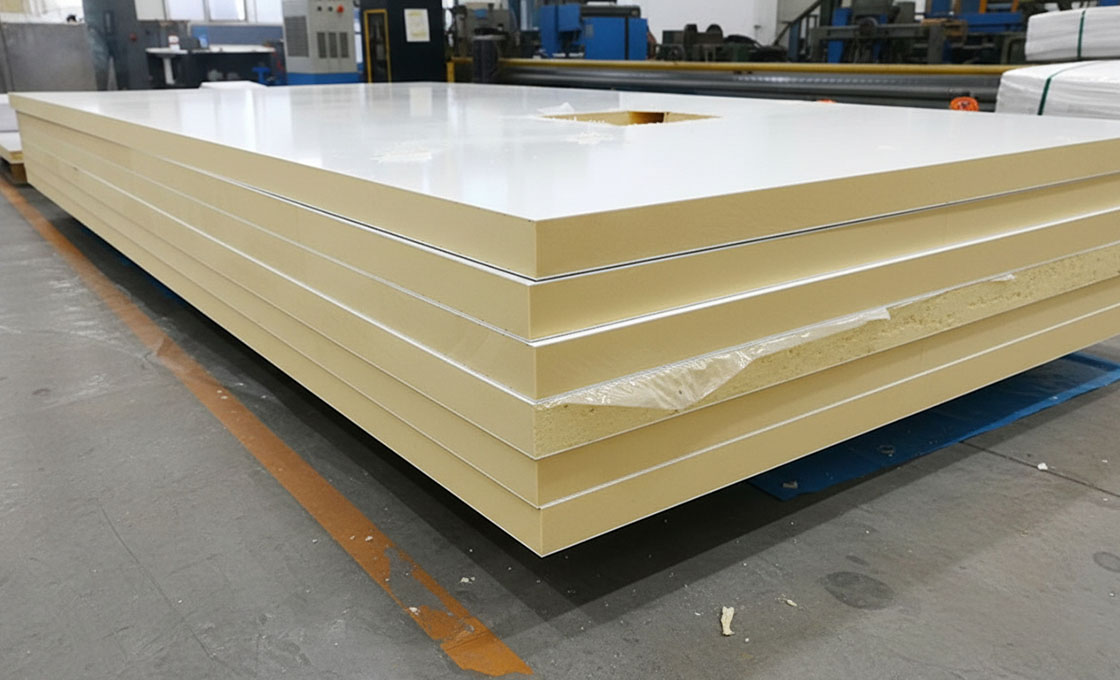
Minimum Order Quantities (MOQ) in composite panel manufacturing are not arbitrary gatekeepers; they represent the exact threshold required to offset machine calibration, raw material waste, and line setup costs.
Standard MOQ: The 100 to 500 Square Meter Baseline
For most Chinese manufacturers, the standard MOQ falls between 100 and 500 square meters. To give you a practical mental framework, a 100 sqm production batch yields enough FRP or CFRT panels to outfit roughly two to three standard camper vans. Anything less than this makes the run highly inefficient.
We strictly enforce a 100 sqm minimum for a single production batch. On our continuous composite panel production line, starting a run requires significant time and energy to bring the presses to optimal temperature and pressure. If we run anything below 100 sqm, the line setup costs completely eclipse the material value, making the transaction economically unviable for both parties.
High-Volume Thresholds and Pricing Tiers
Volume is the primary lever for pulling down your per-square-meter cost. Once you surpass the initial MOQ, the fixed manufacturing overhead is distributed across a larger footprint, unlocking tiered pricing structures. Based on standard manufacturing economics, you should expect the following volume discount thresholds:
- 500 sqm: 5-8% discount over baseline pricing.
- 1000 sqm: 10-14% discount, ideal for mid-size RV manufacturers.
- 2000+ sqm: 15-20% discount, maximizing commercial margin.
Hitting that 2000+ sqm tier is the sweet spot for specialized vehicle manufacturers. Because our daily production capacity exceeds 1,700 square meters, a high-volume order clears our floor rapidly. This means we can turn around a massive order in 7 to 10 days, keeping your assembly line fed without forcing you to warehouse months of inventory.
Trial Orders: Are They Possible?
We regularly encounter procurement engineers who need to validate the weight-to-strength ratio or surface flatness of a CFRT PU foam core panel before betting their entire production run on a new supplier. We understand the risk mitigation involved. Yes, trial orders below the 100 sqm MOQ are possible, but you must account for the financial realities.
Ordering below the standard MOQ will incur a 15-25% price premium. This surcharge covers the operational disruption of stopping the main line, recalibrating the equipment for a micro-run, and handling the disproportionate amount of raw material waste. For a serious buyer, this premium is simply the cost of due diligence—a small upfront expense to prevent a massive production line shutdown down the road.
Hidden Fees in RV Panel Quotes
The gap between a supplier’s quoted panel price and your actual landed cost is where margins disappear. Mold fees, freight terms, and packaging charges routinely add 8-18% to a project bill that wasn’t on the original quote.
Mold and Tooling Charges: The One-Time Hit
When you request custom RV wall panels with non-standard dimensions, profiles, or embedded mounting points, the factory needs to produce a dedicated mold. This is standard practice across Chinese composite panel manufacturing. The charge typically ranges from $500 to $3,000 per custom mold, depending on the complexity and size of the panel profile. This is a one-time fee. On repeat orders, you should not be charged again provided the mold is still in serviceable condition.
Where buyers get caught is failing to clarify ownership and lifespan. At Rax Panel, we define mold ownership terms upfront: if you funded the tooling, it is reserved for your production runs. We’ve seen cases in the market where suppliers reuse a customer-funded mold to produce panels for competitors.
If your panel profile is proprietary to your RV brand, get the mold exclusivity clause in writing before the first production batch. For standard-thickness FRP XPS sandwich panels at common RV dimensions (50mm, 60mm), tooling charges may be waived entirely because existing molds already cover these specifications.
FOB vs. CIF: The Freight Cost Gap That Skews Comparison
This is the single most common source of quote confusion we see from first-time importers. Two suppliers can quote the same FRP sandwich panel at identical per-square-meter prices, and your final cost can differ by thousands of dollars based solely on the shipping Incoterm.
- FOB (Free On Board): The supplier’s quote covers panel production and delivery to the departure port in China. You, the buyer, bear all freight, insurance, and logistics costs from that port to your destination. The panel price looks lower on paper, but your actual cost depends entirely on the freight rate you negotiate separately.
- CIF (Cost, Insurance, Freight): The supplier’s quote includes production, ocean freight, and basic insurance to your destination port. You handle customs clearance, duties, and inland transport from the destination port. The panel price looks higher, but more of your total landed cost is locked in at the time of purchase order.
Neither term is inherently better. If you have a reliable freight forwarder with competitive ocean rates, FOB often yields a lower total landed cost. If you are a smaller RV builder without established logistics partnerships, CIF reduces the risk of unexpected freight spikes during your production window. The critical point: never compare an FOB quote against a CIF quote at face value. Convert both to an estimated landed cost at your warehouse door before making a supplier decision.
Packaging and Crate Fees: The $50-$150 Line Item That Gets Dropped
Composite panels are vulnerable to edge damage and surface scratching during ocean transit. Standard factory packaging, which may consist of basic plastic wrap and steel strapping, is inadequate for a six-week journey in a shipping container. Reinforced wooden crates are the industry standard for protecting panel edges and maintaining flatness during transport.
These crates cost $50 to $150 per unit depending on the panel dimensions and crate construction. For a standard MOQ order of 500 square meters, you may need 8 to 15 crates, adding $400 to $2,250 to your total. Many suppliers omit this from initial quotes because it falls under “packaging and handling,” not panel production.
We include reinforced crate costs in our formal quotations specifically because edge damage claims from inadequate packaging waste time for both parties. If a supplier’s quote does not explicitly list crate or packaging charges, ask before you sign the purchase contract.

Price vs. Weight: Total Cost of Ownership
Shedding 100 kg from your RV body structure saves $400–$800 in fuel per unit annually. Over a 5-year production run, that weight saving pays for the upgrade to CFRT PET foam panels entirely.
How Panel Weight Directly Impacts RV Fuel Efficiency
Every kilogram you remove from an RV wall, roof, or floor panel compounds into real fuel savings over the vehicle’s service life. Industry testing consistently shows that a 100 kg reduction in vehicle weight yields 0.3 to 0.5 L/100km in fuel savings. For a motorhome averaging 15,000 km per year at current European diesel prices (roughly €1.70/L as of early 2026), that translates to approximately $400–$800 in annual fuel cost savings per unit.
Now scale that across a production fleet. If you manufacture 200 motorhomes per year and shave 150 kg off each unit by switching from traditional FRP plywood panels to lighter foam core sandwich panels, your customers collectively save up to $240,000 in fuel costs annually. That is not a marketing claim your sales team can ignore—it becomes a documented spec sheet line item that closes deals.
The weight reduction math is straightforward, but the panel selection is where procurement engineers get stuck. The core material you choose determines how much weight leaves the structure without sacrificing rigidity. Here is how the common cores stack up in density:
- Standard FRP Plywood Core: 400–550 kg/m³ density. Proven durability but heavy. No meaningful weight savings.
- XPS Foam Core: 30–45 kg/m³ density. Significant weight reduction, good moisture resistance, cost-effective.
- PET Foam Core: 60–120 kg/m³ density. Excellent strength-to-weight, recyclable, superior impact resistance.
- PU Foam Core: 30–60 kg/m³ density. Best thermal insulation per unit thickness, lightweight, widely used in refrigerated truck bodies and RV roofing.
- PVC Foam Core: 50–80 kg/m³ density. Premium mechanical properties, strong chemical resistance, higher cost tier.
At our factory, we produce all of these core configurations daily. The right choice depends on what your engineering team prioritizes: minimum weight (PU foam), maximum stiffness (PET foam), or lowest material cost (XPS foam). There is no universally “best” core—only the right core for your load calculations and insulation requirements.
Lightweight Panels: Higher Upfront, Lower Lifecycle Cost
Here is the procurement reality most wholesalers and RV manufacturers miss when comparing initial quotes: the cheapest panel per square meter is rarely the cheapest panel over a 5-year ownership window. A standard FRP plywood sandwich panel may cost less at the factory gate, but the weight penalty erodes that savings within 24 to 36 months of fleet operation.
Consider a side-by-side comparison that we calculate for fleet buyers regularly. A CFRT-faced PET foam core panel weighs approximately 30–40% less than an equivalent FRP plywood panel at the same structural thickness.
The CFRT PET foam panel carries a higher unit price—typically 15–25% more per square meter depending on facing thickness and foam density. But when you factor in the fuel savings from that weight reduction, the payback period falls within 3 to 5 years for a single motorhome, and faster for high-mileage commercial vehicles.
For RV manufacturers selling to fleet operators or rental companies, this is a margin accelerator. You can spec CFRT PU foam core panels into your standard build, document the fuel savings, and charge a premium for the “lightweight package”—while your customer still comes out ahead on total operating cost. The OEM that presents a 5-year total cost of ownership calculation at the point of sale wins the fleet contract over the competitor quoting only on sticker price.
There is a secondary cost factor that rarely appears in initial pricing discussions: delamination and replacement. FRP plywood panels are susceptible to moisture ingress at the plywood-to-resin interface, particularly in RV roofing applications where thermal cycling stresses the bond line. When a plywood core absorbs moisture, the panel warps, delaminates, and must be replaced.
Foam core panels—particularly PET and PU foams—are closed-cell structures that do not absorb water. This eliminates the primary failure mode that drives warranty claims and after-sales service costs. Over a 7-to-10 year vehicle life, the reduced warranty exposure from foam core panels often exceeds the fuel savings.
Our engineering team at Rax Panel provides weight-to-cost modeling for custom panel configurations during the quotation phase. If you send us your current panel specifications—core type, facing material, thickness, and target mechanical properties—we will return a weight comparison and projected fuel savings estimate alongside the pricing. This is not a value-add service; it is standard practice when you are specifying panels for a production run. You should demand the same from any supplier you evaluate.
| Panel Configuration | Price Range (per sqm) | Weight (per sqm) | Weight Savings vs Steel/Plywood | 5-Year TCO Insight |
|---|---|---|---|---|
| FRP XPS Foam Core (50mm) — Baseline | $118 – $161 | 8 – 10 kg | 50 – 60% | Industry standard for mid-volume RV production; best initial cost-to-performance ratio |
| CFRT PU Foam Core (50mm) | $130 – $175 | 6 – 8 kg | 60 – 70% | $2,000 – $4,000 fuel savings over 5 yrs; premium ROI for high-mileage motorhome fleets |
| GRP Honeycomb Core | $140 – $190 | 5 – 7 kg | 65 – 75% | $2,400 – $4,800 fuel savings; maximum weight reduction for commercial fleet operators |
| Aluminum Foam Core Sandwich | $150 – $200 | 7 – 9 kg | 55 – 65% | $1,600 – $3,200 fuel savings; superior corrosion resistance lowers replacement costs long-term |
| Traditional Steel Frame + Plywood | $80 – $110 | 15 – 20 kg | 0% (Baseline) | Lowest acquisition cost but highest lifecycle fuel expense; 50-100% heavier than composites |
Payment Terms Negotiation Guide
The 30/70 deposit-to-BL structure is the gold standard in Chinese composite panel procurement. Anything more aggressive signals either a brand-new supplier desperate for orders, or a pricing trap.
Standard Terms: 30% Deposit, 70% Against Bill of Lading
When you import CFRT sandwich panels or GRP foam core panels from China, the standard payment structure is 30% upfront and 70% upon receipt of the Bill of Lading. This is not a suggestion—it is the baseline nearly every established manufacturer, including our operation at Rax Panel, requires before committing production line capacity.
Here is how the mechanics actually work. Your 30% deposit triggers raw material procurement and secures your slot on the production schedule. For context, our factory runs 1,700 square meters daily. Without that deposit, no manufacturer holds foam core inventory or schedules gelcoat runs for a custom RV wall specification.
The remaining 70% is due when the shipping agent issues the Bill of Lading—a legal document confirming your panels are loaded and the vessel has departed. You pay the balance, you receive the original BL, and you use that document to claim cargo at destination port.
- Risk allocation: The supplier carries production risk. You carry transit risk once the BL is issued.
- Wire transfer timeline: International SWIFT transfers take 3-5 business days. Factor this into your production timeline or your panels sit finished waiting for funds to clear.
- Currency consideration: Most Chinese manufacturers quote in USD. If your operating currency is EUR or AUD, lock your exchange rate at deposit stage to avoid landed cost creep.
Never negotiate to 50% upfront or full prepayment unless you have an existing multi-year relationship. A supplier demanding 100% in advance is either undercapitalized or not a manufacturer at all. Legitimate factories with daily output capacity like ours have cash flow to cover raw materials against a 30% commitment.
Letter of Credit for Large Orders
For orders exceeding $20,000—roughly 170 square meters of 50mm FRP XPS sandwich panels at market rates—Letters of Credit become a viable and often preferred payment method. An LC protects both parties: the supplier knows funds are guaranteed by the issuing bank, and you know payment only releases when shipping documents meet your exact specifications.
The trade-off is cost. Bank fees for an LC typically run 1-2% of the total order value, split between issuing and advising banks. On a $30,000 shipment of CFRT PU foam core panels for an RV production run, expect $300 to $600 in banking fees alone. For thin-margin distributors importing multiple container loads per quarter, these fees compound quickly.
- Irrevocable LC only: Never accept a revocable LC. An irrevocable LC cannot be amended or cancelled without consent from all parties.
- Document requirements: Specify exactly what documents trigger payment—commercial invoice, packing list, original BL, and critical for composite panels, a quality inspection certificate from a third party like SGS or Bureau Veritas.
- Lead time impact: LC issuance adds 7-10 days to your procurement cycle. If your RV production line needs panels in 30 days, start the LC process before confirming the order.
We regularly work with LC terms for distributors supplying European and North American RV manufacturers. Our multilingual team—fluent in English, French, Russian, Japanese, and Korean—coordinates directly with your bank to ensure documentation matches LC conditions precisely, preventing payment delays at the advising bank stage.
| Order Tier | Payment Method | Deposit Required | Discount & Notes |
|---|---|---|---|
| Trial Order (<100 sqm) | 100% T/T in Advance | Full upfront payment | No discount; expect 15-25% small-order surcharge |
| Standard MOQ (100-499 sqm) | T/T or Western Union | 50% deposit, balance before shipment | Base price tier; crate fees ($50-$150) extra |
| Mid-Volume (500-999 sqm) | T/T preferred | 30-50% deposit, balance before shipment | 5-8% discount; mold fees ($500-$3000) may apply |
| Large Volume (1000-1999 sqm) | T/T or L/C at sight (>$10,000) | 30% deposit, balance against B/L copy | 10-14% discount; flexible terms negotiable |
| Bulk OEM (2000+ sqm) | L/C, D/P, or negotiated T/T | Negotiable (typically 30%) | 15-20% discount; priority scheduling; annual contracts available |
Conclusion
If you’re building 30+ units a year, spec CFRT panels with PU foam core and skip the XPS. PU core adds roughly $2-$3 per square meter but cuts 100 kg per unit — that’s $400-$800 in annual fuel savings per motorhome your customers will notice on the spec sheet. XPS works for budget builds, but the weight penalty eats your margin across every unit you ship.
Email your top two suppliers and request a landed cost breakdown on 500 sqm of 50mm CFRT PU panels, with crate fees and port-to-warehouse shipping listed line by line. That single request exposes who prices clean and who buries surcharges on page three. We provide that breakdown on every quote — no mold charges appearing after you commit.
Frequently Asked Questions
This factor has a direct bearing on project performance and long-term cost. Addressing it with specific data rather than general assumptions leads to better outcomes.
What amperage configurations affect RV panel pricing?
Panels are built for 15/20A, 30A, or dual-phase 50A. Higher amperage configurations require hardware like double breakers, which increases manufacturing costs.
Which components determine the wholesale cost of RV panels?
The primary cost drivers are the electrical breakers, the required wire gauge (priced by the foot), and the specialized RV outlet box.
Does a 50A RV panel cost more than a 30A?
Yes, a 50A dual-phase system requires a larger double breaker space and heavier gauge wiring compared to a single-space 30A setup.
How do copper prices impact bulk panel orders?
Because appropriate gauge copper wiring is a major material factor, final bulk pricing is heavily influenced by fluctuating raw copper market rates.
Can panels be customized for specific breaker capacities?
Yes, manufacturers can design electrical panels with the exact single or double breaker spaces needed to handle your specific power loads.