

Most motorhome composite panels look identical on a spec sheet. They don’t perform identically on your assembly line. The difference between a supplier who holds ±0.2mm thickness tolerance across a full production run and one who doesn’t becomes obvious around unit 40 — when fixtures stop aligning and seal consistency falls apart. Over 15 years in composite manufacturing, I’ve watched procurement engineers learn this lesson at full cost: production delays and warranty claims that erased every dollar saved on the lower bid. This guide covers the engineering data that actually matters — real FRP versus aluminum construction numbers, core density and thermal conductivity specs tied to field performance, and the supplier capabilities your production schedule depends on.
The numbers are clear. FRP sandwich panels with XPS foam core deliver up to 40% weight reduction compared to traditional wood-and-aluminum builds. With thermal conductivity as low as 0.035 W/(m·K), you’re not just saving fuel — you’re eliminating the thermal bridging that causes condensation, hidden moisture, and mold claims 18 to 24 months after delivery. That’s the calculation that matters when you’re evaluating panel suppliers: not unit cost alone, but the warranty exposure baked into every wall, floor, and roof panel you spec.
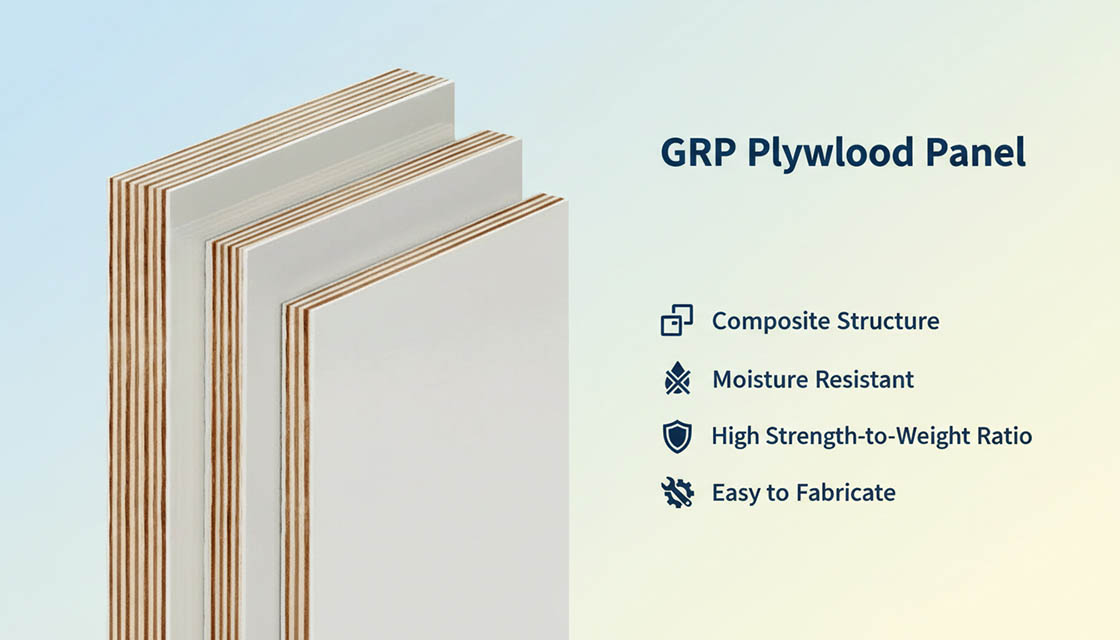
Table of Contents
Why Composite Panels Excel in RVs
Composite sandwich panels deliver up to 40% weight savings over traditional wood and aluminum RV builds while eliminating the thermal bridging and rot issues that drive warranty claims.
Advantages Over Traditional Wood and Aluminum Construction
Traditional RV manufacturing relies on wood framing with aluminum skins or separate layers of luaun underlay and Filon exteriors. This approach creates inherent weaknesses: wood absorbs moisture over time, aluminum frames act as thermal conductors, and multi-layer assemblies leave gaps where water intrudes. Procurement engineers dealing with warranty claims know this pattern well.
Full composite sandwich panels solve these problems at the material level. A single bonded unit—like an FRP skin laminated to an XPS foam core—removes the need for internal framing entirely. The structural load is carried by the panel itself, not by a skeleton of wooden studs. This eliminates thermal bridging, the primary cause of condensation, dampness, and hidden rot in conventional builds.
- Weight Reduction: Rax Panel composites offer up to 40% weight reduction compared to traditional wood-and-aluminum assemblies, directly improving payload capacity and fuel efficiency.
- Thermal Performance: XPS foam core panels achieve thermal conductivity as low as 0.035 W/(m·K), with typical R-values of R-5 to R-6 per inch, far outperforming aluminum-framed walls with spray foam.
- Moisture Resistance: Closed-cell XPS, PET, and PVC foam cores do not absorb water. Combined with FRP gelcoat skins, the panel assembly is inherently waterproof and resistant to mold and mildew.
- Dimensional Consistency: Panel thickness tolerance maintained within +/- 0.2mm, ensuring predictable assembly and reducing fitment issues on the production line.
The comparison between aluminium composite panels and full composite construction is a common source of confusion among buyers. ACP products consist of two thin aluminum sheets bonded to a non-structural core. While adequate for cladding, they lack the impact resistance and structural rigidity required for RV walls subjected to road vibration and off-road stress. GRP and CFRT skins bonded to structural foam cores provide significantly higher load-bearing capacity and impact tolerance.
Durability and Long-Term Performance Benefits
For OEM procurement teams, lifecycle cost matters more than initial unit price. A panel that delaminates after three years destroys any upfront savings through warranty claims, brand damage, and customer attrition. This is where material selection and lamination quality become critical.
Rax Panel’s FRP woven gelcoat skins provide superior impact and abrasion resistance compared to bare aluminum or Filon exteriors. The gelcoat chemistry is formulated for UV resistance, preventing the surface chalking and degradation that plagues lower-quality FRP sheets. This directly extends the exterior’s service life and maintains aesthetic quality over years of sun exposure.
- Delamination Resistance: Multi-material lamination is performed under controlled factory conditions with strict adhesive bonding protocols, producing consistent shear strength across the entire panel face.
- Impact Tolerance: FRP woven roving skins absorb and distribute impact energy across the panel surface, resisting denting and puncture that would permanently deform aluminum skins.
- Fire Compliance: Custom panel configurations available to meet ASTM E84 or specific regional fire safety standards required by commercial vehicle regulations.
- Structural Stability: Unlike wood-based assemblies that swell, warp, or degrade with moisture cycling, composite sandwich panels maintain dimensional stability across temperature and humidity ranges typical of RV operating conditions.
With over 15 years of production experience and a daily output exceeding 1,700 square meters, Rax Panel’s manufacturing line is built for the consistency that OEM production schedules demand. CNC-cut panels delivered to exact CAD specifications eliminate the variability that slows down assembly lines and creates quality control failures downstream.
RV Panel Material Choices
Core selection dictates thermal performance; skin selection dictates impact survival. We engineer motorhome composite panels to hit both targets while holding thickness tolerance within +/- 0.2mm across every production run.
Core Materials and Facing Options for RV Construction
The structural behavior of a sandwich panel is driven by the relationship between its core and its skins. For specialized vehicle manufacturing, the wrong pairing means wasted payload capacity and warranty claims down the line. Our engineering team works directly from your CAD files to match core density and facing type to the exact load requirements of your RV walls, roofing, and flooring assemblies.
We produce panels using four primary foam cores—XPS, PET, PU, and PVC—along with structural honeycomb cores in PP and fiberglass configurations. Each core addresses a different priority in the build. XPS delivers the lowest thermal conductivity. PET offers better dimensional stability at elevated temperatures. PU and PVC provide higher shear strength for load-bearing floor applications. Facing options span GRP/FRP with gelcoat, CFRT for high-impact zones, aluminum, and ACP, selected based on the surface demands of the specific panel location.
Foam Core Panels: Insulation Value and Thermal Performance
Foam core panels remain the standard for RV wall and roof assemblies where thermal resistance is the primary driver. XPS foam cores in our panels achieve a thermal conductivity as low as 0.035 W/(m·K), translating to an R-value of roughly R-5 to R-6 per inch of thickness. For a 1.5-inch panel, that means continuous insulation values that eliminate the thermal bridging inherent in traditional wood or aluminum framing.
This continuous insulation approach is what prevents the condensation and hidden rot that plague conventional builds. Our foam core sandwich panels are waterproof and thermally insulated by design, with facing skins bonded under controlled production conditions that prevent delamination. We produce these panels with GRP/FRP, CFRT, aluminum, or plywood facings depending on the structural and aesthetic demands of the project.
- XPS Foam Core: Lowest k-value at 0.035 W/(m·K), ideal for maximum thermal resistance in wall and roof panels.
- PET Foam Core: Superior temperature stability, recyclable, suited for OEMs prioritizing environmental compliance.
- PU Foam Core: Higher shear strength, common in flooring panels where point loads from furniture and equipment require additional support.
- PVC Foam Core: Closed-cell structure with good chemical resistance, often specified for marine-grade RV builds.
Our CFRT sandwich panels with XPS, PET, or PU cores deliver up to 40% weight reduction compared to traditional wood-and-aluminum construction while maintaining the structural rigidity required for off-road and extreme-temperature deployments.
Honeycomb Core Panels: Weight vs. Strength Trade-offs
When the priority shifts from insulation to sheer structural performance at minimal weight, honeycomb cores become the correct engineering choice. PP honeycomb panels composited with fiberglass sheet deliver an exceptionally high strength-to-weight ratio—critical for slide-out floors, ramp doors, and structural bulkheads where every kilogram matters for fuel efficiency and payload capacity.
Fiberglass honeycomb panels and GRP honeycomb panels offer even higher compressive strength for applications where the panel must carry significant point loads without localized deformation. The trade-off is straightforward: honeycomb cores sacrifice R-value per inch compared to foam, but gain structural stiffness that foam alone cannot match at equivalent weight. For many OEMs, the solution is a mixed-material approach—foam core panels for walls and roofing, honeycomb core panels for flooring and structural partitions.
- PP Honeycomb with Fiberglass Skin: Lightest structural option, strong and rigid, used for interior partitions and non-insulated structural panels.
- Fiberglass Honeycomb: Higher compressive and shear strength, specified for load-bearing floor sections and ramp assemblies.
- Thermoplastic Honeycomb: Recyclable core option for OEMs targeting sustainability mandates without sacrificing panel performance.
We CNC-cut all panels to exact measurements from customer CAD files, maintaining dimensional consistency across production batches. This precision is what allows assembly-line integration without rework or manual fitting—directly addressing the inconsistent quality and tolerance drift that causes production delays at the OEM level.
| Panel Type | Core Options | Key Specs | RV Application | Primary Benefit |
|---|---|---|---|---|
| FRP/Fiberglass Foam Core | XPS, PET, PU, PVC Foam | Thermal conductivity as low as 0.035 W/(m·K); R-5 to R-6 per inch (XPS); Up to 40% weight reduction | Walls, roofing, flooring | Superior insulation, impact resistance, waterproof |
| CFRT Sandwich Panel | XPS, PET, PU, PVC Foam | Continuous fiber reinforced thermoplastic; Lighter and thinner than standard FRP | Structural walls, furniture panels | High strength-to-weight ratio, reduced delamination risk |
| PP Honeycomb Composite | PP Honeycomb with Fiberglass Sheet | Extremely lightweight; High compressive strength | Interior walls, flooring, slide outs | Maximum weight savings without structural compromise |
| Aluminum Foam Core | XPS, PET, PU Foam Core | Aluminum facing with foam insulation; Flat, smooth surface | Exterior walls, cargo compartments | Weather resistance, modern aesthetic finish |
| Fiberglass Honeycomb | Fiberglass Honeycomb Core | High rigidity; Excellent shear strength | Ramp doors, decking, structural components | Heavy-duty load bearing with minimal weight |
| FRP Plywood Composite | Plywood or Balsa Core | Fiberglass reinforced facing; Proven durability | Flooring, heavy-traffic areas | Impact and abrasion resistance for high-wear zones |
| Aluminum Honeycomb | Aluminum Honeycomb Core | Fire resistant; Dimensionally stable | Fire-rated partitions, roof panels | Meets stringent fire safety ratings (ASTM E84) |
Key Panel Specifications for RVs
For high-volume RV OEMs, consistent panel tolerances and verified thermal data dictate assembly line efficiency and long-term warranty exposure.
Material Properties and Thermal Performance
In motorhome manufacturing, the battle against thermal bridging directly dictates a vehicle’s livability and energy consumption. Traditional framing creates cold spots where condensation forms, eventually leading to hidden rot and costly warranty claims. Rax Panel addresses this by supplying continuous insulated panels that eliminate structural weak points. By utilizing an XPS foam core, our panels achieve a thermal conductivity (k-value) as low as 0.035 W/(m·K), maximizing interior climate control.
Achieving up to a 40% weight reduction compared to traditional wood or metal framing, these composite structures drastically improve vehicle fuel efficiency and payload capacity without compromising structural rigidity. We achieve this through advanced multi-material lamination, allowing us to pair specific core materials with high-performance skins like CFRT (Continuous Fiber Reinforced Thermoplastic) to meet exact engineering load requirements.
- Thermal Conductivity: XPS foam core k-value rated at 0.035 W/(m·K) for superior insulation.
- Weight Reduction: Up to 40% lighter than traditional structural materials.
- Skin Options: GRP/FRP, CFRT, Aluminum, and high-grade Gelcoat.
Panel Thickness and Manufacturing Tolerances
Inconsistent panel thickness is a nightmare for automated assembly lines, leading to alignment issues and structural gaps. Rax Panel enforces strict manufacturing disciplines, maintaining panel thickness tolerances within +/- 0.2mm across the entire production run. This precision ensures seamless integration into your existing production jigs and minimizes the need for on-site adjustments.
Whether you require standard 1.5″ or 1.78″ configurations for sidewalls, or specialized dimensions for roofing and flooring, our factory operates an advanced production line capable of outputting over 1,700 square meters daily. Our engineering team works directly from your CAD files to deliver CNC-cut panels to exact specifications, ensuring a drop-in fit that accelerates your manufacturing throughput.
Impact Resistance and Long-Term Durability
Exterior RV panels face a barrage of road debris, extreme weather, and prolonged UV exposure. A failed panel skin leads to delamination, instantly devaluing the vehicle. To mitigate this, Rax Panel utilizes FRP woven gelcoat skins engineered for superior impact and abrasion resistance. The specific gelcoat chemistry we apply provides a waterproof, flat surface that resists chipping and prevents the micro-cracking that plagues standard aftermarket panels.
Beyond the exterior skin, the core-to-skin adhesive bond is critical for preventing delamination over time. Our composite materials undergo rigorous experimental testing to verify structural integrity under stringent conditions. For high-impact areas, we offer specialized solutions like PP honeycomb cores composited with fiberglass sheets, providing an exceptionally high strength-to-weight ratio that absorbs and distributes kinetic energy far better than solid materials.
| Feature | Specification | Benefit |
|---|---|---|
| Weight Reduction | Up to 40% lighter than traditional materials | Improved fuel efficiency and increased payload capacity for RVs |
| Thickness Tolerance | +/- 0.2mm precision across panel surface | Consistent assembly, reduced gaps, fewer warranty claims |
| Facing Skin | 2mm FRP woven gelcoat (CFRT/GRP options available) | Superior impact and abrasion resistance, UV protection against delamination |
| Core Materials | XPS, PET, PU, or PVC foam cores (2.37 lb density standard) | Customizable strength-to-weight ratio for walls, roofing, and flooring |
| Thermal Insulation | K-value as low as 0.035 W/(m·K); R-5 to R-6 per inch (XPS) | Eliminates thermal bridging, prevents condensation and mold growth |
| Max Panel Size | Up to 14 ft long x 7.5 ft tall | Fewer seams required, reduced leak risk, faster production |
| Fire Rating | Custom options for ASTM E84 or regional standards | Meets strict OEM compliance and passenger safety requirements |
| Custom Cutting | CNC-cut to exact measurements from CAD files | Drop-in ready for existing production lines, minimal waste |
| Panel Thickness | 1.5 inch or 1.78 inch standard (custom available) | Optimized profiles for walls, roofs, and floors with maximum rigidity |
| Daily Production Capacity | 1,700+ sqm per day from advanced production line | Reliable supply chain for large-scale OEM orders and tight deadlines |
Custom Panel Manufacturing for OEMs
OEM panel manufacturing demands strict adherence to tolerances and repeatable quality at scale. We engineer custom cuts and laminate assemblies to your exact vehicle specifications.
Custom Cuts and Tailored Solutions for Specific RV Models
Every motorhome floor plan has unique geometric requirements. Off-the-shelf sheet goods force your assembly line to compensate for mismatched dimensions, slowing production and wasting material. We build panels to your CAD drawings, matching the exact curvature, cutout placements, and edge detailing your RV models require.
Our engineers work directly with your design team to select the optimal core and skin combinations. For lightweight RV wall panels, a CFRT skin over an XPS foam core delivers high impact resistance with a k-value as low as 0.035 W/(m·K). If your application demands maximum structural rigidity for flooring or load-bearing partitions, GRP fiberglass foam core panels provide a stronger, stiffer alternative without the weight penalty of traditional plywood.
We maintain a panel thickness tolerance within +/- 0.2mm across the entire sheet. This level of consistency matters on the factory floor. When panels arrive with uniform dimensions, your jigs fit correctly, adhesive bonds evenly, and assembly moves without interruption.
CNC Cutting for Precision
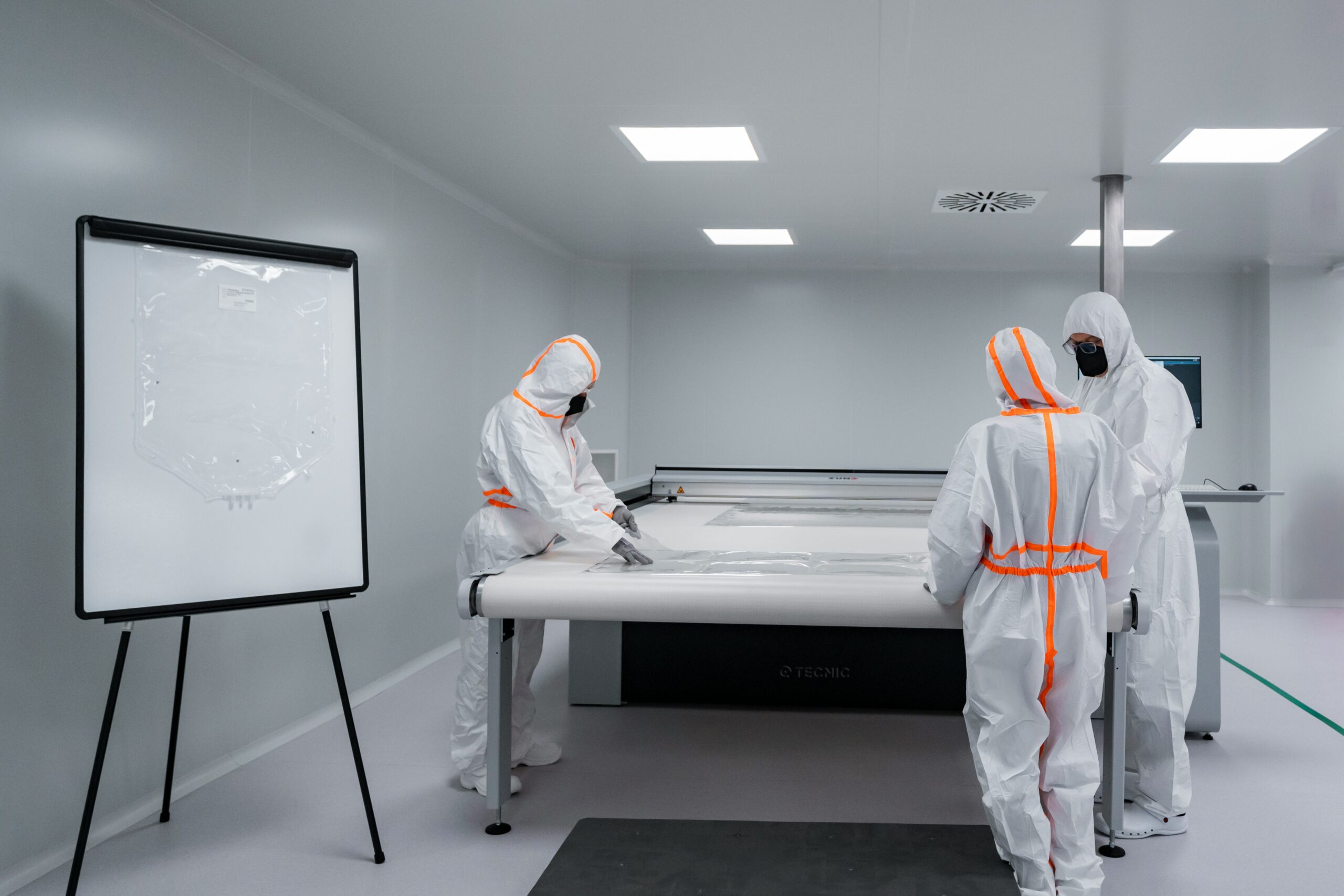
Hand-trimming composite panels introduces variance. Variance creates gaps, and gaps create warranty claims. Our CNC routing equipment cuts panels to exact measurements from your digital files, removing human error from the equation.
- Edge Quality: Clean, burr-free edges that require no secondary finishing before assembly.
- Cutout Accuracy: Precise routing for window openings, door recesses, and utility penetrations directly from your CAD data.
- Repeatability: Panel 500 matches panel 1. This consistency is critical for maintaining production pace and product quality across large runs.
For specialized vehicle manufacturers, this means less time spent on fitment adjustments and more units moving through your line. We accept standard CAD file formats and translate your designs directly into machine code.
Prototyping and Volume Production
Developing a new RV model or refreshing an existing line requires a supplier who can move from concept to full production without missing a beat. Our facility runs an advanced composite panel production line capable of outputting over 1,700 square meters daily, but we also dedicate capacity to low-volume prototype runs.
During the prototype phase, our engineering team tests material combinations against your performance targets. We evaluate different foam densities, skin thicknesses, and lamination configurations to hit your required weight-to-strength ratios and thermal insulation values. Once the spec is locked, we scale production without changing the process or the personnel running the line.
This matters for lead times. When your production schedule calls for 2,000 panels, you need confidence that the material, labor, and machine capacity are available. With over 15 years of production experience serving manufacturers across Europe, North America, and Asia, we understand that delivery delays cost more than the panels themselves. Contact our engineering team to discuss your project specifications and request a technical quotation.
Installation Best Practices
Integrating composite panels into RV assembly lines requires controlling three variables: dimensional tolerance, joint design, and adhesive compatibility. Miss any one, and production throughput drops while warranty claims rise.
Integration into RV Manufacturing Processes
Switching from traditional aluminum framing or wood-and-staple construction to full composite sandwich panels changes your assembly workflow from the ground up. The production line no longer needs separate insulation packing, framing, and skin-bonding stations. Instead, a single structural insulated panel—such as a GRP foam core panel with 2mm FRP woven gelcoat skins—arrives CNC-cut to exact CAD specifications and ready for direct installation.
This shift eliminates several manual steps. But it also introduces new requirements that your production team must account for during the transition phase:
- Tolerance Management: Rax Panel maintains panel thickness tolerance within +/- 0.2mm. This consistency matters because your assembly jigs and fixtures rely on predictable dimensions batch after batch. Inconsistent panels from lower-tier suppliers cause misalignment, forcing line workers to hand-fit each unit and destroying cycle time targets.
- Adhesive and Bonding Protocols: Composite panels require specific surface preparation and structural adhesive systems. FRP gelcoat surfaces must be abraded and cleaned before bonding. Polyurethane-based structural adhesives are the industry standard for joining panels to steel or aluminum subframes in RV chassis construction.
- Handling and Storage: XPS foam core panels with FRP skins weigh up to 40% less than traditional builds, but their larger format—up to 14 feet long in some specifications—demands proper suction-lift equipment to prevent core shear during movement. Store panels flat on level surfaces to prevent warping.
- CNC Integration: Rax Panel accepts CAD files directly and returns CNC-cut panels sized to your exact motorhome wall, roof, or floor profiles. This means your engineering team designs the panel geometry, and the supplier delivers finished parts ready for immediate placement on the assembly line.
For OEMs running multi-shift operations, supply consistency is the critical factor. A factory producing over 1,700 square meters of composite panels daily can sustain continuous delivery schedules, but you should establish buffer stock agreements for your highest-volume panel configurations to protect against shipping delays.
Potential Design Considerations
Engineering a motorhome with composite panels requires thinking differently about thermal performance, structural load paths, and long-term durability compared to conventional construction methods.
Thermal bridging is the most common oversight we see from engineering teams transitioning to composites. Traditional RV builds use metal frames that conduct heat and cold directly through the wall assembly, creating condensation points and hidden moisture damage. Foam core sandwich panels—whether XPS, PET, or PU—eliminate this thermal bridging entirely because the continuous foam core has no conductive pathways. With XPS foam cores providing R-5 to R-6 per inch and thermal conductivity as low as 0.035 W/(m·K), the insulation value is built into the panel structure itself.
Joint and seam design requires particular attention. The panel itself provides excellent insulation, but the joints between panels become the weak point if not properly engineered:
- Mechanical Fastening Points: Concentrated loads from window openings, door frames, and roof rack mounts require localized reinforcement. Rax Panel engineers work with your design team to specify denser foam inserts or solid blocking at high-stress attachment points during the custom panel layup phase.
- Edge Sealing Systems: Exposed foam core edges must be sealed against moisture intrusion. Options include embedded aluminum extrusions, FRP edge caps, or high-performance sealant systems compatible with the specific foam and skin chemistry of your chosen panel configuration.
- Panel-to-Panel Joining: Overlap joints, tongue-and-groove profiles, and flush joint designs each carry different tradeoffs between thermal performance, structural continuity, and visual finish quality. For premium motorhome builds, overlapping FRP flanges with sealed gaps typically deliver the best balance of thermal integrity and manufacturing simplicity.
- Fire Compliance: Depending on your target market, panels may require specific fire ratings. Rax Panel offers customization for ASTM E84 and other regional standards. Factor this into your material specification early—retrofitting fire compliance after tooling is costly and delays launch timelines.
Material selection also impacts long-term warranty exposure. CFRT sandwich panels deliver higher strength-to-weight ratios for structural flooring and load-bearing walls, while standard GRP panels with gelcoat skins provide proven impact and abrasion resistance for exterior surfaces prone to road debris. Matching the specific panel construction to its application—rather than specifying one panel type across the entire vehicle—optimizes both cost and performance.
Conclusion
The math is straightforward. Rax Panel’s XPS-cored FRP sandwich panels deliver up to 40% weight savings over traditional aluminum framing — that translates directly into payload capacity your customers will pay for. With thickness tolerances locked at +/- 0.2mm and k-values as low as 0.035 W/(m·K), your assembly line stops fighting material inconsistency and starts hitting delivery schedules.
Request a sample panel spec’d to your exact wall assembly and run it through your own impact and thermal cycling tests. Ask for the ASTM E84 fire rating documentation and the CFRT tensile strength data on their gelcoat skins. Those two reports tell you whether this supplier can support a 5-year warranty program — or become a liability you’ll regret at month 18.
Frequently Asked Questions
How to get a quote for Motorhome Composite Panels?
You can leave your detailed requirements using the inquiry form below, and our sales team will provide a comprehensive quotation along with product specifications within 24 hours.
Can I request samples before bulk orders?
Yes, we highly recommend testing samples first. Please contact our support team to arrange sample shipments to verify the product quality before confirming your large volume purchase.