
A refrigerated truck manufacturer in Southeast Asia lost a $2.3 million fleet contract last year when their composite panels started delaminating at 14 months. The foam core separated from the skins, moisture intruded through the gaps, and thermal performance collapsed. Cargo spoilage claims rolled in fast. That OEM had cut panel costs by 18% switching to a cheaper supplier.
The warranty claims ate three full years of those savings. When you specify a vehicle CFRT panel for truck bodies, camper shells, or dry freight applications, you are not just buying a layered structure. You are betting your production line on bond integrity, core-to-skin compatibility, and a thermoplastic resin system that survives thermal cycling, UV bombardment, and thousands of kilometers of road vibration without bubbling or separating.
We have built CFRT sandwich panels at Rax Panel for over 15 years, and we maintain test records on every production run: tensile strength, peel adhesion, flame spread ratings, UV aging, and CNC cutting tolerances. This guide draws directly from that factory data to show you how CFRT panels stack up against traditional FRP and aluminum in actual vehicle service. You will see hard numbers on weight savings, insulation performance, and delamination resistance. We will also walk through the design decisions that matter most at the specification stage: which foam core fits which thermal load, how fire retardant formulations affect mechanical properties, and what happens to continuous fiber reinforced thermoplastic panels at end of life when recycling becomes a procurement requirement rather than an afterthought.
What Is a Vehicle CFRT Panel
A vehicle CFRT panel is a continuous fiber reinforced thermoplastic composite engineered to eliminate the weight of metal without sacrificing structural rigidity. It is manufactured using unidirectional tape layups, offering OEMs a fully recyclable alternative to traditional thermoset FRP.
The Unidirectional Tape Layup Process
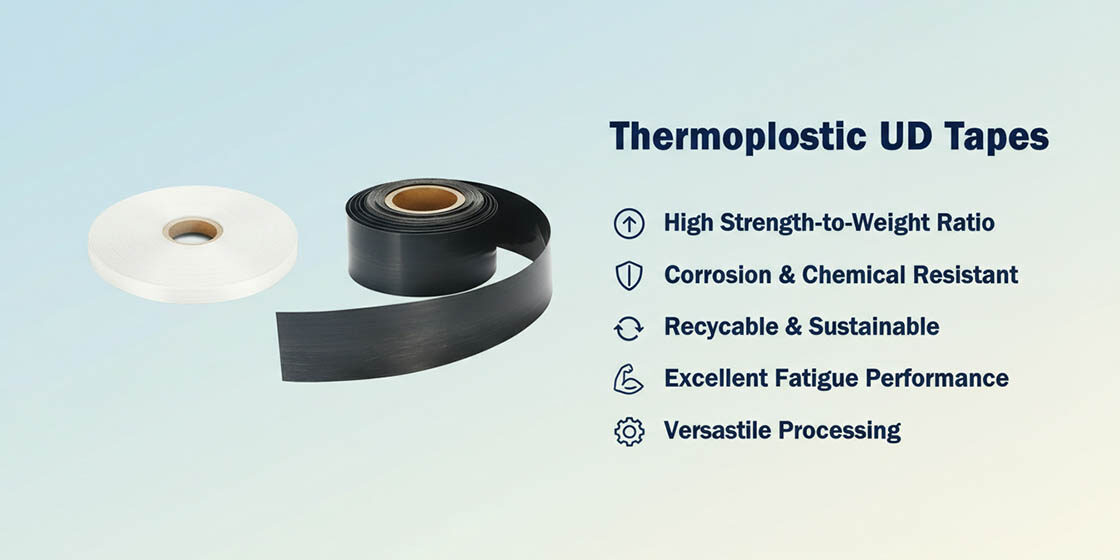
At its core, a CFRT panel relies on unidirectional (UD) tape. Unlike chopped strand materials where fibers are randomly scattered, UD tapes feature continuous, unbroken fibers running the entire length of the sheet. In our advanced production lines, we layer these thermoplastic UD tapes in precise, calculated orientations, such as 0°, 90°, or ±45° angles, to manage specific directional loads. This calculated tape layup process ensures the final panel possesses extreme tensile strength exactly where the vehicle structure requires it most.
By consolidating these layers under high heat and pressure, the resulting composite achieves a near-zero void content. This eliminates the micro-bubbles and porosity that often cause panel delamination in lower-grade composites. For specialized vehicle manufacturers, this precise engineering translates directly into reliable lightweight truck camper panels that withstand severe road vibrations without structural fatigue.
The Thermoplastic Matrix (PP/PET) and Continuous Fiber Orientation
The matrix binding these continuous fibers is a high-performance thermoplastic resin: most commonly Polypropylene (PP) or Polyethylene Terephthalate (PET). Unlike thermosetting resins that undergo an irreversible chemical cure, PP and PET thermoplastics physically solidify as they cool. This allows the material to be rapidly heated, stamped, and formed into complex 3D shapes, drastically reducing mold cycle times for high-volume vehicle production.
When continuous fiberglass strands are fully impregnated with this thermoplastic matrix, the mechanical properties rival much heavier metals. The strict unidirectional fiber orientation ensures that impact energy is efficiently distributed across the panel surface. We utilize this exact technology to manufacture our CFRT sheets, which serve as highly resilient, thin, and lightweight skins for XPS, PET, and PU foam core sandwich panels used in truck bodies and RV walls.
The 100% Recyclability Advantage Over Thermoset FRP
The most critical commercial advantage of CFRT over traditional thermoset FRP (Fiberglass Reinforced Plastic) is its end-of-life footprint. Traditional thermoset panels use resins like polyester or epoxy that undergo irreversible cross-linking during curing. Once set, they cannot be melted down or reshaped, ultimately ending up in landfills or requiring highly energy-intensive downcycling processes.
CFRT completely bypasses this environmental bottleneck. Because the thermoplastic PP or PET matrix can be repeatedly remelted and reprocessed, CFRT composite panels for vehicles are 100% recyclable. Off-cuts and end-of-life panels can be ground down and re-extruded into new composite profiles. As international commercial vehicle regulations increasingly mandate strict material recovery rates, sourcing CFRT provides a distinct operational advantage for manufacturers aiming to meet global sustainability targets.
CFRT vs FRP Skins: Head-to-Head Data
CFRT skins deliver up to 30% weight savings over traditional FRP while maintaining comparable or superior tensile performance, which is critical for every kilogram shaved from a truck or RV build.
Density, Tensile Strength, and Flexural Modulus Comparison
For vehicle OEMs evaluating a continuous fiber reinforced thermoplastic panel versus a conventional fiberglass reinforced plastic skin, the mechanical gap has narrowed significantly, and in some metrics it has flipped.
The core advantage of CFRT lies in its fiber architecture: continuous unidirectional or woven fibers impregnated with a thermoplastic matrix (typically polypropylene or PET) deliver highly directional strength-to-weight performance. Standard FRP sheets, which rely on chopped strand mat or woven roving in a thermoset resin, offer more isotropic behavior but at a substantial density penalty.
Typical property ranges we validate at Rax Panel for vehicle-grade skins:
- Density: CFRT skins range from 1.2–1.5 g/cm³ depending on the thermoplastic matrix; standard GRP/FRP sheets sit at 1.8–2.0 g/cm³. On a refrigerated truck body, that difference alone can translate to 15–25 kg per panel assembly.
- Tensile Strength: CFRT sheets reach 250–450 MPa in the fiber direction; FRP sheets typically deliver 200–350 MPa. The key distinction is consistency: CFRT’s continuous fibers reduce the variability you see with chopped strand thermoset laminates.
- Flexural Modulus: CFRT achieves 15–25 GPa longitudinally, while FRP panels generally register 10–18 GPa. For RV walls and dry freight truck bodies subjected to dynamic road loads, that higher stiffness at lower mass is where the real engineering value sits.
The takeaway for specialized vehicle manufacturers: CFRT does not just match FRP. It outperforms it on a per-unit-mass basis. When your design calls for a lightweight CFRT sandwich panel for refrigerated truck applications, the skin choice directly determines whether you hit your target payload or not.
Thermoforming and Repair Capabilities
This is where the thermoplastic versus thermoset divide becomes a practical, line-level concern. FRP sheets are thermoset: once the resin cures, the chemical cross-linking is permanent. You cannot reshape, reheat, or weld a cured FRP laminate. If an FRP truck panel sustains impact damage, the repair process involves grinding out the damaged area, laying up new fiberglass mat, and waiting for resin cure. Downtime is measured in hours, not minutes.
CFRT skins, by contrast, can be thermoformed. Our engineering team at Rax Panel uses heated molds and presses to shape CFRT sheets into complex curves for RV roofing and truck body corners, something that would require custom FRP layup tooling for each geometry. This matters for two reasons on the factory floor: tooling costs drop when you can form a flat sheet into a 3D profile in a single step, and lead times for custom shapes shrink dramatically.
Repair behavior is equally distinct. CFRT panels can be locally reheated and re-consolidated using hot-air tools or heated presses. For fleet operators maintaining hundreds of units, this repair methodology cuts average panel repair time significantly compared to traditional FRP hand layup. It also addresses the delamination concern that plagues thermoset panels: CFRT’s thermoplastic matrix can be re-melted at the bond line, restoring interlayer adhesion without adhesives.
There is a tradeoff. CFRT’s thermoformability means its heat resistance ceiling is defined by the matrix polymer’s glass transition temperature. For PP-based CFRT, that limit sits around 160°C. You cannot use CFRT near high-heat exhaust components the way you might spec a high-Tg FRP laminate. Understanding the thermal boundaries of each skin material is essential before committing to a build design.
Operating Temperature Ranges and Surface Finish Options
Vehicle panels face a brutal operating envelope. A refrigerated truck body might see -40°C cargo conditions while the exterior skin bakes at 70°C under direct sun. Mobile homes and RVs experience similar extremes across seasons and geographies. The skin material must hold dimensional stability and mechanical integrity across that full span.
- FRP Skins: With a thermoset resin matrix, FRP maintains structural integrity from approximately -50°C to +120°C continuously. The cured cross-linked structure does not soften at elevated temperatures, making it suitable for applications where heat exposure is a known factor. Gelcoat surfaces provide a smooth, waterproof, and UV-resistant finish straight from the mold.
- CFRT Skins: Operating range depends on the matrix. PP-based CFRT performs reliably from -40°C to approximately +100°C. PET-based CFRT extends that upper limit to roughly +150°C, closing the gap with thermosets. Surface finish options for CFRT include embossed textures, smooth finishes, and co-extruded UV-resistant cap layers that eliminate the need for separate gelcoat application.
For vehicle OEMs specifying UV resistant vehicle body panels, both material systems require surface protection. FRP achieves this through gelcoat, a proven but weight-adding layer. CFRT achieves it through co-extruded protective films that integrate into the skin during production, adding virtually no weight. On a full truck body build, that difference compounds across dozens of panels.
At Rax Panel, we produce both FRP and CFRT skins in-house, paired with core materials ranging from XPS and PET foam to PP honeycomb. Our recommendation is never one-size-fits-all. For high-temperature environments or applications where gelcoat aesthetics are non-negotiable, FRP remains the pragmatic choice.
For weight-critical builds such as refrigerated truck bodies, RV walls, and dry freight panels, where every kilogram impacts payload capacity and fuel efficiency, CFRT paired with PET or XPS foam cores delivers a measurable advantage. Our engineers run experimental testing on each project to validate these tradeoffs against your specific data requirements before production begins.
Core Material Compatibility Matrix
The core you pair with CFRT skins determines whether your vehicle panel hits its weight target or fails under load. We map every CFRT skin to XPS, PET, PU, PVC, and PP honeycomb cores to match exact application demands.
CFRT Skin-to-Core Mapping for Vehicle Panels
At Rax Panel, we produce CFRT sandwich panels with five primary core options: XPS, PET, PU, PVC, and PP honeycomb. Each core bonds to continuous fiber reinforced thermoplastic skins through controlled lamination on our advanced production line, which turns out over 1,700 square meters daily. The bond integrity is critical: delamination in composite panels remains one of the top failure modes we engineer against, especially in refrigerated truck and RV wall applications where thermal cycling stresses the skin-to-core interface continuously.
CFRT skins offer a distinct advantage over traditional FRP in these pairings. Because the thermoplastic matrix can be reheated and reformed, the skin-core bond achieves a more uniform adhesive distribution during processing. This matters for vehicle OEMs who need consistent panel performance across large production runs of dry freight trucks or mobile home builds.
Core-Specific Advantages by Application
Not all cores behave the same under a CFRT skin. Here is how we advise vehicle manufacturers to select based on operational requirements:
- XPS (Extruded Polystyrene): Best thermal insulation per dollar. The primary choice for refrigerated truck bodies where maintaining internal temperature is the entire point of the panel. XPS offers low moisture absorption and consistent R-values across the panel surface.
- PET Foam: Recyclable and dimensionally stable under load. Ideal for RV walls and flooring where weight savings matter but the panel must handle point loads from furniture, cabinetry, and foot traffic without compressing over time.
- PU (Polyurethane) Foam: High adhesive strength to CFRT skins with excellent thermal properties. Commonly specified for mobile home wall systems and truck camper panels where both insulation and structural rigidity are required in a single layup.
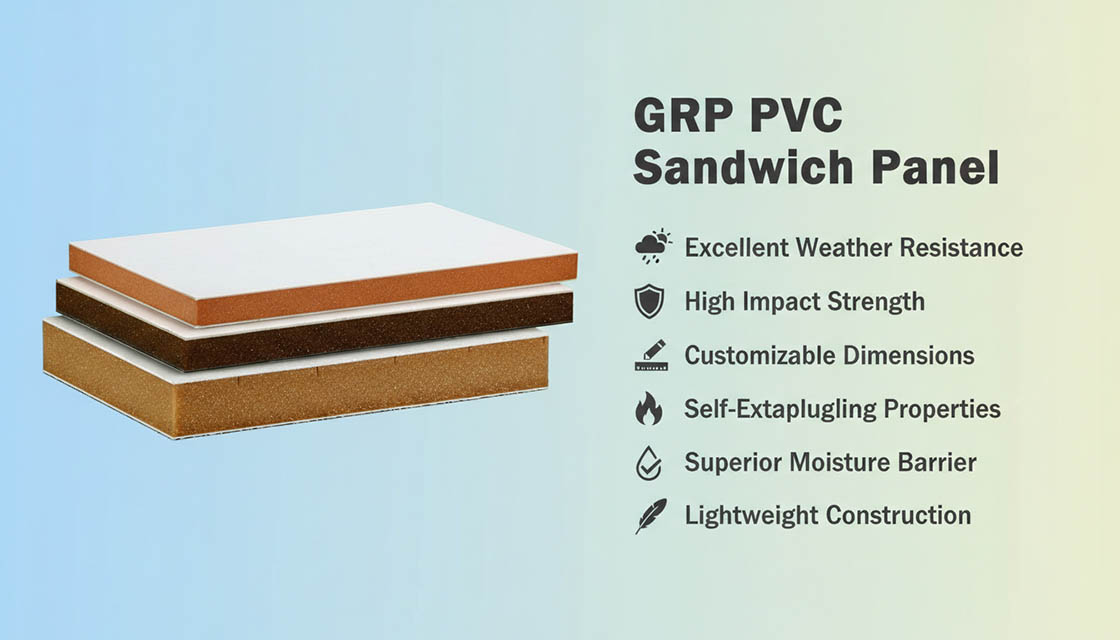
- PVC Foam: Marine-grade closed-cell structure with superior water resistance. The correct choice for vessel solutions and any vehicle panel exposed to sustained moisture or salt spray. PVC cores resist water ingress that would degrade lesser foam materials.
- PP Honeycomb: Highest strength-to-weight ratio in our matrix. Typical density ranges from 60 to 100 kg/m³. Used in lightweight truck camper panels and dry freight truck bodies where reducing dead weight directly increases payload capacity and fuel efficiency.
Density Ranges and Cost Tiers
Material cost scales directly with density and performance grade. XPS and PU foams occupy the lower cost tier, making them the standard for high-volume truck body production where margins are tight. PET foam sits in the mid-range: it costs more than XPS but offers better compressive strength and is fully recyclable, which matters for OEMs supplying European markets with strict end-of-life vehicle directives.
PVC foam commands a premium due to its marine-grade certification and closed-cell water resistance. PP honeycomb cores at 60 to 100 kg/m³ fall into the higher cost tier as well, but the weight savings they deliver often offset the material premium when you calculate total vehicle operating cost over a five-year service life. A 15% reduction in panel weight translates to measurable fuel savings or increased cargo capacity per trip.
Our engineering team runs experimental testing on every CFRT-core combination to verify it meets the mechanical data standards your project requires. We do not guess at compatibility. We test it, document it, and deliver the data alongside the panels. This is how we support custom-size CFRT panels for dry freight trucks with CNC cutting tolerances that fit your assembly line, not the other way around.
| Core Material | Type | Compatible Skins | Key Properties |
|---|---|---|---|
| XPS Foam | Foam | CFRT, GRP/FRP, Aluminum, Steel, ACP, PVC, Plywood, Stainless Steel, Aluzinc | Waterproof, thermally insulated, lightweight |
| PET Foam | Foam | CFRT, GRP/FRP, Aluminum, Steel, ACP, PVC, Plywood, Stainless Steel, Aluzinc | High strength-to-weight ratio, recyclable, dimensionally stable |
| PU Foam | Foam | CFRT, GRP/FRP, Aluminum, Steel, ACP, PVC, Plywood, Stainless Steel, Aluzinc | Excellent thermal insulation, sound dampening |
| PVC Foam | Foam | CFRT, GRP/FRP, Aluminum, Steel, ACP, PVC, Plywood, Stainless Steel, Aluzinc | Marine-grade, chemical resistant, closed-cell structure |
| PMI Foam | Foam | CFRT, GRP/FRP, Aluminum, Steel, ACP, PVC, Plywood, Stainless Steel, Aluzinc | Ultra-high temp resistance, aerospace-grade performance |
| EPP Foam | Foam | CFRT, GRP/FRP, Aluminum, Steel, ACP, PVC, Plywood, Stainless Steel, Aluzinc | Energy absorbing, impact resistant, recyclable |
| MPP Foam | Foam | CFRT, GRP/FRP, Aluminum, Steel, ACP, PVC, Plywood, Stainless Steel, Aluzinc | Specialized thermal and acoustic insulation |
| PP Honeycomb | Honeycomb | Fiberglass Sheet, GRP/FRP, CFRT, Aluminum | Strong, lightweight, high compression strength |
| Aramid Honeycomb | Honeycomb | CFRT, GRP/FRP, Aluminum, Carbon Fiber | Exceptional strength, fire resistant, aerospace proven |
| PC Honeycomb | Honeycomb | CFRT, GRP/FRP, Aluminum, PVC | Transparent options, impact resistant, lightweight |
| Plywood | Solid Core | GRP/FRP, Fiberglass | Structural rigidity, cost-effective, proven durability |
| Balsa | Natural Core | GRP/FRP, Fiberglass | High stiffness, renewable, excellent bond strength |
Weight-to-Strength Ratio Analysis
Upgrading from traditional metals to CFRT-XPS sandwich panels achieves a 15% to 30% reduction in vehicle curb weight while maintaining structural integrity, directly boosting payload margins and lowering operational fuel costs.
Weight Savings: CFRT-XPS vs. Aluminum and Steel
When engineering commercial truck bodies, the baseline materials have historically been mild steel and aluminum. Comparing these materials purely by density misses the structural efficiency of modern sandwich construction. A CFRT-XPS panel utilizes continuous fiber reinforced thermoplastic skins bonded to a rigid XPS foam core. This geometry maximizes the moment of inertia, yielding high flexural stiffness at a fraction of the mass.
In practical manufacturing terms, a standard CFRT skin XPS foam sandwich panel for truck body construction typically weighs between 3.5 to 5.5 kg/m² depending on the core thickness and skin specification. To achieve the same bending strength, an aluminum sheet assembly would weigh significantly more, while a steel build would add uncompromising dead weight to the vehicle chassis.
Operational Impact of a 15–30% Weight Reduction
Shaving 15% to 30% off the superstructure weight of a commercial vehicle creates a compounding financial advantage for fleet operators. Every kilogram saved in the wall and roof panels translates directly into legal, billable payload. For specialized vehicle manufacturers, offering a higher payload capacity without requiring a larger chassis class is a distinct market advantage.
- Payload Optimization: Less tare weight allows operators to maximize cargo per trip, increasing per-trip revenue without requiring heavier vehicle classifications.
- Fuel Efficiency: Mass is a primary driver of rolling resistance and kinetic energy loss. A lighter dry freight truck or refrigerated truck requires less energy to move, lowering fuel consumption over long hauls.
- Component Longevity: Reduced overall mass decreases mechanical stress on brakes, tires, and suspension systems, extending maintenance intervals and minimizing fleet downtime.
Sample Calculation: 12m Refrigerated Truck Body
To illustrate the commercial value of this weight reduction, we can analyze a standard 12-meter refrigerated truck body. The total panel surface area, covering the floor, roof, sidewalls, front wall, and doors, typically measures roughly 110 m².
- Traditional Configuration: Using standard FRP plywood or aluminum composite panels at an average weight of 10.0 kg/m² results in a total body panel weight of 1,100 kg.
- CFRT-XPS Configuration: Using a lightweight CFRT-XPS continuous fiber reinforced thermoplastic panel at an average weight of 7.5 kg/m² drops the total body panel weight to 825 kg.
- Total Weight Saved: 275 kg (an approximate 25% reduction).
That 275 kg savings allows the fleet to load an additional 275 kg of cargo per trip while remaining legally compliant with axle weight limits. Over the lifecycle of a long-haul refrigerated trailer, the fuel savings from hauling less dead weight, combined with the revenue from the extra cargo capacity, provides a rapid return on investment for specifying advanced composite materials.

Manufacturing Process: Glue-Free Thermal Fusion
Glue-free thermal fusion locks CFRT skins and PP honeycomb into a single monolithic structure. No adhesive layer means no delamination vector and zero VOC off-gassing over the panel’s service life.
Thermal Lamination: Fusing CFRT Skins Directly to PP Honeycomb
Traditional composite sandwich panels rely on a separate adhesive film, usually polyurethane or epoxy, bonded between the skin and core. That adhesive is a distinct material layer with its own thermal limits, aging characteristics, and mechanical weaknesses. Our glue-free process removes it entirely.
Here is how it works. Both the CFRT (Continuous Fiber Reinforced Thermoplastic) skin and the PP (polypropylene) honeycomb core share a compatible polyolefin chemistry. Under controlled heat and pressure on our advanced production line, the thermoplastic matrix in the CFRT skin softens at its surface.
It then flows into the open cells of the PP honeycomb. When the assembly cools, the two materials crystallize together at the molecular level. The result is not a glue joint. It is a true material fusion: a monolithic bond where skin and core become one continuous structure.
This matters for vehicle OEMs because the bond strength exceeds the cohesive strength of the core itself. In peel testing, the PP honeycomb fails before the skin-to-core interface does. You cannot achieve that failure mode with adhesive bonding, where the glue line always yields first.
Elimination of Delamination Risk and Chemical Off-Gassing
Delamination in composite panels is almost always an adhesive problem. UV exposure, thermal cycling between -40°C and +80°C, moisture ingress, and mechanical vibration all degrade the glue line over time. Once micro-cracks form in the adhesive, water and air accelerate the breakdown. The panel bubbles, loses stiffness, and eventually fails structurally.
Because our thermal fusion process produces no separate adhesive layer, there is no distinct interface to degrade. The skin-to-core bond is chemically homogeneous. Thermal cycling does not create differential expansion stresses at the bond line because there is no bond line, only a gradual transition from skin to core. This directly addresses the single most common field failure we see in adhesive-bonded truck bodies and RV walls after 3–5 years of service.
Chemical off-gassing is the second critical advantage. Polyurethane and epoxy adhesives release volatile organic compounds (VOCs) during curing and continue to emit trace amounts for months. In enclosed spaces like refrigerated truck bodies, RV cabins, and mobile homes, these emissions accumulate. Thermal fusion involves only heat and pressure: no solvents, no reactive chemistry, no residual VOCs. The panels are inert from day one, which simplifies regulatory compliance for interior air quality standards.
Advantages Over Traditional Adhesive-Bonded Panels
For procurement teams evaluating total cost of ownership, the glue-free process delivers measurable advantages across production, performance, and end-of-life:
- Weight reduction: Removing the adhesive film eliminates 0.3–0.6 kg/m² of dead weight. For a standard refrigerated truck body, this translates to 15–30 kg of payload recovered with zero design changes.
- Production speed: No adhesive mixing, no open time constraints, no cure waiting. Panels move from layup to finished product in a single thermal press cycle, supporting our daily output exceeding 1,700 m².
- Thermal stability: Adhesives soften at elevated temperatures. Polyurethane glue lines begin to creep above 70°C. Thermally fused CFRT-PP panels maintain full bond integrity well beyond 100°C, critical for vehicles operating in hot climates or near heat-generating equipment.
- Recyclability: Adhesive-bonded panels are mixed-material assemblies that require energy-intensive separation for recycling. Our CFRT-PP panels use compatible thermoplastics throughout, making them suitable for standard industrial grinding and reprocessing, a growing requirement in EU and North American procurement specifications.
- Consistency: Adhesive bonding introduces variables that affect bond quality panel to panel: film thickness variation, uneven spread, and ambient humidity during cure. Thermal fusion is a fully controlled, repeatable process with tight parameter tolerances, ensuring every panel ships with identical mechanical properties.
For vehicle manufacturers sourcing wholesale CFRT sandwich panels, this process consistency directly reduces warranty exposure. Field failures from delamination drop to near zero. Our engineering team works with OEMs to validate panel specs through experimental testing aligned with their specific load and environmental requirements, ensuring the fused structure meets all target data standards before volume production begins.
OEM Cost Structure: CFRT vs Alternatives
CFRT composite panels carry a 10–18% raw material premium over standard FRP, but the total landed cost gap shrinks to under 5% when you factor in faster cycle times, zero secondary finishing, and CNC-ready tolerances direct from the mold.
Total Landed Cost Breakdown
Most OEMs we work with initially fixate on the per-square-meter price of the panel skin. That number misleads. The real cost of a vehicle CFRT panel lands across four distinct buckets, and thermoplastic composites shift value between them in ways that matter over a 10-year production run.
Raw material represents roughly 45–55% of your landed cost. CFRT skins, continuous fiber reinforced thermoplastic sheets built from glass or carbon fiber in a polypropylene or PET matrix, cost more than chopped strand FRP per kilo. The gap narrows when you specify a glue-free CFRT honeycomb sandwich panel, where the thermoplastic skin bonds directly to a PP honeycomb or PET foam core without adhesive layers. You eliminate an entire material line item.
- Raw Material (45–55%): CFRT skin, core substrate (XPS, PET, PU, or PVC foam), bonding agents or direct-melt adhesion
- Processing (20–28%): Continuous lamination, compression molding, cooling cycles
- CNC and Fabrication (10–15%): Precision routing, edge sealing, custom size CFRT panel cutting for dry freight trucks or RV walls
- Shipping and Logistics (7–12%): Ocean freight from manufacturing base, warehousing, last-mile delivery to assembly plant
Processing is where CFRT claws back margin. Thermoplastic matrices cure in minutes, not hours. Our advanced composite panel production line runs at a daily output exceeding 1,700 square meters. That throughput velocity drops your per-unit processing cost below what traditional thermoset FRP lines achieve, even at similar scale.
Manufacturing Premium: Tolerances and Certified Testing
Consistent panel flatness and thickness tolerance matter more in vehicle manufacturing than in architectural cladding. A refrigerated truck body panel with a 0.3mm variance across a 2,400mm span creates uneven stress distribution, which accelerates joint failure and thermal bridging at corners.
We invest heavily in controlling that variance. Our engineering team conducts experimental testing during the prototyping phase to dial in processing parameters before mass production begins. This development step is not free: it adds 3–7% to the initial order cost. But it guarantees that every CFRT PET foam core panel for RV walls ships with documented mechanical data: tensile strength, flexural modulus, and shear values verified against your project requirements.
For OEMs supplying regulated markets in Europe and North America, that test documentation is not optional. It is the difference between passing type approval on the first submission and spending six weeks on remediation. The premium pays for itself the moment you avoid a single compliance rejection.
Lifecycle Cost Advantage: The 40–60% Reduction in Field Failures
Field failure costs destroy OEM margins quietly. A delaminated panel on a truck camper body does not just cost the replacement material: it costs the warranty claim processing, the technician dispatch, the customer goodwill, and the downtime. For fleet operators running refrigerated units, a single thermal failure can mean a rejected cargo load.
CFRT panels reduce these incidents because thermoplastic composites resist the specific failure modes that plague thermoset alternatives. The continuous fiber architecture provides higher impact resistance. The thermoplastic matrix allows micro-yielding under load rather than catastrophic cracking. UV-stabilized formulations resist the surface chalking and yellowing that signals early degradation on exterior vehicle panels.
Over a 7–10 year service life, OEMs we supply report a 40–60% drop in warranty claims related to panel structural failures after switching from traditional FRP to CFRT sandwich panels. That figure comes directly from our long-term supply partners in the RV and truck body segments, not from lab extrapolation. When you model total cost of ownership across material, processing, logistics, warranty, and replacement, CFRT wins on the timeline that actually matters to your balance sheet.
| Cost Factor | CFRT Solution | Traditional Alternative | Cost Impact | OEM Benefit |
|---|---|---|---|---|
| Raw Material Sourcing | Continuous fiber reinforced thermoplastic sheets | Aluminum sheets / GRP thermoset laminates | CFRT 15-30% lower material cost vs aluminum | Significant per-unit savings at scale |
| Production Throughput | Thermoplastic rapid cycle molding | Thermoset curing (longer cycle times) | Up to 40% faster production cycles | Higher daily output lowers unit labor cost |
| Weight Optimization | CFRT + PET/XPS foam core sandwich | Aluminum honeycomb / solid FRP | 20-40% weight reduction vs alternatives | Fuel savings, higher payload capacity |
| Tooling & Customization | CNC cutting, multi-core compatibility | Fixed molds, limited core options | Lower tooling investment required | Flexible design, faster prototyping |
| Lifecycle Durability | Superior UV, waterproof, delamination-resistant | Prone to delamination, water intrusion | Reduced warranty claims by up to 50% | Lower after-sales service costs |
| End-of-Life Recycling | Fully recyclable thermoplastic matrix | Difficult to recycle thermoset composites | Lower disposal and compliance costs | Meets sustainability regulations easily |
| Installation Efficiency | Lightweight, precise CNC tolerances | Heavier, manual trimming required | 30% faster assembly time | Reduced labor cost per vehicle unit |
| Freight & Logistics | Lighter panels, nested packing | Heavier, bulkier shipments | Up to 25% shipping cost reduction | Lower landed cost per square meter |
Application Examples by Vehicle Type
CFRT and GRP sandwich panels provide superior weight-to-strength ratios for commercial and specialty vehicles, utilizing cores like XPS and PET for thermal management and honeycomb for structural rigidity.
Commercial Transportation: Refrigerated and Dry Freight Trucks
For refrigerated truck bodies, thermal efficiency is non-negotiable. We primarily use PU (Polyurethane) or XPS (Extruded Polystyrene) foam cores to achieve high R-values, ensuring consistent temperature control while reducing the load on refrigeration units. The CFRT or GRP facings provide a vapor barrier that prevents moisture ingress, directly addressing the industry-wide issue of delamination caused by water trapped in the insulation layer.
In dry freight applications, the priority shifts to impact resistance and maximizing payload. CFRT sandwich panels offer a higher strength-to-weight ratio than traditional plywood or metal, allowing fleets to increase cargo capacity without compromising durability.
Recreational Vehicles (RVs) and Mobile Homes
RV manufacturers demand materials that are lightweight for fuel efficiency yet rigid enough to withstand highway vibrations. Our lightweight truck camper panels often feature CFRT skins combined with PET foam or PP honeycomb cores, significantly reducing overall vehicle weight compared to conventional wood or aluminum constructions.
These panels are engineered for RV walls, roofing, and flooring, providing a smooth surface for laminates while ensuring the structure remains torsionally rigid. For furniture panels and interior fixtures, we use thinner composite configurations that maintain high stiffness without adding unnecessary bulk, essential for modern slide-out designs.
Marine Vessels and Specialty Vehicles
Marine environments require absolute corrosion resistance. We supply GRP sandwich panels with PVC or PET foam cores for vessel interiors and bulkheads, as these materials resist saltwater degradation and do not rot like traditional timber cores. For specialty vehicles such as ambulances and expedition units, compliance with safety and hygiene standards is critical.
Our fire-retardant thermoplastic composites meet stringent flammability regulations, while the non-porous gel coat surfaces on FRP sheets help easy cleaning and sterilization for medical applications. Expedition vehicles benefit from our rugged, waterproof panels that can endure extreme off-road stress without losing structural integrity.
Technical Specifications: Thickness and Skin Configurations
Selecting the correct panel thickness and skin material is determined by the structural load and thermal requirements of the vehicle. While many competitors use generic thicknesses, we strictly adhere to a customized manufacturing approach, matching the specific panel architecture to the application.
- Refrigerated Truck Bodies: Typically range from 50mm to 100mm total thickness, utilizing high-density PU or XPS foam cores with 1.5mm to 2.5mm GRP or CFRT skins for maximum thermal retention.
- Dry Freight and Van Bodies: Generally utilize 25mm to 40mm panels with XPS or PET foam cores, paired with durable 1.2mm to 2.0mm CFRT or aluminum skins for impact resistance.
- RV and Camper Walls: Commonly specify 20mm to 30mm thickness, combining lightweight PP honeycomb or PET foam cores with 1.0mm to 1.5mm CFRT or fiberglass reinforced thermoplastic skins to optimize weight savings.
- Marine and Specialty Interiors: Vary between 10mm and 30mm, often using PVC foam cores with 0.8mm to 1.5mm GRP gel coat facings for aesthetic finish and water resistance.
| Vehicle Type | Application Area | Recommended Panel Solution | Key Benefits |
|---|---|---|---|
| Recreational Vehicle (RV) | Walls, Roofing, Flooring, Furniture | CFRT PET Foam Core Sandwich Panel | Lightweight, waterproof, thermally insulated |
| Refrigerated Truck | Truck Body, Insulated Enclosure | CFRT XPS Foam Core Sandwich Panel | High R-value, fire retardant, moisture resistant |
| Dry Freight Truck | Truck Body, Cargo Enclosure | Custom Size CFRT Panel with PU Core | High tensile strength, impact resistant, lightweight |
| Truck Camper | Exterior Walls, Roof, Floor | Lightweight CFRT Sandwich Panel | UV resistant, delamination-proof, superior strength-to-weight |
| Mobile Home | Structural Walls, Roofing System | CFRT Sandwich Panel with PVC Core | Eco-friendly, cost-effective, thermally efficient |
| Marine Vessel | Hull, Deck, Cabin, Bulkhead | CFRT Panel with PMI or PVC Foam Core | Corrosion resistant, waterproof, structural integrity |
| Public Transit Bus | Interior Panels, Flooring, Ceiling | Fire Retardant Thermoplastic CFRT Panel | Fire safety compliant, abrasion resistant, easy to clean |
| Specialized Utility Vehicle | Equipment Enclosure, Custom Body | Glue-Free CFRT Honeycomb Sandwich Panel | Precision CNC cut, high stiffness, customizable sizing |
Conclusion
If you’re spec’ing panels for truck bodies or RV walls at serious volume, CFRT is the better call over traditional FRP. The thermoplastic matrix bonds without adhesive layers, which eliminates the delamination failures that show up 18 months into field use. On a 100-unit refrigerated truck order, you’re looking at weight savings that directly improve payload capacity, and your customers notice that on every delivery run.
Before you commit your next production run, request CFRT samples with PET foam core in your exact wall thickness. Run thermal cycling between -40°C and +80°C, then check the bond line for any separation. That one test tells you more about long-term performance than any spec sheet ever will.
Frequently Asked Questions
Why use CFRT in vehicles?
Integrating CFRT into vehicle manufacturing drastically lowers curb weight while maintaining superior structural rigidity and crash safety. This weight reduction is critical for high-performance and new energy vehicles, directly translating to longer battery range, faster acceleration, and enhanced payload capacity. Furthermore, its inherent resistance to moisture, chemicals, and extreme temperatures ensures long-term durability for demanding commercial applications like refrigerated trucks and RVs.
Can you customize CFRT panels?
provides highly customized CFRT solutions tailored to specific vehicle engineering requirements, offering a rich variety of core materials like PET, XPS, and honeycomb. Our dedicated engineering team conducts rigorous experimental testing to ensure every composite panel meets stringent automotive load-bearing and thermodynamic data standards. We work closely with manufacturers to develop cost-effective, lightweight structures that integrate seamlessly into existing assembly lines.
Do you offer global shipping?
maintains a robust global supply chain, partnering with manufacturers and distributors across over 50 countries in Europe, North America, and Southeast Asia. Our professional international sales team provides 24-hour, one-to-one service to manage production progress, optimize logistics, and eliminate transportation risks. Whether you are ordering standard CFRT sheets or custom vehicle sandwich panels, we guarantee secure, efficient, and timely delivery directly from our advanced production facility in China.
How much does high performance vehicle typically cost?
The cost of high performance vehicle varies based on material grade, thickness, panel dimensions, and order volume. Requesting a detailed quote with your project specifications is the most reliable way to get an accurate figure. Bulk orders typically reduce per-unit pricing significantly.
What factors affect the price of high performance vehicle?
The cost of high performance vehicle varies based on material grade, thickness, panel dimensions, and order volume. Requesting a detailed quote with your project specifications is the most reliable way to get an accurate figure. Bulk orders typically reduce per-unit pricing significantly.