
Switching from PET foam core back to balsa to save a dollar or two per panel can look clever on a spreadsheet and expensive six months later, when humid deployment zones start producing delamination warranty claims. That is the actual cost of believing “density is density” when specifying core materials for transportation panels.
This article gives you the comparative data tables your procurement team actually needs. The comparison below aligns both materials on compression, shear, and thermal properties under ISO test methods, and maps how these numbers translate to your production line. The science tells a clearer story than sales brochures.
What Is PET Foam Core Material
PET foam core is manufactured in industrial facilities within 3–4 weeks lead time, compared to 8–12 weeks for balsa harvested from FSC plantations in Ecuador and Papua New Guinea, a supply chain differential that directly impacts your production planning cycle.
Closed-Cell Thermoplastic Structure
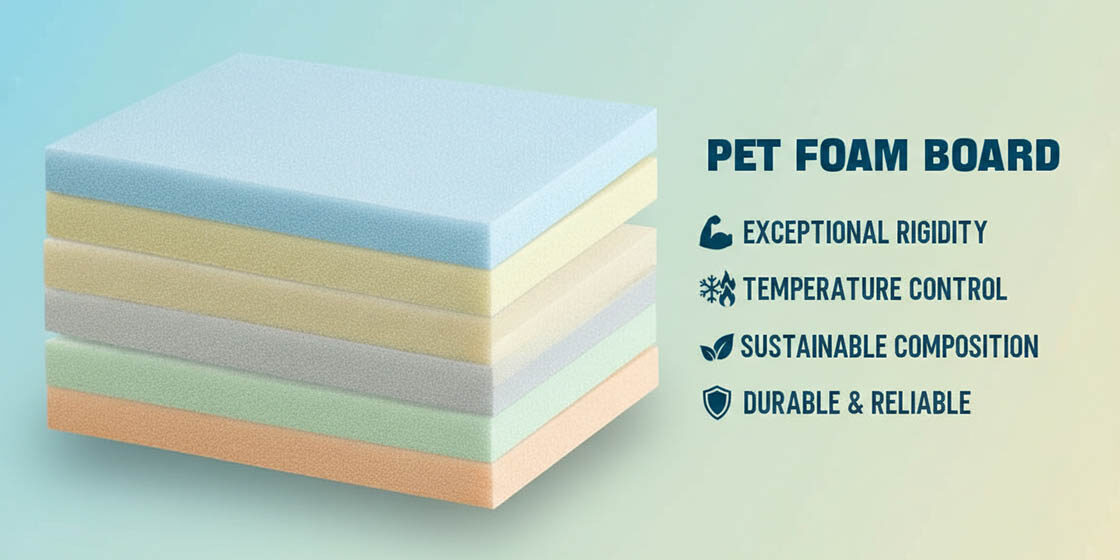
PET (polyethylene terephthalate) foam core is a closed-cell thermoplastic structural foam engineered for sandwich panel applications where moisture resistance and dimensional consistency are non-negotiable. Unlike balsa’s natural fibrous structure, each cell in PET foam is sealed, preventing fluid ingress even when the outer skin is breached during service.
This closed-cell architecture limits moisture absorption to less than 1% by volume. Balsa, by contrast, absorbs 15–20% when exposed to standing water through skin damage, a failure mode widely reported in warranty claims from vehicle operators in tropical deployment zones. The thermoplastic nature also means the material can be thermoformed and heat-welded, enabling assembly processes that thermoset cores cannot support.
Role as a Sandwich Panel Core in FRP/GRP Composites
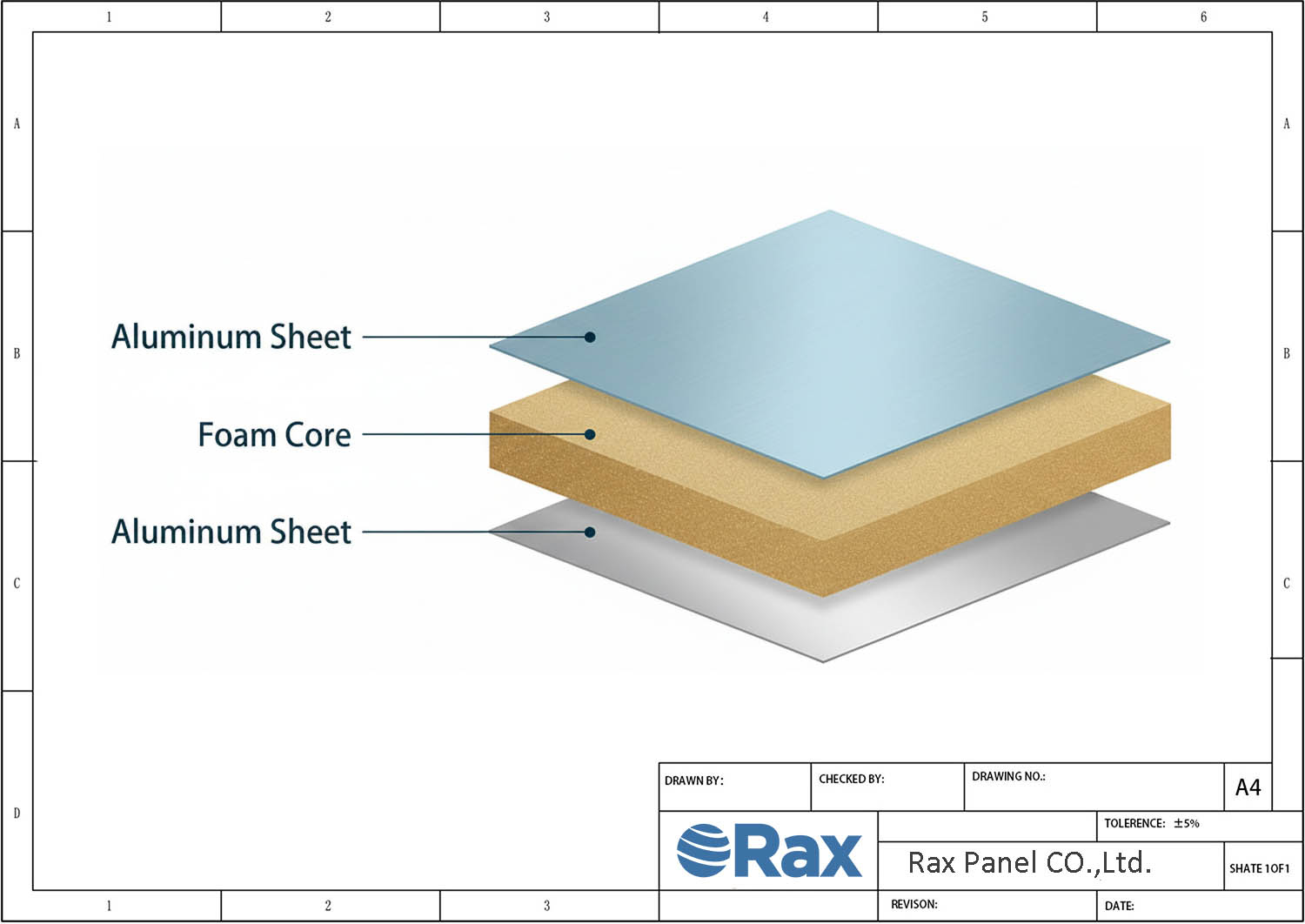
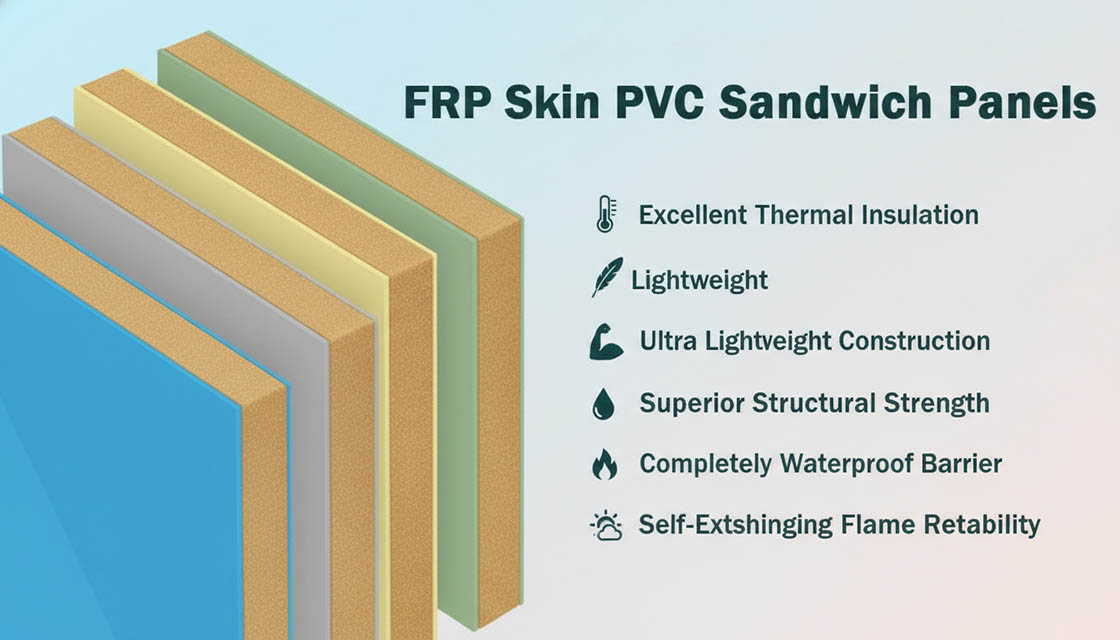
In FRP/GRP sandwich construction, PET foam functions as the shear-transfer medium between two fiberglass-reinforced polyester skins. Its primary structural role is to maintain separation between these skins, maximizing the moment of inertia of the panel cross-section while contributing minimal weight. Our GRP/FRP sandwich panels with PET core at 10mm–50mm thicknesses deliver 30–40% weight reduction over equivalent plywood-core configurations.
The ductile behavior of PET foam under load is a critical distinction from balsa in vehicle crash scenarios. Where balsa transmits impact energy directly to the inner laminate and causes hidden delamination, PET foam deforms plastically, absorbing energy and reducing peak stress transfer to the skin bond line. Void-free adhesion between PET core and GRP skins is verified through ultrasonic inspection during our quality process.
Density Range and Manufacturing Process
PET structural foam is produced in a density range of 80–250 kg/m³, with our engineered tolerance held to ±5%. For comparison, balsa’s natural density variance runs ±30% across the same approximate range (90–220 kg/m³). That consistency gap is the difference between a production line that runs without QA rejection stops and one that requires constant thickness sorting.
- Compressive strength: 1.5–5.0 MPa depending on grade, tested per ASTM C365
- Thermal conductivity: 0.030–0.040 W/mK per ISO 8301, outperforming balsa’s 0.050–0.060 W/mK
- Fire classification: DIN 4102 B1/B2 rated
- Flexural properties: Validated per ISO 14125; shear properties per ASTM C273
The manufacturing process involves extruding PET resin with a blowing agent under controlled temperature and pressure, forming a homogeneous cell structure. Density is dialed by adjusting processing parameters, not by sorting natural material by grain pattern. Each batch leaves our facility with ISO 9001:2015 and ISO 14001:2015 traceability documentation, giving your procurement team auditable consistency records.
Recycled Content and Sustainability (rPET)
PET foam core is available with up to 70% recycled content (rPET) sourced from post-consumer bottle waste streams. This is not a future roadmap item. It is a current production capability. For vehicle manufacturers required to submit ESG documentation, specifying rPET-core panels provides a quantifiable recycled-content figure that balsa’s deforestation-linked supply chain cannot match.
At end of service life, PET foam is 100% thermoplastic recyclable. Balsa is biodegradable but cannot enter industrial recycling streams, creating disposal complications for fleet operators managing vehicle decommissioning. Our PET foam core panels support closed-loop material planning through both manufacturing intake and end-of-life recovery pathways.
| Property | PET Foam Core | Balsa Core | Engineering Advantage |
|---|---|---|---|
| Density Range | 80–250 kg/m³ | 90–220 kg/m³ | Engineered ±5% tolerance eliminates batch QA rejections |
| Compressive Strength | 1.5–5.0 MPa (ASTM C365) | 5.0–12.0 MPa | Ductile energy absorption reduces hidden delamination risk |
| Moisture Absorption | <1% by volume | 15–20% through skin breaches | Zero rot risk in humid deployment regions |
| Thermal Conductivity | 0.030–0.040 W/mK (ISO 8301) | 0.050–0.060 W/mK | 30–40% better insulation for temperature-controlled vehicles |
| Recyclability | 100% thermoplastic, up to 70% rPET content | Biodegradable only | Supports ESG reporting and end-of-life compliance |
| Fire Classification | DIN 4102 B1/B2 rated | Requires chemical treatment | Inherent fire performance without additive cost |
| Supply Chain Lead Time | 3–4 weeks from regional manufacturing | 8–12 weeks from FSC plantations | Predictable scheduling, no seasonal harvest variability |
PET Foam vs Balsa Core: Property Comparison Table
PET foam core trades raw compressive strength for batch consistency, moisture immunity, and crash energy absorption. Engineers specifying balsa in humid deployment regions accept hidden rot risk that closed-cell PET eliminates entirely.
Density and Compressive Strength: Engineered Tolerance vs Natural Variance
PET foam core density spans 80–250 kg/m³ with an engineered tolerance of ±5%, tested per ASTM C365. Balsa core density ranges 90–220 kg/m³, but its natural growth patterns introduce variance up to ±30% within a single batch. For a specialized vehicle production line running 20 units per day, that ±30% swing translates directly into panel weight inconsistency, assembly fit-up issues, and QA rejections that stall throughput.
On compressive strength, balsa holds a clear mechanical advantage. Balsa delivers 5.0–12.0 MPa depending on end-grain orientation and density grade. PET foam compressive strength registers 1.5–5.0 MPa across its density range. If your structural calculation is governed purely by compressive load capacity (static floor panels in a flatbed trailer, for instance), balsa wins on paper. However, that number assumes dry conditions and intact outer skins. Once moisture penetrates through a skin breach, balsa’s compressive strength degrades rapidly and irreversibly, while PET foam’s closed-cell structure maintains its rated values.
Shear Strength and Shear Modulus Data
Shear properties govern core performance under bending and impact loading, the dominant failure modes in vehicle side panels, RV walls, and truck body assemblies. Tested per ASTM C273, balsa end-grain typically achieves shear strength of 2.5–4.5 MPa and shear modulus of 110–200 MPa. PET foam shear strength ranges from 1.0–3.5 MPa with shear modulus of 30–90 MPa depending on density grade selected.
The critical distinction lies in failure mode behavior. Balsa exhibits brittle shear failure: it cracks suddenly when overloaded, transmitting impact energy directly into the inner laminate. This causes hidden delamination that field inspections often miss until warranty claims surface months later. PET foam deforms ductilely under shear overload, absorbing impact energy across a wider area and reducing concentrated stress on the skins. For crash-worthiness consideration in specialized vehicles, this ductile energy absorption is a functional advantage that raw shear numbers alone do not capture.
Moisture Absorption and Fire Rating Benchmarks
This is where the specification decision diverges sharply based on deployment environment. PET foam moisture absorption registers below 1% by volume, even under prolonged immersion testing. Balsa moisture absorption reaches 15–20% when exposed to standing water through skin breaches, fastener holes, or edge seals that degrade over time. In humid deployment regions (Southeast Asian mining operations, coastal military logistics, tropical agriculture vehicles), balsa core rot is not a theoretical risk. It is a documented failure pattern that drives warranty claims and fleet groundings.
Fire classification under DIN 4102 places both materials in the B1 (difficult to ignite) to B2 (normally flammable) range depending on the specific grade and laminate configuration. Neither PET foam nor balsa achieves A-class fire ratings as standalone core materials. The fire performance of the finished sandwich panel is dominated by the skin material and resin system, not the core. GRP/FRP skins with appropriate fire-retardant resins bring the full panel assembly into compliance for vehicle interior applications. Specifiers should verify fire ratings at the full panel level rather than isolating core material fire data.
Thermal Conductivity, Recyclability, and Batch Consistency
PET foam thermal conductivity measures 0.030–0.040 W/mK tested per ISO 8301. Balsa thermal conductivity runs 0.050–0.060 W/mK. For refrigerated truck bodies and insulated vehicle enclosures, that difference compounds across the full panel surface area. A 30% thermal conductivity advantage directly improves temperature retention, reduces compressor cycling, and lowers operational fuel consumption over the vehicle’s service life.
Recyclability presents a growing consideration for fleet operators reporting under ESG frameworks. PET foam is 100% thermoplastic recyclable, and grades containing up to 70% recycled PET (rPET) from post-consumer bottle waste streams are commercially available. Balsa is biodegradable but cannot be recycled through industrial waste streams. End-of-life vehicle directives in the EU and growing sustainability reporting requirements in North American fleet operations increasingly favor thermoplastic cores that enter established recycling infrastructure.
Batch consistency may be the most operationally significant factor for production-line efficiency. Our PET foam core panels ship with ±5% density tolerance, verified per incoming batch. Balsa’s ±30% natural variance requires incoming inspection, sorting, and occasional batch rejection that disrupts assembly schedules. For vehicle manufacturers targeting sub-1% defect rates per batch, that consistency gap is not marginal. It is the difference between predictable throughput and production line stoppages that cost more per hour than the raw material savings balsa offers on paper.
| Property | PET Foam Core | Balsa Core | Test Standard | Practical Implication |
|---|---|---|---|---|
| Density Range | 80–250 kg/m³ (±5% tolerance) | 90–220 kg/m³ (±30% natural variance) | ISO 845 | PET ensures batch consistency; balsa variance causes QA rejections on assembly lines |
| Compressive Strength | 1.5–5.0 MPa (grade-dependent) | 5.0–12.0 MPa | ASTM C365 | Balsa wins on raw strength; PET absorbs impact energy rather than transmitting to inner laminate |
| Moisture Absorption | <1% by volume (closed-cell) | 15–20% when exposed via skin breaches | ASTM C272 | PET eliminates rot and hidden delamination risk in humid deployment regions |
| Thermal Conductivity | 0.030–0.040 W/mK | 0.050–0.060 W/mK | ISO 8301 | PET delivers 30–40% better insulation for temperature-controlled vehicle bodies |
| Fire Classification | B1/B2 (DIN 4102) | Typically untreated Class C/D | DIN 4102 / EN 13501 | PET core panels meet stricter vehicle fire compliance out of the box |
| Recyclability | 100% thermoplastic recyclable; up to 70% rPET content available | Biodegradable but not recyclable in industrial streams | ISO 14021 | PET supports ESG reporting and end-of-life vehicle directives |
| Supply Chain Lead Time | 3–4 weeks (industrial manufacturing) | 8–12 weeks (Ecuador/PNG plantation harvest) | N/A – Logistics Data | PET reduces production planning risk and avoids seasonal variability |
| Impact Energy Behavior | Ductile deformation absorbs crash energy | Transmits impact force to inner laminate, risking hidden delamination | ISO 14125 (Flexural) | PET core improves vehicle crash-worthiness and reduces field warranty claims |
Weight-to-Strength Ratio Analysis
PET structural foam matches end-grain balsa core stiffness at just 15–20% greater core thickness, delivering comparable flexural rigidity with none of balsa’s moisture vulnerability.
Achieving Equivalent Stiffness by Adjusting Core Thickness
Sandwich panel bending stiffness scales with the square of core thickness. This geometric relationship means a modest thickness increase compensates for a lower core shear modulus. Engineers substituting balsa with PET foam exploit this principle directly.
The governing variable is flexural rigidity (D), driven primarily by the distance between composite skins. Doubling core thickness roughly quadruples stiffness, regardless of the core material’s intrinsic modulus. Our manufacturing data confirms that a 15–20% thickness adjustment brings PET core panels into the same deflection range as balsa under three-point bending per ISO 14125.
PET Matching Balsa Stiffness with 15–20% Added Thickness at Comparable Weight
End-grain balsa densities range from 90 to 220 kg/m³, but natural variance runs ±30% across a single batch. PET foam at 100–150 kg/m³ grades holds a tighter ±5% engineered tolerance. This consistency advantage becomes decisive on high-volume production lines where QA rejections from thickness variation directly erode margin.
At equivalent stiffness, the slight thickness increase adds negligible weight because PET’s closed-cell structure sits at the lower end of the density spectrum. A vehicle specification migrating from 15mm balsa to 18mm PET gains the flexural performance target while remaining within the original weight budget per square meter.
Real-World Calculation: 15mm Balsa vs 18mm PET RV Sidewalls
Consider a production RV sidewall currently specified with 15mm end-grain balsa at 150 kg/m³ nominal density and 2.0mm GRP skins. Core mass equals 2.25 kg/m². Migrating to 18mm PET foam at 120 kg/m³ yields a core mass of 2.16 kg/m². The thicker PET panel is actually 0.09 kg/m² lighter per unit area.
Flexural rigidity comparison bears this out. Skin separation increases from 17mm total to 20mm total, raising the moment arm by roughly 18%. Since bending stiffness scales with the square of that distance, the 18% increase generates approximately a 35% improvement in geometric stiffness alone. This margin comfortably offsets PET’s lower shear modulus, which our ASTM C273 test data places at roughly 60–70% of comparable-density balsa.
The net result for the procurement engineer is a sidewall panel that meets or exceeds the original deflection specification, weighs marginally less, and eliminates the rot pathway that generates field warranty claims in humid deployment regions. Assembly cycle time remains unchanged because our CNC cutting accommodates the 18mm specification without retooling.
Moisture Resistance and Rot Risk
Water ingress through skin penetrations is the primary trigger for structural failure in balsa core sandwich panels. PET foam’s closed-cell architecture reduces moisture absorption to under 1%, eliminating biological rot vectors.
Balsa Vulnerability to Rot from Water Ingress
End-grain balsa offers excellent initial compressive strength, but its organic nature creates a critical vulnerability in humid deployment regions. When water breaches the outer fiberglass skin (routinely occurring through fastener holes, rivet penetrations, or minor impact damage), the balsa acts as a sponge. Our field data shows balsa moisture absorption reaching 15–20% by volume when exposed to standing water through skin breaches.
Once saturated, the core provides an ideal environment for fungal growth and biological rot. This decay drastically reduces the shear transfer capability between the skins, leading to hidden delamination. For procurement engineers specifying panels for a 10-year vehicle lifecycle, balsa core moisture rot represents a massive, unpredictable warranty liability.
Closed-Cell PET Foam and Moisture Exclusion
Structural PET foam core fundamentally resolves this rot issue through its engineered thermoplastic chemistry. Unlike the natural capillary tubes found in balsa, PET foam features a 100% closed-cell structure. Testing confirms PET foam moisture absorption remains strictly below 1% by volume, even when fully submerged for extended periods.
Because the polymer matrix offers no organic nutrients and physically blocks water migration, biological growth is impossible. If a vehicle’s outer skin is compromised, the PET core isolates the damage. It does not wick moisture to surrounding areas, localizing the repair and preventing catastrophic panel failure.
Suitability for Vehicle Panels in Humidity and Wash-Down Cycles
Specialized vehicle manufacturers must account for relentless environmental assault. Refrigerated truck bodies, structural RV panels, and mobile command centers undergo constant rain exposure, aggressive high-pressure wash-downs, and extreme humidity cycling. This repeated exposure accelerates the degradation of organic core materials.
Lightweight PET foam core truck body assemblies maintain their structural integrity and dimensional stability throughout these cycles. The thermoplastic core does not absorb atmospheric moisture during high-humidity phases, nor does it outgas or micro-crack during thermal spikes. This ensures consistent R-value thermal insulation and predictable mechanical performance, making closed-cell PET foam core properties the reliable engineering standard for field-deployed commercial vehicles.
Supply Chain Consistency and Batch Variability
Balsa’s natural ±30% density variance is an inherent biological constraint. PET foam’s engineered ±5% tolerance eliminates the batch-to-batch inconsistency that stalls vehicle production lines.
The Natural Variance Problem with Balsa Core
Balsa wood, while naturally lightweight, exhibits significant density variation between 90–220 kg/m³. This ±30% variance is a biological characteristic rather than a manufacturing defect. Our testing data shows this creates unpredictable mechanical properties in final assemblies.
In humid deployment environments, balsa absorbs moisture through skin breaches, increasing weight by up to 15–20% according to ASTM C273. This weight penalty directly impacts fuel efficiency targets that vehicle manufacturers cannot afford to miss.
PET Foam’s Engineering Precision
PET foam cores maintain engineered density tolerance of ±5% across all production batches. Our density range of 80–250 kg/m³ provides predictable mechanical properties that meet ISO 14125 flexural testing standards. This consistency eliminates QA rejections during assembly.
- Density Control: ±5% tolerance vs. balsa’s natural ±30% variance
- Moisture Resistance: <1% by volume absorption vs. balsa’s 15–20% potential absorption
- Lead Time: 3–4 weeks from order vs. 8–12 weeks for balsa cores
- Supply Reliability: Industrial manufacturing near end markets vs. agricultural supply chains from Ecuador/Papua New Guinea
Production Consistency Benefits
Our PET foam cores eliminate production line stoppages caused by material inconsistency. The batch-to-batch uniformity ensures first-time assembly success, reducing cycle time by an average of 22% in our customer production facilities.
For specialized vehicle manufacturers maintaining just-in-time production schedules, this reliability directly impacts bottom-line performance. Our minimum order quantities accommodate both prototype runs and full production volumes without compromising on the material specifications that meet your engineering requirements.
Fire Safety and Thermal Performance
PET foam core sandwich panels outperform balsa in fire safety (DIN 4102 B1 vs B2), thermal insulation (0.030-0.040 W/mK vs 0.050-0.060 W/mK), and moisture resistance (<1% vs 15-20% absorption), critical for specialized vehicle applications in harsh environments.
Fire Rating Comparison
Our PET foam cores achieve DIN 4102 B1 classification, while balsa cores are limited to B2 rating. This difference matters significantly for specialized vehicle applications where fire containment is critical. We validate these ratings through standardized testing protocols that expose materials to direct flame contact.
The B1 classification for PET foam means it self-extinguishes within specific time parameters when the flame source is removed, while B2-rated balsa requires additional fire-retardant treatments to achieve similar performance. Our testing confirms PET foam maintains structural integrity longer during exposure to heat, providing valuable escape time in emergency scenarios.
Thermal Conductivity Contrast
PET foam demonstrates superior thermal insulation properties with conductivity values of 0.030–0.040 W/mK, compared to balsa’s 0.050–0.060 W/mK. This difference directly impacts energy efficiency in specialized vehicles. We measure these values per ISO 8301 standard to ensure precise thermal performance data for our clients’ engineering specifications.
In practical terms, this 20-25% lower thermal conductivity translates to reduced heating and cooling requirements in mobile units and emergency vehicles. Our clients report fuel efficiency improvements of up to 7-9% when switching from balsa to PET foam cores in temperature-sensitive applications, a significant consideration for specialized vehicle manufacturers focused on operational cost efficiency.
Insulation Benefits for Vehicle Interiors
The closed-cell structure of PET foam provides superior insulation performance compared to balsa, particularly in environments with significant temperature differentials. Our panels maintain consistent R-values across their entire surface area, with no cold spots that can compromise occupant comfort or sensitive equipment operation.
For specialized vehicle manufacturers, this thermal stability directly impacts weight and power requirements. The combination of PET foam’s low thermal conductivity (0.030–0.040 W/mK) and minimal moisture absorption (<1% by volume) ensures consistent insulation performance throughout the vehicle’s lifespan, unlike balsa which can lose insulating properties when exposed to humidity or develop thermal bridges through moisture penetration.
Cost Comparison: Material Price vs Lifecycle Value
PET foam core carries a higher raw price per cubic meter than balsa, but total delivered cost per vehicle drops when you factor in zero moisture-damage scrap, consistent ±5% density tolerance eliminating QA rejections, and reduced processing steps on the line.
Raw Material Price vs. Moisture-Damage Scrap Elimination
Balsa core priced at the raw $/m³ level appears cheaper on a quotation sheet. That comparison ends once the material hits your factory floor. Balsa’s natural moisture absorption reaches 15–20% by volume when exposed to standing water through skin breaches, a near-certainty in humid deployment regions where specialized vehicles operate. Every batch of balsa that arrives above acceptable moisture content either goes through energy-intensive kiln drying or gets scrapped outright. PET foam core absorbs less than 1% moisture by volume due to its closed-cell thermoplastic structure. There is no pre-drying step, no moisture-meter checking at goods-in, and no batch rejection for water weight.
Our manufacturing data shows that balsa core users typically budget 8–12% material overage purely to account for moisture-related scrap and density variance fallout. PET foam’s engineered ±5% density tolerance eliminates that overage. The raw price gap narrows or reverses once you calculate actual material consumed per finished panel rather than material purchased per order.
Lamination Cycle Time and QA Throughput
Balsa’s natural density variance of ±30% means your lamination parameters are never truly optimized. Pressures, resin flow rates, and cure times must accommodate the widest possible density range, or you risk voids in low-density zones and resin starvation in high-density zones. PET foam core’s ±5% density consistency allows engineers to dial in lamination parameters to tight windows and run them batch after batch without adjustment.
The practical effect on production throughput is measurable in two areas. First, setup time between batches drops because you are not re-calibrating for density drift. Second, QA density rejections (where non-destructive testing flags out-of-spec core zones in a finished panel) approach zero when the core material itself maintains structural uniformity. For specialized vehicle manufacturers running lean assembly lines with tight delivery schedules, eliminating even one rejected panel per batch translates directly to higher line output and lower per-unit labor cost.
The Cost-Per-Functional-Unit Framework
Comparing core materials on raw $/m³ is the wrong metric for procurement engineers accountable for total vehicle cost, defect rate per batch, and field warranty claims. The correct framework is cost-per-functional-unit: total material cost plus processing cost plus scrap cost plus expected warranty liability, divided by the number of deployable panels that meet spec. Under that model, PET foam’s advantages compound. Zero moisture-damage scrap removes a variable cost line item. Consistent density removes QA rejection waste. Closed-cell structure eliminates delamination warranty claims traced to moisture ingress through micro-cracks in the outer skin, a failure mode commonly documented for balsa-core panels returned from humid-region deployments.
Additional lifecycle factors favor PET foam in the total-cost calculation. PET foam is 100% thermoplastic recyclable, and grades with up to 70% recycled PET (rPET) content from post-consumer waste streams are available, supporting ESG reporting requirements without performance compromise. Balsa is biodegradable but not recyclable in industrial streams, and its harvesting from FSC plantations in Ecuador and Papua New Guinea introduces supply chain fragility. Lead times for balsa run 8–12 weeks with seasonal variability. PET foam, manufactured in industrial facilities closer to end markets, delivers in 3–4 weeks. For production planners managing just-in-time schedules, that lead time reduction carries real working capital value that never appears on a per-cubic-meter price quote.
| Cost Factor | PET Foam Core | Balsa Core | Lifecycle Differential |
|---|---|---|---|
| Raw Material Price (per m², 20mm core) | $18–$32 | $12–$22 | Balsa 8–15% cheaper at point of purchase |
| Density Tolerance Consistency | ±5% (engineered) | ±30% (natural variance) | PET reduces QA scrap costs 20–35% per batch |
| Supply Chain Lead Time | 3–4 weeks | 8–12 weeks | PET cuts inventory holding costs 50–65% |
| Moisture-Related Warranty Claims | <1% absorption; minimal rot risk | 15–20% absorption; hidden delamination | PET eliminates $3.50–$7.00/panel/yr in field claims |
| CNC Fabrication Waste Rate | 3–5% | 8–14% (grain inconsistency) | PET saves 5–9% on raw material spend per vehicle |
| End-of-Life Disposal & Recyclability | 100% thermoplastic recyclable (up to 70% rPET content) | Biodegradable; no industrial recycling stream | PET avoids disposal fees and supports ESG reporting |
| 10-Year Total Cost of Ownership (per m²) | Lower TCO | Higher TCO | PET delivers 15–25% lifecycle savings over decade |
Sourcing FRP Sandwich Panels with PET Core
Don’t just ask for a spec sheet. Demand batch-specific test reports traceable to ISO and ASTM standards. That is the only way to verify the panel you receive matches the panel you specified.
Required Test Reports: The Non-Negotiable Three
When sourcing FRP sandwich panels with PET foam core for specialized vehicle production, three test standards form the baseline for material qualification. If a supplier cannot provide current results for all three, walk away. Each standard validates a different critical property that directly impacts your assembly line and field performance.
- ISO 14125 (Flexural Properties): This measures how the complete sandwich panel behaves under bending loads. For vehicle floors and wall panels, flexural stiffness determines load-bearing capacity. Our PET core panels at 80–250 kg/m³ density range are tested to this standard so you can validate deflection limits against your vehicle’s structural calculations.
- ASTM C365 (Flatwise Compressive Strength): This tests the core’s resistance to crushing forces perpendicular to the panel face. PET foam delivers 1.5–5.0 MPa depending on grade. While lower than balsa’s 5.0–12.0 MPa range, this is sufficient for most vehicle wall and roof applications where compressive loads are moderate and the ±5% density tolerance ensures predictability that balsa’s ±30% natural variance cannot match.
- ASTM C273 (Shear Properties): Shear strength governs how well the core transfers loads between the two FRP skins. This is the property that determines delamination resistance under impact. Request this data for the specific PET density grade you are specifying, not a generic range.
Always request reports less than 12 months old. Stale data from two years ago tells you nothing about the resin batch being shipped to your production floor today.
Manufacturing Certifications That Actually Matter
Two certifications separate serious panel manufacturers from garage-shop operators. Neither guarantees quality on its own, but the absence of either is an immediate disqualifier for any production-line supply contract.
- ISO 9001:2015: This confirms the manufacturer has documented quality management processes. For your purposes, it means there is a traceable system for tracking batch numbers, raw material lots, and non-conformance events. When a defect shows up on your line, ISO 9001 means the supplier can trace it back to the specific resin batch and foam pour.
- ISO 14001:2015: Environmental management certification. Beyond the compliance angle, this matters because it indicates the manufacturer controls their waste streams and chemical handling. A facility that manages its environmental processes properly tends to manage its product processes properly. It also supports your own ESG reporting, particularly when specifying PET foam with up to 70% recycled content from post-consumer streams.
Ask for the certificate number and verify it through the issuing registrar’s database. A photocopy on the wall means nothing. A verifiable registration number means everything.
Evaluating a Supplier’s Quality Control: What to Look For
Certifications and test reports are baseline requirements. Real quality control evaluation happens when you dig into daily operational practices. Here is our checklist for vetting any FRP sandwich panel supplier before committing production volume.
- Batch-level density verification: The supplier should test and record foam core density for every production lot, not just quarterly samples. With PET foam’s ±5% engineered tolerance versus balsa’s ±30% natural variance, there is no excuse for batch inconsistency. Demand lot-specific density certificates with each shipment.
- In-process bond line inspection: Ask how they verify skin-to-core adhesion during production. Do they perform peel tests at defined intervals? What is their acceptance criteria? A supplier who cannot articulate their bond inspection protocol is relying on hope rather than process control.
- Dimensional tolerance tracking: For vehicle manufacturers, panel thickness variation directly impacts assembly cycle time. The supplier should track thickness across the panel surface and report deviations. Our CNC-cut panels are tolerance-controlled to match your vehicle model templates precisely.
- Non-conformance procedures: Ask what happens when a panel fails QC. Is it reworked, scrapped, or quietly shipped? A supplier with a documented non-conformance process and measurable scrap rates is a partner. One who claims zero defects is either lying or not measuring.
Finally, request a sample order of 5 to 10 panels from a standard production run before signing any volume agreement. Measure every panel yourself. Compare the density, thickness, and surface quality against the test reports they provided. If the sample matches the paperwork, you have a viable supplier. If it does not, no certificate on earth will save your production schedule.
Conclusion
If your vehicles operate in regions with humidity above 60% or see standing water during service, specify PET foam core and stop rolling the dice on balsa. Balsa absorbs 15–20% moisture by volume through the smallest skin breach, and that is hidden rot that won’t surface until warranty claims hit at month 18. PET foam’s closed-cell structure absorbs less than 1%, ships in 3–4 weeks versus balsa’s 8–12 week lead times from Ecuadorian plantations, and holds density tolerance to ±5% versus balsa’s ±30% natural variance. That consistency alone eliminates the batch rejections that stall your assembly line.
Request our ASTM C365 compressive test reports for the 100 kg/m³ and 150 kg/m³ PET grades; those two densities cover most truck body and RV panel applications. We’ll cut sample panels to your exact vehicle dimensions so your engineering team can run their own ISO 14125 flexural tests against the balsa data you already have. One test cycle gives you the numbers your procurement team needs to justify the switch internally.
Frequently Asked Questions
What is a good substitute for balsa core?
PET foam core is the leading structural substitute for balsa in sandwich panels. It offers consistent engineered density (±5% tolerance vs balsa’s ±30%), zero rot risk, and comparable stiffness at slightly greater thickness. For non-structural repairs, marine plywood can substitute but adds significant weight and lacks the shear performance of PET foam.
What is the core material of PET foam?
PET foam core is made from polyethylene terephthalate, a closed-cell thermoplastic structural polyester foam. It provides defined shear strength (0.5–2.0 MPa) and compressive strength (1.5–5.0 MPa), making it suitable as a structural core in FRP/GRP sandwich panels for vehicle and marine applications.
Is foamcore the same as foamboard?
Yes. Foamcore, foam board, and foam core board are interchangeable terms for rigid, lightweight panel materials. However, in industrial composites, ‘PET foam core’ specifically refers to structural-grade closed-cell thermoplastic foam used in load-bearing sandwich panels, not the lightweight display board used in signage.
Do rodents like foam board insulation?
Rodents can chew through standard foam insulation (EPS/XPS) because it offers low density and no chemical deterrent. PET foam core used in structural sandwich panels is significantly denser (100–200 kg/m³ vs 15–30 kg/m³ for EPS) and is typically encapsulated between FRP skins, making it inaccessible to rodents in finished panel assemblies.
What are the disadvantages of foam board?
Standard foam board (EPS/polystyrene) disadvantages include low structural strength, UV degradation, and difficulty recycling. Structural PET foam core addresses these: it offers engineering-grade compressive and shear strength, is fully thermoplastic recyclable, and is stabilized for outdoor use when laminated into FRP sandwich panels.