
Static building specifications often fail to translate effectively to the road. As an insulated metal panel manufacturer serving the specialized transport sector, we focus on the specific dynamic stresses of dry and reefer trucks rather than stationary cold storage. Structural integrity and thermal retention must survive constant vibration and impact, or the cold chain breaks.
Procurement engineers often select XPS foam cores for 15-20% initial cost savings, yet XPS possesses 50% higher thermal conductivity than PU foam. That efficiency gap kills long-term performance. This guide breaks down how core density and thermal conductivity benchmarks impact payload optimization, and we detail the specific third-party methodologies required to validate peel strength under dynamic load conditions.
Specifying the correct panel assembly prevents premature delamination and eliminates the weight penalties that ruin fuel economy. You gain a framework for balancing material costs against the strict demands of thermal transit.
How Do Core Materials Compare?
The core material is the decisive factor behind your panel’s thermal performance, structural integrity, and total cost of ownership. Matching core chemistry to your exact duty cycle — not just the spec sheet — is what separates a profitable fleet from a money-bleeding one.
Thermal Conductivity and R-Value Benchmarks
Thermal conductivity is the single most consequential property when selecting a core for refrigerated transport. The difference between a core at 0.020 W/mK and one at 0.034 W/mK is not a minor variance — it is the difference between a body that holds a steady -25°C deep-freeze load on a 45°C highway and one that forces the refrigeration unit to run at constant maximum capacity, burning excess fuel and accelerating compressor wear.
PU foam consistently delivers the lowest thermal conductivity among the mainstream core options, which is why it remains the default choice for pharmaceutical cold chain and deep-freeze applications where temperature excursions above -18°C mean total cargo loss. XPS sits at the higher end of the conductivity spectrum, making it a poor fit for any application requiring sub-zero stability — but it performs perfectly adequately for dry freight and mild refrigeration in the +2°C to +12°C window, where the energy penalty is negligible and the upfront cost savings are real.
PET occupies a middle ground, offering thermal performance close to XPS but with better structural rigidity, which makes it a compelling choice for mobile home and RV wall applications where both insulation and panel stiffness matter. PVC, with its slightly higher conductivity range, is selected not for thermal efficiency but for its intrinsic fire safety and chemical resistance — it is a compliance-driven choice, not a performance-driven one.
Our engineering team consistently advises buyers to calculate the effective R-value per millimeter of panel thickness rather than comparing raw conductivity numbers in isolation. A 100mm PU panel and a 120mm XPS panel may deliver similar thermal resistance, but the PU panel allows 20mm more interior cargo volume — which directly translates into additional revenue per trip. In our experience, that volume gain alone often justifies the higher per-square-meter cost of PU over an XPS alternative within the first 18 months of operation.
Density vs. Compressive Strength Trade-offs
Compressive strength and core density are inextricably linked, and this relationship dictates whether a panel will maintain its flatness and structural integrity over a 10-year service life or develop visible deflection under repeated loading cycles. For refrigerated truck bodies, the floor panel bears the brunt of this stress — it supports racking equipment, pallet stacks, and the dynamic forces of acceleration and braking.
PU foam achieves an exceptional strength-to-weight ratio, meaning it can deliver high compressive performance at lower densities compared to XPS. This is why PU is the preferred core for floor applications in heavy-duty reefer bodies. XPS, while cost-effective, requires higher density to achieve comparable compressive strength — and that density penalty comes at the expense of payload allowance, which is the primary economic metric for fleet operators.
PET foam stands out in this category for applications where stiffness is non-negotiable. Its closed-cell structure and high modulus make it particularly suitable for mobile home and RV floor panels that must span longer distances between support ribs without sagging. PMI foam, though significantly more expensive, represents the premium tier for aerospace and high-performance transportation where both ultra-low density and extraordinary compressive strength are required simultaneously.
Mineral wool deserves mention here for a specific reason: it delivers the highest compressive strength at A1 non-combustible ratings, but its density is substantially higher than any foam alternative. We recommend mineral wool only for interior partition applications in buildings or vehicles where fire code compliance overrides payload considerations. It is never the right choice for structural truck body panels where every kilogram of dead weight eats into revenue capacity.
When evaluating compressive strength claims from suppliers, always ask for the test standard (typically ISO 844 or ASTM C165) and the specific density at which that strength was measured. A 300 kPa rating at 60 kg/m³ is fundamentally different from a 300 kPa rating at 100 kg/m³ — the lower-density result indicates superior material engineering.
Moisture Absorption and Aging Resistance
Moisture ingress is the silent failure mode behind the majority of premature panel delamination cases we encounter in the field. When a core material absorbs water over time, two things happen simultaneously: the thermal conductivity degrades because water conducts heat roughly 25 times more efficiently than air, and the bond interface between the core and the facing weakens as moisture migrates into the adhesive layer through capillary action.
XPS and PU both exhibit very low water absorption rates due to their closed-cell structures, which is why they remain the dominant choices for refrigerated truck bodies operating in humid tropical environments. PVC shares this characteristic and adds intrinsic fire resistance to the moisture protection package. PET foam, while structurally excellent, shows slightly higher moisture uptake under prolonged immersion conditions — acceptable for dry freight and mobile home applications, but something our engineers factor carefully into long-haul reefer body specifications.
Mineral wool is the clear outlier in this category. Its fibrous structure inherently wicks moisture, and without a perfectly sealed facing system, it will absorb and retain water over the panel’s lifespan. This is not a quality issue — it is a fundamental material property. We only specify mineral wool in applications where the panel is fully enclosed and the facing system is engineered to prevent any moisture pathway, such as interior building partitions with sealed joint systems.
Aging resistance extends beyond moisture to include thermal cycling stability and UV exposure on exposed surfaces. Our accelerated aging tests at the factory demonstrate that PU foam maintains its thermal performance within a 3% variance after 2,000 hours of thermal cycling between -30°C and +70°C, while XPS shows a slightly higher variance due to the gradual loss of blowing agents from its cell structure over extended thermal stress. For deep-freeze applications running continuous cold cycles, this long-term thermal drift is a meaningful differentiator that favors PU.
Never specify a core material based solely on its laboratory-aged data without confirming the supplier’s bond-line chemistry. A premium PU core bonded with an inferior polyurethane adhesive will delaminate in 12–18 months in a tropical climate, regardless of how excellent the core’s moisture resistance appears on paper. The interface is always the weakest link.
Weight-to-Thickness Ratios for Payload Optimization
In refrigerated truck body construction, panel weight is not an engineering inconvenience — it is a direct line-item on your profit and loss statement. Every kilogram saved on the body structure is one additional kilogram available for cargo, and in a fleet running 200,000 kilometers annually, the difference between a 1,200 kg body and a 1,050 kg body can represent tens of thousands of dollars in incremental revenue per vehicle per year.
This is why the weight-to-thickness ratio deserves more attention than it typically receives in procurement discussions. PU foam delivers the best combination of thermal performance and low density among the mainstream foam cores, meaning you can achieve a target R-value with a thinner panel than XPS or PET would require. A 100mm PU panel can outperform a 130mm XPS panel thermally while also being lighter — a double advantage that compounds across an entire fleet.
Honeycomb cores represent an entirely different weight optimization philosophy. When bonded between GRP or CFRT facings, PP and fiberglass honeycomb structures can achieve structural rigidity at densities that rigid foams cannot match, making them ideal for floor panels and large flat surfaces where bending stiffness is the governing design constraint rather than thermal resistance. The trade-off is that honeycomb cores require perfectly sealed edges — any open cell becomes a moisture highway.
Our design team frequently encounters buyers who specify panel thickness based on thermal requirements alone, without considering that a thinner high-performance core may deliver the same insulation value at a lower total panel weight. In one recent case, a Southeast Asian reefer body manufacturer switched from 150mm XPS to 120mm PU and gained 8% more internal cargo volume while simultaneously reducing body weight by 12% — both outcomes flowing directly from the superior weight-to-insulation ratio of the PU core.
- PU Foam: Best overall weight-to-insulation ratio; ideal for deep-freeze reefer bodies where payload maximization and thermal performance are equally critical.
- XPS: Lowest upfront cost with acceptable weight performance for dry freight and mild refrigeration where thermal thickness is not a constraint.
- PET Foam: Moderate weight with superior stiffness; optimal for mobile home and RV walls where panel span between ribs demands higher modulus.
- PVC Foam: Heavier than PU or XPS at equivalent thickness; selected for fire-rated applications where regulatory compliance outweighs weight concerns.
- Mineral Wool: Highest density among all options; reserved for interior partitions where fire rating and acoustic performance are the sole selection drivers.
| Core_Type | Thermal_Coefficient | Durability_&_Safety | Cost_TCO_Profile | Best_Use_Case |
|---|---|---|---|---|
| XPS (Extruded Polystyrene) | ~0.029 – 0.034 W/mK | Excellent moisture resistance; lightweight. Risk of low-temp brittleness in deep freeze requires high-quality skin bonding (GRP/CFRT) to prevent delamination. | Lowest initial material cost; suitable for projects with less stringent thermal demands to optimize upfront budget. | Dry freight bodies, mild refrigeration (+2°C to +12°C), and general distribution warehousing. |
| PU (Polyurethane) | ~0.020 – 0.023 W/mK | Superior adhesion to facings; high strength-to-weight ratio. Excellent fire safety ratings (Class 1) available. | Higher upfront cost offset by lowest lifecycle energy costs (best R-value per inch); maximizes payload via thinner panels. | Deep freeze transport (-25°C to -18°C), pharmaceutical cold chain, and high-value temperature-sensitive cargo. |
| PET (Polyethylene Terephthalate) | ~0.030 – 0.035 W/mK | High stiffness and dimensional stability; eco-friendly and 100% recyclable. Good resistance to fatigue and moisture. | Moderate cost; balances structural performance with environmental compliance goals without thermal compromise. | Mobile homes, RV solutions, and eco-friendly industrial applications requiring high stiffness. |
| PVC (Polyvinyl Chloride) | ~0.030 – 0.038 W/mK | Self-extinguishing (intrinsic fire resistance); high chemical resistance and low water absorption. Closed-cell structure. | Moderate to high cost; justified by fire safety requirements and longevity in harsh or humid environments. | Marine vessels, chemical transport areas, and zones requiring strict fire safety compliance. |
| Mineral Wool | ~0.034 – 0.040 W/mK | Non-combustible (A1 fire rating); excellent sound insulation. Heavier weight and potential for moisture absorption if not sealed. | Higher material and transportation cost due to density; specific to fire-code compliance rather than thermal optimization. | High-fire-risk zones, interior partitions in buildings, and applications demanding superior acoustic dampening. |
Prevent Thermal Bridging and Condensation
Thermal bridging at panel joints and structural connections can degrade a system’s overall thermal performance by up to 30%. Effective prevention requires continuous insulation paths and rigorous thermal break design to eliminate condensation risks.
In the context of refrigerated transport and industrial cladding, thermal bridging represents a critical failure point where the insulation envelope is compromised. It occurs when a conductive material, typically a structural element like a steel framing member or an aluminum fastener, punctures the insulation layer, creating a “short circuit” for heat flow. Even with high-performance core materials like PU or XPS, a discontinuity at the joint allows exterior heat to bypass the thermal resistance of the panel, leading to localized cooling loss.
The Physics of the Thermal Bridge
The fundamental issue lies in thermal conductivity. While insulating foam cores possess low conductivity (lambda), metal fasteners and framing members possess high conductivity. When these elements span from the exterior to the interior skin, they transport heat rapidly. In a refrigerated truck body, this results in the interior skin becoming colder than the surrounding insulated areas. If the surface temperature drops below the local dew point of the air, moisture condenses on the interior surface.
- Structural Connections: Steel or aluminum ribs and vertical posts used for structural integrity act as primary thermal bridges if not thermally isolated.
- Panel Joints: The gap between adjacent panels is a vulnerability. If the core does not make continuous contact or if a metallic locking mechanism is used, heat transfer accelerates at the seam.
- Fasteners: Self-tapping screws and bolts that penetrate both skins create direct thermal bridges proportional to their cross-sectional area and length.
Engineering Thermal Breaks and Design Solutions
To maintain the specified R-value of the assembly, design engineers must integrate thermal breaks—materials with low thermal conductivity inserted between conductive elements to interrupt the heat flow path. In modern composite panel systems, this is often achieved through the specific geometry of the joint and the selection of non-conductive hardware.
- Tongue-and-Groove Joints: Utilizing labyrinth seals where the foam cores of adjacent panels interlock eliminates air gaps. This ensures the insulation layer is continuous across the joint, significantly reducing thermal bridging compared to butt-joint systems.
- Non-Metallic Inserts: Using plastic or composite bushings and washers between metal fasteners and the panel skin prevents direct metal-to-metal contact, isolating the thermal path.
- Material Selection: Facings such as Glass Fiber Reinforced Polymer (GRP) or CFRT offer inherent thermal advantages over all-metal skins, particularly in auxiliary structures, by providing structural support without the high conductivity of steel or aluminum.
Preventing Condensation and Moisture Ingress
Condensation is more than a nuisance; in reefer trucks and hygienic environments, it is a vector for mold, mildew, and cargo spoilage. The strategy to prevent condensation must be twofold: raising the surface temperature of the interior skin (by eliminating thermal bridges) and managing vapor drive.
- Air Barrier Integrity: Condensation often forms due to warm, moist air leaking into the cold envelope. Ensuring the joint design acts as an effective air barrier is as critical as the thermal break.
- Continuous Sealants: The application of high-quality, flexible elastomeric sealants at all perimeter connections and lap joints prevents humid air from reaching the cold bridge surface.
- Surface Temperature Analysis: During the design phase, use thermal modeling software to predict the minimum interior surface temperature (f-factor) to ensure it remains above the dew point for the expected interior humidity levels.
Balance Weight and Durability
Maximizing freight payload requires aggressive weight reduction, but lightweight panel designs must withstand the high-frequency vibrations and point loads of transport without suffering structural fatigue or delamination.
In the field of refrigerated transport, the panel is not merely an insulator; it is a structural load-bearing member. The challenge for B2B buyers lies in optimizing the “Stiffness-to-Weight” ratio. A reduction in panel density directly increases the maximum cargo payload—the primary revenue generator for fleet operators. However, achieving a lighter structure often necessitates advanced composites that maintain flexural rigidity under dynamic stress. If a panel lacks sufficient bending stiffness, the trailer body may rack or twist, leading to seal failures and thermal breaks.
Skin-to-Core Bonding Integrity
The most critical failure mode in lightweight composite panels is delamination, rather than core crushing. When a truck hits a pothole or corner sharply, immense shear forces are applied to the adhesive bond between the facing (skin) and the insulation core. Traditional polyurethane (PU) adhesives can degrade over time, especially in freeze-thaw cycles. High-durability solutions often utilize continuous lamination processes where thermoplastic skins are chemically fused or mechanically interlocked with the core. Continuous Fiber Reinforced Thermoplastic (CFRT) panels, for instance, utilize the thermoplastic nature of both skin and core to create a monolithic structure that is significantly more resistant to delamination compared to mechanically bonded or glued assemblies.
Load Capacity Analysis: Core vs. Facing
Selecting the right configuration requires understanding how each component contributes to the overall Moment of Inertia (resistance to bending). The core material primarily dictates the thickness and shear stability, while the skin material dictates the tensile and compressive strength at the surfaces.
| Composite Configuration | Weight Characteristic | Durability Profile |
|---|---|---|
| GRP/FRP + XPS/PET Foam | Moderate density; standard industry weight. | High impact resistance; gelcoat protects against moisture but can crack under severe impact. |
| Aluminum + Honeycomb Core | Lowest weight; high strength-to-weight ratio. | High stiffness; prone to denting on the skin and corrosion if insulation is compromised. |
| CFRT + PU/PVC Foam | Ultra-lightweight; allows for thinner walls with equal strength. | Superior fatigue resistance; high resilience against cracking; maintains bond integrity in high-vibration environments. |
Mitigating Point Loads and Impact
While foam cores provide excellent insulation, they generally have low compressive strength relative to metals or honeycombs. In flooring or high-impact wall zones, a pure foam core risks permanent indentation if forklifts or cargo shift during transit. To address this, manufacturers often utilize hybrid cores or high-density inserts. For example, integrating a Polypropylene (PP) honeycomb structure within the panel can drastically increase the point-load capacity without adding significant weight. The PP honeycomb acts as a thousand mini-vertical columns, supporting the skin against concentrated pressure, whereas foam relies solely on material density.
When evaluating panels for durability, request data on “Peel Strength” (N/mm) specifically after accelerated aging tests. A high initial peel strength is meaningless if it drops by 50% after 500 hours of humidity exposure. Look for thermoplastic systems that retain adhesion through thermal cycling.
Meet FDA and Hygiene Standards
Compliance is not merely a sticker; it is a function of material physics. If the panel skin absorbs moisture or the joint design traps bacteria, the assembly fails hygiene standards regardless of the core insulation value.
For B2B buyers in the food and pharmaceutical logistics sectors, the regulatory environment is the primary constraint on panel selection. The FDA and USDA enforce strict sanitary design principles that treat the refrigerated truck body as an extension of the processing facility. These regulations require that all surfaces in contact with food or medical products must be non-toxic, non-absorbent, and easy to clean. When evaluating CKD (Completely Knocked Down) kits or prefabricated panels, buyers must verify that the materials used in both the facings and the core do not support mold growth or emit volatile organic compounds (VOCs) that could contaminate the cargo.
Surface Washdown and Antibacterial Properties
Operational reality in food transport involves frequent, aggressive cleaning to prevent cross-contamination. Panels must withstand high-pressure, high-temperature washdowns using harsh chemical sanitizers and caustic soaps without degrading. Standard metal skins can rust or corrode, while low-quality laminates may peel. Advanced composite facings, such as Glass Reinforced Plastic (GRP), FRP, or continuous fiber-reinforced thermoplastic (CFRT), offer superior resistance concerning this. These materials provide a smooth, non-porous gel-coat finish that prevents bacterial adhesion and allows for rapid sterilization.
- Chemical Resistance: Facings must resist degradation from chlorine-based and quaternary ammonium cleaners commonly used in sanitation protocols.
- Thermal Shock Resistance: The panel system must maintain bond integrity when rapidly cooled after a hot washdown to prevent delamination.
- Impermeability: Unlike wood or porous materials, composite and metal facings create a barrier that moisture cannot penetrate, eliminating the risk of internal rot or mold colonies.
Joint Integrity and Bacteria Trap Prevention
The weakest link in any insulated enclosure is the joint. Overlapping joints or simple butt joints create crevices where organic matter can accumulate and bacteria can proliferate, creating an immediate hygiene violation. Specifications must mandate the use of engineered interlocking mechanisms or tongue-and-groove systems that eliminate gaps. These designs create a continuous, water-resistant barrier that seals the interior environment. additionally, the use of food-grade, antimicrobial sealants at connection points is essential to ensure the system remains airtight and washdown-proof throughout the vehicle’s service life.
Fire Safety and ATP Certification Standards
While hygiene focuses on biology, safety standards address fire risks, particularly in vehicles transporting hazardous goods or operating through tunnels. For international transport, the ATP (Agreement on the International Carriage of Perishable Foodstuffs) is the critical standard. ATP certification validates that the insulated equipment meets specific thermal performance criteria, ensuring the payload remains stable. However, ATP inspection also assesses the general construction and hygiene suitability. Concurrently, panels must meet relevant fire safety ratings (such as ASTM E84 or equivalent regional standards) regarding flame spread and smoke density. This is particularly vital for core materials; Polyurethane (PU) and Polyisocyanurate (PIR) foams are often manufactured with self-extinguishing additives to meet these strict transportation safety codes.
Do not assume a panel is “FDA Compliant” simply because it is made of stainless steel or fiberglass. You must demand the Material Data Safety Sheet (MSDS) and specific test certificates for the entire assembly (core + facing + adhesive). Adhesives used in bonding often fail hygiene compliance if they are not certified as food-safe.
Custom Manufacturing for Your Fleet
Optimizing CKD Solutions for Logistics and Assembly
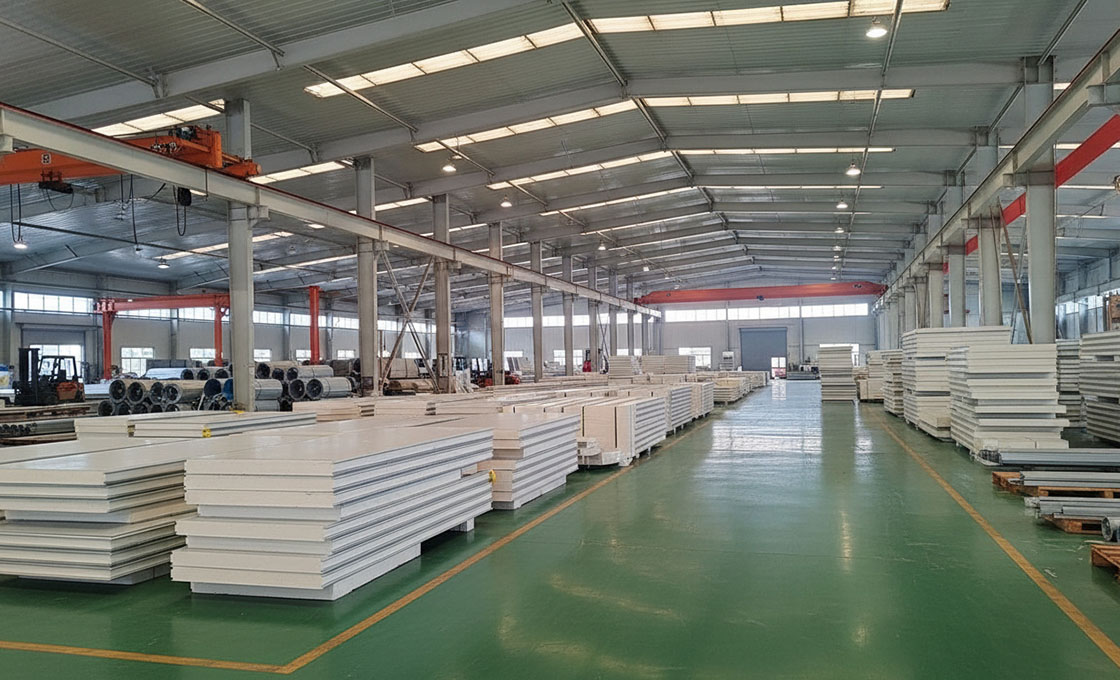
For fleet operators and body builders, the logistical efficiency of Completely Knocked Down (CKD) kits is often as critical as the thermal performance of the panels themselves. Custom manufacturing in this context goes beyond simple dimensional adjustments; it requires engineering the panel components for rapid, error-free assembly on the line while minimizing shipping volume. High-quality custom solutions utilize precise nesting software to optimize kit packaging, ensuring that a standard 40-foot high-cube container can maximize the payload of panel components, thereby reducing per-unit freight costs—a decisive factor in large-scale fleet rollouts.
Additionally, advanced manufacturers provide pre-machined services that align with specific chassis models. This includes precision routing for refrigeration unit cabling, door latch reinforcements, and lifting point cutouts. By shifting these secondary operations to the factory floor, fleet builders can significantly reduce on-site labor hours and eliminate the risk of on-site fabrication errors that compromise panel integrity. The goal is a kit where every component fits within tight tolerances—typically maintained within ±0.5mm—to ensure seamless structural bonding without the need for shimming or force-fitting.
Engineering the Skin-Core Matrix for Specific Applications
True customization is the deliberate selection of skin and core materials to match specific operational stressors rather than relying on a one-size-fits-all “sandwich” configuration.
Effective fleet customization demands a granular approach to material science. Instead of accepting a standard panel, fleet buyers should specify the composite stack-up based on the dominant failure mode of their specific application. For instance, in multi-stop delivery fleets where panel impact is a frequent risk, specifying a Glass Fiber Reinforced Polymer (GRP) or Fiberglass Reinforced Plastic (FRP) facing with a gelcoat finish provides superior resilience against abrasion and UV degradation compared to standard painted steel.
Conversely, for applications where payload maximization is the primary constraint—such as in last-mile urban logistics—engineers might specify Continuous Fiber Reinforced Thermoplastic (CFRT) skins combined with a lightweight core. The “Product Bible” of advanced composites reveals a hierarchy of core options that can be swapped based on required stiffness and thermal insulation:
- PET and PU Foam Cores: Offer an excellent balance of thermal insulation and structural integrity, ideal for standard refrigerated transport.
- XPS Foam Cores: Provide higher compressive strength and moisture resistance, suitable for heavy-duty flooring or high-load applications.
- PP Honeycomb Cores: When composited with fiberglass sheets, deliver the highest stiffness-to-weight ratio, significantly reducing tare weight without sacrificing structural rigidity.
Precision Tolerances and Thermal Consistency
When ordering custom panels for a fleet, consistency across batches is non-negotiable. Variations in panel thickness or flatness can lead to gaps in the thermal envelope, creating thermal bridges that drastically reduce the overall R-value of the vehicle body. A Durable custom manufacturing process utilizes continuous production lines capable of maintaining strict uniformity across thousands of square meters of production.
Buyers must verify that the manufacturer employs automated adhesive application and laminating processes. Manual batching often results in uneven glue distribution, which is a leading cause of delamination in the field. By insisting on panels manufactured in a controlled environment with daily production capacities exceeding 1,700 square meters, fleet buyers ensure that every panel in the order—whether unit #1 or unit #100—adheres to the exact same density and dimensional standards. This repeatability is essential for maintaining the warranty validity of the refrigeration unit and ensuring predictable fuel consumption across the entire fleet.
Verify Claims with Third-Party Testing
Third-party testing is the only way to separate real panel performance from marketing claims. Request raw test data, verify panel configurations match your spec, and never accept reports older than three years without re-validation.
Methodologies for Validating Insulation Integrity
Third-party thermal testing is the only reliable way to confirm that a supplier’s claimed R-value or thermal conductivity actually translates to real-world performance. The gold standard methodology is the Guarded Hot Box method per ASTM C518, which measures steady-state heat flow through a fully assembled panel under controlled temperature differentials. However, many suppliers only provide lab-scale measurements on bare foam cores — not on the final sandwich panel with facings, adhesive bonds, and edge details included. That gap between core-only data and assembly-level performance is where thermal bridging and installation failures hide.
When evaluating test reports, look for the temperature differential used during testing. A report generated at a 20°C delta tells you very little about performance in a -25°C reefer environment. Reputable testing houses like UL and BSI will run tests across the full operational temperature range your truck will encounter. Always request the raw heat flow meter data, not just the summarized R-value — the slope of the curve across temperatures reveals whether the core material is stable or degrading under thermal cycling.
Thermographic imaging during acceptance testing is another practical methodology that catches defects invisible to standard tests. Infrared cameras reveal cold spots at panel joints, adhesive voids, and areas of core compression that compromise insulation. We recommend specifying a full-surface thermographic scan on a random sample from each production batch, especially for long-panel runs where core density variation is most likely.
Peel Strength and Delamination Resistance Testing
Delamination is the single most costly failure mode in composite truck panels. A Southeast Asian OEM we worked with learned this after switching to a lower-cost supplier — their panels began separating at the face-sheet bond after 14 months of freeze-thaw cycling, resulting in a $2.3 million contract loss that erased three years of perceived savings. The root cause was a mismatch in the coefficient of thermal expansion between the facing and the core, compounded by insufficient adhesive cure during lamination.
The definitive test for bond integrity is the T-peel test per ASTM D903, which measures the force required to separate the face sheet from the core at a 180-degree angle. Our engineering team requires a minimum peel strength of 1.5 N/mm for all refrigerated truck applications, and we additionally perform a wet-aging pre-conditioning step — 85°C at 85% relative humidity for 500 hours — before re-testing. This simulates decades of exposure to the condensation and cleaning chemicals that every reefer body endures. Panels that pass dry peel tests but fail after wet aging are using moisture-sensitive adhesives that will degrade in service.
For delamination resistance under dynamic conditions, the industry standard is the cyclic thermal shock test: cycling panels between -30°C and +70°C for at least 50 cycles, then inspecting for bond separation under ultrasonic C-scan. This methodology replicates the real-world thermal stress of a reefer truck moving from a -25°C cargo bay to a 45°C loading dock. Our lab tests show that panels with proper core-to-face CTE matching and full-surface foam injection bonding survive 200+ cycles without measurable bond degradation, while mechanically fastened or partially injected panels typically show delamination onset between 30 and 60 cycles.
Fire Rating and Smoke Toxicity Certification
Fire performance in truck body panels is governed by two separate but equally critical requirements: flame spread classification and smoke toxicity. The most widely recognized flame spread standard for transportation applications is FM 4880 (Factory Mutual), which classifies panels from Class 1 (highest fire resistance) through Class 3. For European markets, EN 13501-1 provides the corresponding classification system, with B-s1-d0 being the typical requirement for refrigerated bodies. These ratings are not interchangeable — a panel certified to one standard does not automatically satisfy the other, and importing panels without verifying cross-compatibility is a common source of customs and compliance delays.
Smoke toxicity is where many spec sheets go silent. A panel can have an excellent flame spread rating but still release dense, toxic smoke when exposed to fire. The relevant test is ISO 5659-2 (cone calorimeter smoke density) combined with EN 13823 (smoke toxicity from combustion gases). For food-grade and pharmaceutical transport, these tests are non-negotiable because cargo crews may be trapped in an enclosed trailer during a fire event. We insist that our suppliers provide full smoke toxicity data — not just flame spread — and we maintain records showing that our PU and PIR core panels produce smoke density values well below the regulatory thresholds for enclosed vehicle compartments.
When reviewing fire certifications, verify the exact panel configuration that was tested. A fire rating obtained on a 50mm panel does not automatically apply to an 80mm variant, even from the same product line. The core thickness, facing material, and adhesive system all affect combustion behavior. Request the test report’s scope of coverage — any ambiguity here is a red flag.
Impact Resistance and Dynamic Load Simulations
Refrigerated truck panels endure a punishing combination of impacts: cargo loading strikes, road debris, vibration fatigue, and dynamic weight shifts during transit. The standard impact test is the dropped-weight impact test per ASTM D7132, which measures the energy required to cause visible cracking or core failure. For truck body applications, we specify a minimum impact resistance of 5 Joules at -20°C pre-conditioning — the low temperature is critical because many foam cores become brittle in cold service, and a panel that passes at room temperature may shatter in a reefer environment.
Beyond static impact, dynamic load simulation validates how panels perform under the vibration and flexural stresses of actual road use. This is typically done on a shaker table or fatigue rig, subjecting panels to randomized vibration spectra that replicate highway, cobblestone, and unpaved road profiles over an accelerated timeframe. The key acceptance criterion is the absence of core shear failure, face-sheet buckling, or bond line separation after the test cycle. Our engineering team runs these simulations on prototype panels before full production approval, and we require suppliers to provide documented fatigue test results for any panel exceeding 100mm in thickness — thicker panels are more susceptible to core shear under dynamic loading.
One area where third-party testing often falls short is the simulation of point-load impacts from cargo handling. Standard drop-weight tests use spherical impactors, but real-world damage usually comes from sharp-edged pallets, forklift tines, and corner brackets. We recommend supplementing standard impact tests with a sharp-edged impact test at low energy levels of 2 to 3 Joules, as this better replicates the type of damage that initiates water intrusion and eventual structural degradation in service.
| Verification_Aspect | Standard_Requirement | Validator_Method | Rax_Panel_Adherence | Project_Benefit |
|---|---|---|---|---|
| Quality Management System | ISO 9001 Certification | BSI / SGS / TÜV | Certified for over 15 years; documented design and production control systems ensuring process stability | Ensures consistent, repeatable manufacturing quality and reliable supply chain standards |
| Product Performance | Fire, Thermal, and Structural Test Reports | Independent Third-Party Laboratories | Bespoke engineering team conducts rigorous testing; full raw material traceability (XPS, PET, PU) to verify bond integrity and prevent delamination | Guarantees code compliance, structural durability against fatigue, and safety under demanding conditions |
| Production Capability | Automated Foam-Injection & Laminating Systems | On-Site Factory Audit or Video Walkthrough | State-of-the-art composite line; daily capacity exceeding 1,700 square meters; capability to fabricate panels up to 12m long | Verifies scale, dimensional stability, and production volume reliability for large-scale orders |
| Environmental Impact | Environmental Product Declaration (EPD) based on LCA | SCS Global Services or Equivalent | Committed to eco-friendly, lightweight CFRT and GRP material innovation designed to maximize payload and reduce lifecycle energy costs | Provides verified, transparent data on sustainability, carbon footprint, and total cost of ownership (TCO) |
Conclusion
Core material selection demands a strategic balance between insulation efficiency and environmental durability. XPS foam handles moisture effectively and lasts longer in wet climates. PU foam delivers higher R-values per inch, offering superior thermal efficiency with low water absorption properties. CFRT sandwich panels cut weight while keeping impact resistance strong, which is vital for payload. Our engineering team can help you match the right core to your operating conditions.
- Request third-party test reports before committing to any panel spec.
- Ask our engineers to model thermal performance for your specific routing and climate zone.
- Review peel strength and delamination data from independent labs, not just manufacturer claims.
Frequently Asked Questions
What panel thicknesses are available for truck bodies?
RaxPanel fabricates insulated sandwich panels up to 150mm thick, with standard offerings ranging from 40mm to 120mm depending on core material and application. Thicker panels deliver higher R-values but add weight, so the optimal thickness depends on your cargo temperature requirements and payload constraints. Custom thicknesses are available for specialized refrigerated or dry freight configurations.
What steel gauge options are available for panel facings?
Steel facing options typically range from 22-gauge to 26-gauge (0.8mm to 0.5mm) depending on structural requirements and application. Heavier-gauge steel provides greater impact resistance and dimensional stability, while lighter gauges maximize payload capacity. The choice depends on whether panels prioritize exterior durability or weight optimization for your specific freight operations.
How do panel joints affect long-term thermal performance?
Panel-to-panel joints are the most common failure point for thermal performance loss in truck bodies. Standard adhesive tapes and sealants degrade under thermal cycling, allowing warm air infiltration and moisture ingress at connection points. Proper joint design with continuous gasketing, structural adhesives, and overlapping profiles is essential to maintain insulation integrity over the vehicle’s service life.
How does UV exposure impact FRP panel longevity?
FRP surfaces without UV-resistant gelcoat experience a 30-40% reduction in tensile strength after two to three years of continuous outdoor exposure. Gelcoat-treated FRP facings significantly extend panel lifespan by shielding the fiberglass matrix from UV degradation. For truck bodies operating in high-sunlight environments, specifying UV-stabilized gelcoat is critical for maintaining structural performance.
Are insulated panels cost-effective for dry freight trucks?
Insulated panels provide meaningful value for dry freight applications where temperature-sensitive goods, cargo protection, or energy-efficient climate control are priorities. While the initial investment exceeds uninsulated metal construction, the improved cargo integrity, reduced condensation damage, and extended vehicle lifespan often justify the cost. Panels also contribute to payload optimization by replacing heavier traditional building materials.