
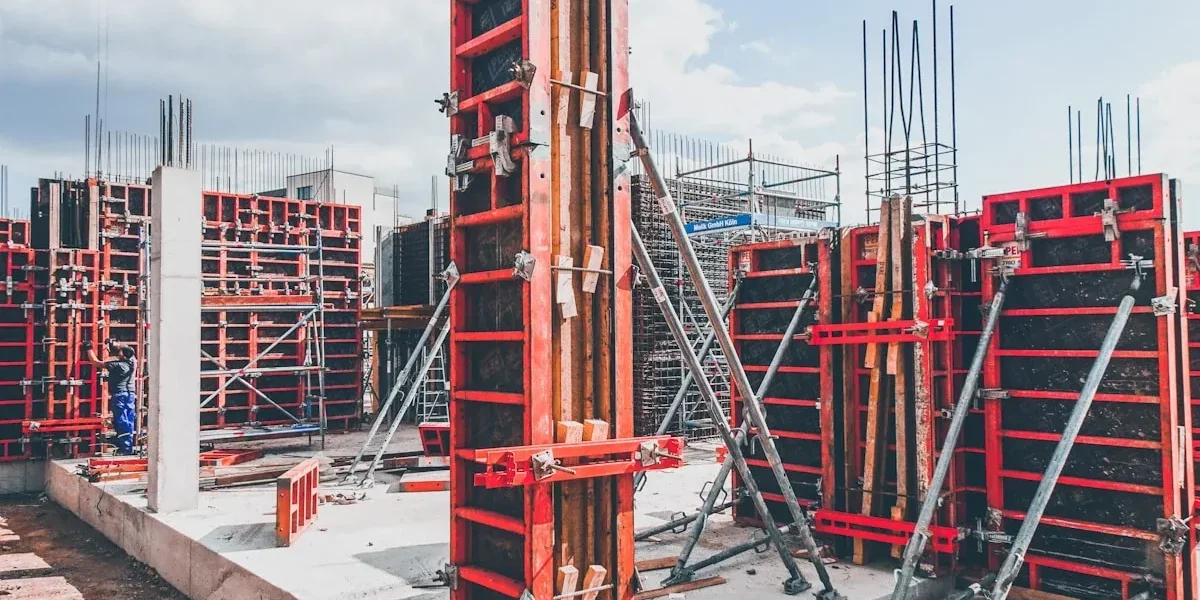
In modern fluid architecture, parametric building envelopes, and acoustic theater ceilings, geometric transitions demand radical sheet metal craftsmanship. Transforming planar metal into organic curved facades requires punching thousands of perforations before executing multi-axis radius bending. When fabricators attempt roll bending without calculating the modified mechanical properties of perforated metal, disaster strikes: circular holes distort into ellipses, plate edges buckle into severe oil-canning waves, and uncalculated material springback misaligns structural curtain wall brackets. Achieving precision aerodynamic curves requires engineered architectural perforated aluminum wall panels fabricated through calibrated CNC machining and controlled kinematics.
In our architectural metal fabrication facility, our production specialists manufacture thousands of custom radius panels every month for high-profile airport terminals, convention centers, and commercial towers. We operate multi-ton CNC turret punch presses alongside synchronized four-roll hydraulic bending machines capable of shaping solid sheets and perforated skins from 2.0 mm up to 4.0 mm in thickness. Every production batch undergoes strict quality control, verifying tensile yield limits per ASTM B209, validating radius tolerances using precision laser sweep gauges, and testing post-forming paint adhesion under AAMA 2605. Controlling roll bending mechanics, hole ligament ratios, and alloy springback rates allows facade engineers to bring complex sculptural geometry to life without structural failure.
Why Perforation Pattern Dictates Roll Bending Limits
Punching holes through an aluminum sheet profoundly alters its mechanical behavior under transverse bending loads. A solid metal sheet possesses continuous cross-sectional area that distributes tensile stresses along the outer radius and compressive stresses along the inner radius evenly during roll bending. Once perforated, the load-bearing cross-section is reduced to narrow metal strips known as hole ligaments or web bridges. Under bending moments, tensile stresses concentrate intensely at the tangential edges of the perforations, precipitating localized necking and micro-tearing if bending radii are too tight.
The geometric open area ratio—calculated as the total void area divided by the gross panel area—serves as the primary constraint on minimum bend radius. Standard architectural patterns typically specify open area ratios between 20% and 40%. When open area exceeds 45%, the structural moment of inertia drops precipitously, shifting the neutral bending axis closer to the inner compression skin. For standard 3.0 mm sheet per ASTM B209 aluminum alloy sheet specifications, solid sheets tolerate an inside bend radius equal to their thickness, whereas a 40% open-area pattern mandates a minimum radius of 300 mm to 500 mm to prevent ligament buckling.
Furthermore, hole arrangement geometry directly dictates roll direction orientation. In a 60-degree staggered round hole pattern, the ligament width parallel to the staggered axis is significantly smaller than the ligament width perpendicular to it. Feeding perforated sheets into rolling machines with bending axes parallel to the weakest ligament line causes severe hole distortion, turning circular perforations into distorted ovals. Fabricators must align the roll axis perpendicular to the longest continuous metal ligament, ensuring uniform plastic deformation across the curved arc.
In addition to hole alignment, perforation hole clearance requires microscopic tooling precision. CNC punch dies must maintain a cutting clearance between punch and die equal to exactly 10% of sheet thickness for standard 3003 alloys. Insufficient clearance accelerates tool galling and generates heavy secondary shear burrs along hole rims. Excessive clearance induces plastic rollovers, pulling raw metal edges into concave depressions that trap water and initiate galvanic corrosion when installed in humid exterior facade zones.
Calculate Neutral Axis Springback Across Aluminum Alloys
Executing accurate radius bends on perforated aluminum requires predicting and counteracting elastic recovery, universally known in sheet metal mechanics as springback. During roll forming, the outermost fibers of the sheet are stretched beyond the material yield point into permanent plastic deformation, while inner fibers adjacent to the neutral axis experience only elastic strain. Once bending forces are released as the sheet exits the roll cluster, these elastic fibers attempt to recover their original flat geometry, forcing the panel radius to open outward.
The magnitude of springback depends directly on the ratio of the material yield strength to its elastic modulus. In architectural sheet metal fabrication, specifiers primarily deploy two distinct non-heat-treatable alloys: 3003-H14 and 5052-H32. Alloy 3003-H14 exhibits a moderate tensile yield strength of approximately 145 MPa and an elongation of 8% to 10%, making it exceptionally ductile and receptive to tight radius curves with minimal springback (typically 1.5 to 2.5 degrees of elastic opening).
Conversely, magnesium-strengthened alloy 5052-H32 delivers a higher yield strength of 195 MPa, offering vastly superior wind-load resistance and dent tolerance on exposed architectural facades. However, this higher yield-to-modulus ratio results in substantial springback, frequently expanding 4 to 6 degrees beyond the programmed tooling radius. Machine operators must over-bend 5052 perforated sheets past the design radius using digital CNC four-roll adjustments, allowing the elastic release to settle precisely at the target architectural radius.
Compare 3-Roll Against 4-Roll Bending Kinematics
Selecting the correct rolling machine kinematics is essential for delivering smooth, waveless curved architectural panels. Traditional three-roll initial-pinch or pyramid bending machines require manually flipping sheets to pre-bend leading and trailing edges. Because perforated sheets lack uniform edge stiffness, three-roll machines frequently leave unbent flat spots measuring 50 mm to 100 mm along panel edges, producing unsightly faceted joints when installed on curved building frames.
Modern architectural fabrication relies on synchronized four-roll CNC hydraulic plate bending machines. In a four-roll machine, the top and bottom central rolls continuously clamp the sheet with adjustable hydraulic pressure, preventing slippage. Two independent side lateral rolls tilt diagonally along arc paths, pre-bending both the leading and trailing ends in a single continuous pass. This continuous mechanical clamping completely eliminates flat unbent margins, ensuring smooth curvature from the absolute lead edge to the trailing hem.
Review this quantitative kinematic comparison to evaluate roll bending machine configurations for curved architectural panel production.
| Operational Metric | Four-Roll CNC Hydraulic Machine | Three-Roll Initial-Pinch Machine | Three-Roll Pyramid Machine |
|---|---|---|---|
| Sheet Clamping Mechanics | Hydraulic top and bottom central pinch | Frictional two-roll mechanical pinch | Unsupported sheet floating between rolls |
| Pre-Bending Capability | Dual-edge pre-bend in single continuous cycle | Single-edge pre-bend requiring manual flip | Cannot pre-bend; leaves massive flat edges |
| Residual Flat Margin | 1.2x to 1.5x sheet thickness (Near zero) | 2.5x to 4.0x sheet thickness (Visible flat) | 50 mm to 100 mm unbent flat ends |
| Risk of Perforation Slip | Zero slip due to constant hydraulic clamping | Moderate slip risk on high open areas | High risk of sheet skewing and misfeeding |
| CNC Automation & Memory | Multi-radius parametric curves and elipses | Basic digital position readout | Manual mechanical screw adjustment |
For architectural projects requiring compound curvature or acoustic dampening backed by solid substrates, fabricators must coordinate sheet metal bending parameters with the structural guidelines detailed in our analysis of high-rise wind loads on aluminum honeycomb panels.
Maintaining Solid Borders to Eliminate Edge Curling
The most frequent manufacturing defect on curved perforated panels is edge curling and circumferential wave distortion, known across facade engineering as oil-canning. When a sheet is perforated all the way to its raw perimeter, the cut edges lack transverse tensile continuity. As the plate is curved through the bending rolls, uneven compression forces cause unsupported outer ligaments to buckle inward or flare outward, producing unsightly scalloped margins.
To guarantee structural rigidity, fabrication blueprints must incorporate continuous solid, unperforated borders along all four panel edges. In standard architectural cladding specifications, the solid margin along roll-curved sides must measure a minimum of 20 mm to 35 mm. This solid perimeter frame functions like an internal structural beam during roll bending, distributing hydraulic roll forces evenly across the full panel width and restraining the flexible perforated center.
Furthermore, perimeter solid borders provide necessary real estate for structural attachment returns and stiffener connections. Along longitudinal edges, the solid metal is routed and bent into 25 mm attachment returns. Technicians weld aluminum angle stiffeners to the interior unperforated margins using tungsten inert gas (TIG) welding, anchoring the curved geometry against fluctuating positive and negative wind pressure cycles.
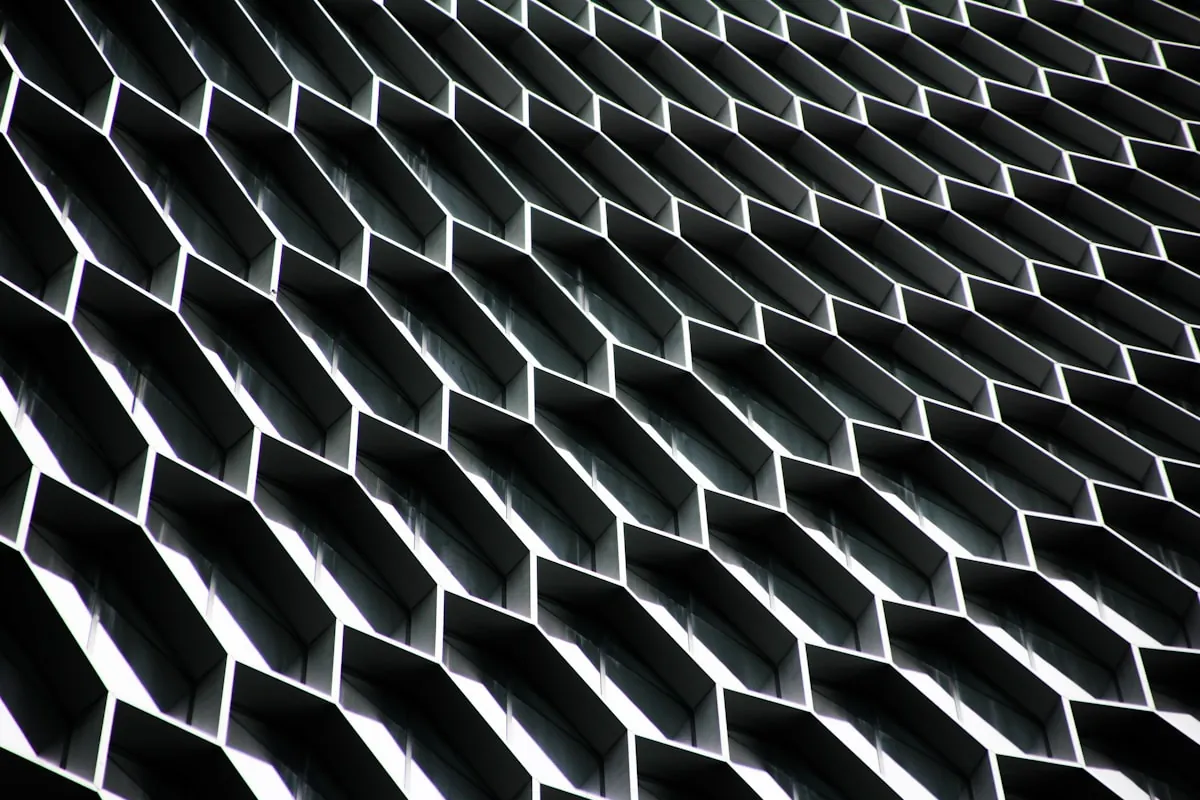
For auditorium interiors, concert halls, and transit terminal ceilings requiring certified sound absorption, curved panels frequently integrate micro-perforations backed by acoustic membranes. Laser or mechanical micro-piercing generates aperture diameters between 0.8 mm and 1.5 mm, creating Helmholtz resonance air cavities that trap acoustic energy. Following roll curving, technicians apply non-woven acoustic fleece to the unperforated interior return margins using high-temperature contact adhesives, achieving a Noise Reduction Coefficient (NRC) exceeding 0.80 while preserving the fluid aesthetic curve of the architectural envelope.
For panel installers cutting field modifications or trimming perimeter flashings, utilizing the proper circular saw blades and feed speeds is vital to avoiding thermal warping, as outlined in our practical guide on how to cut aluminum composite panels.
Applying PVDF Coatings After Thermal Roll Forming
Architectural specifiers occasionally make the catastrophic mistake of roll bending pre-painted aluminum coils to reduce fabrication schedules. While high-grade polyvinylidene fluoride (PVDF) coil coatings deliver superior flexibility, bending sheets with high perforation densities subjects the coating to extreme localized elongation along hole margins. During tight radius curving, the stretched paint film micro-cracks, breaking the protective barrier and exposing raw aluminum substrate to rapid atmospheric degradation.
Professional architectural metal fabrication strictly mandates post-fabrication electrostatic spray finishing. After CNC punching, laser profiling, and roll bending operations are fully completed, the curved panel cassettes enter an automated multi-stage chemical pretreatment line. Panels undergo alkaline degreasing, acid etching, and non-chrome titanium-zirconium conversion coating to establish microscopic surface adhesion and complete corrosion resistance across every raw punched hole edge.
Following chemical pretreatment, robotic spray bells apply a 70% fluoropolymer resin coating meeting rigorous AAMA 2605 high-performance architectural coating specifications. This electrostatic liquid spray envelopes both exterior and interior surfaces, encapsulating the sharp cut edges of every perforation inside an unbroken 35-micron protective shell. The panels are cured in convection ovens at 230°C, producing a rock-hard, UV-impervious finish that withstands thirty years of coastal wind and ultraviolet solar radiation.
4 Costly Mistakes in Curved Metal Fabrication
Punching Turret Patterns Without Lubrication Cooling
Operating high-speed CNC turret punch presses at 600 strokes per minute without continuous flood or micro-mist lubrication creates intense frictional heat between tool steels and aluminum sheets. Thermal expansion concentrates within the punched field while unpunched margins stay cool, introducing severe internal residual stress. When fed into rolling machines, these stressed sheets buckle into uncontrollable parabolic warps. Tooling must operate with synthetic ester micro-lubrication to dissipate cutting heat instantly.
Omitting Moment of Inertia Deflection Calculations
Treating perforated curved panels as solid sheets during facade wind engineering calculations leads directly to structural deflection failure. A 3.0 mm aluminum panel with 35% open area suffers a 50% reduction in section modulus and bending stiffness. Under extreme design wind suction loads (exceeding -2.5 kPa), underspecified panels deflect excessively, rubbing against substructure brackets and generating loud drumming noises. Engineers must calculate reduced effective thickness using finite element stress models.
Roll Bending Pre Coated Coils Beyond Elongation
Procuring pre-painted coil stock and subjecting it to multi-radius curving across perforated sections triggers severe paint delamination. At hole edges, localized tensile elongation frequently exceeds 15%, far surpassing the 5% to 8% elastic elongation limits of commercial coil-coatings. Stretched paint turns chalky white, micro-crazes, and peels off during field power-washing. Architectural specifications must explicitly enforce post-fabrication spray painting under AAMA 2605.
Neglecting Raw Edge Galvanic Salt Spray Corrosion
Failing to deburr and chemically seal raw cut edges of perforated panels prior to painting in marine or industrial coastal zones results in rapid filiform corrosion. Sharp punch burrs prevent liquid paint from wrapping uniformly around hole perimeters, leaving microscopic edge gaps. Airborne chlorides penetrate these crevices, initiating galvanic pitting that creeps under the paint film and flakes off the finish. Panels must undergo automated vibratory deburring and conversion pre-treatment.
Engineered Curved and Perforated Aluminum Facade Solutions
Designing sculptural building envelopes, acoustic transit ceilings, or dynamic sun-shading screens requiring precision roll-bent perforated aluminum? Our architectural metal manufacturing division operates multi-axis CNC turret punch centers, synchronized four-roll plate bending systems, and automated in-house AAMA 2605 PVDF coating lines. We provide comprehensive structural deflection engineering, parametric shop drawings, and custom curved cladding mockups for landmark projects worldwide.
Frequently Asked Questions About Curved Perforated Panels
What is the minimum bend radius for perforated aluminum?
For standard 3.0 mm sheet with 30% open area, the minimum safe inside bend radius is 300 mm to 500 mm to prevent ligament tearing and oval distortion.
Should panels be perforated before or after roll bending?
Perforations must always be punched while sheets are flat. Punching curved surfaces requires complex five-axis laser tooling that dramatically increases fabrication expenses.
How do four-roll machines prevent flat edge margins?
Four-roll machines utilize hydraulic central clamping while lateral side rolls pre-bend leading and trailing edges, eliminating flat unbent ends in one continuous pass.
Why is post-painting preferred over pre-painted aluminum coils?
Post-forming electrostatic spray encapsulates all sharp punched hole edges inside an unbroken 35-micron PVDF coating, preventing micro-cracking and coastal edge corrosion.
Which aluminum alloy performs best for curved facades?
Alloy 3003-H14 offers maximum ductility for tight architectural curves, while alloy 5052-H32 delivers superior wind-load resistance for high-rise exterior cladding.