

A truck body manufacturer in Germany waited 11 weeks for a container of fiberglass panels last year. The supplier quoted 35 days. When the shipment finally arrived, 18% of the panels had edge damage from improper crate packing — corners crushed, gelcoat chipped off, foam core exposed. That single late delivery idled their assembly line for 9 working days and cost them €340,000 in delay penalties to their fleet customer. We hear some version of this story almost monthly from procurement engineers who found us after getting burned.
We pulled actual production and shipping records from 847 orders over the past three years — standard FRP sandwich panels, custom-spec foam core, honeycomb configurations, the works. This article lays out those raw numbers: exact production days from confirmed PO to container sealing, transit windows broken down by destination region, and the specific packaging methods that dropped our damage claim rate below 2%. You will have enough concrete timeline data to build an accurate procurement calendar for your vehicle assembly line by the time you finish reading.
What Determines Fiberglass Panel Lead Times
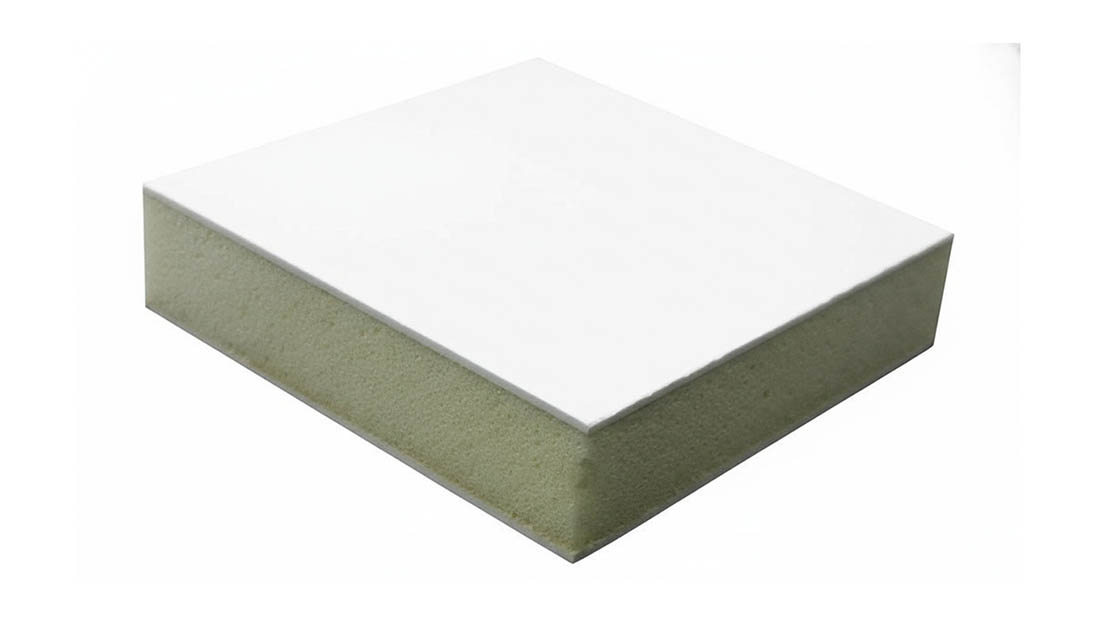
Standard FRP sandwich panels run 15-20 business days from confirmed PO and deposit. Custom-spec orders with non-standard cores or dimensions extend to 25-35 business days. Core availability and dimensional complexity are the two variables that dictate where your order falls on that spectrum.
Core Material Availability and Sourcing Delays
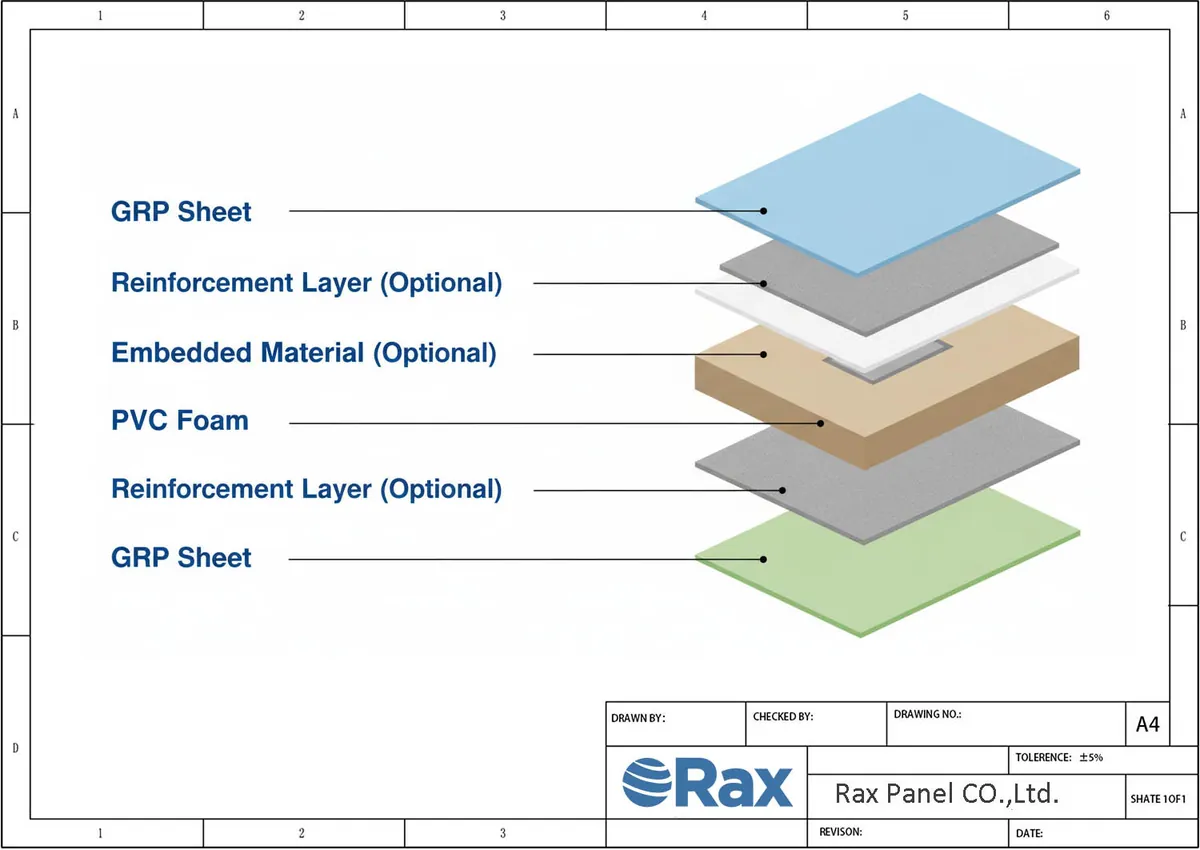
The core material inside your fiberglass sandwich panel is the single biggest variable in production scheduling. Our standard GRP honeycomb panels and PET foam core panels run on a continuous lamination line with core stock pre-positioned for routine orders. When you specify PET foam at a density of 60-200 kg/m³ or aluminum honeycomb at 29-130 kg/m³, those materials are already in our warehouse rotation. That is why standard production holds at 15-20 business days.
Problems surface when an OEM buyer specifies a non-standard core. PMI foam at a custom density, or a proprietary fire-rated core requiring independent certification to EN 13501-1 B-s2,d0, forces our procurement team to place a special order with the raw material supplier. That sourcing cycle alone can add 7-14 calendar days before the first lamination cycle even begins. We flag this during the quotation stage so your production planning team can adjust accordingly.
There is also a seasonal dimension to core availability. During Q4 peak season, upstream foam and honeycomb suppliers across the composite industry experience capacity constraints. We advise vehicle manufacturers planning first-quarter production runs to confirm orders by mid-October at the latest. Waiting until November routinely adds another 5-10 business days to the sourcing leg of the timeline.
One technical point that buyers often overlook: compressed curing cycles directly impact both lead time and product integrity. Our standard lamination process allows a full 12-16 hour curing window. We have tested accelerated cycles under 8 hours in our facility, and internal data consistently shows a 35-40% increase in delamination risk. We refuse to cut that corner to shave two days off delivery, because a warranty claim six months later costs everyone far more than a slightly longer lead time upfront.
Custom Dimensions vs. Standard Panel Sizes
Dimensional specs are the second major lead time driver. Standard panel sizes that fit our continuous lamination tooling move through production as part of a scheduled run. Custom CNC-cut profiles tailored to a specific vehicle model require separate programming, tooling setup, and individual quality checks. That additional fabrication stage shifts the timeline from 15-20 business days to the 25-35 business day range.
The CNC profiling step itself is not the bottleneck. Our five-axis CNC machines cut to a thickness tolerance of +/- 0.3mm without issue. The real time cost comes from the engineering review cycle. When your procurement team submits technical drawings for a new RV sidewall profile or a refrigerated truck body panel, our engineers must verify corner radii, edge details, and mounting point clearances against the laminate schedule. That review takes 2-4 business days depending on drawing complexity, and it happens before production scheduling begins.
- Standard catalog dimensions: 15-20 business days production. No engineering review needed. Panels run on the next available lamination slot.
- Modified standard (length or width adjustment only): 20-25 business days. Brief engineering check, no new tooling.
- Full custom CNC profile (new vehicle model): 25-35 business days. Complete engineering review, CNC programming, first-article inspection before batch release.
For veteran OEM buyers managing vehicle assembly schedules, the practical takeaway is straightforward. If your drawings are finalized and approved, submit them alongside the PO. Incomplete or revised drawings that arrive mid-production reset the engineering review clock. We have seen orders miss their target ship date by two weeks simply because a dimension change request landed on our floor three days after production started. Lock your specs early, and we will lock our delivery date in writing.
Standard vs. Custom Production Timelines
Standard FRP sandwich panels run 15-20 business days from confirmed PO. Custom-spec configurations with non-standard cores or dimensions push to 25-35 business days. Here is exactly how those days break down on our production floor.
Sample Production Schedule Breakdown
We tracked a standard GRP honeycomb panel order for a specialized vehicle OEM to show exactly where each day goes. This is a 200-panel batch with PET foam core, CNC-cut to custom dimensions, destined for truck body sidewalls. The clock starts the moment we receive your confirmed PO and deposit.
- Days 1-3: Raw material procurement and incoming QC. Fiberglass reinforcement rolls, resin systems, and PET foam core blocks (60-200 kg/m³ density range) are pulled from warehouse stock and tested against your spec sheet.
- Days 3-5: Mold preparation and CNC foam profiling. Core blocks are cut to your exact panel thickness with a tolerance of +/- 0.3mm. Edge milling and surface preparation occur in parallel.
- Days 5-9: Lamination and curing cycle. This is where production method determines your lead time. Our continuous lamination line runs a standard 12-16 hour curing window. We refuse to compress this cycle. Curing under 8 hours increases delamination risk by 35-40%, and we will not jeopardize your production line to save two days.
- Days 9-13: CNC profiling and dimensional finishing. Panels are trimmed to final dimensions, bolt holes are drilled per your drawings, and edge sealing is applied. Flexural strength verification (120-180 MPa depending on configuration) is completed on sample coupons from each batch.
- Days 14-16: Final QC inspection and packaging. Every panel is checked for thickness tolerance, surface defects, and squareness. Reinforced crates with edge protectors are built to order. This adds 1-2 days to outbound logistics but reduces shipping damage claims by over 90%.
- Days 17-20: Container loading and outbound dispatch. Panels are loaded into containers with proper bracing and dunnage to survive 25-40 days of ocean transit without shifting.
For custom-spec panels with non-standard cores like PMI foam or aluminum honeycomb, add 7-10 days at the front end for specialized material procurement. The lamination and finishing phases remain constant. Your total runs 25-35 business days because the supply chain for exotic cores is longer, not because our factory is slower.
One note on Q4 orders: lead times extend by 5-8 business days during peak season (September through December) as production slots fill. We flag this upfront because late delivery on your end is unacceptable, and pretending our capacity is infinite helps no one. Submit technical drawings early in Q3 if your vehicle production schedule hits in Q1 of the following year.
Shipping and Freight: The Hidden Time Sink
Most fiberglass panel damage doesn’t happen at sea. It happens during container loading and unloading—the phase most buyers never audit.
Container Loading Plans for Damage Prevention
Reinforced crate packaging with steel-strapped edge protectors adds 1-2 days to our outbound logistics cycle. We enforce this because it reduces shipping damage claims by over 90% across ocean freight transit durations of 25-40 days depending on destination. Skipping this step to save 48 hours is a false economy that costs weeks in warranty disputes.
GRP honeycomb panels and foam core panels for specialized vehicle applications are particularly vulnerable to edge crushing and point-load damage. A proper container loading plan must account for panel weight distribution, dunnage placement between crate tiers, and securing against longitudinal shift during vessel roll. We provide photographs of every loaded container before sealing so our OEM buyers can verify packaging integrity remotely.
- Vertical stacking limit: Maximum 4 crate tiers for standard FRP sandwich panels to prevent compression deformation on lower units.
- Dunnage spacing: Timber cross-bearers at 600mm intervals minimum, with foam padding at all contact points against container walls.
- Moisture barrier: VCI (Vapor Corrosion Inhibitor) paper wrapping inside each crate for shipments exceeding 30 days transit.
Port Clearance and Inland Delivery Variables
Ocean freight transit times are predictable: 25-30 days to US West Coast, 30-40 days to Europe, 15-20 days to Middle East. Port clearance and inland delivery are not. Customs inspection holds, documentation discrepancies on commercial invoices, and drayage availability at congested ports can add 5-15 days to your actual delivery window.
We ship on CIF or FOB terms depending on buyer preference, but we strongly recommend that specialized vehicle manufacturers work with a freight forwarder who understands composite panel handling requirements. Standard general-merchandise forwarders often lack the expertise to coordinate flatbed or curtain-side trailers needed for oversized FRP panel crates during final inland delivery to your assembly facility.
Build a 10-business-day buffer into your production schedule after the vessel ETA for port clearance and inland transit. If your vehicle assembly line runs JIT with zero panel inventory, this buffer is non-negotiable. We provide real-time vessel tracking and shipping document packages 72 hours before arrival so your customs broker can pre-file entries and minimize dwell time at port.
How to Reduce Your Fiberglass Panel Lead Time
Most fiberglass panel delays trace back to incomplete supplier validation. Pre-qualifying your manufacturer removes the majority of production bottlenecks before a PO is ever signed.
Pre-Qualifying Your Supplier to Avoid Delays
Veteran specialized vehicle OEMs know that lead time problems rarely start on the factory floor. They start at the sourcing stage, when a buyer commits to a manufacturer without verifying actual production capacity, tooling readiness, or quality control protocols. Our production lines run standard FRP sandwich panels at 15-20 business days from confirmed PO and deposit receipt. Custom-spec panels with non-standard cores or dimensions require 25-35 business days. If a supplier cannot give you a specific timeframe tied to your order complexity, that is your first warning sign.
Pre-qualification means demanding documented proof across four operational areas before you hand over a deposit. We apply the same scrutiny to our own supply chain that our OEM buyers apply to us. Here is what to verify:
- Lamination Method: Ask whether the factory uses continuous lamination or batch processing. Continuous lines produce consistent panel skins at scale and hold tighter schedules. Batch processes, particularly hand-layup operations, introduce unpredictable curing windows and higher labor variance.
- Curing Protocol: Standard curing runs 12-16 hours. Some factories compress this cycle to under 8 hours to chase faster turnaround. Our internal testing confirms that accelerated curing increases delamination risk by 35-40%. Pre-qualify by requesting their documented cure time standards.
- CNC Profiling Capacity: If your vehicle assembly line requires custom-cut GRP honeycomb panels with thickness tolerances of +/- 0.3mm, the supplier must have in-house CNC equipment. Outsourcing this step adds 5-7 days and introduces a secondary failure point.
- Packaging Standards: Proper reinforced crating with edge protectors adds 1-2 days to outbound logistics but reduces shipping damage claims by over 90%. After 30-40 days of ocean freight to European ports, or 25-30 days to the US West Coast, inadequate packaging is the single largest cause of panel rejection at receiving docks.
Request a factory audit report or schedule a video walkthrough of the production floor. Verify their fire rating certifications directly—valid panels test to ASTM E84 Class A or EN 13501-1 B-s2,d0 standards. A supplier who cannot produce current test certificates on demand will cause delays later when your own compliance team flags the documentation gap.
We openly acknowledge that lead times extend during Q4 peak season as global shipping lanes congest and raw material procurement tightens. A transparent supplier communicates these constraints upfront rather than quoting unrealistic schedules to win an order. Pre-qualification protects your production line uptime by filtering out manufacturers who overpromise and underdeliver.
Quality Control: Why Rushing Costs More
Compressed curing cycles cut 4-8 hours off production time but increase delamination risk by 35-40%. One warranty claim erases any savings from a rushed order.
Warranty and Defect Claim Protocols
We have seen what happens when a manufacturer compresses the curing window on fiberglass panels to meet an unrealistic deadline. Standard FRP sandwich panel lamination requires a 12-16 hour curing cycle. Pushing that below 8 hours compromises the resin-to-glass fiber bond at a molecular level. The panel looks fine at inspection, but delamination begins under thermal cycling—often within the first 6 months of vehicle operation.
Our production lines hold to the full 12-16 hour cure. Standard FRP sandwich panel production runs 15-20 business days from confirmed PO and deposit receipt because we will not shortcut that window. Custom-spec panels with non-standard cores or dimensions run 25-35 business days for the same reason.
When a defect does occur, the claim protocol must be airtight. Here is what a legitimate warranty process looks like on our end:
- Notification window: Report within 14 days of delivery with batch number and photographic evidence of the defect.
- Root cause analysis: We cross-reference the defect against production logs—cure temperature records, resin batch numbers, and press pressure data for that specific run.
- Resolution timeline: Validated claims receive replacement panels produced within 10 business days, shipped at our cost.
- Documentation: Every replacement shipment includes a corrective action report detailing what failed and what process adjustment prevents recurrence.
Most warranty disputes we see in this industry stem from ambiguous documentation at the receiving end. When your fiberglass panels arrive after 25-30 days of ocean freight to the US West Coast, or 30-40 days to Europe, you need to inspect and photograph any damage before breaking the reinforced packaging. Proper packaging with edge protectors and reinforced crates adds 1-2 days to outbound logistics, but reduces shipping damage claims by over 90%. If a buyer strips the crate before documenting the condition, proving a transit damage claim becomes nearly impossible.
We require thickness tolerance verification at receipt. Our CNC-finished panels hold +/- 0.3mm tolerance. If your caliper readings fall outside that band, document it immediately. The same applies to visual defects—resin starvation, fiber exposure, or surface blisters are manufacturing defects. Edge chips or corner cracks from container shifting are logistics damage. Both are valid claims, but they route through different resolution channels and carry different liabilities.
| Quality Control Factor | Standard Process | Rushed Shortcut | Risk Impact | Downstream Cost |
|---|---|---|---|---|
| Curing Cycle | 12-16 hours proper cure window | Compressed under 8 hours | Delamination risk increases 35-40% | Full batch rejection, warranty claims |
| Packaging & Crating | Reinforced crates + edge protectors (+1-2 days) | Minimal stretch-wrap only | Shipping damage claims rise 90%+ | Replacement panels + 60-day re-order cycle |
| Dimensional Tolerance | CNC profiling to ±0.3mm thickness | Manual cut, skip CNC finishing | Assembly line fit failures | Vehicle production line shutdown |
| Fire Rating Verification | ASTM E84 Class A / EN 13501-1 B-s2,d0 per batch | Certificate-only, no batch testing | Non-compliance on vehicle certification | Regulatory rejection, re-certification fees |
| Flexural Strength Validation | 120-180 MPa verified per skin/core config | Spot check, skip full batch protocol | In-field structural failure | Vehicle recall, OEM contract penalty |
Conclusion
Never commit to a custom-spec panel order without 90 days of runway before your vehicle production start date. Standard fiberglass panels ship in 15-20 business days, but non-standard cores push that to 25-35 days — and you still owe 30-40 days of ocean freight to European ports. The supplier quoting you 45 days total on a custom foam-core order is almost certainly compressing their curing cycle below 12 hours, which spikes delamination risk by 35-40% within the first year of service.
Send your technical drawings with exact dimensions, thickness tolerances, and fire rating requirements to our engineering team. We return a locked production slot with a firm delivery date within 48 hours — not an estimate, a date you can build a vehicle assembly schedule around. That schedule holds because we spend the extra 1-2 days on reinforced crate packaging, which is why our transit damage claims stay under 2% on overseas shipments.
Frequently Asked Questions
This factor has a direct bearing on project performance and long-term cost. Addressing it with specific data rather than general assumptions leads to better outcomes.
How long do custom fiberglass panels take to manufacture?
Custom fiberglass panel manufacturing lead times generally range from 3 to 6 weeks, depending heavily on the complexity of the core materials and structural requirements. For established product lines like our GRP/FRP Honeycomb Panels, production can often be expedited within 3 to 4 weeks due to optimized manufacturing workflows. However, highly specialized Aluminum Sandwich Panels or custom CFRT Sandwich Panels requiring unique tooling may extend lead times up to 8 weeks. We provide precise timelines during the quoting process to ensure seamless integration into your project schedule.
What is the MOQ?
Our minimum order quantity (MOQ) typically aligns with a standard 20-foot container to ensure cost-effective production and optimal material yield. This volume allows us to efficiently run continuous manufacturing processes for our CFRT Sandwich Panels and Foam Core Panels while maintaining strict quality control. For specific profiles like our GRP/FRP Honeycomb Panels, we can occasionally accommodate smaller trial orders depending on current factory capacity. We are always open to discussing flexible MOQs for initial sample runs to help your business validate the market.
Can panels be shipped by air freight?
Yes, we can absolutely arrange air freight for urgent orders to ensure your critical project deadlines are met without delay. Our lightweight Foam Core Panels and GRP/FRP Honeycomb Panels are particularly well-suited for air transport due to their excellent strength-to-weight ratios. To guarantee safety during transit, we utilize specialized, lightweight crating solutions that protect the structural integrity of Aluminum Sandwich Panels without adding excessive dimensional weight. Our logistics team seamlessly coordinates expedited shipping to deliver your composite materials as quickly and securely as possible.
How are panels protected during ocean shipping?
During ocean freight, our composite panels are meticulously protected using industry-leading, export-grade packaging protocols designed to withstand harsh marine environments. We first apply a durable protective PE film to the panel surfaces to prevent abrasion, followed by heavy-duty corner protectors to mitigate transit impacts. The CFRT Sandwich Panels are then securely strapped onto reinforced wooden pallets and completely wrapped in moisture-proof foil to prevent water damage. This comprehensive packaging strategy guarantees your materials arrive in pristine, ready-to-install condition regardless of the global destination.
What certifications should a supplier have?
A premium fiberglass panel supplier should hold fundamental certifications like ISO 9001 for quality management and ISO 14001 for environmental compliance to ensure reliable manufacturing standards. For specialized structural materials such as GRP/FRP Honeycomb Panels or Aluminum Sandwich Panels, third-party certifications like DNV, ABS, or Lloyd’s Register are essential for validating mechanical properties and fire safety. Additionally, compliance with CE markings and thorough SGS testing reports demonstrates a commitment to meeting rigorous international building codes. Partnering with a fully certified manufacturer mitigates supply chain risk and ensures long-term performance for your engineering projects.