
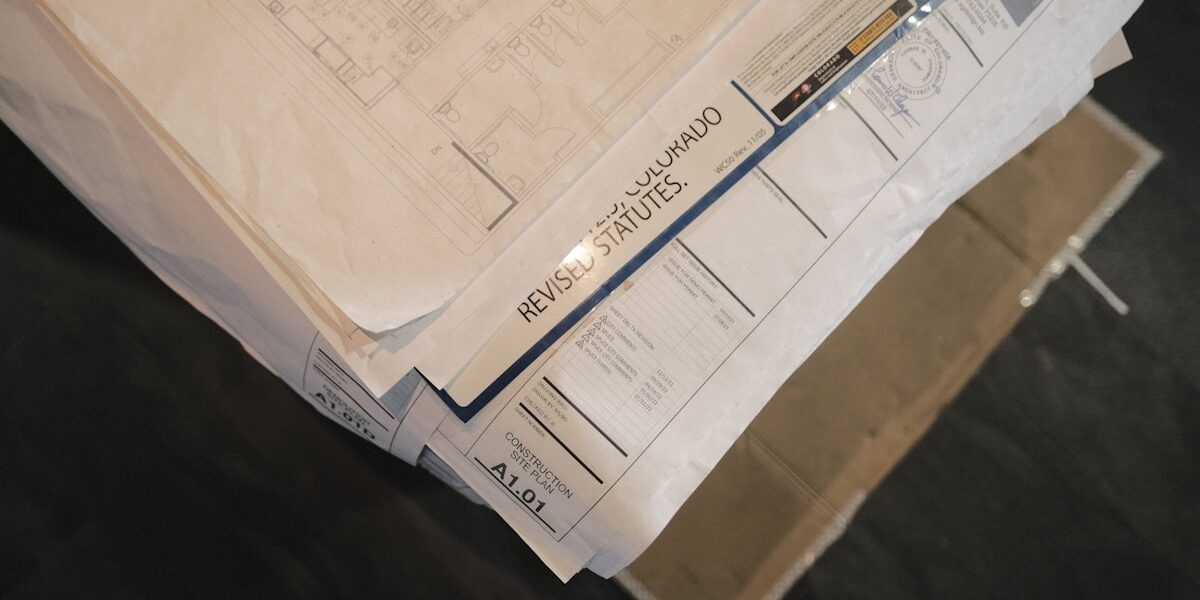
Three quotes sat on the desk, and the highlighter was already circling the lowest total. That was the morning the exclusions page got read. The cheapest stack had quietly left out the crane, the electrical connection and the drainage run, and by handover it had grown by about a third. A buyer learns one lesson from that stack of paper: the bottom line answers a question nobody has checked yet.
I run procurement for a food distribution group now, and every cold storage quotation gets the same treatment. It gets read as a boundary map, line by line, before any total is compared. RaxPanel builds modular cold rooms and the wall, ceiling, floor and door panels they are made of on one production line. Every job is quoted against the buyer’s brief – the habit this page argues for. The rows below are the ones worth auditing before anything gets signed.
What a Cold Storage Quotation Should Itemize
Treat the document as a border map rather than a price tag. Each line draws a boundary around work somebody has agreed to do; each absent line pushes that work back onto your side of the fence. The missing rows are the finding, and they are visible long before concrete is poured.
There is no single price for a cold room, because a room is engineered to a brief rather than sold off a shelf. Buyers’ guides converge on five factors that move the total most: room volume, target temperature, panel thickness and core, and refrigeration design with its redundancy. Ancillaries – flooring, doors, racking, controls – ride on top of those four. An offer that cannot show those five inputs has priced something else entirely.

The brief behind the number matters as much as the number. Sector RFP guides ask bidders to state their inputs: dimensions, stored product, target temperature, door-opening frequency, whether goods arrive cold or need pull-down, floor loading, available power and temperature tolerance. If those inputs are missing, ask which assumptions filled the gap.
| Line item | A serious quote states | A silent quote says |
|---|---|---|
| Panels | Thickness in mm, core material, steel skin, joint type | Insulated panels included |
| Doors | Type, size, hardware and gasket specification | Door included |
| Floor | Panel floor or slab, with load class | Floor: yes or no |
| Refrigeration | Make, model, capacity and sizing assumptions | A compressor brand name |
| Electrical | Wiring scope and who supplies the electrician | Nothing, until the site asks |
| Lifting and placement | Offloading and crane responsibility | Delivery to site |
| Drainage | Defrost and condensate water routes | Nothing written |
| Startup and acceptance | Who commissions, against which tolerances | Tested at the factory |
| Warranty | Years per component; who pays labor and travel | One number, no components |
| Payment nodes | Milestones that release each payment | Terms to be discussed |
That table is the audit sheet for the rest of this page. One boundary note: a separate guide totals what a cold room really costs once the scope is complete; this one audits the document that decides the scope. Wherever the two overlap, the cold storage quotation wins, because the document is what you sign.
Scope Boundaries: Who Pays for Which Trade
The gap between quotes rarely hides in the equipment list; it hides in the trades list. When one offer grows by about a third between signature and handover, the difference is almost always who was assumed to supply labor. The RFP discipline says it plainly: the proposal that excludes the most work from its price could appear to offer more value than it really does.
Panel-built rooms arrive as parts. On-site assembly, the electrician, field refrigeration installation, drainage, weather protection and sealing are typically not inside the purchase price, which is exactly where a low total recovers its margin. Each of those trades is a row your document either claims or ignores.

A restaurant group I know learned this at its receiving dock. The freezer arrived on schedule; the crane over the parapet and the connection crew were invoiced separately while produce idled in the sun. Nine rows absorb most of that ambiguity, and every one of them can be a line on the exclusions page:
- Civil works and the floor slab or plinth the panels sit on
- Crane hire and any second lift after the truck leaves
- Electrical connection from the room to the distribution board
- Refrigerant piping between split components
- Drainage and defrost water routing
- Weather protection and any roof work the penetration needs
- Removal and disposal of old equipment
- Inspection, permits and grid connection formalities
- Consumables and labor during the trial-run period
Who is allowed to do which of those rows is not a matter of confidence. Wiring refrigeration systems and lights requires a qualified electrician. Split systems need a refrigeration expert because of the pipe runs; monoblock units pass through the wall or ceiling, then get wired. A document that pretends the buyer’s crew can absorb the first two rows is transferring risk, not saving money.
Serious vendors answer the trade question before it is asked. Procurement guides recommend demanding a responsibility table that names who handles and pays for delivery, assembly, refrigeration installation, electrical work, site preparation, startup and testing. The matrix below is that request drawn out – accept any of the three answers per row, refuse the blank.
| Scope row | Supplier scope | Buyer site works | Named third party |
|---|---|---|---|
| Delivery to site | Included, unloading point named | Buyer arranges transport | Freight forwarder |
| Lifting and placement | Crane in supplier scope | Buyer hires crane | Lifting contractor |
| Panel assembly | Supplier crew or supervisor | Buyer crew, supervised | Installation contractor |
| Electrical work | Supplier electrician to board | Buyer’s qualified electrician | Local electrical firm |
| Refrigeration installation | Supplier technicians | Challenge any blank here | Refrigeration contractor |
| Site preparation | Slab spec issued by supplier | Buyer civil works | Civil contractor |
| Drainage | Piped to agreed point | Buyer plumbing | Plumbing contractor |
| Startup and testing | Commissioning engineer, records kept | Buyer witnesses and signs | Independent commissioning agent |
One row per trade, one name per row. Where an offer stays silent, write the name in yourself before the award meeting – the cheapest ink on the project.
Panel Line Items: Thickness, Core and Finish
The panel row is where an offer hides the most behind the least text. Four declarations belong in it: thickness in millimetres, core material, steel skin and finish, and the joint type that seals the envelope. A line that reads only insulated panels is a placeholder, not a specification.
Thickness comes with published norms. Chiller lines typically run 60-80 mm and freezer lines 100-150 mm, and the working convention across the trade sits at 80 mm for chillers and 100 mm for freezers. A freezer quoted at chiller thickness will run – just not cheaply, and not for as long.
Same-size rooms can differ in price for reasons that never show in a thickness number: insulation quality, vapour sealing and how honestly the refrigeration was sized. The steel skin and the joint system decide how a panel behaves after five years of door traffic. That is why our cold room panels are quoted as wall, ceiling, floor and door rows of one pressure-tight system. For the skin-and-coating detail behind that row, see the color steel sandwich panel specifications guide.
RaxPanel runs one production line for modular cold rooms and their wall, ceiling, floor and door panels – over 1,700 m2 a day, shipped to projects in 30+ countries. Send your internal dimensions, temperature band, door count and voltage, and an engineer returns a line-item template built on the rows in this article.
Refrigeration, Energy and Warranty Line Items
The refrigeration row has a floor: a make and model you can look up, the capacity, and the sizing assumptions that produced both. RFP discipline asks vendors to disclose those assumptions, because two units with identical badges can be sized against entirely different rooms. The badge is the least informative part of the row.
Energy rows compare on one basis only. Annual kilowatt-hour estimates compare when they assume the same setpoint, ambient, door-opening pattern and product load, priced at one utility rate. Anything else is a comparison of spreadsheets, not of units.
The stakes of that rule are measurable. One manufacturer’s published field test ran two outdoor walk-in freezers of the same 8 by 14 foot size, both over ten years old. Over three weeks they metered 349 against 928 kilowatt-hours – about $1,044 a year at the meter, per box. Vendor data, yes, but the gap it illustrates is the one your energy row should make impossible to hide.

Warranty is not a number; it is a table of payer rows. The component split to ask for covers structure, roof, floor, doors, hardware, insulation, compressor and refrigeration components, each with its own years. Alongside the years sit the costlier questions: who pays for diagnosis, labor, travel, shipping, and removal and reinstallation when a part fails. One manufacturer’s example runs about 25 years on foam, 12 on structure, 5 on compressor and 1 on miscellaneous parts – a shape to compare against.
Then there is the phrase that should trigger a written follow-up: energy efficient. It can mean very different things from one bidder to another, which is precisely why the same-basis rule above exists. Both rows trace back to the assumptions the room was sized on. The sizing math sits in our optimal cold room size guide; the volume input behind it, in the cold storage volume calculation guide. Make the bidders disclose, then make the numbers share one spreadsheet.
Payment Nodes, Acceptance Tests and Change Control
A cheap cold storage quotation survives to handover only on paper, and the commercial rows decide whether the paper holds. Three of them do that work: payment nodes, acceptance tests, and the mechanism for changes. The five stage gates that carry a build to handover spell out how each of the three gets tested. None of the three appears on an equipment schedule, which is why weak offers avoid all of them.
Payment asks only for logic. Nodes tied to events – panels on site, installation complete, pull-down to setpoint – give both sides a clock. A written lead time from award to delivery, with delay remedies attached, gives the clock a consequence. The mechanism matters more than any split, because events can be verified and promises cannot.

Acceptance needs a tolerance and a tester. The row should state the temperature band the room must pull down to, who runs startup and testing, and where the temperature monitoring line reports. Safety and compliance items belong on standard lines, not an upgrades page – budget reviews trim add-ons first, so the list that survives is what you get. Two baselines deserve print: NSF/ANSI 7 as the walk-in spec reference, and pressure relief on freezer doors. A door without one gets propped open by staff holding the cold in with their shoulders.
Change orders are where the paper gets stress-tested. Changes are cheap only before panels are cut – the freeze point sits at fabrication – so push every open question across that line while it costs a phone call. After the cut, every variation should arrive as a written change with its price consequence attached, and no panel moves until it is signed. Upfront price versus the decade after is its own ledger; our cold room panel cost guide prices that difference.
How to Reconcile Three Quotes Line by Line
Reconciliation is clerk work before it is judgment work. Run the same six steps against any stack of offers, in this order, and the ranking usually rewrites itself by step five.
- Rebuild every offer into one identical row skeleton – same line names, same order – so missing rows become visible instead of invisible.
- Transcribe the exclusions page first, before any price: every not-included note becomes a row in your own sheet.
- Audit the panel rows against thickness, core and finish, and the refrigeration rows against model and sizing assumptions.
- Reprice every annual kilowatt-hour estimate at one utility rate on identical assumptions; the field test above shows what a hidden gap costs.
- Check the warranty payer rows and the payment trigger events, line by line, against the matrix in the scope section.
- Convert each total into a delivered-and-running price – every exclusion priced back in – then re-rank, and only then negotiate.
Weighting is yours to set; one manufacturer’s scorecard example gives a shape to steal: installed cost 25%, ten-year energy 15%, construction and durability 15%, warranty and service 15%. The tail rows – maintenance 10%, performance and code 10%, delivery and capacity 5%, references 3%, standardization 2% – catch the vendors who only win on price. Any stack can be scored against weights like those in an afternoon. The point is not the exact weights; it is that your weights, not the vendor’s layout, decide the winner.
The cheapest quotation is rarely lying. It is just answering a narrower question.
The closing question answers itself once the sheet is rebuilt: which offer covers the most border, not which one drew the smallest circle. Audited line by line, the document stops being a price and becomes what it always was – a map of who does what, for how much, until the room runs.
Frequently Asked Questions About Cold Storage Quotes
What should a cold storage quotation include?
A serious cold storage quotation itemizes scope: panel thickness and core, doors, floor, refrigeration with sizing assumptions, electrical work, lifting, drainage, acceptance testing. Warranty splits by component, payment nodes tie to milestones; every row states a number or a named party.
Why is the cheapest cold storage quotation risky?
The proposal that excludes the most work can look like the best value. Missing rows return at handover as variation invoices and site labor – crane hire, electrical connection, drainage – priced after your stock is already waiting on a dock.
Who does the electrical work in a cold room installation?
A qualified electrician – wiring refrigeration systems and lights is not a do-it-yourself step. Split systems also need a refrigeration expert for the pipe runs; monoblock units pass through the wall or ceiling, then get wired.
What panel thickness should the quotation state?
Chiller lines typically run 60-80 mm and freezer lines 100-150 mm; the working convention is 80 mm for chillers and 100 mm for freezers. The row should also name the core material and the vapour sealing.
How do I compare two cold storage quotations fairly?
Rebuild both into one line-item skeleton, check the assumptions match – setpoint, volume, door openings – and reprice annual kilowatt-hours at one utility rate. Convert every exclusion into site cost, then compare delivered-and-running prices against your own weightings.