
Handover day starts early. The chart recorder crawls toward setpoint while the contractor stands with a coffee he has stopped drinking. Behind us the door swings shut with the flat, confident thud of a gasket doing its job. That needle tells you whether the build earned the title of perfect cold storage. It never tells you where the story was decided – that happened months earlier, at five gates.
We build cold room wall, ceiling, floor and door panels plus the modular rooms they close into, and we sign our share of handover sheets. The pattern across regret-free projects is boring and repeatable: every gate locks a decision before the next gate can ruin it. This page walks the five gates in order, from design freeze to the first 30 days of running.
What Perfect Means Once the Room Is Running
Once the room runs, perfect has a meter on it. In a Polar King vendor field test, two 8’x14′ outdoor freezers more than ten years old were metered for three weeks: one drew 349 kWh, the other 928. Priced out under the study’s assumptions, that gap is $1,044 a year between two boxes that look identical on the same pad.
Moisture explains most of that spread, and the moisture has a paper trail. In the study by US Cooler Company with Owens Corning and the US Corps of Engineers, the best steel-panel walk-in lost 25% of its R-value to moisture within five years. The average lost 75%. Behind those figures sit seams nobody checked and a handover nobody tested. None of it appears on the invoice.
The arithmetic scales with quiet cruelty: an extra $800 a year at one site becomes $8,000 a year across ten locations, per Polar King’s vendor math. A perfect cold storage is the room where those numbers never get the chance to exist. Three definitions carry the rest of this page.
- Design freeze
- The point after which every change exists only as a written, priced change order.
- Snag list
- A numbered, photographed defect register that must reach zero before anyone signs.
- Acceptance baseline
- The recorded handover test results your first 30 days are measured against.
Gate 1: Freeze the Design Before Panels Ship
Gate 1 closes on paper, and it closes hard. Polar King’s regional sales team tells of a Florida school district walk-in that flooded because placement and design were never reconciled with the site. The room came out and went back in as rework, and every change after that point arrived wearing a change order.
So freeze five locks before anything is cut, and treat each one as a signature:
- Purpose and temperature class. A -25 C freezer and a +2 C chiller are different buildings; the band you pick here drives thickness, refrigeration and budget.
- Throughput and size. Daily intake, turnover and pallet counts; the sizing math lives in our guide to optimal cold room size.
- Build method. Walk-in or modular – a sister comparison owns that trade-off, so take a position on paper here.
- Site position. Indoors, outdoors, beside heat sources; the school room above drowned partly on this line.
- Door and opening positions. Where product and people actually flow, not where the wall happened to be free.
While the design is still fluid, audit the quotation line by line; our cold storage quotation checklist owns that job and this page will not rebuild it. After the freeze, treat every late idea as what it is – a written change with a price attached. Lock the drawing, date it, and make it the only version anyone can build from. Changes are cheap only before panels are cut, the planning principle Thermo-Kool hammers in its school walk-in guide.
Gate 2: Spec Panels as a Structural Decision
At Gate 2 the panel stops being a line item and becomes the structure. Our cold room panels run CFC-free foam injected at 40-45 kg/m3, with thermal conductivity of 0.022-0.024 W/(m-K) on the finished panel. Compressive strength sits above 160 kPa, standard thickness spans 50-200 mm, and widths come in 960, 1,000 and 1,120 mm with lengths to 12 m.
Cores matter as much as skins. PUR or PIR foam holds lambda of roughly 0.019-0.022 W/(m-K) stable to -40 C for deep-freeze work, with fire ratings of B2 for PUR and B1 for PIR. The line serves rooms from -45 C to +10 C.

Insist that every lambda you are quoted traces to a test method. Conductivity claims of this class trace to ASTM C518, the standard test for steady-state thermal transmission. Ask every bidder on your cold storage project for the method behind the number.
Then remember the field data: datasheet lambda is a factory number, and moisture entering the joints erased 25-75% of R-value within five years in that study. The joint system is therefore part of the structure. Tongue-and-groove joints are thermal-bridge-free and take cam-lock fasteners where handling demands them. For the chemistry head-to-head, our PU versus PIR panel comparison owns the molecule-level detail.
Gate 3: Prepare the Ground Before Anything Arrives
Gate 3 is the one buyers postpone, and flooring vendors keep the receipts. A floor decided after delivery is a floor decided twice. Pick it at the desk, from the traffic the room will actually see:
| Traffic the room will see | Floor class that survives it (Thermo-Kool vendor tables) |
|---|---|
| Foot traffic, loads to 600 lb | Standard insulated floor; no rolling traffic |
| Hand carts | DURA-FLOOR, rated 200 lb per square foot |
| Pallet jacks | ARMOR, rated 1,500 lb per square foot with NSF-listed overlay |
| Motorized equipment | 4-inch concrete slab plus a site-specific assessment |

Thermo-Kool’s warning list for the wrong floor reads like a maintenance calendar: cracks, condensation, equipment damage, safety hazards and voided warranties. A floor chosen for a chiller often cannot carry a freezer’s loads, so the traffic table and the temperature class get decided in the same meeting. The deeper mechanics – ground insulation and frost heave under freezers – belong to our cold room ground insulation guide.
Watch the causal chain instead. An uneven slab twists the first panel, a twisted panel misaligns every joint that follows. Misaligned joints then hand the cold room installation crew a defect list before a single seam is closed. Level, drained, powered and accessible: finish the site before the truck arrives. The level check belongs on the same day as the concreting, not on the morning the panels arrive.
Gate 4: Install With Every Seam on the Snag List
Installation is the first hidden cost, in Polar King’s words: a metal-panel box arrives as parts, and electrical and refrigeration usually belong to separate trades. Perfect cold storage is not bought at this gate; it is inspected into existence. Cold room installation quality is a management artifact, and it needs paperwork.
- Number every seam, corner and penetration on the drawings before work starts.
- Photograph each one as it closes – good or bad, so nobody argues from memory later.
- Log every defect, however small, on a numbered snag list with an owner and a date.
- Zero the list before handover; an open snag is a defect you have agreed to own.
Watch the quiet failures first. Gaskets compressing unevenly, doors drifting out of alignment and penetrations sealed with optimism each leak a little heat every day. Polar King’s door research calls the walk-in door the component most likely to fail quietly, with worn gaskets and misalignment taxing the room daily.
Then the seam chain rolls: frost at a joint means longer run times, longer run times mean more energy and more wear, and wear means service calls. A cold storage project that skips the snag list pays for the skip at the meter, one winter at a time.
Send the temperature class and the handover tests your cold storage project must pass. The engineering team returns a panel and thickness list drawn from the wall, ceiling, floor and door panel line plus modular rooms. The line ships over 1,700 m2 a day to projects in 30+ countries, backed by 15+ years of production.
Gate 5: Accept the Room With Tests, Not Feelings
Gate 5 is where a perfect cold storage gets documented instead of promised. Acceptance is a test sheet, not a walkthrough with good intentions. Run the six rows below, record the readings and archive them, because those numbers become the baseline your first month is judged against. A test that is not written down did not happen.
Thermo-Kool’s school planning guide puts the safety items bluntly: interior release, pressure relief and staff-alert monitoring priced as add-ons get trimmed in budget reviews. The sheet below therefore moves them into the must-pass column. A cold room acceptance that waves them through is a signature waiting to be regretted.
| Acceptance test | What you record before signing |
|---|---|
| Pull-down curve | Time-and-temperature log from ambient to setpoint in the empty room, archived as the baseline |
| Temperature uniformity | Readings at each measuring point, empty and loaded, with deviation from setpoint noted |
| Door cycle | Repeated open-close cycles with the gasket imprint continuous and no binding or drag |
| Pressure relief port | Heater and valve proven working on freezer doors; a missing port lets suction suck the door shut (Thermo-Kool planning-mistake list) |
| Emergency release and alarm | Interior release opens under test; the staff alarm chain fires at the panel |
| Paperwork | Curve, photos, snag-list zero signature, warranty split by structure, floor, roof, door and hardware |
Read the warranty the same way, component by component – structure, floor, roof, door, hardware. Ask what happens if a panel fails; that is the split Polar King tells buyers to demand. File the sheet where the next audit can find it, because the baseline you archive today is the evidence you will argue with in year five. Feelings sign nothing at this gate; readings do.
The First 30 Days Decide the Next Ten Years
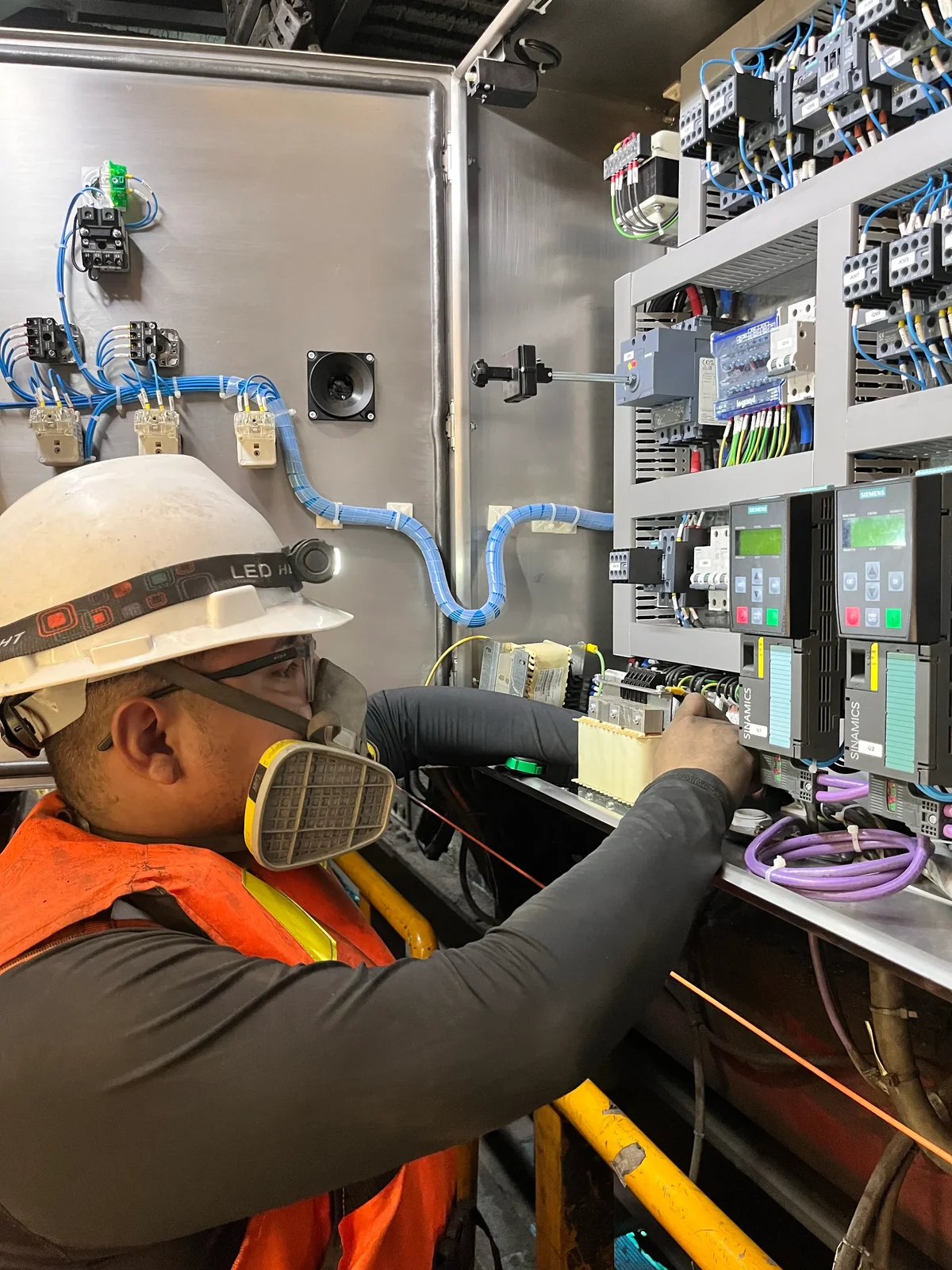
Handover does not end the project; it opens the observation window. Thermo-Kool notes that equipment variance shows up five to seven years in, during service calls rather than on invoices. The first 30 days are when drift is cheapest to catch.
- Week 1. Daily drift readings against the acceptance baseline; chase trends, not just breaches.
- Weeks 2-4. Confirm defrost cycles and walk the seams and gaskets; frost flowers at a joint are a signal, not decoration.
- Day 30. Read the meter against the estimated consumption each manufacturer should have supplied (the ask built into Polar King’s RFP guidance) – the same arithmetic behind the $1,044-a-year field-test gap.
Monitoring earns its keep twice, per Thermo-Kool: it catches after-hours temperature drift, and it catches a person trapped inside. Keep the chart recorder running well past day 30, and keep the alarm list current. An alarm that pages nobody is a timer on the same bill, so the contact list gets reviewed with the same seriousness as the setpoints.
A perfect cold storage is not the room that never drifts; it is the room whose drift gets read, logged and answered while the warranty is young. Setpoint discipline for your product class lives in our temperature guide, a sister topic this page deliberately does not rebuild.
Frequently Asked Questions About Perfect Cold Storage
What does a perfect cold storage actually mean?
Every gate closed clean: design frozen in writing, panel line items locked, ground passed, the snag list at zero, and acceptance tests recorded and archived. The invoice proves none of it; the paperwork does.
How thick should cold room panels be?
RaxPanel’s standard band runs 50-200 mm, and thickness follows the temperature class and duty, from +10 C chiller work down to -40 C deep freeze. Ask for the thickness map against your setpoint, not a single number.
What tests should a new cold room pass at handover?
Pull-down curve, temperature uniformity, door cycle with gasket check, freezer pressure relief port, emergency interior release with alarm, and paperwork including the warranty split by component. Record every reading, archive it, and treat it as your cold room acceptance baseline.
Why is my new cold room sweating at the seams?
Sweat means moist air is entering a joint that was not closed or sealed properly. In the US Cooler, Owens Corning and Corps of Engineers study, moisture erased 25-75% of R-value within five years. Put the seam on the snag list.
Do freezers need pressure relief ports?
Yes. Without a working relief port, suction pulls a freezer door shut hard enough that staff end up forcing it – Thermo-Kool lists the missing port among classic planning mistakes. Test the heater and valve at acceptance.