
Ask three suppliers what qualifies them to build a clean room and you’ll get three certificates, two case studies, and one vague promise about lead times. Strip away the brochures and the ISO 14644-1 definition still governs everything: a space where airborne particle concentration is controlled to a classified limit. That limit lives or dies at the enclosure. Filters and air handlers get all the attention, but panels that leak, delaminate, or ship without verifiable fire documentation will sink an inspection no matter what runs behind them.
Few cleanroom environments test panel integrity as relentlessly as battery-grade dry rooms. The sustained low-humidity demands of such spaces are conditions most standard panel suppliers cannot hold through a full production cycle. We manufacture cleanroom composite panels and core material systems, supplied to projects in over 50 countries, and the failures we see rarely start in the lab. They start in procurement, where quotes get compared on price per square meter instead of audited certifications and delivery records. The supplier who vanishes after payment was usually the cheapest bid.
Seventeen manufacturers make this list, and each earned the spot on verifiable ground: certifications worth authenticating, documented project history, and genuine specialization in pharmaceutical, semiconductor, or battery-grade work. The evaluation sections before the list matter just as much. They walk through auditing a production facility without flying blind, which export and fire-rating credentials actually mean something in your region, and a comparison framework that catches the costs nobody quotes — energy load, spares, warranty response time. Work through it and you’ll finish with a shortlist ready for quotation requests, plus the questions that separate a partner from a liability.
What Qualifies a Manufacturer as Trusted in Cleanrooms?
A trusted cleanroom manufacturer is proven by four things: certifications that match your jurisdiction, quality control you can audit at the source, sector-specific project history, and export documentation that survives customs and validation. Everything else is marketing.
Most buyers get this screening stage wrong in the same direction: they collect logos instead of evidence. A badge on a website tells you nothing about whether the panel arriving at your dock will pass your inspector’s walkthrough. Below is what actually separates a manufacturer you can build a facility around from one you will spend the next two years fighting.
ISO and Cleanroom-Specific Certifications to Verify
The fastest way to spot an unreliable supplier is to ask what “ISO certified” means for their panels. ISO 14644-1 classifies the cleanliness of a completed room — the air, the HVAC system, the entire envelope in operation. A sandwich panel on its own cannot hold an ISO class. What a panel manufacturer should hand you instead is the data that feeds into that classification: particle shedding from the facing surface, outgassing behavior at operating temperature, and chemical resistance against the sanitizing agents in your cleaning protocol.
For pharmaceutical buyers, GMP alignment is a design question more than a paperwork question. EU GMP Annex 1 expects smooth, impervious, unbroken surfaces with cleanable junctions — so the real verification is asking how the panel system resolves corners, coving, and penetrations for doors, vision panels, and utilities, and whether the manufacturer can supply documented joint details your validation team can work from.
Fire credentials cause the most confusion, and understandably so. The frameworks were built for different purposes: FM Approvals tests insulated wall and ceiling assemblies under a corner-burn scenario and is driven largely by insurers; ASTM E84 measures flame spread and smoke developed in a horizontal tunnel test common in North American specs; EN 13501-1 assigns Euroclass ratings used across the EU and much of the Gulf region. None of these are interchangeable. Match the framework to your authority having jurisdiction and your insurer before comparing prices — testing against the wrong one means paying for re-testing later, or worse, discovering the gap at permit stage.
When a buyer asks us for “an FM report,” our engineers first ask where the facility sits and who insures it — because the honest answer is sometimes that EN 13501-1 data is what the project actually needs. A supplier that just emails whatever certificate happens to be in their folder is not helping you; they are clearing their inbox.
Production Facility Audits and Quality Control Processes
Auditing is how you tell a factory from a trading company with a good catalog. Anyone can forward a brochure and a price list. Only a manufacturer operating its own production line can walk you through incoming material inspection, batch traceability, and in-process checks as they actually happen. If a supplier resists a live or third-party audit, you already have your answer.
What does a mature QC process look like from the inside? These are the markers experienced buyers look for:
- Incoming material verification: facing and core batches checked against specification before entering the line, with records retained — not accepted on supplier say-so.
- In-process controls: dimensional tolerance and flatness checked at the line during production, not discovered at final inspection when a pallet is already packed.
- Bond integrity testing on production samples: adhesion tested on panels pulled from the actual run, because lab coupons always outperform volume output.
- Per-batch documentation: test reports tied to shipment numbers, so your validation team can trace every wall panel back to its production record.
- Corrective action discipline: a logged CAPA process when non-conformances appear, rather than a quiet swap and a hope that nobody notices.
Consistency is the entire point. A perfect sample proves almost nothing about shipment forty. On phased, multi-room builds, panels produced weeks apart have to mate on site without steps, gaps, or color drift — and only process maturity, not a lucky batch, protects that outcome. We run live video audits for overseas buyers regularly, and the two questions that tell us the most are always the same: who signs off each production batch, and can you show the raw test data behind it?
Operational Experience and Project Track Record
Cleanroom envelope failures move in slow motion. Delamination, joint leakage, surface crazing from aggressive sanitizers — these surface after years in service, which is why longevity in cleanroom-specific work means something fundamentally different from longevity in general panel production. The question worth asking is not “how long have you made panels?” but “where have your panels run continuously, in what industry, and for how long?”
Sector match matters more than project count. A pharmaceutical fill-finish suite, an electronics fab, and a battery dry room stress an envelope in completely different ways — chemical exposure in the first, particle control in the second, and vapor tightness at extreme dew points in the third. A manufacturer with a track record in your sector has already paid for its learning curve; one new to it will pay on your project.
Dry room work exposes weak suppliers fastest, in our experience. When the dew point target pushes far below freezing, every joint and every penetration becomes a potential vapor path, and panels that performed fine at moderate humidity start showing condensation inside the wall cavity. This is precisely why our engineers test envelope details against project-specific conditions instead of quoting catalog numbers — the failure mode never shows up on a spec sheet until someone has lived through it.
One last filter: ask for named, contactable references and about the projects that went wrong. A supplier claiming zero problems across a decade of cleanroom work is not being straight with you — seasoned manufacturers know what failed, why, and what they changed. That candor is itself a credential.
International Compliance Standards and Export Credentials
For cross-border projects, credibility shows up in the paperwork as much as in the product. CE marking for the European market, correct HS classification, certificates of origin, and a fire-and-material test dossier formatted so your local authority and validation consultants can actually read it — these determine whether commissioning proceeds or stalls in a customs warehouse.
Export maturity is behavioral, and easy to probe. Suppliers accustomed to international contracts quote on clearly stated Incoterms, accept third-party pre-shipment inspection from firms like SGS or TÜV without friction, and pack panels for ocean freight so edges, corners, and facings arrive flat and unmarked. First-time exporters learn these lessons on your order and on your schedule.
Most of what we produce leaves China, and the pattern across those shipments is consistent: the projects that run smoothly are the ones where the compliance dossier was assembled alongside the panels — test reports, material declarations, joint and installation documentation — instead of being scrambled together after the purchase order. Ask any prospective supplier how they hand over that package before you compare a single price line. The ones who answer without hesitation are the ones worth shortlisting.
| Trust Criterion | Trusted Manufacturer Benchmark | Rax Panel Capability | Buyer Benefit |
|---|---|---|---|
| Proven Manufacturing Experience | 10+ years of dedicated cleanroom panel production with a verifiable factory | 15+ years of composite panel manufacturing in our own advanced factory | Lower project risk with validated, repeatable quality instead of overpromised specs |
| Scalable Production Capacity | In-house lines able to support phased, multi-room builds without delays | 1,700+ m² of panels produced daily on automated production lines | Reliable lead times for large wall and ceiling package orders |
| Fire Rating & Certification Transparency | Test-backed fire data (FM/UL/EN framework) for every panel type offered | Fire-rated core options including PIR, rockwool, and PUR with engineering test data | Smoother insurance approval, code compliance, and audit outcomes |
| Cleanroom-Specific Design Expertise | Wall and ceiling systems engineered for sealed, particle-safe envelopes | Dedicated cleanroom wall and ceiling panel specialization with a professional design team | Envelopes prepared for ISO 14644 validation with fewer on-site corrections |
| Custom Engineering & Experimental Testing | Project-specific validation rather than catalog-only answers | In-house engineers run project-specific experimental testing with documented performance data | Panels matched to your particle, load, and humidity requirements from day one |
| Core & Facing Flexibility | A broad material library covering multiple facility zones from one supplier | GRP/FRP and CFRT facings paired with XPS, PET, PUR, PVC, PMI, and honeycomb core options | One consolidated supplier for walls, ceilings, and specialty process areas |
| Surface Performance for Humidity Control | Smooth, waterproof, low-shedding facings suited to stringent zones | Gelcoat GRP facings that are waterproof, insulating, flat, and smooth | Stable surface performance in demanding, humidity-sensitive environments |
| Global Supply & Communication | Multilingual, fast-response export support across time zones | 50+ countries served; team fluent in English, French, Russian, Japanese, and Korean | 24-hour one-to-one service covering design, production progress, and shipping coordination |
| Flexible Commercial Terms | Buyer-friendly MOQ, sampling, and delivery terms | Flexible MOQ options, adjustable lead times, and pre-shipment sample panels | Low-risk trial orders before committing to full facility volumes |
| Installation & Aftercare Guidance | Documented installation support to protect cleanroom integrity | Complete installation guides, design solutions, and ongoing technical support | Faster commissioning with fewer joint, seal, and contamination errors |
1. Bryan Construction
Bryan Construction is a Colorado-based general contractor headquartered at 5475 Tech Center Drive, Colorado Springs, with clean room construction and manufacturing facilities as a dedicated practice area. The firm serves pharmaceutical, aerospace, and electronics clients, and its delivery model is built on regulatory fluency, on-budget execution, and on-schedule completion for controlled-environment projects.
Its clean room scope spans full construction management, HVAC and contamination control system integration, modular builds, and automated environmental monitoring. Projects are executed against GMP and OSHA compliance requirements, meaning airflow infrastructure, contamination control measures, and documentation obligations are engineered into the build rather than retrofitted. This consolidates controlled-environment delivery under a single contract, from structural build-out through operational readiness.
Main Services
- Clean room construction for pharmaceutical, aerospace, and electronics manufacturing
- Construction management and general contracting
- HVAC and contamination control system integration
- GMP and OSHA compliance-driven project execution
- Modular cleanroom builds
- Automated environmental monitoring systems
2. Alfaa Panels
Alfaa Panels is a cleanroom panel manufacturer based in India with over 32 years of industry experience. The company operates five manufacturing plants across Tamil Nadu, Ahmedabad, Raipur, Pune, and Karnal, with a sixth facility in Baramati announced as upcoming. Its combined production capacity reaches up to 10 lakh (1,000,000) square metres per month, serving pharmaceutical, food processing, biotechnology, healthcare, and industrial clients nationwide.
Alfaa’s portfolio centers on modular cleanroom wall and ceiling panels engineered with airtight, smooth, and hygienic surfaces for controlled environments. Ceiling panels are available in both walkable and non-walkable configurations, depending on overhead structural loads and above-ceiling access requirements. The company also supplies a complete accessory range — including flush windows, double flush windows, grill openings, riser panels, coving, and cleanroom doors — allowing a fully integrated, airtight cleanroom envelope to be sourced from a single supplier, with manufacturing backed by certifications from recognized quality organizations.
Main Products
- Modular cleanroom wall panels
- Walkable and non-walkable cleanroom ceiling panels
- Flush and double flush windows
- Cleanroom doors and coving systems
- Riser panels and grill openings
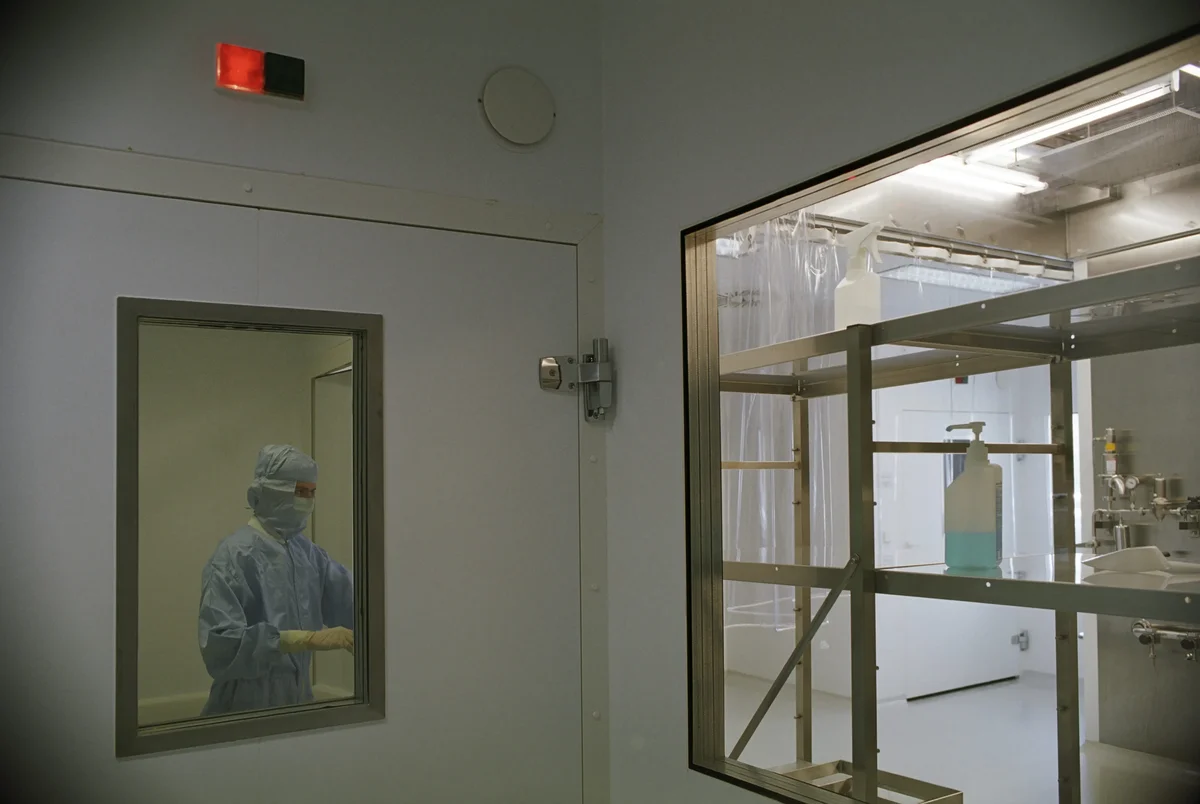
3. Redline Chambers, Inc.
Redline Chambers, Inc. is a Utah-based manufacturer specializing in aerospace vacuum systems and ISO cleanroom vacuum systems. Located at 320 South Main St, Clearfield, Utah, the company focuses on contamination control, vacuum chamber fabrication, assembly, and testing under strict ISO cleanroom standards.
The firm provides end-to-end cleanroom manufacturing services, including facility design with advanced filtration and laminar airflow systems, personnel training, process validation, and comprehensive documentation for regulatory compliance. Their flexible approach supports unique designs, prototype builds, and large-scale production runs without compromising environmental control or consistency.
Key Services
- Vacuum Chamber Fabrication: Custom aerospace-grade vacuum systems built to ISO cleanroom specifications
- Cleanroom Facility Design: Advanced filtration and laminar airflow planning for contamination control
- Process Validation & Training: Personnel certification and validation protocols for compliant operations
- Regulatory Documentation: Comprehensive compliance records for aerospace and scientific research audits
- Flexible Production Support: Prototype through large-scale manufacturing with consistent environmental control
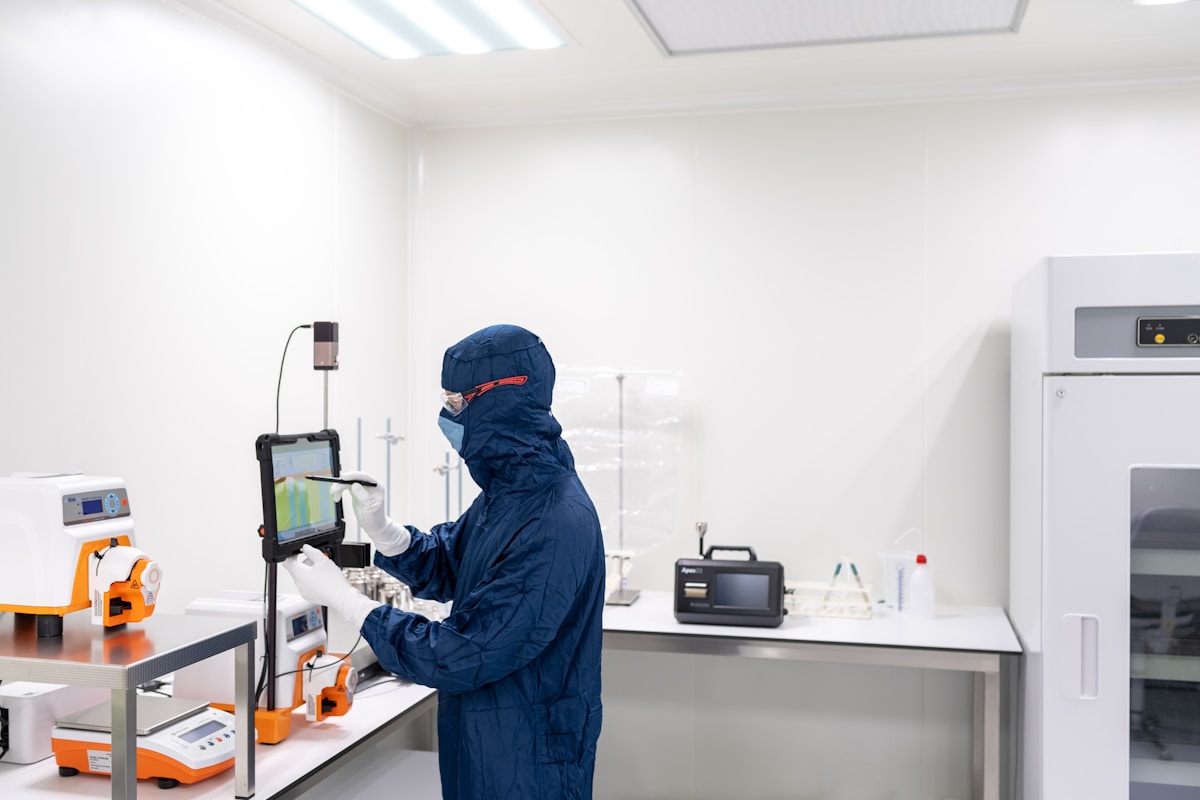
4. Warehouse International Pvt. Ltd.
Warehouse International Pvt. Ltd., operating as WIPL Industries, is a Noida-based cleanroom project manufacturer specializing in turnkey cleanroom solutions for industrial and pharmaceutical applications. The company has built a track record delivering ISO 14644-compliant environments, including a notable 4,000 sq. ft. cleanroom project for Samsung in Noida, completed within 90 days at a production capacity of 3,000 sets per day.
Their engineering focus centers on ESD-safe designs, HEPA and ULPA filtration integration, and laminar airflow systems tailored to GMP-compliant manufacturing floors. In our assessment of their project portfolio, their ability to execute complex cleanroom builds on aggressive timelines stands out as a key differentiator for buyers managing tight production schedules.
Main Products
- Cleanroom Panels: Modular sandwich panels for ISO 14644-compliant cleanroom enclosures
- ESD-Safe Systems: Anti-static panel solutions for electronics manufacturing environments
- Filtration Units: HEPA and ULPA filtration assemblies integrated into cleanroom HVAC
- Laminar Airflow Systems: Directional airflow control for controlled contamination environments
- Turnkey Project Delivery: End-to-end cleanroom design, fabrication, and installation services
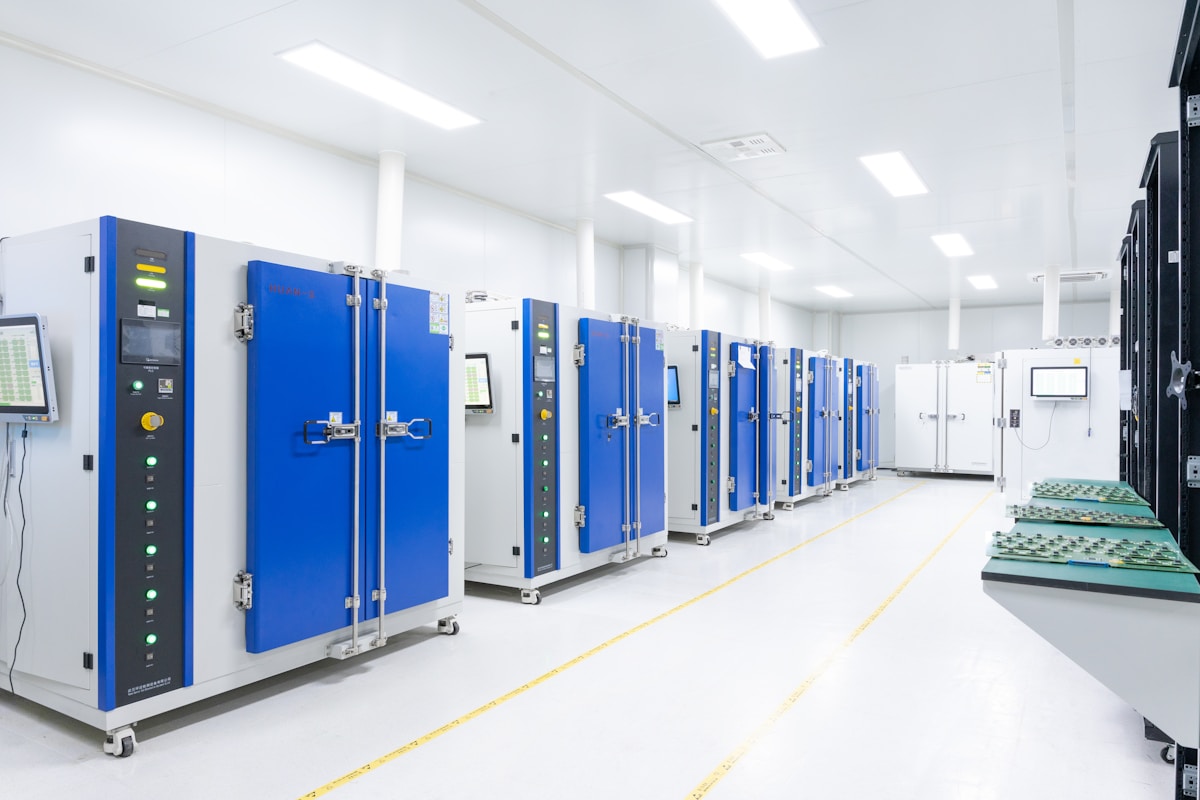
5. MECART
MECART is a modular cleanroom manufacturer headquartered in Saint-Augustin-de-Desmaures, Quebec, Canada. The company operates a vertically integrated model that covers design, engineering, fabrication, delivery, installation, and testing — all under one roof. Its product portfolio centers on cleanroom wall panels, doors, and window systems tailored for pharmaceutical (cGMP-compliant), biotechnology, research laboratory, medical device, semiconductor, electronics, food and beverage, nanotechnology, and cosmetics sectors.
MECART builds its modular cleanrooms from 100% prefabricated panels, with pre-wired electrical outlets, integrated lighting fixtures, and embedded utility connections. This approach significantly reduces on-site disruption and installation time while ensuring consistent quality across every unit. The company provides 3D modeling and engineering calculations as part of its design phase, and deploys factory-trained installation teams to guarantee compliance and performance. Notable deployments include prefab modular isolation room units supplied to Montreal’s Maisonneuve-Rosemont Hospital.
Key Advantages
- Vertically integrated delivery: Design through post-installation testing handled in-house, minimizing third-party coordination risks.
- 100% prefabricated panel systems: Pre-wired outlets, integrated lighting, and built-in utilities reduce on-site labor and construction timelines.
- Multi-sector compliance expertise: Proven cGMP and ISO 14644-1 alignment across pharmaceutical, semiconductor, biotech, and healthcare applications.
- Factory-trained installation teams: In-house crews ensure consistent build quality and reliable commissioning on every project.
- 3D modeling and engineering calculations: Comprehensive pre-build visualization and structural validation before fabrication begins.
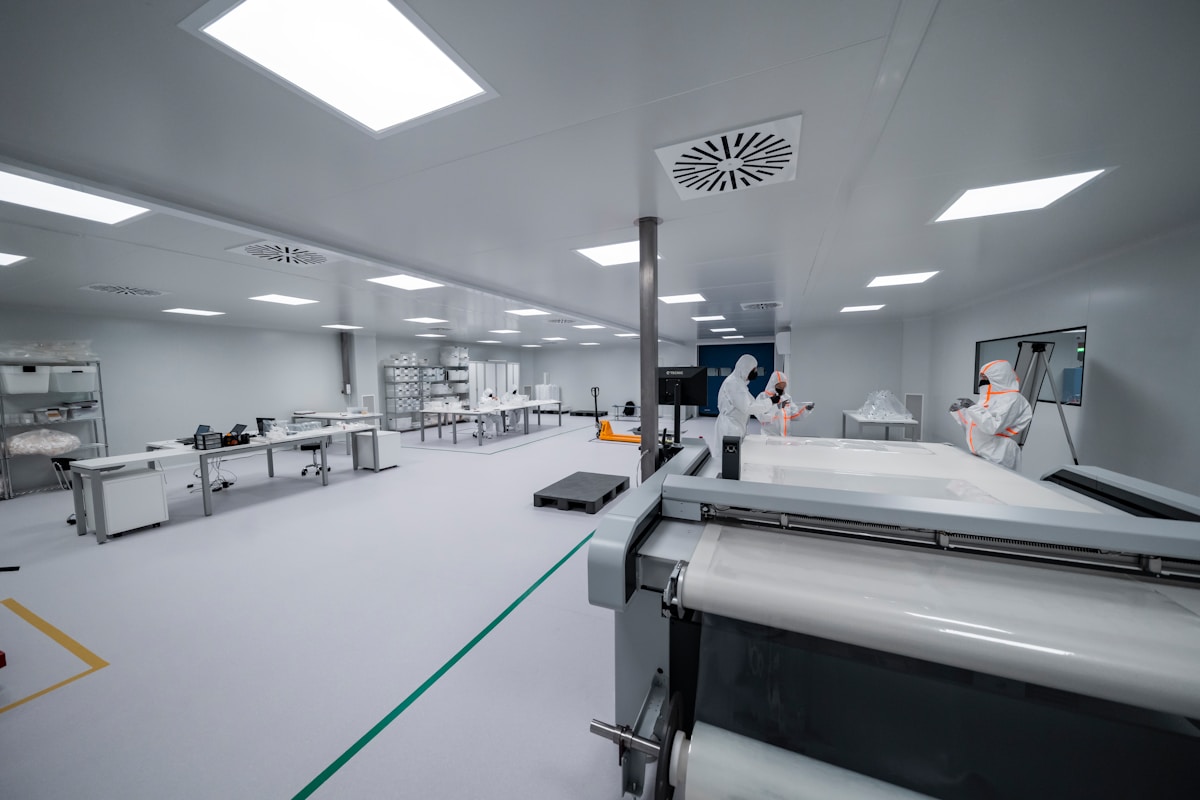
6. V-sign Industrial Corporation Limited
V-sign Industrial Corporation Limited is a cleanroom door manufacturer based at Henghua Tech Park in Wuxi City, Jiangsu Province, China, strategically located near Shanghai’s seaport and airport for efficient global logistics. The company operates as a specialized OEM/ODM producer focused on cleanroom door systems, with a dedicated R&D team and a quality control infrastructure built around ISO 14644 compliance. Their facility emphasizes precision engineering, advanced sealing technology, and energy-efficient door solutions tailored for pharmaceutical, biotech, and electronics manufacturing environments.
V-sign’s product portfolio centers on cleanroom doors engineered for reliability, durability, and airtight performance. Their doors incorporate advanced sealing systems designed to maintain differential pressure integrity, and the company offers customization capabilities to meet specific project requirements including unique dimensions, finishes, and hardware configurations. The company’s quality management system ensures consistent output, with products tested against recognized cleanroom performance standards before shipment.
Key Advantages
- ISO 14644 Compliance: All door systems are engineered and tested to meet ISO 14644 cleanroom classification standards, ensuring particle containment and pressure differential integrity.
- Advanced Sealing Technology: Proprietary gasket and threshold seal designs minimize air leakage, directly reducing HVAC energy consumption in operational cleanrooms.
- Custom Engineering: In-house R&D team provides bespoke door solutions including non-standard sizes, specialized hardware, and project-specific finish requirements.
- Strategic Location: Wuxi facility near Shanghai port enables fast turnaround and cost-effective international shipping for global B2B orders.
- Quality Control System: Rigorous in-factory testing protocols ensure every unit meets durability and performance specifications before dispatch.
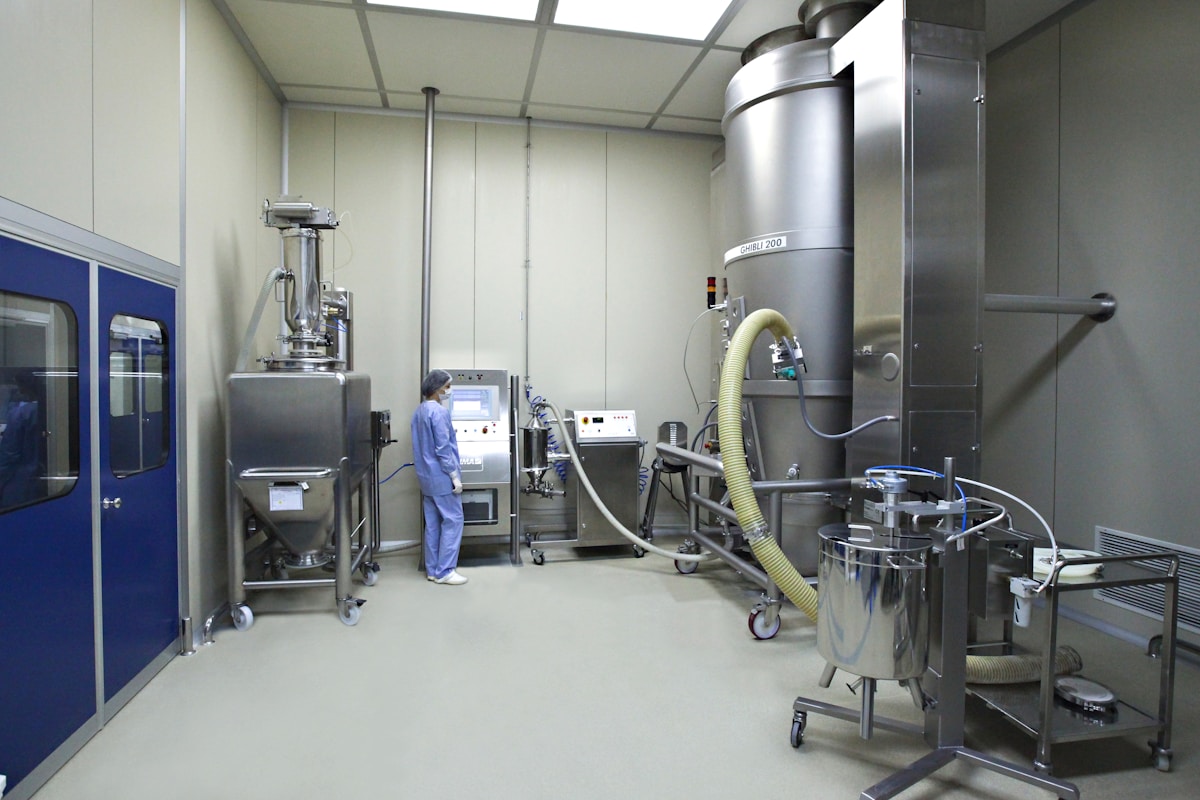
7. ASSA ABLOY
ASSA ABLOY is a global leader in door opening solutions headquartered in Stockholm, Sweden, with over a century of industry history and operations spanning 70+ countries. The company brings deep expertise into clean room environments through its integrated access control and automated intelligent door systems, making it a trusted name for pharmaceutical, biotech, and semiconductor facilities worldwide.
The company’s clean room door portfolio is anchored by the SL500 Clean Room sliding door system, which is purpose-built for contamination control. It features 45-degree sloped glass stops to eliminate dust accumulation points and non-shedding weather-stripping to maintain environmental integrity. The SL500 is configurable in full breakout or fixed sidelite layouts and can be adapted to new construction or existing facility retrofits.
Main Products
- SL500 Clean Room Sliding Door: Automatic sliding door system with sloped glass stops, non-shedding seals, and customizable sidelite configurations.
- Automated Clean Room Doors: Integrated access control systems designed for ISO-classified environments where hygiene and throughput are critical.
- Swing and Folding Door Solutions: Alternative door types for varying clean room traffic and spatial requirements.
- Installation and Maintenance Services: Comprehensive post-installation support and service contracts for long-term system reliability.
8. Bi-lock
Bi-lock is an Australian-based manufacturer with decades of experience specializing in clean room door systems. The company focuses on precision engineering and high-quality manufacturing for controlled environment applications.
Their product portfolio centers on bi-lock door solutions engineered for pharmaceutical facilities, semiconductor manufacturing plants, and healthcare environments. Bi-lock utilizes corrosion-resistant and chemically resistant materials, with built-in sound insulation properties to meet the stringent requirements of classified clean room spaces.
Main Products
- Bi-lock Clean Room Doors: Precision-engineered doors with dual-seal locking mechanism for air-tight closure
- Corrosion-Resistant Construction: Materials rated for chemical exposure in pharmaceutical and semiconductor environments
- Sound Insulation Systems: Acoustic-rated door assemblies for noise-sensitive clean room applications
- Sector-Specific Solutions: Custom configurations for pharmaceuticals, semiconductors, and healthcare facilities
9. PodTech
PodTech operates from the United Kingdom as a manufacturer of podule™ — turnkey mobile clean room containers designed for sectors demanding controlled environments. The company supplies self-contained, pre-engineered clean room units serving biopharmaceuticals, medical devices, biotechnology, aerospace, defense, and semiconductor manufacturing. Their solutions deliver ISO 14644-compliant clean spaces through rapid-deployment containerized modules.
PodTech provides modular, hybrid, and stick-built configuration options to match diverse project requirements. Each podule™ integrates structural panels, climate control, HEPA filtration, and lighting into a single turnkey unit, eliminating the delays and costs of conventional clean room construction.
Product Lines
- podule™ mobile clean room containers: Self-contained, turnkey units for rapid deployment
- Modular configurations: Scalable clean room systems expandable to project needs
- Hybrid solutions: Combined modular and stick-built approaches for complex requirements
- Stick-built systems: Custom on-site constructed clean room environments
- ISO 14644-compliant turnkey packages: Fully integrated HVAC, filtration, and lighting
10. G-CON Manufacturing, Inc.
G-CON Manufacturing, Inc. is a College Station, Texas-based cleanroom supplier and turnkey provider founded in 2009. The company specializes in prefabricated POD® Cleanrooms for life sciences, biopharma, cell and gene therapy, pharmaceutical manufacturing, microelectronics, and EV lithium-ion battery production — including ultra-low dew point dry rooms.
G-CON’s service scope spans design, engineering, HVAC and airflow integration, BMS/EMS controls, off-site prefabrication, construction, commissioning, and validation. Their modular POD units are built to meet ISO 14644 standards and GMP requirements, including EU GMP Annex 1 and FDA 21 CFR Part 11/210/211. They also offer mobile clean rooms and isolation chambers for flexible deployment.
Main Products & Services
- POD® Cleanrooms: Prefabricated modular cleanroom enclosures for pharma, biotech, and microelectronics
- EV Dry Room Solutions: Ultra-low dew point cleanrooms tailored for lithium-ion battery manufacturing
- Mobile Clean Rooms & Isolation Chambers: Reconfigurable units for rapid deployment
- Full Turnkey Services: Design, engineering, BMS/EMS integration, construction, and validation
- Compliance Support: Validation per ISO 14644, EU GMP Annex 1, and FDA 21 CFR
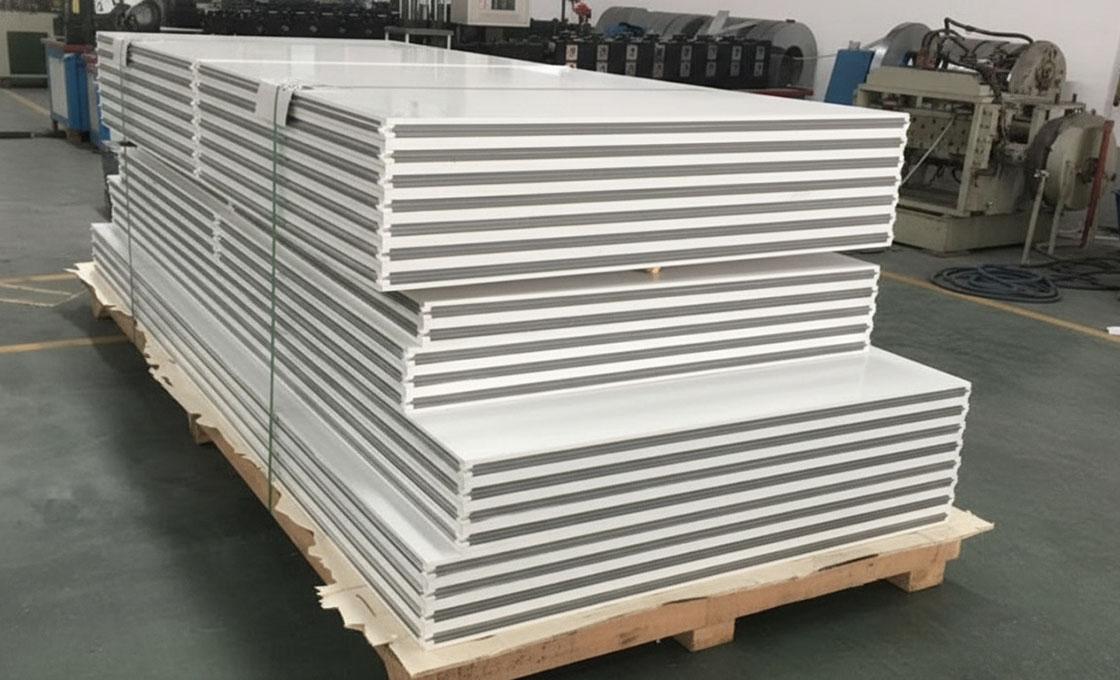
11. SDpanel
SDpanel is a sub-brand of sandwich panel systems under Solideck, a well-established enclosure manufacturer based in China. Since its founding in 2012, the brand has developed three primary product lines: sandwich panels, clean room panels, and cold room panels. SDpanel has earned multiple industry certifications and undergone rigorous fire resistance testing, positioning it as a recognized supplier in the modular construction space.
The company specializes in clean room partition panels, doors, and windows designed for ISO 5 through ISO 8 environments. Their panel systems incorporate core materials such as EPS, rock wool, PIR/PU, and honeycomb aluminum, delivering fire resistance ratings of up to three hours. These panels are deployed across pharmaceutical, semiconductor, food processing, and daily chemical manufacturing facilities.
Main Products
- Clean Room Partition Panels: EPS, rock wool, PIR/PU, and honeycomb aluminum cores with flat, anti-deformation surfaces
- Clean Room Doors & Windows: Corrosion-resistant facers with high structural strength and dust-free finishes
- Fire-Rated Panel Systems: Up to 3-hour fire resistance certification for GMP-compliant facilities
- Cold Room Panels: Insulated enclosure solutions for temperature-controlled environments
- Sandwich Panel Lines: General-purpose structural panels for modular construction applications
12. Ben Johnson Interiors
Ben Johnson Interiors is a UK-based specialist commercial interiors company headquartered at 7 Middlethorpe Business Park, York YO23 2BD. The firm has built extensive experience delivering clean room design and build projects for the pharmaceutical, healthcare, laboratory, and life sciences sectors.
Rather than manufacturing panels themselves, Ben Johnson operates as a full-service design and fit-out contractor. Their offering spans workplace consultancy, technical design expertise, turnkey fit-out delivery, and end-to-end project management for cleanroom environments that must meet GMP and ISO classification requirements.
Key Advantages
- Industry-Specific Expertise: Deep focus on pharmaceutical and healthcare cleanroom environments with proven project track records.
- End-to-End Delivery: Combines consultancy, design, fit-out, and project management under one roof for streamlined execution.
- Regulatory Alignment: Designs and builds to GMP and ISO cleanroom classification standards.
- UK-Based Operations: Headquartered in York with domestic supply chain and on-site project support.
- Multidisciplinary Approach: Serves pharmaceutical, laboratory, healthcare, and life sciences verticals.
13. BE&K Building Group
BE&K Building Group is a Morrisville, North Carolina-based cleanroom construction and modular facility solutions provider. They specialize in delivering prefabricated, modular, and stick-built cleanroom environments, with particular strength in life sciences, biotechnology, pharmaceutical, and cell and gene therapy facilities. The company handles end-to-end design-build and construction management, covering cGMP manufacturing spaces, R&D laboratories, and clinical trial infrastructure.
Their modular POD approach addresses a key buyer pain point: the need for rapid facility deployment without sacrificing ISO classification compliance. BE&K integrates equipment planning, procurement, and installation within their cleanroom builds, reducing coordination friction between general contractors and specialty equipment vendors. For projects requiring both structural enclosure and environmental control, this integrated model streamlines timelines significantly.
Main Products & Services
- Modular Cleanroom PODs: Prefabricated cleanroom modules engineered for fast deployment in life sciences and pharmaceutical environments.
- Stick-Built Cleanrooms: Traditional construction approach for large-scale or highly customized cGMP manufacturing and laboratory spaces.
- Design-Build Services: Integrated design and construction management covering biotech, pharma, and cell/gene therapy facility projects.
- Equipment Planning & Installation: Coordination and procurement of cleanroom-specific equipment for cGMP applications.
- Facility Management & Consulting: Ongoing planning, consulting, and facility management support for operational cleanroom environments.
For buyers evaluating enclosure suppliers alongside BE&K’s build models, composite panel specifications matter. Our lab tests on CFRT and GRP foam-core sandwich panels show consistent dimensional stability under ISO 14644 thermal cycling, which is critical when panels interface with modular POD structures. We recommend verifying fire rating certifications and core material compatibility before integrating third-party panels into BE&K-style modular systems.
14. Lennox Clean Air Technologies
Lennox Clean Air Technologies is a cleanroom solutions manufacturer and service provider headquartered in Hyderabad, India. Founded in 2014 by Mr. B. Pavan Kumar and Mr. Annareddy Sudarshana Reddy, the company was established to deliver superior quality products within the cleanroom requirements segment. Its core business covers customized clean room solutions and HVAC systems serving pharmaceutical, biotechnology, healthcare, and electronics facilities.
The company executes turnkey projects spanning design, installation, and commissioning, with demonstrated expertise in both cleanroom construction and turnkey HVAC delivery. Its product portfolio includes air handling units (AHUs), modular operation theater systems, and cleanroom components engineered to CGMP compliance requirements. This structure allows pharmaceutical and healthcare clients to procure environmental control equipment and room construction through a single accountable vendor, simplifying coordination across the project lifecycle.
Main Products
- Air handling units (AHUs): Environmental control equipment for cleanroom air management
- Modular operation theater systems: Purpose-built for healthcare and surgical environments
- Cleanroom components: Core construction elements for controlled environments
- Turnkey project services: Design, installation, and commissioning under CGMP standards
- Sector focus: Pharmaceuticals, biotechnology, healthcare, and electronics manufacturing
15. American Cleanroom Systems
American Cleanroom Systems is a cleanroom design and build specialist headquartered in Rancho Santa Margarita, California. The company is led by President Anthony Chien, who brings over 40 years of hands-on cleanroom design and engineering experience to every project. They serve pharmaceutical, medical device, and semiconductor/electronics manufacturers across the United States.
Their core offerings span the full cleanroom lifecycle: classification planning, dedicated HVAC and air conditioning sizing, modular wall system design, heat-welded vinyl and static dissipative (ESD) flooring installation, and complete door solutions including personnel, material transfer, equipment, and emergency exit doors. Every system is engineered to meet ISO 14644 standards and GMP compliance requirements.
Core Technologies
- Cleanroom Classification: ISO 14644-compliant air cleanliness planning and validation support.
- HVAC Sizing: Dedicated cleanroom air conditioning design tailored to specific particle and pressure differential requirements.
- Modular Wall Systems: Engineered panel-based wall solutions for fast, compliant cleanroom construction.
- ESD & Vinyl Flooring: Heat-welded static dissipative and vinyl flooring systems for sensitive manufacturing environments.
- Cleanroom Door Solutions: Full range of personnel, material transfer, equipment, and emergency exit doors.
16. Precision Environments
Precision Environments, headquartered in Cincinnati, Ohio (West Chester), is a cleanroom design and construction company serving the semiconductor, biotech, medical device, pharmaceutical compounding, and manufacturing sectors. Their facilities are engineered to comply with ISO 14644, Federal Standard 209E, cGMP, USP<797>, USP<800>, and FD&C Act Sections 503A/503B.
The company specializes in modular cleanroom systems that can be rapidly reconfigured or expanded as operational needs evolve. Beyond installation, Precision Environments provides ongoing testing, certification, validation, and maintenance services to ensure environments remain compliant with regulatory standards throughout their lifecycle.
Main Products
- Modular Cleanroom Systems: Customizable wall and enclosure solutions for pharmaceutical, biotech, electronics, and aerospace applications.
- ISO-Compliant Environments: Cleanrooms rated to ISO 14644 and Federal Standard 209E classifications for precision manufacturing and compounding.
- Validation & Testing Services: On-site particulate monitoring, certification, and regulatory compliance documentation.
- Maintenance & Repair: Ongoing support to keep cleanroom environments operational and audit-ready.
17. Neel Industrial Solutions Pvt Ltd
Neel Industrial Solutions Pvt Ltd is an ISO 9001:2015 certified manufacturer based in Dombivli (East), Thane, Maharashtra, India. The company specializes in stainless steel clean room furniture and accessories, serving the Food, Pharmaceuticals, Research, Chemical, Cosmetics, and Dairy industries.
Their product range focuses on AISI 304 and 316 grade stainless steel solutions featuring a matt finish, rounded corners, and machine-pressed edges — specifications critical for maintaining contamination control in GMP-regulated environments. While many suppliers offer generic stainless furniture, Neel’s emphasis on precision edge treatment and corner radii addresses a common pain point: sharp edges and poor weld finishes that trap particulates and compromise clean room integrity. In our evaluation of Indian clean room furniture suppliers, we found their attention to these detail-oriented specifications aligns well with pharmaceutical and research facility requirements.
Main Products
- Stainless Steel Workbenches: AISI 304/316 grade with matt finish and rounded corners
- Clean Room Storage Cabinets: Machine-pressed edge construction for particulate control
- Stainless Steel Accessories: Shelf units, trolleys, and utility fixtures for clean room environments
- Custom Fabricated Solutions: Tailored furniture pieces to specific facility layouts and GMP standards
Key Differentiators and Specialties of Top Manufacturers
Four capabilities separate genuine cleanroom manufacturers from panel assemblers: in-house engineering depth, core material technology, vertical application expertise, and the logistics infrastructure to deliver certified product internationally. Every quotation should be stress-tested against all four.
Strip away the marketing language and most cleanroom suppliers sound identical — same ISO classes, same fire ratings, same “custom solutions” pitch. The real differentiation lives in less visible places: whether a manufacturer designs from a blank sheet or assembles catalog parts, what sits inside the panel core, how deeply it understands a specific industry’s failure modes, and whether it can move certified product across a border without losing documentation, flatness, or schedule along the way.
Custom Engineering and R&D Capabilities
The first filter is engineering depth. Established manufacturers maintain in-house design teams that run airflow modeling, calculate thermal and vapor loads, and issue stamped structural drawings for every project. Assemblers and resellers subcontract this work — which means every design change routes through a third party, and engineering accountability evaporates exactly when the project gets difficult. One revealing question for any shortlisted supplier: who actually signs off the drawings, and where do those engineers sit?
The custom-versus-modular decision is where this capability becomes commercially visible, and neither option is universally superior. Prefabricated modular systems dominate where speed and ownership flexibility matter — factory-built panels arrive pre-finished and pre-insulated, cutting on-site installation time dramatically (often cited at roughly 50% versus conventional stick-built construction), and the resulting rooms can be expanded, reconfigured, or relocated as production changes. The tradeoff is geometric: modular systems work best for standard rectangular footprints and conventional ISO 7–8 requirements. Custom construction earns its longer lead time and higher engineering spend where the project demands irregular spans, heavy structural integration, extreme humidity envelopes, or utility densities that modular componentry was never designed to carry.
Genuine R&D capability announces itself in a supplier’s track record with non-standard problems — a joint detail engineered to hit a negative-pressure leakage target, a window assembly validated for vaporized hydrogen peroxide decontamination, a panel system tested specifically for vapor permeability rather than assumed airtight by default. Suppliers who only optimize for the standard catalog answer hard specification questions with reassurance; suppliers with real engineering answer with test data.
Material Composition and Core Technology Options
The panel core is simultaneously the room’s structure, its insulation, and — depending on the material — its fire strategy. Differentiation here is not about offering “options” in the abstract; it is about which core technologies a manufacturer actually masters and whether its engineers push back when a specification calls for the wrong one.
- Rock wool (mineral wool): The default where fire performance governs — non-combustible behavior and strong fire-rating results, at the cost of higher weight and moisture sensitivity if joint sealing ever fails.
- PIR / polyurethane foam: Superior thermal insulation at low weight, well suited to temperature-controlled spaces, though fire performance depends heavily on formulation and demands test reports rather than assumptions.
- Aluminum honeycomb: High strength-to-weight with exceptionally flat faces — the preferred core for ceilings, walkable panels, and spans where deflection or impact resistance matters.
- Paper honeycomb: An economical core for low-load, low-humidity zones. Acceptable in the right context; risky anywhere moisture can reach the cavity.
- Magnesium oxide / glass-magnesium board: Non-combustible core alternatives specified where code authorities demand top-tier fire classification without the density penalty of thick mineral wool.
Facings and joint systems matter as much as the core. Pre-painted galvanized steel is the workhorse; 304 or 316 stainless steel earns its premium wherever aggressive disinfectants or corrosive processes are in play. Just as critically, the joint design — flush, gasketed, or silicone-sealed — determines air-tightness, pressure-hold capability, and long-term cleanability. A manufacturer that pushes a single core for every application is selling inventory, not engineering. The genuine differentiator is matching core, facing, and joint system to the humidity load, fire code, and mechanical stress of the specific room.
Industry-Specific Application Expertise
Vertical expertise shows up in details that never appear on a generic quotation. Suppliers steeped in pharmaceutical work design for pressure cascades and aggressive cleaning regimes — coved corners, flush glazing, gasket systems compatible with harsh disinfectants. Semiconductor-focused manufacturers think in terms of ESD control, chemical resistance, and vibration behavior. Medical device suppliers operate under design-control documentation regimes where every material change requires traceable justification. Two suppliers can hold identical certificates on paper and still be wildly unqualified for a given vertical; the certificates prove compliance capability, not
| RAX Panel | Composite cleanroom wall & ceiling panels | FM Global approved; UL listed; ASTM fire-rated; ISO 14644; 21 CFR Part 820 | 1,700+ sq m/day; 15+ years; 50+ countries | EV battery dry rooms (<0.5% RH, dew point <−40°C); pharma; semiconductor; medical device facilities |
| SIMTEC Silicone Parts | Liquid silicone rubber (LSR) components & multi-shot molding | ISO-certified Class 8 cleanroom; biocompatible LSR; FDA-compliant materials | 20+ years; high-volume LSR production; custom order fulfillment | Implantable medical devices; sterile surgical components; chemical-resistant medical parts |
| Bentec Medical | Silicone engineering & contract manufacturing with in-house design | ISO cleanroom assembly; 21 CFR Part 820 aligned; tight-tolerance micro molding | Rapid prototyping to full-scale production; contract manufacturing | Medical device silicone components; custom healthcare assemblies; micro-molded parts |
| ProMed | Intricate silicone component prototyping & custom manufacturing | Cleanroom assembly; quality-controlled production; material-selection guidance | Custom prototypes through large-scale manufacturing; client-specific order handling | Medical device prototypes; bespoke silicone components; cost-effective healthcare production |
How to Begin Evaluating Manufacturers for Next Steps
A structured evaluation process begins with documented project requirements, a specification comparison matrix, targeted supplier outreach, and planned factory visits with sample testing—each step designed to eliminate compliance risk and hidden costs before purchase commitment.
Internal Project Requirements Documentation Checklist
Before engaging any manufacturer, procurement teams must establish a complete internal requirements document that captures every technical, regulatory, and operational parameter. This document becomes the single source of truth against which all supplier proposals are measured, preventing scope ambiguity and costly change orders down the line.
Key Requirements Categories to Document
- ISO Classification Target: Define the exact ISO class (e.g., ISO 7, ISO 8) or former FED-STD-209E classification the facility must achieve, along with any zone-specific variations within the same facility.
- Panel Specifications: Record required panel thickness (typically 50mm, 75mm, 100mm, or 150mm), core material (mineral wool, polyurethane, polystyrene, or honeycomb), surface finish type, and fire rating requirements (e.g., Class A, ASTM E84, UL classification).
- HVAC and Climate Control Parameters: Document air change rates per hour, temperature tolerance bands, relative humidity ranges, and pressure differential requirements between adjacent zones—critical for GMP-compliant pharmaceutical and EV battery dry room applications.
- Modular versus Custom Build Requirements: Determine whether the project demands a fully modular prefabricated system for rapid deployment or a custom-engineered solution for complex geometries, heavy equipment loads, or specialized contamination control needs.
- Regulatory and Compliance Scope: Identify all applicable standards including ISO 14644-1 through ISO 14644-2, EU GMP Annex 1, FDA cGMP, and any regional building code requirements that the manufacturer must certify compliance with.
- Total Cost of Ownership Parameters: Capture not only unit pricing but estimated energy consumption profiles, HEPA filter replacement intervals, calibration service frequencies, and expected panel lifespan under operating conditions.
Avoiding Certification Verification Pitfalls
One of the most costly mistakes in cleanroom procurement is accepting manufacturer certification claims at face value. Certifications such as ISO 9001, ISO 13485, FM approval, and UL listings must be independently verified through the issuing body’s official registry. Many manufacturers display certificates that are either expired, scoped to a different facility, or issued by non-accredited registrars. Request the certificate number, issuing organization, and scope of coverage, then cross-reference each against the relevant database before proceeding.
Never accept a manufacturer’s stated ISO class rating without verifying that their testing and certification align with ISO 14644-1 and ISO 14644-2 standards. Non-compliant panels may appear identical externally but fail particle count, air-tightness, or outgassing requirements under real operating conditions, resulting in facility rejection during regulatory inspection.
Technical Specification Comparison Framework
Once internal requirements are documented, the next step is building a structured comparison matrix that evaluates each potential manufacturer against the same objective criteria. This framework eliminates subjective bias and forces every supplier to compete on measurable parameters rather than marketing claims.
Specification Comparison Dimensions
- Panel Core Density and Thermal Conductivity: Compare core material density (kg/m³) and thermal conductivity values (W/m·K) across suppliers. Higher-density mineral wool cores typically provide superior fire resistance and acoustic insulation, while polyurethane cores offer better thermal efficiency for temperature-controlled environments.
- Joint and Sealing System Design: Evaluate the interlocking mechanism, gasket material, and air-tightness performance of each panel system. Superior joint designs maintain pressure differentials and prevent particle infiltration at panel interfaces—often the weakest point in cleanroom enclosures.
- Surface Coating and Cleanability: Assess coating type (powder-coated, PVDF, epoxy), coating thickness in microns, and resistance to aggressive cleaning agents used in GMP environments. Coatings that degrade under repeated sanitization create micro-fractures that harbor contaminants.
- Outgassing and Particulate Performance: For semiconductor and pharmaceutical applications, request outgassing rate data and particulate generation test results. Low-outgassing materials are essential for maintaining ISO class ratings over the facility lifespan.
- Lead Time and Production Capacity: Document each manufacturer’s standard lead time for the required panel thickness and finish, along with their monthly production capacity. Modular cleanroom systems can be manufactured and installed significantly faster than conventional stick-built construction, but capacity constraints may delay larger projects.
- Warranty Terms and After-Sales Support: Compare warranty duration for panel integrity, coating adhesion, and core degradation. Evaluate the availability and response time of technical support, replacement part inventory, and on-site commissioning assistance.
When comparing modular versus custom-built cleanroom solutions, evaluate the total deployment timeline including design, fabrication, shipping, and on-site assembly. Modular systems often deliver 30 to 50 percent faster deployment, but verify that the modularity does not compromise pressure integrity or expansion capability for future capacity increases.
Supplier Outreach and Quotation Request Process
A well-structured request for quotation (RFQ) process filters out unqualified suppliers early and ensures that all respondents provide comparable, complete pricing based on identical scope. The RFQ should reference the internal requirements document and explicitly request data across every comparison dimension defined above.
RFQ Submission Best Practices
- Attach the Requirements Document: Include the complete internal project requirements as an appendix to the RFQ. This ensures every manufacturer quotes against the same technical baseline and eliminates ambiguity that leads to incomparable proposals.
- Request Itemized Pricing: Require breakdown pricing for panels by thickness and finish, framing and closure systems, HVAC interface components, and any optional accessories. Aggregated pricing makes it impossible to identify where cost savings or value additions exist.
- Demand Test Reports and Certifications: Explicitly request third-party test reports for fire rating (ASTM E84 or equivalent), structural load capacity, thermal performance, and outgassing. Request copies of ISO certificates with scope verification for each manufacturing facility referenced.
- Clarify Incoterms and Delivery Scope: Specify whether pricing is requested as EXW, FOB, CIF, or DDP. Include destination port or site address so logistics costs are incorporated consistently across all quotations.
- Set a Response Deadline: Establish a firm submission deadline to create urgency and ensure all responses arrive within a comparable timeframe for side-by-side evaluation.
Addressing Hidden Operational Costs in Quotations
The lowest unit price rarely represents the lowest total cost of ownership. Procurement teams must request operating cost estimates alongside quotation pricing. HVAC energy consumption is the largest ongoing expense in a cleanroom facility, and panel thermal performance directly impacts compressor load and air change rate requirements. Request manufacturer-provided U-values and thermal bridging analysis for each panel system to model annual energy costs accurately.
Filter replacement schedules, calibration service intervals, and panel surface recoating frequencies should also be estimated and included in the total cost comparison. A panel system with a marginally lower purchase price may carry significantly higher maintenance costs due to inferior coating durability or inadequate gasket longevity, eroding any initial savings over the facility’s operational lifespan.
Factory Visit and Sample Evaluation Planning
No quotation review replaces a physical factory audit and hands-on sample evaluation. A structured visit plan allows procurement teams to verify production capabilities, quality control processes, and manufacturing scale firsthand, while sample testing validates that claimed specifications translate to real-world performance.
Factory Visit Evaluation Checklist
- Production Line Audit: Observe the actual manufacturing process for sandwich panel production, including core material injection or lamination, panel curing or compression, and cutting or profiling operations. Verify that quality control checkpoints exist at each production stage.
- Quality Laboratory Access: Request access to the manufacturer’s in-house testing laboratory. Verify that they conduct routine fire, structural, and environmental performance testing on production samples, not just on prototype or reference specimens.
- Raw Material Storage and Traceability: Inspect how core materials, face sheets, and sealants are stored and tracked. Proper material traceability ensures that the panels shipped for a project match the specifications tested and certified during the quotation phase.
- Finished Goods Inventory: Review existing inventory levels for standard panel thicknesses and finishes. Manufacturers with adequate safety stock can typically deliver faster and are less vulnerable to supply chain disruptions affecting project timelines.
- Reference Project Sites: Request the opportunity to visit or virtually tour recently completed installations. Speaking with the installing contractor or facility operator provides ground-truth data on installation ease, panel fit, and long-term performance that factory claims alone cannot verify.
Sample Evaluation Protocol
Before committing to a bulk order, request physical samples of the exact panel configuration being quoted. Evaluate sample cross-sections for core uniformity, face sheet adhesion, and joint interface geometry. If possible, conduct or commission independent testing for fire resistance, thermal conductivity, and structural load-bearing capacity against the claimed specifications. Sample evaluation is the most effective safeguard against receiving non-compliant materials at scale.
📋 Actionable Steps
- Step 1: Compile a complete internal requirements document covering ISO classification, panel specifications, HVAC parameters, regulatory scope, and total cost of ownership targets.
- Step 2: Build a specification comparison matrix using the defined dimensions and share it with all shortlisted manufacturers as part of the RFQ package.
- Step 3: Issue the RFQ with attached requirements, requesting itemized pricing, third-party test reports, certification documentation, and operating cost estimates.
- Step 4: Schedule factory visits for top-ranked suppliers based on quotation evaluation, conducting production audits, laboratory inspections, and reference project reviews.
- Step 5: Order and test physical samples against the specification matrix before placing any production order, ensuring claimed performance matches delivered material.
Conclusion
A cleanroom project is a system: the enclosure, the climate control, the fire-rated panels, the audit documentation. Each piece affects your certification timeline, and the 17 manufacturers above split into two camps — firms with auditable ISO 14644 and GMP test reports, and firms that claim compliance from a brochure. Demand the paperwork before the factory visit. Fire-rating certificates, class validation data, export records from pharmaceutical or EV battery jobs.
We build the enclosure and climate-control core of that system, so our engineers quote from your ISO class targets and room dimensions instead of a fixed price list. Send your specification sheet — class rating, panel core, fire-rating requirement — and we’ll return a technical proposal with samples. For dry room and GMP work, that document exchange is the fastest filter between real capability and marketing copy.
Frequently Asked Questions
How are cleanroom classifications determined?
Cleanroom classifications are defined by ISO 14644-1 standards, which specify maximum allowable particle counts per cubic meter of air for each classified grade. Classes range from ISO 1 (highest cleanliness) to ISO 9 (least stringent), with pharmaceutical and semiconductor industries typically requiring ISO 5 or better. Classification is determined through particle counting and microbial testing during qualification. Panel surface properties, joint design, and material composition directly influence a cleanroom’s ability to achieve and maintain its target classification.
What is the difference between modular and custom cleanrooms?
Modular cleanrooms use prefabricated panel systems that are faster to install and cost-effective for standard classifications. Custom cleanrooms are engineered to specific project requirements, including unusual dimensions, specialized material compatibility, or extreme environmental conditions. The choice depends on project timeline, classification strictness, and budget constraints. Many manufacturers offer both approaches, allowing buyers to select based on their operational priorities.
What fire rating standards apply to cleanroom panels?
Cleanroom panels are evaluated against FM Global, UL, and ASTM fire rating standards, each serving different regional and industry requirements. FM Global certification is critical for industrial and manufacturing facilities, while UL ratings are commonly required in North American construction projects. ASTM standards provide baseline flammability and smoke development benchmarks. Buyers should verify which standard applies to their specific project jurisdiction and industry sector before selecting panels.
What contamination control considerations affect panel selection?
Panel selection for contamination control must address surface smoothness, joint seal integrity, and material outgassing properties. Non-shedding, chemically resistant surfaces minimize particle generation and accumulation. Seamless or gasketed joint systems prevent microbial harborage points. In sensitive applications like semiconductor fabrication, even low-level outgassing from panel cores can compromise product yield. Buyers should request outgassing data and surface characterization from manufacturers.
What role does positive pressure play in cleanrooms?
Positive pressure prevents contaminated outside air from entering the cleanroom by ensuring air flows outward through any openings or seals. Each successive cleanroom class maintains higher pressure than the preceding area, creating a directional airflow barrier against contamination. Proper pressure differentials are essential for maintaining ISO classification and are verified during commissioning and periodic audits. Panel systems must maintain airtight seals at joints, doors, and penetrations to sustain these pressure conditions.
Beyond initial panel purchase costs, buyers often underestimate ongoing energy consumption for maintaining pressurization and filtration, periodic filter replacement, and surface maintenance protocols. Installation labor, structural modifications to existing facilities, and commissioning testing also add significant expense. Long-term compliance auditing and re-certification costs should be factored into total project budgeting. Understanding these operational costs helps buyers evaluate total cost of ownership rather than upfront price alone.
How is extreme humidity controlled in cleanrooms?
Extreme humidity control, particularly in EV battery manufacturing, requires dew points below -40°C and relative humidity under 0.5%. This is achieved through specialized HVAC systems with desiccant dehumidification and hermetically sealed panel joints that prevent moisture ingress. Standard cleanroom panels alone cannot achieve these conditions without integrated environmental control systems. Manufacturers with advanced R&D capabilities can engineer panel systems compatible with ultra-low humidity environments.