

For international commercial developers, facade engineering contractors, and architectural procurement managers, sourcing facade materials across global supply chains presents high financial rewards alongside severe logistical risks. Sourcing directly from Asian manufacturing epicenters can reduce material capital expenditures by 35% to 50% compared to regional distribution markups. However, overseas buyers navigating international procurement frequently encounter costly pitfalls: unannounced aluminum skin gauge reductions, chromatic batch variations across container deliveries, white-rust moisture damage during ocean transit, and unexpected anti-dumping tariff penalties at arrival ports. Successfully orchestrating bulk procurement requires deploying certified custom architectural aluminum cladding panels under strict technical contracts and verified fabrication controls.
In our architectural metal manufacturing facility, our production team exports over one hundred thousand square meters of high-precision facade panels every month through major international container terminals. We operate automated continuous lamination lines and precision CNC routing centers fabricating solid sheets, composite cassettes, and custom insulated envelopes. Every export order undergoes rigorous pre-shipment quality verification, confirming mechanical peel strength per ASTM D1781, validating fluoropolymer coating dry film thickness under AAMA 2605, and issuing mill test certificates traceable to primary aluminum ingots. Enforcing stringent technical specifications, third-party factory audits, and specialized ocean container packaging allows global procurement directors to capture major cost savings while maintaining unyielding structural quality.
Why Direct Sourcing Lowers Facade Capital Costs
Direct factory procurement eliminates multiple layers of domestic middlemen, wholesale distributors, and regional brand markups that typically inflate architectural cladding budgets. In conventional supply chains, material passes from primary manufacturers through export brokers, overseas stocking distributors, and local trade contractors, with each entity adding 12% to 20% in profit margins and handling markups. By establishing direct contracts with primary manufacturers, commercial project teams secure baseline factory-gate pricing based directly on underlying aluminum commodity spot prices and raw coil fabrication costs.
Bulk container shipping unlocks tremendous economies of scale across international logistics routes. A standard 40-foot high-cube (40HQ) shipping container accommodates between 3,800 and 4,500 square meters of 4.0 mm architectural composite panels packed within export-grade reinforced timber crates. For structural insulated sandwich panels, a single 40HQ container holds 1,800 to 2,200 square meters depending on core thickness. Distributing international ocean freight, port terminal handling charges, and customs brokerage across thousands of square meters reduces transit overhead to a modest fraction of total panel value.
Beyond raw purchase savings, direct manufacturer collaboration allows custom engineering flexibility that local distributors cannot match. Factory engineering departments can customize panel lengths up to six meters, tailor perforation hole geometries to parametric architectural models, and apply custom metallic colors matched precisely to architectural master palettes. When planning large cladding procurements, buyers must verify panel core chemistry and lamination integrity just as rigorously as facade specialists evaluate aluminum composite panel quality on domestic commercial sites.

In addition to unit price savings, establishing direct factory contracts secures guaranteed production scheduling. Commercial building facade schedules frequently face delays when regional distributors exhaust local warehouse inventory. Working directly with primary manufacturers enables contractors to lock in continuous rolling schedules across multiple phases, aligning container arrivals with tower construction milestones.
Audit Chinese Manufacturers Across Regional Industrial Clusters
The Chinese architectural aluminum manufacturing ecosystem is organized into specialized geographical industrial clusters, each possessing distinct metallurgical capabilities and pricing models. Navigating these regional hubs requires identifying which manufacturing center aligns with your specific architectural specification, fire life-safety rating, and volume requirements.
The primary architectural manufacturing clusters comprise three main regions. The Pearl River Delta hub centered around Foshan and Guangzhou represents the pinnacle of complex architectural fabrication, specialized custom curved cassettes, unitized curtain wall sub-assemblies, and premium fluoropolymer finishes. The Yangtze River Delta cluster around Changzhou and Wuxi excels in high-speed automated continuous coil coating, standard composite panels, and mineral-core fire-rated sheets. Meanwhile, the northern cluster in Shandong province focuses on massive high-volume production of standard commercial sheets and economy composite panels.
Conducting rigorous factory audits—either via in-person visits or accredited third-party engineering inspectors—is mandatory before issuing commercial deposits. Factory audits must verify five technical criteria: primary aluminum coil sourcing agreements, continuous automated lamination machinery, computerized color-matching spectrophotometers, calibrated testing laboratories equipped with tensile and peel test benches, and formalized ISO 9001 quality management documentation.
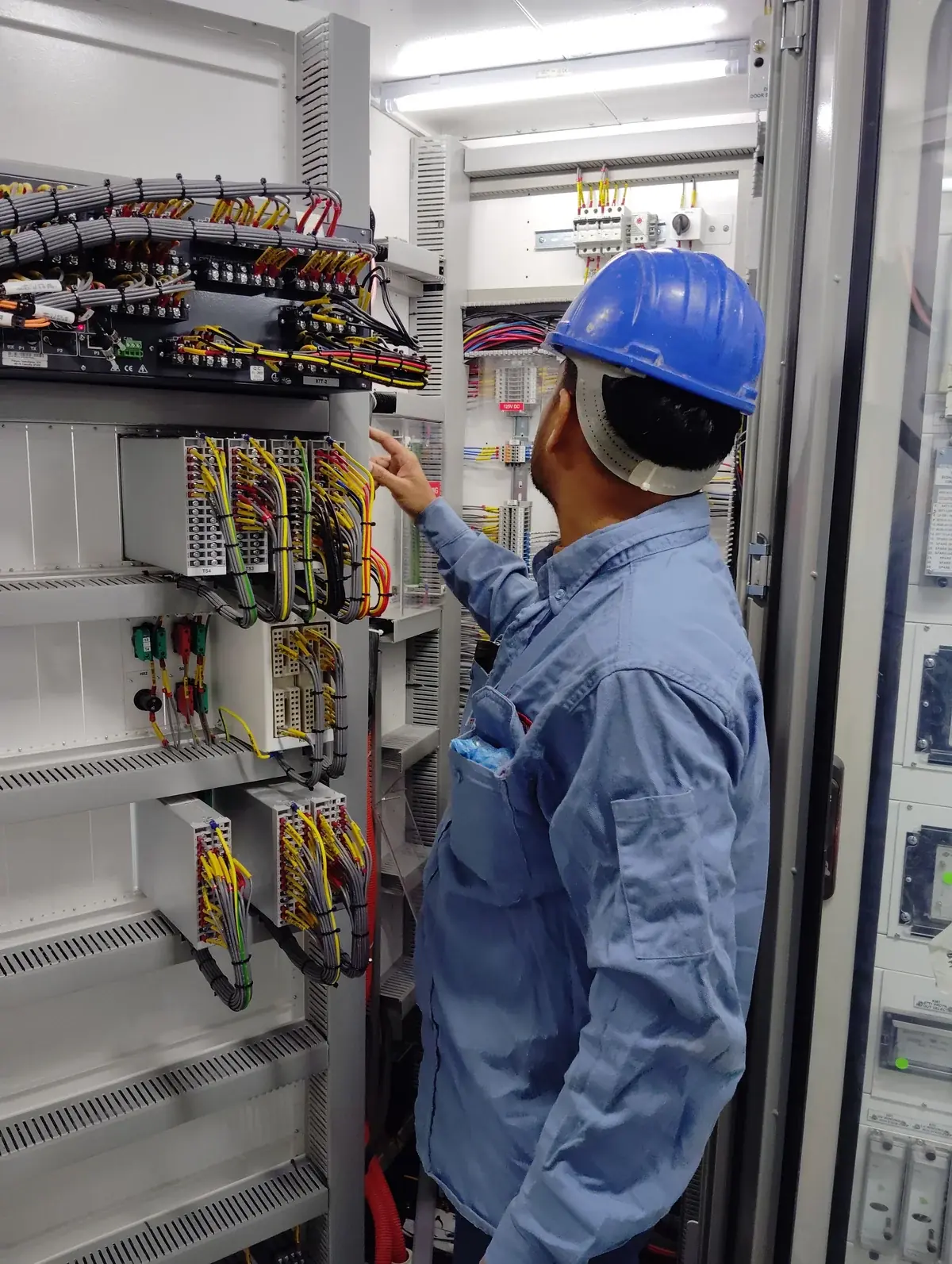
For architectural projects featuring complex geometric facets or multi-panel corner returns, factory audits must also inspect mockup pre-assembly capabilities. Leading tier-one Chinese fabricators operate dedicated dry-fit staging yards where full-scale facade cassettes are assembled onto mock sub-frames prior to final crate packing. Requiring high-resolution video recordings and 3D laser coordinate scans of factory dry-fit mockups allows overseas structural engineers to verify joint reveals, anchor hole alignments, and drainage weep slots before container doors are sealed.
Compare Factory Direct Pricing Against Landed Cost
A frequent procurement error among first-time importers is confusing the initial factory Free on Board (FOB) quotation with the final landed jobsite cost. Evaluating true financial viability requires constructing a comprehensive landed cost model that factors ocean freight, maritime cargo insurance, customs duties, port handling fees, and inland drayage transportation.
When negotiating purchase contracts, selecting the appropriate Incoterm defines operational risk allocation. FOB (Free on Board) shipping terms are recommended for experienced contractors with established freight forwarding relationships, allowing the buyer to control ocean carrier selection and container routing. For buyers seeking simplified logistics, CIF (Cost, Insurance, and Freight) places transport coordination onto the manufacturer up to the destination port, while DDP (Delivered Duty Paid) places all import logistics and duty payments onto the seller.
Review this quantitative landed cost breakdown illustrating typical budget allocations when importing a 40HQ container of architectural cladding panels.
| Cost Component | Typical Cost Range (USD) | Percentage of Landed Budget | Key Risk Mitigation Factor |
|---|---|---|---|
| Ex-Factory Panel Manufacturing | $65,000 to $85,000 (4,000 m²) | 70% to 75% | Milestone payment releases tied to testing |
| Export Packing & Fumigated Crates | $2,500 to $3,500 | 2.5% to 3.5% | Mandate ISPM 15 certified solid plywood |
| Ocean Freight & Bunker Adjustment | $4,500 to $8,500 (Market dependent) | 5% to 8% | Book vessels 3 weeks ahead of packaging |
| Destination Port THC & Clearance | $1,800 to $2,800 | 2% to 3% | Pre-clear customs 5 days prior to vessel docking |
| Import Customs Duties & Tariffs | $3,500 to $12,000 (Jurisdiction dependent) | 4% to 12% | Verify exact HS tariff classification codes |
For projects requiring high-durability finishes across exterior envelopes, buyers should specify certified resin chemistry as detailed in our guide on what is PVDF coating on aluminum panels.
Engineering Pre Shipment Inspections to Eliminate Defects
Once export crates are nailed shut and loaded into ocean shipping containers, remediating manufacturing defects becomes practically impossible. A shipment discovered with flawed paint gloss, delaminating cores, or incorrect sheet dimensions upon arrival at an overseas jobsite triggers severe project delays and contentious insurance claims. Implementing a formal pre-shipment inspection (PSI) by an accredited third-party engineering agency is the single most effective risk control measure.
Accredited inspection agencies (such as SGS, Intertek, Bureau Veritas, or specialized facade consulting engineers) conduct inspections according to international sampling standard ISO 2859-1 (AQL Level II). The technical inspection protocol encompasses four critical verification phases: dimensional accuracy verification, coating adhesion testing, mechanical peel resistance testing, and physical packaging audit.
Inspectors measure panel length, width, thickness, and squareness using precision digital calipers and diagonal measuring tapes, ensuring tolerances adhere to ±2.0 mm on length and ±0.2 mm on thickness. For mechanical integrity, technicians perform standard floating roller peel resistance tests per ASTM D1781 climbing drum peel testing, verifying that the core-to-skin adhesion exceeds 100 N·mm/mm. Only after the third-party inspector issues an official passed inspection certificate should the buyer authorize final balance payments.

In addition to mechanical validation, color consistency must be verified across the production lot. Technicians use multi-angle spectrophotometers to record Delta-E color variance values against master architectural control chips. Delta-E variance must remain strictly below 1.0 across all crates, eliminating visible panel-to-panel color banding across building elevations.
Protecting Ocean Freight Against Salt Air Condensation
Ocean shipping routes through tropical waters expose containerized metal to violent temperature cycling and high relative humidity. During day-night transitions crossing the equator, moisture vapor inside sealed steel shipping containers condenses onto container ceilings and rain down onto cargo—a phenomenon known throughout marine logistics as container sweat. If unmitigated, trapped moisture penetrates panel protective films, initiating rapid alkaline pitting and white rust stains that permanently ruin architectural paint finishes.
To ensure absolute moisture protection, professional export packaging requires a multi-layer defense system. Individual panel faces must be covered with co-extruded UV-resistant polyethylene protective films carrying non-transferring acrylic adhesives. Panel bundles are then wrapped completely inside heavy-duty vapor-corrosion-inhibitor (VCI) plastic film sheets, heat-sealed along seams to form an airtight cocoon that arrests oxidation.
Within each export crate and container corner, packing crews place high-capacity calcium chloride desiccant pouches capable of absorbing over 200% of their weight in moisture. In addition, panels must be secured within reinforced solid plywood crates built with internal foam buffers and external heavy-gauge steel banding. Crates must comply strictly with ISPM 15 heat-treatment standards to bypass agricultural quarantine delays at destination ports.

Beyond container moisture packing, overseas logistics planning must rigorously manage destination port container demurrage and equipment detention timelines. Shipping lines grant international importers between four and seven free demurrage days after a vessel discharges containers onto port terminal docks. If customs brokers encounter tariff classification inquiries or missing agricultural timber fumigation certificates, daily demurrage penalties can exceed three hundred dollars per container. Savvy procurement teams contract experienced maritime customs brokers to pre-clear cargo entry documentation five days prior to ocean vessel arrival.
4 Costly Mistakes in Direct Factory Procurement
Accepting Underspecified Skin Gauges and Mill Tolerances
Failing to specify precise aluminum skin thickness down to decimal millimeters allows unethical suppliers to supply undersized sheets. An overseas contract simply requesting 4.0 mm composite panels might be supplied with 0.21 mm or 0.30 mm aluminum skins instead of architectural-grade 0.50 mm skins. Thin skins buckle under wind suction and deform during groove-folding. Purchase orders must explicitly specify 0.50 mm skin thickness verified under micrometers upon arrival.
Splitting Single Building Elevations Across Multiple Batches
Ordering panels across staggered production runs for the same building facade elevation causes noticeable color banding. Even when using identical paint formulas, slight variations in coil-coating line speeds, curing oven temperatures, and liquid viscosity introduce subtle Delta-E shifts. Procurement teams must calculate total elevation square meterage plus a 5% installation buffer, mandating that the entire facade volume be coated from a single continuous master coil run.
Signing Commercial Contracts on Loose EXW Incoterms
Approving Ex-Works (EXW) terms places the entire legal responsibility for export customs declaration, inland truck transit to sea ports, and port loading onto the overseas buyer. If factory delivery trucks encounter traffic accidents or customs brokers encounter export documentation delays, the foreign buyer absorbs all financial losses. Buyers must insist on FOB (Free on Board) terms, ensuring the manufacturer retains responsibility until cargo crosses the ship rail.
Misclassifying HS Codes Under Anti Dumping Tariffs
Failing to verify precise Harmonized System (HS) customs tariff codes prior to shipping can result in devastating anti-dumping duties. Many jurisdictions (including the United States and European Union) impose anti-dumping duties exceeding 50% on standard aluminum extrusions and generic composite panels under HS Code 7606. Consulting an accredited customs broker to classify goods per WCO Harmonized System nomenclature standards ensures compliant tariff duties.
Engineered Architectural Aluminum Panel Export Solutions
Managing high-volume international facade projects requiring verified metallurgical quality and reliable ocean container logistics? Our architectural export division manufactures high-performance aluminum composite panels, solid cladding cassettes, and custom insulated envelopes for global commercial developments. We provide comprehensive third-party testing coordination, certified ISPM 15 container packaging, and transparent FOB/CIF logistics support for contractors worldwide.
Frequently Asked Questions About Importing Cladding Panels
How much can buyers save importing aluminum cladding directly?
Direct factory procurement typically reduces material capital costs by 35% to 50% compared to domestic distributor markups, even after factoring in ocean freight and customs tariffs.
How many square meters fit into a standard 40HQ container?
A standard 40-foot high-cube container holds between 3,800 and 4,500 square meters of 4.0 mm composite panels packed inside reinforced wooden export crates.
Which Incoterm is recommended for importing facade panels?
FOB (Free on Board) is recommended for experienced buyers to control shipping lines, while CIF provides convenient port-to-port delivery managed by the supplier.
How do buyers prevent white rust damage during ocean shipping?
Export packaging must utilize heat-sealed VCI plastic wrapping, calcium chloride desiccant bags, and ISPM 15 fumigated crates to block high-humidity maritime condensation.
Why is a third-party pre-shipment inspection mandatory?
Third-party inspection verifies peel strength, dry film thickness, squareness, and color consistency before final payment, completely preventing defective cargo delivery overseas.