
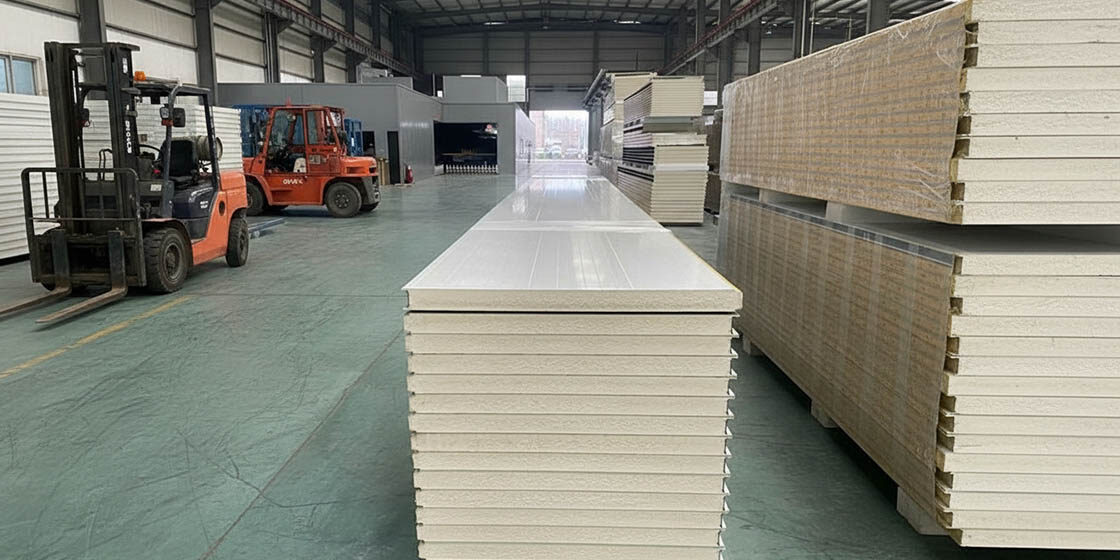
Specifying a building sandwich panel requires more than checking the R-value on a spec sheet. Most procurement teams treat panel cores as interchangeable line items, but swapping PIR for mineral wool changes your entire fire compliance strategy. Standard PE or PU cores lack inherent fire resistance and require special treatment to meet codes, unlike Mineral Wool cores which function as non-combustible Insulated Metal Panels. Selecting the wrong core material creates immediate liabilities during inspections.
We break down the specific trade-offs between PIR, PUR, and rockwool cores, along with the span capacities required for high-load industrial applications. You will learn how to balance initial material costs against long-term lifecycle savings from improved thermal efficiency and lower insurance premiums. This data prevents costly rework and ensures your envelope meets structural and safety requirements on the first pass.
Key Performance Metrics for Choosing Materials
Selecting the correct composite panel requires balancing thermal efficiency against fire safety compliance, structural load demands, and acoustic requirements. There is no “universal” core material.
Thermal Resistance and Insulation Efficiency
The primary driver for energy cost control in metal buildings is the core material’s ability to resist heat flow. While polyisocyanurate (PIR) and polyurethane (PUR) foams offer the highest thermal resistance per inch of thickness, the choice between them and other materials like Rockwool or XPS depends on the specific temperature control requirements of the project.
In our experience manufacturing for global climates, consistency is just as critical as the raw material rating. We enforce a strict ±0.5mm thickness tolerance across our production lines. Variations in core density or thickness significantly degrade real-world R-value performance. For cold storage and controlled environments, PIR is generally preferred due to its superior thermal stability over time compared to standard PUR, whereas XPS offers a viable alternative where moisture resistance is a higher priority than peak insulation value.
Fire Rating Classifications and Compliance
Fire safety regulations often dictate material selection more strictly than insulation needs. The industry broadly divides cores into combustible (foams) and non-combustible (mineral wool) categories.
- PIR Cores: Exhibit improved fire performance compared to traditional PUR due to their thermoset chemical structure. They typically achieve a Class 1 or Euroclass C rating with fire-retardant additives, suitable for many industrial applications but often restricted in high-rise or public access buildings.
- Rockwool Cores: Provide non-combustible protection (Euroclass A1/A2). These are mandatory for high-risk zones, tunnels, and structures requiring strict fire compartmentation. While they sacrifice some thermal efficiency compared to foams, they prevent fire spread and do not contribute to fuel load.
- Compliance Verification: We certify our panels under ASTM and CE standards. For B2B buyers, verifying that the certification covers the *entire* assembly—core and facing combined—is critical to passing local code inspections.
Span Capacity and Load-Bearing Specifications
A common mistake in procurement is selecting panel thickness based solely on insulation needs while ignoring structural integrity. The span capacity—how far a panel can stretch between supports without failing—is a function of the composite action between the facings and the core.
The facing material (steel, aluminum, or GRP) resists bending tension and compression, while the core resists shear. If the bond between these layers fails, the structural integrity collapses immediately. This is why we strictly adhere to a minimum 0.3 MPa peel strength in our manufacturing. For high-load applications like roofing or refrigerated truck floors, Honeycomb cores are often utilized not for their insulation value, but for their exceptional strength-to-weight ratio and rigidity, allowing for longer spans with less deflection.
Acoustic Dampening Performance
Noise reduction is often an afterthought in industrial cladding but is critical for workforce safety and comfort in generators rooms, music studios, or transit hubs. Foam cores (PIR, PUR, XPS) generally possess poor acoustic dampening qualities; they are excellent thermal barriers but offer little resistance to sound transmission.
Rockwool cores are the superior choice for acoustic control. Their dense, fibrous structure effectively disrupts sound waves, providing both thermal insulation and significant noise absorption. When noise pollution is a key performance indicator, specifying a Rockwool core is necessary to meet decibel reduction targets, even if it requires a thicker panel to match the thermal performance of a foam core.
| Material Type | Thermal Resistance (R-Value/in) | Thermal Conductivity (W/mK) | Key Application Traits | Rax Quality Assurance |
|---|---|---|---|---|
| PIR (Polyisocyanurate) | 6.5 – 7.2 | 0.022 – 0.028 W/mK | PIR (Polyisocyanurate) stands out in the thermal performance column with a conductivity range that sets it apart from competing cores. Superior fire resistance and thermal efficiency; self-supporting structure suitable for energy-efficient roofing and cladding. | CE/ASTM fire certified; ISO 14001 compliant manufacturing. |
| PUR (Polyurethane) | 6.0 – 7.0 | 0.022 – 0.028 | High insulation efficiency with a lightweight profile; cost-effective solution for walls and refrigerated vehicles. | Customized density engineering; strict ±0.5mm thickness tolerance. |
| Rockwool (Mineral Wool) | 3.5 – 4.2 | 0.035 – 0.040 W/mK | Rockwool (Mineral Wool) occupies a distinct position in the comparison table, defined by its non-combustible classification and acoustic properties. Non-combustible (A1) core with excellent acoustic dampening; ideal for high-fire-risk zones and sound insulation. | ASTM fire compliance; engineered joint design to eliminate thermal bridging. |
| XPS (Extruded Polystyrene) | 5.0 – 5.5 | 0.028 – 0.035 | High compressive strength and excellent moisture resistance; minimal water absorption for wet environments. | Waterproof GRP/FRP facings; minimum 0.3 MPa peel strength to prevent delamination. |
| Honeycomb (PP/Fiberglass) | 0.5 – 3.0 | Varies by Material | Highest strength-to-weight ratio and structural rigidity; optimal for RV walls, truck bodies, and flooring. | 15+ years specialized production experience; lightweight solutions optimized for global transportation. |
Balancing Upfront Costs with Long-Term Savings
The lowest initial purchase price often masks the highest Total Cost of Ownership (TCO). A rigorous cost-benefit analysis must weigh raw material acquisition against 20-year operational expenditures, specifically targeting HVAC load reduction, insurance liability, and maintenance cycles.
Upfront Material Costs by Core and Facing Configuration
Initial expenditure is primarily driven by the density of the core material and the coatings applied to the metal facings. While basic Expanded Polystyrene (EPS) panels offer the lowest sticker price, they lack the thermal resistance required for modern energy codes without increasing thickness. Conversely, mineral wool cores demand a higher upfront investment due to raw material density and compression processing during manufacturing. Facings also contribute significantly; standard PPGI (Pre-painted Galvanized Iron) is cost-effective, while aluminum or high-performance Stainless Steel facings are specified for corrosive environments at a premium.
| Core Material | Relative Material Cost | Installation Impact | Best Economic Use Case |
|---|---|---|---|
| EPS (Expanded Polystyrene) | Low | Fast handling (lightweight) | Climate-controlled warehousing (non-fire rated) |
| PIR (Polyisocyanurate) | Medium-High | Standard labor | Cold storage, high R-value requirements |
| Mineral Wool | High | Slower (heavier, requires care) | High-rise, exterior cladding (fire compliance) |
Lifecycle Savings via Thermal Efficiency
The most immediate return on investment (ROI) for insulated sandwich panels is realized through reduced HVAC operational expenditure. Panels with superior thermal performance (higher R-value per inch) minimize thermal bridging and heat transfer. In environments requiring strict temperature control, such as cold storage or cleanrooms, high-performance PIR cores can reduce energy consumption by 20-30% compared to legacy systems or lower-grade insulations. Over a 10-year horizon, these operational savings frequently exceed the initial material delta.
- HVAC Capacity Downsizing: High-efficiency building envelopes allow for the specification of smaller, less expensive heating and cooling equipment.
- Peak Load Reduction: Improved insulation lowers peak energy demand charges, which are a significant component of commercial utility bills.
- Carbon Tax Compliance: Future-proofing against tightening energy regulations avoids potential retrofit costs or carbon taxes.
Insurance Premiums and Fire Rating Selection
Fire performance is a critical, often underestimated, economic variable. Insurers assess risk based on the combustibility of the building envelope. Choosing non-combustible cores, such as mineral wool (typically rated Euroclass A1 or A2), can result in significantly lower property insurance premiums compared to combustible foam cores (PIR/PUR/EPS). In high-value industrial assets, the annual savings on insurance can be substantial. Furthermore, utilizing non-combustible materials may satisfy code requirements without the need for expensive active fire suppression systems (like sprinklers) in specific zoning classifications, though local codes always dictate the final requirement.
Maintenance and Replacement Cost Projections
Sandwich panels are designed for durability, but lifecycle costs vary based on facing material selection. Metal facings (steel or aluminum) offer high resilience against UV degradation, impact, and moisture intrusion, often exceeding service lives of 30 years with minimal maintenance. This longevity contrasts sharply with traditional built-up systems that require periodic re-sealing or re-coating. While premium facings like Stainless Steel or Fiberglass-Reforced Polymer (FRP) carry higher upfront costs, they virtually eliminate replacement cycles in harsh environments (e.g., chemical plants or coastal zones), proving more economical over a 25-year analysis than cheaper coatings that fail prematurely.
- Joint Integrity: Factory-controlled joint seals typically outperform field-applied sealants, reducing long-term maintenance labor.
- Corrosion Resistance: Investing in higher-grade coatings (e.g., PVDF or HDP) prevents costly rust-related remediation in humid or industrial atmospheres.
PU vs. PIR Foam Cores: Which Performs Better?
PU cores offer optimal thermal efficiency and cost-effectiveness for standard insulation, while PIR cores provide superior fire resistance and thermal stability, making them the preferred choice for stringent safety codes.
Chemical Composition and Thermal Stability
While both materials are rigid thermoset foams used in sandwich panels, the distinction lies in their chemical structure. Polyisocyanurate (PIR) is essentially a modified version of Polyurethane (PU). During the manufacturing process, PIR utilizes a higher ratio of isocyanate to polyol, leading to the formation of isocyanurate ring structures rather than the standard urethane linkages found in PU.
These isocyanurate rings create stronger chemical bonds, which significantly enhance the foam’s thermal stability. Consequently, PIR foam cores demonstrate better dimensional stability and performance under high-temperature conditions compared to standard PU. PU foam typically begins to soften and degrade at lower temperatures, whereas PIR maintains its structural integrity longer when exposed to heat, a critical factor for building envelopes in varying climates.
Fire Performance and Safety
The most decisive performance differentiator between these two cores is fire resistance. PIR technology is widely regarded as an upgraded solution specifically for improved fire safety. When exposed to flame, PIR foam forms a protective char layer on the surface. This char layer acts as an insulating barrier, slowing down the spread of fire and reducing the release of flammable gases.
In contrast, standard PU foam is generally more combustible and lacks the inherent charring characteristics of PIR. While PU panels can be treated with flame retardants to meet specific safety standards, they typically do not achieve the same level of fire performance as PIR without additional fire barriers. For commercial projects requiring higher fire ratings or compliance with strict building codes without the need for supplementary fire-stopping layers, PIR is the standard specification.
Thermal Insulation Efficiency
Polyurethane (PU) has historically been the benchmark for thermal insulation in sandwich panels. It possesses a slightly lower thermal conductivity (Lambda value) compared to PIR in standard conditions, meaning it can offer marginally better insulation per millimeter of thickness in the short term. This makes PU an excellent choice for projects where maximizing thermal efficiency within a limited thickness or minimizing upfront material costs is the primary objective.
However, PIR has closed much of this gap. Modern PIR foams offer thermal conductivity values that are competitive with PU, typically ranging between 0.022 and 0.024 W/m·K. More importantly, PIR’s superior thermal stability means its insulation properties are less likely to degrade over time when exposed to temperature fluctuations, offering better long-term energy retention in demanding environments.
- Reaction to Fire: PIR typically achieves Euroclass B or C fire classifications, whereas standard PU generally requires additional facings or additives to meet similar safety standards.
- Thermal Conductivity: PU cores often start with a slight edge in raw R-value, but PIR maintains consistent performance better under thermal stress.
- Operating Temperature: PIR supports continuous operating temperatures up to roughly 120°C, whereas PU is typically limited to lower ranges before softening occurs.
- Cost Efficiency: PU remains the more economical option for projects with tight budgets and moderate fire safety requirements.
Selecting the Right Core for Commercial Enveloping
Choosing between PU and PIR requires balancing regulatory compliance against budget constraints. For industrial warehousing, agricultural buildings, or interior partitions where fire codes are less stringent, PU sandwich panels provide a highly efficient, lightweight, and cost-effective thermal envelope.
Conversely, for high-rise commercial buildings, hospitals, schools, or public facilities, PIR is the industry standard. Its enhanced fire resistance often eliminates the need for expensive internal fire barriers, allowing architects to meet strict safety codes without sacrificing the panel’s lightweight or insulative properties. When the project involves high-occupancy or high-value assets, the investment in PIR technology is justified by the increased safety margin and compliance longevity.
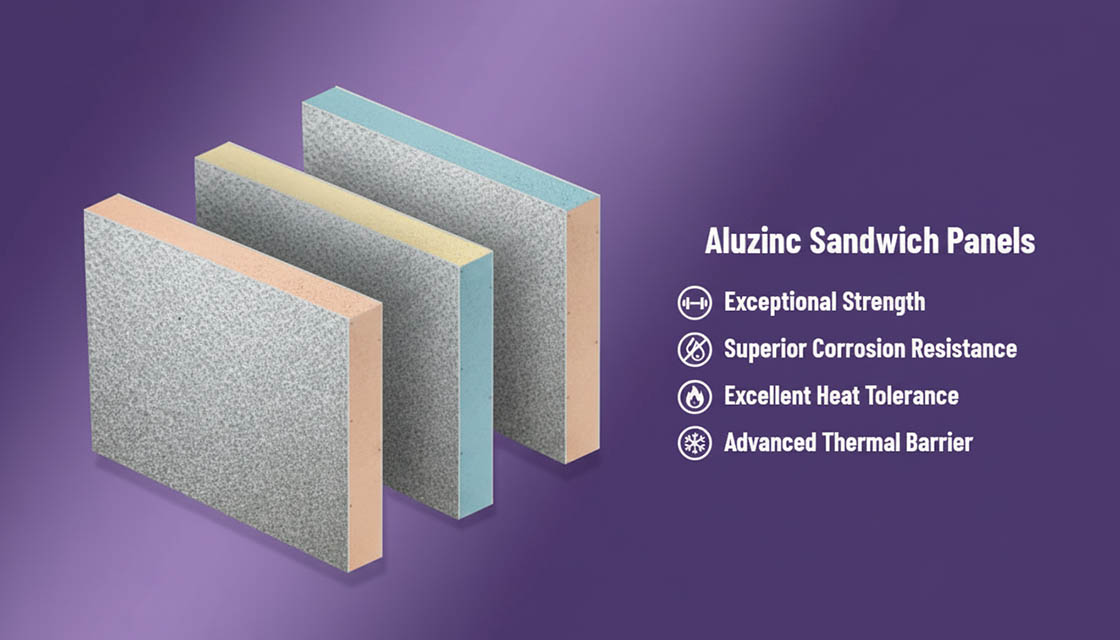
Mineral Wool Cores: Fire Resistance and Acoustics
Mineral wool sandwich panel cores deliver non-combustible fire protection up to EI 240 and superior acoustic dampening, making them the default specification for fire-separated buildings and noise-sensitive environments where foam cores fall short.
Fire Resistance: The Non-Combustible Advantage
The defining characteristic of mineral wool cores is their inherent non-combustibility. Unlike organic foam cores such as PIR or PU, mineral wool is manufactured from spun basalt or slag fibers that do not contribute fuel to a fire. This structural difference translates directly into measurable fire performance ratings that many building codes now mandate for high-rise and fire-separated constructions.
Mineral wool sandwich panels typically achieve Euroclass A1 or A2-s1,d0 reaction-to-fire classifications, the highest tier available for sandwich panel cores. These ratings indicate the core material will not ignite, produce significant flaming droplets, or emit substantial smoke under fire conditions. In full assembly testing, mineral wool cores can deliver fire resistance ratings up to EI 240 depending on panel thickness, providing two hours of structural integrity and insulation performance during a standard fire exposure.
- Euroclass A1: Non-combustible with no contribution to fire; applicable for the most stringent fire compartmentation requirements
- Euroclass A2-s1,d0: Essentially non-combustible with minimal smoke emission and no flaming droplets; meets most international building code thresholds
- EI 240 by thickness: Full assembly fire resistance rating achievable with adequate mineral wool core depth
- No toxic smoke evolution: Unlike PIR panels which typically achieve only B-s1,d0 or B-s2,d0, mineral wool does not release hazardous combustion gases
Acoustic Dampening: The Density Benefit
Mineral wool’s dense fibrous structure serves a dual purpose beyond fire protection. The interlocking fiber matrix effectively absorbs and dissipates sound energy, making mineral wool sandwich panels a strong choice for acoustic performance in partition walls, roof decks, and facade systems where noise transmission is a concern.
The acoustic advantage stems from the core’s mass and porous composition. Sound waves entering the mineral wool matrix encounter friction across millions of fiber surfaces, converting acoustic energy into negligible heat. This mechanism provides superior sound absorption compared to closed-cell foam cores, which tend to reflect sound rather than absorb it. For general contractors working on projects with acoustic requirements—such as multi-tenant industrial facilities, cold storage buildings with mechanical equipment, or structures adjacent to noise sources—the mineral wool core delivers measurable STC and NRC improvements without requiring additional acoustic treatments.
- Sound absorption mechanism: Dense fibrous structure converts acoustic energy through fiber friction, unlike foam cores that reflect sound waves
- Improved STC ratings: Mineral wool cores typically deliver higher Sound Transmission Class values compared to equivalent-thickness foam cores
- Reduced reverberation: Effective for interior applications where echo control and noise mitigation matter
- No additional acoustic layers needed: The core material itself provides damping, potentially reducing wall or roof assembly complexity
The Trade-Off: Density versus Thermal Performance
The same density that delivers fire and acoustic benefits creates a thermal performance trade-off. Mineral wool cores have lower thermal resistance per inch of thickness compared to closed-cell foam alternatives like PIR or PU. This means achieving equivalent R-values with mineral wool requires greater panel thickness, which directly impacts shipping volume, structural load, and overall building envelope depth.
For B2B buyers evaluating material selection, the decision often comes down to project priorities. Where fire separation, non-combustibility mandates, or acoustic performance drive the specification, mineral wool is the correct choice despite the thermal penalty. Where maximum insulation efficiency per inch is the primary constraint and fire ratings permit organic cores, PIR or PU may offer a more thermally efficient solution. The cost differential between core types and the potential insurance premium impact of higher fire ratings should also factor into the total cost analysis.
When Mineral Wool Is the Non-Negotiable Choice
Certain project types and jurisdictional requirements effectively eliminate foam core options from consideration. Building codes in many regions mandate non-combustible cores for high-rise construction, fire-rated partition walls, and assemblies adjacent to property lines. In these scenarios, mineral wool is not a preference—it is a compliance requirement.
- High-rise buildings: Many international building codes require non-combustible core materials for facade and partition systems above a certain height threshold
- Fire compartmentation walls: Interior fire-rated separations between tenant spaces or hazardous areas typically mandate A-class cores
- Proximity to property lines: Assembly fire resistance requirements increase as panels approach lot boundaries, often pushing specifications toward mineral wool
- Acoustic-sensitive environments: Data centers, mechanical rooms, multi-tenant industrial facilities, and buildings near transportation corridors benefit from the inherent sound dampening
- Insurance-driven specifications: Some insurers offer premium reductions for buildings constructed with non-combustible panel systems, partially offsetting the higher material cost
The mineral wool versus foam core decision is ultimately a specification trade-off between fire safety, acoustic performance, and thermal efficiency. For projects where non-combustibility and sound control are paramount, mineral wool sandwich panels deliver measurable performance that foam cores cannot replicate. The key is specifying the correct thickness to meet both fire resistance and thermal targets, and sourcing from manufacturers with validated assembly test data rather than relying on core material ratings alone.
When to Choose EPS or Honeycomb Cores
For interior applications where fire resistance is not a primary concern, EPS cores deliver the lowest material cost, while honeycomb cores provide the highest structural rigidity-to-weight ratio for demanding load-bearing scenarios.
Expanded Polystyrene (EPS) Cores: The Cost-Effective Workhorse
EPS sandwich panels remain the most common configuration in the global market. The core is produced by expanding polystyrene beads with steam, creating a closed-cell foam structure that delivers consistent thermal insulation at the lowest price point per square meter. For B2B buyers sourcing interior partition panels, ceiling tiles, or non-structural cladding where fire rating is not the governing constraint, EPS represents the most economical choice without sacrificing lightweight performance.
The density range for construction-grade EPS cores typically falls between 18 to 30 kg/m³, which translates to panel weights roughly 40 to 60 percent lighter than comparable mineral wool or solid foam alternatives. This weight reduction directly lowers handling costs, simplifies on-site installation, and reduces structural load requirements for supporting frameworks. For bulk procurement, EPS panels also benefit from mature supply chains and high production throughput, making lead times consistently short across most regions.
- Best suited for: Interior wall partitions, ceiling systems, cold storage interiors, and temporary or modular building enclosures where fire resistance ratings below 60 minutes are acceptable.
- Key advantage: Lowest cost per square meter among all insulated core options, combined with proven moisture resistance and long-term dimensional stability when properly facied.
- Limitation to acknowledge: EPS cores are combustible and will not meet non-combustible core requirements under building codes that mandate Class A fire ratings for exterior walls or high-rise applications.
Honeycomb Cores: Maximum Rigidity Per Unit Weight
Honeycomb cores represent a fundamentally different engineering approach. Rather than relying on bulk foam density for strength, honeycomb structures utilize a hexagonal cell geometry that maximizes compressive and shear resistance while minimizing material mass. This is the same principle bees use to yield maximum structural efficiency from minimal resources. For applications where panel flatness, span capacity, and surface rigidity matter more than thermal mass, honeycomb cores deliver performance that bulk foam cores cannot match at equivalent weights.
Multiple honeycomb core materials are available, each serving distinct application profiles. PP honeycomb cores composited with fiberglass facing sheets produce panels that are notably strong and light, making them suitable for truck bodies, RV wall panels, and mobile facility construction. Fiberglass and GRP honeycomb panels serve marine and industrial equipment applications where both structural rigidity and corrosion resistance are required. Carbon fiber honeycomb panels represent the premium tier for aerospace and high-performance transportation where every kilogram carries a direct cost penalty. Cellulose paper or cardboard honeycomb cores, typically produced from recycled materials, offer a low-cost entry point with high compressive strength relative to their weight, particularly valued in packaging and light-duty interior panel applications.
- PP honeycomb: Cost-effective structural core for vehicle bodies, furniture panels, and lightweight interior partitions. Combines well with GRP, CFRT, or aluminum facings.
- Fiberglass/GRP honeycomb: Ideal for marine vessels, cleanroom panels, and industrial equipment where structural rigidity and moisture resistance are both required.
- Cellulose paper honeycomb: Budget-friendly core for non-structural interior applications, offering high compressive strength at the lowest honeycomb cost tier.
- Carbon fiber honeycomb: Premium core for transportation and specialized industrial applications where weight savings directly translate to operational cost reductions.
Decision Framework: EPS vs. Honeycomb for Interior Applications
The choice between EPS and honeycomb cores ultimately depends on which performance parameter carries the highest priority in your project specification. If the primary objective is minimizing material cost per square meter for interior partitions or ceiling panels, EPS is the clear selection. The per-unit cost advantage is significant and consistent across global markets, and the thermal insulation properties are adequate for climate-controlled interiors.
If the project involves wide-span panels, load-bearing floor or roof decks, or applications where panel deflection under load must be minimized, honeycomb cores provide a structural advantage that EPS cannot replicate. A honeycomb-core panel of equivalent weight will typically demonstrate three to five times the face-sheet buckling resistance compared to an EPS-core panel of the same thickness. This makes honeycomb the preferred choice for RV flooring, truck body panels, mobile home structural decks, and any application where the panel must carry meaningful mechanical loads across unsupported spans.
Steel or Aluminum: Choosing the Right Facing
Steel facings deliver structural rigidity and impact resistance for demanding industrial applications, while aluminum facings provide corrosion resistance and weight savings ideal for harsh environments and architectural projects.
Selecting between steel and aluminum facing materials is one of the most consequential decisions in sandwich panel specification. The choice directly affects structural performance, longevity, transportation costs, and overall project economics. Industry professionals evaluate this decision through a framework of environmental exposure, structural requirements, and lifecycle considerations rather than upfront material cost alone.
Steel Facings: Structural Performance and Impact Resistance
Galvanized steel facings remain the dominant choice for industrial and commercial construction where structural integrity and impact resistance take priority. The inherent tensile strength of steel provides superior load-bearing capacity, making it the preferred facing for applications subject to mechanical stress, high wind loads, or potential impact damage. Steel panels maintain their structural performance across wider temperature ranges compared to aluminum, which softens at elevated temperatures.
Pre-painted and PVDF-coated steel options extend the lifecycle of steel facings by adding protective layers that resist UV degradation and chemical exposure. These coated variants bridge the gap between pure steel performance and aluminum’s corrosion resistance, though they carry a premium over standard galvanized options. The coating system must be specified carefully, as the paint or PVDF layer introduces a potential failure point if damaged during installation or service.
- Impact resistance: Steel facings absorb and distribute impact energy more effectively than aluminum, reducing dent formation and maintaining panel integrity under mechanical stress
- Structural rigidity: Higher modulus of elasticity provides better span performance and resistance to deflection under lateral loads
- Cost efficiency: Galvanized steel typically offers lower material costs compared to aluminum facings of equivalent thickness
- Temperature stability: Maintains mechanical properties across broader temperature ranges without softening
Aluminum Facings: Corrosion Resistance and Weight Advantage
Aluminum facings excel in environments where corrosion resistance and weight reduction are paramount. The natural oxide layer that forms on aluminum surfaces provides inherent protection against atmospheric corrosion, making aluminum the default choice for coastal, marine, and chemically aggressive environments. Unlike steel, aluminum does not require galvanization or coating for basic corrosion protection, though anodized and powder-coated variants offer additional aesthetic and protective benefits.
The weight advantage of aluminum facings translates directly into reduced transportation costs and easier handling during installation. For projects where structural load limits are constrained, such as retrofits or lightweight modular construction, aluminum facings enable panel configurations that would be impractical with steel. This weight reduction is particularly valuable in transportation applications, where payload capacity directly impacts operational economics.
- Corrosion resistance: Naturally forms protective oxide layer; superior performance in marine, coastal, and chemical environments without additional coating systems
- Weight reduction: Significantly lighter than steel facings, reducing transportation costs and simplifying handling during installation
- Aesthetic flexibility: Accepts a wider range of surface treatments and color options, making aluminum the preferred choice for architectural applications
- Maintenance reduction: Lower long-term maintenance requirements in corrosive environments compared to coated steel systems
Decision Framework: Matching Facing to Application Requirements
The selection between steel and aluminum should follow a systematic evaluation of project-specific requirements. Environmental exposure is the primary differentiator—coastal and industrial atmospheric conditions with high chloride or chemical exposure strongly favor aluminum facings. Inland environments with standard atmospheric exposure can typically accommodate steel facings with appropriate coating systems.
Structural requirements drive the second consideration. Applications requiring maximum impact resistance, such as industrial warehouses subject to forklift traffic or high-wind zones, benefit from steel facings. Where weight constraints dominate—such as transportation bodies, rooftop retrofits, or modular construction—aluminum provides a clear advantage. The trade-off between structural performance and weight savings must be quantified for each project rather than applied as a general rule.
Manufacturing expertise plays a critical role in realizing the theoretical advantages of either facing material. Companies with extensive production experience and professional engineering teams can optimize the bond between facing and core materials, ensuring that the facing’s inherent properties are fully utilized in the final panel performance. Customized solutions that account for specific project requirements—environmental conditions, structural loads, and aesthetic needs—deliver better outcomes than off-the-shelf specifications.
Installation practices also influence facing selection. Steel facings require careful handling to prevent coating damage during transport and installation, as scratches and gouges can become initiation points for corrosion. Aluminum facings are more forgiving during installation but require attention to galvanic corrosion when connected to dissimilar metals. Proper detailing of joints, fasteners, and sealants is essential regardless of facing material choice.
The global composite panel industry has developed extensive expertise in matching facing materials to application requirements. Manufacturers serving over 50 countries bring accumulated knowledge of how different facing materials perform across diverse climatic and operational conditions. This experience base enables more accurate facing selection and reduces the risk of specification errors that lead to premature panel failure or unnecessary material over-specification.
| Facing Material | Thickness Range | Key Advantage | Best Suited For |
|---|---|---|---|
| Galvanized Steel (G90/G550) | 0.4mm – 1.0mm | Highest structural rigidity and impact resistance; cost-effective for most building applications | Industrial warehouses, cold storage, general cladding and roofing |
| Aluminum Alloy (3003 / 5052) | 0.3mm – 0.8mm | Lightweight with superior corrosion resistance; ideal for marine and coastal environments | Transportation, RV bodies, cleanrooms, architectural facades in corrosive zones |
| Pre-Painted / PVDF-Coated Steel | 0.4mm – 0.7mm | Excellent UV and weather resistance with long aesthetic lifespan; maintains color integrity | Architectural cladding, high-visibility commercial facades, premium building envelopes |
| Aluminum with Anodized or PE Coating | 0.3mm – 0.6mm | Corrosion-proof with low maintenance; naturally forms protective oxide layer | Marine vessels, chemical plants, coastal structures, lightweight modular buildings |
| Stainless Steel (304 / 316) | 0.5mm – 0.8mm | Maximum corrosion and chemical resistance; hygienic surface for food-grade environments | Food processing, pharmaceutical cleanrooms, chemical storage, high-humidity environments |
Fiberglass and Specialized Facings for Harsh Environments
For aggressive chemical, marine, and hygienic environments, GRP/FRP facings outperform standard metal cladding in corrosion resistance and cleanliness—while delivering equivalent structural performance at reduced weight.
Why Fiberglass Facings Dominate Harsh Environments
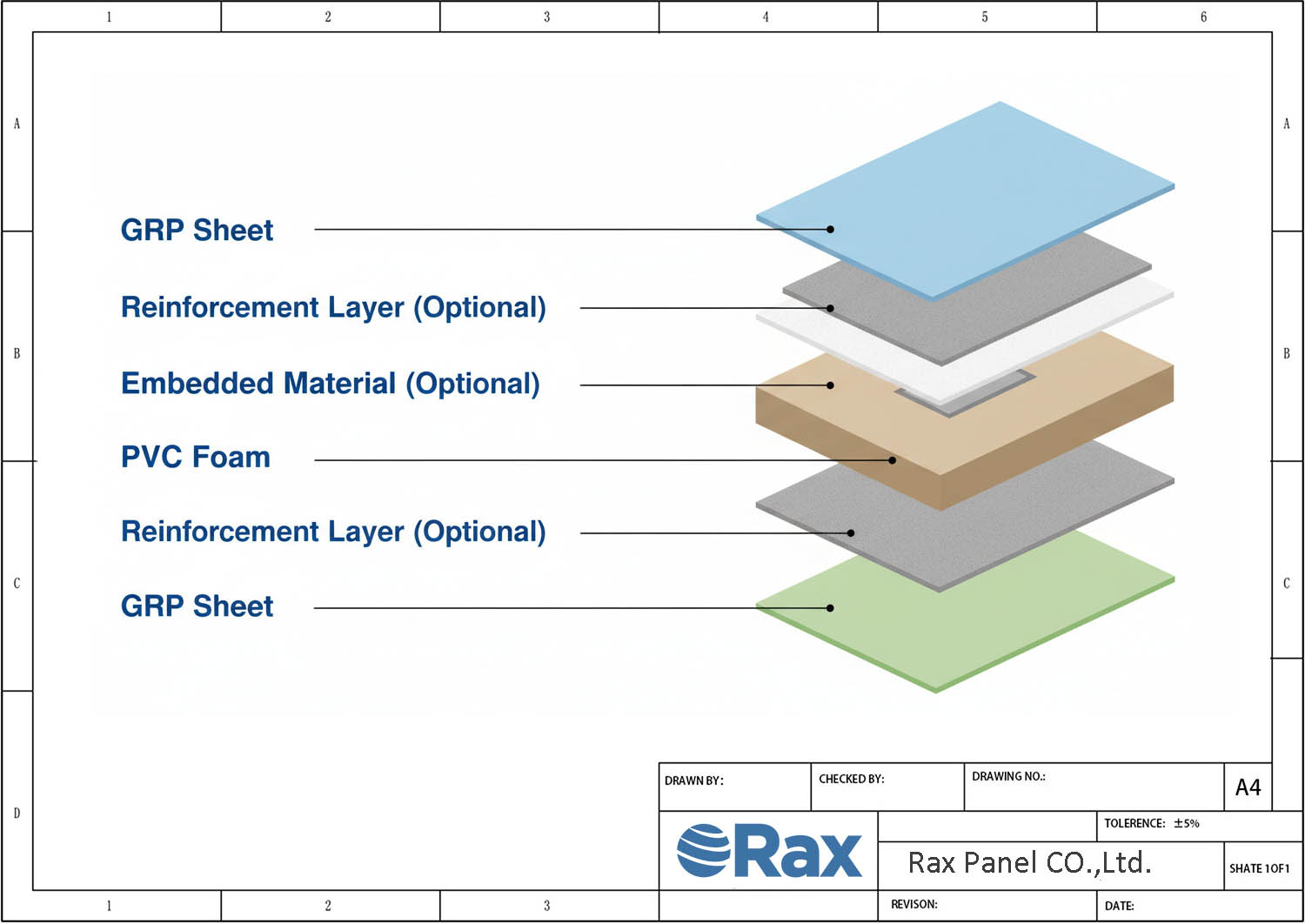
Standard galvanized or painted steel facings fail prematurely in environments exposed to chlorides, acids, alkalis, or constant moisture. GRP (Glass Reinforced Plastic) and FRP (Fiberglass Reinforced Plastic) facings eliminate this failure mode entirely—because fiberglass does not corrode, rust, or degrade under chemical attack.
The buyer pain point is clear: metal-faced panels in chemical plants, cold storage with high humidity, marine vessels, or food processing facilities require frequent repainting or full panel replacement within 5–8 years. GRP-faced sandwich panels extend service life to 20+ years in identical conditions, dramatically reducing lifecycle cost despite a higher upfront investment.
Chemical Resistance: GRP vs. Metal Facings
GRP facings provide inherent resistance to a broad spectrum of chemicals that would rapidly degrade metal panels. This is not a coating-dependent property—it is a material-level advantage.
- Acid exposure: GRP faces hydrochloric, sulfuric, and nitric acids without degradation—environments where even stainless steel faces can suffer pitting and stress corrosion cracking.
- Alkaline resistance: Ideal for fertilizer storage, wastewater treatment, and agricultural buildings where ammonia and caustic cleaners are routine.
- Chloride environments: Marine salt spray, coastal industrial zones, and de-icing salt exposure cause zero corrosion on GRP—unlike galvanized steel, which begins showing white rust within 2–3 years.
- Solvent resistance: Standard GRP with gelcoat withstands mild solvents and cleaning agents used in food processing and pharmaceutical facilities.
Hygienic Properties for Cleanrooms and Food Processing
Cleanroom and food processing buyers face a unique constraint: panel facings must resist bacterial growth, tolerate aggressive sanitizers, and maintain a seamless, non-porous surface. GRP facings with gelcoat finish deliver exactly this—without the crevices, weld seams, or coating failures inherent to metal panels.
- Non-porous surface: Gelcoat-finished GRP creates a smooth, impermeable barrier that prevents microbial ingress—critical for USDA, FDA, and EHEDG compliance in food and pharmaceutical facilities.
- Sanitizer compatibility: GRP withstands repeated exposure to quaternary ammonium compounds, peracetic acid, and chlorine-based disinfectants that degrade painted metal surfaces over time.
- Seamless installation: GRP panels can be fabricated with integrated corner radii and seamless joints, eliminating the micro-fractures and fastener holes where bacteria accumulate on metal panel systems.
- Lightweight advantage: GRP facings weigh approximately 40–50% less than steel facings of equivalent thickness—reducing structural support requirements and simplifying installation in retrofit cleanroom projects.
Gelcoat: The Performance Multiplier
The gelcoat layer on GRP panels is not cosmetic—it is a functional barrier that defines the panel’s environmental resistance. High-quality gelcoat provides a smooth, paint-ready surface with the following verified properties:
- Waterproofing: Zero water absorption when intact—essential for cold storage, marine, and high-humidity environments where moisture ingress through the facing causes core degradation.
- UV resistance: Gelcoat formulations with UV stabilizers resist chalking and color fade for 15+ years in direct sunlight—critical for exterior cladding in harsh solar environments.
- Surface hardness: Gelcoat provides a hard, scratch-resistant surface that maintains aesthetic quality in high-traffic industrial environments.
GRP vs. Metal Facings: Harsh Environment Comparison
The following comparison reflects field performance data from aggressive environment installations across chemical, marine, food processing, and cold storage sectors.
- Corrosion resistance: GRP—superior. Zero corrosion in chloride, acid, and alkaline environments. Steel—requires protective coatings that degrade over time.
- Hygienic performance: GRP—non-porous, seamless, sanitizer-resistant. Steel—weld seams and fastener holes harbor bacteria; coatings chip and crack.
- Weight: GRP—40–50% lighter than steel at equivalent thickness. Reduces structural load and simplifies handling.
- Initial cost: GRP—15–30% higher than galvanized steel. Offset by extended service life and reduced maintenance.
- Lifecycle cost (15 years): GRP—typically 25–40% lower than metal in harsh environments due to eliminated repainting and premature replacement.
- Maintenance: GRP—wash-down only. Metal—repainting every 5–7 years in harsh conditions.
Advanced Fiberglass Technologies: CFRT and LWRT
Continuous Fiberglass Reinforced Thermoplastic (CFRT) and Lightweight Reinforced Thermoplastic (LWRT) sheets represent the next generation of fiberglass facings. These materials address two limitations of traditional SMC/BMC GRP: weight and formability.
- CFRT sheets: Made from continuous fiberglass reinforced with thermoplastic matrices (PP, PA, PET). Significantly lighter and thinner than conventional GRP while maintaining equivalent mechanical strength and chemical resistance.
- LWRT sheets: Engineered for maximum weight reduction—ideal for applications where every kilogram counts, such as RV walls, truck bodies, and mobile facility construction.
- Resilience: Thermoplastic facings exhibit higher impact resistance and ductility than thermoset GRP—reducing denting and cracking during transport and installation.
When to Specify GRP Facings
GRP sandwich panels are the default choice when the environment presents any of the following conditions:
- Chemical processing facilities: Exposure to acids, alkalis, or solvent vapors.
- Marine and coastal construction: Salt spray, high humidity, and storm-driven moisture.
- Food and beverage processing: Wash-downsanitizers, high humidity, and hygienic surface requirements.
- Cleanrooms and pharmaceutical facilities: Non-porous, seamless, sanitizer-compatible surfaces.
- Cold storage and refrigeration: Constant condensation and thermal cycling that degrade metal coatings.
- Agricultural and livestock buildings: Ammonia exposure from waste and bedding materials.
For environments without these aggressive factors, standard metal facings remain cost-effective. But when chemical resistance, hygiene, or moisture tolerance is non-negotiable, GRP facings deliver proven performance that metal cannot match—making them the technically correct specification for harsh environment construction.
Material Picks for Every Application
Selecting the correct combination of core material and facing is not about aesthetics; it is a functional decision dictated by the operational environment and safety regulations.
PIR Core Panels for Cold Storage Applications
For refrigerated warehouses, freezer rooms, and cold chain logistics, Polyisocyanurate (PIR) foam cores are the indisputable industry standard due to their superior thermal stability and low thermal conductivity (Lambda). Unlike standard PUR, PIR exhibits improved fire resistance and better dimensional stability when exposed to temperature fluctuations. In cold storage environments, the risk of panel delamination increases significantly due to thermal contraction.
We publish our bonding adhesion data specifically for this reason. Our engineering team strictly enforces a minimum peel strength of 0.3 MPa in our PIR panels to prevent facing separation during extreme thermal cycling.
Mineral Wool Cores for High-Rise Fire Safety
When the project scope exceeds the reach of firefighting equipment, such as in high-rise buildings or tunnels, non-combustibility is the primary constraint. Mineral Wool (Rockwool) cores are classified as Euroclass A1 or A2, meaning they do not contribute to fire load. Unlike foam cores which can melt, mineral wool maintains structural integrity at temperatures exceeding 1,000°C.
To address the lower compressive strength often associated with mineral wool, we utilize lamellar-cut configurations where the wool fibers are rotated 90° to run perpendicular to the facings. This orientation significantly increases compressive strength and load-bearing capacity compared to parallel-fiber orientations, ensuring the wall system remains stable even if the external facing is compromised by heat.
GRP Facings for Cleanroom Hygiene Requirements
In pharmaceutical, biotechnology, and food processing environments, the wall system must withstand aggressive chemical cleaning and strict sterility standards. Metal facings can corrode over time when exposed to chlorine-based sanitizers, and joints can become traps for bacterial growth. Glass Fiber Reinforced Polymer (GRP) facings solve this by offering a seamless, non-porous surface that is inherently resistant to a wide range of chemicals.
Our GRP solutions incorporate a specialized gel coat finish. This layer provides a smooth, waterproof barrier that prevents mold and bacterial ingress while reflecting light to enhance visibility in the cleanroom. Additionally, the electrical non-conductivity of GRP adds a layer of safety in facilities where static discharge is a concern.
Aluminum-Faced Panels for Exterior Wall Cladding
For commercial facades and architectural cladding, Aluminum-faced sandwich panels offer the highest rigidity-to-weight ratio and superior flatness tolerance compared to steel. Aluminum is naturally resistant to corrosion, making it ideal for buildings in coastal or high-humidity regions where rust prevention is a constant maintenance burden.
- Surface Durability: We utilize PVDF (Polyvinylidene Fluoride) coatings on our aluminum facings, which provide exceptional resistance to UV fading and chalking, ensuring the building retains its aesthetic appeal for decades.
- Lightweight Logistics: The reduced weight of aluminum versus steel allows for easier installation and reduces the dead load on the building’s primary steel structure, offering cost savings in the foundational design.
Conclusion
PIR cores dominate for a reason: they deliver 30–40% better insulation per unit thickness than mineral wool, translating to roughly 1.3x–1.4x the R-value at the same thickness, which cuts your wall cavity depth or lets you hit the same thermal rating with thinner panels. That matters on tight footprints. Mineral wool only justifies itself when you’re chasing that 1-hour fire rating on high-rise or occupancy-sensitive builds. Everything else — cold storage, warehouses, light industrial — PIR is the move. Pair it with galvanized steel facings for standard environments, aluminum for corrosion zones, and you’ve got a panel that performs without surprises.
Our engineering team reviews span capacity and load tables for every core-facing combination we produce. Send us your project dimensions, fire rating requirement, and climate zone. We’ll run the specs and flag any installation risks before you commit to a bulk order. No obligation — just the numbers your structural engineer needs to approve the design.
Frequently Asked Questions
What thickness range is available for building sandwich panels?
Building sandwich panels are typically available from 30mm to 200mm depending on the core material and application. RaxPanel controls thickness tolerances within ±0.5mm to ensure industrial-grade consistency. Selecting the right thickness requires calculating both thermal and structural needs rather than choosing based on cost or appearance alone.
How does core density affect structural performance?
Higher core density generally improves load-bearing capacity and span performance but may add weight. The right balance depends on your project’s structural requirements versus weight constraints. RaxPanel’s engineering team conducts experimental testing to match core density with facing materials for optimal performance under demanding conditions.
What causes sandwich panel delamination and how is it prevented?
Delamination occurs when the bond between the facing and core weakens due to poor adhesive quality, thermal cycling, or manufacturing defects. RaxPanel publishes bonding adhesion data with a minimum 0.3 MPa peel strength to ensure structural integrity and prevent delamination throughout the panel’s service life.
Why is vapor barrier placement critical in sandwich panels?
Without a proper vapor barrier, moisture can migrate into the core material, reducing thermal performance and causing corrosion or delamination over time. This is especially critical in cold storage and humid climates. RaxPanel engineers joint design protocols and barrier specifications to mitigate moisture risk and protect the panel’s long-term integrity.
How do you prevent thermal bridging at panel joints?
Thermal bridging occurs at joints where conductive materials bypass the insulation layer. RaxPanel provides engineered joint design protocols to minimize thermal bridging and maintain the panel’s overall thermal performance. Proper gasket selection, overlap detailing, and sealant application are essential to preserving the building envelope’s efficiency.
Can sandwich panels be used for interior partition walls?
Yes, sandwich panels are suitable for interior partitions, especially where thermal insulation, acoustic dampening, or cleanroom hygiene is required. GRP-faced panels with appropriate cores meet cleanroom standards, while mineral wool cores provide sound attenuation between spaces. Panel thickness and facing selection should match the interior environment’s functional demands.
How long do sandwich panels typically last in construction?
Well-installed sandwich panels can last 25 to 50 years depending on core material, facing protection, and environmental exposure. Proper vapor barrier installation and joint sealing significantly extend service life by preventing moisture damage. RaxPanel’s 15+ years of production experience and quality control ensure panels meet long-term performance expectations.