
Two years ago, a truck body manufacturer in Indiana lost $85,000 in a single week because their new agricultural panel suppliers shipped a batch with a 0.6mm thickness variance. The assembly line stopped dead.
Doors wouldn’t seal, wall joints buckled, and the factory floor turned into an expensive storage unit while procurement argued with a trading company that suddenly stopped returning emails. It happens constantly. Buyers spend months dialing in the perfect composite spec and balancing R-values against weight targets, only to watch a bad factory selection destroy their production schedule and their margins.
We built this 15-point factory checklist because evaluating manufacturers shouldn’t rely on a polished website and a verbal promise. Over our 15 years of running a continuous composite panel production line, we have seen exactly how hidden mold fees, inadequate wooden crating, and sloppy tolerance controls ruin vehicle builds.
Use this scoring matrix. Take it into your next supplier call and force them to prove their ISO certifications, their actual daily output capacity, and their freight packaging protocols before you wire a single cent.
Why Generic Metal Panels Fail Agricultural Builds
Standard 29ga steel agricultural panels deliver an R-value of effectively zero and weigh 8-12 kg/m². A 50mm PET foam core composite panel achieves R-2.8 to R-3.2 at nearly half the weight.
Standard 29ga Steel vs. Composite Sandwich Panels: The Baseline Failure
Most post-frame agricultural builders default to 29-gauge corrugated steel because it is cheap and locally available. That logic works for open-air storage sheds. It fails the moment you need temperature control, chemical resistance, or structural integrity in a mobile application.
A 29ga steel skin provides a physical barrier against weather and nothing else. There is no core, no insulation value, and no energy efficiency. In livestock buildings, grain storage facilities, or refrigerated agricultural vehicles, that single layer of steel bleeds thermal energy continuously and condenses moisture into the structure.
Composite sandwich panels operate on an entirely different engineering principle. Two structural face sheets, whether GRP/FRP, CFRT, aluminum, or steel, bond to a lightweight core material like PET foam, PU foam, PVC foam, XPS foam, or PP honeycomb. This creates a structural I-beam effect across the entire panel surface.
The core handles shear loads and thermal insulation simultaneously, while the face sheets manage tensile and compressive forces. You get rigidity, insulation, and weatherproofing in a single factory-produced unit rather than a field-assembled stack of separate components.
Thermal Insulation, Weight-to-Strength Ratio, and Corrosion Resistance
Thermal performance is where the gap between steel and composite becomes commercially significant. Steel agricultural panels have no insulating core, meaning your R-value sits at essentially zero. You then have to budget for separate insulation layers, interior cladding, and the labor to install them, all while creating interstitial spaces where moisture and mold thrive. A 50mm PET foam core sandwich panel from our production line delivers an R-value between 2.8 and 3.2, with a thermal conductivity of 0.028–0.035 W/m·K. That single panel replaces a multi-component wall assembly and reduces energy costs by 30–40% in insulated agricultural structures.
Weight-to-strength ratio matters most when you are building mobile agricultural units like refrigerated truck bodies, portable livestock shelters, or deployable storage structures. Every kilogram of unnecessary panel weight translates directly into fuel consumption over the vehicle’s service life. FRP sandwich panels from our manufacturing facility weigh between 3.5 and 5.5 kg/m² depending on the facing and core configuration.
An equivalent rigid steel panel weighs 8 to 12 kg/m². That is a 50–65% weight reduction without sacrificing structural capacity. For a refrigerated truck body with 60 m² of panel surface, switching from steel to FRP composite removes approximately 250–350 kg of dead weight from the vehicle.
Corrosion resistance in agricultural environments is non-negotiable. Livestock ammonia, fertilizer compounds, feed storage humidity, and regular high-pressure washing create conditions that accelerate steel degradation even with galvanized coatings. FRP facings with gelcoat are inherently waterproof and chemically inert. They do not rust, they do not require protective repainting cycles, and they maintain their structural properties in environments that would compromise bare or coated steel within a few years.
R-Value and Weight Per Square Meter: Comparative Data
Procurement engineers evaluating agricultural panel suppliers need to compare specifications at the material level, not the marketing level. Below are the core data points we reference when configuring panels for agricultural clients.
- 29ga Bare Steel Panel: R-value = 0.0, weight = 8–12 kg/m², no core insulation, corrosion-prone in humid or chemical environments.
- 50mm PET Foam Core Composite (FRP Facing): R-value = 2.8–3.2, weight = 3.5–5.5 kg/m², thermal conductivity = 0.028–0.035 W/m·K, waterproof gelcoat surface.
- 50mm XPS Foam Core Composite (FRP Facing): Similar weight profile, thermal conductivity = 0.028–0.034 W/m·K, cost-effective for static agricultural buildings.
- PP Honeycomb Core Composite (Fiberglass Facing): Maximum weight savings for mobile agricultural structures, high shear strength, open-cell drainage capability.
- PUR/PIR Foam Core Panels: Higher fire resistance ratings, suitable for agricultural buildings requiring EN 13501-1 Class B compliance or equivalent standards.
In our 15 years of manufacturing composite panels, we have found that most procurement teams underestimate the cumulative cost of inferior thermal performance. A 30–40% energy reduction in climate-controlled agricultural storage or livestock housing compounds into substantial operational savings over a 15–20 year building lifecycle. The panel upgrade pays for itself within the first few years of operation.
The “Any Agricultural Panel” Misconception
There is a persistent assumption in agricultural procurement that a panel is a panel: source the cheapest option, bolt it on, and move on. That approach ignores two critical variables that directly impact total landed cost: dimensional tolerance and freight survivability.
Thickness tolerance determines whether your panels fit the assembly process they were designed for. For vehicle manufacturers building refrigerated truck bodies or mobile agricultural units, a tolerance deviation of more than ±0.3mm on panels under 50mm creates cascading assembly failures. Jigs do not align. Fasteners do not seat properly. Seal gaps appear where they should not.
Industry data from our production audits across supply chains in over 50 countries shows that uncertified panel suppliers operate at defect rates of 3–8%, while ISO-certified factories maintain defect rates below 1%. If you are sourcing bulk agricultural panels for an assembly line, that difference translates into thousands of dollars per hour in downtime when out-of-spec panels halt production.
Freight damage is the silent killer that most supplier evaluations ignore entirely. Competitors advertise weather resistance on the product spec sheet but never address how the panels survive six weeks of ocean transit in a shipping container. Panels that arrive warped, edge-damaged, or moisture-compromised are a direct loss.
Our factory ships composite panels in reinforced wooden crating with edge protectors and provides container loading diagrams that specify exactly how panels should be blocked and braced. This is a specialization that separates real manufacturers with 15+ years of export experience from trading companies reselling panels with zero quality control over packaging.
The bottom line: generic metal panels serve a purpose in basic un-insulated structures. For any agricultural application requiring thermal performance, weight optimization, chemical resistance, or vehicle-grade dimensional precision, composite sandwich panels are not an upgrade: they are the correct engineering choice from day one. Evaluate your suppliers on tolerance consistency, certification status, and freight packaging protocols before you evaluate unit price. The cheapest panel quote is rarely the lowest total cost.
Checkpoint 1-3: Factory Credentials and Production Capacity
A composite panel factory without verifiable ISO certifications and a continuous production line is a liability, not a supplier. These three checkpoints separate qualified manufacturers from trading companies pretending to own a factory.
Checkpoint 1: Business License and ISO Certification Verification
Every legitimate composite panel manufacturer in China holds a current business license registered with local AIC (Administration for Industry and Commerce) and maintains at minimum ISO 9001:2015 for quality management and ISO 14001 for environmental management.
If a supplier cannot produce certificate numbers that you can independently verify through the issuing body’s database, stop the conversation. In our internal production audits across supply chains spanning 50+ countries, we have found that uncertified panel suppliers consistently deliver defect rates of 3–8%, while ISO-certified factories maintain rates below 1%.
Your verification checklist should confirm:
- ISO 9001:2015 certificate: Must list “design and manufacture of composite panels” in the scope, not vague language like “building materials trading.”
- ISO 14001 certificate: Confirms the factory meets environmental compliance, critical if your agricultural panels are destined for markets with green building requirements.
- Certificate validity: Check the expiry date. Certificates pending renewal or suspended are a warning sign of audit failures.
- Registered address vs. factory address: If these do not match, you may be dealing with a trading company subcontracting to an unknown third-party workshop.
For agricultural applications specifically, ask whether the factory holds additional fire classification test reports such as EN 13501-1 (minimum Class B for agricultural buildings) or ASTM E84 surface burning characteristics data. Factories that actually produce composite panels for export to Europe and North America will have these reports on file. Those that do not are likely selling you panels manufactured elsewhere.
Checkpoint 2: Daily Production Capacity Assessment
The minimum viable production capacity for a specialized composite panel manufacturer serving international buyers is 1,500 square meters per day. Below this threshold, the factory lacks the equipment scale to handle bulk orders for agricultural panel projects without queuing your order behind other customers, which directly impacts your on-time delivery rate.
Rax Panel operates an advanced continuous composite panel production line rated at over 1,700 square meters per day, which provides the buffer needed to accommodate custom panel configurations without disrupting standard production schedules.
When a supplier states their daily capacity, probe deeper with these questions:
- Single-line or multi-line capacity: A factory claiming 2,000 sqm/day across three small batch lines is fundamentally different from one producing 1,700 sqm/day on a single continuous line. Continuous lines deliver consistent thickness tolerances of ±0.3mm for panels under 50mm. Batch processes simply cannot match this consistency.
- Panel thickness range: Confirm the line can produce your required range (5mm–150mm) without reconfiguration delays that shrink effective daily output.
- Core material flexibility: If you need PET foam core panels one week and PP honeycomb panels the next, the line must handle both core types without multi-day changeovers. Ask for the specific changeover time between core materials.
- Actual vs. theoretical capacity: Theoretical capacity assumes zero downtime. Request the factory’s effective capacity after planned maintenance and typical changeover losses, usually 80–85% of theoretical maximum.
Checkpoint 3: Equipment Cross-Reference and Video Verification
Claimed capacity means nothing if the equipment cannot support it. A continuous composite panel production line is a major capital investment. If a supplier claims 1,500+ sqm/day output but shows you photos of batch presses and manual layup tables, the math does not add up.
Continuous lines produce panels in a single uninterrupted process where facing material, core material, and adhesive are fed, compressed, and cured inline. This is what delivers the dimensional consistency required for vehicle assembly, where a thickness deviation of 0.5mm across a batch creates cascading misalignment failures costing $2,000–$5,000 per production hour in downtime.
This is where video verification becomes non-negotiable. Any legitimate manufacturer with 15+ years of production experience and a physical factory will agree to a live video walkthrough of their production floor. The walkthrough should confirm:
- Continuous lamination line in operation: You should see facing sheets and core material feeding into the line and finished panels exiting. Static photos of idle equipment prove nothing.
- Raw material inventory: Visible stock of foam cores (XPS, PET, PU, PVC), PP honeycomb, fiberglass sheets, and aluminum coils confirms the factory actually produces the panel configurations they advertise.
- Quality control station: Thickness gauges, adhesion test equipment, and a dedicated inspection area indicate real process control, not cosmetic compliance theater.
- Packaging area: Reinforced wooden crating, edge protectors, and container loading diagrams visible on the floor confirm the factory has experience shipping panels on 6-week ocean voyages without freight damage.
If a supplier refuses a video verification call, offers only pre-recorded footage, or insists on scheduling it weeks in advance with excuses about “factory confidentiality,” treat this as a hard disqualifier. Factories that actually own their production lines and have nothing to hide will schedule a walkthrough within 48 hours.
Trading companies reselling panels from unknown third-party workshops cannot. In 15 years of manufacturing composite panels for export to over 50 countries, we have found that a supplier’s willingness to show you their floor in real time is the single most reliable predictor of whether your order will arrive on-spec and on-time.
Checkpoint 4-6: Raw Material Traceability and Core Quality
If a composite panel factory cannot name their foam supplier or produce a density test report within 48 hours of your request, stop the conversation. Material traceability is the single strongest predictor of whether your batch will arrive in-spec or become a production line emergency.
Material Datasheets: What You Must Demand for Core Foams and Facing Sheets
Every reputable composite agricultural panel supplier should provide full technical datasheets for both core and facing materials before you commit to a sample order. Not summaries. Not marketing brochures. The actual manufacturer-issued data sheets with tested values.
In our 15 years of production at Rax Panel, we have seen competitors ship panels with PET foam claiming a density of 120 kg/m³ that actually tested at 95 kg/m³, a deviation that directly reduces compressive strength and compromises structural integrity in mobile agricultural applications.
For core foams specifically, your datasheet verification must cover these parameters:
- PET Foam: Density range 100–200 kg/m³, thermal conductivity 0.028–0.035 W/m·K, compressive strength minimum 1.5 MPa
- XPS Foam: Density 30–45 kg/m³, thermal conductivity ≤0.035 W/m·K, water absorption below 0.5%
- PU (Polyurethane) Foam: Density 35–60 kg/m³ for insulated truck bodies, thermal conductivity ≤0.025 W/m·K, fire classification per EN 13501-1
- PVC Foam: Density 60–250 kg/m³, shear strength minimum 0.5 MPa, relevant for marine and high-humidity agricultural environments
For facing sheets, the requirements are equally non-negotiable. FRP/GRP facings must show flexural strength of at least 150 MPa per ASTM testing standards. CFRT facings should specify glass fiber content by weight percentage. If the supplier offers gelcoat finishes, demand the gelcoat manufacturer’s data sheet showing UV resistance and waterproofing performance.
We supply GRP sheets both with and without gelcoat, and the performance gap between a properly applied gelcoat surface and an uncoated FRP sheet in humid livestock environments is significant enough to affect your product’s service life by years.
Raw Material Supplier Source Verification
Here is where most procurement engineers get uncomfortable. Ask a trading company to name their foam supplier, and you will receive vague answers about “proprietary supply chains” or “multiple qualified vendors.” A real manufacturer names the supplier without hesitation. Rax Panel sources core materials including PMI Foam, XPS Foam, PET Foam, PU Foam, and PVC Foam from vetted, named suppliers because traceability is a feature, not a liability.
Your verification checklist should include:
- Foam supplier identity: The actual manufacturer name, not a distributor. Major PET foam suppliers include ArmaPET, Gurit, and Evonik. If your supplier claims PET core but cannot name the foam producer, assume they are buying off-spec or recycled material.
- Facing material provenance: For fiberglass reinforced sheets, verify the glass fiber supplier and the resin system. For aluminum facings, confirm the alloy grade and temper.
- Adhesive system documentation: The bonding agent between core and facing is the weak link in any sandwich panel. Demand the adhesive manufacturer’s technical data sheet and recommended application parameters.
This matters for agricultural applications more than most buyers realize. In environments with high ammonia concentrations from livestock waste, inferior adhesive systems delaminate within 18–24 months. We have engineered our composite panels to perform under these stringent conditions specifically because our engineers understand the chemical exposure profiles in agricultural structures. If a supplier cannot discuss adhesive chemistry at this level, they are not qualified to supply insulated panels for barns and livestock buildings.
Batch-Level Traceability Requirements
Batch traceability separates ISO-certified factories from the uncertified operations driving the industry’s 3–8% defect rate. When you source composite agricultural panels at volume, every production run must carry a unique batch identifier that links back to specific raw material lots, production line settings, and quality control test results.
At minimum, your supplier must provide:
- Batch/lot number on every pallet: Stenciled, not stickered. Labels fall off in transit. Ink stamps survive ocean shipping.
- Thickness tolerance report per batch: For panels under 50mm, tolerance must be ±0.3mm. For panels 50–100mm, tolerance must be ±0.5mm. Exceeding these thresholds causes assembly misalignment that costs $2,000–$5,000 per hour in vehicle production downtime.
- Density test report per foam lot: Independent lab verification, not in-house-only testing. The report must match the foam lot number to the panel batch number.
- Fire rating certificate per production period: If you require EN 13501-1 Class B minimum for agricultural buildings, the certificate must reference the specific batch, not a generic product line approval.
On our 1,700+ sqm/day continuous composite panel production line, we maintain batch records that link every panel to its constituent raw materials. This is not optional for us: it is how we maintain a defect rate below 1% across shipments to over 50 countries. Any supplier that treats batch traceability as an inconvenience rather than a core competency is signaling that their quality control is superficial.
The Red Flag: When a Supplier Cannot Name Their Foam Source or Provide Density Reports
This is the hard stop. During your first technical call with any composite agricultural panel factory, ask two questions directly: “Who manufactures your PET foam?” and “Can you send me a density test report from the last production batch?” If the answer to either question involves hesitation, a promise to “check with the production team,” or a redirect to a sales manager, you are not speaking with a manufacturer.
You are speaking with a trading company that buys panels from an unknown factory and has zero control over material quality.
The consequences are not theoretical. A density deviation of 15% in PET foam core reduces the R-value of a 50mm panel from R-3.2 to approximately R-2.7, negating the 30–40% energy cost reduction you designed your agricultural structure to achieve. Worse, under-spec foam collapses under point loads in vehicle flooring applications, creating warranty claims that erode your margins months after installation.
We maintain a professional international sales team with engineers who can discuss foam supplier identities, density specifications, and batch traceability in English, French, Russian, Japanese, and Korean. This capability exists because our team has deep manufacturing knowledge, not scripted responses.
When evaluating agricultural panel suppliers, use the supplier’s willingness and ability to discuss raw material provenance at a technical level as your primary qualification filter. Everything else, from pricing and lead times to customization options, is irrelevant if the underlying materials are unverified.
| Checkpoint | Criteria | Pass Threshold |
|---|---|---|
| Raw Material Certification Verification | Foam cores (XPS, PET, PU, PVC) must carry ISO 9001:2015 traceability documentation with batch numbers linked to supplier certificates of analysis | 100% batch traceability from raw foam to finished panel with documented chain of custody |
| Core Material Density Consistency | PET foam core density maintained within ±5% of specification; thermal conductivity range 0.028-0.035 W/m·K verified per lot | Density test reports for every production lot; deviation beyond ±5% triggers lot rejection |
| PP Honeycomb Cell Uniformity | PP honeycomb core cell size consistency within ±0.2mm; bonded fiberglass sheet adhesion strength minimum 1.5 N/mm² | Cell uniformity visual inspection per sheet; peel test results documented per production batch |
| FRP Facing Flexural Strength | GRP/FRP facing sheets with gelcoat must achieve minimum 150 MPa flexural strength; gelcoat adhesion rated per EN 13501-1 standards | Three-point bend test per 500m² produced; no delamination or gelcoat blistering under thermal cycling -40°C to +80°C |
| Panel Thickness Tolerance Control | Continuous production line maintains ±0.3mm tolerance for panels under 50mm thickness; ±0.5mm for 50-100mm panels | Laser measurement at 3 points per panel width; statistical process control data logged per shift showing Cpk ≥1.33 |
Checkpoint 7-9: Thickness Tolerance and Dimensional Consistency
Thickness tolerance is the single most overlooked defect source in composite panel procurement. A 0.5mm deviation can halt an entire vehicle assembly line.
Acceptable Tolerance Bands by Panel Thickness
Not all tolerance claims are equal. A supplier quoting “±0.5mm” without specifying the panel thickness range is withholding critical information. In our 15 years of production at Rax Panel, we have standardized tolerance thresholds based on the total panel thickness, because the structural behavior of a 10mm FRP foam core panel differs entirely from a 100mm building sandwich panel.
- Panels under 50mm total thickness: Tolerance must not exceed ±0.3mm. This is the threshold required for vehicle assembly applications where panels interface with extrusion profiles and mechanical fasteners.
- Panels between 50mm and 100mm: Tolerance band widens slightly to ±0.5mm due to core material expansion variables in thicker foam and honeycomb structures.
- Panels above 100mm: Tolerance of ±0.8mm is standard, though many architectural applications can accommodate ±1.0mm without visible or structural compromise.
If a supplier cannot provide documented tolerance data tied to specific thickness ranges, that is a disqualifying signal. Ask for their incoming raw material thickness logs and final panel measurement records before committing to a trial order.
Statistical Process Control Data: What to Demand
Verbal assurances of quality control mean nothing. You need statistical proof that a factory’s production line delivers dimensional consistency across an entire production run, not just on the first three panels off the line. Our continuous composite panel production line at Rax Panel runs at over 1,700 square meters per day, and we track thickness at three intervals: after core layup, after facing lamination, and after final curing.
- Cpk (Process Capability Index): Require a minimum Cpk of 1.33 for thickness. Anything below 1.0 indicates the process is incapable of consistently meeting tolerance.
- Measurement frequency: Acceptable suppliers measure thickness at no fewer than 5 points per panel, four corners and center, with digital micrometers calibrated to 0.01mm resolution.
- Batch-to-batch variance: Demand the standard deviation across the last three production runs for the exact panel spec you are ordering. A standard deviation above 0.15mm for sub-50mm panels signals inconsistent raw material input or temperature control issues during lamination.
When evaluating suppliers, request SPC charts for the last 90 days of production. A factory that has them ready within 24 hours is actively monitoring their process. A factory that needs a week to prepare them is likely assembling data manually after the fact.
The Real Cost of Thickness Variation on Assembly
This is where tolerance stops being a line item on a spec sheet and starts affecting your bottom line. For specialized vehicle manufacturers building RV walls, refrigerated truck bodies, and mobile agricultural structures, panels do not exist in isolation. They slot into aluminum extrusions, mechanical joint systems, and adhesive-bonded frameworks designed with precise gaps.
A 0.5mm thickness variation across a batch of panels creates cascading failures. Panels that are too thick will not seat properly in the extrusion channel, forcing line workers to grind or shim, adding 8 to 12 minutes per panel.
Panels that are too thin create gaps that compromise the thermal seal and structural bond. For a truck body builder assembling 20 panels per unit, that inconsistency translates to $2,000 to $5,000 per production hour in downtime, depending on line speed and labor rates.
This is why we maintain ±0.3mm tolerance on our FRP and CFRT sandwich panels used in vehicle applications. The cost of tighter process control is absorbed at the manufacturing stage. The cost of tolerance failure is transferred directly to your assembly floor, and it is always higher than the savings from a cheaper, less precise supplier.
| Checkpoint | Specification | Pass Criteria | Failure Consequence | Verification Method |
|---|---|---|---|---|
| 7. Thickness Tolerance (Panels <50mm) | ±0.3mm maximum variance | 100% of sampled panels within tolerance via continuous line QC | Assembly misalignment causing $2,000–$5,000/hr vehicle production downtime | Digital caliper measurement at minimum 5 points per panel |
| 8. Thickness Tolerance (Panels 50–100mm) | ±0.5mm maximum variance | All panels conform for structural and thermal seal integrity | Gasket seal failures and thermal bridging in insulated agricultural structures | Ultrasonic thickness gauge integrated on production line |
| 9. Batch Dimensional Consistency | ≤0.5mm deviation across full production run | Statistical process control confirms consistency across 1,700+ sqm daily output | Cascading assembly failures, rejected shipments, warranty claims | Hourly sampling with SPC charts; lot traceability documentation |
Checkpoint 10-12: Fire Resistance, Thermal, and Mechanical Test Data
If a supplier cannot produce third-party fire and thermal test reports dated within the last 24 months, stop the evaluation immediately. No exceptions.
Checkpoint 10: Third-Party Fire Classification Reports
Agricultural buildings and vehicle bodies face strict fire safety requirements that vary by region. In European markets, EN 13501-1 is the baseline standard, and you should demand a minimum Class B or Class C fire rating for composite panels used in livestock structures and insulated storage facilities.
For North American compliance, ASTM E84 measures surface burning characteristics, specifically the Flame Spread Index and Smoke Developed Index. A reputable supplier provides test certificates from accredited laboratories, not internal quality control documents printed on company letterhead.
In our experience supplying panels across 50+ countries, the most common compliance gap we see is suppliers offering fire test data from a single panel configuration and then applying that rating across their entire product range. This is scientifically invalid.
Different core materials such as PET foam, XPS foam, PU foam, PVC foam, and PP honeycomb produce dramatically different fire performance results even with identical facing materials. You must verify that the fire test report matches the exact panel configuration you are ordering: same facing material, same core material, same thickness range.
Checkpoint 11: Why In-House Test Reports Must Be Rejected
This checkpoint separates legitimate manufacturers from trading companies reselling panels with zero quality oversight. In-house test reports are useful for internal production monitoring, but they carry no legal or commercial weight in procurement contracts. Here is why you must insist on independent laboratory certification:
- Liability allocation: If a panel fails fire compliance on-site and the only documentation is an in-house report, the supplier can dispute the testing methodology and you bear the regulatory risk.
- Calibration variance: Internal test equipment may not be calibrated to ISO 17025 standards, producing thermal conductivity readings that are 10-15% optimistic compared to third-party results.
- Material substitution risk: Without third-party verification tied to a specific batch or production period, there is no mechanism to confirm the supplier did not change raw material grades between the test date and your production run.
Thermal conductivity data requires particular scrutiny. For PET foam core panels, the accepted thermal conductivity range is 0.028–0.035 W/m·K. At 50mm thickness, this translates to an R-value of approximately R-2.8 to R-3.2, a 30-40% energy cost reduction compared to uninsulated 29-gauge steel agricultural panels that deliver effectively zero thermal resistance. These numbers must come from a recognized testing body, and the test report must specify the exact foam density and facing combination used during evaluation.
Checkpoint 12: Minimum Acceptable Mechanical Values for Agricultural and Vehicle Applications
Agricultural environments and vehicle installations impose mechanical loads that generic building panels cannot withstand. For vehicle applications such as refrigerated truck bodies, dry freight trailers, and mobile farm structures, the panel must survive dynamic loads, vibration, and impact without delamination. For static agricultural installations, the panel faces wind loads, snow loads, and occasional impact from equipment or livestock.
Based on our 15 years of production experience and engineering data from thousands of completed projects, these are the minimum mechanical thresholds you should enforce during supplier evaluation:
- Flexural strength (FRP facing): Minimum 150 MPa. Panels below this threshold will crack under the concentrated loads common in truck body flooring and RV wall assemblies.
- Facing bond strength: Minimum 1.5 MPa peel strength between the facing material and core. Delamination is the primary failure mode in mobile agricultural structures. If the bond fails, the entire panel fails regardless of individual material quality.
- Compressive strength (foam core): Minimum 150 kPa for PET and PU foam cores used in wall applications, and minimum 250 kPa for flooring panels that must support point loads from equipment or foot traffic.
- Thickness tolerance: ±0.3mm for panels under 50mm thickness, and ±0.5mm for panels between 50mm and 100mm. This is non-negotiable for vehicle manufacturers: a 0.5mm inconsistency across a batch causes assembly misalignment costing $2,000-$5,000 per hour in production downtime.
When evaluating foam core sandwich panel suppliers, ask for mechanical test data specific to your facing and core combination. A GRP sheet with gelcoat bonded to PET foam performs differently than a CFRT facing on XPS foam.
Generic data sheets that list only core material properties without addressing the composite assembly are a red flag: the facing-to-core interface is where most field failures originate, and only a manufacturer who actually produces the complete panel in their own facility can provide meaningful mechanical data for the finished assembly.
Checkpoint 13-15: Shipping Protection, Payment Terms, and Warranty
Freight damage and payment disputes destroy more panel deals than material defects. These three checkpoints separate real manufacturers from trading companies that disappear once the container sails.
Shipping Protection: How Your Panels Survive 6 Weeks at Sea
A 40-foot container holding $25,000 worth of FRP sandwich panels gets loaded onto a vessel, spends six weeks crossing the Pacific, hits 40°C temperature swings, and arrives at your facility. If the panels inside are chipped, warped, or water-damaged, the supplier’s certificate of origin means nothing. Shipping packaging is the silent killer in international composite panel procurement. Most suppliers wrap panels in thin plastic and call it export packing. That fails every time.
In our 15 years of shipping to over 50 countries, we have found that proper crating prevents 99% of transit damage claims. Your supplier must provide three things as a non-negotiable baseline:
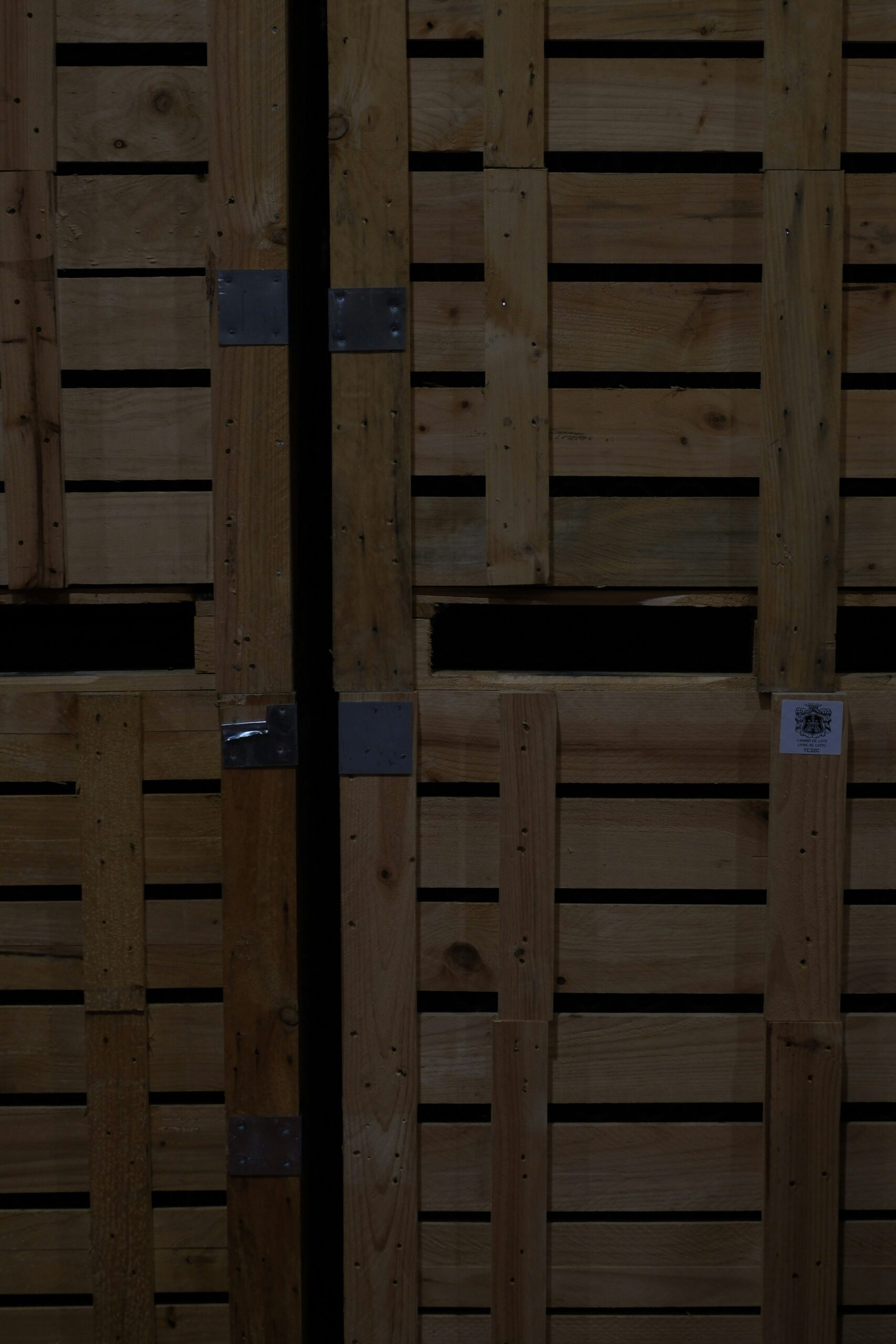
- Reinforced wooden crates: Not cardboard wrap or stretch film. Heat-treated timber frames rated for ISPM 15 compliance, built to absorb forklift impact and container vibration.
- Edge protectors: Foam or cardboard profiles on every panel edge. A 2mm chip on a gelcoat FRP facing becomes a delamination entry point within 12 months of field exposure.
- Container loading diagrams: A documented packing plan showing exactly how crates are positioned, braced, and strapped inside the container. This is your evidence if a freight damage claim arises.
If a supplier cannot provide photographs of their crating process and a sample loading diagram, they are reselling panels from a factory they do not control. Walk away.
Payment Structure: The 30/70 T/T Credibility Test
Payment terms reveal everything about a supplier’s financial stability and confidence in their product. The international standard for composite panel manufacturing is 30% deposit with 70% balance paid against a copy of the bill of lading after production completion and inspection. This structure protects both parties: the manufacturer funds raw materials, and you retain leverage until you see proof your panels exist.
Any deviation from this baseline warrants scrutiny. If a supplier demands 50% or more upfront without a documented reason tied to custom raw material procurement, they may be using your deposit to fund another client’s production. This is a common cash flow trap with small trading companies posing as manufacturers.
Red Flag: 100% Payment Before Production
If a supplier demands full payment before starting your order, terminate the conversation immediately. This is the single clearest indicator of a fraudulent or financially unstable operation. A legitimate factory with a 1,700+ sqm/day production line and 15 years of operating history has supplier credit terms for raw materials.
They do not need your full payment to begin production. We have seen buyers lose $40,000 to $80,000 on single orders because they paid 100% upfront and the supplier stopped responding. No warranty, no panels, no recourse once the funds clear an overseas account.
Written Warranty: Minimum 5 Years for Delamination
A supplier’s warranty is only as valuable as the paper it is written on and the company backing it. Verbal guarantees mean nothing in international trade. You need a signed, stamped warranty document that specifically covers delamination, core separation, and facing bond failure for a minimum of 5 years from the date of delivery. Generic “quality guarantees” that avoid naming specific failure modes are legally unenforceable.
Your warranty document must include these elements:
- Specific failure coverage: Delamination between facing and core material, foam core collapse, gelcoat blistering, and water ingress at panel edges.
- Defined remedy: Free replacement panels shipped at supplier’s cost, not a pro-rated discount on your next order.
- Exclusions listed explicitly: You need to know what is not covered so you can assess your own installation risk.
- Company stamp and authorized signature: A PDF without a corporate seal is unenforceable in Chinese commercial law.
A factory that stands behind its ISO 9001:2015 certification and its production process will provide this warranty without hesitation. Hesitation itself is a data point. If a supplier negotiates against providing a written delamination warranty, they are telling you their adhesive bonding process is not consistent enough to guarantee. Listen to that signal.
Red Flags: Walk Away From These Suppliers
Four supplier behaviors that should terminate your evaluation immediately. No negotiation can fix structural dishonesty or operational incompetence.
No Third-Party Testing and Factory Audit Refusal
If a supplier cannot produce ISO 9001:2015 certification or refuses an independent factory audit, close the conversation. This is non-negotiable. Our internal production audits across supply chains in 50+ countries consistently show that uncertified panel suppliers operate at defect rates of 3-8%, while ISO-certified factories maintain rates below 1%. For a specialized vehicle manufacturer running continuous assembly lines, that gap means the difference between profitable production and $2,000-$5,000 per hour in downtime.
Ask specifically for third-party test reports covering EN 13501-1 fire classification (minimum Class B for agricultural buildings) and ASTM E84 surface burning characteristics. A supplier who hesitates or offers only “internal test data” is hiding something. In our 15 years of production, we have found that factories willing to open their doors to SGS, TUV, or Bureau Veritas audits consistently deliver panel thickness tolerances within ±0.3mm for panels under 50mm. Those who refuse rarely maintain that precision.
Supplier Competing Directly in Your Market
This red flag destroys distributor and OEM relationships faster than any quality issue. Some Chinese composite panel manufacturers maintain their own export sales teams that sell directly to end-users in your target region, at prices that undercut your margins. You invest in market development; they harvest your customers.
Before signing any agreement, demand a clear answer on their direct sales activity in your territory. Check whether they exhibit at trade shows in your market under their own brand. Look at their website: do they list end-user pricing or target the same customers you serve? A legitimate manufacturing partner focused on B2B wholesale will have no issue signing a territorial exclusivity agreement. If they deflect or refuse, that silence is your answer.
Inconsistent Sample Quality
Request three sample batches produced on different days. Measure thickness at five points across each panel. If you see variance exceeding ±0.3mm on panels under 50mm, or ±0.5mm on panels between 50mm and 100mm, walk away. Thickness inconsistency in a single sample batch indicates a production line lacking continuous quality control, and that problem will multiply exponentially across a 1,000+ square meter order.
Pay attention to gelcoat finish uniformity on FRP sheets. Bubbles, micro-cracks, or color variation between samples reveal unstable raw material sourcing or inconsistent resin mixing ratios. For agricultural applications where panels face humidity, chemical exposure, and thermal cycling, surface defects become failure points within 18-24 months. A factory running an advanced continuous composite panel production line at 1,700+ sqm/day should deliver samples that are virtually identical. Anything less is a warning sign.
Missing Customs Documentation Competency
Incorrect HS codes, missing certificates of origin, or incomplete packing lists do not just delay delivery. They trigger inspections, storage fees, and in some cases, cargo seizure. For composite panels entering markets with anti-dumping duties on Chinese aluminum or steel products, precise material classification is critical. A supplier who cannot articulate the correct HS code for an FRP-faced PET foam core panel versus an aluminum-faced panel is gambling with your landed cost.
Evaluate their documentation before you place an order. Request copies of their standard export paperwork: commercial invoice template, packing list format, bill of lading samples from recent shipments, and any preferential certificate of origin they can provide. A supplier exporting to 50+ countries should have this documentation systematized. If they fumble through the request or send inconsistent templates, expect the same chaos when your container is sitting at port waiting for clearance.
Cost vs. Risk: Price Analysis of Agricultural Panels
The cheapest panel quote on paper often becomes the most expensive shipment you ever receive. Real cost is calculated at your assembly line, not on a supplier’s price list.
True Cost Breakdown: Unverified Suppliers vs. Certified Manufacturers
When you evaluate agricultural panel suppliers, the unit price difference between an uncertified trading company and an ISO-certified factory typically ranges from 10-18% per square meter. That gap looks significant on a spreadsheet. But here is what the spreadsheet does not show you: the unverified supplier cuts corners on resin saturation ratios, foam density consistency, and gelcoat thickness to hit that lower price point.
In our 15 years of production at Rax Panel, we have analyzed competitor samples sent by clients who switched to us after costly failures. The pattern is consistent: lower density cores, inconsistent fiberglass layup, and zero dimensional tolerance controls.
A certified manufacturer with ISO 9001:2015 quality management systems and ISO 14001 environmental compliance runs continuous inline inspections. Every 50mm PET foam core panel coming off our 1,700+ sqm/day production line is checked for thickness tolerance within ±0.3mm.
That precision is what prevents assembly misalignment on your vehicle production floor, an issue that costs $2,000-$5,000 per hour in downtime when panels do not fit jigs properly. You pay more per unit upfront with a certified factory, but you eliminate the hidden costs of rework, rejected batches, and production halts.
Defect Rate Comparison: The 3-8% vs. Under 1% Reality
Internal production audits across our 50+ country supply chain consistently show the same defect rate gap. Uncertified panel suppliers operate at a 3-8% defect rate. ISO-certified factories maintain rates below 1%. Let us put hard numbers to that difference for a standard bulk order of 2,000 sqm of FRP sandwich panels for mobile agricultural structures:
- Uncertified supplier (5% avg. defect rate): 100 sqm of unusable panels per 2,000 sqm order, material you paid for that cannot enter your production line.
- ISO-certified factory (<1% defect rate): Maximum 20 sqm defective per 2,000 sqm order, with most certified runs achieving under 10 sqm.
- Financial impact at $28/sqm: Uncertified suppliers cost you $2,800 in wasted material versus $280-$560 with a certified manufacturer, per shipment.
- Cascading production cost: Each defective panel discovered mid-assembly triggers jig repositioning, labor idle time, and delivery schedule disruption across your entire build queue.
Freight Damage Rates and Warranty Claim Costs
Most procurement guides ignore what happens to your panels during the 4-6 weeks they spend in ocean transit. This is a critical oversight. FRP and CFRT sandwich panels with gelcoat finishes are vulnerable to edge chipping, surface abrasion, and core compression if improperly loaded.
Trading companies without factory oversight typically wrap panels in standard corrugated cardboard and ship. No edge protectors, no container loading diagrams, no reinforced crating. We have seen freight damage rates as high as 7-12% on shipments from unverified suppliers who treat packaging as an afterthought.
Rax Panel ships panels in reinforced wooden crates with engineered edge protectors and provides detailed container loading diagrams for every shipment. This is not a luxury add-on: it is a non-negotiable requirement when you are shipping composite panels with thermal conductivity ratings of 0.028-0.035 W/m·K across oceans.
The cost difference between reinforced crating and standard packaging adds approximately $0.80-$1.20 per square meter to your order. Compare that to the cost of filing a warranty claim for 150 sqm of edge-damaged panels, navigating a 60-90 day claims process with a supplier who has no financial incentive to honor it, and scheduling a replacement shipment that pushes your project timeline back by 8 weeks.
Total Landed Cost Calculation
Smart procurement engineers calculate total landed cost, not unit price. This is the metric that determines whether your panel supplier decision generates margin or destroys it. Total landed cost accounts for the unit price, defect waste, freight damage loss, customs duties, inland freight, and the administrative overhead of managing quality disputes. Here is how the math breaks down across the two supplier categories when you factor in every variable:
- Low-cost unverified supplier: Lower unit price, but add 3-8% defect waste, 7-12% freight damage risk, zero dimensional tolerance guarantees causing assembly rework at $2,000-$5,000/hour, and 60-90 day warranty dispute cycles with no guaranteed resolution.
- Certified manufacturer (ISO 9001:2015): Higher unit price offset by under 1% defect rates, reinforced crating reducing freight damage below 2%, ±0.3mm thickness tolerance eliminating assembly failures, and documented quality management systems enabling rapid issue resolution.
- Net result on a 2,000 sqm order: The certified manufacturer consistently delivers 8-15% lower total landed cost when you account for waste, rework, and dispute management, despite the higher quoted unit price.
The bottom line is straightforward. If your procurement process evaluates suppliers on quoted unit price alone, you are optimizing for the wrong metric.
A 15-year-old composite panel manufacturer with a 1,700+ sqm/day continuous production line, ISO certifications, and documented quality controls will always deliver lower total cost of ownership than an unverified supplier offering a 12% discount on the invoice, and charging you 30% more in hidden failures after delivery. Calculate your real costs at the assembly line, not the purchase order.
| Panel Type | Cost Factor | Risk Factor | Performance Metric | Value Verdict |
|---|---|---|---|---|
| 29ga Standard Steel Agricultural Panel | Low initial unit cost ($6-9/m²) | R-0.0 insulation value: zero thermal protection for livestock or stored crops | Weight: 8-12 kg/m²; Lifespan: 15-20 yrs with maintenance | False economy: energy losses of 30-40% vs. insulated composites erase savings within 18 months |
| 50mm PET Foam Core FRP Sandwich Panel | Mid-range unit cost ($18-28/m² depending on facing) | ±0.3mm tolerance deviation risk if supplier lacks continuous production line QC | R-2.8 to R-3.2 thermal resistance; Weight: 3.5-5.5 kg/m² | Optimal ROI: 30-40% energy reduction and 50% weight savings pay back premium in 2-3 years |
| uncertified Factory Composite Panel | Lowest quoted price ($12-16/m²) | 3-8% defect rate vs. <1% at ISO-certified factories. Hidden replacement and downtime costs | No guaranteed fire rating (EN 13501-1); No certified thickness tolerance | High-risk trap: $2,000-$5,000/hr downtime from out-of-spec batches destroys any unit savings |
| PP Honeycomb Core Panel (Mobile Structures) | Premium tier ($25-35/m²) | Freight damage during 6-week ocean transit if supplier omits reinforced crating | Lightest option: 3.0-4.2 kg/m²; Flexural strength: 150+ MPa | Best for mobile ag structures: fuel savings of 15-20% justify premium for vehicle-mounted applications |
| Aluminum Foam Core Sandwich Panel | High tier ($30-45/m²) | Thermal conductivity 0.028-0.035 W/m·K variance if core density is inconsistent across batch | Fire rating: Class B (EN 13501-1); Weight: 5.0-7.0 kg/m² | Justified for livestock buildings demanding fire compliance and hygiene-rated surfaces |
| GRP Plywood Composite Panel | Budget composite ($14-20/m²) | Moisture ingress at facing joints if gelcoat seal is incomplete, a hidden mold liability | Moderate insulation: R-1.5 to R-2.0; Weight: 6.0-8.0 kg/m² | Acceptable for dry storage; insufficient for temperature-controlled or high-humidity agricultural use |
| PUR/PIR Insulated Sandwich Panel | Mid-tier ($20-30/m²) | Delamination risk if facing adhesion process is not monitored. Verify ISO 9001:2015 certification | R-3.5 to R-4.0 per 50mm; Fire rating: Class B-C | Strong thermal performer for cold storage ag facilities; requires certified factory audit before order |
Conclusion
If your panels go into vehicle assembly or insulated agricultural structures, ISO certification and ±0.3mm thickness tolerance are what separate real manufacturers from expensive mistakes. A batch with 0.5mm variation shuts down your line at $2,000–$5,000 per hour. That single cost erases every cent you saved on unit price.
Request three things from any factory before you commit: their last thickness tolerance test report, a sample cut to your exact spec, and their reinforced crating documentation. A manufacturer with its own production line ships all three within one week. If they can’t produce that, you’re talking to a trading company, and you’ll have zero recourse when damaged panels arrive at your dock.
Frequently Asked Questions
What are the factors to consider in choosing the right agricultural supplier?
Evaluate six critical factors: quality (ISO certifications, third-party test reports), reliability (production capacity verification, on-time delivery track record), product diversity (range of core materials and facings), pricing transparency (itemized quotes vs. lump-sum), sustainability (environmental certifications), and reputation (verified client references in 10+ countries). Request factory audit reports and sample evaluations before committing to bulk orders.
How do I verify an agricultural panel factory’s real production capacity?
Do not rely on stated capacity alone. Request a live video walkthrough of the production floor during operating hours. Verify equipment: a continuous composite panel production line indicates genuine high-volume capability (1,500+ sqm/day). Ask for production logs from the last 90 days showing daily output. Cross-reference with raw material purchase invoices. A factory claiming 2,000 sqm/day but purchasing foam for 500 sqm/day is misrepresenting capacity.
What payment terms should I demand from composite panel suppliers?
Standard international terms for first orders: 30% deposit with order confirmation, 70% against Bill of Lading (T/T). Never agree to 100% prepayment. After 3-5 successful shipments, negotiate to 30/70 or request open credit with LC at sight. Require a written warranty clause covering delamination, core separation, and facing defects for a minimum of 5 years. Verify the supplier accepts third-party pre-shipment inspection (SGS, Bureau Veritas) at their cost.
What certifications must agricultural insulated panels carry?
For structural agricultural applications, require: ISO 9001:2015 (quality management), fire resistance classification per EN 13501-1 (minimum Class C, Class B for occupied structures), and thermal conductivity certificates from accredited labs. For food-processing or livestock-adjacent buildings, verify compliance with relevant hygiene standards (USDA, FDA for US markets). Request original certificates, not copies. Verify document numbers with issuing bodies.
How should agricultural panels be packaged for ocean freight?
Require reinforced wooden crates with internal shock absorbers, not loose stacking on pallets. Panels must have edge protectors on all four sides to prevent compression damage. The supplier must provide a container loading diagram showing weight distribution and securing points. For composite foam core panels, insist on moisture barrier wrapping to prevent condensation absorption during 4-6 week transit. Confirm the supplier provides comprehensive packing lists and compliant customs documentation (HS codes, certificates of origin).