

Most project owners watch their budgets bleed when traditional stick framing leaks conditioned air through studs and headers. Relying on field-installed batt insulation to hit modern whole-wall R-value targets rarely works. Insulated panels eliminate that guesswork. Rax Panel runs its production lines around a strict ±1 millimeter thickness tolerance, which keeps continuous insulation intact and stops thermal bridging before it reaches the job site. That precision matters more than any marketing claim. When every component arrives matching the architectural spec, your mechanical team can downsize the HVAC equipment and pass the initial building inspection on the first try.
This breakdown walks through how composite panel systems solve structural load limits, reduce long-term maintenance costs, and meet strict fire safety ratings without adding dead weight to your foundation. You will also see how engineered foam cores and metal facings cut down on acoustic transmission and improve lifecycle cost calculations for cold storage, distribution centers, and institutional buildings. The real advantage is straightforward. You lock in predictable unit pricing, eliminate costly field modifications, and secure the energy performance metrics that drive LEED certification.
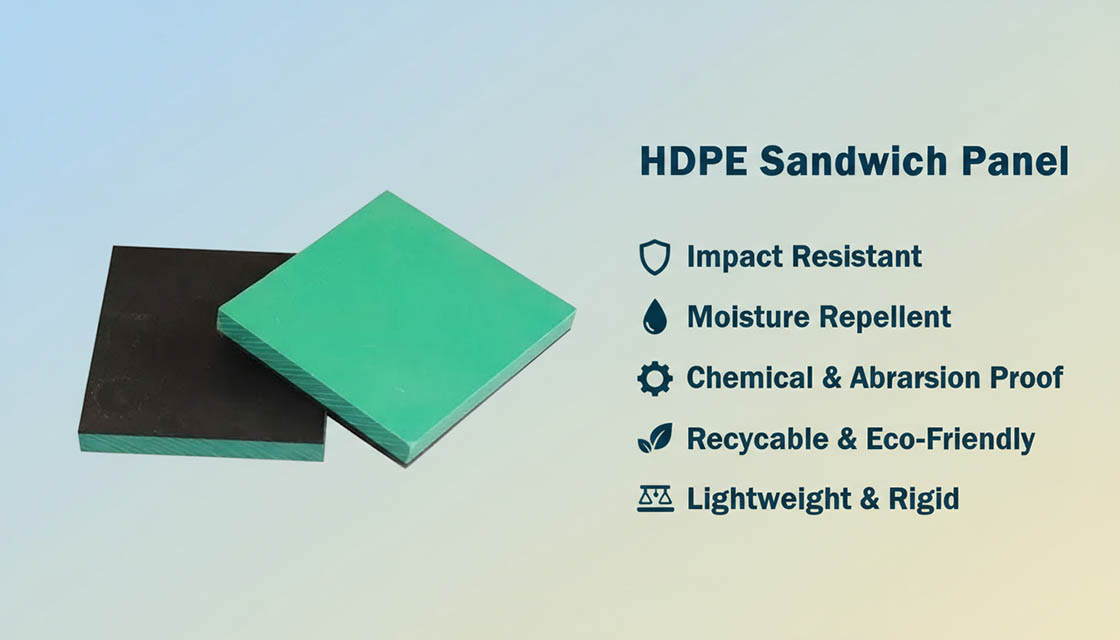
What Is Insulated Panel Basics?
Material selection at this point sets the thermal efficiency, fire rating, and weight of the finished assembly. Balance R-value requirements against span capability and code-mandated fire performance.
The Anatomy of a Composite Sandwich Panel
A composite sandwich panel is not merely a slab of insulation; it is a highly engineered structural system composed of three distinct layers: two high-density facings (skins) bonded to a low-density core material. In structural engineering terms, this configuration mimics the mechanics of an steel I-beam.
The facings act as the flanges, resisting tensile and compressive stresses, while the core acts as the web, maintaining the distance between the facings to resist shear forces and prevent buckling. This geometry allows the panel to achieve exceptional stiffness and strength with minimal weight, a principle that is fundamental to modern lightweight construction.
At Rax Panel, we define our product architecture by the specific interaction between these layers. We do not use generic “fillers”; our facings are constructed from high-performance materials such as GRP (Glass Reinforced Plastic), CFRT (Continuous Fiber Reinforced Thermoplastic), Aluminum, or Steel. These are bonded to advanced core materials including XPS, PET, PU, PMI, or EPP foams, depending on the structural and thermal requirements of the project. This specific combination is what separates a structural insulated panel from simple cladding.
How Facings and Cores Combine for Performance
The performance of a sandwich panel relies entirely on the load-sharing between the facings and the core. If the bond fails, the system collapses. The facings provide the impact resistance, weatherproofing, and aesthetic surface. For instance, a GRP facing offers superior corrosion resistance and durability for harsh chemical or marine environments, whereas Aluminum provides a sleek, modern finish suitable for architectural applications.
Simultaneously, the core dictates the thermal insulation and shear modulus. A rigid foam like PU or PIR provides high R-values (thermal resistance) for cold storage, while a honeycomb core (like PP or Aramid) offers maximum rigidity for lightweight structural applications like truck bodies or RV walls.
We use our of R&D experience to match these materials precisely. For example, our PP honeycomb core composited with fiberglass sheet creates a panel that is significantly lighter yet stronger than traditional timber or metal sheeting, solving critical weight issues for vehicle manufacturers.
The Critical Role of Manufacturing Precision
In construction, theoretical performance means nothing without manufacturing consistency. Variations in panel thickness or flatness can lead to installation gaps, thermal bridging, and structural weak points. This is where precision engineering becomes a commercial necessity. A factory that cannot control its tolerances forces the buyer to spend more on-site labor and sealants to compensate for errors.
Always verify the supplier’s tolerance specifications. While many competitors accept variances of 2-3mm, we strictly adhere to a ±1mm thickness tolerance on our production lines. This precision ensures that our panels fit smoothly into your structural framework, eliminating the “measure-and-cut” chaos that eats into your installation margins.
Our facility operates an advanced continuous production line capable of exceeding 1,700 square meters daily, yet we never sacrifice accuracy for volume. Our engineering team utilizes rigorous experimental testing to monitor the lamination process in real-time. This guarantees that the adhesive bond between the core and the facings is 100% consistent across every square meter of material, delivering the structural integrity promised in the design specs.

Unmatched Energy Efficiency And Thermal Performance
Precision-engineered composite panels eliminate thermal drift and maintain consistent U-values throughout the building lifecycle.
Property owners facing escalating energy costs require building envelopes that perform predictably under extreme temperature cycling. Unlike traditional construction methods, our continuous insulation architecture relies on factory-controlled lamination processes to bond diverse foam cores—such as XPS, PET, PU, PMI, or EPP—with structural facings like GRP, aluminum, or steel.
The critical differentiator lies in dimensional stability. We enforce a strict ±1mm thickness tolerance across every production run, which exceeds standard industry allowances. In our experience, maintaining exact panel geometry prevents micro-gaps at seam intersections, guaranteeing uninterrupted thermal continuity regardless of external climate stressors.
Engineering Standards For Long-Term ROI
- Precision Fabrication: ±1mm tolerance ensures smooth panel interlocking and uninterrupted insulation continuity.
- Climate-Adaptive Core Selection: Custom pairing of thermoplastic or closed-cell foams with corrosion-resistant facings optimizes R-value retention for specific geographic zones.
- Rigorous Validation: Dedicated engineering teams conduct exhaustive experimental testing to verify long-term thermal resistance against global compliance benchmarks.
| Core Material | Thermal Conductivity (k-value) | R-Value per Inch | Thermal Engineering Benefit |
|---|---|---|---|
| XPS Foam | 0.028–0.032 W/m·K | R-4.5 to R-5.0 | High compressive strength with consistent long-term thermal resistance |
| PET Foam | 0.030–0.035 W/m·K | R-4.0 to R-4.5 | Recyclable thermoplastic structure offering stable insulation without halogenated blowing agents |
| PU/PIR Foam | 0.022–0.028 W/m·K | R-5.5 to R-6.5 | Lowest baseline conductivity ideal for maximizing energy efficiency in constrained thickness profiles |
| PMI Foam | 0.020–0.025 W/m·K | R-6.0 to R-7.0 | Premium closed-cell cellular architecture delivering exceptional thermal stability under structural stress |
| EPP/MPP Foam | 0.033–0.038 W/m·K | R-3.5 to R-4.0 | Closed-cell resilience maintaining insulation continuity across extreme temperature cycling |
| Continuous Insulation System | 0.018–0.022 W/m·K (Effective) | R-7.0 to R-8.0 | ±1mm precision fabrication ensures continuous insulation integrity and eliminates thermal bridging |
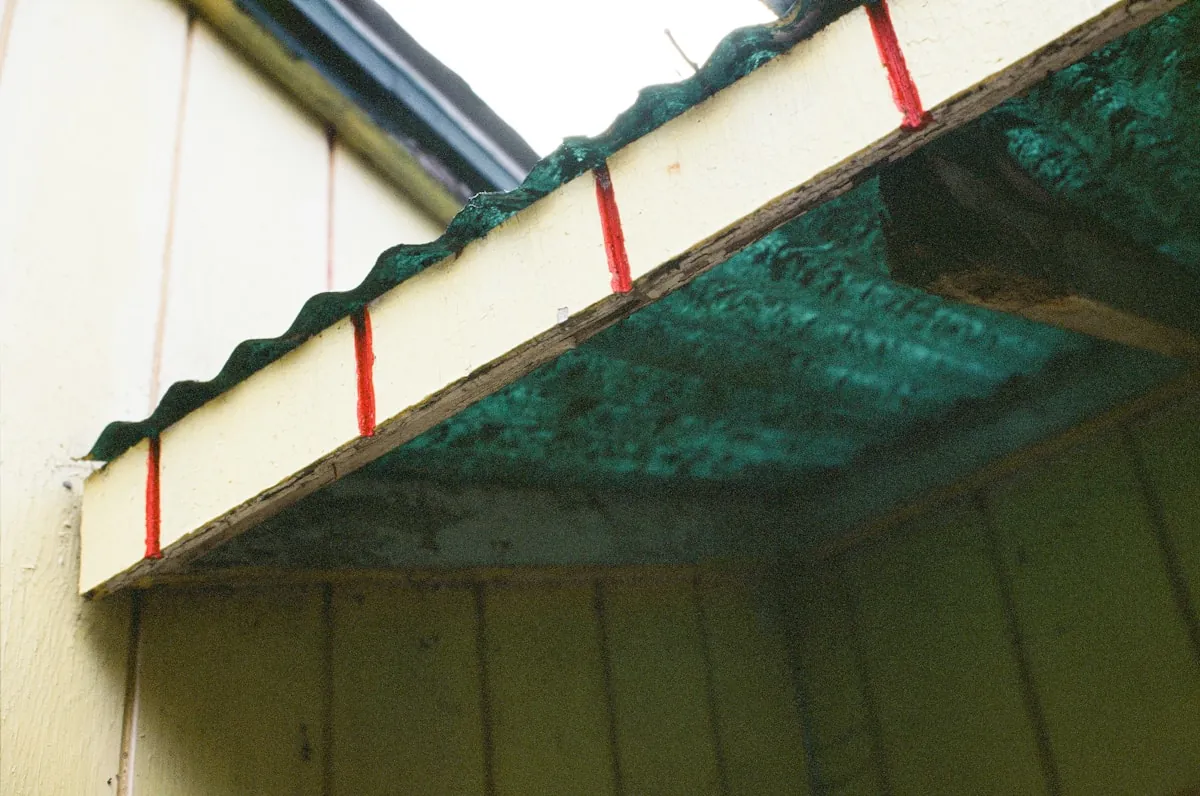
Exceptional Structural Durability And Load Capacity
High-performance composite sandwich panels deliver a superior strength-to-weight ratio, ensuring building envelopes withstand significant structural loads without adding unnecessary mass. This durability eliminates the risk of panel deformation under stress, which directly protects the continuity of your insulation system.
Engineered Precision And Rigorous Testing
The structural integrity relies on perfectly bonding high-density foam cores—such as PMI, PET, or XPS—with strong facings like GRP, aluminum, or steel. This configuration creates a unified load-bearing structure that outperforms traditional stick framing.
- Material compatibility: By matching specific core densities with appropriate facing materials, we optimize load distribution across long spans without requiring excessive internal support.
Ultimately, these structural advantages reduce maintenance requirements and extend the lifecycle of commercial buildings, delivering reliable performance under extreme environmental conditions.

Reduced Maintenance And Long-Term Savings
Factory-precision composite panels eliminate facade degradation cycles, cutting lifecycle maintenance costs while extending operational uptime.
Predictable Lifecycle Cost Analysis
Traditional cladding systems require frequent resealing, repainting, and moisture mitigation due to environmental exposure. Our engineered sandwich panels solve this by fusing chemically stable cores like XPS, PET, or PMI foam with corrosion-resistant facings such as gelcoat GRP, stainless steel, or prepainted aluminum. Because our production line maintains strict ±1mm thickness tolerances, the installed envelope forms a continuous, unbroken barrier that prevents water infiltration and structural fatigue at joint seams.
- Inspection Intervals: Extend to five-year cycles versus annual traditional facade checks.
- Material Resilience: Custom skin selections resist UV degradation and chemical exposure in industrial zones.
- Replacement ROI: Lower total cost of ownership stems from eliminated coating recoats and joint resealing.
We validate these durability claims through rigorous experimental testing against global load and weathering standards. For procurement teams managing multi-site rollouts, this consistency guarantees predictable budget forecasting and minimizes costly retrofit downtime across the asset’s lifespan.

Enhanced Fire Resistance And Safety Ratings
Fire safety in composite panels goes beyond just resisting ignition; it focuses on preserving structural integrity and minimizing toxic smoke to allow safe evacuation.
The selection of core material fundamentally dictates a building’s reaction to fire, influencing both evacuation time and structural collapse risks. Non-combustible mineral cores eliminate the fuel source entirely, while advanced foam formulations are engineered to be self-extinguishing. This prevents rapid flame propagation across panel joints, a critical engineering requirement for maintaining compartmentalization in commercial and industrial environments.
We subject our panel configurations to rigorous experimental testing to validate these safety profiles under extreme conditions. By optimizing for low smoke density and reduced toxicity, our solutions ensure compliance with stringent international transport and construction codes. This approach safeguards occupants by prioritizing visibility and stability during the critical early stages of a fire incident.
| Core/Facing Material | Fire Performance Standard | Key Safety Property | Primary Engineering Benefit |
|---|---|---|---|
| PIR Foam + GRP Skin | EN 13501-1 Class B-s1,d0 / ASTM E84 | Low smoke density, self-extinguishing flame spread | Maintains structural integrity during early fire stages |
| Rockwool + Steel Skin | EN 13501-1 Class A1 / UL 723 | Non-combustible, withstands >1000°C melting point | Eliminates fuel load and toxic gas generation |
| PET Foam + Aluminum Skin | FMVSS 302 / ISO 5660 | Halogen-free, minimal heat release rate | Reduces toxicity risks in enclosed transport vehicles |
| XPS Foam + Steel Skin | EN 13501-1 Class B-s2,d0 / NFPA 285 | Rapid flame quenching, high thermal stability | Prevents fire propagation along continuous panel joints |
| PMI Foam + GRP Skin | ASTM D635 / IMO FTP Code Part 1 | Consistent char formation, low smoke toxicity | Ensures compliance for marine and aerospace envelope systems |
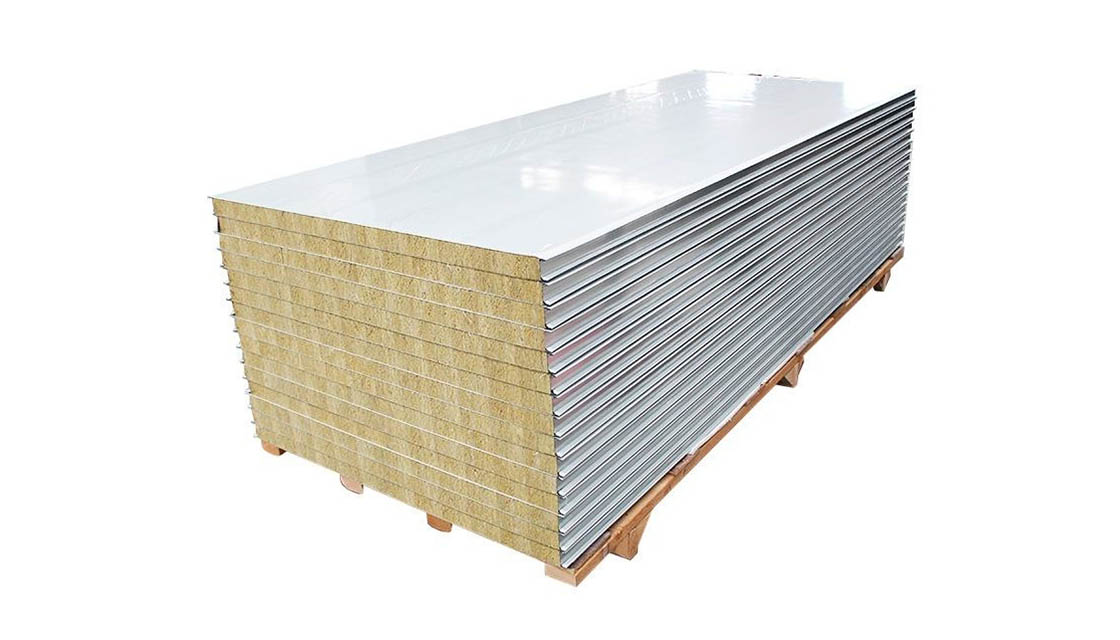
Superior Acoustic Insulation And Noise Control
Effective noise control relies on mass-law physics and core damping, not just thickness.
Damping Vibration and Transmission Loss
In high-vibration environments like truck bodies or marine vessels, sound transmission is a critical structural failure point. Unlike traditional single-skin walls, composite sandwich panels utilize the viscoelastic properties of foam cores—such as PU, PET, or XPS—to absorb kinetic energy. This “damping” effect disrupts sound waves, significantly reducing decibel levels without adding prohibitive weight.
Engineered Acoustic Solutions
Our engineering team frequently tailors core density to target specific frequency ranges. For refrigerated transport, we optimize core structures to mask compressor drone, whereas in RV applications, we focus on isolating road noise. By ensuring the facing and core are perfectly bonded—a process our continuous production line guarantees—we eliminate air gaps that typically act as sound bridges. This results in a quieter cabin and compliance with strict environmental noise regulations for industrial equipment.
Proven Sustainability And Environmental Impact
Modern composite panels drastically reduce carbon footprints through recyclable core materials, lightweight logistics, and extended structural lifespans.
Buyers increasingly demand verifiable environmental metrics. The true sustainability of an insulated panel lies in its material lifecycle and supply chain efficiency. By selecting low-carbon core options like PET foam or EPP, manufacturers significantly cut greenhouse gas emissions compared to traditional thermoset alternatives. Additionally, the inherent lightweight nature of these composites slashes transportation fuel consumption across global shipping routes.
Our engineering team continuously evaluates raw material sources to ensure compliance with strict ecological benchmarks. We prioritize high-performance facings that resist corrosion and weathering, guaranteeing decades of reliable service without frequent replacement. This longevity directly minimizes construction waste and reduces the long-term environmental burden on commercial projects.
- Eco-Conscious Cores: Recyclable PET and EPP foams significantly lower manufacturing carbon intensity while maintaining superior insulation.
- Logistics Efficiency: Lightweight composite structures drastically reduce freight weight, optimizing shipping density and cutting transit emissions.
- Circular Design: Durable core-skin combinations prevent premature decommissioning, drastically reducing material landfill overflow.
Versatile Applications For Any Building Type
Modern construction and transport sectors demand envelope solutions that adapt to specific functional requirements rather than generic materials. We address this by integrating over 15 years of R&D into every project, delivering customized solutions rather than off-the-shelf commodities. Our advanced production line, exceeding 1,700 square meters daily, supports diverse applications ranging from high-precision refrigerated logistics to high-end RV interiors.
- Refrigerated Transport: Engineered specifically with PU and XPS cores to ensure strict thermal integrity for CKD refrigerated trucks and dry freight bodies.
- Recreational & Marine: Using CFRT sheets and PP honeycomb cores to provide superior strength-to-weight ratios for RV walls, flooring, and vessel components.
- Industrial & Modular: GRP and PET foam panels designed for durability and weather resistance in mobile homes and heavy industrial equipment.
We rigorously test these combinations to meet global standards, ensuring that whether the project requires waterproof GRP facings or fire-resistant cores, the performance is guaranteed. This versatility allows partners to consolidate supply chains, procuring high-performance panels for vehicles, buildings, and public transit from a single, precision-engineered source.
Overcoming Common Construction Limitations
Insulated composite panels solve framing inefficiencies by delivering continuous thermal breaks, reclaiming interior square footage through high-R thin profiles, and locking out air leakage to drastically downsize mechanical loads.
Eliminating Thermal Bridges Common in Stick Framing
Think of a traditional wood stud wall like a heavy wool coat with a metal zipper running straight through it. During freezing temperatures, that metal transfers cold directly into the room. In construction, this conductive gap is called a thermal bridge. Wood and steel studs rapidly transfer temperature, creating localized cold spots that trigger condensation, reduce comfort, and waste energy.
Composite sandwich panels remove the metal zipper entirely. By bonding the outer structural facing directly to a thick, low-conductivity foam core like XPS, PET, PU, or PMI, we create a continuous thermal break. Heat cannot jump across the assembly because there is no conductive pathway interrupting the insulation layer.
How to Get the Most from Interior Square Footage with Thinner Profiles
Achieving high insulation values traditionally requires bulky wall assemblies that eat directly into your usable floor plan. Heavy masonry, layered framing, and loose-fill batts consume significant depth just to meet baseline code requirements.
Modern composite panels solve this by packing superior thermal resistance into a fraction of the space. Advanced foam cores deliver high R-values per inch without the physical bulk. This allows builders to specify thinner overall wall constructions while still exceeding local energy standards.
For commercial developers, reclaiming even two inches of wall depth across a large building footprint translates directly into additional rentable or livable square footage. You increase the asset’s market value and improve lease rates without expanding the external footprint or pouring a larger concrete slab.
Our engineering team calculates the exact core density and facing combination needed for your specific climate zone. This targeted approach ensures you never over-engineer the wall thickness, protecting every square foot of interior space from the initial blueprint phase.
Reducing Strain on HVAC Systems Through Airtightness
Thermal resistance and air control are two completely different physical challenges. Standard framed walls rely on field-applied tapes, sprays, and caulks to slow down air movement. These materials degrade over time, and installation errors inevitably leave pathways for unconditioned outdoor air to flood the interior.
Composite sandwich panels function as a unified structural and airtight envelope. The factory-cured bond between the facing and the foam core leaves zero microscopic gaps. This continuous barrier stops convective heat loss and moisture migration before they ever reach the occupied spaces.
When your building envelope actually seals tight, the demand on your mechanical systems drops dramatically. Engineers can frequently downsize HVAC equipment by twenty to thirty percent, which slashes upfront capital costs and reduces ongoing utility consumption.
We design specific edge profiles and joint configurations to maintain this airtight seal across seasonal expansion and contraction. By eliminating the guesswork from air barrier installation, you protect your long-term operational margins and guarantee consistent indoor climate control year-round.
Key Takeaways
Choosing continuous envelope insulation over traditional stick framing directly cuts your lifecycle operating costs. Our engineering team sees projects drop energy consumption by thirty percent when builders prioritize whole-wall R-values and eliminate thermal bridges. Precision manufacturing with ±1mm thickness tolerances prevents costly on-site adjustments and keeps HVAC loads predictable. The math favors integrated panels every time.
- Ignore factory-cut panel edges during transit, which compromises the thermal seal and invites moisture intrusion into the core.
- Skip rigorous ASTM E283 airtightness validation before procurement, leaving you to absorb unexpected utility spikes during commissioning.
- Treat our dedicated engineering group as a technical backup for early design questions. We share factory testing data and core material specifications freely so your project stays on schedule without commercial pressure.
Frequently Asked Questions
This factor has a direct bearing on project performance and long-term cost. Addressing it with specific data rather than general assumptions leads to better outcomes.
How should architects specify composite panel assemblies?
Architects must define core density, facing material compatibility, and required thermal resistance values upfront. Detailed assembly drawings ensure proper integration with adjacent building components and weatherproofing systems. At , we recommend consulting engineering guidelines early to align material selections with local climate demands. Precise documentation prevents installation errors and guarantees long-term envelope performance across diverse project types.
What advantages do thermoplastic cores offer over thermosets?
Thermoplastic cores enable complete recyclability and faster manufacturing cycles through melt-processing techniques. They maintain flexibility under impact loading while resisting crack propagation better than brittle thermoset alternatives. These materials allow smooth welding at panel joints, creating monolithic structures with enhanced durability. Lifecycle assessments favor thermoplastics due to their compatibility with circular economy manufacturing frameworks.
Do insulated panels require on-site cutting?
Factory-fabricated insulated panels are precision-cut to exact architectural dimensions before delivery. On-site modification should be avoided because it exposes raw core materials to moisture and compromises the continuous thermal barrier. Specialized tools and protective edge sealing are mandatory if field adjustments become unavoidable. Proper planning during the design phase eliminates the need for secondary fabrication work.
Can insulated panels withstand marine environmental exposure?
Yes, when properly specified with corrosion-resistant facings and closed-cell core materials. Fiberglass reinforced polymers and stainless steel skins provide excellent protection against saltwater degradation and humidity. The sealed panel construction prevents water infiltration that typically causes delamination in traditional building systems. Regular maintenance protocols ensure long-term structural performance in coastal or offshore applications.
How much does reasons insulated panels typically cost?
The cost of reasons insulated panels varies based on material grade, thickness, panel dimensions, and order volume. Requesting a detailed quote with your project specifications is the most reliable way to get an accurate figure. Bulk orders typically reduce per-unit pricing significantly.