

Evaluating the mechanical capacity of composite sandwich panels requires a rigorous examination of the internal cellular core. In architectural envelopes and industrial transport enclosures, aluminum honeycomb cores provide structural shear transfer while maintaining bulk densities between 34 and 95 kg/m³. When flatwise compressive resistance tested under ASTM C365 varies from 1.5 to 7.8 MPa, minute changes in foil geometry directly shift failure modes from ductile yielding to catastrophic elastic buckling. Selecting the wrong core specification risks panel delamination, excessive deflection under negative wind gusts, and surface skin wrinkling.
Inside our manufacturing workshops, continuous automated foil rolling and expansion lines process high-purity aluminum alloys with thickness tolerances held within 0.003 mm. Computerized printing heads apply thermosetting epoxy node lines at precise geometric pitches before curing blocks in calibrated thermal ovens. Our engineering team routinely tests core specimens for node peel resistance above 3.5 N/mm and conducts planar shear verifications per ASTM C273. This technical analysis explores the five primary variables that govern honeycomb core performance in structural sandwich constructions.
Understanding Compressive and Shear Stress Mechanics
In structural sandwich construction, the cellular core functions as the web of an extended I-beam, carrying transverse shear loads while stabilizing the thin outer skins against localized buckling. Specifying high performance architectural aluminum honeycomb panels allows facade engineers to increase structural moment of inertia by thirty times without adding substantial foundation dead weight. The core must possess adequate flatwise compressive modulus to resist perpendicular impact loads and cyclic wind suction without permanent plastic deformation.
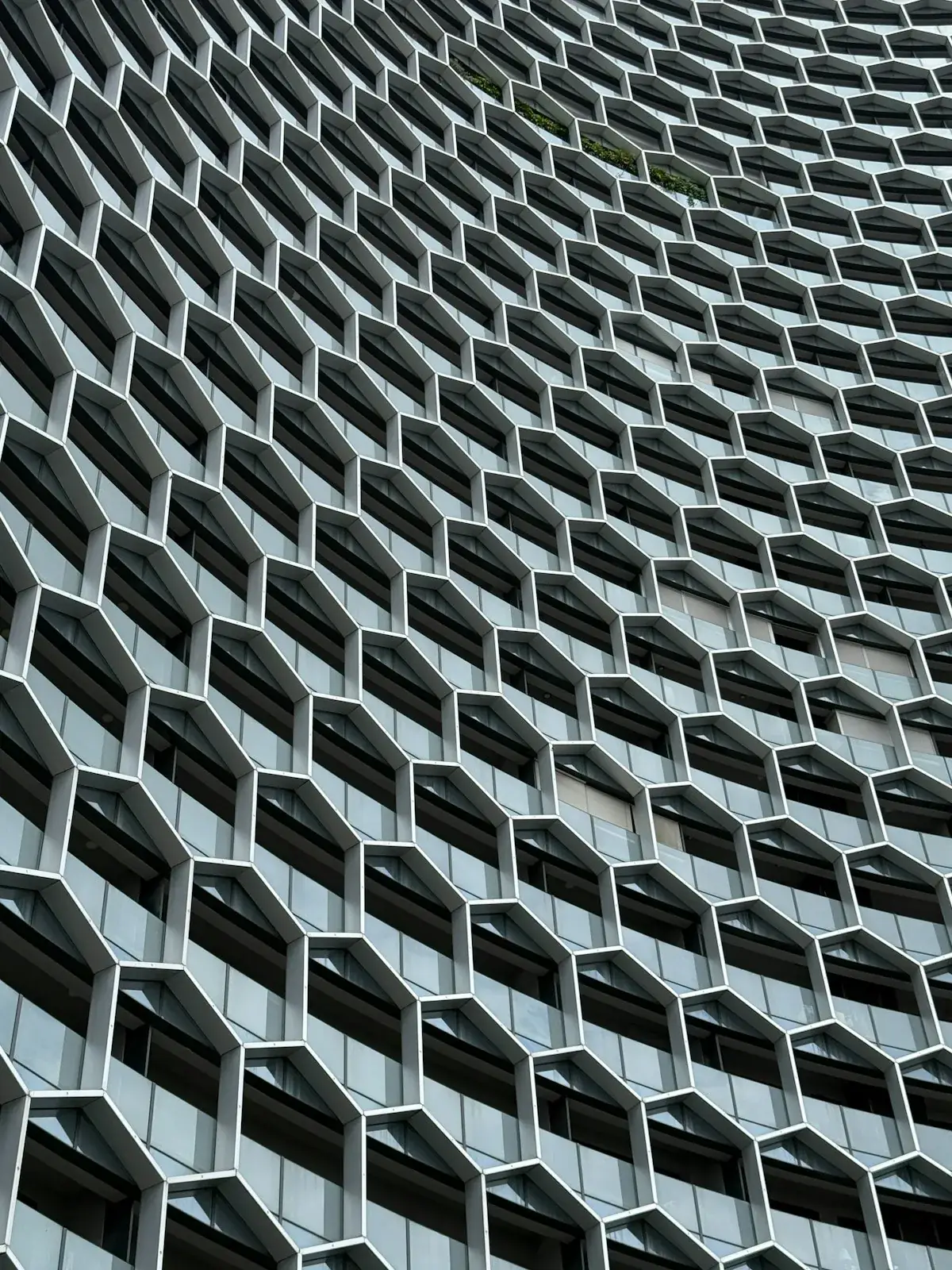
Under pure out-of-plane compression, individual vertical cell walls act as miniature structural columns subject to end constraints. If compressive loads exceed critical thresholds, cell walls collapse through localized elastic buckling or continuous plastic folding. In addition, when lateral wind suction bends the exterior panel, the core absorbs significant horizontal shear stresses. High quality aluminum honeycomb cores maintain sufficient shear modulus to keep total panel deflection well below the stringent L/175 architectural limit.
The distribution of internal shear forces is highly dependent on core continuity and uniform cell expansion. Inconsistencies during expansion create distorted hexagonal geometries that induce localized stress peaks under uniform surface loads. These stress concentrations cause premature adhesive shear failure along the skin-to-core bond line, compromising composite action across the entire building envelope.
Why Foil Thickness Controls Structural Cell Stiffness
Foil thickness represents the primary mechanical lever governing the compressive and shear strength of expanded cellular cores. Classical plate buckling equations demonstrate that the critical elastic buckling stress of an unbraced cell wall is proportional to the cube of its thickness divided by cell length. Consequently, increasing foil gauge from 0.04 mm to 0.06 mm raises localized wall buckling resistance by more than 55%. Minor variations in raw foil manufacturing tolerances produce substantial shifts in ultimate load-bearing limits.
Using ultra-thin foils below 0.03 mm reduces raw material mass but renders cell walls susceptible to premature micro-buckling during panel lamination. Under standard hot press bonding cycles, hydraulic pressure can crush weak cell edges, creating uneven bond planes and reduced peel resistance. For heavy exterior cladding exposed to cyclonic wind zones, structural calculations mandate foil gauges between 0.05 mm and 0.08 mm to guarantee stable mechanical resistance.
Foil thickness also directly influences energy absorption capacity during high-velocity impacts. In ballistic barriers, transport flooring, and architectural spandrel infills, thicker cell walls deform through progressive plastic folding rather than sudden brittle fracture. This controlled crushing behavior absorbs substantial kinetic energy while shielding internal structural framing from dynamic shock damage.
How Cell Size Dictates Core Density Ratios
Hexagonal cell diameter establishes the spatial density of vertical supporting webs across the panel face. Standard commercial specifications range from 1/4 inch (6.35 mm) to 3/4 inch (19.05 mm), dictating bulk core density between 34 and 95 kg/m³. Smaller cell diameters increase the quantity of continuous foil walls per square meter, distributing concentrated loads over a broader contact surface. When pairing cores with thin architectural skins under 0.8 mm, smaller cell sizes prevent visible surface dimpling and oil-canning.

Conversely, larger cell configurations reduce panel weight for interior partitions, ceiling baffles, and signage where external wind loads remain negligible. However, expanding cell size without increasing foil thickness drastically reduces bare compressive strength under ASTM C365. Engineering specifications must carefully balance structural wind pressure requirements against overall building dead load budgets when selecting aluminum honeycomb cores.
| Cell Size (Inches / mm) | Foil Gauge (mm) | Core Density (kg/m³) | ASTM C365 Bare Comp. (MPa) | L-Direction Shear (MPa) |
|---|---|---|---|---|
| 1/4″ (6.35 mm) | 0.05 mm | 68 kg/m³ | 4.6 MPa | 2.4 MPa |
| 3/8″ (9.52 mm) | 0.04 mm | 48 kg/m³ | 2.5 MPa | 1.5 MPa |
| 1/2″ (12.70 mm) | 0.05 mm | 42 kg/m³ | 2.0 MPa | 1.2 MPa |
| 3/4″ (19.05 mm) | 0.06 mm | 34 kg/m³ | 1.5 MPa | 0.9 MPa |
The interaction between cell size and core height creates distinct structural performance envelopes. Taller cores require denser cell configurations to prevent lateral wall swaying under heavy compressive loads. Specifying a 1/4-inch cell size in a 50 mm thick panel maintains wall verticality, whereas a 3/4-inch cell in the same thickness exhibits reduced column stability.
Compare 3003-H18 and 5052-H39 Alloy Tempers
The metallurgical composition of the raw aluminum foil sets absolute boundaries for strength, elongation, and environmental corrosion resistance. Commercial architectural cladding predominantly specifies alloy 3003-H18, which uses manganese additions to attain a nominal yield strength of 165 MPa. Alloy 3003 provides high ductility, enabling smooth, tear-free expansion during core block manufacturing while offering an economical cost structure for commercial facades.
Marine vessels, aerospace structures, and walk-on cleanroom ceiling systems demand alloy 5052-H39, an aluminum-magnesium composition delivering yield strengths exceeding 240 MPa. The magnesium content provides outstanding resistance to saltwater pitting and chemical atmospheric corrosion. In marine and coastal facade applications, specifying 5052 alloy foils prevents intergranular corrosion along cell nodes, ensuring decades of structural endurance under harsh cyclic weather conditions.
| Property Parameter | Alloy 3003-H18 | Alloy 5052-H39 | Performance Impact |
|---|---|---|---|
| Nominal Yield Strength | 165 MPa | 240 MPa | 5052 provides 45% higher compressive resistance |
| Ultimate Tensile Strength | 195 MPa | 280 MPa | Resists cell wall rupture during high shear loads |
| Magnesium Content | < 0.05% | 2.2% – 2.8% | Improves marine and coastal salt spray defense |
| Elongation at Break | 3.5% | 4.0% | Maintains cell geometry during core block expansion |
| Primary Application | Commercial facades and partitions | Cleanrooms, marine bulkheads, rail cars | Dictates procurement budget and service lifecycle |
Foil temper also determines residual stress retention after cell expansion. The fully hard H18 and H39 tempers retain planar stiffness along cell flats without springback. In contrast, semi-hard or annealed foils suffer from elastic relaxation, causing hexagonal cell walls to bow inward and reducing effective flatwise compressive strength.
Ribbon Asymmetry Between L and W Orientations
Due to the expansion process used in manufacturing, aluminum honeycomb cores display pronounced orthotropic mechanical behavior. The longitudinal ribbon direction, designated as the L-direction, runs parallel to the adhesive node printing lines. Conversely, the transverse expansion direction, termed the W-direction, extends perpendicular to the ribbon webs. Because the L-direction features continuous double-thickness foil walls along glued nodes, its shear modulus and ultimate shear strength exceed W-direction values by 50% to 100%.
Engineer High Performance Honeycomb Panels with RaxPanel
We manufacture precision-expanded 3003-H18 and 5052-H39 aluminum honeycomb cores tailored for demanding architectural cladding and cleanrooms.
Ignoring this directional disparity creates severe engineering vulnerabilities in facade assemblies. When fabricating rectangular panels supported across two main structural mullions, workshops must align the L-direction parallel to the primary span. Orienting the weaker W-direction across the primary bending axis causes excessive mid-span sag and risks premature core shear failure during peak wind gusts. Proper workshop nesting drawings must explicitly indicate ribbon alignment across every fabricated panel.
Directional orientation also dictates panel behavior during secondary edge forming and folding operations. Cores flex more readily along the W-direction, making it the preferred orientation for curved architectural canopy panels. Attempting tight radius bends along the stiffer L-direction risks crushing node adhesive lines and tearing outer foil ribbons.
Evaluating Node Adhesive Strength Under Thermal Stress
A honeycomb core is only as durable as the polymer adhesive holding its individual foil ribbons together at the nodes. Substandard suppliers frequently utilize low-cost thermoplastic or modified rubber adhesives that soften when exposed to high operating temperatures. In contrast, certified industrial manufacturers apply modified thermosetting epoxy adhesives engineered for continuous service up to 120°C. High-performance node adhesives maintain full shear transfer when dark facade panels absorb direct solar radiation on summer afternoons.
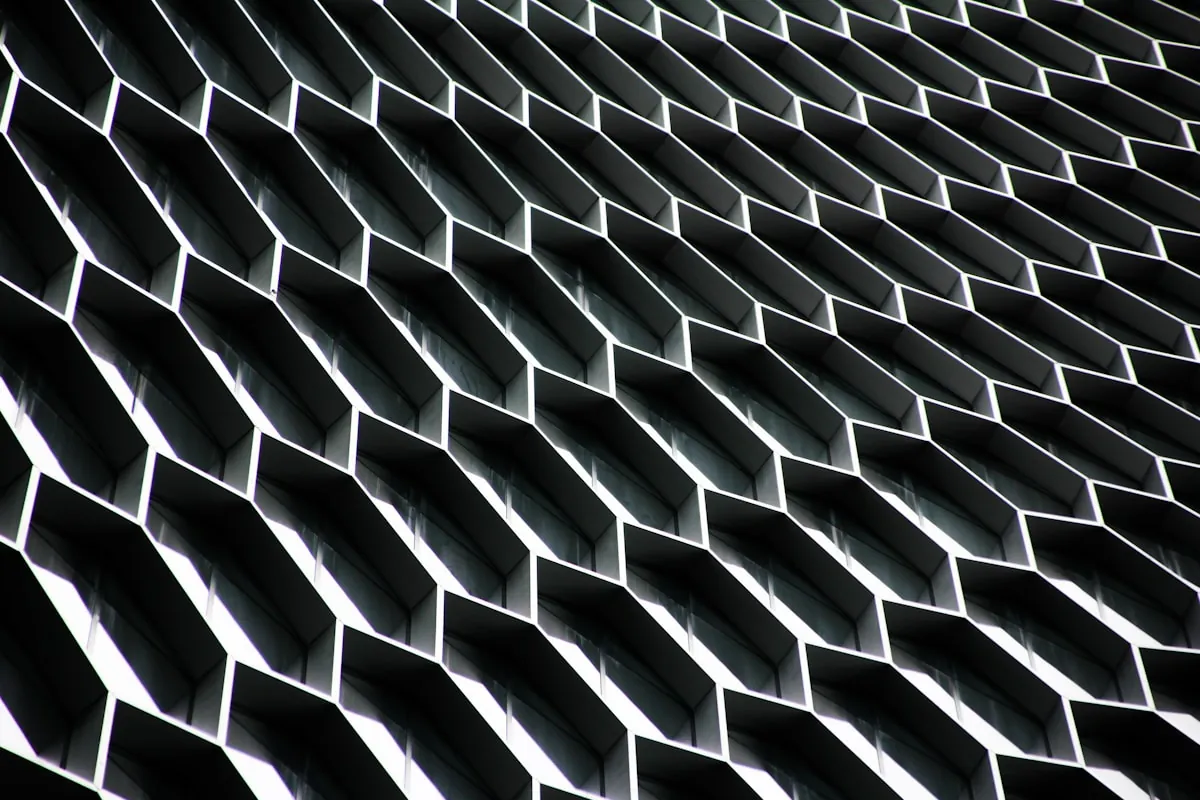
Rigorous quality control protocols require validating node adhesive endurance through accelerated hydrothermal immersion testing. Quality inspectors submerge core test slices in boiling water for four consecutive hours before conducting tensile separation checks. If node adhesive lines peel apart cleanly along the foil surface, the chemical bond is under-cured or chemically contaminated. Cores passing this hydrothermal test retain full structural integrity without risk of internal delamination over a thirty-year building design lifespan.
The glass transition temperature of the cured node adhesive sets the upper operational limit for composite lamination. If the adhesive glass transition temperature is lower than the hot press curing temperature of the face skin adhesive, node lines can soften and shift during panel bonding. Specifying thermosetting node adhesives with glass transition temperatures above 140°C prevents cell distortion during automated press cycles.
Four Common Engineering Mistakes That Degrade Cores
Procurement errors and workshop oversights frequently degrade the structural capacity of sandwich panels in commercial projects. Recognizing these failure mechanisms early prevents expensive field remediation and structural re-engineering.
Mistake 1: Relying on Nominal Cell Size Without Verifying Foil Gauge
Procurement officers frequently order honeycomb cores specifying only nominal cell diameter, assuming that all 3/8-inch cores provide identical mechanical performance. However, reducing foil thickness from 0.05 mm to 0.03 mm cuts bare compressive resistance by over 45% while keeping cell diameter unchanged. This discrepancy leads to localized skin dimpling and structural deflection under negative wind pressures. Technical specifications must always mandate both cell size and minimum foil gauge.
Mistake 2: Cutting Honeycomb Slices Across the Weaker W Direction
Fabrication shops often cut core slices to maximize sheet utilization without verifying ribbon orientation relative to architectural structural spans. Installing panels with the weaker W-direction spanning primary mullions cuts allowable shear capacity in half, causing excessive facade deflection and joint seal degradation. Fabrication layouts must clearly designate the L-direction on workshop drawings to guarantee structural compliance under peak wind loads.
Mistake 3: Overlooking Node Adhesive Thermal Glass Transition Limits
Accepting cores bonded with low-grade thermoplastic adhesives creates severe structural risks on dark exterior building envelopes. When solar radiation warms dark architectural panels to 80°C, inferior node adhesives soften, permitting vertical cell walls to shear and slide. Specifying modified thermosetting epoxy adhesives with certified glass transition temperatures above 120°C guarantees continuous structural shear transfer across seasonal thermal extremes.
Mistake 4: Omitting Hydrothermal Water Boil Adhesion Testing
Relying solely on dry room-temperature mill test certificates exposes building projects to catastrophic long-term delamination risks. Cheap adhesives pass dry tensile tests but degrade rapidly when moisture penetrates unsealed perimeter panel joints. Mandatory four-hour boiling water immersion testing verifies that node adhesives retain covalent chemical crosslinking under aggressive hydrothermal exposure, ensuring permanent core structural integrity.
Essential Testing Standards for Core Verification
Structural validation requires conducting physical tests in accordance with recognized international engineering standards. The definitive method for assessing flatwise compressive strength and compressive modulus is ASTM C365. This standard specifies both bare compression testing to detect foil wall buckling and stabilized compression testing to quantify performance when cell ends are constrained by bonded facings.
To measure core shear strength and core shear modulus across both L and W directions, testing laboratories employ ASTM C273. This planar shear evaluation determines whether the core provides adequate shear modulus to resist wind-induced bending. Furthermore, architectural facade specifications integrate criteria from aluminum honeycomb core selection guidelines and aluminum curtain walls engineering to verify complete building envelope compliance.
Tensile adhesion between the core and outer skins is verified using ASTM C297 flatwise tensile testing. During tensile pull-off evaluation, the primary failure mode must occur through core foil tearing rather than adhesive bond detachment. Demonstrating 100% cohesive foil failure confirms that adhesive bond strength surpasses the yield strength of the base aluminum honeycomb cores, providing robust assurance of panel life cycle durability.
Frequently Asked Questions About Core Performance
What is the primary factor affecting honeycomb core compressive strength?
Foil thickness is the primary factor governing compressive strength. Because elastic wall buckling resistance scales cubically with foil gauge, increasing foil thickness from 0.04 mm to 0.06 mm increases compressive capacity by over 55%.
How does cell size influence panel surface flatness and dimpling?
Smaller cell sizes provide dense planar backing that prevents thin outer skins from dimpling or telegraphing. Cores with 1/4-inch or 3/8-inch cells support face skins under wind suction, maintaining high surface flatness on architectural facades.
Why is the L-direction stronger than the W-direction in honeycomb cores?
The longitudinal L-direction runs along the continuous double-thickness node adhesive lines, delivering 50% to 100% higher shear modulus than the transverse W-direction. Fabricators must align the L-direction across primary structural spans to prevent excessive deflection.
When should 5052 alloy foil be specified instead of 3003 alloy?
Specify alloy 5052-H39 for marine bulkheads, rail transport, and coastal facades where salt spray corrosion resistance is essential. Containing 2.5% magnesium, 5052 provides 240 MPa yield strength, 45% higher than commercial 3003-H18 alloy.
What testing method confirms node adhesive hydrothermal durability?
The four-hour boiling water immersion test evaluates node adhesive durability. Immersing sample core slices in boiling water before tensile separation confirms the thermosetting epoxy maintains chemical crosslinking without peeling under harsh hydrothermal environmental conditions.