

Sourcing an insulated metal panel manufacturer is effectively a bet on whether the technical data on the mill certificate matches the physical product arriving at the job site. At RaxPanel, we have seen projects stall for weeks because a vendor substituted PIR cores with ungraded polyurethane to meet a deadline. Independent lab tests often reveal up to a 20% density variance in mineral wool cores when buyers skip third-party verification, a failure point that creates immediate compliance risks.
You need a vetting process that targets production consistency rather than just quoted price. This guide details how to set clear technical requirements for fire resistance and assess supply chain and logistics capability to prevent customs holds. Following these steps gives you the specific contractual clauses necessary to enforce quality standards, protecting your project from long-term liability.

Set Clear Technical Requirements for Your Project
Vague specifications are the root cause of 90% of import disputes. Precise definitions of material grades, thermal values, and load-bearing capacities are non-negotiable before issuing an RFQ.
Specifying Core Material Types and Thermal Values
Thermal performance begins with core selection, and this is where most sourcing mistakes happen. Buyers often request a U-value or R-value without specifying the core material, leaving the manufacturer to choose between XPS, PET, PU, PIR, or mineral wool. Each core type delivers different thermal resistance, moisture tolerance, and cost profiles. For cold chain applications, closed-cell foams like XPS and PU remain the standard due to their low water absorption and stable thermal conductivity over time. For construction envelopes where fire safety takes priority, mineral wool or PIR cores become the default choice.
Thermal bridging through metal facings is a real concern in cold climates. The solution lies not in avoiding metal facings altogether but in specifying panel profiles that break the thermal bridge at the joint. Our engineering team designs panels with thermally broken interlocking profiles that minimize conductive heat loss at seams. When you define your thermal requirements, include the target U-value, the core material preference, and whether your project demands a thermally broken joint system.
- Thermal conductivity (λ-value): Specify the maximum lambda value in W/m·K for your chosen core material. This directly determines panel thickness requirements.
- Temperature operating range: Cold storage panels must withstand continuous exposure to sub-zero temperatures without core degradation or facing delamination.
- Moisture absorption rate: For humid or refrigerated environments, require cores with closed-cell structures and absorption rates below 1% by volume.
Selecting Metal Facings and Surface Finishes
The facing material determines corrosion resistance, structural contribution, and aesthetic outcome. Aluminum facings offer natural corrosion resistance and light weight, making them ideal for exterior cladding and marine environments. Steel facings provide higher impact resistance and are standard for industrial and cold storage applications. GRP and CFRT facings serve specialized needs where non-conductive or chemically resistant surfaces are required.
Surface finish selection is equally critical. Smooth finishes are easier to clean and resist dirt accumulation, which matters for food-grade cold storage facilities. Embossed or stucco textures hide minor surface imperfections and are preferred for architectural cladding where visual consistency across large facades is important. Gelcoat surfaces on GRP panels provide an integrated, waterproof finish that eliminates the need for secondary painting.
We always advise our clients to request facing thickness specifications in mils or gauge, not just material type. A 0.5mm aluminum facing performs very differently from a 0.7mm facing under wind load or impact conditions. Include facing gauge, coating type, and color standard in your technical requirements to avoid ambiguity during production.
- Facing material and gauge: Define exact thickness for both inner and outer metal skins, as this affects structural capacity and durability.
- Surface treatment type: Specify powder coating, PVDF, polyester, or gelcoat based on environmental exposure and maintenance expectations.
- Color and finish standard: Reference RAL or ASTM color standards to ensure consistency across multiple production batches.
Establishing Fire Resistance and Structural Load Requirements
Fire rating requirements vary dramatically by market and application. European projects typically reference Euroclass ratings (A1, B-s1-d0, etc.), while North American buyers look for UL or FM approval. Asian and Middle Eastern projects may reference BS or GB standards. Specifying the correct certification framework upfront prevents costly rework and ensures your panels clear customs without compliance holds.
Mineral wool and rockwool cores deliver the highest fire resistance, achieving one to three-hour fire ratings depending on panel thickness. PIR cores typically achieve B-s1-d0 or similar classifications, suitable for general construction but not for high-fire-risk environments. Our experimental testing validates fire performance against internationally recognized standards, and we provide third-party test reports that align with your target market’s regulatory requirements.
Do not accept fire rating claims based solely on the manufacturer’s word. Always request a copy of the original test report from an accredited laboratory. Verify that the test standard, panel thickness, and core material in the report match your exact specification. Panels tested at one thickness cannot be assumed to meet the same rating at a different thickness.
Structural load requirements depend on whether the panel serves as a wall, roof, or floor application. Roof panels must support dead loads, live loads, snow loads, and wind uplift. Wall panels primarily face wind pressure and impact resistance. Specify your design load values in kilopascals or pounds per square foot, along with the relevant building code reference. Our engineering team uses these values to confirm that your selected panel configuration meets structural adequacy without unnecessary over-engineering.
- Fire rating standard: Identify the exact certification framework required by your local building code (Euroclass, UL, FM, BS, GB).
- Fire resistance duration: State the required hour rating (1-hour, 2-hour, 3-hour) based on application and occupancy type.
- Structural load values: Provide design loads for wind, snow, and live loading per your project’s structural engineer specifications.
- Third-party test reports: Require accredited laboratory documentation that matches your exact panel configuration before production begins.
Defining Panel Dimensions and Joint Profiles
Panel dimensions directly affect transportation efficiency, on-site handling, and installation speed. Longer panels reduce the number of vertical joints but increase the risk of damage during ocean freight if packaging is inadequate. Width is typically standardized, but length should be optimized for your project’s structural bay spacing and container loading capacity. We recommend coordinating panel lengths with your logistics team to maximize container utilization while keeping individual panel weights within safe handling limits.
The joint profile determines how panels connect and how the assembly performs under thermal cycling and wind loading. Tongue-and-groove joints provide reliable alignment and weather sealing for wall applications. concealed clip systems offer cleaner aesthetics for architectural facades. Ship-lap joints are common in roofing where water shedding is critical. The joint design also influences thermal performance, as poor joint detailing can create air leakage paths that undermine the panel’s insulating value.
In our experience, buyers who define joint profiles early in the specification process avoid costly field modifications and sealing failures. Include your preferred joint type, sealant requirements, and fastener pattern in your technical documentation. This allows the manufacturer to produce panels that integrate seamlessly with your chosen installation system and reduces on-site adjustment time.
- Panel length optimization: Coordinate panel lengths with structural bay spacing and container loading constraints to balance performance and logistics efficiency.
- Joint profile selection: Choose between tongue-and-groove, concealed clip, or ship-lap profiles based on application, aesthetic requirements, and weather sealing needs.
- Sealing and fastener specifications: Define gasket materials, sealant types, and fastener patterns to ensure long-term air and water tightness.
- Packaging requirements: Specify edge protection and stacking methods to prevent panel damage during international shipping and on-site handling.
| Requirement | Specification | Advantage |
|---|---|---|
| Core Insulation Material | XPS, PET, PU, PVC, PMI, PIR, PUR, Rockwool, EPP, MPP | Tailored thermal resistance and fire rating for cold chain, construction, or industrial use |
| Facing / Skin Material | Aluminum, Steel, GRP/FRP, CFRT, ACP, PVC, Aluzinc | Corrosion resistance, aesthetic finish, and structural compatibility for diverse environments |
| Dimensions & Customization | Customizable by core material, facing, and thickness | Reduces on-site joints and waste; matches architectural design intent precisely |
| Fire Rating & Safety | Mineral wool/Rockwool fire-rated panels; Experimental validation | Eliminates compliance risk and ensures regulatory acceptance in target markets |
| Application Scope | Cold chain logistics, refrigerated truck bodies, cold storage facilities, industrial temperature-retention, commercial construction, exterior cladding | Specialized solutions for logistics, temperature control, and building envelopes |
| Quality Assurance | Experimental testing to meet data standards | Guarantees performance consistency and addresses quality variability concerns |

Prepare Your RFQ and RFP Documents
Specifying exact physical properties acts as a primary defense against the unauthorized substitution of materials. When RFQ documents define precise technical metrics—such as core density ranges, facing thickness tolerances, and certification requirements—vendors are constrained from applying margin-optimizing shortcuts. This level of detail ensures that procurement documents move beyond general expectations and establish enforceable boundaries that protect against the discrepancies between quoted specifications and shipped products.
Mitigating Material Substitution through Specification Granularity
The most common failure in international panel sourcing is the discrepancy between the quoted specification and the shipped product. Vendors may optimize margins by altering core densities or facing thicknesses if the RFQ lacks explicit boundaries. To counter this, procurement documents must move beyond generic descriptions and require exact physical properties. For example, rather than simply requesting “XPS core,” the RFQ must mandate the specific density (e.g., 35kg/m³ to 40kg/m³), compressive strength (kPa), and thickness tolerance (±0.5mm).
Furthermore, documents should link commercial terms to material verification. Buyers should require that the final invoice be supported by third-party lab reports or raw material Mill Test Certificates (MTCs) corresponding to the shipped batch. By legally binding the payment release to the confirmation of these specific data points, the buyer creates a financial deterrent against unauthorized material substitution.
Verifying Certification Authenticity and Scope
Skepticism regarding certification validity is well-founded in the global manufacturing market. An RFQ must distinguish between a factory possessing a generic ISO 9001 certification (which verifies quality management systems) and a product holding specific performance accreditations like FM Approval or CE marking for structural integrity. The RFP should explicitly require vendors to provide the certificate number, the issuing body, and the scope of the certification.
Do not accept a simple copy of a certificate. Request the “Certificate of Conformity” specific to the production batch or a letter of authorization from the certifying body verifying the supplier’s status.
For fire safety and structural claims, demand to see the test report summary, not just the certificate. The report should indicate the laboratory that conducted the test (e.g., SGS, Intertek, TUV) and the date of validity. This clause forces the vendor to prove that the panel profile and core material being quoted actually match the tested unit, preventing the “bait-and-switch” of using a certification for a non-comparable variant.
Clarifying Fire Rating Standards and Testing Protocols
Ambiguity in fire rating terminology is a primary source of liability. Terms like “fireproof” or “fire-resistant” are scientifically meaningless without a defined standard. The RFQ must specify the exact testing standard required based on the destination country’s building code. For instance, a project in the European Union requires compliance with EN 13501-1 (classifications A1, A2, B, etc.), while a US project may require ASTM E84 or NFPA 286 standards with specific Flame Spread and Smoke Developed indices.
The document should mandate that all fire-rated panels include a label or marking permanently affixed to the panel surface, indicating the fire rating and the standard met. Additionally, require the vendor to declare the core material’s reaction to fire classification (e.g., Polyisocyanurate (PIR) vs. Polyurethane (PU)) explicitly, as these materials exhibit different burn behaviors even when sold under similar trade names.
Standardizing the Bid Structure for Comparison
To ensure an accurate Total Cost of Ownership comparison, the RFP must dictate the format of the vendor’s response. Without a standardized template, suppliers will quote different Incoterms, lead times, and panel thicknesses, rendering a price comparison useless. The document should include a mandatory “Technical & Commercial Schedule” that vendors must fill out completely.
📋 Mandatory RFQ Data Fields
- Core Material & Density: (e.g., PIR, 40kg/m³ ±2%)
- Facings & Coating: (e.g., 0.6mm PPGI/Aluzinc, PVDF coating 20µm)
- Fire Rating Standard: (e.g., EN 13501-1 Class B, FM Approval 4880)
- Thermal Conductivity: (W/m·K value at 10°C/24°C mean temp)
- Dimensional Tolerances: (Length/Width/Thickness deviations)
- Volume per 20’GP/40’HC: Exact loading quantity and pallet configuration
- Production Lead Time: Days from deposit receipt to ex-factory date
Evaluate Manufacturers Against Key Criteria
The single biggest risk when sourcing insulated metal panels from China is not price—it is vendor reliability. A structured evaluation framework that verifies certifications, audits production capacity, and validates quality systems eliminates ambiguity before a purchase order is placed.
Verify Certification Authenticity Through Independent Channels
Chinese manufacturers frequently display CE marks, ISO 9001 certificates, FM approvals, and fire-rating classifications on their websites and in promotional materials. However, the presence of a certificate does not guarantee validity. The industry has documented cases of forged or expired certification documents circulating in procurement channels, and buyers who accept certificates at face value risk panel rejection during local inspections.
The correct approach is to treat every certificate as a claim requiring independent verification. CE certificates for construction products under the Construction Products Regulation (CPR) must include a Notified Body number and a Declaration of Performance (DoP) referencing the specific product standard. ISO certificates can be validated through the International Organization for Standardization’s free database or the certifying body’s official registry. FM approvals are publicly searchable on the FM Approvals website by manufacturer name and certificate number. Fire ratings such as Class A or Euroclass B-s1-d0 must reference a recognized test report from an accredited laboratory like UL, Intertek, or a EU-notified testing facility.
- Certificate cross-check: Request the full certificate number and verify it on the issuing body’s official website before proceeding with negotiations.
- Test report review: Ask for the complete third-party test report, not just the summary certificate. The report should show sample dimensions, test standard reference, test results, and laboratory accreditation marks (ISO/IEC 17025).
- Scope validation: Confirm that the certificate covers the exact product type, core material, and facing configuration you intend to purchase. A manufacturer may hold an ISO certificate for one product line while a different product line remains unverified.
Assess Production Capacity and Quality Control Systems
Quality variability is the most common source of project failure in imported insulated metal panels. Two factories producing identical panel specifications can deliver dramatically different results depending on their raw material sourcing, production line automation level, in-process quality controls, and finished goods inspection rigor. The cheapest quote often reflects cost-cutting in one or more of these areas.
Production capacity assessment goes beyond the manufacturer’s claimed daily output. The critical questions are whether the factory can sustain that output consistently, whether raw material inventory is adequate to prevent delays, and whether quality control checkpoints are embedded at every stage of production rather than applied only at final inspection.
- Core material integrity: Verify that the manufacturer sources core foam from reputable suppliers with traceable batch records. XPS, PU, and PIR cores from unauthorized or unverified suppliers may exhibit inconsistent density, moisture absorption rates, and thermal conductivity values that deviate from declared specifications.
- Facing material specification: Confirm that metal facings meet the specified gauge, coating type, and tensile strength. A factory substituting a lower-grade aluminum alloy or a thinner steel coil without notification is a documented industry risk.
- In-process testing: Reputable manufacturers conduct peel adhesion tests, thermal conductivity measurements, and dimensional checks at regular intervals during production. Request documentation of these in-process tests and the tolerance thresholds applied.
- Production line capability: Facilities with continuous lamination lines and automated cutting equipment typically deliver more consistent panel quality than those relying on manual assembly processes. Ask for details on line speed, automation level, and last year’s production volume.
Conduct Independent Factory Audits Before Commitment
The hesitation many international buyers feel when engaging Chinese manufacturers stems from a genuine information asymmetry. The buyer cannot visually inspect the factory, verify quality systems, or confirm that the production environment matches what was presented in brochures and video tours. An independent factory audit removes this uncertainty and provides the evidence needed to make an informed sourcing decision.
A thorough audit should evaluate the manufacturing facility against a structured checklist that covers organizational capability, production infrastructure, quality management systems, raw material storage conditions, and finished goods testing laboratories. Third-party inspection agencies such as SGS, Bureau Veritas, and TÜV offer factory audit services that produce detailed reports with photographic evidence and compliance ratings.
📋 Actionable Steps
- Step 1: Request a complete list of all current certifications, test reports, and quality system documents from the manufacturer.
- Step 2: Engage a third-party inspection agency to conduct an on-site factory audit covering production capacity, quality control processes, and raw material sourcing.
- Step 3: Request a pre-shipment inspection sample from the manufacturer’s current production batch. Test this sample independently at an accredited laboratory to verify core density, thermal conductivity, facing gauge, and peel adhesion strength against your specification requirements.
- Step 4: Review the audit report and test results against your project’s technical requirements. Proceed with the vendor only if all critical criteria are met with documented evidence.
Prevent Product Substitution Through Specification Locking
Product substitution is a documented risk in the insulated panel supply chain. Manufacturers may substitute a lower-density core foam, use a thinner metal facing than specified, or replace a premium fire-rated core material with a cheaper alternative that appears similar in visual inspection but fails to meet the required performance standards. The substitution may be intentional or the result of supply chain disruptions, but the contractual and performance consequences fall entirely on the buyer.
The most effective protection is a specification-locked purchase agreement that defines every critical material parameter with measurable tolerances and references the exact test standards used for verification. The contract should include substitution penalties and grant the buyer the right to conduct pre-shipment inspections at the manufacturer’s facility or through a third-party inspector.
- Material grade specification: Define the exact core material type, density range, thermal conductivity value, and facing material grade with tolerances. For example, a PU core should specify density within ±5 kg/m³ of the declared value and lambda value within ±0.005 W/m·K.
- Third-party verification clause: Include a contractual clause requiring pre-shipment sampling and independent laboratory testing at the buyer’s expense. The contract should specify acceptable tolerance ranges and define consequences for non-conformance.
- Batch traceability: Require the manufacturer to provide batch numbers for core materials and facing coils used in each production run. This enables traceability back to the original supplier and verification that specified materials were actually used.
Build Confidence Through Structured Supplier Evaluation
The psychological barrier to working with Chinese manufacturers is real but solvable through a systematic evaluation process. Buyers who approach supplier selection with a structured framework—verifying certifications through independent channels, assessing production capability with objective criteria, conducting factory audits, and locking specifications contractually—transform uncertainty into manageable risk.
The manufacturers that welcome rigorous evaluation and provide transparent documentation are typically the most reliable partners. Manufacturers that resist certification verification, decline factory audits, or provide vague responses to specification questions should be treated as high-risk regardless of pricing advantage. The cost of a thorough evaluation process is negligible compared to the financial and schedule impact of receiving non-conforming insulated metal panels at a project site.
Set Up Quality Control and Auditing
A structured quality control framework with third-party verification, pre-shipment sampling, and material certification audits is the single most effective defense against product substitution and quality variability when sourcing insulated panels from overseas manufacturers.
Sourcing insulated metal panels from China introduces a well-documented spectrum of quality outcomes. The market contains both highly disciplined manufacturers and operators who cut corners on core density, facing thickness, or adhesive bonding. Without a formalized quality control and auditing protocol, buyers have no reliable mechanism to verify that the panels delivered match the specifications agreed upon in the contract. This section outlines the inspection frameworks that protect against the three most common procurement risks: quality variability, material substitution, and hazardous substance non-compliance.
Pre-Shipment Sampling and Inspection Protocols
Pre-shipment inspection (PSI) is the industry-standard checkpoint where a representative sample from the manufacturing batch is evaluated against the approved specification sheet before the goods leave the factory. A reliable PSI protocol should be triggered once production reaches at least 80% completion and the goods are packed or staged for loading. The sample must be selected randomly from multiple production batches to avoid cherry-picking only visually perfect units.
The inspection should cover dimensional accuracy, core material density, facing gauge and coating integrity, adhesive bond strength, and joint profile conformity. Each panel should be measured at multiple points using calibrated tools, and core density should be verified through destructive sampling. A typical acceptable deviation for panel thickness is ±1.5mm for standard industrial panels and ±1.0mm for precision applications. Facing steel gauge should not fall below the specified minimum, and any visible delamination, surface defects, or edge damage should trigger a rejection of the entire batch.
Many buyers engage independent inspection agencies such as SGS, Bureau Veritas, or Intertek to conduct these audits. The inspector should follow a documented checklist aligned with the project specifications, photograph all findings, and issue a written report within 24 hours. Buyers should never waive the right to pre-shipment inspection in their purchase terms, as this is the last opportunity to catch deviations before cargo is sealed and shipped.
Third-Party Laboratory Testing for Material Compliance
While on-site visual checks verify surface conditions, only accredited laboratory analysis can expose internal material discrepancies. General pre-shipment inspections, even when conducted by independent agencies such as SGS, Bureau Veritas, or Intertek, are limited to surface-level verification and dimensional sampling. They cannot confirm whether the core density, adhesive composition, or facing gauge matches the specified requirements. To validate these critical performance parameters, buyers must commission laboratory testing at an accredited facility using recognized international standards.
Laboratory testing should be arranged through an accredited facility and should cover the following parameters at minimum: thermal conductivity (k-value or lambda value) per ASTM C518 or ISO 8301, core compressive strength per ASTM D1621, facing pull-off adhesion strength per ASTM D4541, fire performance classification per relevant standards such as ASTM E84 or EN 13501-1 depending on the target market, and heavy metal content including lead, cadmium, chromium, and mercury per REACH or local regulatory requirements.
For buyers concerned about lead and toxicity, laboratory testing of the raw materials themselves is more reliable than testing finished panels. Request that the manufacturer provide certificates of analysis for the steel coil, foam core, and adhesive from their upstream suppliers. Cross-reference these certificates against the test reports from an independent lab. Discrepancies between supplier certificates and independent results are a strong indicator of potential material substitution or documentation fraud.
- Thermal conductivity testing: Core material must meet the specified lambda value within ±5% tolerance. PU foam typically ranges from 0.022 to 0.028 W/m·K, XPS from 0.028 to 0.035 W/m·K, and PET from 0.034 to 0.040 W/m·K. Panels claiming superior insulation performance should be verified against these established ranges.
- Fire rating verification: If the project requires a specific fire classification, request that the manufacturer submit a sample panel to an accredited laboratory for full fire testing. Do not rely solely on the manufacturer’s self-declared ratings or certificates issued without independent test data.
- Heavy metal screening: For building applications where long-term occupant safety matters, X-ray fluorescence (XRF) screening can detect lead and other heavy metals in the facing coating and core materials. Any reading above 90 ppm lead should be treated as a non-conformance.
Video Inspection and Real-Time Production Monitoring
Video inspection has become an increasingly common requirement in B2B panel procurement, particularly for large orders where the financial exposure justifies the additional oversight. Live video feeds or scheduled video walkthroughs of the production line allow buyers to observe the manufacturing process in real time, verifying that the correct materials are being fed into the line and that the sandwiching process follows proper parameters.
A video inspection should confirm several key process indicators: the core material roll matches the specified type and density grade, the steel coil gauge and coating type are consistent with the order, the adhesive application system is functioning correctly with no signs of bypass or reduced adhesive volume, and the curing or lamination process follows the manufacturer’s documented cycle time. Any deviation from these process indicators should be documented immediately and escalated before the next production batch begins.
For buyers who cannot visit the factory in person, scheduling video inspections at critical production milestones provides a practical alternative. The first article inspection, mid-production check, and pre-loading verification are the three most valuable video inspection points. Each should be recorded with timestamps and shared with the buyer’s technical team for review before the next production phase proceeds.
Material Certification and Traceability Requirements
A formal material certification and traceability system is the foundation of any credible quality control framework. Every batch of insulated panels should be accompanied by a complete documentation package that links the finished product back to the raw material sources. This package should include mill certificates for the steel facing, density and composition certificates for the core material, adhesive compatibility and cure verification records, and fire test reports for the assembled panel construction.
Traceability extends beyond documentation. Each production batch should carry a unique identifier that allows the buyer to match any field-installed panel back to its manufacturing records, test reports, and raw material certificates. This is essential for warranty claims, forensic analysis after a failure, and compliance verification during building inspections or customs audits.
Buyers should establish a formal document review process as part of their procurement workflow. The quality documentation package should be submitted and approved before the final payment milestone is released. Any missing, incomplete, or inconsistent certificate should halt payment until the discrepancy is resolved. This contractual advantage is one of the most effective tools for ensuring manufacturers maintain consistent quality standards throughout the production cycle.
- Steel facing mill certificates: Should confirm base metal grade, coating type and weight, thickness tolerance, and tensile strength. For galvanized steel, the zinc coating weight should be documented per ASTM A653. For coated steel, the paint system and film thickness should be specified.
- Core material certificates: Should confirm foam type, density in kg/m³, thermal conductivity value, compressive strength, water absorption percentage, and fire classification. Any certificate missing these parameters should be considered incomplete.
- Assembly test reports: Should cover the thermal performance, structural capacity, and fire performance of the fully assembled panel, not just the individual materials. A panel’s performance is not simply the sum of its parts; the adhesive bond and joint design significantly affect overall performance.
Building a Quality Clause into the Purchase Contract
All quality control procedures must be codified in the purchase contract to be enforceable. A verbal agreement on inspection rights or testing standards carries no legal weight if the manufacturer delivers non-conforming panels and the buyer has no contractual basis to reject them. The quality clause should specify the inspection standards, acceptable tolerances, testing procedures, documentation requirements, and remedies for non-conformance.
The contract should explicitly reserve the buyer’s right to conduct pre-shipment inspections at the manufacturer’s facility at agreed notice periods, typically 5 to 7 business days. It should specify that third-party laboratory testing costs are borne by the party whose non-conformance is confirmed, creating a financial incentive for the manufacturer to maintain quality. The contract should also define clear rejection criteria and the buyer’s right to demand replacement, rework, or refund for any non-conforming panels.
Payment terms should be structured to align with quality verification milestones. A common and effective structure is a deposit upon order confirmation, a mid-production payment triggered by video inspection approval, and the final payment released only after the pre-shipment inspection report confirms compliance and the complete documentation package is received. This structure ensures the manufacturer has a strong incentive to maintain quality throughout production and to resolve any issues before the cargo leaves the factory.
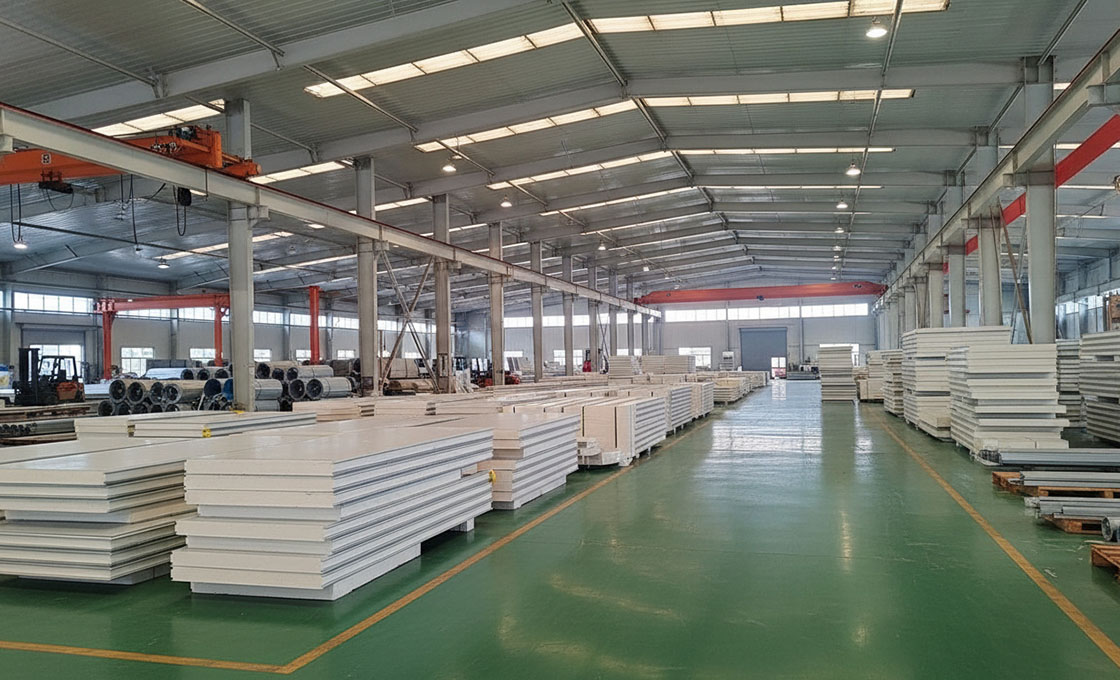
Assess Supply Chain and Logistics Capability
A supplier’s logistics maturity often determines project viability more than panel specs. Evaluating shipping reliability, customs compliance track record, and Incoterms flexibility protects margin and prevents costly port delays before they happen.
When sourcing insulated metal panels or composite sandwich panels from China, the quoted unit price represents only a fraction of the landed cost. Port congestion, fluctuating freight rates, and customs compliance failures can erase thin B2B margins within weeks. Buyers who have lost money to demurrage charges or seized shipments often trace the root cause back to insufficient due diligence on their supplier’s logistics infrastructure.
Shipping Reliability and Transit Predictability
Transit time from Chinese ports to North American or European destinations can vary significantly depending on the shipping route, port of origin, and current global logistics conditions. A manufacturer with established relationships with multiple freight forwarders and consistent container loading practices will deliver more predictable lead times than one relying on ad-hoc shipping arrangements. The difference between a 35-day and a 55-day transit window can mean the difference between meeting a construction deadline and incurring liquidated damages.
Evaluate a supplier’s shipping reliability by requesting their historical on-time delivery data for your target destination market. Ask specifically about their experience shipping similar panel volumes to your region and whether they maintain standing bookings with container lines. Manufacturers who ship regularly to your market will have optimized packaging and loading patterns that reduce the risk of panel damage during transit, which is a critical concern with large-format insulated metal panels.
- Freight cost volatility: Ocean freight rates can swing 300 to 400 percent within a single year. Request that your supplier provide freight quotes valid for at least 30 days and clarify whether their pricing is based on current spot rates or contracted rates.
- Transit time ranges: Standard container shipping from major Chinese ports to the US West Coast typically ranges from 14 to 21 days, while transshipment through other Asian hubs can add 7 to 14 additional days. To Northern Europe, transit ranges from 28 to 40 days depending on port of discharge.
- Demurrage and detention exposure: Understand who bears the risk of port delays. Under FOB terms, the buyer assumes risk once cargo crosses the ship’s rail, making customs clearance speed at the destination port a critical cost variable.
📋 Actionable Steps
- Step 1: Request the supplier’s shipping history for your target market over the past 12 months, including average transit times and any documented delay incidents.
- Step 2: Verify whether the supplier maintains partnerships with at least two independent freight forwarders to reduce single-point-of-failure risk.
- Step 3: Clarify Incoterms coverage and request a landed cost breakdown that includes freight, insurance, customs duties, and estimated port fees for your specific delivery address.
Customs Compliance and Import Documentation
Importing building envelope materials from China involves navigating a complex web of regulatory requirements that vary by destination country. In the United States, insulated panels must comply with HTS classification rules, CBP Prior Notice requirements, and potentially Section 232 or anti-dumping duties depending on the specific panel construction and origin. A manufacturer that lacks experience with these compliance layers can create costly delays, including CBP holds that lock cargo at the port for weeks while documentation is resolved.
Customs compliance begins with accurate product classification. Insulated metal panels typically fall under HTS 7610.10 for aluminum panels or HTS 8306.29 for other metal panels, but the classification can shift based on core material composition and facing type. Suppliers who proactively provide correct HS codes, material composition declarations, and country-of-origin documentation before shipment reduces the probability of customs holds dramatically.
- HTS classification accuracy: Verify that the supplier’s declared HTS code matches the actual panel construction. Misclassification can trigger audits, retroactive duty assessments, and cargo holds that delay projects by 10 to 30 days.
- Prior Notice requirements: US imports require Prior Notice filing to CBP at least 8 hours before vessel arrival. Confirm whether your supplier or their freight forwarder handles this filing as part of standard procedure.
- Country-specific compliance: EU imports require CE marking conformity assessments for construction products under CPR Regulation 305/2011. Middle Eastern imports may require SASO or ESMA certification. Verify the supplier has documented experience shipping to your target market.
- Anti-dumping and countervailing duties: Certain aluminum and steel products from China face additional duties. Request a current duty rate analysis from your customs broker before committing to a supplier.
Packaging Standards and Cargo Protection
Insulated metal panels are large, flat, and susceptible to edge damage and surface scratching during transit. Packaging quality directly impacts the percentage of panels that arrive in sellable condition. Reputable manufacturers use wooden crating or reinforced steel-edge protectors on every bundle, with moisture-resistant wrapping and corner guards that prevent panel-to-panel abrasion. The difference between adequate and premium packaging often determines whether a container load arrives with zero damage or requires on-site rework and warranty claims.
When evaluating a supplier’s packaging capability, request photos of their actual packaging configuration for panels destined to your market. Look for evidence of stack-load engineering that prevents crushing of lower panels, weatherproof wrapping suitable for ocean container transit, and clear labeling that identifies panel orientation and handling requirements. Manufacturers who have shipped to your region for multiple years will have packaging specifications refined through accumulated transit experience.
- Bundle integrity: Panels should be secured in bundles of 20 to 40 pieces depending on thickness, with steel strapping at minimum three points per bundle to prevent shifting during container movement.
- Moisture protection: Ocean container transit exposes cargo to humidity fluctuations. Premium packaging includes desiccant bags and vapor-barrier wrapping to prevent condensation damage to panel cores, particularly for foam-core panels.
- Container load optimization: Experienced suppliers calculate container loading patterns that maximize cube utilization while maintaining structural integrity. Poor loading design can result in damaged panels and underutilized container space, increasing per-unit landed cost.
Incoterms Flexibility and Risk Allocation
The Incoterms selected for a panel purchase order define exactly where risk and cost transfer from supplier to buyer. Understanding these boundaries is essential for accurate budgeting and risk management. Suppliers who offer flexible Incoterms options demonstrate logistics maturity and willingness to share supply chain risk rather than pushing all exposure onto the buyer.
FOB pricing is common for China-sourced panels and gives buyers control over freight selection and customs clearance at destination. However, FOB also means the buyer assumes all risk once cargo is loaded on the vessel, including exposure to port congestion delays and inland transportation costs at origin. CIF pricing transfers more responsibility to the supplier but may conceal higher freight margins. For large projects, DDP pricing provides the most budget certainty by including all costs through delivery to the project site, though it typically carries a premium of 8 to 15 percent over FOB pricing.
- FOB (Free on Board): Buyer controls freight and customs. Recommended when the buyer has established relationships with freight forwarders and customs brokers in the destination country.
- CIF (Cost, Insurance, Freight): Supplier arranges freight and insurance to the destination port. Suitable for buyers without established logistics networks but requires scrutiny of the supplier’s chosen freight forwarder.
- DDP (Delivered Duty Paid): Maximum convenience with all costs and risk borne by the supplier until delivery. Highest per-unit cost but eliminates budget uncertainty for project forecasting.
Calculate the Total Cost of Ownership
Beyond Unit Price: The TCO Framework
True cost is not just the invoice price; it is the sum of logistics efficiency, energy performance, and risk mitigation over the asset’s lifecycle.
In the procurement of insulated metal panels and composite materials, relying solely on the initial FOB price per square meter is a strategic error. The Total Cost of Ownership (TCO) model forces buyers to evaluate the long-term financial impact of their sourcing decisions. A low upfront price often signals compromises in material density, thermal resistance, or production consistency, leading to exponential costs downstream through operational inefficiencies and premature replacement.
To accurately calculate TCO, one must aggregate the direct purchase costs with operational expenditure (OPEX) and supply chain risk factors. This includes the energy required to maintain thermal stability, the frequency of maintenance due to corrosion or facade degradation, and the potential financial liability of non-compliant materials. A panel with superior core insulation—such as PIR, PUR, or high-density foam—may carry a premium, but the reduction in HVAC load over a 20-year service life delivers a return on investment that far outweighs the initial capital expenditure.
Logistics Volatility and Scheduling Risk
Supply chain reliability is a critical, yet frequently invisible, line item in the TCO equation. When sourcing from global manufacturing hubs, variables such as port congestion, freight rate fluctuations, and customs clearance delays can convert a competitive quote into a financial loss. A manufacturer with high daily output capacity and established logistics protocols minimizes the risk of project downtime.
Every day a construction site sits idle waiting for materials incurs heavy costs in crew wages, equipment rental, and penalties for missed deadlines. Furthermore, inconsistent production schedules often force buyers to air-freight materials to meet deadlines, a shipping method that can cost four to five times more than sea freight. Evaluating a supplier’s ability to meet volume targets consistently is therefore essential for controlling landed costs.
Quality Variability and Compliance Costs
The variance in quality within the composite panel market is a primary driver of long-term cost. Inferior facings, such as low-galvanized steel instead of Aluzinc or GRP/FRP, are prone to rapid corrosion in industrial or coastal environments, necessitating expensive retrofits or total facade replacement within a few years. Similarly, using the wrong core material for a specific application—such as neglecting fire-rated mineral wool in high-risk zones—invites regulatory scrutiny.
Non-compliance with building codes does not merely result in failed inspections; it triggers the astronomical cost of dismantling and reinstalling cladding to meet safety standards. TCO analysis must therefore account for the “assurance cost” of sourcing from suppliers that adhere to rigorous international testing standards. A slightly higher price point from a manufacturer that provides verifiable certification and material traceability protects the buyer from the catastrophic financial risks associated with substandard imports and customs seizures.
Durability and Material Efficiency
Material efficiency directly correlates with installation speed and waste reduction. Customized solutions that match specific project requirements prevent the inefficiencies of over-engineering. For example, optimizing the thickness of the insulation core to meet the exact thermal bridge requirements of a zone ensures that capital is not wasted on unnecessary material weight or bulk.
Additionally, the longevity of the panel system reduces the capital expenditure (CAPEX) allocation for future repairs. Advanced manufacturing processes that ensure strong bonding between facings and cores—whether utilizing honeycomb structures, foam cores, or plywood laminates—extend the service life of the installation. By prioritizing structural integrity and weather resistance, the effective cost per year of service decreases significantly, validating the investment in higher-quality composite materials.
| Cost_Driver | Rax_Spec | TCO_Benefit | Quality_Standard |
|---|---|---|---|
| Energy Consumption | High-performance PIR/PUR/XPS cores with variable thickness options. | Superior thermal retention minimizes long-term HVAC operational costs. | Experimental testing to meet international thermal performance standards. |
| Project Scheduling Risk | Daily output exceeding 1,700 sqm; 15+ years of manufacturing experience. | High-volume capacity ensures on-time delivery, reducing downtime costs. | Professional engineering team manages production consistency. |
| Maintenance & Durability | Corrosion-resistant facings (GRP/FRP, Aluzinc, Steel) for cold chain and exterior applications. | Extended service life significantly lowers replacement and repair CAPEX. | Strict material control ensures long-term structural integrity. |
| Fire Safety Compliance | Mineral wool / Rockwool fire-rated core panels. | Meets strict building codes to avoid costly retrofits or penalties. | Non-combustible options available for high-safety applications. |
| Material Efficiency | Fully customizable combination of core material, facing, and thickness. | Tailored specifications prevent over-engineering and optimize material spend. | Integrated R&D ensures precise product matching to project needs. |
Finalize Your Vendor and Contract Terms
A solid contract is your primary defense against material substitution, certification fraud, and cost overruns. Lock in auditable specifications, enforceable QA clauses, and clear Incoterms before you sign.
Auditing Manufacturing Capacity and Lead Times
When committing to a Chinese IMP supplier, verify that their production capacity aligns with your project timeline. Request a current factory audit report or schedule a third-party inspection. Key metrics to validate include daily output volume, number of active production lines, and whether the facility operates on a single shift or multiple shifts.
Lead time claims often vary between quoted estimates and actual fulfillment. We recommend requesting a written production schedule with milestone dates and building in a 15–20% buffer for customs clearance and freight delays. In our experience, manufacturers with integrated R&D and production lines—like our own facility, which produces over 1,700 square meters daily—tend to deliver more consistent lead times than trading companies or assembly-only operations.
Confirm whether the supplier maintains finished goods inventory for standard panel configurations. A stocked inventory can compress lead times from 4–6 weeks down to 1–2 weeks for common thicknesses and facing materials. For custom orders, lock in raw material procurement timelines, especially for specialty cores like PMI foam or aramid honeycomb, which may have longer supplier lead times.
Structuring Quality Assurance Clauses and Testing Standards
Your contract must specify exact testing standards, acceptance criteria, and inspection rights. Vague language like “meet industry standards” provides zero protection. Reference specific ASTM, EN, or ISO test methods for thermal resistance, fire rating, compressive strength, and moisture absorption—depending on your panel type and target market.
Require third-party certification verification. CE markings, FM approval, and ISO 9001 certificates can be fabricated or expired. Request original certification documents directly from the issuing body and validate them against the certifier’s public registry. For fire-rated panels, insist on test reports from accredited laboratories—not just manufacturer self-declarations.
Integrating these verification rights directly into the commercial contract ensures they remain enforceable throughout the production cycle. Rather than relying solely on internal testing protocols, the agreement should explicitly link the release of progress payments to the validation of experimental data and certification compliance. This financial leverage compels the manufacturer to ensure composite products meet the agreed data standards as a condition of shipment, thereby bridging the gap between document verification and the physical pre-shipment inspection.
- Pre-shipment inspection: Mandatory 100% dimensional check and random sampling for core density and facing adhesion.
- Material traceability: Batch numbers for all core foams and metal facings must be documented and available for audit.
- Non-conformance protocol: Define replacement, rework, or refund procedures for panels that fail acceptance criteria.
Defining Payment Milestones and Currency Terms
Payment structure is where many importers lose leverage. Avoid suppliers who demand 100% upfront payment. A balanced milestone structure protects both parties while maintaining your negotiating position throughout production.
The standard B2B framework for IMP sourcing typically follows a 30–40% deposit upon contract signing, 40–50% against proof of production completion and successful pre-shipment inspection, and the remaining 10–20% within 30 days after receipt and acceptance at destination. This structure ensures the supplier has working capital while retaining leverage until you verify quality.
Specify the currency explicitly—USD is standard for China IMP transactions—and address exchange rate risk. If the RMB appreciates significantly between order confirmation and payment, your costs increase. Consider locking in an exchange rate through your bank or using forward contracts for large orders. Always confirm whether the quoted price includes or excludes bank transfer fees, which can add 1–3% to the total cost.
Allocating Shipping Risk and Logistics Responsibilities
Managing exchange rate exposure goes hand-in-hand with selecting trade terms that clearly demarcate logistical liabilities. While you can mitigate currency risk, the fixed costs of shipping and insurance are dictated by the Incoterms you select. Choosing between common arrangements like FOB, CIF, and DDP requires weighing the impact on your total landed cost against the level of control you wish to retain over the supply chain.
Evaluating these trade models reveals a distinct trade-off between vendor convenience and buyer control over the supply chain. FOB gives you the most leverage: you choose the freight forwarder, negotiate transit rates directly, and maintain visibility into cargo handling from departure to arrival. CIF appears simpler but cedes carrier selection to the supplier, which can result in longer transit windows, less flexible routing, and limited ability to consolidate shipments. DDP offers the smoothest experience on paper, yet the logistics markup embedded in the unit price typically ranges from 8–15%, and you still have no visibility into which forwarder is moving your goods or how they’re being handled. For importers who plan to scale, the incremental cost of managing your own freight under FOB is almost always offset by the savings from direct carrier negotiations and the ability to optimize consolidation and routing.
For large orders, negotiate FOB pricing and use your own freight forwarder. This gives you control over carrier selection, consolidation options, and transit routing. It also eliminates hidden logistics markups and reduces the risk of cargo being held at port due to the supplier’s forwarding relationships.
- Insurance coverage: Ensure all-risk marine cargo insurance covers at least 110% of the invoice value, including freight and insurance costs.
- Demurrage and detention: Define responsibility for port storage fees, container demurrage, and detention charges in the contract.
- Customs compliance: Specify which party handles HTS classification, CBP Prior Notice filings, and any country-specific import documentation.
- Transit time guarantees: Include penalty clauses for shipment delays caused by the supplier’s failure to meet production milestones.
Conclusion
Sourcing insulated metal panels from China is as much about due diligence as it is about finding the right factory. You’ve spent time on technical specs, fire ratings, and joint profiles — that groundwork separates buyers who get exactly what they need from those who get expensive surprises on arrival. The manufacturers who earn your business are the ones who can demonstrate, not just claim, their capabilities. Third-party audits, pre-shipment inspections, and clear contract terms with defined QA clauses are non-negotiable. Shipping logistics and tariff compliance should be locked in before you sign anything.
- Verify ISO certification and third-party fire test reports before requesting samples.
- Request factory audit records from an independent inspector, not just marketing materials.
- Lock payment milestones to production stages, not delivery dates.
- Confirm lead times in writing and build in buffer for customs clearance.
- Treat our engineering team as a free resource for technical questions — share your project specs and we’ll help you validate whether your requirements are realistic and properly defined, no obligation attached.
Frequently Asked Questions
Are Chinese IMPs free of lead and toxic materials?
Reputable Chinese manufacturers like RaxPanel use certified raw materials and comply with international safety standards. Always request material safety data sheets and third-party toxicity test reports before purchasing. Independent lab verification provides the strongest assurance that no hazardous substances are present in facings or core materials.
Can IMPs be used for cold storage and refrigeration?
Yes. RaxPanel produces PIR and PUR sandwich panels specifically engineered for cold chain and refrigerated applications. These panels deliver superior thermal retention and are used in refrigerated truck bodies, cold storage buildings, and temperature-controlled logistics facilities. Core materials like PIR offer high R-values with slim profiles.
Can IMPs be used for both walls and roofs?
Yes. RaxPanel produces IMPs configured for vertical wall cladding, exterior facades, and roof applications. Panel specifications including thickness, facing material, and structural load ratings are adjusted based on whether the application is wall or roof. Custom engineering ensures each panel meets the demands of its intended orientation.
Do IMPs create thermal bridges at joints?
Modern IMP designs minimize thermal bridging through continuous insulation cores and insulated joint profiles. RaxPanel engineers develop custom joint systems that maintain thermal continuity across panel connections. Proper installation following manufacturer guidelines is essential to prevent condensation and heat loss at seams.
Are insulated metal panels environmentally friendly?
IMP manufacturing increasingly incorporates recyclable materials and energy-efficient production processes. RaxPanel uses foam cores such as PET and EPP that offer strong thermal performance with reduced environmental impact. The lightweight nature of composite panels also lowers transportation emissions compared to traditional building materials.
What should I do if I am hesitant about sourcing from China?
Start with a small trial order to evaluate product quality, communication responsiveness, and delivery performance. RaxPanel offers 24-hour one-to-one service with multilingual sales and engineering support across English, French, Russian, Japanese, and Korean. Visiting the factory or arranging a virtual tour builds confidence before committing to larger orders.
How do shipping delays from China affect project timelines?
Plan for variable transit times and build buffer periods into your project schedule. RaxPanel monitors logistics closely and provides proactive updates on production progress and shipment status. Working with an experienced manufacturer who manages export documentation and freight coordination reduces the risk of unexpected delays at customs.